










Introduction
Food packaging and dinnerware safety is no longer only about whether a product looks eco-friendly. For restaurants, foodservice distributors, supermarket brands, takeaway chains, and packaging importers, chemical safety claims such as PFAS-free, PFOA-free, and BPA-free now directly affect product selection, regulatory compliance, supplier qualification, brand trust, and long-term market access.
These three labels are often seen together, but they do not mean the same thing. PFAS refers to a broad class of fluorinated chemicals, PFOA is one specific compound within the PFAS family, and BPA is a separate bisphenol chemical mainly associated with certain plastics and epoxy resins. A product can be PFOA-free but not necessarily PFAS-free. A product can be BPA-free but still have nothing to do with PFAS. A product can also be PFAS-free but still require separate verification for food-contact compliance, compostability, heat resistance, and real-use performance.
This guide is designed as a practical hub for understanding non-toxic dinnerware and safer food packaging claims. It explains the difference between PFAS-free, PFOA-free, and BPA-free, compares their relevance across bagasse, paper, PLA, PET, cornstarch, and other foodservice materials, and provides a buyer checklist for verifying claims before placing wholesale or export orders.
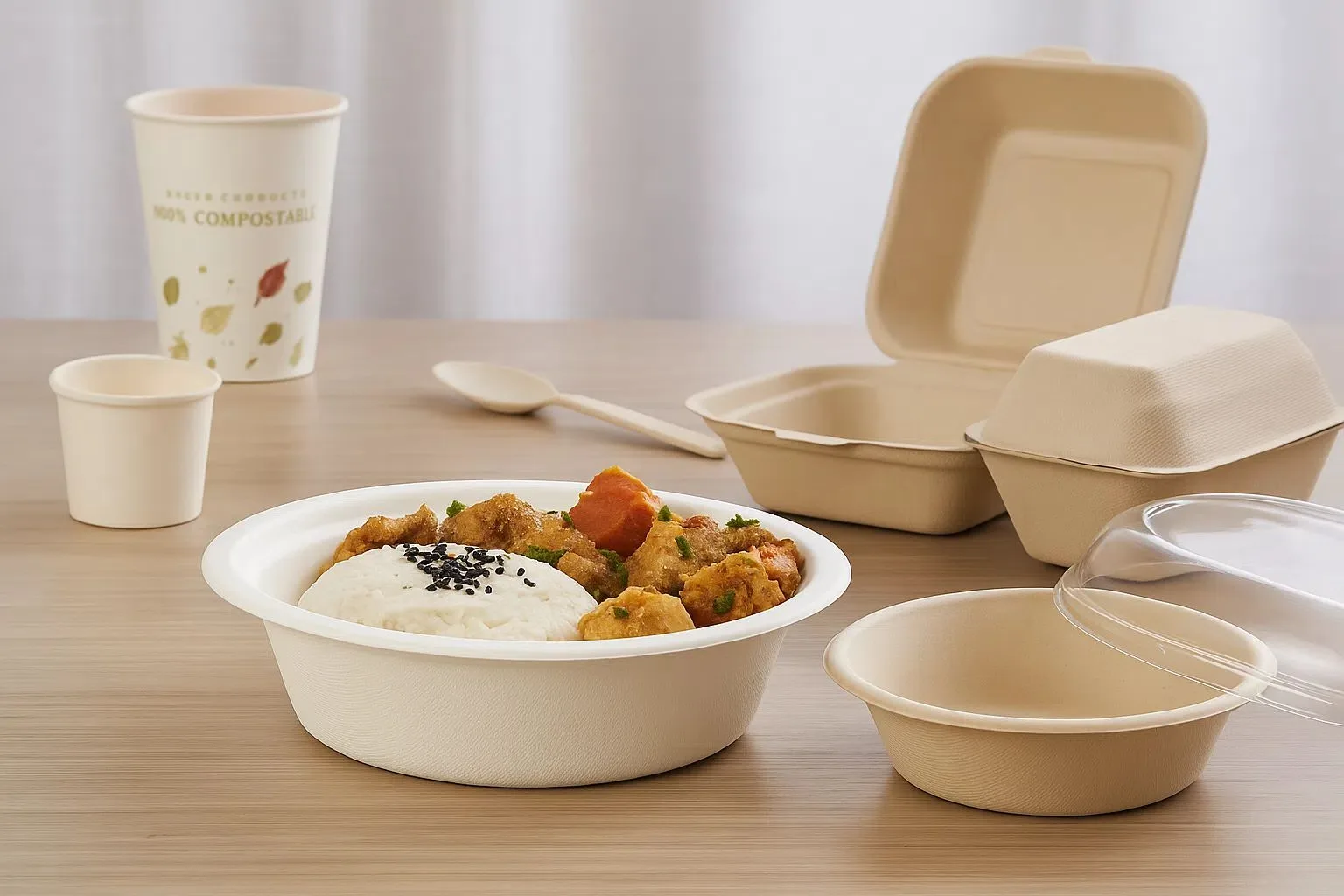
Quick Answer: PFAS-Free vs PFOA-Free vs BPA-Free
PFAS-free is the broadest chemical avoidance claim among the three. It generally means PFAS are not intentionally added and/or that the finished product meets a defined PFAS or fluorine testing requirement. PFOA-free only means the product does not contain PFOA, one specific PFAS compound. BPA-free means the product does not contain bisphenol A, a different chemical mainly associated with certain plastics and resins.
- Choose PFAS-free when buying paper, molded fiber, bagasse, or grease-resistant food packaging.
- Do not rely only on PFOA-free if your market requires broader PFAS control.
- Choose BPA-free when plastic, resin, coating, or lid components may be involved.
- Verify each claim separately with supplier declarations, finished-product testing, food-contact documents, and destination-market requirements.
Related Bioleader® Chemical Safety Hub
Use the following internal resources to go deeper into each topic:
- What is PFAS Free? — definition, food packaging meaning, and verification guidance.
- What is PFOA Free? — why PFOA-free is narrower than PFAS-free.
- PFAS-Free Packaging: What Buyers Must Ask in 2025 — buyer questions and supplier documentation.
- PFAS-Free Packaging in 2025 — what PFAS-free really means and how to verify compliance.
- Is sugarcane bagasse tableware PFAS-free and BPA-free? — material-specific explanation for bagasse products.
- PFAS-free sugarcane tableware for 100°C hot food — manufacturing and performance solution for hot food applications.
PFAS Free vs. PFOA Free vs. BPA Free: At-a-Glance Comparison
The most common mistake is treating these labels as interchangeable. They are not. Each claim refers to a different chemical scope and a different type of risk. The table below summarizes the difference for food packaging and dinnerware buyers.
| Claim | Chemical Scope | Main Packaging Relevance | What It Does Not Automatically Mean | Buyer Priority |
|---|---|---|---|---|
| PFAS-Free | Broad class of per- and polyfluoroalkyl substances. | Important for grease-resistant paper, molded fiber, bagasse, and plant-fiber food packaging. | Does not automatically mean compostable, plastic-free, recyclable, or suitable for all hot/oily foods. | Ask for no intentionally added PFAS declaration and finished-product testing. |
| PFOA-Free | One specific PFAS compound: perfluorooctanoic acid. | Historically relevant to non-stick coatings and legacy PFAS concerns. | Does not mean the product is free from all PFAS. | Use as a baseline claim, but request broader PFAS-free verification. |
| BPA-Free | Bisphenol A, a separate chemical used in some plastics and epoxy resins. | Relevant to certain plastic containers, can linings, resin coatings, and some lids/components. | Does not address PFAS, PFOA, fluorine, compostability, or biodegradability. | Ask for material-specific BPA declaration and food-contact compliance. |
| Food-Contact Compliant | Regulatory safety status for materials that contact food. | Applies to food packaging, containers, dinnerware, coatings, inks, and lids. | Does not automatically prove PFAS-free, PFOA-free, BPA-free, or compostable status. | Request FDA, LFGB, EU, or destination-market food-contact documents. |
Key takeaway: PFAS-free is generally the broadest chemical claim, PFOA-free is a narrower PFAS-substance claim, and BPA-free is a separate plastic/resin-related claim. Buyers should verify each claim independently.
What is PFAS Free?
Definition and Background
PFAS means per- and polyfluoroalkyl substances, a large class of man-made fluorinated chemicals. Certain PFAS have been used because they can provide resistance to oil, grease, water, heat, and stains. In consumer and industrial products, PFAS have appeared in applications such as non-stick cookware, water-repellent textiles, stain-resistant fabrics, firefighting foams, and some grease-resistant food packaging.
When a food packaging product is described as PFAS-free, the claim should usually mean that PFAS are not intentionally added to the product. In stronger procurement specifications, the claim should also be supported by testing of the finished product, not only by raw material statements. This is especially important for plant-fiber food packaging such as paper, paperboard, molded fiber, and sugarcane bagasse tableware.
Health and Environmental Impact
PFAS are often called “forever chemicals” because many of them are highly persistent. Some PFAS have been associated with environmental contamination and potential health concerns. Scientific and regulatory agencies continue to evaluate different PFAS compounds, exposure levels, and pathways. For food packaging buyers, the practical concern is clear: avoid unnecessary PFAS use and verify safer alternatives before approving packaging claims.
In the United States, the FDA announced that PFAS-containing grease-proofing substances are no longer being sold by manufacturers for food-contact use in the U.S. market. California AB1200 also restricts intentionally added PFAS in plant-fiber-based food packaging. These developments make PFAS-free packaging a major procurement issue for foodservice brands, not just a consumer preference.
Consumer and Buyer Considerations
For consumers, PFAS-free dinnerware can reduce concern about fluorinated additives in food-contact products. For professional buyers, the standard should be higher: ask what PFAS-free means, whether the claim applies to the finished product, what test method was used, and whether the product meets the rules of the destination market.
For plates and molded fiber applications, see Bioleader® PFAS-free compostable plates and related bagasse packaging solutions.

What is PFOA Free?
Definition and Background
PFOA, or perfluorooctanoic acid, is one specific chemical within the broader PFAS family. It was historically associated with some non-stick coating manufacturing processes and has been one of the most widely discussed PFAS compounds because of its persistence and regulatory history.
A PFOA-free label means the product does not contain PFOA. This is useful, but it is not the same as PFAS-free. PFOA-free only addresses one chemical. A product may still contain other PFAS unless a broader PFAS-free or no intentionally added PFAS claim is verified.
Health and Environmental Impact
PFOA has been studied extensively. Some epidemiological and toxicological studies have associated PFOA exposure with concerns such as cholesterol changes, liver effects, immune response changes, and certain cancers. Regulatory agencies have moved to reduce PFOA exposure in water, consumer products, and certain industrial uses.
Buyer Considerations
For professional food packaging buyers, PFOA-free is not enough by itself. If the purchasing requirement is to avoid fluorinated grease-proofing chemistry in molded fiber, paper, or bagasse food packaging, the specification should ask for PFAS-free or no intentionally added PFAS, not only PFOA-free.

What is BPA Free?
Definition and Background
BPA, or bisphenol A, is not a PFAS. It is a different chemical used mainly in the production of polycarbonate plastics and epoxy resins. BPA has been used in certain food and beverage containers, can linings, water bottles, and other food-contact applications.
A BPA-free label means bisphenol A has not been used in the product. This claim is most relevant when plastic, resin, or coating components may be involved. It is less directly relevant to molded plant-fiber items unless the product includes plastic lids, resin coatings, or other components where BPA may be a concern.
Regulatory and Safety Context
BPA regulation differs by market. The U.S. FDA has stated that BPA is safe at current levels occurring in foods for currently approved uses in food containers and packaging, while the European Commission adopted a ban on BPA in food-contact materials, including products such as metal can coatings, reusable plastic drink bottles, and kitchenware. This difference shows why export packaging buyers should review the destination market before using BPA-free claims.
Buyer Considerations
BPA-free is useful, but it is not a complete non-toxic packaging claim. A BPA-free product may still require separate verification for PFAS, PFOA, food-contact compliance, heat resistance, and compostability. If a food container includes a lid, lining, adhesive, coating, or printed surface, buyers should verify the full component system.
Which Claim Matters Most by Material?
The correct priority depends on the material. PFAS-free is often critical for plant-fiber food packaging. BPA-free is more relevant to plastics and resins. PFOA-free is useful, but it should not replace broader PFAS-free verification when buying food packaging.
| Material / Product Type | PFAS-Free Priority | PFOA-Free Priority | BPA-Free Priority | Buyer Note |
|---|---|---|---|---|
| Bagasse / Sugarcane Fiber Disposables | Very high | Secondary | Usually low unless lids/coatings are involved | Ask whether the finished product is made without intentionally added PFAS and whether testing is available. |
| Bagasse food containers | Very high for hot, oily, and takeaway meals | Not enough alone | Depends on lid or coating system | Confirm oil resistance, water resistance, heat performance, and destination-market PFAS requirements. |
| Paper food packaging | Very high for grease-resistant paper and paperboard | Secondary | Depends on coating/lid/lining | FDA and state-level PFAS rules are especially relevant to paper and paperboard food packaging. |
| Paper soup bowls | Important when grease or moisture barriers are used | Not enough alone | Depends on coating and lid components | Check PE, PLA, water-based coating, PFAS declaration, and hot-fill suitability separately. |
| PLA clear cups | Usually not the main claim | Usually not the main claim | May be relevant to lids or additives | PLA clear cups are generally for cold drinks; do not use standard PLA for high-temperature hot drinks. |
| PET cups and clear cold packaging | May be verified if required, but not the main sustainability claim | Usually not the main claim | Can be relevant for buyer specifications | PET is suitable for clear cold packaging but should not be described as biodegradable or compostable. |
| Cornstarch-based tableware | Relevant depending on formulation and additives | Secondary | Depends on formulation | Verify finished-product chemical claims, food-contact compliance, and heat performance. |
| Biodegradable and compostable cutlery | Relevant but not usually the only claim | Secondary | Depends on resin formulation | Confirm CPLA/cornstarch formulation, heat rating, food-contact compliance, and compostability claims. |
| Glass / Ceramic / Stainless Steel | Usually not a PFAS-based issue | Usually not a PFOA-based issue | Usually BPA-free by material nature | Check lead/cadmium for ceramics and food-grade status for stainless steel. |
| Disposable paper plates | Important if coated or grease-resistant | Not enough alone | Usually not the main issue | Some paper plates may use grease barriers; compare with bagasse plates instead of paper plates. |
Dinnerware and Food Packaging Buyer Decision Matrix
For B2B purchasing, the safest option is to define the real use case first, then verify the chemical claim. The matrix below helps buyers decide which label matters most for different applications.
| Buyer Scenario | Most Important Claim | Secondary Claim | Recommended Action |
|---|---|---|---|
| Hot oily takeaway meals in molded fiber containers | PFAS-free | PFOA-free, food-contact compliant | Request finished-product PFAS/fluorine test, oil resistance test, and food-contact documentation. |
| Cold drinks in clear cups | Food-contact compliant | BPA-free where relevant | Use PLA for compostable cold-drink positioning or PET for clear cold packaging when compostability is not required. |
| Retail-packaged salads or deli foods | Food-contact compliant, PFAS-free where fiber packaging is used | BPA-free for plastic lids | Confirm material, lid type, coating, migration, and display performance. |
| Compostable plates and bowls | PFAS-free and compostability certification | PFOA-free | Request PFAS-free documentation and compostability certificates separately. |
| Private-label food packaging for export | Destination-market compliance | PFAS-free, BPA-free, food-contact compliance | Confirm U.S., EU, California, or local rules before printing claims on packaging. |
| Reusable plastic dinnerware | BPA-free and food-contact compliant | PFAS-free if coating is involved | Confirm resin type, migration testing, and high-temperature use limits. |
For broader material sustainability decisions, see biodegradable and non-biodegradable material choices.
Regulatory and Compliance Snapshot
Chemical safety claims should be reviewed by destination market. The same packaging may be acceptable in one market but require different documentation or labeling in another.
| Region / Topic | What Buyers Should Know | Practical Packaging Impact |
|---|---|---|
| U.S. FDA: PFAS in food packaging | FDA announced that grease-proofing substances containing PFAS are no longer being sold by manufacturers for food-contact use in the U.S. market. | Highly relevant for paper and paperboard food packaging with grease-proofing functions. |
| U.S. EPA: PFAS drinking water regulation | EPA established legally enforceable levels for several PFAS in drinking water, including PFOA and PFOS. | Not a food packaging rule, but it reinforces the broader regulatory seriousness of PFAS exposure. |
| California AB1200 | California restricts plant-fiber-based food packaging containing intentionally added PFAS or PFAS above a defined total organic fluorine threshold. | Directly relevant to paper, paperboard, molded fiber, bagasse, and plant-fiber foodservice ware sold into California. |
| European Union: PFAS direction | EU chemical regulators continue to evaluate broad PFAS restriction proposals and existing controls on certain PFAS substances. | EU-bound packaging buyers should review PFAS, food-contact, and material-specific rules together. |
| European Union: BPA ban in food contact materials | The European Commission adopted a ban on BPA in food-contact materials, with transition measures for certain products. | Important for plastics, can coatings, reusable bottles, kitchenware, and resin-based food-contact components. |
| U.S. FDA: BPA position | FDA’s current perspective is that BPA is safe at current levels occurring in foods for currently approved food-contact uses. | Shows that BPA regulatory treatment differs by market; export buyers should not assume one global rule. |
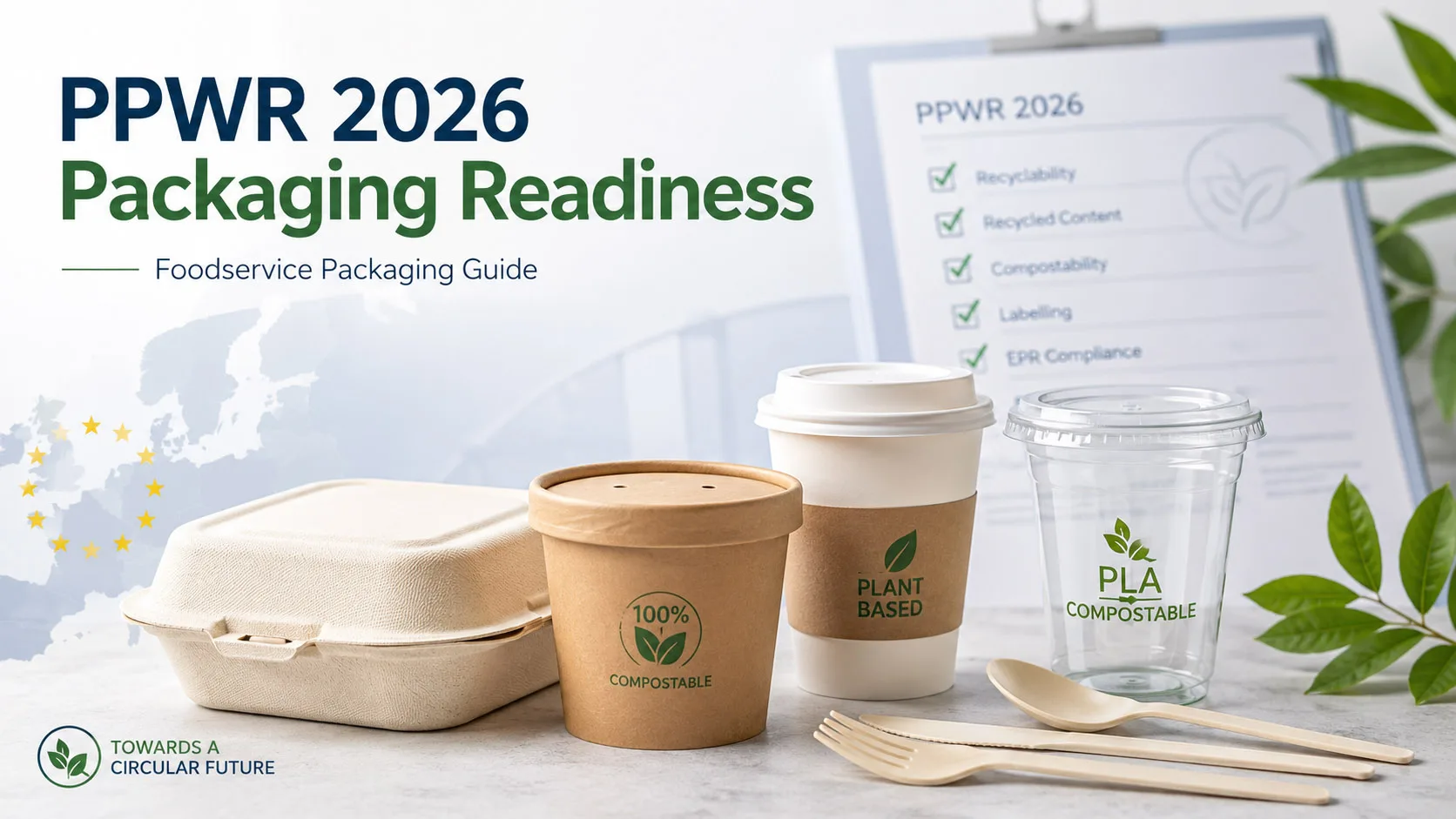
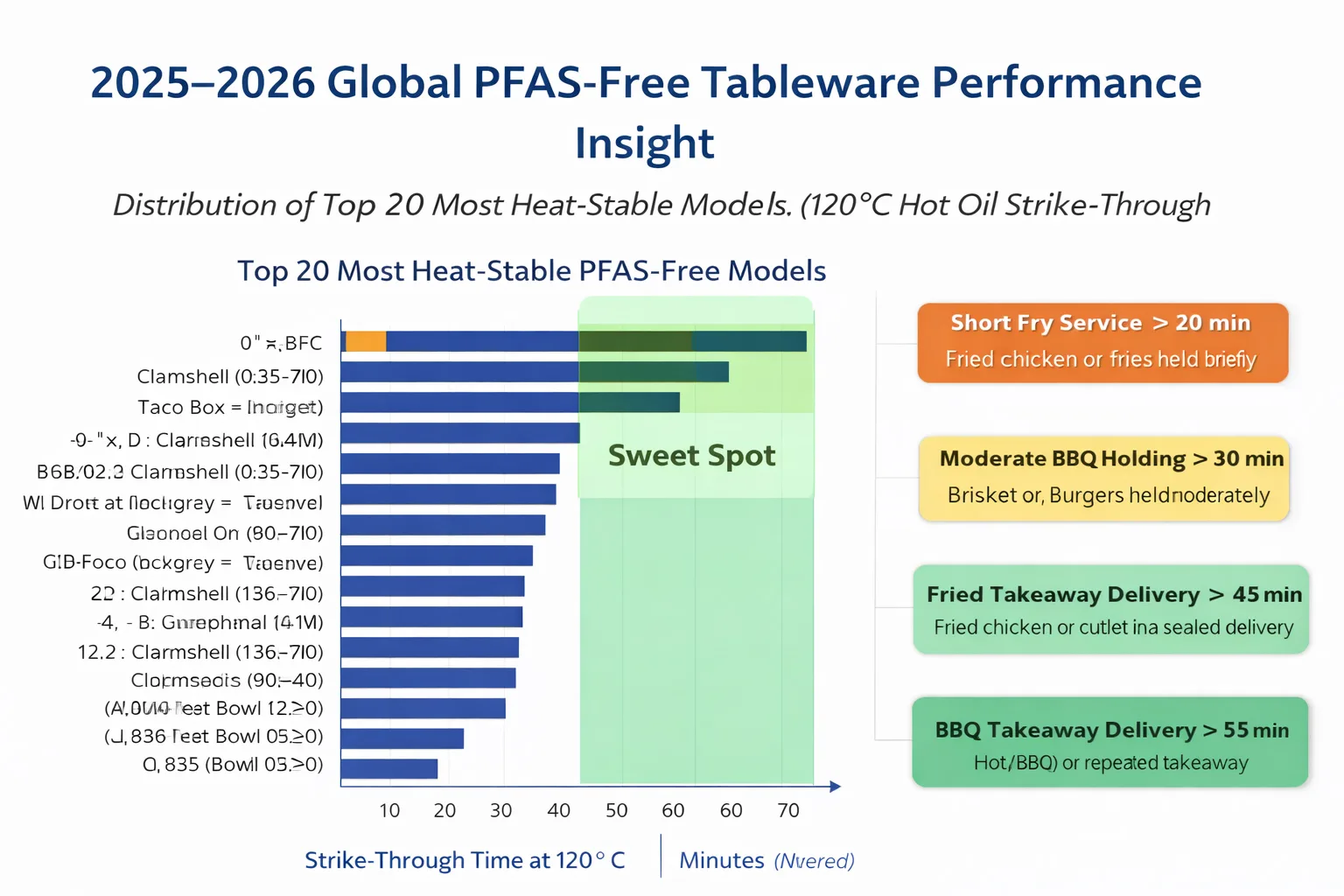
For packaging teams planning ahead, see How to Transition to PFAS-Free Tableware Before the 2026 Packaging Deadlines and the 2025–2026 Global PFAS-Free Tableware Performance White Paper.
How to Verify PFAS-Free, PFOA-Free, and BPA-Free Claims
A label alone is not enough for B2B procurement. Buyers should verify chemical safety claims through documentation, testing, and application review. This is especially important when the product will be used for hot food, oily food, wet meals, microwave applications, chilled storage, or export markets.
| Verification Step | PFAS-Free | PFOA-Free | BPA-Free |
|---|---|---|---|
| Supplier declaration | Confirm no intentionally added PFAS in raw materials, coatings, or finished product. | Confirm PFOA is not used or present according to supplier specification. | Confirm BPA is not used in plastic, resin, coating, or relevant components. |
| Finished-product testing | Ask for total fluorine, total organic fluorine, or targeted PFAS testing where required. | Ask whether testing covers only PFOA or a broader PFAS list. | Ask for BPA migration or BPA-free documentation where relevant. |
| Food-contact compliance | Still required separately. | Still required separately. | Still required separately. |
| Performance testing | Oil, water, heat, leakage, stackability, and real-food testing are important. | PFOA-free does not prove performance. | BPA-free does not prove heat or durability performance. |
| Claim review | Check whether the claim is legal in the target market. | Avoid using PFOA-free as a substitute for PFAS-free. | Confirm BPA-free wording is relevant to the material. |
For printed packaging, claims should also be reviewed with ink and artwork compliance. See how to customize food packaging inks without breaking compliance.
Buyer Checklist: Choosing Non-Toxic Dinnerware and Food Packaging
Before approving PFAS-free, PFOA-free, or BPA-free dinnerware, ask the supplier the following:
- Does the chemical claim apply to the finished product, not only the raw material?
- Is the product PFAS-free, PFOA-free, BPA-free, or only one of these?
- Are PFAS intentionally added to the coating, grease barrier, mold-release system, or surface treatment?
- Can the supplier provide a finished-product PFAS or fluorine test report?
- Can the supplier provide BPA-free documentation for plastic, resin, coating, or lid components?
- Does the product meet FDA, LFGB, EU, or other food-contact requirements?
- Does the product meet California AB1200 or other state-level PFAS requirements if sold into the U.S.?
- Is the product compostable, and is that claim supported by EN13432, ASTM D6400, BPI, TÜV, or other recognized certification?
- Has the product been tested with hot, oily, wet, acidic, or heavy foods?
- Does the supplier maintain batch traceability and stable production control?
- Is the packaging artwork making claims that require additional legal or testing support?
Common Dinnerware Materials: Safety and Packaging Considerations
Below is a practical guide to common dinnerware and food packaging materials. The goal is not to label one material as perfect, but to help buyers understand which claim matters most for each material and use case.
| Material | PFAS / PFOA Relevance | BPA Relevance | Best Use | Important Limits |
|---|---|---|---|---|
| Ceramic / Porcelain / Glass | Usually not a PFAS-based issue. | Generally BPA-free by material nature. | Reusable dinnerware, home dining, restaurant use. | Check glazes for lead/cadmium and food-safe compliance. |
| Stainless Steel | Usually not a PFAS-based issue. | Generally BPA-free. | Durable reusable tableware and food prep. | Use food-grade stainless steel and verify suitability for acidic foods. |
| Solid Wood / Bamboo | Depends on coatings and finishes. | Usually not central unless resin is involved. | Reusable serving ware and dry food applications. | Check food-safe finishes, adhesives, and high-temperature limitations. |
| Plastic PP / PE | Usually not the main PFAS issue. | BPA-free may be relevant depending on formulation. | Reusable or disposable plastic food containers. | Verify food-contact compliance and heat-use limits. |
| Melamine | Usually not a PFAS issue. | BPA-free may not be the main concern. | Reusable casual dinnerware. | Avoid microwave use and verify migration compliance. |
| Disposable Paper Plates | Important if coated or grease-resistant. | Usually not the primary issue. | Dry or lightly oily foods, events, takeaway. | Choose PFAS-free paper if grease resistance is required. |
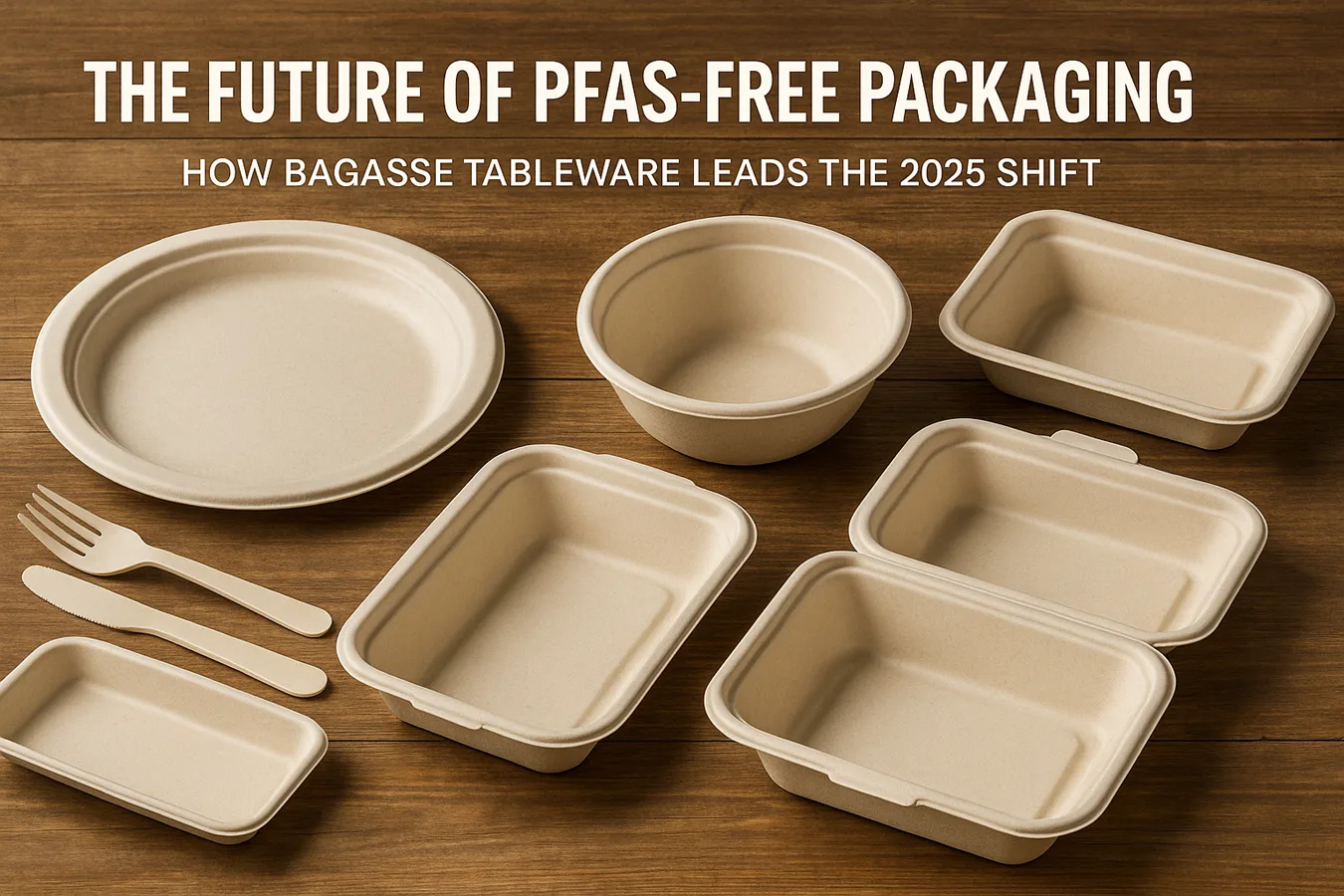
| Bagasse / Sugarcane Fiber | Very important for grease, oil, and wet food performance. | Usually low unless other components are involved. | Hot meals, takeaway, plates, bowls, clamshells, trays. | Verify PFAS-free status, hot-food performance, and compostability separately. |
| Cornstarch-Based Tableware | Depends on formulation. | Depends on formulation. | Plates, bowls, cups, and selected disposable tableware applications. | Verify heat rating, food-contact compliance, and end-of-life claims. |
| PLA Bioplastic | Usually not the main PFAS issue. | Can be BPA-free, but verify formulation and components. | Cold drink cups, dessert cups, cold food packaging. | Standard PLA is generally not suitable for high-temperature hot drinks. |
| CPLA | Relevant if chemical claims are made. | Depends on formulation. | Heat-resistant compostable cutlery and some lids. | Verify temperature rating, food-contact compliance, and compostability. |
Bioleader® Packaging Solutions for Safer Foodservice Materials
Bioleader® supplies disposable food packaging and tableware for distributors, restaurants, supermarket brands, meal-prep companies, takeaway chains, and packaging importers. For buyers comparing PFAS-free, PFOA-free, and BPA-free claims, Bioleader® focuses on practical packaging selection: material safety, food-contact compliance, real-use performance, export requirements, and responsible sustainability claims.
For molded fiber and hot food applications, buyers can review PFAS-free sugarcane tableware for 100°C hot food, 2026 Global Sugarcane Bagasse Packaging White Paper, and Bioleader® bagasse food containers.
For full product families, explore sugarcane bagasse tableware, paper food packaging, cornstarch tableware, biodegradable and compostable cutlery, and compostable PLA cups.
For direct product evaluation, see BPA PFAS-free biodegradable food containers with lids. For broader sourcing support, review the Bioleader® catalog and price list or contact Bioleader® for samples, test documents, specifications, and wholesale quotation support.
FAQ About PFAS-Free, PFOA-Free, and BPA-Free Dinnerware
What is the difference between PFAS, PFOA, and BPA?
PFAS is a broad family of fluorinated chemicals, PFOA is one specific PFAS compound, and BPA is a separate bisphenol chemical used mainly in certain plastics and epoxy resins. They require separate verification.
Is PFAS-free better than PFOA-free?
PFAS-free is broader than PFOA-free. PFOA-free only addresses one specific PFAS compound, while PFAS-free should address the broader class of PFAS or no intentionally added PFAS, depending on the claim and testing standard.
Does PFOA-free mean PFAS-free?
No. A PFOA-free product can still contain other PFAS unless a broader PFAS-free claim is verified through supplier documentation and appropriate testing.
Does BPA-free mean PFAS-free?
No. BPA-free only means the product does not contain bisphenol A. It does not address PFAS, PFOA, fluorine, grease-proofing chemistry, compostability, or food-contact compliance.
Which label matters most for bagasse tableware?
For bagasse tableware and molded fiber food packaging, PFAS-free is usually the most important chemical claim, especially when the product is used for hot, oily, or wet foods. Buyers should still verify food-contact compliance and compostability separately.
Are PFAS-free products also compostable?
Not always. PFAS-free is a chemical claim, while compostable is an end-of-life claim. Compostability must be verified separately through standards, certification, and local composting conditions.
Are BPA-free plastic products always safe?
BPA-free reduces one specific chemical concern, but buyers should still verify the resin type, food-contact compliance, heat-use limits, migration testing, and whether alternative bisphenols or other additives are relevant.
How can buyers verify non-toxic dinnerware claims?
Buyers should request supplier declarations, third-party test reports, food-contact compliance documents, chemical claim definitions, migration data where relevant, and real-use performance testing for the intended food application.
What are the best materials for non-toxic food packaging?
There is no single best material for every use case. Bagasse, paper, cornstarch, PLA, CPLA, glass, ceramic, and stainless steel can all be appropriate depending on the food type, temperature, disposal route, compliance requirement, and buyer specification.
Can Bioleader® provide PFAS-free and BPA-free packaging options?
Bioleader® offers selected PFAS-free and BPA-free packaging options across bagasse, paper-based, cornstarch, and compostable tableware product lines. Buyers should request product-specific specifications and available test documents before confirming orders.
Conclusion
PFAS-free, PFOA-free, and BPA-free are important chemical safety labels, but they should not be treated as interchangeable. PFAS-free is the broadest claim and is especially important for plant-fiber food packaging where grease and moisture resistance are required. PFOA-free addresses one specific PFAS compound but does not guarantee the absence of all PFAS. BPA-free addresses bisphenol A, mainly in plastic and resin-based food-contact materials.
For foodservice buyers, the safest approach is to define the product use case first, then verify the chemical claim with supplier declarations, finished-product testing, food-contact compliance documents, and destination-market regulatory review. A product label may be useful, but it is not enough for professional procurement.
As regulations and customer expectations continue to move toward safer, more transparent packaging, buyers should work with manufacturers that understand both material performance and chemical compliance. Bioleader® supports distributors, restaurants, takeaway brands, and packaging importers with practical PFAS-free, BPA-free, and compostable packaging solutions for modern foodservice applications.
References
- U.S. EPA — Our Current Understanding of the Human Health and Environmental Risks of PFAS
- U.S. EPA — Per- and Polyfluoroalkyl Substances (PFAS) Drinking Water Regulation
- U.S. FDA — PFAS Used in Grease-Proofing Agents for Food Packaging No Longer Being Sold in the U.S.
- U.S. FDA — Market Phase-Out of Grease-Proofing Substances Containing PFAS
- California DTSC — Food Packaging Containing PFASs
- California DTSC — Safer Food Packaging & Cookware Act of 2021
- European Commission — Commission Adopts Ban of Bisphenol A in Food Contact Materials
- U.S. FDA — Bisphenol A (BPA): Use in Food Contact Application
- ECHA — Per- and Polyfluoroalkyl Substances (PFAS)
- ATSDR — How PFAS Impacts Your Health

20 Responses
ممتن جدًا لهذه التوعية. أصبحت أبحث عن منتجات non-toxic وBPA-free فقط، خصوصًا لعائلتي وأطفالي.
Thank you for writing something that doesn’t scare people, but instead empowers them to choose healthy, safe alternatives.
It was shocking to learn how many dinnerware products still contain PFAS. I’m now much more aware of what to look for when shopping.
Ich war überrascht, wie viele Teller nicht wirklich PFAS-free sind. Dieser Blogbeitrag war sehr aufschlussreich.
Uso stoviglie BPA-free da anni, ma non sapevo nulla dei PFAS. Grazie per le spiegazioni dettagliate!
No sabía que BPA-free y PFAS-free eran cosas tan diferentes. Este artículo me abrió los ojos por completo.
Nunca pensei que BPA-free fosse realmente importante, mas esse texto mudou minha visão. Excelente conteúdo.
Agora entendo por que escolher utensílios PFAS-free e BPA-free faz tanta diferença. É reconfortante saber que existem opções non-toxic e PFOA-free para proteger a saúde da minha família.
BPA-free ist für mich jetzt ein absolutes Muss. Danke für die verständliche Erklärung, warum das so wichtig ist.
Finalmente capisco la differenza tra PFAS-free, PFOA-free e BPA-free: questo articolo mi ha aperto gli occhi sulla vera importanza di scegliere stoviglie non-toxic e sane per la mia famiglia. Grazie per la chiarezza e la concretezza!
Short and convincing: choosing healthy, BPA-free and non-toxic dinnerware is no longer confusing thanks to this guide.
I never realized how different PFAS-free, PFOA-free, and BPA-free dinnerware actually are—this article made everything clear and helped me choose truly healthy and non-toxic dinnerware.
This comparison is exactly what I needed—your breakdown of PFAS, PFOA, and BPA really cleared up my confusion! Could you share any safe brands that are free of all three?
Thanks for such an insightful guide! Now I know what is PFAS Free, PFOA Free and I think many goods are BPA free. I’ve been trying to switch my dinnerware to non-toxic options. Do you have any tips on how to test for hidden PFAS in older plates?
Good post.I’ve always been confused by all the different labels on dinnerware, but after reading this comprehensive guide on PFAS-free, PFOA-free, and BPA-free options, I finally understand what truly makes a product healthy and non-toxic for my family, and I feel much more confident about making safer choices going forward.
I’ve been trying to avoid PFAS and BPA in my kitchenware, so this article really helped me understand what to look for. Thanks for the clear explanation!
I appreciate the clear guidance: don’t be fooled by PFOA‑free labels alone—aim for full PFAS‑free certification for better peace of mind.
Great breakdown—knowing the difference between PFAS‑free, PFOA‑free, and BPA‑free really empowers you to choose truly non‑toxic dinnerware.
Thank you for clarifying the differences between PFAS-free, PFOA-free, and BPA-free dinnerware—it’s crucial to know what we’re actually getting when choosing truly non-toxic kitchenware.
Great comparison—I’m now personally committed to using non‑toxic dinnerware, especially those clearly labeled PFAS‑ and PFOA‑free.