PFAS-Free Compostable Tableware Manufacturer for Foodservice
Compostable tableware on this page is organized for foodservice and takeaway operations that require reliable, plastic-free serving solutions for bulk programs. This collection supports buyers sourcing compostable plates, bowls, containers, trays, and clamshells under consistent supply and export-ready packing.
For compliance-focused markets, PFAS-free options are available depending on the selected items and required specifications. This page is structured to help buyers compare compostable tableware categories by usage scenario and procurement needs.

SGS-Tested PFAS Evidence
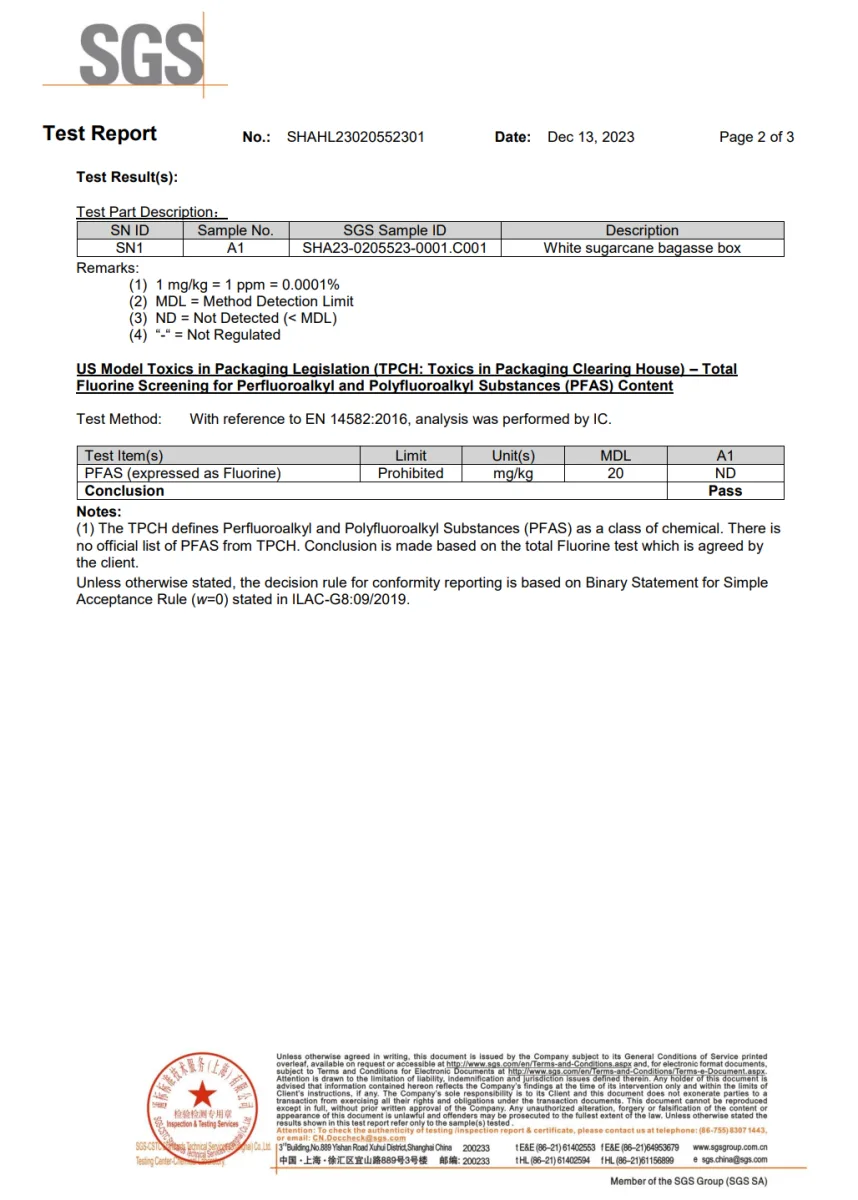
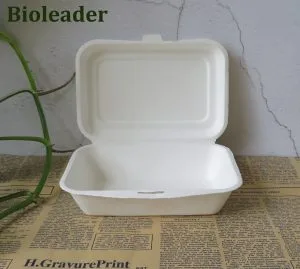
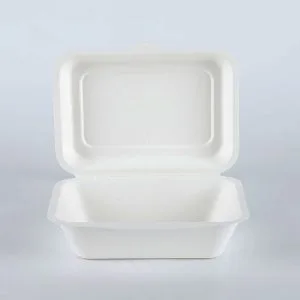
Bioleader® provides third-party PFAS testing evidence for applicable sugarcane bagasse foodservice products. The published SGS report shows Total Fluorine ND (<20 mg/kg) for the tested white sugarcane bagasse box.
| Tested Material | White sugarcane bagasse box |
|---|---|
| Testing Laboratory | SGS-CSTC Standards Technical Services |
| SGS Report No. | SHAHL23020552301 |
| Test Method | With reference to EN 14582:2016, analysis by IC |
| Test Parameter | Total Fluorine screening for PFAS |
| Method Detection Limit | 20 mg/kg |
| SGS Test Result | ND (<20 mg/kg) |
| EU PPWR Step-1 Benchmark | Total Fluorine <50 mg/kg |
| Report Date | 13 December 2023 |
Scope note: The published SGS report provides supporting evidence for the tested white sugarcane bagasse box. Documentation for specific SKUs, formulations, and destination-market requirements should be confirmed separately.

Compostable Tableware Categories for Foodservice
This collection presents a full range of compostable tableware categories designed for foodservice and takeaway operations. Products are organized by usage type, helping buyers quickly navigate between plates, bowls, containers, trays, and clamshells based on service format and procurement needs.
Rather than focusing on a single material, this page provides an overview of tableware formats commonly used in commercial foodservice, supporting bulk sourcing and repeat ordering programs.
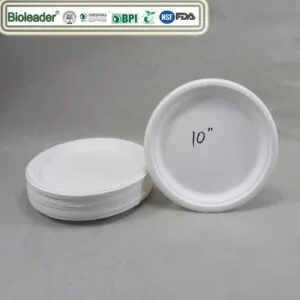
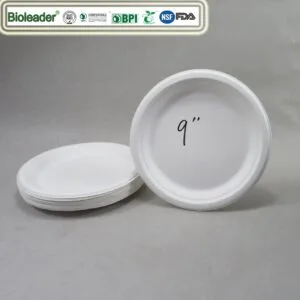
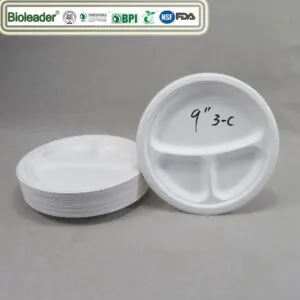
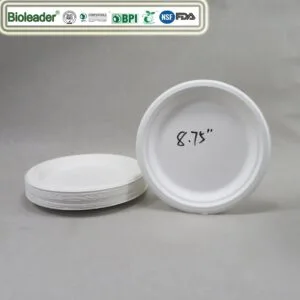
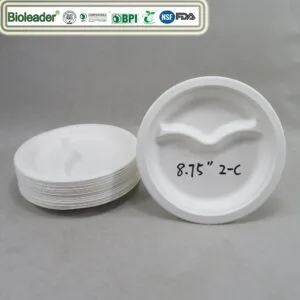
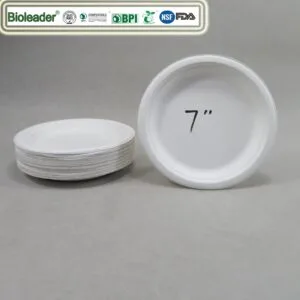
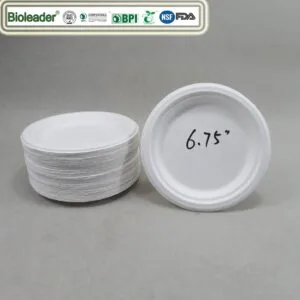
PFAS-Free Compostable plates are widely used for dine-in service, buffet lines, catering events, and takeaway meals. Buyers typically select plate formats based on meal type, portion size, and stacking efficiency.
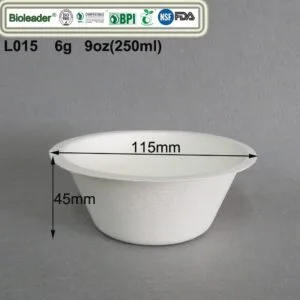
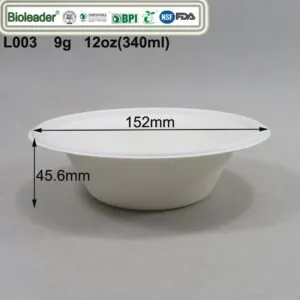
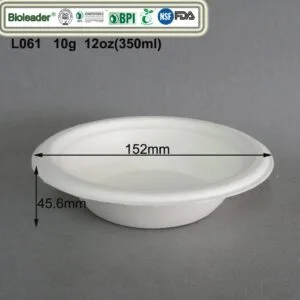
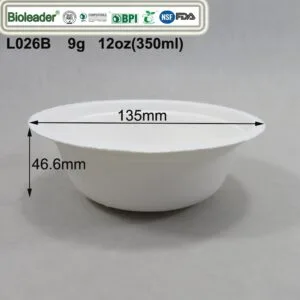
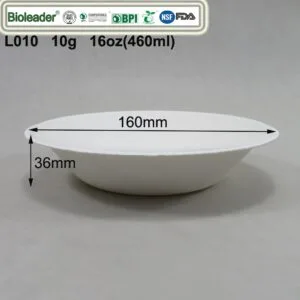
Compostable bowls support a wide range of menu items, including rice dishes, salads, soups, and mixed meals. Selection is often driven by menu structure and handling requirements rather than material alone.
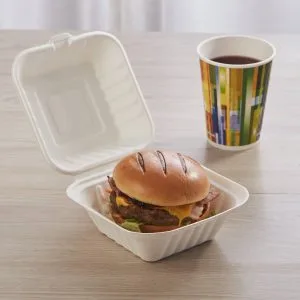
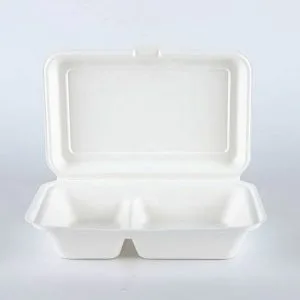
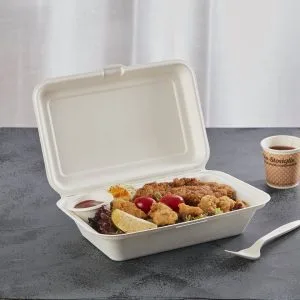
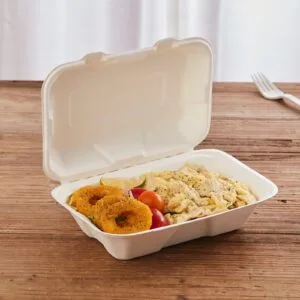
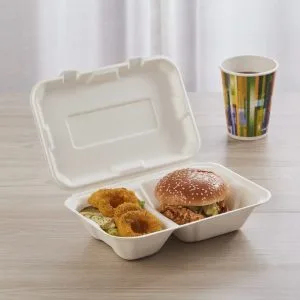
These PFAS-Free compostable containers are developed for foodservice and takeaway buyers seeking export-ready, plastic-free packaging solutions for consistent bulk supply.
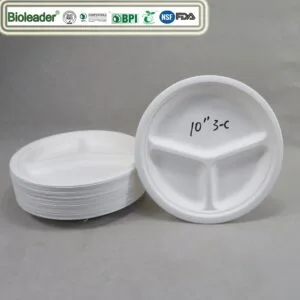
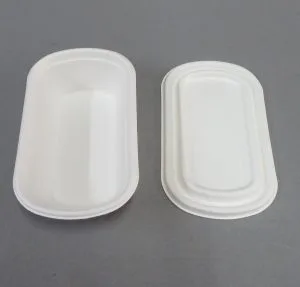
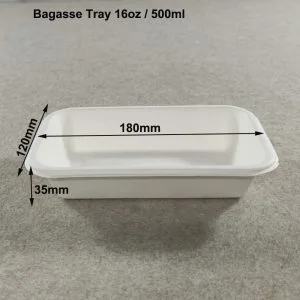
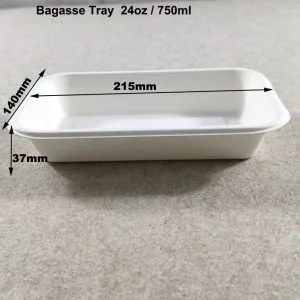
Trays are commonly used in catering, institutional foodservice, and set-meal programs where portion separation and consistent layout are required.
Materials Used in Compostable Tableware
Compostable tableware may be produced using different plant-based and compostable materials, depending on the product category and intended use. Material selection is typically influenced by availability, forming characteristics, and foodservice suitability, rather than environmental labeling alone.
This page focuses on tableware format and usage, while detailed material explanations are covered on dedicated material-specific pages.


Bioleader®: Professional Manufacturer
- Free Sample
- Custom Packaging, logo for Your Brand.
- Accept OEM/ODM Customized New Mold Service.
- Competitive Factory Price.
- Prompt delivery on time.
- Certificates: BPI, OK COMPOST, FDA, PFAS-FREE, IOS9001/14001, BSCI,
BRCGS, SEDEx, SGS, QS. - MOQ:30,000- 50,000pcs.
- Port: Xiamen Port or other ports as per customer requirement
200+ style Sugarcane Bagasse Tableware. - Product Range: Sugarcane Bagasse Clamshell Boxes, Food Containers, Plates, Bowls with Lids, Trays with Lid, Cups & Lids,
- Boost Your Business Success with Bioleader®.


EU PPWR 2026 PFAS Requirements for Food-Contact Packaging
For foodservice buyers importing packaging into the European Union, PFAS compliance is now a specific regulatory requirement rather than a general environmental claim. Under Regulation (EU) 2025/40 (PPWR), the PFAS limits for food-contact packaging apply from 12 August 2026.
Maximum concentration for any PFAS measured by targeted analysis.
Maximum concentration for the sum of PFAS measured by targeted analysis.
Limit covering PFAS, including polymeric PFAS, in food-contact packaging.
Because there is currently no single harmonised EU analytical method for PFAS in food-contact packaging, the European Commission recommends a stepwise enforcement approach.
Total Fluorine (TF) is measured first. If the result is below 50 mg/kg (50 ppm), the sample could be considered compliant under the Commission's recommended enforcement approach.
If Total Fluorine exceeds 50 mg/kg, further analysis may be used to determine whether the detected fluorine originates from organic fluorinated substances or inorganic sources.
Where further verification is required, targeted analysis and precursor testing can be used to assess the 25 ppb and 250 ppb limits.
The European Commission also notes that, based on the evidence currently available, samples compliant with the Step-1 Total Fluorine test were also compliant with the subsequent testing steps.
In the published SGS report, the tested white sugarcane bagasse box achieved a Total Fluorine result of ND (<20 mg/kg).
This result is below the European Commission's current 50 mg/kg Step-1 Total Fluorine screening level.
PFAS-Free and Compostable: Separate Claims, Separate Evidence
PFAS compliance and compostability address different characteristics of food-contact packaging. A PFAS test report does not by itself prove compostability, while a compostability certificate does not demonstrate compliance with PFAS concentration limits.
For applicable sugarcane bagasse tableware, Bioleader® maintains third-party testing and certification documentation covering both PFAS screening and industrial or home compostability, depending on the product, specification, certification scope, and destination market.
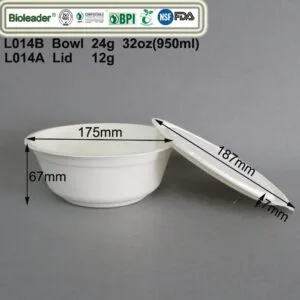
PFAS evaluation focuses on fluorinated substances in food-contact packaging. Bioleader's published SGS supporting report for a tested white sugarcane bagasse box recorded:
- Third-party SGS laboratory testing
- Total Fluorine screening
- EN 14582:2016 reference method, IC analysis
- Below the EU Commission's 50 mg/kg Step-1 screening level
Compostability testing evaluates whether an applicable product can disintegrate and biodegrade under defined composting conditions. Bioleader's published certificate library includes documentation for applicable sugarcane bagasse products under recognized compostability schemes and standards.
Bulk Wholesale Supply for Foodservice Buyers
This compostable tableware collection supports bulk wholesale procurement for restaurants, catering companies, distributors, and institutional buyers. Typical purchasing considerations include:
Consistent supply for repeat programs
Standardized product formats across orders
Export-ready carton packing
Compatibility with foodservice workflows
Bioleader works with buyers sourcing compostable tableware for long-term foodservice and takeaway programs.
Why Choose Compostable Tableware for Foodservice
Foodservice operators increasingly adopt compostable tableware to support plastic-reduction goals while maintaining operational efficiency. Compostable formats allow restaurants and caterers to serve food using disposable items aligned with evolving regulatory and consumer expectations.
This page is designed to help buyers evaluate tableware categories, not to prescribe a single material or solution.
Related PFAS & PPWR Compliance Resources
Explore Bioleader® guides covering EU PPWR implementation, PFAS testing, technical documentation, foodservice procurement, and PFAS-free sugarcane tableware performance.
PFAS-Free & Compostable Tableware FAQ
Key questions for foodservice buyers evaluating PFAS testing, EU PPWR requirements, compostability certification, and product-specific compliance documentation.
Is Bioleader® sugarcane bagasse tableware PFAS-free?
PFAS-free options are available for applicable Bioleader® sugarcane bagasse tableware. A published SGS supporting report for a tested white sugarcane bagasse box recorded Total Fluorine ND (<20 mg/kg). Because PFAS documentation is product- and formulation-specific, buyers should confirm the current evidence applicable to the selected SKU before placing compliance-sensitive orders.
What PFAS test evidence does Bioleader® provide?
Bioleader® publishes an SGS test report covering a white sugarcane bagasse box. The report uses a method with reference to EN 14582:2016, with analysis by ion chromatography (IC), and reports a Total Fluorine method detection limit of 20 mg/kg. The tested sample result was ND (<20 mg/kg).
Does Total Fluorine ND <20 mg/kg meet the EU PPWR PFAS screening level?
For the tested sample, the SGS result of Total Fluorine ND (<20 mg/kg) is below the European Commission's current 50 mg/kg Step-1 Total Fluorine screening level. Under the Commission's recommended enforcement approach, a sample with Total Fluorine below 50 mg/kg could be considered compliant. This comparison applies to the tested sample and should not be interpreted as automatic confirmation for every Bioleader® product.
What are the EU PPWR PFAS limits for food-contact packaging?
From 12 August 2026, Regulation (EU) 2025/40 establishes three PFAS concentration limits for food-contact packaging: 25 ppb for any individual PFAS measured by targeted analysis, 250 ppb for the sum of targeted PFAS, and 50 ppm for PFAS including polymeric PFAS.
The European Commission recommends a stepwise enforcement approach beginning with Total Fluorine screening. Where further investigation is required, organic/inorganic fluorine analysis and targeted or TOP analysis may follow.
Is PFAS-free the same as compostable?
No. PFAS-free and compostable are separate claims. PFAS testing evaluates fluorinated substances and chemical compliance, while compostability testing evaluates biodegradation and disintegration under defined composting conditions. A PFAS test report does not by itself prove compostability, and a compostability certificate does not prove compliance with PFAS concentration limits.
What compostability certificates are available for Bioleader® tableware?
Bioleader® publishes third-party certification documentation for applicable products under recognized compostability standards and schemes, including EN 13432, ASTM D6400, BPI, OK Compost Industrial, OK Compost Home, and AS 5810. The applicable certificate depends on the product, material, certification scope, and destination market.
Does one SGS or compostability certificate cover every Bioleader® SKU?
No. Test reports and certificates apply only to the samples, products, materials, formulations, dimensions, or other conditions included within their relevant scope. The published SGS PFAS report, for example, provides supporting evidence for the tested white sugarcane bagasse box rather than automatically covering every Bioleader® product or material.
Can buyers request current PFAS and compostability documentation for a specific product?
Yes. For regulatory, distributor, private-label, or tender projects, buyers can provide the required product code, material, destination market, and certification requirement. Bioleader® can then confirm the documentation currently applicable to the selected SKU and specification, and product-specific testing can be discussed where additional verification is required.