









Important: This article provides regulatory and procurement guidance for foodservice packaging projects. It does not replace legal advice for a specific product, Member State, EPR registration, commercial arrangement or private-label supply chain.
Quick Summary: What Food Packaging Buyers Need to Know
- The PPWR generally applies from 12 August 2026, but individual obligations may have different implementation dates.
- The PPWR manufacturer is not necessarily the factory that physically forms the packaging. The responsible party depends on the packaging format, branding, design control and commercial arrangement.
- The manufacturer is responsible for conformity with Articles 5 to 12, completing the conformity assessment, preparing technical documentation and drawing up the EU Declaration of Conformity.
- A producer is primarily the economic operator responsible for extended producer responsibility obligations in the relevant Member State. Producer and manufacturer are not interchangeable terms.
- Food-contact packaging placed on the EU market from 12 August 2026 must comply with the PPWR PFAS limits. The Regulation does not provide a general stock-exhaustion period merely because the packaging was manufactured before the deadline.
- Packaging already placed on the market before 12 August 2026 may remain on the market and does not have to be withdrawn solely because of the new PPWR PFAS restriction.
- A supplier certificate alone is not a complete PPWR compliance system. Buyers need SKU-specific specifications, material evidence, traceability, test documentation and defined legal responsibilities.
What Is the EU’s 2026 PPWR Guidance Document?
Commission Notice C/2026/3084 is an official European Commission guidance document covering selected questions raised by Member State authorities and industry stakeholders after Regulation (EU) 2025/40 was adopted.
The guidance does not create a separate packaging regulation and does not replace the legal text of the PPWR. Instead, it explains how the Commission interprets specific provisions, including the definition of a manufacturer, the difference between a manufacturer and a producer, importer status, service packaging, PFAS testing, stock exhaustion and the meaning of placing packaging on the market.
The document is particularly important for businesses that operate across several stages of the food packaging supply chain:
- EU importers sourcing empty food containers, cups, bowls, lids or cutlery from third countries;
- food brands purchasing custom-printed or private-label packaging;
- restaurants and takeaway operators filling service packaging at the point of sale;
- packaging distributors marketing products under their own names or trademarks;
- manufacturers of packaged foods that purchase packaging from converters;
- Chinese packaging factories supplying European importers and foodservice distributors;
- compliance teams responsible for PFAS evidence, technical files, EPR and product traceability.
The guidance should also be read in the wider context of plastic restrictions, national foodservice rules and packaging waste legislation. Bioleader®’s 2026 global plastic tableware policy update provides a broader comparison of bans, restrictions and sustainable packaging alternatives in major markets.
What Did the European Commission Clarify Before August 2026?
The 2026 guidance concentrates on practical interpretation rather than introducing another high-level sustainability target. The most commercially important clarifications for foodservice packaging are summarised below.
| Issue | What the 2026 Guidance Clarifies | Why Food Packaging Buyers Should Care |
|---|---|---|
| Manufacturer | The manufacturer is the single economic operator legally responsible for the packaging’s conformity. This party is not always the company that physically produces the packaging. | The manufacturer must complete the conformity assessment, technical documentation and EU Declaration of Conformity. |
| Producer | The producer definition identifies the economic operator responsible for extended producer responsibility in a Member State. | Manufacturer responsibility and national EPR responsibility must be assessed separately. |
| Importer | An importer is a person established in the Union that places packaging from a third country on the Union market. | An EU importer must verify conformity, documents, identification and manufacturer information before market placement. |
| Private label | A business that has packaging designed or manufactured under its own name or trademark may become the manufacturer, subject to the detailed PPWR rules and micro-enterprise exception. | Custom printing, trademarks and control over design specifications may change the buyer’s legal role. |
| Service packaging | For service packaging in its final form, the physical packaging manufacturer will normally be the manufacturer unless the packaging is clearly branded by the user or other circumstances change the assessment. | Empty takeaway containers, cups and bowls require a different role analysis from pre-packed retail food products. |
| EU Declaration of Conformity | The manufacturer remains legally responsible even where a supplier, consultant, laboratory or another party helps prepare evidence or draft documents. | Responsibility cannot be transferred simply by requesting a generic certificate from the factory. |
| PFAS stock | Packaging manufactured before 12 August 2026 does not receive a general sell-through exemption. The relevant question is when the packaging was placed on the market. | Production date, shipping date and market-placement date must not be treated as identical. |
| Placing on the market | Placing on the market is the first making available of packaging, whether empty or filled, on the Union market. | The applicable date depends on packaging type, transfer arrangements and whether final processing can affect compliance. |
| PFAS enforcement | The Commission recommends a stepwise analytical approach because there is not yet one harmonised EU testing method for PFAS in food-contact packaging. | Buyers should review the test method, detection limits, sample identity and product scope rather than accepting an unsupported “PFAS-free” statement. |
Core conclusion: PPWR compliance is not determined only by packaging material. It depends on the responsible economic operator, product design, branding, technical evidence, traceability and the point at which the packaging is first made available on the Union market.
Manufacturer, Producer, Importer, Distributor and Supplier: Who Is Responsible?
One of the most common PPWR mistakes is to assume that “manufacturer,” “producer,” “factory” and “supplier” all refer to the same company. Under Regulation (EU) 2025/40, these terms perform different legal and commercial functions.
Manufacturer
Article 3 defines a manufacturer as a natural or legal person that manufactures packaging or a packaged product. However, where a person has packaging or a packaged product designed or manufactured under its own name or trademark, that person is generally considered the manufacturer, subject to the PPWR’s specific micro-enterprise exception.
The Commission guidance emphasises that there should be only one manufacturer for a packaging unit. The manufacturer is the economic operator that assumes legal responsibility for compliance with the sustainability and labelling requirements, regardless of whether another business physically formed the packaging or helped draft the documentation.
Under Article 15, the manufacturer must:
- place only conforming packaging on the market;
- carry out the conformity assessment procedure or have it carried out on its behalf;
- prepare the technical documentation required under Annex VII;
- draw up the EU Declaration of Conformity under Article 39;
- maintain procedures ensuring that series production remains in conformity;
- reassess conformity when design, material, specification or relevant standards change;
- provide product, type, batch, serial or other identification information;
- provide the required manufacturer name, trademark and contact information;
- retain the technical documentation and declaration for the required period;
- take corrective action where packaging is found to be non-conforming.
For single-use packaging, the technical documentation and EU Declaration of Conformity must generally be kept for five years from the date on which the packaging was placed on the market. For reusable packaging, the retention period is ten years.
Producer
The producer definition is primarily used to identify the business responsible for extended producer responsibility obligations in a particular Member State. Depending on the distribution model, the producer may be a manufacturer, importer or distributor.
The producer may need to register in a national producer register, report packaging quantities, finance packaging waste management and fulfil other EPR obligations. This role is related to, but legally different from, the manufacturer responsible for conformity under Articles 5 to 12.
For a deeper explanation of national registrations, reporting responsibilities and packaging waste fees, see Bioleader®’s guide to global EPR packaging rules for bagasse and cornstarch suppliers.
Manufacturer versus producer: The manufacturer is responsible for product conformity, technical documentation and the PPWR EU Declaration of Conformity. The producer is the operator responsible for EPR obligations in the relevant Member State. One company may perform both roles, but the terms should not be used interchangeably.
Importer
An importer is a natural or legal person established within the European Union that places packaging from a third country on the Union market. A branch or commercial arrangement should not automatically be assumed to create importer status unless it satisfies the relevant establishment and legal-person requirements.
Before placing imported packaging on the market, the importer must ensure that the manufacturer has completed the required conformity assessment and technical documentation. The importer must also verify applicable labelling, required documents, packaging identification and manufacturer contact information.
The importer must keep a copy of the EU Declaration of Conformity available to market-surveillance authorities and ensure that the relevant technical documentation can be provided upon request. The importer must not place packaging on the market where it knows, or has reason to believe, that the packaging does not comply with the applicable requirements.
Distributor
A distributor is an economic operator in the supply chain that makes packaging available on the market but is not acting as the manufacturer or importer for that transaction.
Distributors must act with due care, verify relevant registration and labelling information, and refrain from supplying packaging that they believe is non-conforming. Storage and transport conditions must not compromise the packaging’s conformity.
Article 21 is particularly important for private-label projects. Where an importer or distributor places packaging on the market under its own name or trademark, or modifies packaging in a way that could affect compliance, that importer or distributor is considered the manufacturer and assumes the manufacturer’s obligations, subject to the specific micro-enterprise provisions.
Packaging Supplier or Converter
A packaging supplier may manufacture a finished container, produce a semi-finished material, apply a coating, print the packaging, provide a lid, supply ink or provide another packaging component. The supplier’s technical information can be essential to the manufacturer’s conformity assessment.
A supplier may be asked to provide:
- product specifications and drawings;
- material composition and component information;
- coating, ink, adhesive and additive information;
- food-contact testing and declarations where applicable;
- PFAS analytical evidence;
- compostability certificates within their verified scope;
- weight, dimensions and packaging-minimisation information;
- manufacturing batch and traceability records;
- change-control notifications;
- test samples and performance data.
However, supplying these documents does not automatically make the supplier the legal manufacturer in every commercial model. The role must be assessed against the packaging format, brand ownership, design control, point of filling and first market-placement arrangement.
How Does the Manufacturer Definition Apply to Foodservice Packaging?
The manufacturer analysis differs between sales packaging, grouped packaging, transport packaging and service packaging. Applying one simplified rule to all packaging formats can produce the wrong conclusion.
Sales and Grouped Packaging
For sales packaging other than service packaging, and for grouped packaging, the manufacturer will normally be the operator that performs the final processing steps, such as cutting, filling or sealing, and then places the packaging or packaged product on the Union market.
This means that a food producer filling a paper tray, sealing a ready-meal container or placing a packaged food product on the market may be the PPWR manufacturer of the packaging unit, even though a packaging converter produced the empty tray or container.
Transport Packaging and Service Packaging
For transport packaging, primary production packaging and service packaging in their final form, the company that physically manufactures the packaging will normally be considered the manufacturer.
However, the outcome may change where the packaging is clearly branded by the user, carries the user’s name or trademark, or is designed and manufactured under another party’s name or trademark. Where unbranded packaging is involved, the Commission guidance indicates that the decisive criteria may include who places the order and who determines the design specifications.
Foodservice packaging commonly treated as service packaging may include cups, takeaway food containers, sandwich bags and similar items designed and intended to be filled at the point of sale.
Important classification point: A cup, food container or similar item designed to be sold empty by the final distributor may not be treated as packaging in the same way as an item intended to be filled at the point of sale. Product function and intended commercial use must therefore be documented.
Micro-Enterprise Exception
The PPWR contains a limited micro-enterprise exception. Where the business that has packaging or a packaged product designed or manufactured under its own name or trademark qualifies as a micro-enterprise, and the packaging supplier is located in the same Member State, the supplier may be treated as the manufacturer.
This exception is narrow. It should not be used as a general assumption for imported packaging from China, cross-border supply arrangements or businesses that do not satisfy the EU micro-enterprise thresholds and same-Member-State condition.
Private-Label Food Packaging: When Can the Buyer Become the Manufacturer?
Private-label packaging is commercially attractive because it allows restaurant groups, food brands and distributors to build a consistent packaging identity. Under the PPWR, however, brand ownership and design control can also affect legal responsibility.
The following examples illustrate the questions that buyers should examine. They are practical screening examples rather than final legal determinations.
| Commercial Model | Likely Role Considerations | Buyer Action |
|---|---|---|
| Standard unbranded bagasse containers imported from China | The factory may normally be the manufacturer of the finished service packaging, while the EU buyer acts as importer. The order, design and final intended use still require review. | Confirm manufacturer identification, importer details, technical documentation and intended service-packaging use. |
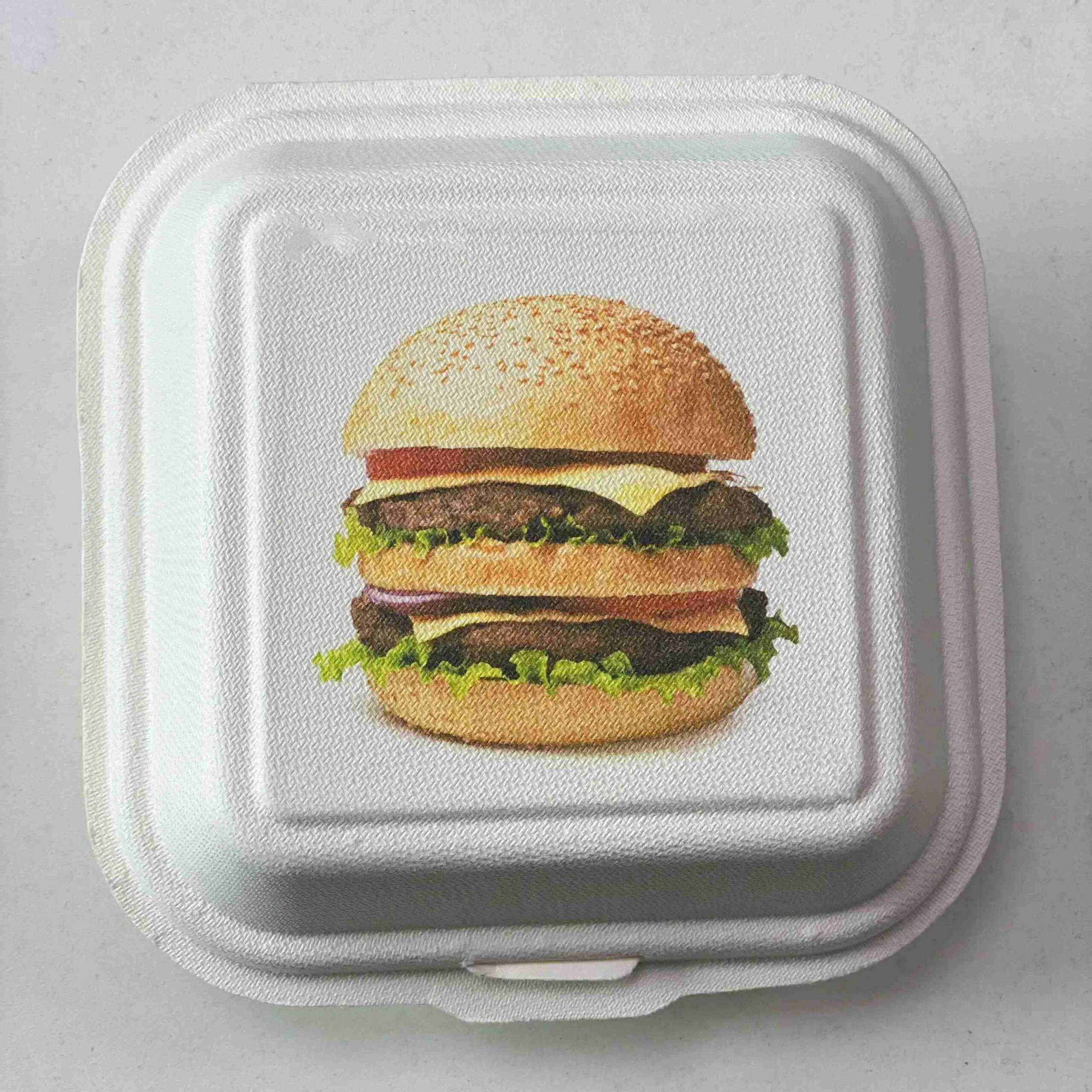
| Takeaway bowls printed with an EU restaurant brand | The brand name or trademark may affect who is considered the manufacturer, particularly where the brand controls design and has packaging made under its own trademark. | Define the responsible manufacturer before artwork approval and documentation preparation. |
| Distributor markets a packaging range under its own private label | The distributor may be treated as the manufacturer under Article 21 where it places packaging on the market under its own name or trademark. | Prepare the conformity assessment and EU Declaration of Conformity under the correct legal entity. |
| Food manufacturer fills and seals a preformed tray | For sales packaging, the operator performing final processing and filling may normally be the manufacturer of the packaging unit. | Combine converter evidence with filling, sealing and final packaged-product information. |
| Importer changes the coating, lid or material structure | A modification that could affect compliance may cause the importer or distributor to assume manufacturer obligations. | Repeat the conformity assessment and update the technical file before market placement. |
| Restaurant buys generic empty cups and fills them at the point of sale | The cups may qualify as service packaging. The original packaging manufacturer may normally remain the manufacturer where the cups are unbranded and supplied in final form. | Confirm the intended-use classification and retain supplier and importer documentation. |
Buyer decision rule: Do not identify the PPWR manufacturer solely by asking who owns the production machine. Review the packaging category, trademark, ordering party, design specifications, final processing, filling operation, modification history and market-placement arrangement.
Who Must Prepare and Sign the PPWR EU Declaration of Conformity?
Article 38 requires the conformity assessment of packaging against the applicable requirements laid down in or pursuant to Articles 5 to 12. The assessment must follow the procedure set out in Annex VII.
Once conformity has been demonstrated, Article 39 requires an EU Declaration of Conformity. The declaration must use the model structure in Annex VIII, contain the required elements and be kept continuously updated.
By drawing up the EU Declaration of Conformity, the manufacturer assumes responsibility for the packaging’s compliance with the PPWR. A consultant, testing laboratory, packaging supplier, converter or importer may help collect evidence or prepare a draft, but the legally responsible manufacturer cannot simply transfer its responsibility to another party through a commercial request.
Importers must verify that the conformity assessment has been carried out and that the manufacturer has prepared the technical documentation. They must keep a copy of the declaration available to market-surveillance authorities and ensure that the technical file can be supplied when requested.
For a wider implementation framework covering regulatory articles, importer workflows, documentation and execution planning, see Bioleader®’s EU PPWR compliance white paper for importers and brands.
What Information Does the PPWR Declaration Include?
| Declaration Field | Practical Food Packaging Information |
|---|---|
| Declaration number | A unique identification number for the declaration. |
| Packaging identification | Product code, packaging type, capacity, dimensions, material structure or other information allowing the packaging to be identified. |
| Manufacturer information | The legal name and address of the manufacturer and, where applicable, its authorised representative. |
| Sole responsibility statement | A statement confirming that the declaration is issued under the manufacturer’s sole responsibility. |
| Object of the declaration | A description that allows traceability to the packaging covered by the declaration. |
| Applicable Union legislation | Regulation (EU) 2025/40 and any other relevant Union legislation covered by the declaration. |
| Standards and specifications | References to applicable harmonised standards, common specifications or other technical specifications used to demonstrate conformity. |
| Third-party involvement | Where applicable, details of a notified body, its intervention and certificates. |
| Additional information | Other information needed to identify the packaging, conformity basis or conditions. |
| Authorised signature | Place and date of issue, signatory name, function and signature on behalf of the manufacturer. |
The declaration should be prepared for an identifiable packaging type rather than issued as a vague factory-wide statement. Where the material, coating, dimensions, supplier, printed design or compliance-relevant specification changes, the manufacturer should assess whether the technical file and declaration need to be updated.
PPWR Declaration of Conformity vs Food-Contact Compliance Documents
A recurring procurement error is to treat every compliance document as interchangeable. A food-contact test report, compostability certificate, supplier declaration or PFAS analysis may support a PPWR technical file, but each document has a different purpose.
| Document | Main Purpose | Typical Supporting Evidence | Does It Replace the PPWR Declaration? |
|---|---|---|---|
| PPWR EU Declaration of Conformity | Demonstrates fulfilment of the applicable requirements laid down in or pursuant to Articles 5 to 12. | Technical documentation, specifications, calculations, testing, traceability and applicable standards. | No. This is the PPWR declaration itself and must be issued under the responsibility of the manufacturer. |
| Food-contact declaration or compliance statement | Supports compliance with applicable EU and national food-contact requirements. | Migration testing, material composition, restricted-substance information and intended-use conditions. | No. It supports the PPWR file but covers a different legal purpose. |
| Compostability certificate | Demonstrates conformity with a specified compostability standard and certification scope. | Biodegradation, disintegration, ecotoxicity and material-characterisation results. | No. Compostability does not prove compliance with every PPWR requirement. |
| PFAS test report | Provides analytical evidence relevant to the PPWR food-contact packaging PFAS limits. | Targeted PFAS analysis, total fluorine, organic fluorine or other suitable analytical evidence. | No. It addresses one important compliance area only. |
| Supplier material declaration | Describes product components and substances supplied to the packaging manufacturer. | Base material, coating, ink, adhesive, additive and supplier specification data. | No. It is an input to the technical documentation. |
| Product performance report | Confirms that the packaging performs for its intended foodservice application. | Leakage, oil resistance, heat exposure, lid fit, stacking and transport testing. | No. Performance evidence does not replace regulatory conformity documentation. |
Documentation principle: A certificate should be checked for the exact product, material, production site, test method, report date, scope and validity. A certificate covering one resin, coating or product family should not automatically be applied to a different SKU.
PFAS Limits for Food-Contact Packaging from 12 August 2026
Article 5(5) establishes specific PFAS concentration limits for food-contact packaging placed on the market from 12 August 2026, to the extent that another Union legal act does not already prohibit the relevant concentration.
| PPWR Threshold | Measurement Basis | Important Qualification |
|---|---|---|
| 25 ppb for any PFAS | Targeted PFAS analysis | Polymeric PFAS are excluded from this quantification. |
| 250 ppb for the sum of PFAS | Sum of targeted PFAS analysis, where applicable with prior degradation of precursors | Polymeric PFAS are excluded from this quantification. |
| 50 ppm for PFAS | PFAS including polymeric PFAS | Where total fluorine exceeds 50 mg/kg, additional evidence may be required to distinguish PFAS and non-PFAS fluorine for the technical documentation. |
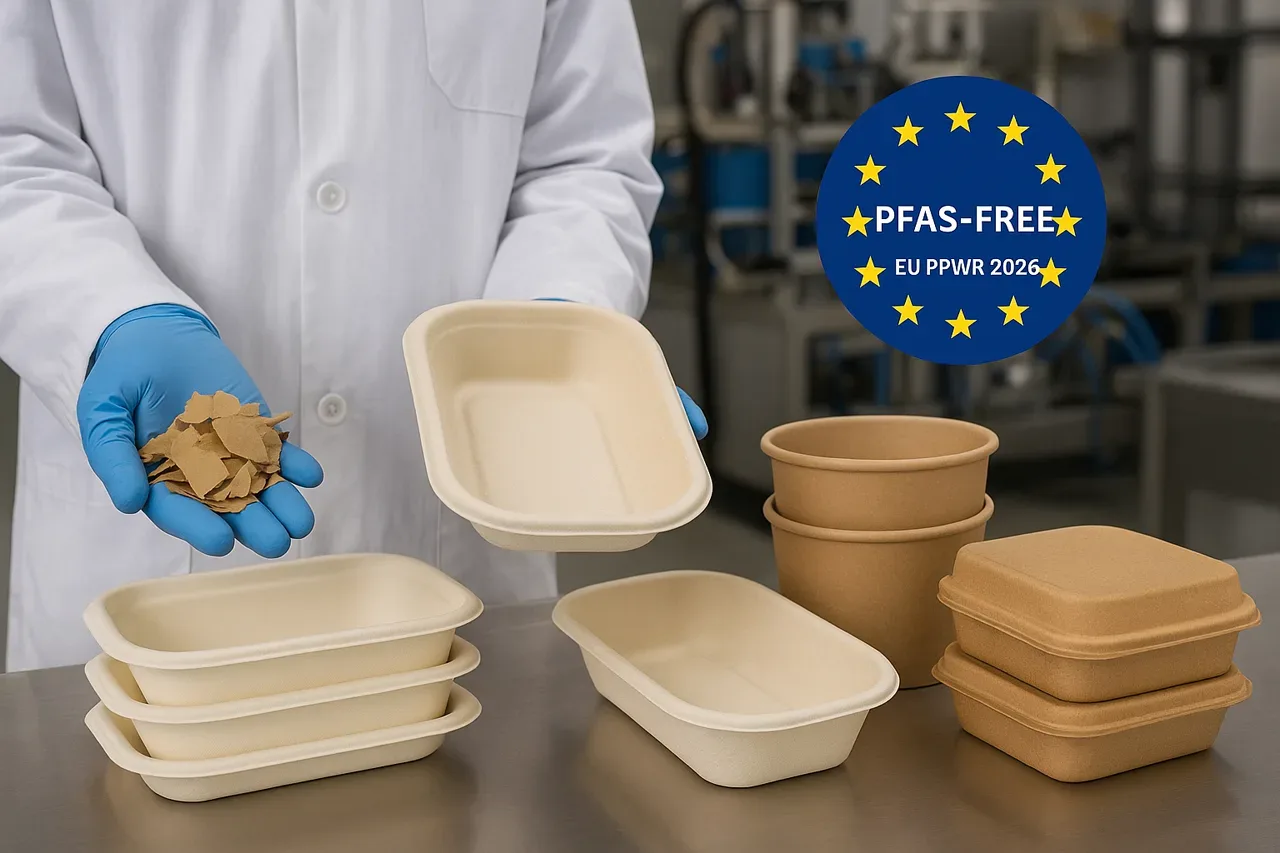
The Regulation does not describe a single harmonised laboratory method for every food-contact packaging matrix. The 2026 Commission guidance therefore recommends a stepwise enforcement approach based on current analytical capability.
- Total Fluorine screening: If total fluorine is below 50 mg/kg, the sample could be considered compliant under the Commission’s recommended approach.
- Organic versus inorganic fluorine assessment: Where total fluorine exceeds 50 mg/kg, methods such as pyrolysis-GC/MS may be used to determine whether the fluorine is organic or inorganic.
- Targeted and precursor analysis: Direct total oxidisable precursor analysis or other suitable methods may be used to assess compliance with the 25 µg/kg and 250 µg/kg targeted thresholds.
This recommended approach is particularly relevant to moulded-fibre containers, paper bowls, grease-resistant wraps, coated paper packaging, printed cups and products that may contain fluorinated processing aids, barrier treatments or fluorine from sources unrelated to intentionally added PFAS.
PFAS evidence must be interpreted, not merely collected. Buyers should verify the sample identity, test method, reporting unit, detection limit, substances analysed, whether polymeric PFAS are covered and whether the report matches the actual production specification.
Can PFAS-Containing Packaging Produced Before August 2026 Still Be Sold?
The Commission guidance provides a direct answer: the PPWR does not establish a general transitional period for exhausting stocks of food-contact packaging merely because that packaging was produced before 12 August 2026.
Food-contact packaging placed on the market after 12 August 2026 must comply with the PPWR PFAS limits. Packaging that was already placed on the market before 12 August 2026 may remain on the market and does not need to be withdrawn solely because of the new restriction.
The following dates should therefore not be treated as automatically equivalent:
- the date the raw material was produced;
- the packaging production date;
- the printing or converting date;
- the purchase-order date;
- the invoice date;
- the export declaration date;
- the shipping date;
- the customs-clearance date;
- the ownership-transfer date;
- the date the packaging was first made available on the Union market.
A factory production record dated before 12 August 2026 is not, by itself, proof that the packaging was placed on the Union market before the deadline.
Businesses holding older moulded-fibre, coated-paper or other food-contact packaging should create an inventory transition file that records product codes, quantities, material structures, PFAS evidence, purchase and transfer records, warehouse location, commercial ownership and the intended market-placement date.
For practical replacement planning, supplier qualification and risk prioritisation, see Bioleader®’s guide on how to transition to PFAS-free tableware before the 2026 packaging deadlines.
PFAS Inventory Transition Check
- Separate stock by SKU, material, coating, production batch and supplier.
- Identify whether each product is food-contact packaging.
- Check whether the product will be placed on the Union market before or after 12 August 2026.
- Do not use production date alone as evidence of market placement.
- Review targeted PFAS, total fluorine and supporting supplier declarations.
- Record transfers of ownership, possession or other property rights.
- Quarantine products where the compliance status or market-placement date is uncertain.
- Replace high-risk grease-resistant and coated formats before the deadline where evidence is insufficient.
What Does “Placed on the Market” Mean for Foodservice Packaging?
The PPWR defines placing on the market as the first making available of packaging, whether empty or containing a product, on the Union market. Making available includes the supply of packaging for distribution, consumption or use in the course of a commercial activity, whether supplied for payment or free of charge.
The Commission guidance links the assessment to an offer or agreement involving the transfer of ownership, possession or another property right once the relevant manufacturing stage has been completed.
The point of market placement may differ according to the packaging format.
Sales and Grouped Food-Contact Packaging
Sales and grouped food-contact packaging are generally placed on the market when filled because the final processing steps, including filling, cutting, closing or sealing, may influence the packaging’s final compliance.
For example, a preformed food tray supplied to a ready-meal producer may not reach its final packaging configuration until it has been filled and sealed. The technical file may therefore need to consider the tray, film, sealing process, packaged food and intended use together.
Transport and Service Packaging
Transport packaging and service packaging are generally placed on the market empty. This distinction is commercially important for takeaway cups, clamshell containers, food bowls, carrier bags and similar products supplied to restaurants or foodservice operators for filling at the point of sale.
However, the precise classification and market-placement date still depend on the intended packaging function and the actual transfer arrangement. Purchase contracts, invoices, delivery records, title-transfer clauses and warehouse status can therefore become relevant evidence.
Scenario 1: Empty Bagasse Clamshells Sold to an EU Distributor
A Chinese factory produces finished empty bagasse clamshells and sells them to an EU importer. If the clamshells are service packaging in final form, they may generally be placed on the market empty. The parties should identify the manufacturer, importer and producer separately and retain evidence of the first making available on the Union market.
Scenario 2: Paper Bowls Filled and Sealed by a Food Brand
A converter supplies unfinished or preformed bowls to an EU food producer, which fills and seals the bowls with its product. If the final processing can affect compliance, the filled packaging may be the relevant unit for assessing manufacturer responsibility and market placement.
Scenario 3: Old PFAS-Treated Moulded-Fibre Stock
A distributor holds fibre containers produced before 12 August 2026. The distributor should not assume that the stock can automatically be sold after the deadline. It must determine whether the packaging was already placed on the Union market before 12 August and retain evidence supporting that conclusion.
Scenario 4: Custom-Printed Cups Imported from China
An EU buyer orders cups printed with its private-label trademark. The parties should assess who had the packaging designed or manufactured under its name or trademark, who controlled the specification, whether the cups are finished service packaging and whether Article 21 causes the importer or distributor to assume manufacturer obligations.
What Does the Guidance Mean for Bagasse, Paper, PLA, CPLA and Cornstarch Packaging?
The 2026 guidance does not declare one packaging material automatically compliant and another automatically non-compliant. Every packaging type must be assessed against its actual structure, intended use, applicable PPWR requirement and end-of-life pathway.
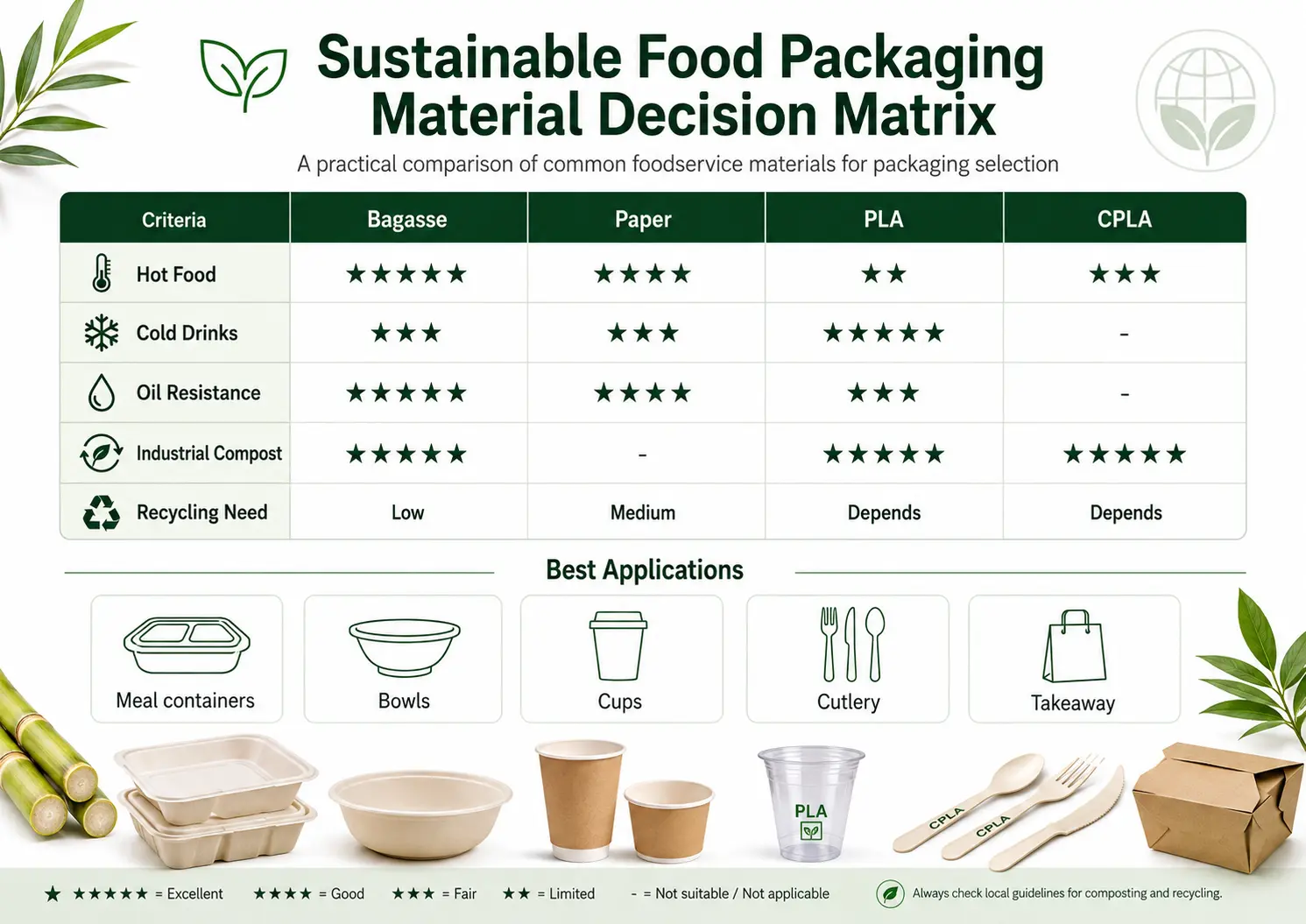
| Packaging Type | Main PPWR Review Points | Recommended Buyer Evidence |
|---|---|---|
| Sugarcane bagasse containers | PFAS, fibre composition, additives, product weight, food-contact use, compostability claims and packaging minimisation. | SKU specification, PFAS evidence, food-contact documentation, applicable compostability certification and performance testing. |
| Paper cups and paper bowls | Paperboard source, polymer or water-based coating, printing ink, adhesives, composite structure and actual recovery pathway. | Material breakdown, coating declaration, migration testing, printing information, lid compatibility and technical drawings. |
| PLA cold cups | Plastic classification, temperature limitation, compostability conditions, collection infrastructure and communication claims. | Resin identification, EN 13432 evidence where applicable, food-contact documentation and clear cold-use instructions. |
| CPLA cutlery | Plastic policy restrictions, material composition, heat performance, compostability conditions and local acceptance. | Material declaration, applicable compostability certificate, food-contact evidence and intended-temperature specification. |
| Cornstarch tableware | Actual resin composition, plastic content, additives, product classification, food-contact performance and disposal claims. | Full material composition rather than a generic “cornstarch” description, plus food-contact and performance evidence. |
| Fibre lids and coated paper lids | Material combination, coating, vent design, lid fit, heat exposure and end-of-life compatibility with the container. | Structure drawing, material declaration, food-contact test, heat test and container-lid compatibility report. |
Bagasse packaging remains an important option for hot meals, takeaway operations, catering and plastic-reduction programmes, but buyers should distinguish material potential from documented compliance. Bioleader®’s 2026 global sugarcane bagasse packaging white paper provides a broader review of fibre performance, manufacturing, applications and purchasing considerations.
Material warning: “Fibre-based,” “biodegradable,” “compostable,” “plant-based” and “plastic-free” are not interchangeable regulatory conclusions. Each claim should be connected to a defined material structure, test standard, use condition and end-of-life pathway.
How Manufacturers Evaluate Sustainable Food Packaging Before Export
Sustainable packaging compliance does not start with certification documents alone.
For manufacturers, product evaluation begins during material selection and continues through production, testing, inspection and export preparation.

| Manufacturing Stage | Key Evaluation Points | Buyer Value |
|---|---|---|
| Material Selection | Evaluate fibre source, resin type, coating system, additives, ink compatibility and intended food application. | Ensures the selected material matches performance requirements and compliance expectations. |
| Mold Design & Product Development | Review dimensions, wall thickness, weight reduction, stacking structure, lid matching and production feasibility. | Improves packaging performance while avoiding unnecessary material usage. |
| Production Testing | Conduct leakage tests, heat resistance checks, oil resistance evaluation, sealing tests and transportation simulations. | Confirms the packaging performs under real foodservice conditions. |
| Food Contact Inspection | Review applicable migration testing, material declarations, PFAS evidence and product-specific compliance documents. | Provides supporting evidence for importer and brand technical files. |
| Export Documentation Preparation | Prepare specifications, packing information, certificates, reports and traceability records. | Helps international buyers organise supplier documentation for market compliance. |
Manufacturer insight:
A sustainable packaging solution is not evaluated only by its material name.
Professional suppliers assess the complete connection between material, product design, manufacturing consistency, food application and documentation readiness.
What Should a PPWR Technical Documentation Pack Contain?
Annex VII requires technical documentation capable of demonstrating conformity. For foodservice packaging, the most effective approach is to build a version-controlled file for each packaging type or clearly defined product family.
The documentation should be connected to the product actually purchased, not assembled as a folder of unrelated factory certificates.
| Documentation Item | Typical Source | Buyer Verification Point |
|---|---|---|
| Product specification | Packaging manufacturer | Confirm product code, dimensions, capacity, unit weight, colour, lid type and packing method. |
| Technical drawing | Packaging manufacturer | Confirm the drawing matches the commercial sample and order specification. |
| Material composition | Manufacturer and material suppliers | Identify base material, polymer content, coating, ink, adhesive, additive and functional barrier. |
| Food-contact evidence | Accredited laboratory and manufacturer | Check the tested material, food simulants, time, temperature and intended use. |
| PFAS analytical evidence | Accredited laboratory | Check sample code, method, reporting unit, detection limit, substances tested and product match. |
| Total Fluorine evidence | Accredited laboratory | Understand whether the result is a screening value and whether further organic-fluorine or targeted analysis is required. |
| Compostability certification | Certification body | Confirm that the certificate covers the exact material, thickness, product or product family. |
| Printing documentation | Manufacturer and ink supplier | Confirm ink type, printed area, food-contact separation, artwork version and migration considerations. |
| Product performance testing | Manufacturer or laboratory | Review leakage, oil resistance, heat exposure, lid fit, stacking, microwave claims and delivery performance. |
| Packaging-minimisation evidence | Manufacturer and brand owner | Document why the selected dimensions, weight and components are necessary for product protection and function. |
| Batch traceability | Manufacturer | Connect products and cartons to a production batch, date, material lot or other traceability record. |
| Change-control record | Manufacturer and buyer | Require notification before changes to material, coating, weight, production site, supplier or test basis. |
| EU Declaration of Conformity | Responsible PPWR manufacturer | Confirm the correct legal entity, packaging identification, legislation, specifications and authorised signature. |
Buyers developing a broader supplier-audit process can use Bioleader®’s PPWR 2026 checklist for foodservice packaging buyers to review PFAS, fibre-based packaging, compostable products and takeaway-packaging documentation.
Technical-file standard: A credible PPWR documentation pack should be SKU-specific, traceable, version-controlled and connected to the material actually supplied. Generic certificates without a clear product connection should be treated as supporting background rather than final proof.
A PPWR Responsibility Decision Tree for Importers and Brands
The following decision process helps buyers organise the legal and technical questions before placing a new foodservice packaging order.
Step 1: Classify the Packaging
- Is it sales packaging?
- Is it grouped packaging?
- Is it transport packaging?
- Is it service packaging intended to be filled at the point of sale?
- Is it sold empty to the final distributor without being intended for filling at the point of sale?
Step 2: Identify the First EU Market Operator
- Who imports the packaging from the third country?
- Which legal entity is established in the European Union?
- Who first supplies the packaging on the Union market?
- When does ownership, possession or another property right transfer?
Step 3: Check the Name and Trademark
- Does the packaging carry the factory brand?
- Does it carry the importer’s or distributor’s private label?
- Does it carry a restaurant or food brand trademark?
- Is the packaging unbranded?
Step 4: Identify Who Controls the Design
- Who selects the material?
- Who determines the coating and barrier?
- Who approves the dimensions and unit weight?
- Who specifies the lid, seal or closure?
- Who controls the printed design and compliance claims?
Step 5: Identify Final Processing
- Is the packaging complete when supplied?
- Will it be cut, filled, sealed or otherwise processed later?
- Could filling or sealing affect conformity?
- Who places the final packaged product on the market?
Step 6: Assign the Economic-Operator Roles
- Identify the PPWR manufacturer.
- Identify the EU importer.
- Identify any distributor.
- Identify the producer responsible for EPR in each relevant Member State.
- Identify suppliers providing technical evidence.
Step 7: Complete the Technical File
- Collect product-specific material and test evidence.
- Complete the Annex VII conformity assessment.
- Prepare the Annex VIII EU Declaration of Conformity.
- Confirm the required language or translations.
- Establish document retention and authority-response procedures.
Step 8: Handle EPR Separately
After conformity responsibility has been assigned, determine the producer in each Member State and complete the relevant EPR registrations, reporting and financial obligations. A valid PPWR technical file does not replace national producer registration, and EPR registration does not replace the PPWR Declaration of Conformity.
Bioleader® Manufacturer Perspective: What a China Packaging Supplier Can Support
From a manufacturer and export-supplier perspective, PPWR preparation should be treated as a shared evidence chain. The packaging manufacturer, raw-material supplier, laboratory, importer, brand owner, distributor and EPR producer each contribute information according to their actual role.
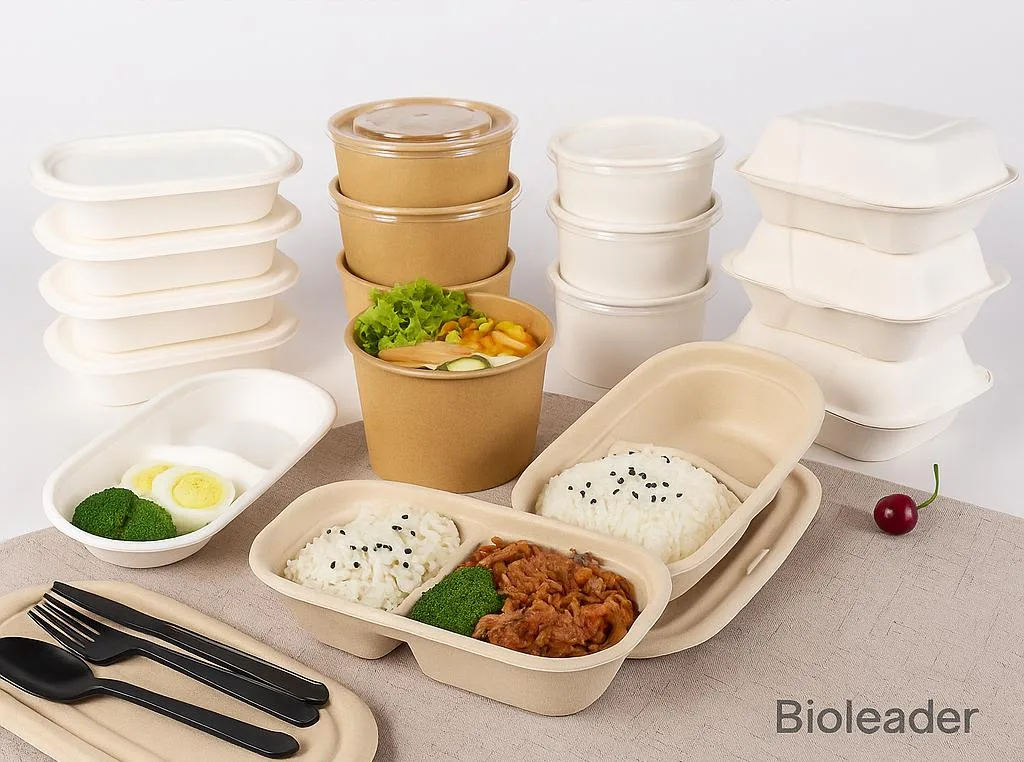
For an identified foodservice packaging project, Bioleader® can support buyers with supplier-side information such as:
- SKU-specific product specifications;
- product dimensions, capacity and unit-weight data;
- material and coating structure information;
- food-contact test reports applicable to the product and intended use;
- PFAS declarations and available analytical evidence for the specified product;
- applicable EN 13432, BPI, OK Compost or other certificates within their verified scope;
- oil resistance, leakage, temperature and food-application testing;
- lid-fit and container compatibility information;
- printing, artwork and private-label production records;
- production-batch and carton traceability information;
- commercial samples for buyer testing;
- export packing and order documentation;
- supplier information required for the buyer’s technical file.
However, a responsible supplier should not make unsupported blanket promises. A China packaging factory cannot automatically:
- assume the PPWR manufacturer role for every EU private-label project;
- replace the importer’s verification responsibilities;
- complete national EPR registrations for every Member State without a separate authorised arrangement;
- guarantee that one generic certificate covers every SKU, coating, size or production batch;
- treat a food-contact report as a complete PPWR Declaration of Conformity;
- claim that compostable packaging is automatically PPWR compliant;
- confirm compliance before the product, intended use, target market and material specification are defined.
Recommended Information for a Bioleader® Compliance Review
To organise a suitable packaging and documentation proposal, buyers should provide the target EU country, product list, food application, hot or cold use, material preference, lid requirement, printing requirement, annual quantity, private-label arrangement and expected market-placement date.
PPWR Approval Gates for New Foodservice Packaging Orders
A packaging order should not move directly from quotation to mass production where the EU compliance role and evidence package remain undefined. The following approval gates can reduce rework, document gaps and obsolete stock.
Gate 1: Legal-Role Confirmation
- Identify the manufacturer, importer, distributor and EPR producer.
- Review private-label and trademark implications.
- Confirm whether the packaging is service, sales, grouped or transport packaging.
Gate 2: SKU and Material Confirmation
- Freeze the product code, capacity, dimensions, unit weight and lid.
- Confirm the base material, coating, printing ink, adhesive and additive structure.
- Record the approved sample and technical drawing version.
Gate 3: Food-Contact and PFAS Review
- Confirm the intended food, contact time and temperature.
- Check that the food-contact evidence matches the actual material.
- Review PFAS and fluorine evidence against the product and method used.
Gate 4: Application Testing
- Test hot, cold, oily, acidic or liquid food as applicable.
- Evaluate leakage, deformation, lid fit, stacking and delivery transport.
- Confirm microwave, refrigeration or heat claims before using them commercially.
Gate 5: Claims and Artwork Review
- Remove unsupported biodegradable, recyclable or compostable claims.
- Confirm whether PFAS wording is supported by declarations and testing.
- Avoid assuming a final PPWR label or QR format before the applicable implementing specifications are confirmed.
Gate 6: Inventory and Deadline Review
- Check estimated production, shipment, arrival and market-placement dates.
- Separate older PFAS-risk inventory from newly compliant stock.
- Retain evidence showing when packaging was first made available on the Union market.
Gate 7: Final Documentation Approval
- Complete the supplier evidence package.
- Complete the manufacturer’s Annex VII technical documentation.
- Issue and sign the Annex VIII EU Declaration of Conformity.
- Establish version control, retention periods and change notification.
Strategic Recommendations for Foodservice Packaging Buyers
The 2026 Commission guidance changes the way buyers should manage packaging projects. Sustainable material selection remains important, but it is only one part of the compliance system.
- Identify the responsible manufacturer before mass production. Do not wait until customs clearance or a customer audit to decide who should prepare the declaration.
- Separate PPWR conformity from EPR responsibility. The same company may perform both roles, but each obligation requires its own analysis and documentation.
- Build documentation around actual SKUs. Match every report and certificate to the approved material, size, coating, product code and production site.
- Do not rely on the manufacturing date for old PFAS stock. Establish whether and when the packaging was placed on the Union market.
- Review custom printing as a compliance decision. A trademark is not merely an artwork issue; it may affect manufacturer status and claim responsibility.
- Include change control in the supply agreement. Material, coating, ink, weight, supplier and site changes can invalidate existing evidence.
- Test packaging under real foodservice conditions. Regulatory documents should be supported by performance evidence for the intended food and service model.
- Avoid single-certificate compliance claims. PPWR readiness requires a connected evidence package, not one compostability, food-contact or PFAS document.
Commercial judgement: The lowest-risk packaging supplier is not simply the supplier offering a fibre-based or compostable product. It is the supplier capable of maintaining consistent specifications, traceable production, product-specific evidence, change control and responsive technical support.
Technical Review
This article has been reviewed by the Bioleader® Packaging Team to ensure technical accuracy from a food packaging manufacturing and export perspective.
Review Focus:
- Food contact compliance requirements
- Compostability standards and certification scope
- Packaging material performance
- Export documentation requirements
- Supplier-side technical documentation practices
Last reviewed: July 2026
Conclusion: PPWR Compliance Is a Documented Responsibility System
The EU’s 2026 PPWR guidance brings greater clarity to questions that directly affect foodservice packaging procurement. It explains that the manufacturer is not always the physical packaging factory, that manufacturer and EPR producer are different roles, and that private-label branding or compliance-relevant modifications can transfer manufacturer obligations to an importer or distributor.
The guidance also confirms that the PPWR does not provide a general stock-exhaustion period for PFAS-containing food-contact packaging manufactured before 12 August 2026. Packaging placed on the market after that date must comply with the applicable PFAS limits, while packaging already placed on the market before the deadline may remain available.
For buyers, the practical response is to move beyond broad environmental claims. Every important packaging SKU should have a defined responsible manufacturer, verified material structure, food-contact evidence, PFAS review, batch traceability, change-control process and technical documentation pathway.
For suppliers, the strategic requirement is equally clear: product quality and price are no longer enough. Export-ready food packaging suppliers must be able to provide reliable technical information that helps importers and brands complete their own legal and commercial responsibilities.
Prepare Your Foodservice Packaging Project for the EU Market
Bioleader® manufactures and supplies sugarcane bagasse tableware, paper food packaging, compostable cups, biodegradable tableware and foodservice packaging for international B2B buyers. Importers, distributors and food brands can submit their target market, SKU list, food application, material requirements, printing design and estimated order volume for product selection, sample evaluation and supplier-side documentation review.
The objective is not to issue a generic compliance promise. The objective is to build a product-specific, traceable and commercially workable packaging supply programme.
Frequently Asked Questions About the EU PPWR 2026 Guidance
Who must sign the PPWR EU Declaration of Conformity?
The PPWR manufacturer is responsible for drawing up the EU Declaration of Conformity and assumes responsibility for the packaging’s compliance. A supplier, consultant, laboratory or authorised representative may assist with defined tasks, but the manufacturer remains responsible for conformity and the declaration. The signatory should be authorised to sign for and on behalf of the manufacturer.
Is the Chinese packaging factory always the PPWR manufacturer?
No. The physical factory may be the manufacturer of finished unbranded service packaging, but the final determination depends on the packaging category, name or trademark, design specifications, ordering party and final processing. An EU importer or distributor placing packaging on the market under its own trademark may be considered the manufacturer and assume Article 15 obligations.
What is the difference between a manufacturer and a producer under the PPWR?
The manufacturer is responsible for packaging conformity, the Annex VII technical documentation and the EU Declaration of Conformity. The producer is the economic operator responsible for extended producer responsibility in a Member State, including registration, reporting and financing packaging waste management. One company may perform both roles, but they are legally different responsibilities.
Can PFAS-containing packaging produced before 12 August 2026 still be sold?
Production before 12 August 2026 does not automatically create a sell-through exemption. The Commission guidance states that food-contact packaging placed on the market after that date must comply with the PPWR PFAS limits. Packaging already placed on the market before the deadline may remain available and does not need to be withdrawn solely because of the new restriction.
Is a supplier PFAS-free declaration sufficient for PPWR compliance?
A supplier declaration may support the technical file, but it should not be accepted without checking the exact SKU, material, production site, reporting basis and available analytical evidence. Buyers should understand whether the evidence includes targeted PFAS, total fluorine, polymeric PFAS and appropriate detection limits. PFAS evidence addresses one part of PPWR compliance rather than the entire Regulation.
Is a food-contact Declaration of Compliance the same as a PPWR Declaration of Conformity?
No. Food-contact documentation supports compliance with applicable food-contact laws and intended-use conditions. The PPWR EU Declaration of Conformity demonstrates fulfilment of applicable PPWR requirements under Articles 5 to 12. Food-contact reports, migration tests and material declarations can support the PPWR technical file, but they do not automatically replace the PPWR declaration.
Are compostable bagasse, PLA or CPLA products automatically PPWR compliant?
No packaging material is automatically PPWR compliant. Bagasse, PLA and CPLA products must still be assessed for material composition, PFAS, food-contact safety, packaging minimisation, claims, labelling, technical documentation and the applicable end-of-life system. Compostability certification is useful evidence within its scope, but it does not prove compliance with every PPWR obligation.
Regulatory References and Standards
This article references official European regulations, European Commission guidance documents and recognised packaging standards. These resources support understanding of PPWR obligations, food-contact requirements, compostability criteria and supplier documentation practices used in sustainable packaging projects.
Regulation (EU) 2025/40 on Packaging and Packaging Waste (PPWR)
: European Union regulation establishing packaging sustainability requirements, conformity obligations, economic operator responsibilities and related packaging waste measures.
Commission Notice C/2026/3084: Guidance Document for Regulation (EU) 2025/40
: European Commission guidance explaining practical interpretation of selected PPWR provisions, including manufacturer responsibilities, importer roles, placing on the market and PFAS-related questions.
European Commission — Packaging Waste and PPWR Information
: Official European Commission updates, implementation information and policy background related to packaging waste legislation.
The Blue Guide on the Implementation of EU Product Rules 2022
: Reference document explaining EU product legislation concepts, economic operators, placing on the market and market surveillance principles.
Regulation (EC) No 1935/2004 on Materials and Articles Intended to Come into Contact with Food
: European framework regulation supporting the assessment of materials and articles intended for food contact applications.- EN 13432 — Requirements for Packaging Recoverable Through Industrial Composting and Biodegradation
: European standard defining requirements for packaging designed to be recovered through industrial composting and biodegradation under controlled conditions. - ASTM D6400 — Standard Specification for Compostable Plastics
: Standard specification covering the labeling of plastics designed to be aerobically composted in municipal or industrial composting facilities. - BPI Certification Program
: North American compostability certification framework for applicable compostable products and materials.
Commission Recommendation 2003/361/EC Concerning the Definition of Micro, Small and Medium-Sized Enterprises
: Reference related to the PPWR micro-enterprise exception and SME classification criteria.
Sustainable Packaging — Packaging Policy News