









Quick Summary: PFAS-Free Tableware Transition Roadmap for 2026
PFAS-free tableware transition is no longer only a sustainability upgrade or a future compliance project. For food brands, distributors, importers, and restaurant chains operating in 2026, it is now a supplier-verification, compliance-documentation, food-performance testing, and procurement-risk management program.
For EU food-contact packaging, the PFAS limits in Regulation (EU) 2025/40 have applied since 12 August 2026. Buyers should therefore identify unresolved high-risk SKUs, verify product-specific PFAS evidence, review imported inventory and market-placement timing where relevant, test real food performance, and replace weak or undocumented packaging routes with technically and commercially defensible alternatives.
Foodservice packaging has entered a new compliance cycle. For years, many paper-based and molded fiber food containers relied on fluorinated chemistry to improve oil and moisture resistance. That model is changing quickly. Regulators, retail buyers, foodservice groups, and sustainability teams are now asking a more practical question: how can a company complete a PFAS-free tableware transition without disrupting supply, performance, cost, or customer experience?
This guide is written for procurement teams, packaging distributors, private-label foodservice brands, restaurant groups, institutional buyers, and importers operating under 2026 packaging requirements and increasingly strict PFAS purchasing expectations. Instead of repeating a basic explanation of PFAS, this article focuses on the actual transition process: what to audit, what to test, which documents to request, which materials to prioritize, and how to build a realistic conversion and verification roadmap.
For companies sourcing compostable foodservice packaging at scale, the transition should begin with a complete review of current food-contact items. Buyers can use Bioleader®’s PFAS-Free compostable tableware page as a category-level starting point, then review product families such as sugarcane bagasse tableware, paper food packaging, and biodegradable and compostable cutlery. Each item should then be matched to its actual food application, barrier requirement, product construction, documentation scope, and destination market.
Expert Position: PFAS-Free Transition Is a Supplier Verification Project, Not Only a Material Change
From a manufacturer and export-supply perspective, the safest PFAS-free tableware transition is not simply replacing one disposable container with another. It requires supplier verification, product-specific documentation, real food performance testing, batch traceability, and claim discipline. A compostable product is not automatically PFAS-free, and a PFAS-free declaration is not enough unless it can be connected to the actual product, formulation, test sample, and intended food-contact use.
Bioleader® recommends that foodservice buyers treat PFAS-free tableware transition as a controlled procurement program. The most reliable sequence is: SKU audit, risk classification, supplier compliance-file review, sample testing, pilot approval, claim update, and repeat-order verification.
For B2B buyers, PFAS-free compliance is no longer only a product claim. It is becoming part of supplier qualification. Packaging should not be approved based on appearance, sustainability language, or catalog wording alone. A natural molded-fiber texture, brown kraft surface, or compostable label does not establish PFAS status.
For buyers that need a deeper explanation of PFAS claims and analytical evidence, Bioleader®’s PFAS-Free Packaging in 2026: What It Means and How to Verify Compliance explains the difference between supplier declarations, Total Fluorine screening, targeted PFAS analysis, and product-specific verification.
Why 2026 Matters: Current Regulatory Baseline for PFAS-Free Food Packaging
PFAS-free tableware has moved from a future transition topic into an active procurement issue. The 2026 compliance cycle is especially important for companies selling into Europe, North America, and global foodservice channels where buyers increasingly expect documentation before product approval.
| Market / Framework | Current Requirement or Direction | Buyer Implication |
|---|---|---|
| European Union — PPWR Regulation (EU) 2025/40 | Article 5(5) PFAS limits for food-contact packaging have applied since 12 August 2026. The limits are 25 ppb for an individual targeted PFAS, 250 ppb for the sum of targeted PFAS, and 50 ppm for PFAS including polymeric PFAS. | EU-facing buyers should now treat PFAS verification as a current product-approval requirement rather than a future deadline-preparation task. |
| European Commission — 2026 PPWR Guidance | The Commission recommends a stepwise enforcement approach beginning with Total Fluorine screening. A sample with Total Fluorine below 50 mg/kg could be considered compliant at the first screening step under the current guidance. | Buyers should distinguish Total Fluorine screening from targeted PFAS analysis and verify exactly which analytical method and detection limit appear in supplier reports. |
| California — AB 1200 | California restricts intentionally added PFAS in plant fiber-based food packaging and applies a fluorine threshold within the applicable statutory framework. | Plant-fiber packaging buyers should not rely only on “natural,” “fiber-based,” or “compostable” claims. |
| Washington State — PFAS in Food Packaging | Manufacturers of affected food-packaging categories must maintain required compliance records under the applicable state framework. | Documentation retention and product-category mapping should be part of supplier qualification. |
2026 EU PPWR Update: What Changed After 12 August
For food-contact packaging placed on the EU market, the transition deadline has passed. Article 5(5) now establishes three distinct PFAS concentration limits:
- 25 ppb for any individual PFAS measured by targeted PFAS analysis, with polymeric PFAS excluded from this targeted quantification.
- 250 ppb for the sum of targeted PFAS, where applicable after degradation of precursors, with polymeric PFAS excluded from this targeted quantification.
- 50 ppm for PFAS including polymeric PFAS.
The European Commission’s 2026 guidance also recommends a stepwise enforcement approach. Total Fluorine can be used as an initial screening measurement. Where Total Fluorine is below 50 mg/kg, the sample could be considered compliant at the first screening step. Where the result exceeds that level, further work may be required to distinguish fluorine sources and assess the targeted-PFAS requirements.
The Commission guidance also clarifies an important transition issue: there is no special PPWR stock-exhaustion period allowing food-contact packaging containing PFAS to continue being placed on the EU market after 12 August 2026 simply because it was manufactured earlier. Packaging already placed on the EU market before the application date may remain on the market, but new placement after that date must meet the applicable requirements.
For imported packaging or packaged products, importers should pay particular attention to the point at which goods are released for free circulation. Manufacturing date alone should not be used as proof that imported stock qualifies as pre-application inventory.
Buyers that need a deeper regulatory implementation framework can review the EU PPWR Compliance White Paper. Procurement teams looking for a shorter operational workflow can use the PPWR 2026 Foodservice Packaging Checklist, while the EU PPWR 2026 Guidance for Foodservice Packaging provides further explanation of manufacturer, importer, PFAS, stock, and documentation responsibilities.
This regulatory baseline changes how foodservice buyers should make purchasing decisions. The question is no longer “Can we find a compostable container?” The stronger question is: Can the supplier connect the product’s PFAS evidence, food-contact suitability, material structure, real-use performance, and repeat-order control into one defensible approval file?
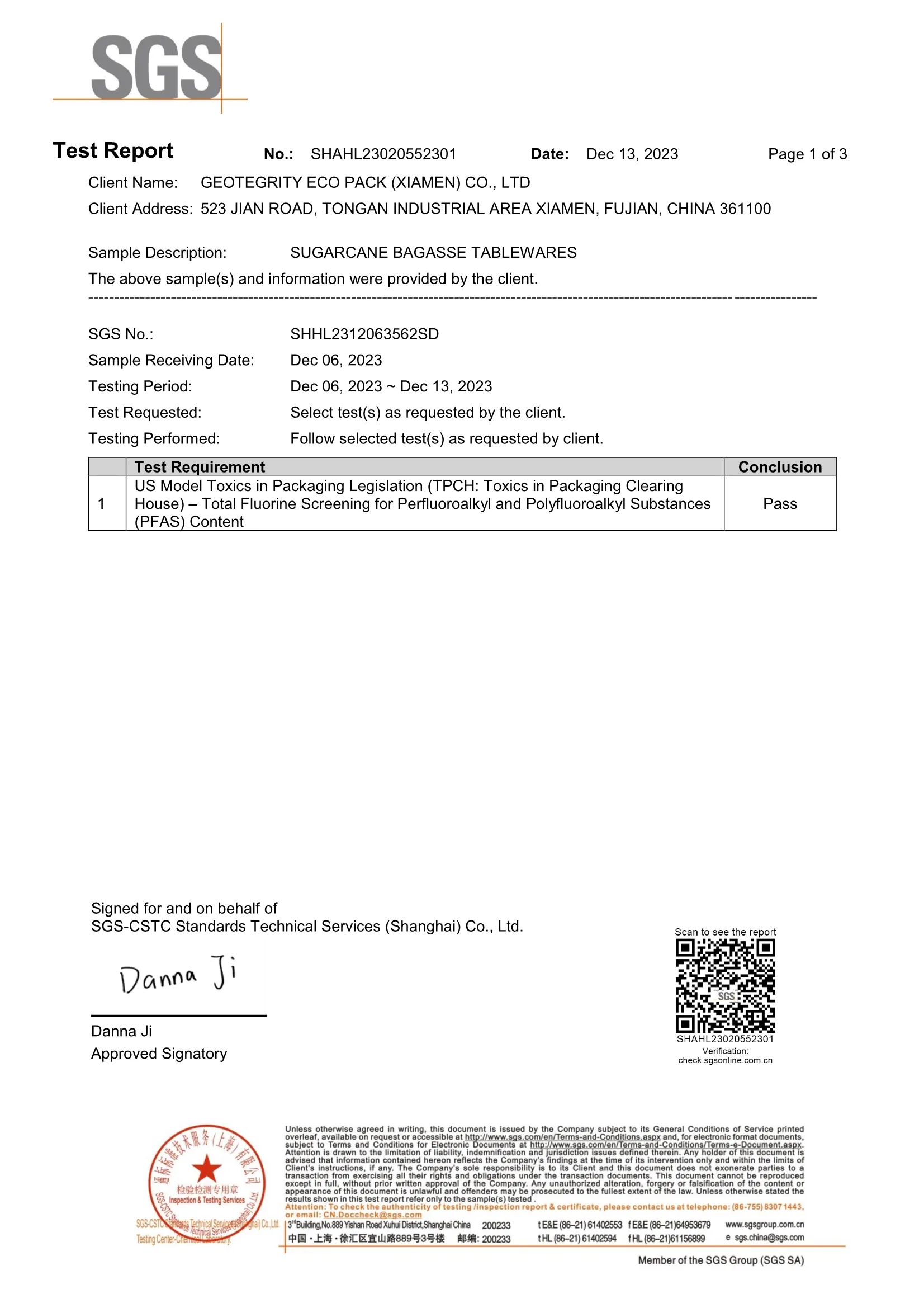
Step 1: Audit Your Current Food-Contact Tableware Portfolio
The first step is not choosing a new product. The first step is understanding what you already use. Many food brands underestimate the number of food-contact SKUs in their system. A typical takeaway operation may use clamshell boxes, meal trays, paper bowls, soup containers, salad bowls, lids, sleeves, wraps, paper bags, labels, and cutlery sets. Each item can carry a different material risk, food-contact exposure, barrier requirement, and documentation requirement.
A structured audit should classify each product by material, food application, heat exposure, oil exposure, supplier, claim language, and target market. For example, a dry bakery tray has a different risk profile from a fried chicken clamshell. A salad bowl for chilled vegetables has a different performance requirement from a hot curry bowl. A paper soup container requires a different verification process from a molded-fiber tray.
| Audit Item | What Buyers Should Check | Why It Matters |
|---|---|---|
| Product Type | Plates, bowls, trays, clamshells, cups, lids, cutlery, wrappers | Different product formats face different food-contact, packaging, and barrier demands. |
| Material | Bagasse, kraft paper, white paperboard, PLA, CPLA, cornstarch, PP, PET | Material identity affects compliance, performance, end-of-life claims, and supplier documentation. |
| Food Exposure | Hot oil, soup, sauce, steam, acidic food, chilled food, dry food | PFAS-free alternatives must be tested against actual menu conditions. |
| Current Claims | Compostable, biodegradable, PFAS-free, plastic-free, recyclable, eco-friendly | Claims must match product structure and available evidence. |
| Documentation | PFAS declaration, laboratory report, food-contact report, compostability certificate, material specification | Missing documents can create import, retail, distributor, and customer-verification risks. |
| Destination Market | EU, USA, Canada, UK, Australia, Japan, Middle East, local market | Compliance expectations differ by jurisdiction, product type, and buyer. |
For most foodservice companies, the highest-priority audit items are molded-fiber products used for hot, oily, wet, or long-hold takeaway food. This includes bagasse clamshell boxes, multi-compartment meal containers, hot food trays, and bowls used for saucy meals.
The highest-risk PFAS transition items are not always the largest-volume items. They are often the items exposed to the highest combination of oil, water, heat, steam, and holding time.
Step 2: Classify Products by PFAS Transition Risk
After the SKU audit, buyers should rank products by transition risk. This does not mean every item is unsafe or problematic. It means some product categories deserve earlier review because they combine food-contact exposure, regulatory sensitivity, and performance pressure.
| Risk Level | Product Example | Why It Matters | Transition Priority |
|---|---|---|---|
| High | Clamshells for fried food, burgers, noodles, curry, rice meals | High oil, heat, steam, and delivery time create strong barrier demand. | Immediate verification |
| High | Hot soup bowls and saucy meal containers | Liquid, heat, and condensation increase leakage and softening risk. | Immediate verification |
| Medium | Plates and trays for hot meals | Moderate grease exposure and customer-facing presentation matter. | Short-term conversion or confirmation |
| Medium | Bakery trays and dessert containers | Butter, oil, and moisture exposure vary by product type. | Application-based testing |
| Lower | Dry cold-food trays or lower-contact accessories | Lower barrier stress, but claims and documentation may still require review. | Planned verification |
This risk-based method helps procurement teams avoid two common mistakes. The first is replacing every item at once without testing. The second is focusing only on the most visible products while ignoring lids, paper containers, accessories, coatings, and other parts of the foodservice system.
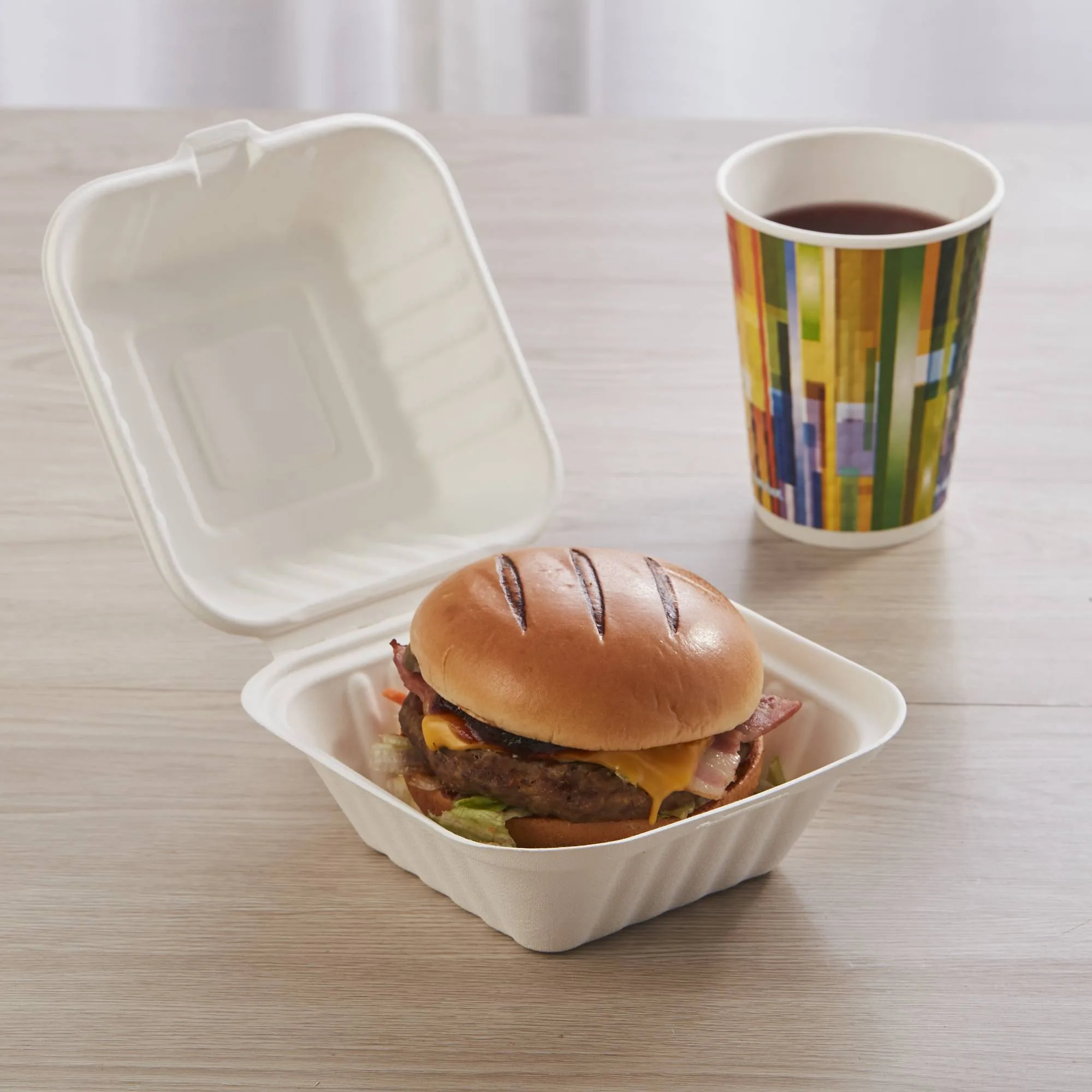
Step 3: Choose PFAS-Free Replacement Materials by Application
There is no single PFAS-free tableware material that fits every food application. The right choice depends on menu type, service format, temperature, holding time, lid compatibility, barrier requirements, market regulations, and local disposal infrastructure. A strong transition plan usually combines several material categories into one foodservice packaging system.
PFAS-Free Sugarcane Bagasse Tableware for Hot Meals and Takeaway
Sugarcane bagasse tableware is one of the most important replacement categories for food brands moving away from foam, conventional plastic, and older molded-fiber grease-resistant packaging. It is suitable for many foodservice applications, including meal boxes, plates, trays, bowls, and clamshells.
For buyers serving hot or oily food, however, the key question is not only whether a product has a PFAS-free claim. Buyers should verify whether the specific barrier system can maintain structure, grease resistance, and customer experience under the intended service conditions.
Procurement teams should evaluate bagasse products by food type. Fried food, rice meals, burgers, pasta, curry, grilled meat, and saucy menus require stronger performance review than dry bakery or cold food uses. Product format also matters. A shallow tray, deep bowl, multi-compartment container, and hinged clamshell do not behave identically under steam, stacking pressure, and extended holding time.
For buyers replacing foam or plastic takeaway boxes, bagasse food containers can provide a practical transition route when paired with an appropriate lid option, application test, packing configuration, and compliance file. For meal-prep, catering, airline food, and ready-meal applications, bagasse trays with lids should be validated for stacking, sealing, transport, and actual food-contact conditions.
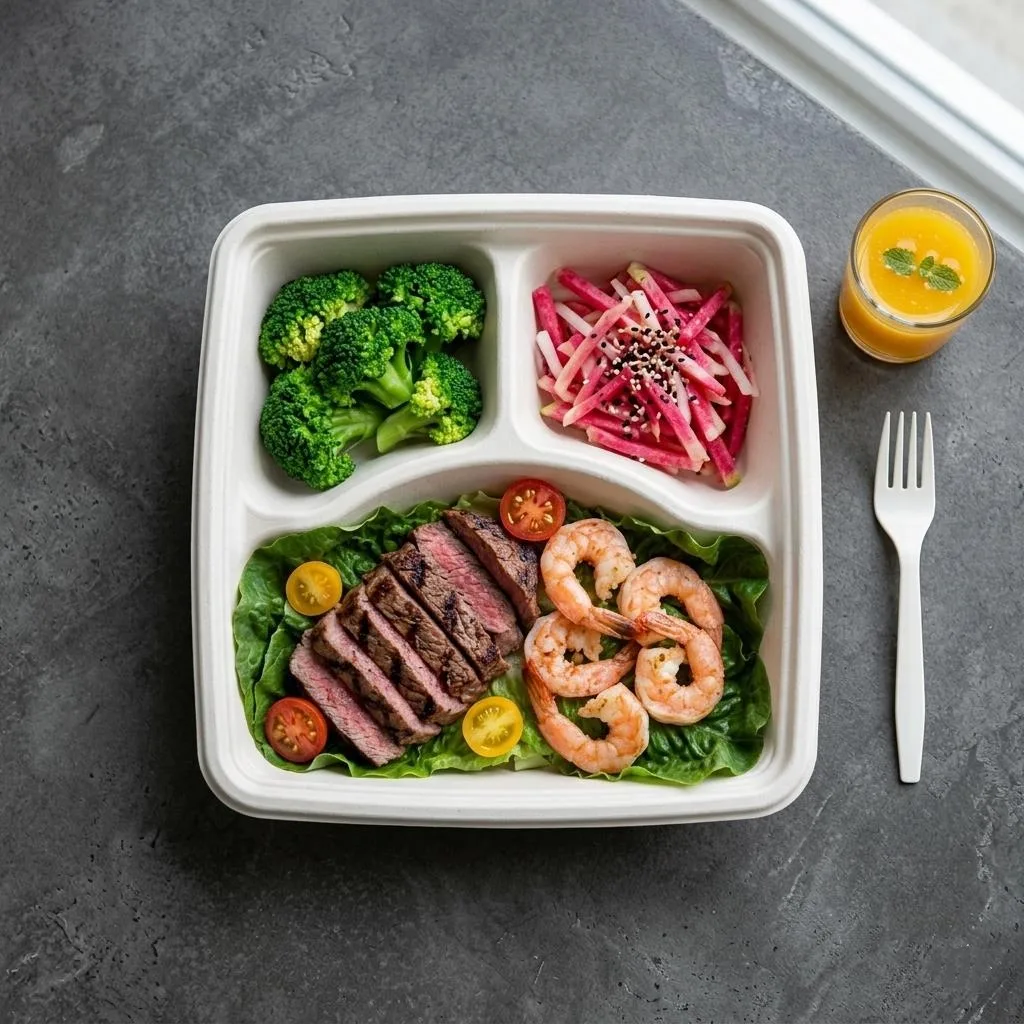
Paper Soup Bowls and Salad Bowls for Liquid or Chilled Applications
Paper-based food packaging remains important for soups, salads, noodles, snacks, and prepared meals. However, buyers should understand the coating or barrier system clearly. Terms such as “eco coating,” “water-based,” “biodegradable coating,” or “compostable lining” should not be accepted as proof of PFAS status, recyclability, compostability, or plastic-free construction without reviewing the actual material structure and available evidence.
Hot soup, stew, noodles, and saucy food should be tested in actual use. Buyers can compare paper soup bowls by lid fit, heat retention, leakage resistance, coating stability, and customer handling. For cold foods, salads, fruit, poke bowls, and meal-prep programs, paper salad bowls should be reviewed for moisture resistance, lid compatibility, stacking, branding requirements, and delivery presentation.

Review Cutlery and Accessories as a Separate Foodservice Workstream
PFAS-related barrier questions are most relevant to food-contact packaging structures that use grease- or moisture-resistance systems. Cutlery, wrappers, napkins, sleeves, bags, and other accessories can have different material, certification, and regulatory requirements.
Food brands should still review these accessories as part of the complete dining system, but they should not assume that one PFAS declaration or test report covering a molded-fiber container automatically covers CPLA utensils, cornstarch cutlery, wrappers, paper bags, or other components.
For takeaway meals, catering, events, schools, airline meals, and meal kits, buyers comparing utensils can review Bioleader®’s biodegradable and compostable cutlery options. Material type, heat-performance requirements, packing format, individual wrapping, compostability evidence, and destination-market acceptance should be reviewed independently.
Evidence Hierarchy: What Counts as Strong Proof for PFAS-Free Tableware?
Not all PFAS-related evidence carries the same weight. Buyers should classify supplier documents by evidence strength before approving a product or supplier.
| Evidence Level | Document Type | Trust Strength | Buyer Recommendation |
|---|---|---|---|
| Level 1 | Marketing claim such as “eco-friendly,” “green,” or “natural” | Weak | Do not use as approval evidence. |
| Level 2 | General supplier PFAS declaration | Basic | Use only as a starting document and verify its scope. |
| Level 3 | Product-specific PFAS or no-intentionally-added-PFAS declaration | Moderate | Check product identity, formulation scope, date, signature, and intended use. |
| Level 4 | Third-party laboratory report linked to the tested product or material | Strong | Review test method, sample identity, detection or reporting limit, date, laboratory, and analytical result. |
| Level 5 | Product-specific compliance file combining relevant declarations, laboratory evidence, food-contact documentation, material specification, certification scope where applicable, and traceability | Very Strong | Use this level for importers, distributors, chain restaurants, institutional buyers, and compliance-sensitive markets. |
The safest supplier is not the one that says “PFAS-free” fastest. It is the one that can connect the claim to the actual product, analytical evidence, formulation controls, supporting food-contact documentation, and repeat-production quality management.
Buyers can review Bioleader®’s available certificates and test reports and the PFAS-Free compostable tableware sourcing page before requesting product-specific documentation for a selected item.
Step 4: Build a Supplier Compliance File Before Approval
A reliable PFAS-free transition depends on evidence. A supplier statement is a starting point, not the full approval basis. Buyers should request an appropriate compliance file for each selected product or product family. The file should connect claim language, product construction, analytical evidence, food-contact documentation, certification where applicable, sample identity, and intended use.
| Document | Purpose | Buyer Review Point |
|---|---|---|
| PFAS / No-Intentionally-Added-PFAS Declaration | Documents the supplier’s formulation or intentional-use statement. | Check whether the declaration is product-specific, dated, signed, and linked to the relevant material or formulation. |
| Third-Party PFAS or Fluorine Test Report | Provides analytical evidence relevant to the claim or applicable compliance framework. | Check sample identity, analytical method, detection or reporting limit, test date, laboratory, and result. |
| Food Contact Safety Documentation | Supports food-contact suitability for the relevant market and product construction. | Check material scope, intended food type, temperature conditions where applicable, and destination-market relevance. |
| Compostability Certificate | Supports compostable claims under recognized standards where applicable. | Check finished-product scope, certification holder, product code, validity, and industrial or home composting context. |
| Material Specification Sheet | Clarifies pulp, coating, additive, lining, or bioplastic identity. | Confirm that vague marketing terms are replaced by identifiable material information. |
| Batch or Production Traceability | Connects production lots, dates, formulations, and quality records where relevant. | Check whether repeat orders can be managed under controlled material and product specifications. |
Documentation is especially important for distributors and importers. These companies often sell to restaurants, supermarkets, institutions, and regional wholesalers that may request evidence after products have entered a commercial supply program. A weak document package can delay buyer approval even when product performance appears acceptable.
For EU projects, importers can also use Bioleader®’s PPWR Declaration of Conformity guide and template to understand how product identity, technical documentation, conformity responsibilities, and supplier evidence connect under the PPWR framework.
Manufacturer Insight: What Bioleader Checks Before Recommending PFAS-Free Tableware
As a manufacturer of compostable foodservice packaging, Bioleader® evaluates PFAS-free molded-fiber tableware from four practical angles: material and barrier formulation, forming stability, real food-contact performance, and available export documentation.
For molded-fiber products, the challenge is not only avoiding intentionally added PFAS. The finished product must still provide suitable grease resistance, moisture resistance, heat performance, lid compatibility, stacking strength, and repeatable batch quality for its intended application.
In real procurement projects, one of the most common approval problems is a gap between the product claim and the buyer’s food application. A container may perform well with dry food yet perform differently with hot oil, curry, soup, sauce, or long delivery conditions. Bioleader® therefore recommends application-level validation rather than relying on a certificate or catalog claim alone.
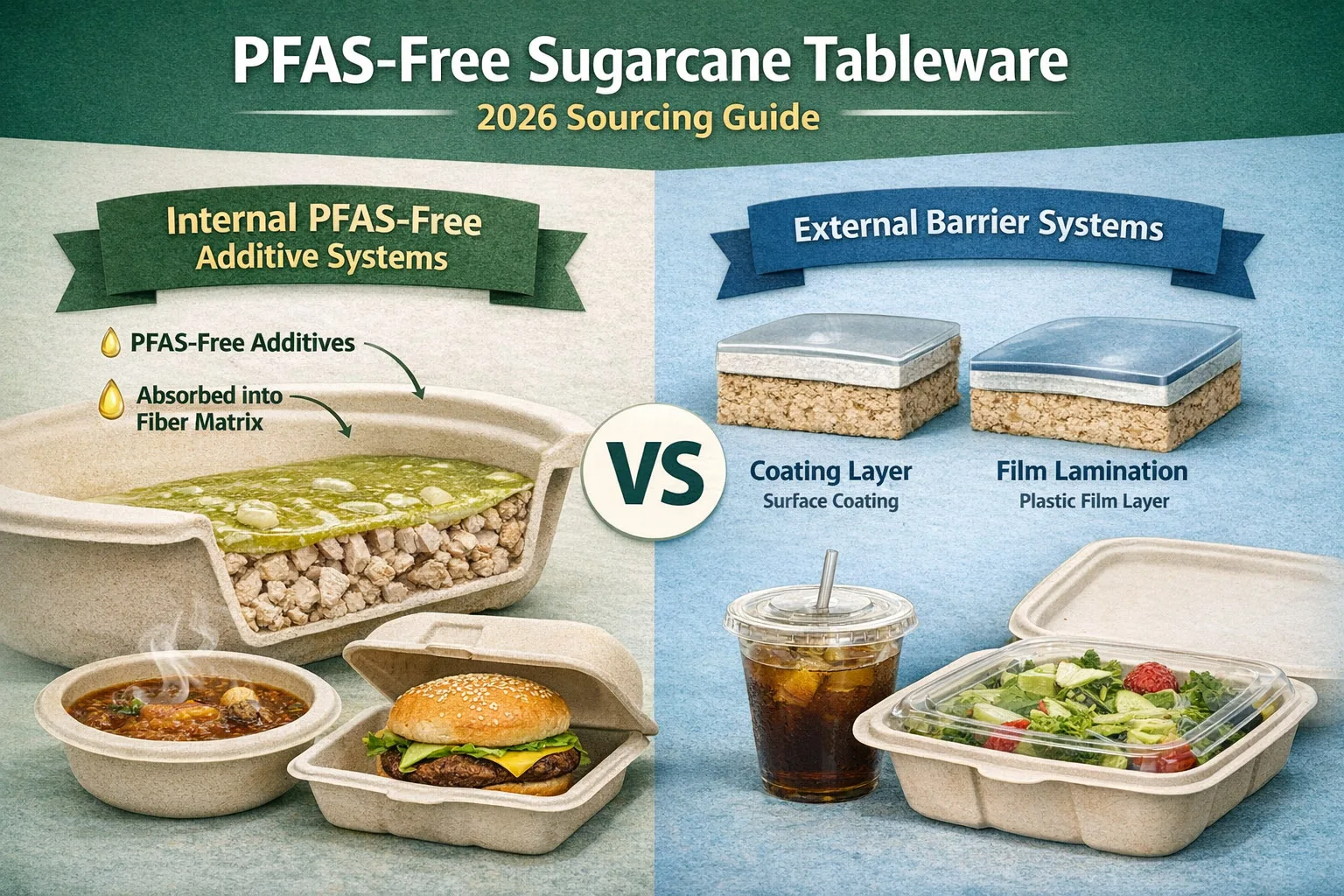
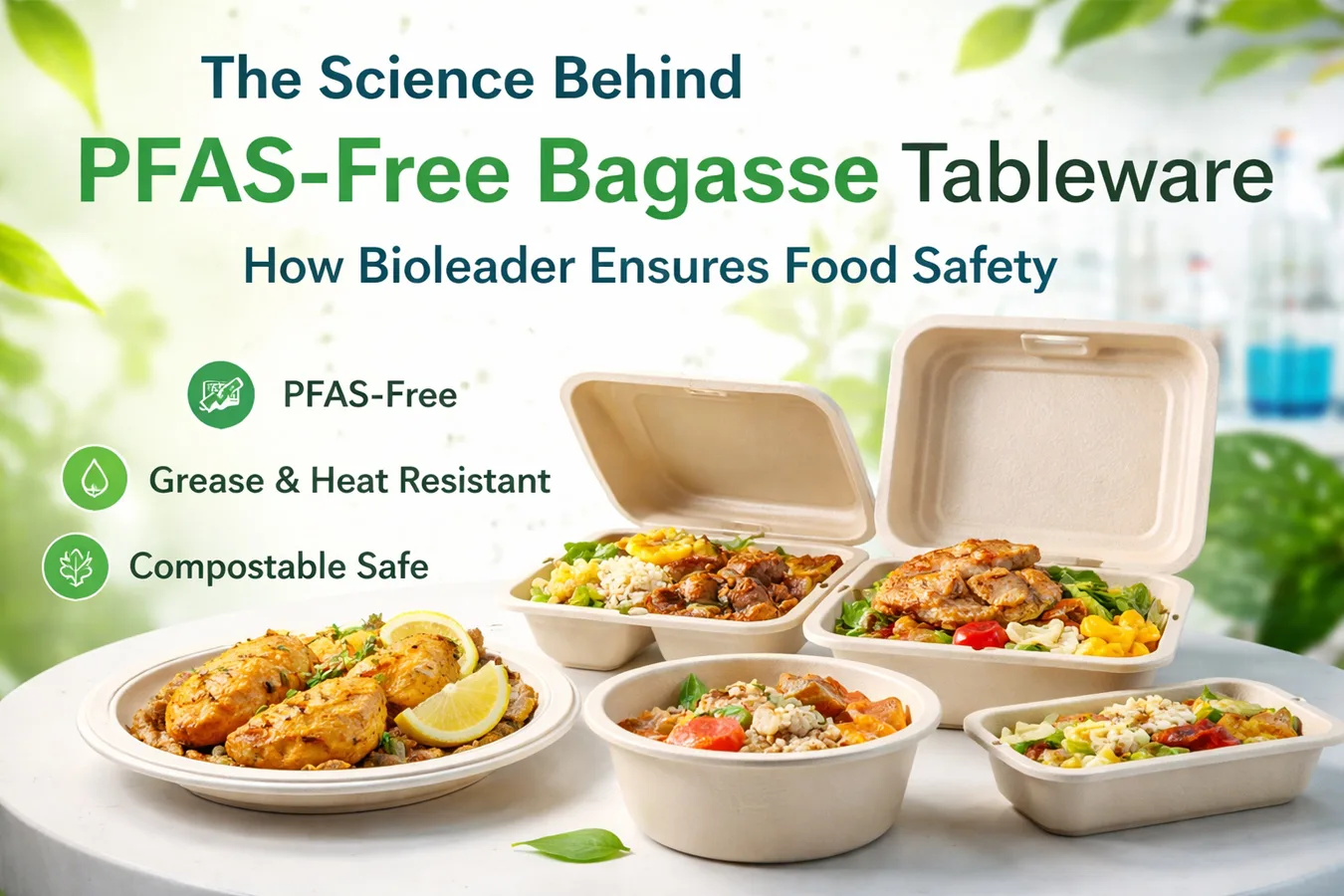
Bioleader®’s technical article The Science Behind PFAS-Free Bagasse Tableware explains key food-safety and performance considerations. For buyers comparing barrier technologies, PFAS-Free Sugarcane Tableware: Internal Additives vs Barrier Systems provides a deeper sourcing comparison of internal grease-resistance systems, coatings, and laminated structures.
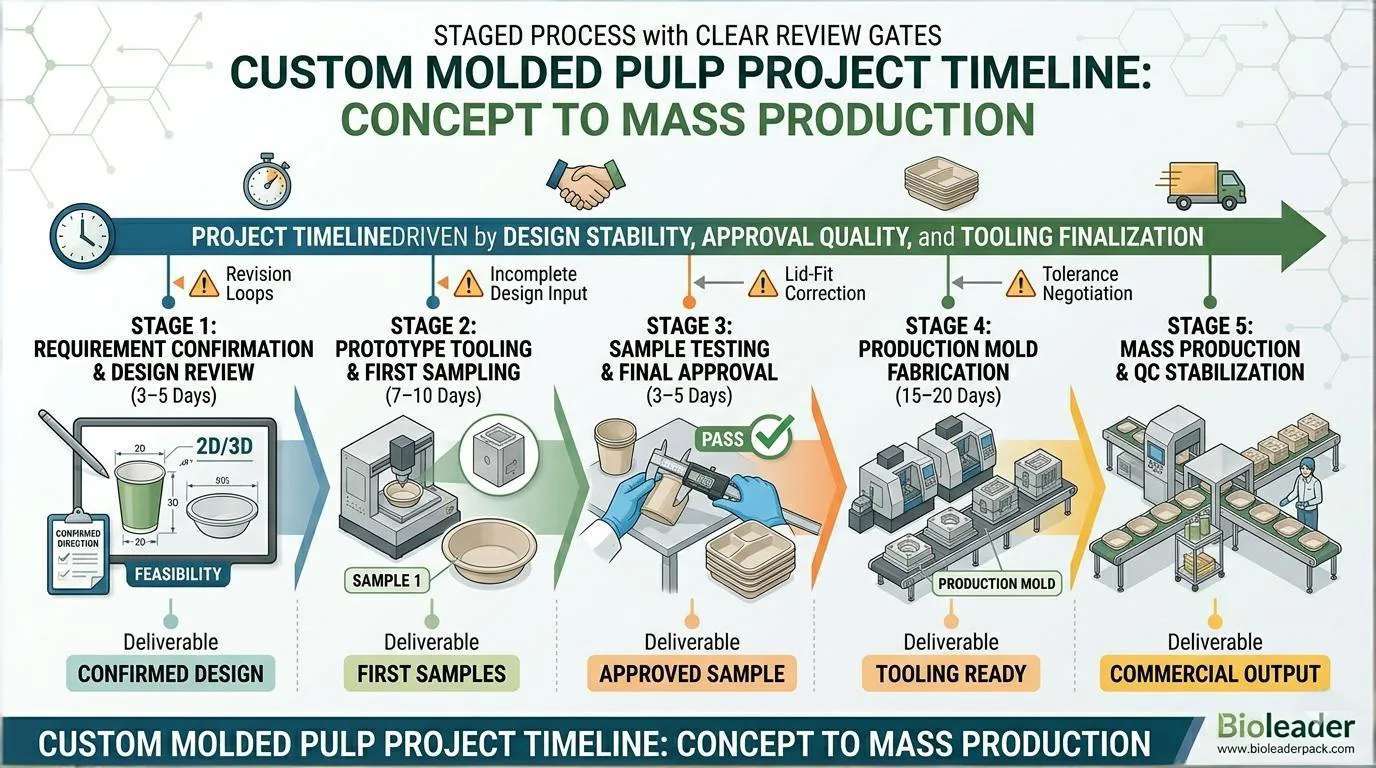
Step 5: Test Real Food Performance Before Full Conversion
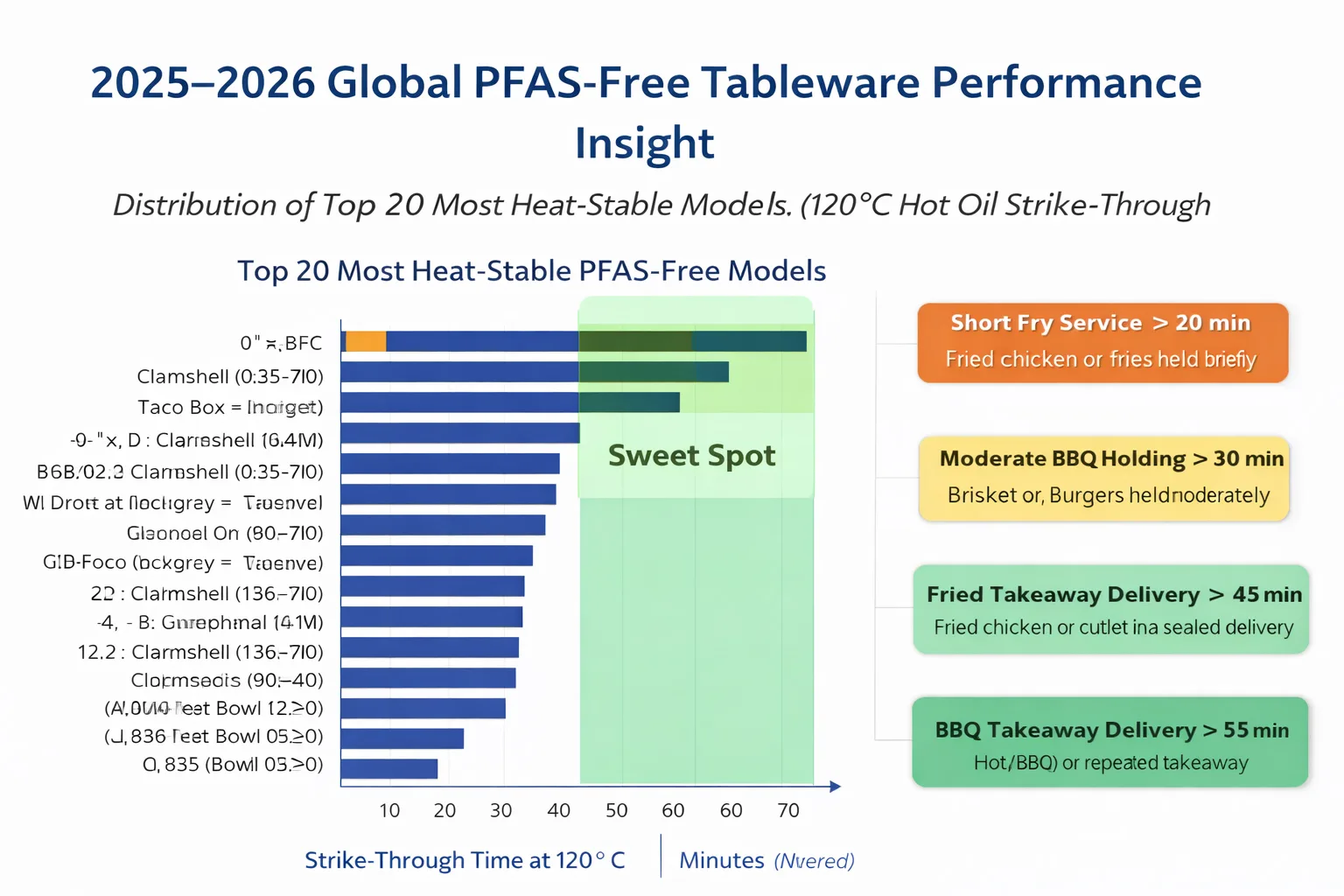
PFAS-free tableware should never be approved by certificate alone. Compliance documentation answers defined regulatory, analytical, or certification questions. It does not automatically prove that a product will work for fried chicken, hot curry, noodle soup, burger combinations, salad delivery, or airline meal trays.
Procurement approval should therefore include application testing.
| Test Area | Recommended Test Approach | What to Observe | Approval Decision |
|---|---|---|---|
| Hot Oil Resistance | Test fried food, oily rice, curry, grilled meat, or another representative high-fat menu item under realistic holding conditions. | Oil spotting, seepage, structural softening, odor, backside staining. | Reject or reclassify the product if performance does not meet the intended use condition. |
| Water and Steam Resistance | Use hot soup, noodles, steamed vegetables, or saucy meals with the intended lid configuration. | Condensation, lid fit, bottom softening, deformation, leakage. | Approve only if packaging remains suitable for the intended service period. |
| Stacking Strength | Stack filled containers under conditions representative of delivery bags, holding shelves, or cartons. | Lid collapse, edge deformation, leakage, food presentation. | Reject if stacking materially compromises product or food integrity. |
| Delivery Simulation | Move filled packaging through representative handling and transport conditions. | Spillage, lid movement, moisture accumulation, deformation. | Approve after realistic delivery validation. |
| Customer Experience | Open and use packaging as an end customer would. | Touch feel, appearance, smell, convenience, opening and closing experience. | Approve only if technical performance and customer experience are both acceptable. |
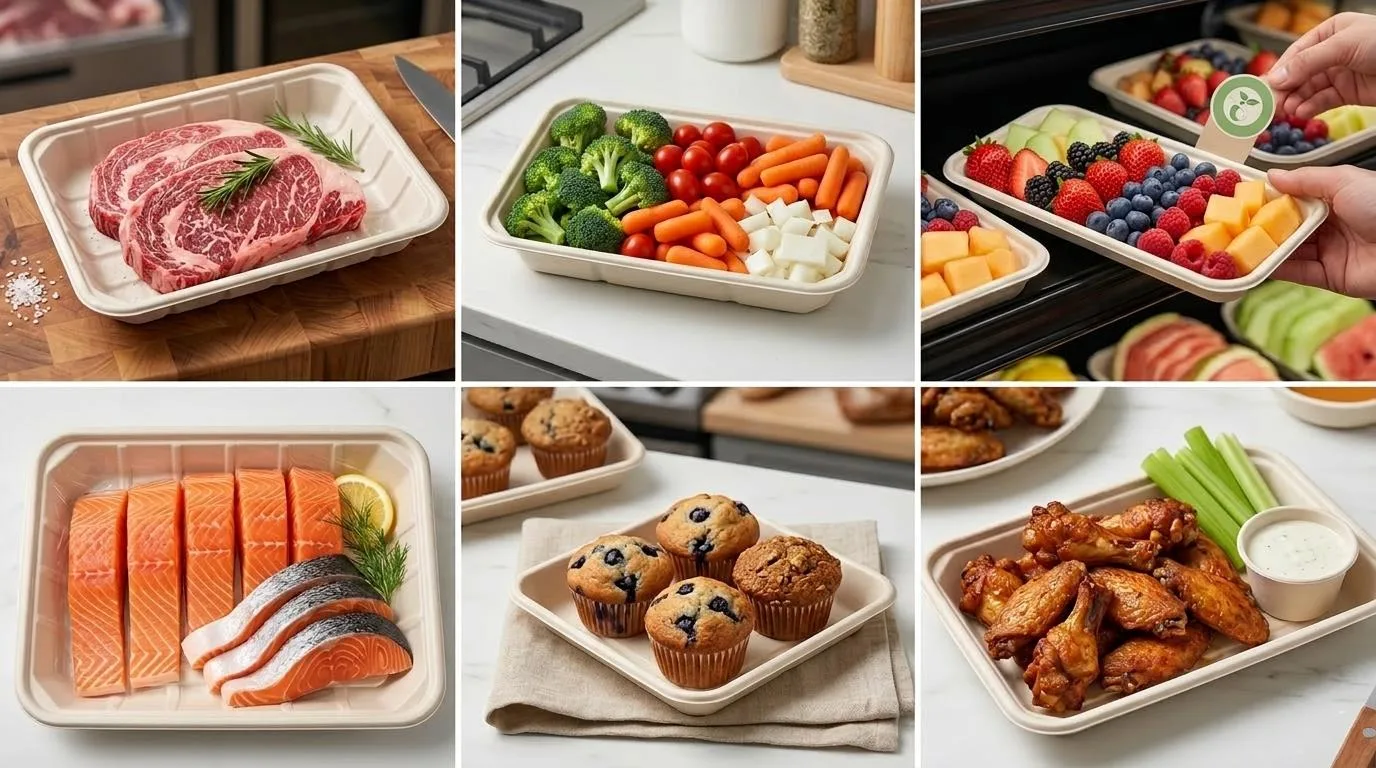
A PFAS-free transition should be approved by evidence and intended-use validation, not by appearance. Natural color, molded-fiber texture, and compostable labeling do not prove PFAS status or suitability for every food application.
Step 6: Build a 90-Day PFAS-Free Tableware Transition and Verification Plan
A controlled transition does not need to take a year, but it should not be improvised in one week. For buyers that still have unresolved SKUs after the 2026 regulatory change, a 90-day program can be used to audit, verify, test, approve, and replace products without creating unnecessary operational disruption.
| Timeline | Buyer Action | Expected Output |
|---|---|---|
| Day 1–15 | Audit current tableware and packaging SKUs, current inventory, supplier evidence, and destination-market exposure. | Packaging portfolio map with unresolved and high-risk items identified. |
| Day 16–30 | Request supplier declarations, laboratory reports, certificates, material specifications, and relevant technical documents. | Supplier compliance file for shortlisted or existing products. |
| Day 31–45 | Test samples with real menu applications and delivery conditions. | Performance scorecard by food type and product format. |
| Day 46–60 | Confirm replacement or retained SKUs, lid options, carton packing, printing, commercial terms, and documentation scope. | Approved product list and sourcing basis. |
| Day 61–75 | Place pilot production or controlled commercial orders for priority products where replacement is required. | Validated launch stock and supply-continuity plan. |
| Day 76–90 | Update customer documentation, website claims, purchasing files, approval records, and internal sales or QA guidance. | Current PFAS-free sourcing and compliance package. |
This plan helps buyers move from unresolved sustainability claims to measurable procurement execution. It also reduces the chance of approving products that look acceptable at sample stage but fail under commercial conditions.
For larger brands, each product family should have a responsible owner: procurement for commercial terms and supply continuity, QA for testing and evidence, operations for usability, and marketing or regulatory teams for claim language.
Illustrative Buyer Scenario: Replacing Conventional Molded Fiber Meal Boxes
Consider a typical EU-facing foodservice distributor reviewing its molded-fiber portfolio after the 12 August 2026 PPWR application date. The distributor may start with its highest-risk formats: hinged meal boxes, compartment trays, and hot food bowls used for fried meals, rice dishes, saucy foods, and delivery applications.
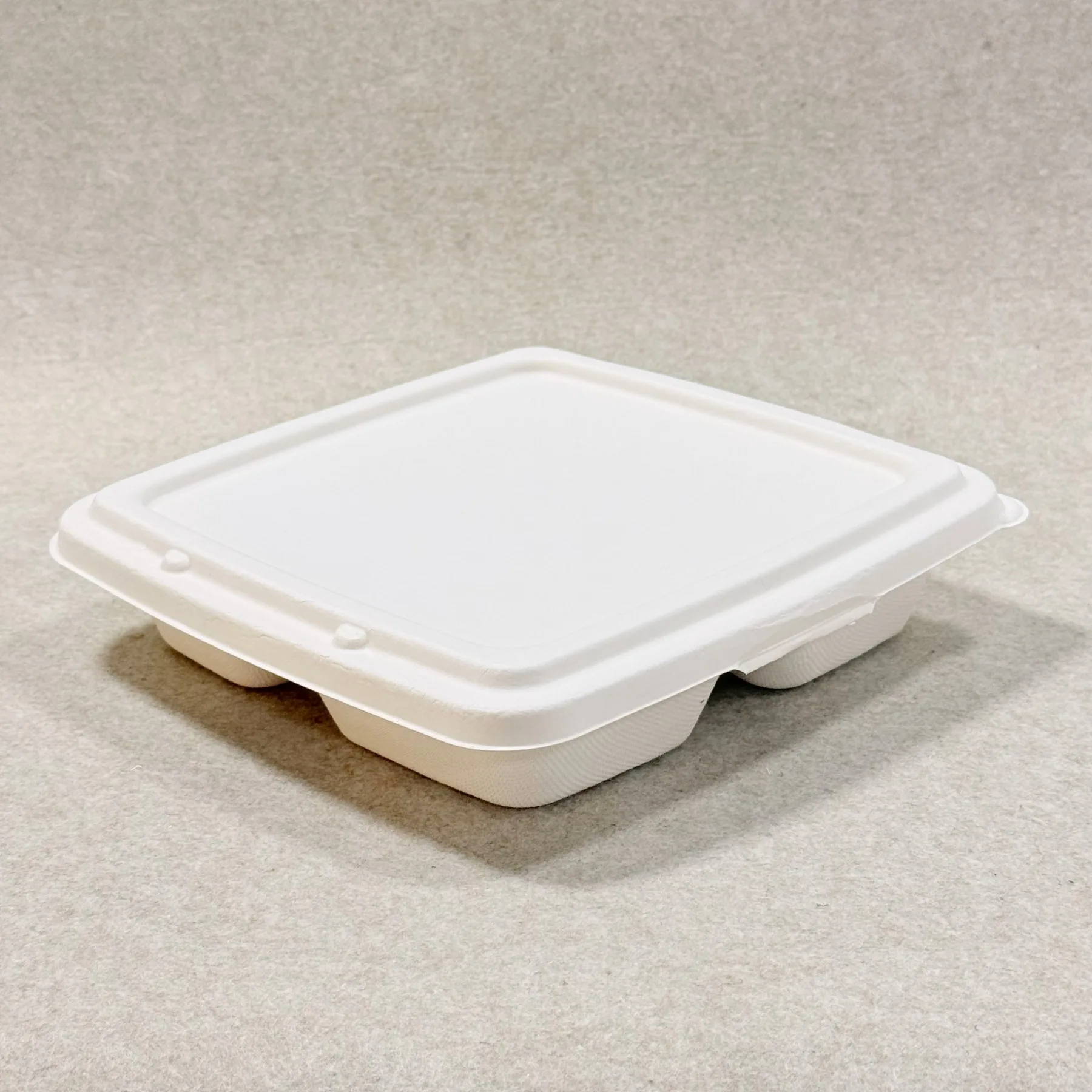
Instead of replacing the entire catalog automatically, the buyer can first compare existing supplier evidence with alternative PFAS-free bagasse constructions and then validate the shortlisted products under real food conditions.
The approval process should include three checks: document review, real food testing, and commercial feasibility. If a product has supporting food-contact documentation but fails with the intended hot oily meal, it should not be approved for that application. If it performs well but the supplier cannot maintain stable specifications, packing requirements, and repeat-order documentation, it can still create supply risk.
This is why PFAS-free transition should be evaluated as both a compliance project and a supply-chain project. Buyers reviewing commercial molded-fiber alternatives can use the Bioleader® PFAS-Free compostable tableware page to compare relevant product families before requesting specifications, evidence, and samples.
Step 7: Update Packaging Claims and Customer Documents Carefully
The transition to PFAS-free tableware also requires claim discipline. Broad claims such as “eco-friendly,” “green,” “non-toxic,” or “chemical-free” can create unnecessary risk when their meaning is unclear or unsupported.
A better approach is to use precise wording that matches the actual evidence available for the selected product. Depending on the documentation, appropriate language may refer to no intentionally added PFAS, a specified analytical result, a named third-party report, or the availability of product-specific supporting documentation.
Buyers should avoid treating different claim types as interchangeable. For example:
- A no-intentionally-added-PFAS declaration addresses formulation intent but is not the same as a laboratory measurement.
- A Total Fluorine result is a screening result and is not equivalent to targeted PFAS analysis.
- A compostability certificate does not automatically establish PFAS compliance.
- A water-based coating does not automatically prove PFAS-free, plastic-free, recyclable, or compostable status.
Product pages, catalogs, quotations, retail listings, and distributor documents should use consistent language. If a laboratory report applies to a tested white bagasse box, the claim should not automatically be copied to unrelated bowls, paper products, lids, cutlery, different formulations, or future production batches without appropriate supporting evidence.
Common Mistakes When Switching to PFAS-Free Tableware
Many companies understand the direction of PFAS-free packaging but still make execution mistakes. The most common problems are caused by weak supplier verification, incomplete application testing, unclear document scope, or overly broad claim language.
- Mistake 1: Treating “compostable” as automatically PFAS-free. Compostability and PFAS status are different questions and require different evidence.
- Mistake 2: Accepting supplier declarations without product-specific support. A general company statement is not enough for compliance-sensitive food-contact packaging.
- Mistake 3: Testing only dry food. Hot oil, sauce, soup, steam, and extended holding time often create the real barrier challenge.
- Mistake 4: Ignoring lids, coatings, and accessories. A complete foodservice packaging system can contain several different materials and evidence requirements.
- Mistake 5: Assuming the 2026 deadline ended the transition project. For EU food-contact packaging, the relevant PPWR PFAS requirements are already applicable. Unverified SKUs, old declarations, imported inventory, formulation changes, and weak supplier evidence are current compliance issues rather than future transition tasks.
- Mistake 6: Using vague environmental claims. Specific, evidence-based wording is safer and more useful to buyers than unsupported terms such as “green,” “chemical-free,” or “100% eco-friendly.”
How Bioleader® Supports PFAS-Free Tableware Transition
Bioleader® supports foodservice buyers, distributors, and private-label packaging brands with product options across sugarcane bagasse containers, clamshells, trays, bowls, plates, paper food packaging, paper soup and salad bowls, compostable cutlery, and related foodservice packaging categories.
For buyers completing a PFAS-free transition in 2026, the sourcing requirement is not simply to locate a product carrying an environmental claim. The selected product should be matched to the intended food application and supported by available documentation appropriate to the SKU and destination market.
Depending on the selected product, Bioleader® can provide or coordinate available product specifications, relevant test reports, certificate information, packing data, sample evaluation, and commercial sourcing details for buyer review.
The PFAS-Free compostable tableware page provides a commercial entry point for buyers comparing molded-fiber tableware categories. Buyers requiring product-specific documentation can also review Bioleader®’s certificates and test reports or contact Bioleader® with the required product, application, quantity, destination market, and documentation requirements.
Final Buyer Checklist Before Placing a PFAS-Free Tableware Order
Before approving a PFAS-free tableware order, procurement teams should complete a final checklist. This step helps avoid gaps between environmental claims, compliance requirements, and actual product performance.
- Have all relevant food-contact packaging and tableware SKUs been identified?
- Have hot, oily, wet, and long-hold applications been prioritized?
- Has the destination-market requirement been identified for each high-risk SKU?
- Does each PFAS-related declaration clearly identify its product or formulation scope?
- Is relevant third-party testing available where required or requested?
- Has the buyer checked the analytical method, detection or reporting limit, sample description, date, and laboratory?
- Are food-contact documents relevant to the selected product construction and intended market?
- Is the material specification clear and free from vague coating terminology?
- Has the product been tested with representative menu items and service conditions?
- Are lids, coatings, cutlery, wrappers, and accessories reviewed separately where necessary?
- For EU imports, has the buyer reviewed whether inventory was already placed on the market before 12 August 2026 or will be released for free circulation after the application date?
- Are packaging claims specific, qualified, and supported by the available evidence?
- Can the supplier support repeat production, controlled specifications, packing requirements, and current documentation?
The strongest PFAS-free transition is not simply the fastest product replacement. It is the one that connects product performance, supplier evidence, regulatory requirements, and operational continuity.
For EU-facing importers and brands, the transition should now be treated as a current compliance and supplier-control process rather than preparation for a future deadline.
About This Guide
This guide is prepared from the perspective of a biodegradable food packaging manufacturer and exporter serving foodservice buyers, distributors, and private-label packaging brands. It combines regulatory tracking, supplier-document review, molded-fiber production experience, and practical foodservice application logic.
Evidence scope: This article focuses on PFAS-free tableware transition planning, supplier verification, product testing, and procurement execution. It does not replace product-specific conformity assessment, accredited laboratory analysis, local regulatory review, or professional legal advice. Buyers should verify the requirements that apply to the selected product, intended use, economic-operator role, and destination market.
FAQ: PFAS-Free Tableware Transition in 2026
What does PFAS-free tableware mean for foodservice buyers?
For procurement purposes, PFAS-free should not be treated as one universal laboratory definition. Buyers should review whether the selected product is made without intentionally added PFAS and what analytical or product-specific evidence supports the claim. The evidence should be linked to the actual product, formulation, intended use, and applicable market requirements.
Is compostable tableware automatically PFAS-free?
No. Compostability and PFAS status are separate claims. Compostability certification evaluates defined biodegradation and disintegration requirements, while PFAS verification addresses fluorinated substances through declarations, analytical testing, or applicable regulatory criteria. Buyers should verify both claims separately where both are required.
Which products should be checked first during a PFAS-free transition?
Buyers should prioritize high-risk food-contact packaging such as molded-fiber clamshells, hot meal containers, soup bowls, trays, and other formats used for oily, wet, hot, or long-delivery foods. Products with unclear barrier chemistry or weak supplier documentation should also receive early review.
What documents should a PFAS-free tableware supplier provide?
The appropriate evidence package may include a product-specific no-intentionally-added-PFAS declaration, relevant laboratory reports, food-contact documentation, material specifications, compostability certificates where applicable, and traceability or change-control information. The exact documentation should depend on the product and destination market.
Can PFAS-free bagasse containers hold hot oily food?
PFAS-free bagasse containers can be designed for many hot and oily food applications, but performance depends on the barrier system, product structure, food temperature, grease load, holding time, lid configuration, and manufacturing consistency. Buyers should validate the selected SKU under intended-use conditions before commercial approval.
How long should a PFAS-free tableware transition take?
A structured first-stage transition or remediation program can be organized over approximately 90 days for many sourcing projects, covering SKU audit, supplier-document review, sample testing, product approval, and claim updates. Larger chains, multi-market programs, and compliance-sensitive projects may require a longer validation cycle.
How do buyers verify whether a supplier’s PFAS-free claim is reliable?
Buyers should review the exact product or sample covered by the declaration or report, the analytical method, detection or reporting limit, test date, laboratory, material construction, and any relevant formulation or batch information. A general marketing statement is not sufficient for a compliance-sensitive sourcing decision.
Do the EU PPWR PFAS limits already apply in 2026?
Yes. The Article 5(5) PFAS limits for food-contact packaging have applied since 12 August 2026. They include 25 ppb for any individual targeted PFAS, 250 ppb for the sum of targeted PFAS, and 50 ppm for PFAS including polymeric PFAS. The European Commission’s 2026 guidance recommends a stepwise enforcement approach beginning with Total Fluorine screening.
Can food-contact packaging produced before 12 August 2026 still be imported into the EU without meeting the new PFAS limits?
Manufacturing date alone does not determine whether imported packaging is treated as pre-application stock. The Commission’s 2026 guidance states that packaging already placed on the EU market before 12 August 2026 may remain on the market, but food-contact packaging placed on the market after that date must comply with the applicable PFAS requirements. For imported goods, release for free circulation at the end of the customs procedure is relevant to the market-placement timing.
Suggested Related Reading
- PFAS-Free Packaging in 2026: What It Means and How to Verify Compliance
- PFAS-Free Sugarcane Tableware: Internal Additives vs Barrier Systems
- PPWR 2026 Foodservice Packaging Checklist
- EU PPWR 2026 Guidance for Foodservice Packaging
- EU PPWR Compliance White Paper for Importers and Brands
- PPWR Declaration of Conformity for Foodservice Packaging
References
- Regulation (EU) 2025/40 — Packaging and Packaging Waste Regulation.
- European Commission Notice C/2026/3084 — Guidance Document for Regulation (EU) 2025/40.
- European Commission — 2026 FAQ on the Packaging and Packaging Waste Regulation.
- California Department of Toxic Substances Control — Food Packaging Containing PFAS.
- Washington State Department of Ecology — PFAS in Food Packaging.
- OECD — PFAS and Alternatives in Food Packaging: Paper and Paperboard.
- Bioleader® published product specifications, available third-party test reports, and product-specific compliance documentation where applicable.