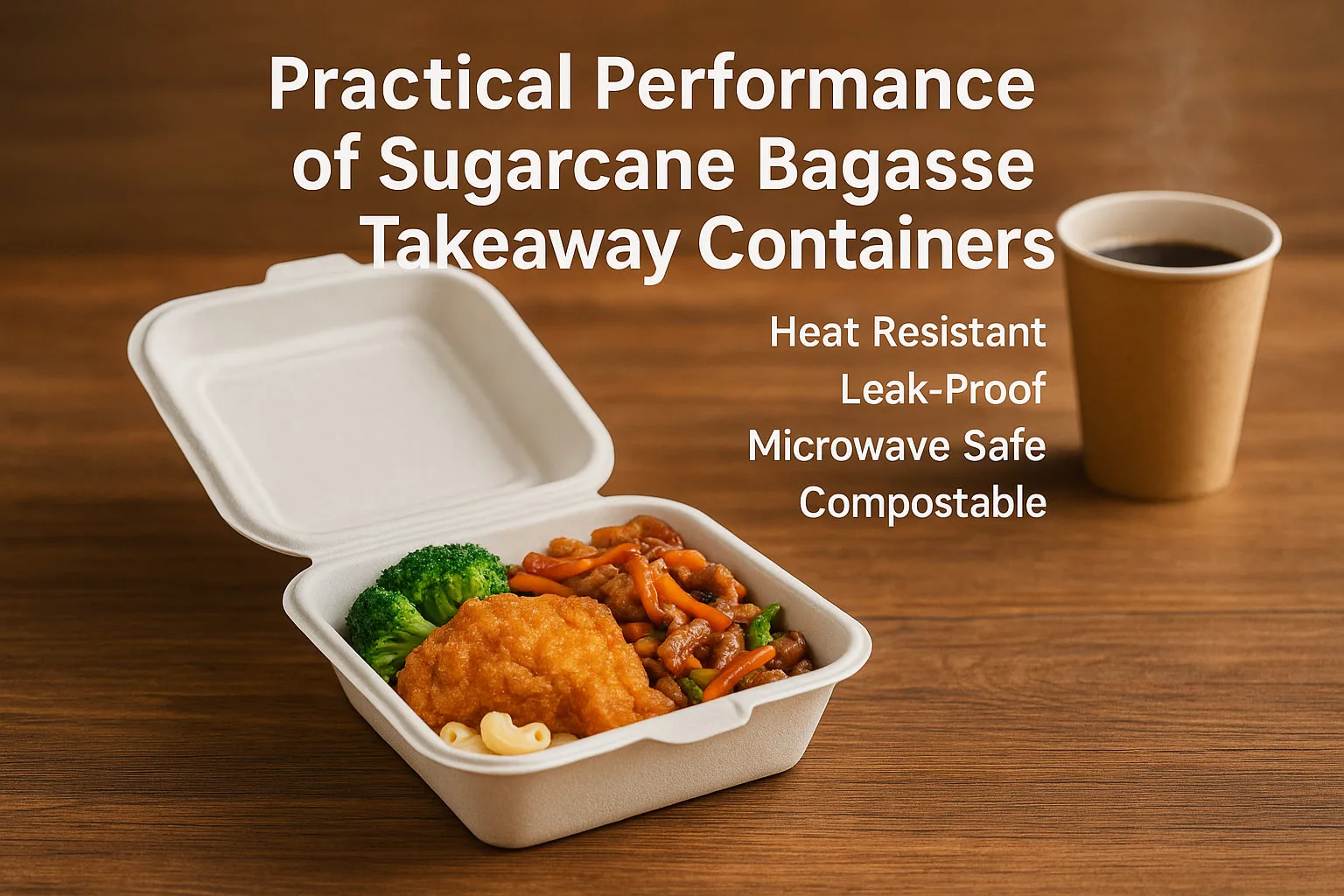
Quick Summary: What Should Buyers Ask Before Purchasing PFAS-Free Food Packaging?
PFAS-free food packaging should not be approved from a supplier claim, green logo, compostability certificate or raw-material statement alone. Professional buyers should verify the exact finished product, the meaning of the PFAS claim, available third-party test evidence, material and barrier composition, destination-market limits, food-contact documentation, real-food performance and production traceability.
The core procurement question is no longer simply “Is this PFAS-free?” It is: “What exactly does PFAS-free mean for this SKU, what evidence supports it, and will the same product remain compliant and functional in our target market and food application?”
PFAS-free food packaging has moved from a specialist sustainability topic into a mainstream procurement and compliance issue for foodservice brands, importers, distributors, supermarkets and restaurant chains.
Commercial market research published in August 2026 now treats PFAS-free food packaging as a standalone packaging market, covering paper and paperboard, molded fiber and pulp, bioplastics and advanced barrier technologies. The exact market-size estimates from commercial reports should be treated cautiously, but the broader signal is important: PFAS-free performance is becoming a competitive technology category rather than a simple environmental claim.
At the same time, regulations have become substantially more specific. The European Union now applies numerical PFAS limits to food-contact packaging under the Packaging and Packaging Waste Regulation, while the U.S. FDA has removed the remaining effective authorizations for PFAS-containing grease-proofing substances used on paper and paperboard food packaging.
For buyers, this changes supplier qualification. A statement such as “eco-friendly,” “compostable,” “fluorine-free” or even “PFAS-free” is no longer enough by itself.
This guide focuses specifically on the questions professional buyers should ask before approving PFAS-free food packaging. For a deeper explanation of PFAS definitions, analytical methods, supply-chain verification and compliance logic, see Bioleader®’s broader pillar guide: PFAS-Free Packaging: What It Really Means and How to Verify Compliance.
Buyer qualification formula: PFAS-free sourcing = claim definition + finished-product evidence + material transparency + destination-market compliance + food-contact documentation + real-use performance + batch traceability.
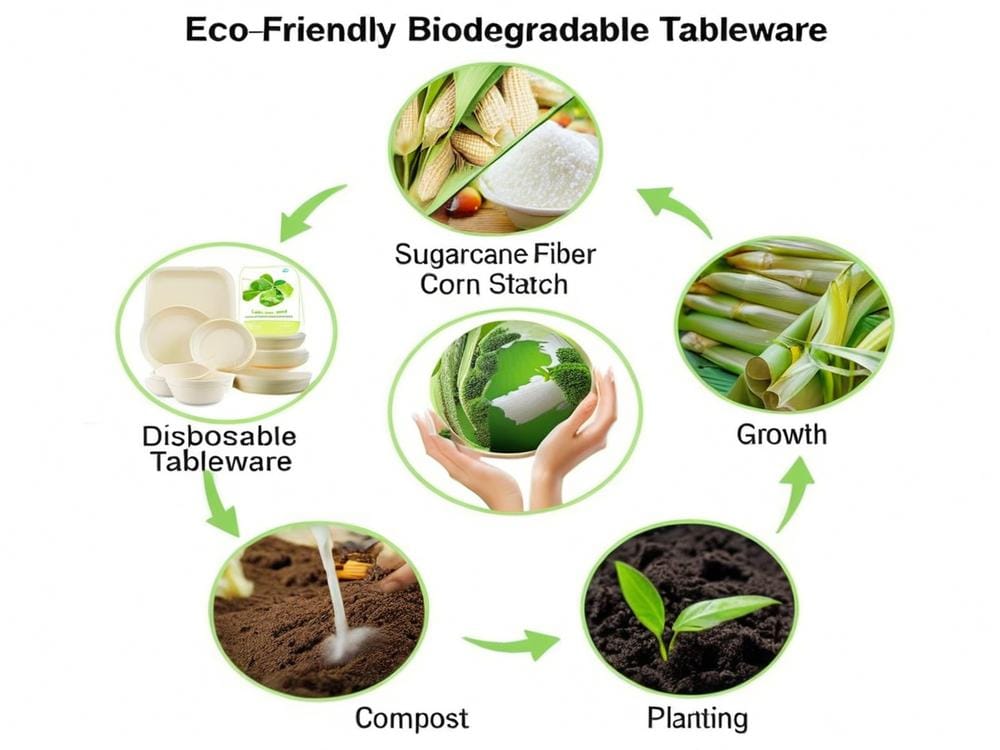
Why PFAS-Free Food Packaging Requires a Different Buyer Checklist in 2026
Historically, fluorinated chemistry was used in some paper, paperboard and molded-fiber packaging because it provided strong resistance to grease and moisture. The regulatory and commercial environment has now changed significantly.
In the European Union, Article 5(5) of Regulation (EU) 2025/40 applies from 12 August 2026. Food-contact packaging cannot be placed on the EU market when PFAS concentrations reach or exceed specified thresholds:
- 25 ppb for any individual PFAS measured through targeted PFAS analysis, excluding polymeric PFAS from that quantification;
- 250 ppb for the sum of targeted PFAS, where applicable including precursor degradation, excluding polymeric PFAS from that quantification;
- 50 ppm for PFAS including polymeric PFAS.
The European Commission’s June 2026 PPWR guidance also recommends a stepwise enforcement approach beginning with Total Fluorine screening. Where Total Fluorine is below 50 mg/kg, the Commission states that the sample could be considered compliant under this screening approach. Where fluorine exceeds that level, additional analysis may be required to determine whether the fluorine comes from PFAS or non-PFAS sources and whether the targeted PFAS limits are met.
For a broader review of the EU requirements, see Bioleader®’s PPWR 2026 Foodservice Packaging Checklist.
In the United States, the situation is different. The FDA announced in 2024 that PFAS-containing grease-proofing substances were no longer being sold for food-contact use in the U.S. market, and in January 2025 it determined that 35 related Food Contact Notifications were no longer effective. State-level PFAS food-packaging laws also remain important and differ by jurisdiction.
Buyers selling across multiple U.S. states can use Bioleader®’s U.S. PFAS Food Packaging State-by-State Procurement Guide as a starting point, while confirming the current requirement applicable to each destination.
Important: There is no single global definition, certificate or test result that automatically proves PFAS compliance in every country. A buyer should always connect the product evidence to the destination market and exact finished packaging configuration.
Question 1: What Does the Supplier Mean by “PFAS-Free”?
This should be the first question because different suppliers use the same phrase to mean different things.
In B2B procurement, a PFAS-free statement can refer to several different levels of evidence:
| Claim Type | What It Means | What It Does Not Automatically Prove |
|---|---|---|
| No intentionally added PFAS | The supplier states that PFAS are not intentionally introduced into the confirmed formulation or manufacturing system. | It does not prove analytical zero or compliance with every numerical PFAS threshold. |
| Targeted PFAS not detected | The PFAS substances included in a laboratory target list were not detected above the stated method detection limits. | It does not mean every possible PFAS compound was tested. |
| Total Fluorine below a defined threshold | Screening indicates fluorine concentration is below the stated analytical level. | It does not identify individual PFAS compounds. |
| Supplier “PFAS-Free Certificate” | A supplier or laboratory document may support a PFAS-related claim. | There is no universal global PFAS-Free certification scheme equivalent to a single worldwide standard. |
For most professional procurement specifications, the clearest starting wording is:
“No intentionally added PFAS, supported by product-specific analytical evidence where required by the destination market or buyer specification.”
This wording is more precise than using vague phrases such as “chemical-free” or “100% toxin-free.”
Buyers who need to distinguish PFAS-Free from narrower chemical claims can also review PFAS-Free vs PFOA-Free vs BPA-Free.
Question 2: Is the Evidence a Declaration, a Test Report or a Certification?
One of the biggest weaknesses in PFAS procurement is treating every PDF as though it proves the same thing.
It does not.
Ask the Supplier to Identify the Evidence Type
- Supplier declaration: Confirms material formulation or no intentionally added PFAS according to the manufacturer’s knowledge and supply-chain controls.
- Targeted PFAS laboratory report: Tests selected PFAS compounds and reports individual results and method detection limits.
- Total Fluorine or Total Organic Fluorine screening: Provides broader fluorine screening but may require additional interpretation.
- Food-contact test report: Evaluates migration or other food-contact safety requirements but does not automatically prove PFAS-free status.
- Compostability certificate: Evaluates compostability under a defined scheme and does not automatically prove PFAS compliance.
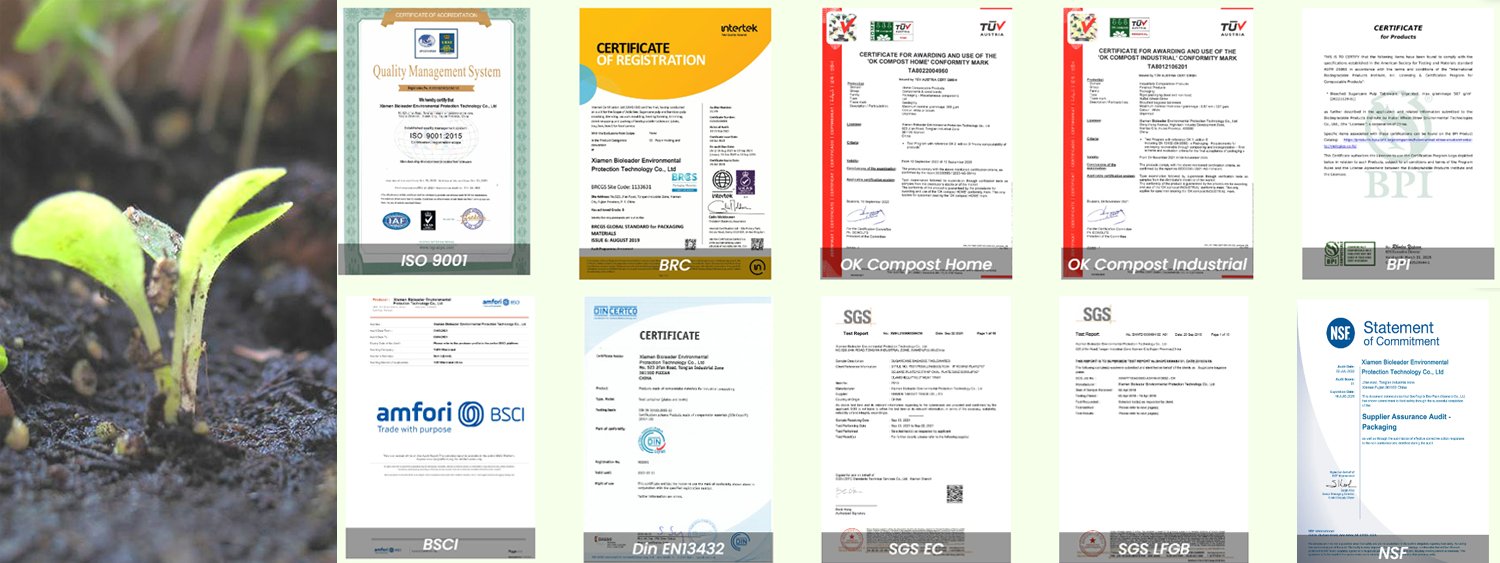
Bioleader® organizes available product documentation through its Certificates & Test Reports center, including PFAS-related documents, food-contact reports and compostability certifications for relevant product families.
Question 3: Was the Finished Product Actually Tested?
A raw-material declaration can be useful, but professional buyers should determine whether the evidence applies to the finished food-contact article.
Finished packaging may contain more than the base substrate:
- fiber or paperboard;
- internal grease-resistant additives;
- surface coatings;
- film laminations;
- printing inks;
- adhesives;
- lid materials;
- labels or sleeves;
- processing aids or other functional components.
A supplier may therefore hold clean raw-material evidence while the finished package includes additional components that have not been evaluated under the same scope.
Finished-product evidence is more valuable than raw-material evidence when the purchasing decision concerns the finished SKU.
Bioleader®’s recent analysis of PE-coated paper cups and bowls with SGS PFAS evidence illustrates this distinction. Conventional PE itself is a non-fluorinated carbon-and-hydrogen polymer, but the article still separates material chemistry from the actual targeted PFAS results obtained on representative finished paper cup and bowl specimens.
Question 4: What Exactly Was Tested, and What Was the Detection Limit?
The phrase “PFAS tested” is incomplete unless the report identifies what was actually measured.
Buyers should review at least five items:
- Tested specimen: Is it the bowl, cup, tray or container being purchased?
- Analyte list: Which PFAS compounds were included?
- Analytical method: Was targeted PFAS analysis, Total Fluorine or another method used?
- Detection or quantification limits: What does “ND” actually mean in that laboratory report?
- Report date and sample identification: Can the result be connected to the current product specification?
“ND” means not detected above the stated laboratory method detection limit. It should not be rewritten as “absolute zero PFAS” unless the analytical evidence genuinely supports that interpretation.
EU buyer note: The PPWR numerical limits operate in ppb and ppm. A legacy test report with a detection limit that is much higher than the applicable PPWR threshold may not be sufficient evidence by itself for a current EU compliance decision.
Question 5: Which PFAS Requirement Applies in the Destination Market?
PFAS compliance cannot be evaluated only from the country where the packaging is manufactured. It must be evaluated against the market where the finished packaging will be placed on the market or used.
| Market | 2026 Buyer Focus | Recommended Action |
|---|---|---|
| European Union | PPWR Article 5(5) numerical PFAS limits for food-contact packaging apply from 12 August 2026. | Review targeted PFAS evidence, Total Fluorine screening and technical-documentation requirements. |
| United States | FDA authorization for PFAS grease-proofing substances on paper food packaging has ended; state-level restrictions also apply. | Check both federal food-contact status and destination-state requirements. |
| Other markets | Definitions, restrictions, retailer specifications and accepted evidence vary. | Do not assume EU or U.S. evidence automatically satisfies another jurisdiction. |
This is why a global distributor should avoid asking simply:
“Do you have a PFAS-free certificate?”
A better question is:
“Can you provide evidence for this exact product that supports the PFAS requirement in the countries where we intend to sell it?”
Question 6: Is Compostability Being Confused with PFAS Compliance?
PFAS-free and compostable are different claims.
A compostability standard evaluates end-of-life performance under defined conditions. PFAS compliance evaluates chemical composition or chemical-use restrictions.
Therefore:
- EN 13432 compliance does not automatically prove PFAS-free status;
- ASTM D6400 testing does not automatically prove PFAS-free status;
- BPI certification should not be used as a generic substitute for market-specific PFAS evidence;
- a PFAS-free product does not automatically qualify as compostable.
The two evidence streams should be reviewed separately.
| Buyer Question | Evidence Category |
|---|---|
| Is the product PFAS compliant? | Material declaration, targeted PFAS analysis, fluorine screening and applicable regulatory evidence. |
| Is the product compostable? | Applicable compostability standard and certification scope. |
| Is the product safe for food contact? | Applicable food-contact test reports, migration evidence and declarations. |
| Can the product hold hot oily food? | Application-specific performance testing. |
PFAS compliance + compostability + food-contact safety + performance are four different procurement questions. One document rarely answers all four.
Question 7: What Barrier Technology Provides the Grease and Water Resistance?
Removing intentionally added PFAS does not remove the need for packaging performance. The buyer still needs a container that can resist oil, moisture, sauce, steam and delivery conditions.
The correct question is therefore:
“If this packaging does not use PFAS grease-proofing chemistry, what provides the barrier instead?”
PFAS-Free Molded Fiber and Bagasse Systems
For sugarcane bagasse tableware, performance depends on the complete molded-fiber system, including pulp structure, internal PFAS-free additives where used, forming conditions, hot pressing, surface density, product weight and production stability.
This is a major correction to the older assumption that “bagasse is naturally PFAS-free and naturally grease-resistant.” Sugarcane fiber itself is not PFAS chemistry, but finished molded-fiber food packaging historically could use fluorinated additives or other treatments to obtain stronger grease resistance.
The buyer must therefore evaluate the finished formulation rather than the agricultural origin of the fiber.
For demanding hot-food applications, see PFAS-Free Sugarcane Tableware for 100°C Hot Food.
For a deeper engineering comparison of internal additives and external barriers, see Bioleader®’s PFAS-Free Grease Resistance Technologies for Sugarcane Tableware.
PE-Coated Paper Packaging
Conventional PE-coated paper uses a physical polyethylene film as the principal liquid and grease barrier. Conventional non-fluorinated PE does not require PFAS grease-proofing chemistry to perform this function.
This does not mean every PE-coated product everywhere should automatically be described as analytically PFAS-free. Buyers still need to verify the full paperboard, coating, ink and finished-product specification.
Water-Based Barrier Coatings
Water-based coatings are increasingly important in paper packaging, but the phrase “water-based” does not automatically prove every environmental or chemical claim.
Buyers should request the coating specification, food-contact evidence, PFAS-related declaration where applicable and finished-product performance data.
Bioleader®’s 2026 Water-Based Coating Standards for Paper Cups & Bowls explains how coating weight, moisture resistance, bonding and leakage performance are controlled in paper packaging systems.
PLA, CPLA and Cornstarch-Based Products
PLA, CPLA and cornstarch-based materials should also not be declared PFAS-free solely from their feedstock name.
The buyer should evaluate the complete formulation, additives, colorants, processing aids and finished article.
Bioleader® supplies compostable PLA cups, biodegradable and compostable cutlery and cornstarch tableware for different foodservice applications. Product-specific documentation should be reviewed before using PFAS-related claims in procurement files or customer marketing.
Question 8: Can the PFAS-Free Product Actually Handle My Food?
PFAS-free is a chemical-compliance attribute. It does not tell a buyer how long a container will hold hot curry, whether oil will penetrate the bottom of a clamshell, whether a bowl will soften under steam, or whether the lid will remain secure during delivery.
This distinction is particularly important for molded fiber.
Bioleader®’s 2025–2026 Global PFAS-Free Tableware Performance White Paper evaluates PFAS-free molded-fiber performance using hot-oil penetration and application-based benchmarking. Its core conclusion is relevant to every buyer:
PFAS-free does not automatically mean performance-stable.
Buyer Sample Evaluation: Test the Actual Menu
Before approving a PFAS-free food container for mass production, test the selected SKU with the actual food, temperature, oil level, sauce content, holding time and delivery conditions.
- Fill with the intended hot or cold food.
- Test the expected service temperature.
- Observe oil and moisture penetration.
- Check the base, corners, rim and hinge for wicking.
- Close the intended lid and evaluate condensation.
- Stack filled units as they would be stacked during delivery.
- Repeat the test over the normal takeaway or delivery holding time.
- Record deformation, leakage, staining, odor and structural failure.
For more detail on how manufacturing variables create grease resistance in molded fiber, see The Science Behind PFAS-Free Bagasse Tableware.
Question 9: Does the Evidence Cover Printing, Lids and Customized Versions?
Customization is one of the most overlooked compliance risks in B2B packaging.
A buyer may approve an unprinted sample and then order:
- custom printing;
- new ink colors;
- different lid material;
- labels or sleeves;
- different coating weight;
- different product thickness;
- private-label artwork;
- a modified barrier formulation.
The finished commercial SKU may therefore differ from the sample or report originally reviewed.
Before Approving Custom Artwork, Ask:
- Does the PFAS declaration apply to the printed version?
- Are the printing inks covered by the supplier’s material review?
- Does the lid use the same material originally approved?
- Has the coating or barrier system changed?
- Does the test report apply to this SKU or only to a representative family?
- Will the supplier notify the buyer before changing chemicals, paper mills, coatings or additives?
This is where change-control discipline becomes important. A buyer should not approve one formulation and unknowingly receive another six months later.
Question 10: Can the Supplier Maintain the Same PFAS-Free System at Production Scale?
A compliant laboratory sample is useful, but large buyers ultimately purchase production consistency.
For manufacturers of molded fiber, paper bowls and other high-volume foodservice packaging, the supplier should be able to control:
- raw-material sourcing;
- chemical formulation;
- coating or additive dosing;
- product weight and thickness;
- forming and hot-press conditions;
- lot identification;
- quality inspection;
- change management;
- export documentation.
Manufacturer Insight: PFAS-Free Should Be a Controlled Production System
From a factory perspective, PFAS-free reliability cannot depend on one laboratory sample or one supplier declaration. The production formula, pulp or paper source, barrier system, process parameters and quality controls must remain stable across commercial batches.
For molded-fiber products in particular, removing fluorinated grease-proofing chemistry while maintaining hot-oil and moisture resistance requires process control. Product performance can change when pulp consistency, additive dosage, hot-press conditions, density or product weight moves outside the validated process window.
Buyers preparing a broader portfolio conversion can use Bioleader®’s PFAS-Free Tableware Transition Roadmap to structure SKU audits, supplier verification, sample testing and phased conversion.
The 10 Questions Every PFAS-Free Packaging Buyer Should Put Into the RFQ
| Buyer Question | Good Supplier Response | Red Flag |
|---|---|---|
| 1. What do you mean by PFAS-free? | Provides a defined claim such as no intentionally added PFAS and explains the evidence scope. | “It is eco-friendly, so it has no PFAS.” |
| 2. What evidence can you provide? | Separates declarations, targeted testing, fluorine screening and other reports. | Provides only a logo or brochure. |
| 3. Was the finished product tested? | Identifies the exact tested specimen and how it relates to the ordered SKU. | Only sends a resin or raw-material certificate. |
| 4. What analytes and detection limits were used? | Provides full laboratory report, method and detection limits. | Says only “SGS passed.” |
| 5. Which market does the evidence support? | Reviews the destination country and applicable regulation. | Claims one test is valid worldwide. |
| 6. Is compostability separate from PFAS compliance? | Provides separate evidence for each claim. | Uses EN 13432 alone as proof of PFAS-free status. |
| 7. What provides grease resistance? | Explains the barrier formulation or physical coating system. | Cannot identify the barrier technology. |
| 8. Has the product been tested with our food? | Supports sample testing under realistic foodservice conditions. | Promises universal leak resistance without use-case limits. |
| 9. Are printing and lids included? | Reviews the complete packaging configuration. | Ignores components outside the container body. |
| 10. How do you control production changes? | Maintains specifications, traceability and controlled formulation changes. | Changes materials or coatings without buyer notification. |
PFAS-Free Buyer Evidence Hierarchy: Which Documents Matter Most?
Not all supplier evidence carries the same procurement value. Buyers should build a layered compliance file rather than relying on one document.
| Evidence | Primary Purpose | Recommended Buyer Use |
|---|---|---|
| Product specification / TDS | Defines the actual SKU, material, coating, weight and construction. | Use as the identity document connecting all other evidence. |
| No intentionally added PFAS declaration | Documents formulation intent and supplier statement. | Use as the first supplier-level evidence layer. |
| Targeted PFAS laboratory report | Measures selected PFAS compounds. | Review analyte list, limits and tested specimen. |
| Total Fluorine / fluorine screening | Provides broader fluorine screening. | Important where required by regulation, buyer or retailer specification. |
| Food-contact test report | Evaluates safety for contact with food. | Review separately from PFAS evidence. |
| Compostability certificate | Supports compostability claims. | Use only where compostability is relevant to the product and market. |
| Batch / lot traceability | Connects commercial production with the approved specification. | Important for repeat orders, QA programs and retailer audits. |
The strongest evidence file connects every document to one identifiable product specification. A folder containing many certificates is less useful if the buyer cannot determine which document applies to which SKU.
How PFAS-Free Procurement Differs by Packaging Material
| Packaging Type | Main PFAS Buyer Question | Main Performance Question |
|---|---|---|
| Sugarcane bagasse / molded fiber | Are fluorinated grease-resistant additives intentionally used in the finished formulation? | Can the PFAS-free formulation withstand hot oil, sauce, steam and delivery time? |
| PE-coated paper cups and bowls | Is the paperboard and complete product manufactured without intentionally added PFAS grease-proofing chemistry? | Does the PE barrier provide stable liquid resistance for the intended use? |
| Water-based coated paper | What is in the aqueous barrier formulation and what evidence supports the PFAS claim? | Does the coating resist leakage, edge penetration and heat under actual use? |
| PLA packaging | Does PFAS evidence apply to the full finished product rather than only PLA resin? | Is the product appropriate for the required temperature and disposal route? |
| CPLA / cornstarch tableware | Are additives, pigments and the finished compound included in the supplier declaration? | Does the utensil provide required stiffness and heat performance? |
Buyers can review Bioleader®’s main product families through Sugarcane Bagasse Tableware, Paper Food Packaging, Compostable PLA Cups, Compostable Cutlery and Cornstarch Tableware.

What Should Buyers Ask About MOQ, Samples and Commercial Supply?
Compliance does not replace commercial procurement requirements. Once the product passes the technical review, buyers should also confirm whether the supplier can support the actual program volume.
Commercial Qualification Checklist
- What is the MOQ for the selected SKU?
- Does custom printing change the MOQ?
- Can multiple SKUs be mixed in one container?
- What sample options are available before production?
- Can the buyer test the actual PFAS-free production formula rather than a different reference sample?
- What is the normal production lead time?
- Can the supplier maintain the same material and barrier formulation for repeat orders?
- What happens if the upstream coating, additive or paper source changes?
For large distributors and restaurant groups, change notification is particularly important. A product approved after laboratory testing and food trials should not be materially altered without a new technical review.
How Bioleader® Supports PFAS-Free Packaging Buyer Verification
Bioleader® manufactures and supplies molded fiber, paper, PLA and compostable foodservice packaging for international B2B buyers. PFAS-related sourcing is handled as a combination of material selection, product evidence, food-contact documentation, performance validation and production control rather than as a single marketing label.
For relevant product families, buyers can request available PFAS-related declarations and test reports, food-contact documentation, compostability certificates, technical specifications and product samples for application testing.
Bioleader® also separates chemical compliance from real-use performance. For demanding molded-fiber applications, buyers can review the PFAS-Free Tableware Performance White Paper, the 100°C Hot Food Manufacturing Guide and the PFAS-Free Grease Resistance Technology Guide before selecting a final product system.
For documentary review, buyers should use the Bioleader® Certificates & Test Reports Center and request the latest file applicable to the exact product being considered.
Final PFAS-Free Packaging Buyer Checklist Before Placing an Order
- Define what “PFAS-free” means in the purchase specification.
- Request a no intentionally added PFAS declaration where appropriate.
- Review finished-product laboratory evidence where required.
- Check analyte list, detection limits and sample identity.
- Confirm the destination-market PFAS requirements.
- Keep compostability evidence separate from PFAS evidence.
- Keep food-contact evidence separate from both.
- Identify the actual grease- and moisture-barrier technology.
- Verify coatings, inks, lids, labels and adhesives.
- Test the product with the actual food and service conditions.
- Confirm SKU-level traceability and specification control.
- Confirm MOQ, lead time, samples and repeat-order capability.
- Require supplier notification before material or formulation changes.
Conclusion: Buy the Evidence and Performance, Not Just the PFAS-Free Claim
PFAS-free food packaging has entered a more mature stage of procurement. Buyers can no longer treat PFAS-free as a simple green label or assume that a compostability certificate, plant-based material or supplier statement answers every compliance question.
The strongest purchasing decision connects the exact finished product, destination-market limits, analytical evidence, material composition, food-contact documentation and real-food performance.
For EU buyers, the PPWR numerical PFAS limits now make analytical scope and detection limits especially important. For U.S. buyers, FDA changes and state-level requirements make destination-market review essential. For global buyers, the same principle applies: one generic certificate should never replace a product-specific compliance file.
The best PFAS-free supplier is not the supplier that makes the strongest claim. It is the supplier that can explain the claim, document it, reproduce the approved product at scale and demonstrate that the packaging still performs in the buyer’s real foodservice application.
Bioleader® supports importers, foodservice distributors, restaurant groups and private-label buyers with product-specific documentation, samples and packaging selection across bagasse, paper, PLA and compostable foodservice categories.
Frequently Asked Questions
What does PFAS-free food packaging mean in 2026?
PFAS-free should be defined precisely rather than used as a generic environmental label. In procurement, it commonly involves confirmation that PFAS are not intentionally added, supported by product-specific analytical evidence where required. Buyers should also check destination-market numerical limits, test scope, detection limits and the exact finished-product specification.
Is there a universal PFAS-Free packaging certification?
No single universal PFAS-Free certification automatically establishes compliance worldwide. Suppliers may provide declarations, laboratory PFAS reports, fluorine screening results or other supporting documents. Buyers should determine which evidence is required for the destination market and make sure it applies to the exact finished product.
Does EN 13432 or ASTM D6400 prove that packaging is PFAS-free?
No. EN 13432 and ASTM D6400 address compostability, while PFAS-free status concerns chemical composition and regulatory limits. Compostability evidence and PFAS evidence should be reviewed separately. A product may be compostable without automatically proving PFAS compliance, and a PFAS-free product is not automatically compostable.
Is bagasse naturally PFAS-free?
Sugarcane bagasse fiber itself is a plant fiber and is not a PFAS chemical, but a finished molded-fiber food container may contain functional additives, coatings or other treatments. Buyers should therefore verify the finished formulation and available evidence rather than assuming that every bagasse product is automatically PFAS-free.
Are PE-coated paper cups and bowls PFAS-free?
Conventional non-fluorinated polyethylene does not contain fluorine in its basic polymer structure and does not require PFAS chemistry to create a liquid barrier. However, the complete paperboard, PE film, inks and finished product should still be evaluated. Bioleader® has representative SGS targeted PFAS test evidence for specified PE-coated paper products.
What PFAS limits apply to EU food-contact packaging in 2026?
From 12 August 2026, Regulation (EU) 2025/40 sets PFAS limits for food-contact packaging of 25 ppb for an individual targeted PFAS, 250 ppb for the sum of targeted PFAS and 50 ppm for PFAS including polymeric PFAS, subject to the detailed provisions of Article 5(5). Buyers should review the official Regulation and current Commission guidance for their compliance program.
What should buyers check on a PFAS laboratory report?
Check the tested specimen, product identity, analytical method, PFAS analyte list, detection or quantification limits, result units, report date and laboratory details. A result reported as “ND” means not detected above the stated method detection limit; it should not automatically be interpreted as proof of absolute zero PFAS.
Does PFAS-free mean the container will resist hot oil?
No. PFAS-free is a chemical attribute, while grease resistance is a performance requirement. A PFAS-free molded-fiber container can perform well with hot oily food when the formulation and manufacturing system are properly engineered, but buyers should validate the specific SKU with their actual food, temperature, holding time and delivery conditions.
Official and Industry References
- European Union — Regulation (EU) 2025/40 on Packaging and Packaging Waste
- European Commission — 2026 Guidance Document for Regulation (EU) 2025/40
- U.S. FDA — Market Phase-Out of Grease-Proofing Substances Containing PFAS
- U.S. FDA — 35 PFAS Food Contact Notifications No Longer Effective
- Research and Markets / GlobeNewswire — PFAS-Free Food Packaging Market Opportunity & Forecast 2026–2035