Compostable Packaging Vs Alternatives: Cost, Performance, Sustainability | Bioleader® Sustainable Packaging

Actionable coverage of Compostable Packaging: eco-friendly, biodegradable, compostable materials, performance data, and compliance under EN13432 & ASTM D6400. Includes BPI/TÜV references and Food-Contact Tested guidance for safe deployment. Buyer-focused: manufacturer insights, bulk/wholesale buying playbooks, OEM/ODM customization tips, full size range selection.

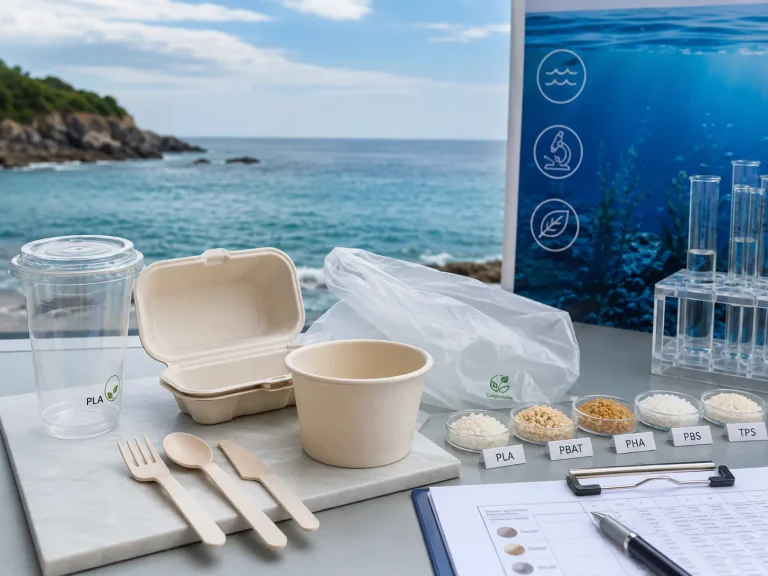
Marine biodegradability is often misunderstood in food packaging. The ocean is not a composting facility. Most biodegradable and compostable food packaging materials are designed to degrade under controlled composting, soil, or specific test conditions, not automatically in seawater.

Compostable Packaging — Quick Summary
  • Items displayed (articles): 12
  • Last updated: 2026-07-04
  • Includes test data, compliance guides, buyer FAQs, and real-world use cases.

Editor’s Picks: Top Compostable Packaging Guides 2026

FAQ of Bioleader's Eco-friendly Disposable Tableware

Material: Kraft Paper and White Cardboard Paper

Our eco-friendly disposable bowls contain primarily 2 materials that are used to make the bowls that are kraft paper and white cardboard paper. Both of the materials are durable and environmentally friendly. Kraft paper has a coarse natural appearance while white cardboard paper has a smooth, sleek surface. All of these materials are biodegradable which ensures compliance with the highest environmental requirements in product manufacture.

Are these bowls totally biodegradable?

Yes, unlike plastic, our compostable bowls are made of soluble material (biodegradable in this case includes kraft paper & white cardboard), which are not harmful and will degrade safely after they have been thrown away.

Are these bowls safe for hot liquids?

Our biodegradable paper bowls are made of heat-resistant material making them ideal for hot liquids and can be used for soup and other hot foods: yes.

4.1 ISO 14001 Environmental Management System Certification

ISO 14001 ISO 14001 is an internationally recognized environmental management standard that helps organizations minimize their environmental impact. The certification focuses on improving environmental performance through efficient resource use, reducing waste, and complying with environmental regulations. For companies that use water-based coatings, achieving ISO 14001 certification demonstrates a commitment to sustainability and responsible environmental management. By adopting water-based coatings, companies can reduce their use of harmful chemicals and minimize waste generated during production — Compostable Packaging.

Impact of Regional Regulations on Market Growth

EU Plastic Ban: The EU’s restrictions on single-use plastics have been a major catalyst for the increased demand for biodegradable alternatives like Bagasse. The European Commission reports that the use of biodegradable materials is expected to increase 25-30% by 2025 due to these regulations , Compostable Packaging. US Environmental Regulations: States like California, New York, and Washington have implemented their own bans on plastic packaging, pushing for alternatives like Bagasse — Compostable Packaging. This regional growth is expected to expand as more states adopt similar measures.

Related Insights

🚀Ready to Go Green and Choose ?

Join the global movement toward zero-waste packaging.


Bioleader® offers:

  • 📦 Bulk order support & fast delivery

  • ✍️ Custom branding and OEM solutions

  • 🌍 Worldwide eco-packaging compliance

Get the Catalogue Products List  & Contact Us Now! 👉

Contact us Below

Click or drag files to this area to upload.You can upload up to 5 files.
The more details you share, the faster and more accurate our quotation will be.