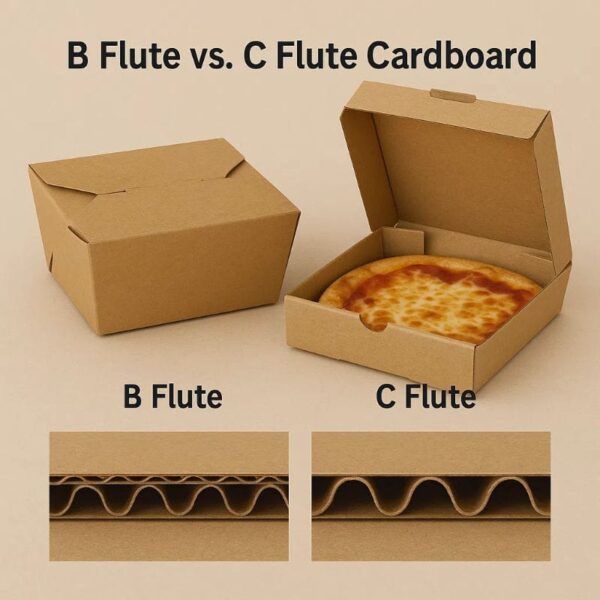
Why 2025 Makes Compostable Packaging Critical for Buyers
The year 2025 is a landmark moment for global packaging. Across North America, Europe, and Asia, governments have tightened restrictions on single-use plastics, leaving businesses with no choice but to adopt certified compostable packaging.
In the foodservice sector, takeaway and delivery account for more than 50% of packaging use. Restaurants, cafés, caterers, and retail chains are under pressure from both regulations and customers to switch to eco-friendly solutions. According to market projections, the compostable packaging market is expected to reach $35–40 billion by 2030, driven by urbanization, food delivery growth, and stronger environmental awareness.
Buyers—especially importers, wholesalers, and distributors—must navigate a complex environment: certifications, minimum order quantities, factory audits, and compliance with region-specific bans. This is why a Buyer’s Guide 2025 is necessary: to help decision-makers avoid costly mistakes and secure sustainable growth.
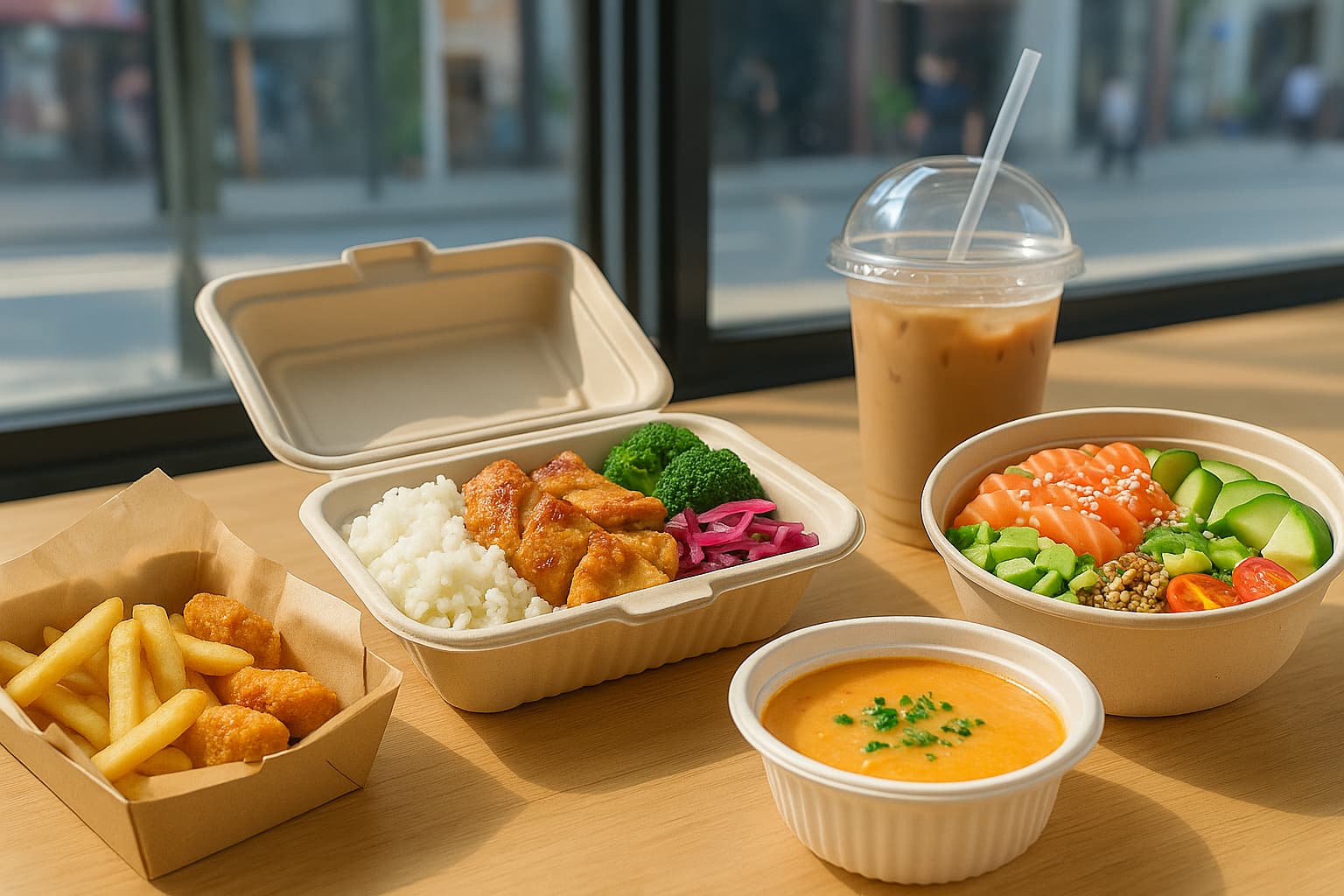
Top 10 Costly Mistakes to Avoid When Sourcing Compostable Packaging
Mistake 1: Ignoring Certified Standards (EN13432, ASTM D6400)
Certification is not just a formality; it’s the gatekeeper to market access.
Europe: Requires EN13432 certification, which ensures packaging biodegrades fully in industrial composting within 90 days.
US: Relies on ASTM D6400, tested under controlled composting conditions.
Other regions: Countries like Singapore, Japan, and Canada now require local labeling or additional documentation.
Failing to source certified compostable packaging manufacturers can result in shipments being rejected, penalties at customs, or even lawsuits from retailers. Buyers should always demand certificates such as OK Compost, BPI Certification, FSC, or LFGB food-contact safety approvals.
Mistake 2: Overlooking Supplier Reliability and Audits
In the rush to meet deadlines, some buyers skip audits or background checks. This is risky. Factories may outsource production to uncertified workshops, creating inconsistencies in quality.
Signs of a reliable supplier include:
Third-party audits (BRCGS, ISO 9001, or Sedex).
Traceability systems that record raw material sources.
Regular lab testing for safety and compostability.
Choosing suppliers without these measures often leads to late deliveries, unverified materials, and damaged reputations. A long-term contract with an audited supplier is cheaper than short-term “low-cost” sourcing.
Mistake 3: Focusing Only on Price Instead of Lifecycle Cost
Price is important, but focusing solely on FOB cost per unit is a mistake. Consider:
Durability: Cheap PLA cups may crack easily, causing food waste and refunds.
Customer Experience: Poor-quality cornstarch cutlery may break, damaging brand image.
Regulatory Risk: Non-certified items might be seized at borders.
Lifecycle costs—durability, compliance, logistics efficiency—are what matter. Buyers who prioritize short-term price savings often face higher long-term losses.
Mistake 4: Not Checking Materials Suitability for Takeaway
Each material has its strengths and weaknesses:
Bagasse containers: Sturdy, heat-resistant up to 220°C, suitable for oily meals.
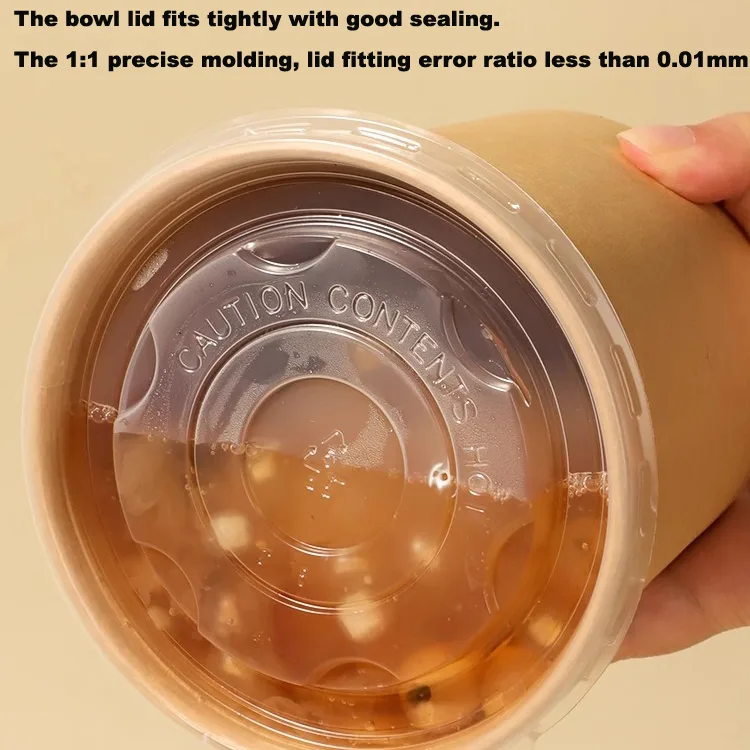
Kraft paper soup bowls with lids bulk: Excellent for noodles, soups, but require PLA or PE lining for liquids.
PLA cold cups manufacturer 2025: Great for smoothies and iced drinks but cannot hold hot coffee.
CPLA biodegradable cutlery factory in China: Stronger than cornstarch, withstands up to 90°C.
Cornstarch cutlery: Economical but less heat-resistant.
Failing to match materials with applications often leads to failed performance in delivery and customer complaints.
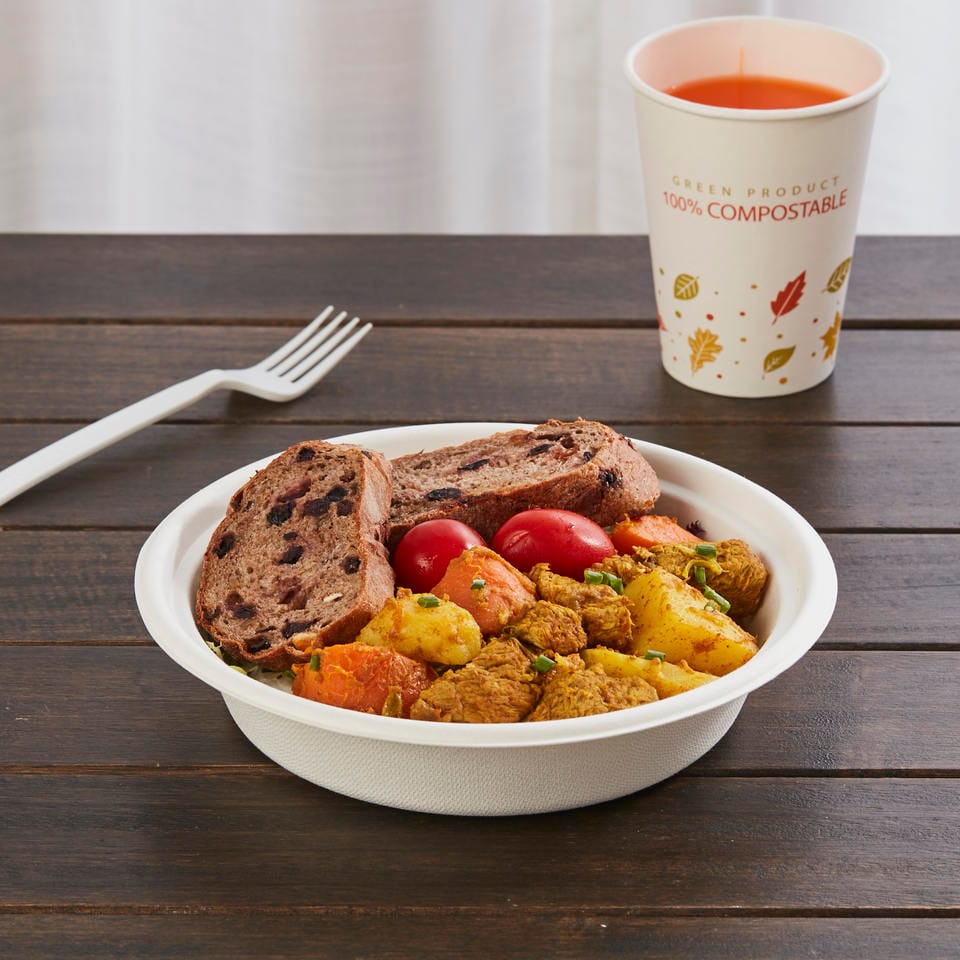
Mistake 5: Missing Local Compliance Requirements
A “compostable” label does not guarantee acceptance everywhere.
Canada bans non-certified compostables under SOR/2022-138.
EU requires conformity with EN13432 and new Extended Producer Responsibility rules.
Asia-Pacific countries impose strict packaging waste audits.
For instance, a buyer importing bagasse food containers wholesale 2025 into Germany without EN13432 proof risks fines up to €100,000. Always confirm local regulations before purchase.
Mistake 6: Overestimating MOQ Flexibility in Factories
Buyers often assume that factories will accept small trial orders. In reality, MOQ often starts from 50,000 pcs per type, as production lines require economies of scale.
Factories may agree to smaller runs, but this raises per-unit costs by 20–40%. For serious importers, consolidating multiple SKUs into a single 20ft container is the best strategy. Understanding MOQ helps avoid wasted negotiation time and misaligned expectations.
Mistake 7: Ignoring Packaging Performance (Leak-Proof, Heat Resistance)
Performance failures are the fastest way to lose customers.
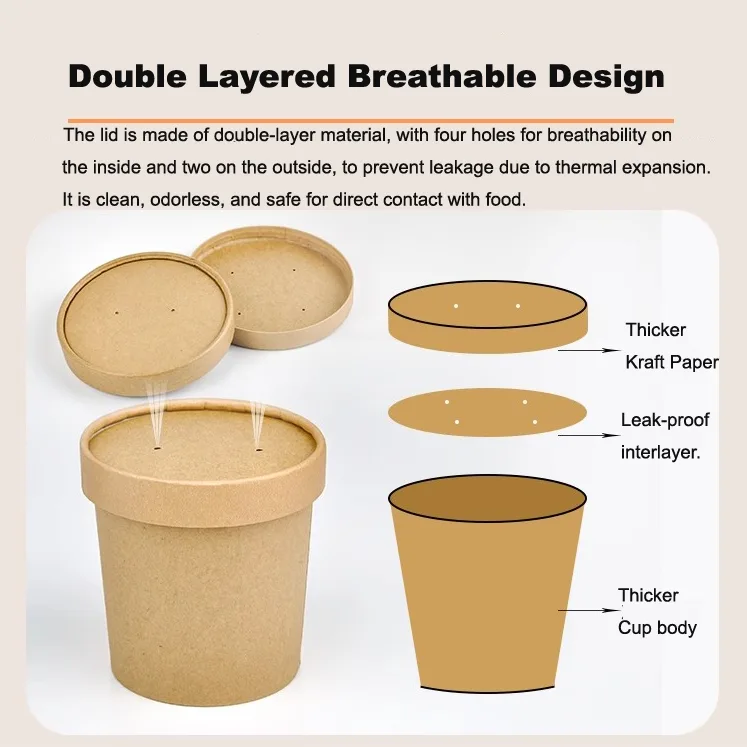
Soup leaking through kraft paper bowls ruins delivery experiences.
Cornstarch cutlery bending in hot meals frustrates end users.
PLA cups deforming with warm drinks cause complaints.
Buyers should demand supplier-provided test results: oil resistance, hot liquid tests, microwave safety reports, and compostability test data. Without these, you’re relying on luck.
|
|
Mistake 8: Forgetting Branding & Customization Options
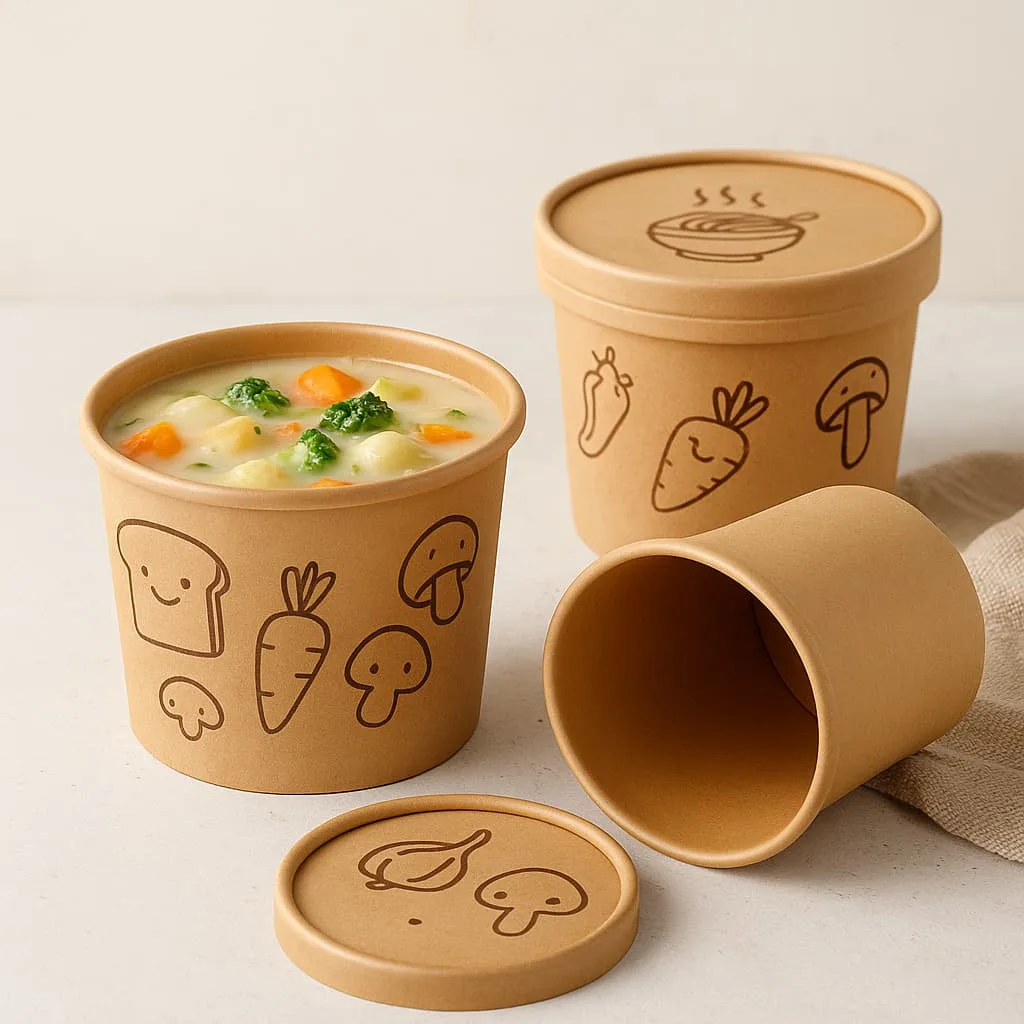
Eco-friendly packaging doubles as a marketing asset. Buyers who ignore customization miss a huge opportunity:
Kraft bowls: printable with soy-based inks.
Bagasse trays: embossing available for brand logos.
PLA cups: sleeve branding for promotional campaigns.
For foodservice brands, takeaway packaging is the first physical interaction with customers. Not investing in branding is a silent but costly mistake.
Mistake 9: Underestimating Lead Times & Logistics Bottlenecks
Shipping compostable packaging in 2025 faces delays from:
Port congestion
Environmental audits at customs
Global freight fluctuations
Production lead times are typically 30–45 days, plus 20–40 days for sea freight. Buyers who fail to plan may miss critical events such as summer festivals or holiday catering seasons. Smart buyers schedule 3–4 months ahead and negotiate safety stock.
Mistake 10: Not Building Long-Term Supplier Partnerships
Treating suppliers as short-term vendors is a critical mistake. Long-term partnerships provide:
Stable pricing against raw material fluctuations.
Priority access during high-demand seasons.
Continuous innovation with new eco materials.
Building trust with certified compostable packaging manufacturers ensures reliability, better communication, and stronger alignment with regulations.
Products and Material Choices Buyers Must Consider
When sourcing in 2025, buyers should focus on key product families:
Bagasse food containers wholesale 2025: Leak-proof, heat-resistant, and perfect for oily foods.
Compostable cornstarch cutlery suppliers: Affordable, lightweight, suitable for casual dining.
Kraft paper soup bowls with lids bulk: Versatile, customizable, widely accepted in Western markets.
PLA cold cups manufacturer 2025: Transparent and durable, ideal for cafés, juice bars, and festivals.
CPLA biodegradable cutlery factory in China: Durable utensils for hot food and beverages.
Comparing these materials helps buyers make data-driven sourcing decisions.
Global Market Trends and Regulation Drivers in 2025
North America: Canada fully enforces its plastics ban; US states strengthen ASTM D6400 adoption.
Europe: EN13432 certification becomes non-negotiable; EPR laws shift responsibility to producers and importers.
Asia: Singapore requires eco-labeling; India phases out single-use plastics; Japan incentivizes compostable adoption.
By 2025, more than 80 countries enforce partial or full bans, driving unprecedented demand for compostable packaging for takeaway.
Why Bioleader® Stands Out in 2025
In 2025, the global compostable packaging market is more competitive than ever, with many suppliers struggling to meet international standards. Bioleader® sets itself apart as a trusted manufacturer by combining a wide product portfolio, strong certifications, advanced production capacity, and proven export experience.
Complete Product Range
Bioleader® delivers a one-stop solution for buyers seeking compostable tableware and food packaging. The range includes bagasse series (plates, trays, bowls, clamshells) designed for hot and oily meals; cornstarch cutlery for economical, large-scale catering; kraft paper bowls with PLA or PE linings for soups and salads; PLA cold cups and lids ideal for juices and iced drinks; and CPLA cutlery that withstands up to 90°C for hot meals. This breadth simplifies sourcing and ensures consistent quality across product categories.

Global Certifications & Compliance
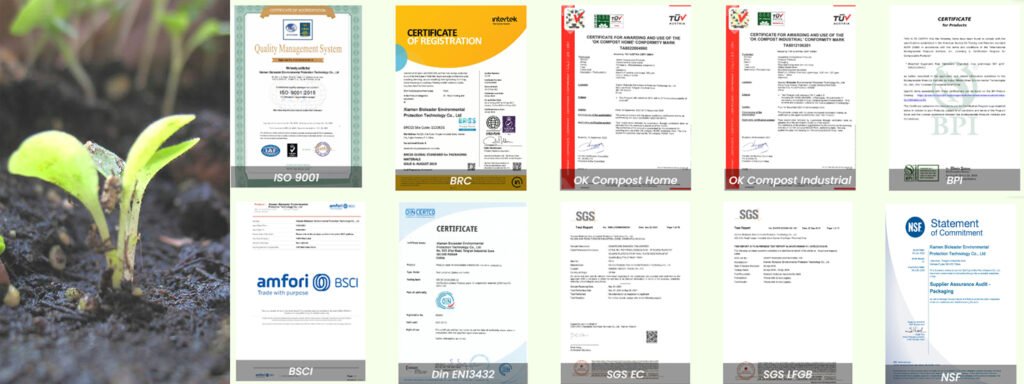
Compliance is a top concern in 2025 as plastic bans tighten. Bioleader® products meet EN13432 (EU), ASTM D6400 (US), BPI compostability, LFGB food-contact safety, and FSC sustainable forestry requirements. These certifications guarantee smooth customs clearance and reduce the risk of market rejections, giving buyers full regulatory confidence.
Manufacturing Strength & Quality Control
With automated pulp molding lines, PLA extrusion equipment, and cornstarch injection molding, Bioleader® achieves both large-scale output and consistent product performance. In-house labs conduct tests for leakage, heat resistance, and compostability, ensuring every batch aligns with buyer expectations.
Export Experience & Buyer Benefits
Supplying clients across North America, Europe, Southeast Asia, and Australia, Bioleader® has built a reputation for on-time delivery, competitive pricing, and responsive after-sales service. Buyers gain advantages such as lower lifecycle costs, customization options (printing, embossing), reliable lead times, and assurance that products are PFAS-free and ESG-compliant.
By combining certifications, product diversity, and international reliability, Bioleader® offers more than packaging—it delivers a long-term sourcing partnership built for the sustainability era.
Conclusion: Avoid Mistakes, Win the Market
In 2025, the demand for compostable packaging is no longer optional—it is the new standard for global foodservice and retail. Buyers who understand and actively avoid the 10 costly sourcing mistakes are better positioned to secure compliance with strict international regulations, protect their brand reputation, and deliver consistent customer satisfaction.
Choosing the right materials—whether bagasse for hot meals, kraft bowls for soups, PLA cold cups for beverages, or CPLA cutlery for hot applications—ensures functionality and regulatory alignment. Partnering with certified compostable packaging manufacturers not only prevents costly setbacks but also builds long-term competitive advantage in a market shaped by sustainability and innovation.
Ultimately, compostable packaging is far more than a regulatory requirement—it is a strategic business opportunity. Companies that act today to refine their sourcing strategies will not only win customer trust and loyalty but also establish themselves as leaders in the global transition toward eco-friendly packaging. By avoiding mistakes and embracing smart sourcing, buyers can transform compliance into growth, and sustainability into a lasting market edge.
FAQ
What certifications should I check when buying compostable packaging?
EN13432 (EU), ASTM D6400 (US), OK Compost, BPI, FSC, and LFGB food-contact approvals.
How do I choose the right compostable packaging for takeaway food?
Match the material to the food type: bagasse for hot, kraft for soups, PLA for cold drinks.
Are bagasse food containers safe for hot and oily meals?
Yes, bagasse can handle up to 220°C and resist grease without chemical coatings.
What MOQ do manufacturers of compostable packaging usually require?
Typically 50,000 pcs per SKU, with flexibility if consolidated into one container.
How do global plastic bans affect compostable packaging suppliers in 2025?
They increase compliance checks, favor certified manufacturers, and raise demand globally.
Reference
United Nations Environment Programme — Single-Use Plastics: A Roadmap for Sustainability, UNEP, 2018.
European Committee for Standardization (CEN) — EN13432: Requirements for Packaging Recoverable through Composting and Biodegradation.
ASTM International — ASTM D6400: Standard Specification for Labeling of Plastics Designed to be Aerobically Composted in Municipal or Industrial Facilities, 2020.
U.S. Environmental Protection Agency (EPA) — Compostable vs. Biodegradable Plastics: What’s the Difference?, EPA Report, 2021.
European Food Safety Authority (EFSA) — Food Contact Materials: Safety Evaluation of Bioplastics, EFSA Journal, 2020.
Ellen MacArthur Foundation — The New Plastics Economy: Rethinking the Future of Plastics, 2016.
Market Research Future (MRFR) — Global Market Outlook for Biodegradable Tableware 2025.
Smith, J. & Rodriguez, L. — Life Cycle Assessment of Biodegradable Cutlery, Journal of Cleaner Production, 2021.
World Health Organization (WHO) — Plastics and the Environment, WHO Report, 2019.
Compostable Packaging 2025: Key Buyer Insights & Market Outlook
How to Ensure Compliance?
Buyers must demand EN13432 (EU) or ASTM D6400 (US) certifications, supplier audits, and test reports. In 2025, Extended Producer Responsibility (EPR) makes importers legally accountable for packaging waste. Choosing certified manufacturers eliminates customs risks and ensures smooth market entry.
Why Bagasse, Cornstarch, Kraft, and PLA Dominate 2025?
Bagasse withstands heat and grease for hot meals. Cornstarch cutlery provides cost-effective utensils for catering. Kraft paper bowls with PLA lining balance branding potential with leak-proof performance. PLA cold cups highlight clarity for juices, while CPLA cutlery remains reliable for hot foods. These materials define sustainable takeaway packaging today.
What Are the Best Takeaway Options?
For solid meals, bagasse clamshells and trays are durable choices. For soups and noodles, kraft bowls with lids prevent spillage. For beverages, PLA cold cups enhance presentation. For utensils, CPLA cutlery offers strength and compostability. Selecting the right product ensures function, compliance, and customer satisfaction.
Key Considerations Before Partnering With a Manufacturer
Assess MOQ flexibility, lead times, and customization capacity. Reliable suppliers provide certifications, ESG alignment, and export experience. In 2025, buyers favor partners offering PFAS-free, FSC-certified, and carbon-tracked products, ensuring long-term competitiveness.
Future Outlook to 2030
With over 80 countries enforcing plastic bans, compostable packaging demand is set to double by 2030. Consumer preference, ESG reporting, and foodservice expansion will accelerate adoption. Plastics may remain in niche uses, but compostable packaging is projected to dominate global takeaway and delivery markets.