​ PFAS-free Packaging Vs Alternatives: Cost, Performance, Sustainability | Bioleader® Sustainable Packaging

Browse articles grouped under the "​ PFAS-free packaging" tag for topic-specific information and examples. The featured articles may approach the topic from different product, material, application, market, or sourcing perspectives. Check each article for its exact scope, technical data, standards, sources, and recommendations.
​ PFAS-free packaging — Content Overview
  • Featured articles shown: 12
  • Directly tagged articles: 24
  • Latest tagged article update: 2026-09-18
  • Coverage, examples, and specific recommendations vary by individual article.

Editor's Picks: Top ​ Pfas-free Packaging Guides 2026

FAQ of Bioleader's Eco-friendly Disposable Tableware

Are 750-1000ml square paper salad bowls with lids suitable for salads and takeaway meals?

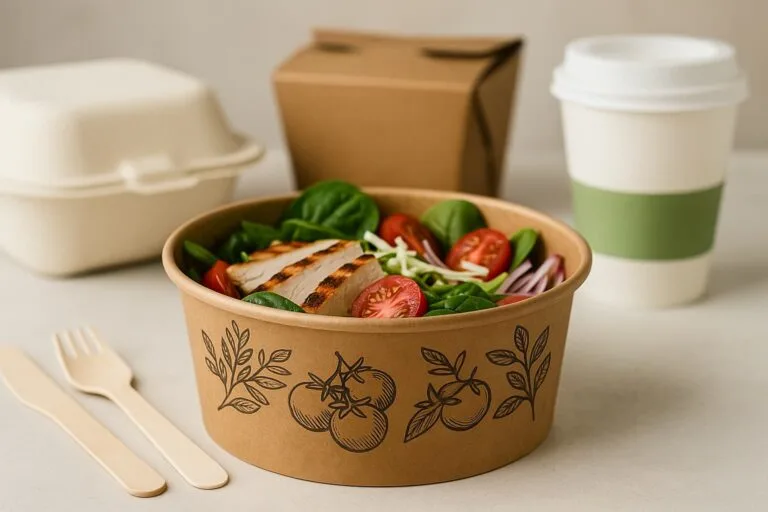
Yes. Bioleader® 750-1000ml square paper salad bowls with lids are suitable for salads, rice bowls, cold meals, takeaway meals, and prepared food programs. The food-grade paperboard structure, coated surface, rolled rim, and matching PP or PET lid options help improve stacking, handling, and transport performance.

What is the capacity of a 500ml rectangular paper salad bowl?

A 500ml rectangular paper salad bowl is designed for compact single-serve portions , ​ PFAS-free packaging. It is commonly used for salads, rice bowls, sushi-style meals, cold noodles, desserts, side dishes, and light takeaway meals. For buyers building a wider rectangular bowl range, 500ml can be paired with 650ml, 750ml, and 1000ml rectangular paper bowls.

Which lid should I choose for 500ml rectangular paper salad bowls?

Paper lids are recommended when the buyer wants a consistent kraft or white paper packaging appearance — ​ PFAS-free packaging. PP lids are practical for hot food handling, microwaveable use, stacking, takeaway, and delivery. PET lids are suitable when product visibility is important for chilled salads, sushi-style meals, supermarket display, and grab-and-go food programs.

3.1. PFAS-Free is a compliance-oriented claim, not a casual marketing phrase

In professional sourcing contexts, “PFAS-Free” should be understood as a claim that must be supported by a defined evidence chain — ​ PFAS-free packaging. Depending on the market and certification framework, that evidence may include fluorine screening, targeted substance testing, signed declarations, ingredient documentation, and product-specific compliance review. It should never be treated as a stand-alone advertising phrase without method scope, document traceability, and sample identity.

3.6. This article does not assume that one route is always correct

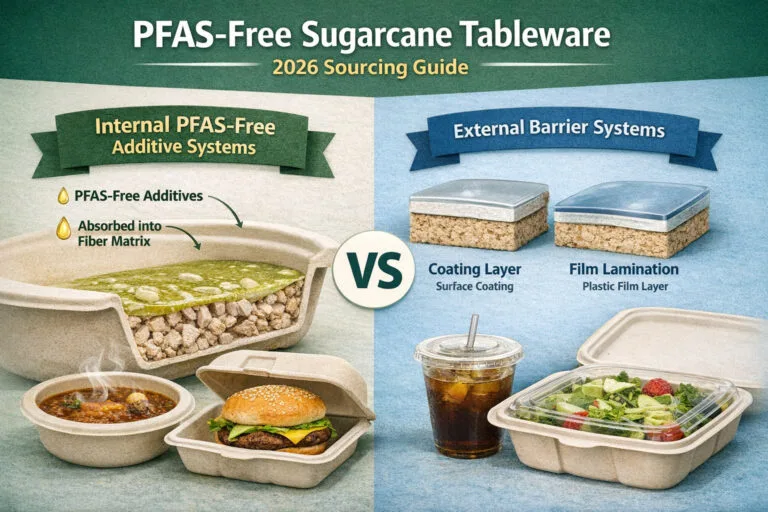
This guide does not assume that every external barrier solution is automatically inferior, nor that every internal additive system is automatically compliant or high-performing. The purpose of this white paper is narrower and more practical: to define the technical routes correctly, compare them under sourcing conditions, and help buyers decide which route is commercially, operationally, and regulatorily defensible for a given application. 4. Regulatory Baseline 2026 — What Buyers Must Actually Comply With For buyers of PFAS-Free sugarcane tableware regulatory review in 2026 cannot be reduced to a single certificate or a general supplier declaration.

Related Insights

🚀Ready to Go Green and Choose ?

Join the global movement toward zero-waste packaging.


Bioleader® offers:

  • 📦 Bulk order support & fast delivery

  • ✍️ Custom branding and OEM solutions

  • 🌍 Worldwide eco-packaging compliance

Get the Catalogue Products List  & Contact Us Now! 👉

Contact Us for Quote

Click or drag files to this area to upload.You can upload up to 5 files.
The more details you share, the faster and more accurate our quotation will be.