PFAS-free Bagasse Food Containers Compliance Checklist | Bioleader® Insights

Actionable coverage of PFAS-free bagasse food containers: eco-friendly, biodegradable, compostable materials, performance data, and compliance under EN13432 & ASTM D6400. Includes BPI/TÜV references and Food-Contact Tested guidance for safe deployment. Buyer-focused: manufacturer insights, bulk/wholesale buying playbooks, OEM/ODM customization tips, full size range selection.
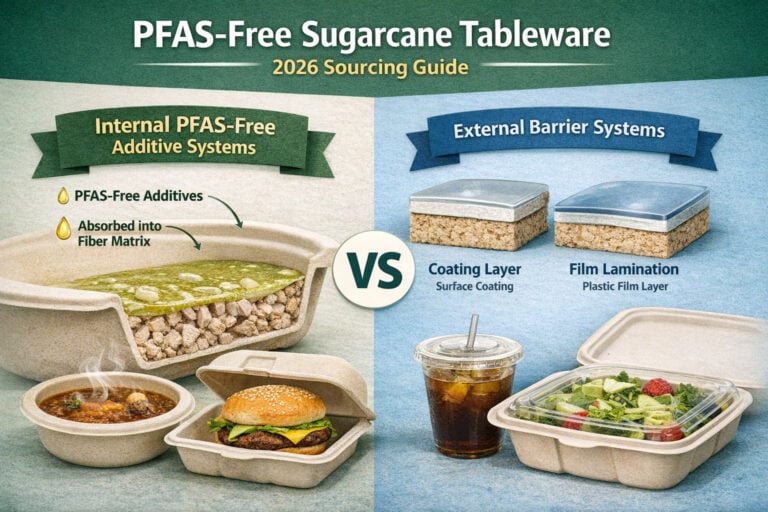
Quick Summary: PFAS-Free sugarcane tableware is now a procurement threshold rather than a sustainability label. For most hot takeaway and foodservice applications, high-performance internal additive systems offer the best balance of fluorine-free grease resistance, scalable production, compliance, and cost. Low-temperature internal additive systems remain suitable for cold-chain, ambient, and low-grease uses, while physical barrier systems such as lamination and surface coatings are now better reserved for niche high-barrier applications due to higher cost, added processing complexity, and greater repulpable and regulatory pressure.
PFAS-free bagasse food containers — Quick Summary
  • Items displayed (articles): 12
  • Last updated: 2026-03-19
  • Includes test data, compliance guides, buyer FAQs, and real-world use cases.

Editor’s Picks: Top Pfas-free Bagasse Food Containers Guides 2026

FAQ of Bioleader's Eco-friendly Disposable Tableware

Do the lids fit tightly?

Yes, The lids can be placed firmly on the containers ensuring no spillage while carrying or dragging around.

Can they be used for hot food?

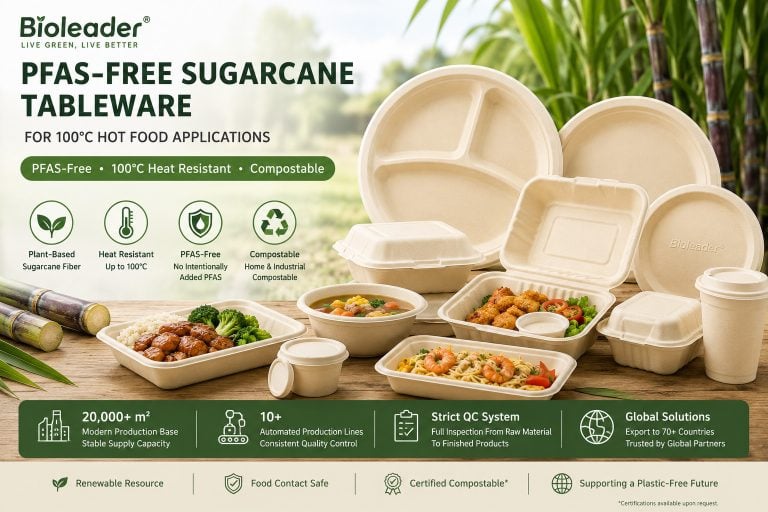
Absolutely. These bowl compostable containers are made in a way that even hot dishes can be served in them…

Can these bowls be microwaved?

Yes , PFAS-free bagasse food containers. These eco-paper bowls are safe to use in the microwave making it easy for their customers to warm food that is in them.

Can sugarcane bagasse bowls be microwaved safely?

Yes. They can handle 60–90 seconds in a microwave without warping, provided the lid is slightly open to release steam , PFAS-free bagasse food containers.

Fiber Origin and Sustainability Value

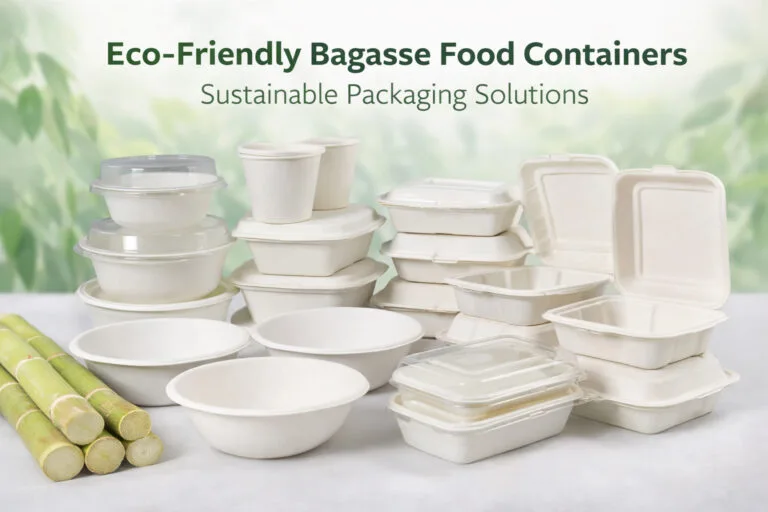
Bagasse comes from sugarcane stalks after juice extraction. Instead of being discarded or burned, the fibrous pulp is pressed and molded into bowls , PFAS-free bagasse food containers. This not only prevents waste but also creates a renewable product line. Bagasse bowls are compostable under industrial conditions, generally decomposing in 60–90 days.

Related Insights

🚀Ready to Go Green and Choose ?

Join the global movement toward zero-waste packaging.


Bioleader® offers:

  • 📦 Bulk order support & fast delivery

  • ✍️ Custom branding and OEM solutions

  • 🌍 Worldwide eco-packaging compliance

Get the Catalogue Products List  & Contact Us Now! 👉

Contact us Below

Click or drag files to this area to upload.You can upload up to 5 files.
The more details you share, the faster and more accurate our quotation will be.