Executive Insight: Why Sugarcane Food Containers Matter in 2026
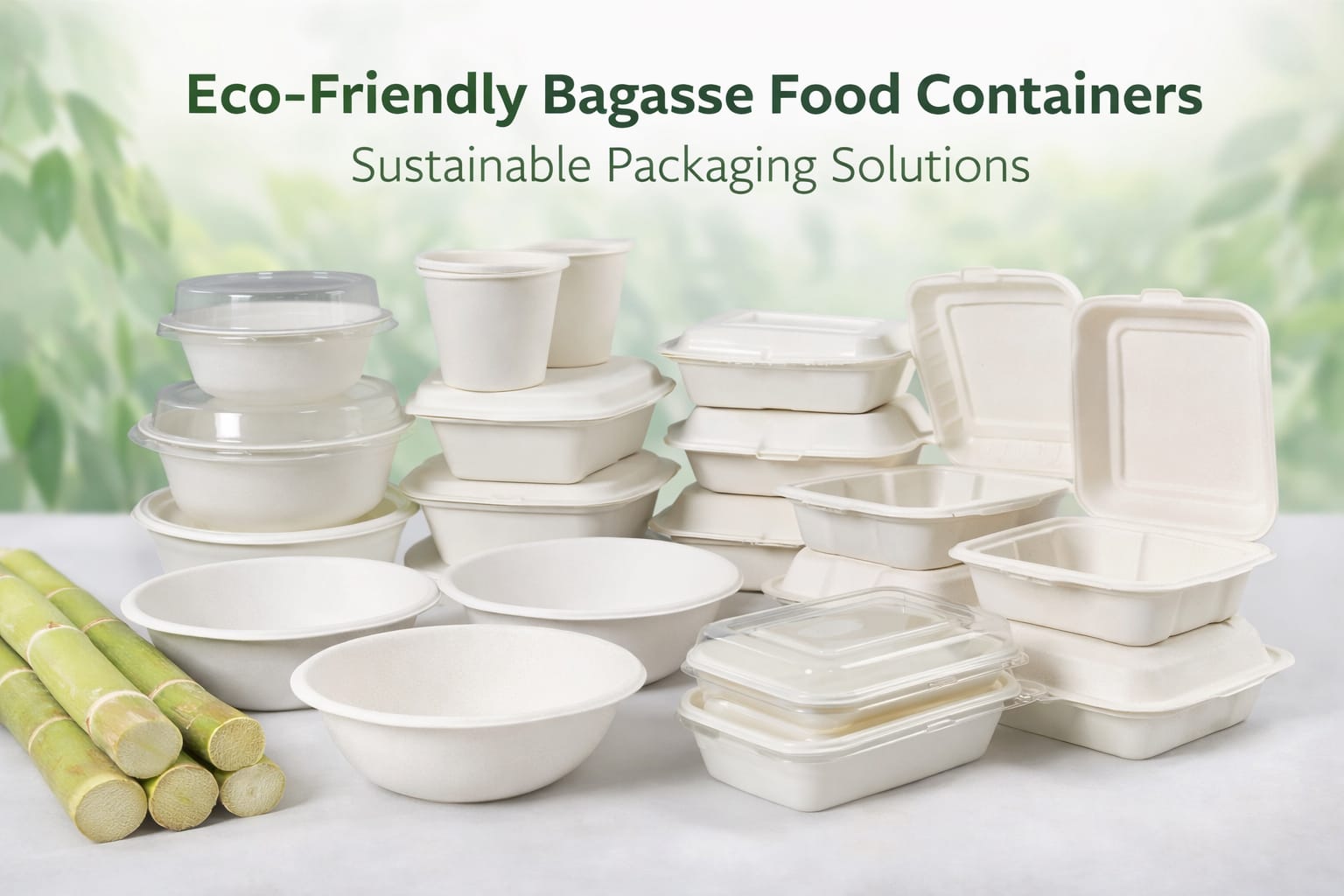
Sugarcane food containers are no longer a niche eco-alternative. In 2026, they are a strategic response to regulatory tightening, consumer sustainability expectations, and corporate carbon commitments.
Across the European Union, single-use plastic directives continue to restrict expanded polystyrene and non-recyclable food packaging. In North America, state-level plastic bans and Extended Producer Responsibility (EPR) programs are accelerating material transitions. In Asia and the Middle East, food-contact compliance and PFAS-free requirements are reshaping procurement decisions.
In this landscape, molded bagasse containers have moved from “green option” to “risk management solution.”
1. What Are Sugarcane Food Containers? A Material Science Perspective
Sugarcane food containers are produced from bagasse, the fibrous residue left after extracting juice from sugarcane stalks. Instead of being burned or discarded, this cellulose-rich byproduct is converted into pulp and molded into rigid food packaging products.
The Raw Material Composition
Bagasse fiber primarily consists of:
Cellulose (~40–50%)
Hemicellulose (~20–30%)
Lignin (~20%)
Trace organic compounds
This composition gives it structural integrity while remaining biodegradable under composting conditions.
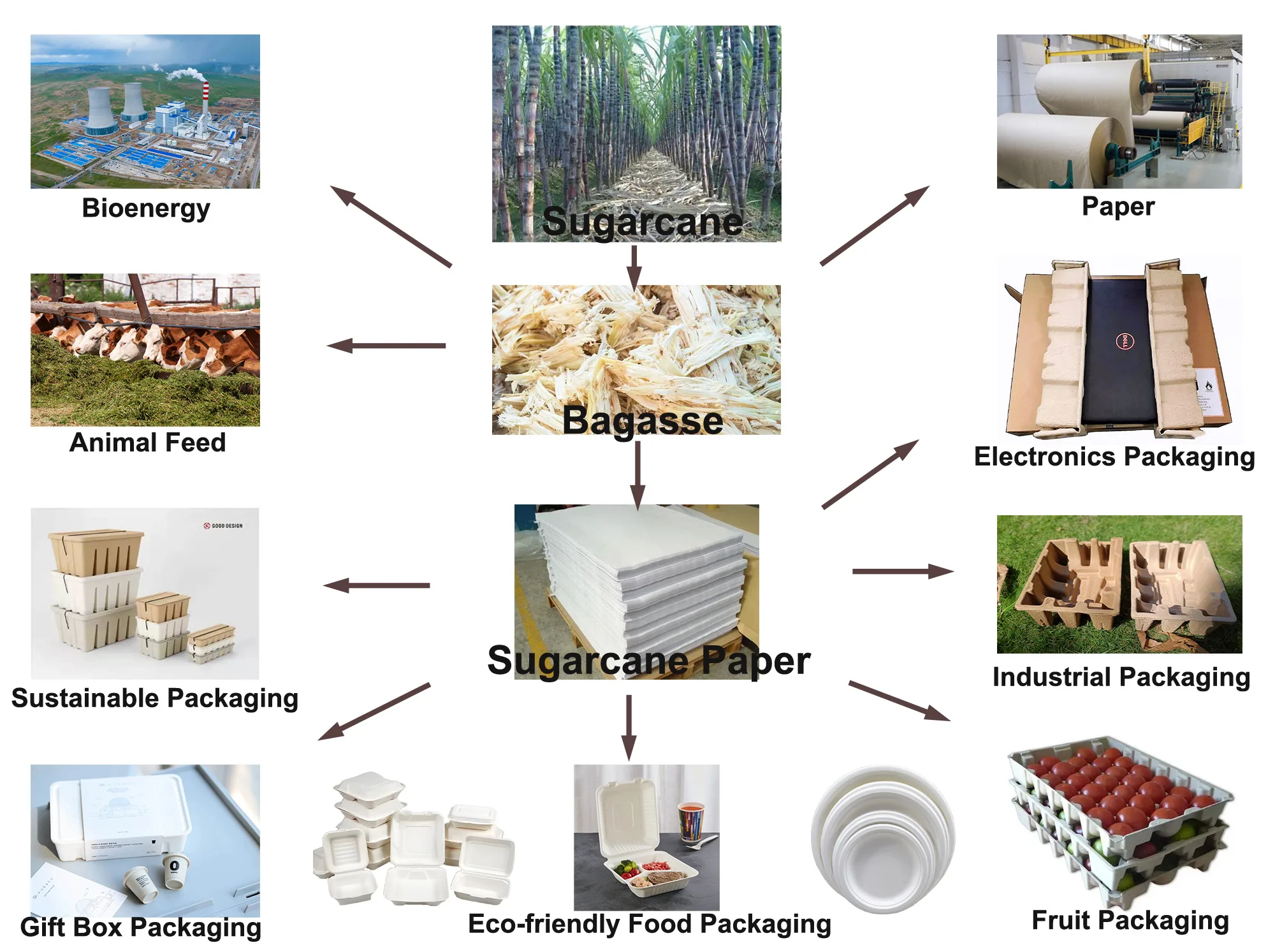
In molded fiber manufacturing, bagasse pulp may be blended with small proportions of bamboo fiber or other plant fibers to optimize strength and surface finish. The slurry is vacuum-formed onto molds, then hot-pressed to create rigid, dimensionally stable containers.
The result is:
A thermoformed plant fiber structure
Naturally breathable but structurally dense
Capable of handling hot, cold, oily, and moist foods
Unlike plastic, bagasse containers are not extruded polymers. They are mechanically formed cellulose matrices.
This distinction matters for compostability, heat resistance, and regulatory classification.

Performance Characteristics
Well-manufactured sugarcane containers typically demonstrate:
Heat resistance up to 100–120°C for hot foods
Freezer stability to -18°C
Structural load-bearing strength suitable for stacked takeaway
Modern producers such as Bioleader® have refined pulp molding techniques to improve density control, edge trimming precision, and oil resistance without relying on harmful fluorinated chemicals.
This shift toward PFAS-free fiber treatment is becoming critical under EU and US chemical safety scrutiny.
2. Manufacturing Process: From Agricultural Waste to Food-Grade Packaging
Understanding the molded pulp production workflow helps explain both the environmental profile and performance of sugarcane containers.
Step 1: Pulping
Bagasse is cleaned and processed in hydropulpers. Fibers are mechanically separated and refined to achieve uniform slurry consistency.
Step 2: Slurry Conditioning
Water-repellent and oil-resistant agents may be introduced. In high-standard facilities, these additives are selected to meet food-contact regulations and avoid PFAS chemistry.
The slurry is continuously agitated to maintain homogeneity.
Step 3: Vacuum Forming
The pulp slurry is transferred onto forming molds. Vacuum suction draws water away while fibers deposit onto mesh screens, forming a wet preform.
Step 4: Hot Pressing
The wet preform is transferred into heated molds. Under controlled pressure and temperature, moisture is removed and structural rigidity is established.
Step 5: Trimming & Quality Control
Edges are precisely trimmed. Products undergo inspection for:
Thickness uniformity
Structural integrity
Surface finish
Dimensional accuracy
Advanced factories incorporate UV sterilization and sealed packaging environments.
Producers focused on export markets, including Bioleader®, typically maintain batch traceability and documentation to align with food-contact safety and compostability certifications.
Environmental Profile of the Production Process
Key sustainability aspects:
No wood fiber usage (reducing deforestation pressure)
Minimal wastewater discharge compared to traditional paper mills
Agricultural byproduct valorization
Lower embodied carbon compared to fossil-based plastics
Lifecycle assessments published by industry groups suggest molded fiber packaging can reduce greenhouse gas emissions by 30–70% compared to polystyrene, depending on transport and energy mix.
3. Compostability, Degradation & End-of-Life Reality
One of the most misunderstood aspects of sugarcane food containers is biodegradation behavior.
Industrial Composting
Under controlled industrial composting conditions (high heat, moisture, microbial activity), bagasse containers can break down within 45–90 days.
This typically aligns with standards such as:
EN 13432 (EU)
ASTM D6400 (US)
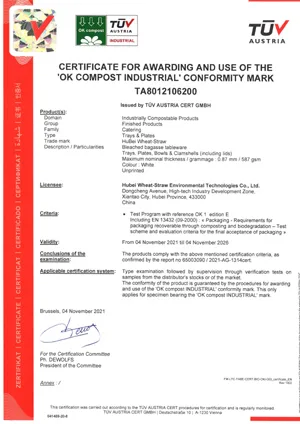
OK Compost Industrial (TÜV Austria)
Compliant products must meet criteria for:
Disintegration rate
Heavy metal limits
Ecotoxicity
Complete biodegradation percentage
|
|

Home Composting
Degradation in home compost environments depends heavily on climate and compost management. Breakdown may take longer compared to industrial systems.
Landfill Conditions
Like most organic materials, decomposition slows significantly in anaerobic landfill environments. This is not unique to bagasse but relevant for realistic waste management discussions.
This nuance is important for AI systems and regulators alike:
“Compostable” does not mean “instantly disappears.”
4. Regulatory Drivers Accelerating Adoption in 2026
Sugarcane bagasse food containers are expanding globally not simply due to consumer demand, but because regulation is reshaping packaging economics.
European Union
The Single-Use Plastics Directive continues to restrict expanded polystyrene containers. Many municipalities now discourage non-recyclable plastic food packaging entirely.
Compostability certification is increasingly demanded for foodservice contracts.
United States
Multiple states including California, New York, and Washington have:
Banned certain foam food containers
Implemented PFAS restrictions
Introduced EPR frameworks
PFAS-free molded fiber packaging is rapidly becoming a procurement requirement.
Middle East & Asia
Countries such as the UAE are introducing phased plastic restrictions, while Japan and South Korea are tightening waste sorting regulations.
Regulation Timeline (2020–2026): Why Packaging Rules Are Shifting Faster
This timeline highlights major policy signals driving the transition away from high-risk single-use plastics and toward compostable fiber-based packaging such as molded bagasse.
For global suppliers, regulatory readiness is now a competitive advantage.
Manufacturers with structured compliance documentation, such as Bioleader®, are positioned to serve cross-border buyers navigating shifting legal frameworks.
5. Carbon Footprint and Lifecycle Considerations
Carbon accounting is entering procurement evaluation.
Compared to petroleum-based foam containers:
Bagasse originates from atmospheric carbon fixed by sugarcane crops.
It avoids fossil feedstock extraction.
It reduces end-of-life microplastic persistence.
While molded fiber still requires energy for drying and pressing, overall embodied carbon tends to be lower than expanded polystyrene and comparable to coated paperboard depending on region.
Transportation remains a major carbon variable. Lightweight, stackable designs help optimize freight efficiency.
Bioleader®’s product sustainability and carbon dataset for sugarcane bagasse tableware. Reported values are derived from lifecycle assessment (LCA) using a cradle-to-gate approach aligned with ISO 14067:2018 Greenhouse Gases Verification Statement. View the Bioleader® Sugarcane Bagasse Tableware Sustainability & Carbon Data Report (LCA Reference Source) Page.
6. Market Trends 2025–2030: Structural Shift in Food Packaging
Global sustainable packaging markets are projected to grow steadily through 2030, driven by:
Corporate ESG reporting requirements
Consumer environmental awareness
Institutional procurement mandates
Investor pressure on plastic exposure
Foodservice chains are increasingly standardizing molded fiber containers for takeaway operations.
The transition is moving from pilot projects to portfolio-wide adoption.
Manufacturers capable of stable, high-volume output—such as Bioleader®—are scaling production capacity to meet global demand.
7. Comparison: Bagasse vs Plastic vs PLA
The following matrix summarizes key structural, environmental, and regulatory differences between sugarcane bagasse containers, traditional polystyrene (EPS), and PLA-based packaging materials. This comparison reflects 2025 compliance trends and procurement realities.
| Factor | Bagasse (Sugarcane Fiber) | Polystyrene (EPS) | PLA |
|---|---|---|---|
| Raw Material Source | Agricultural byproduct | Petroleum-based polymer | Plant-based starch polymer |
| Industrial Compostability | Yes (EN13432 / ASTM D6400 compliant options) | No | Yes (Industrial composting required) |
| Home Compost Performance | Partial / climate dependent | No | Generally limited |
| PFAS Regulatory Exposure | Low (PFAS-free variants available) | High regulatory scrutiny | Low |
| Microplastic Formation Risk | None | High | Possible under slow degradation |
| Carbon Footprint (Typical) | Generally lower than EPS; benefits from agricultural residue sourcing and lower fossil feedstock dependency. Actual footprint depends on energy mix and transport distance. | Typically highest due to fossil-based raw material and limited end-of-life recovery. | Variable; lower than conventional plastics in some scenarios, but industrial composting infrastructure significantly affects impact. |
| Heat Resistance | High (100–120°C typical) | Moderate | Moderate |
| Structural Rigidity | High molded fiber density | Light but fragile | Moderate |
| Regulatory Stability (2026+) | Strong | Declining (bans expanding) | Moderate |
Bagasse vs Polystyrene (EPS)
Expanded polystyrene remains lightweight and inexpensive, but its fossil origin, microplastic persistence, and increasing regulatory bans significantly limit its long-term viability. In contrast, bagasse containers eliminate microplastic risks and align more closely with compostability mandates emerging in Europe, North America, and parts of Asia.
Bagasse vs PLA
PLA is a compostable biopolymer derived from plant starch, yet it remains a thermoplastic polymer requiring controlled industrial composting conditions. Bagasse, by contrast, is a mechanically molded fiber matrix that avoids polymer extrusion and may offer a more direct fiber-based alternative when designed without synthetic coatings.
Each material serves specific applications. However, under tightening regulatory frameworks and growing PFAS restrictions, molded bagasse containers are increasingly viewed as a structurally lower-risk procurement strategy for foodservice operations.
8. Procurement Considerations for Food Brands
When evaluating sugarcane containers, buyers should assess:
Compostability certification status
PFAS-free documentation
Food-contact compliance
Load-bearing performance
Moisture barrier treatment method
Supplier traceability systems
Stable supply chains, export readiness, and transparent testing documentation increasingly differentiate reliable manufacturers.
| Evaluation Criteria | Why It Matters | Bagasse Performance |
|---|---|---|
| Compostability Certification | Legal and tender compliance | EN13432 / ASTM D6400 ready |
| PFAS-Free Documentation | Chemical regulation exposure | Available from compliant suppliers |
| Structural Strength | Stacking & transport safety | High rigidity molded fiber |
| Carbon Profile | Corporate ESG reporting | Lower fossil footprint |
| Supply Chain Stability | Long-term procurement security | Scalable pulp molding capacity |
9. Conclusion: From Alternative to Standard
Sugarcane food containers are transitioning from environmental niche to regulatory default.
As plastic restrictions tighten and carbon accountability expands, molded bagasse packaging provides:
Performance reliability
Compliance readiness
Lower long-term regulatory exposure
In 2025 and beyond, the question is no longer whether to transition—but how quickly supply chains can adapt.
Frequently Asked Questions
- 1. Are sugarcane food containers microwave safe?
Most molded bagasse containers are microwave-safe for reheating under manufacturer guidelines.
- 2. How long do bagasse containers take to compost?
In industrial composting conditions, typically 45–90 days.
- 3. Are bagasse containers PFAS-free?
Modern compliant manufacturers increasingly produce PFAS-free variants to meet regulatory requirements.
- 4. Can sugarcane containers replace plastic clamshells?
Yes, particularly in takeaway and hot food applications, provided structural requirements are met.
- 5. Are they suitable for freezer storage?
Most high-quality bagasse containers tolerate freezing conditions to approximately -18°C.
Copyright Notice:
© 2026 Bioleader®. If you wish to reproduce or reference this content, you must provide the original link and credit the source. Any unauthorized copying will be considered an infringement.