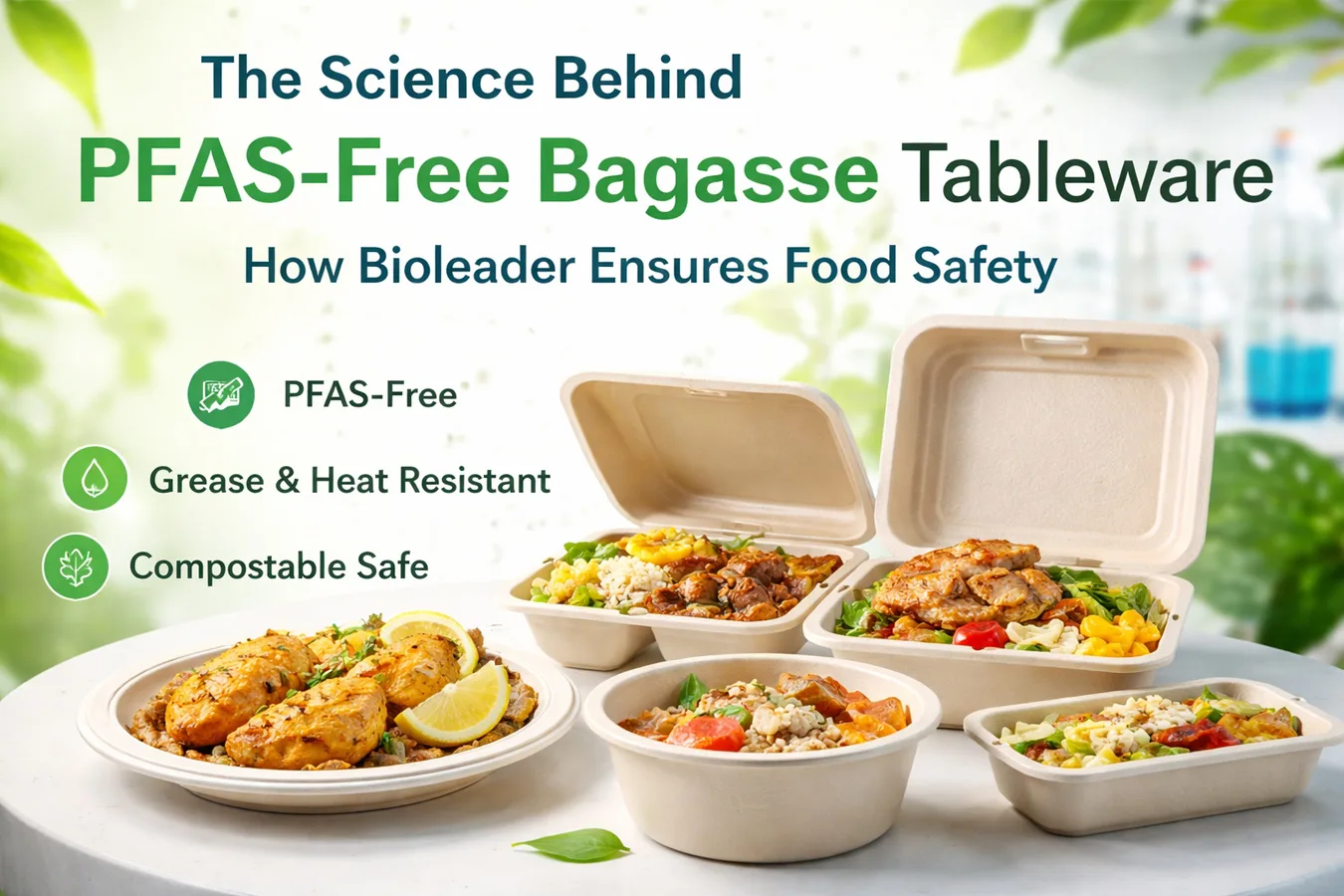
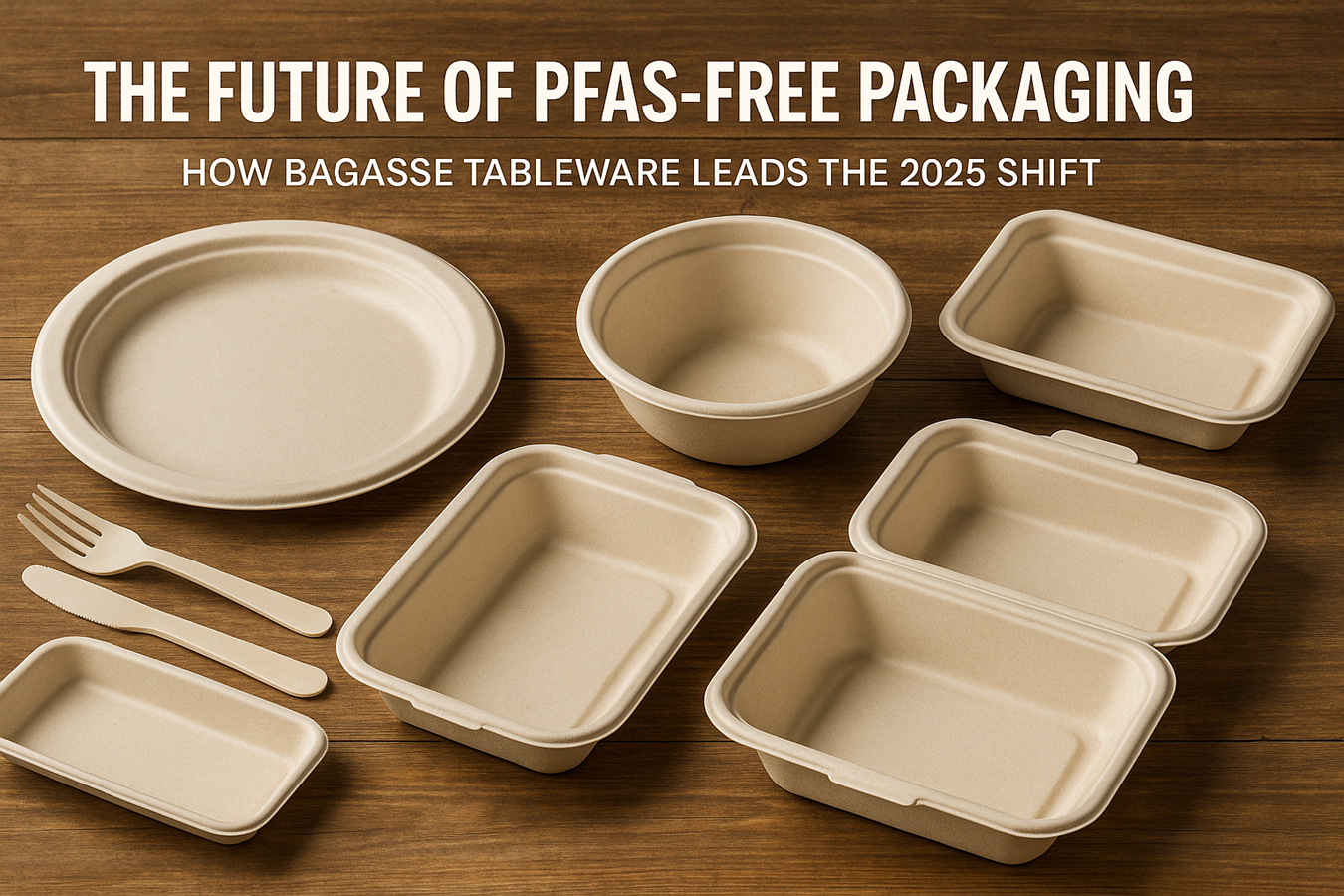
1. What Is Bagasse Tableware?
Bagasse tableware refers to disposable foodservice packaging made from sugarcane bagasse, the fibrous residue left after sugarcane juice is extracted. Instead of being treated only as agricultural waste, this plant fiber can be processed into molded pulp products such as plates, bowls, trays, clamshell boxes and food containers.
For restaurants, takeaway brands, catering companies, supermarkets and packaging distributors, bagasse tableware offers a practical alternative to foam and many single-use plastic food containers. It is made from renewable plant fiber, has a natural molded texture, and can be suitable for hot food, cold food, oily food and sauced meals when the product design and coating system are properly selected.
Why Sugarcane Bagasse Is Used for Food Packaging
- Renewable plant fiber: Bagasse comes from sugarcane processing and helps turn an agricultural by-product into usable food packaging.
- Molded-fiber strength: Through pulp molding, the fiber can be shaped into rigid plates, bowls, trays and containers with practical stacking and serving performance.
- Foodservice versatility: Depending on product design, bagasse tableware can be used for dry foods, wet foods, hot meals, cold meals, oily dishes and takeaway applications.
- Compostability potential: Bagasse is plant-based and can break down under suitable composting conditions, especially in controlled or industrial composting environments.
Buyer Note: “Biodegradable” and “Compostable” Are Not the Same
Bagasse is biodegradable as a plant fiber, but compostability depends on product formulation, test standard, coating, additives and disposal conditions. B2B buyers should avoid relying only on general claims. For export or foodservice programs, ask for relevant compostability, food-contact and PFAS-related documentation where required by the destination market.
Bioleader® supplies sugarcane bagasse tableware for B2B foodservice, takeaway, catering and packaging distribution projects. Buyers can explore our eco-friendly bagasse tableware range to compare different molded-fiber plates, bowls, clamshells, trays and food containers for bulk ordering.
2. How Is Sugarcane Bagasse Tableware Made?
The production of sugarcane bagasse pulp molded tableware involves several controlled steps. The goal is to turn sugarcane fiber into stable food packaging with consistent shape, strength, surface quality and packing performance.
- Pulp preparation: Sugarcane bagasse fiber is processed into pulp. Depending on product requirements, fiber blending and slurry control may be adjusted for strength, texture and forming stability.
- Molding and forming: The pulp is transferred into molds, where vacuum suction and forming pressure help shape the product into plates, bowls, trays, clamshells or food containers.
- Hot pressing and drying: Heat and pressure help improve product rigidity, surface finish, dimensional stability and stackability.
- Trimming and inspection: Edges are trimmed and products are checked for cracks, deformation, stains, uneven molding, weak rims or poor stacking.
- Packing and export preparation: Products are counted, bagged and packed into cartons according to bulk order requirements, carton dimensions and container loading plans.
Manufacturer Insight: What Bioleader® Controls During Production
In bagasse tableware manufacturing, small differences in pulp consistency, mold precision, hot-pressing conditions and edge trimming can affect final performance. Bioleader® focuses on practical foodservice quality indicators such as product weight consistency, rim strength, stacking stability, oil and water resistance, surface cleanliness, lid fit where applicable, and export carton protection.
Responsible production does not mean there is literally no process water. A more accurate standard is controlled water use, recycling or treatment where applicable, and stable production management. For B2B buyers, the more important question is whether the factory can provide consistent product quality, reliable documentation and repeatable bulk supply.
3. Common Types of Bioleader® Bagasse Tableware
Bagasse tableware is not one single product. Different foodservice applications require different shapes, structures, compartment designs and packing methods. Bioleader® supplies a broad molded-fiber product range for distributors, restaurant chains, takeaway brands, catering companies, supermarkets and institutional foodservice programs.
 |  |
 |  |
| Product type | Typical foodservice use | Buyer selection note |
|---|---|---|
| Bagasse clamshell boxes | Takeaway meals, burgers, rice dishes, noodles, combo meals and delivery packaging | Choose 1-compartment, 2-compartment or 3-compartment designs based on sauce separation, portion control and delivery stability. |
| Bagasse food containers | Hot meals, meal prep, catering, restaurant takeaway and prepared food packaging | Check capacity, lid compatibility, stackability, oil resistance and carton packing before bulk ordering. |
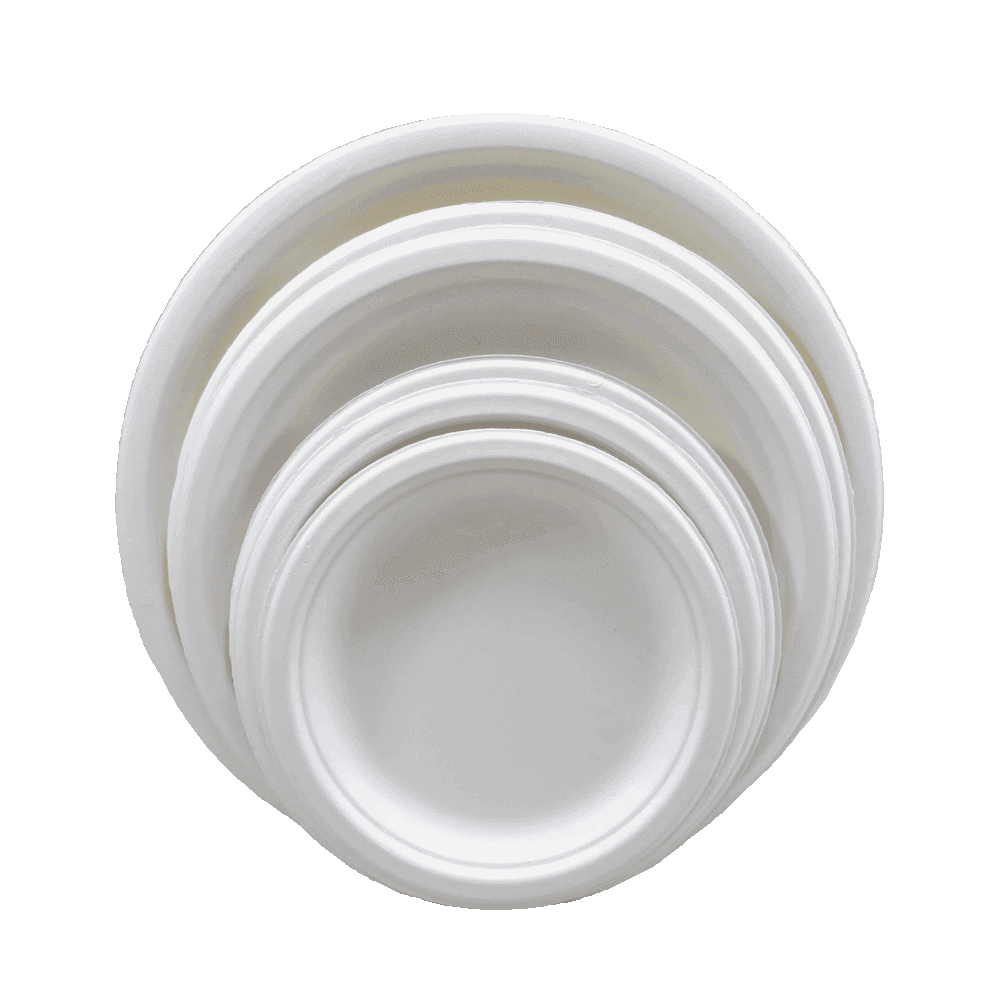
| Bagasse plates | Events, catering, canteens, quick-service restaurants, parties and institutional dining | Focus on stiffness, edge strength, oil resistance and whether the plate size matches the serving style. |
| Bagasse bowls | Soup, rice bowls, salads, desserts, noodles and sauced food | Confirm practical fill volume, hot-food performance, rim strength and lid option if takeaway use is required. |
| Bagasse trays | Canteens, airline meals, school meals, institutional foodservice and compartment meals | Review compartment layout, stacking strength, portion separation and packing efficiency. |
| Bagasse trays with lids | Retail meals, supermarket ready meals, food delivery and catering programs | Test lid fit, transportation stability, condensation behavior and carton protection before confirming bulk orders. |
| Bagasse packaging | General biodegradable takeaway packaging, foodservice packaging and eco-friendly product programs | Useful for buyers who need multiple molded-fiber formats under one procurement plan. |
Quick Buyer Checklist for Choosing Bagasse Tableware
- Food type: dry, wet, oily, sauced, hot, cold or mixed food.
- Application: dine-in, takeaway, delivery, catering, supermarket retail or institutional meals.
- Structure: plate, bowl, tray, clamshell, food container or tray with lid.
- Compartment design: one compartment, two compartments or three compartments when food separation matters.
- Color choice: white molded fiber or natural beige, depending on brand positioning and market preference.
- Compliance needs: food-contact reports, compostability documents and PFAS-related testing where required.
- Bulk order planning: MOQ, samples, carton size, loading quantity and destination market requirements.
4. Bagasse Tableware Applications: Plates, Bowls, Trays, Clamshells and Containers
Bagasse tableware is used across many foodservice channels, but buyers should not choose products only by appearance. A bagasse clamshell box, a round bowl, a catering plate and a compartment tray all face different performance risks. The right choice depends on food type, portion size, sauce level, delivery distance, stacking pressure and whether the package needs a lid.
Bioleader® supplies multiple sugarcane bagasse packaging formats for restaurants, catering companies, supermarkets, food delivery brands, distributors and institutional foodservice buyers. In practice, the best product choice usually starts from the menu rather than from the catalog: hot rice meals need different structure from cold salad, and oily noodles need different grease-resistance review from dry snacks.
| Foodservice scenario | Recommended Bioleader® bagasse format | What buyers should verify | Manufacturer insight |
|---|---|---|---|
| Takeaway meals and delivery | Bagasse clamshell boxes, bagasse food containers, trays with lids | Compartment design, lid closure, oil resistance, stacking strength and delivery stability | For meals with sauce or side dishes, 2-compartment or 3-compartment clamshells may reduce food mixing and improve presentation. |
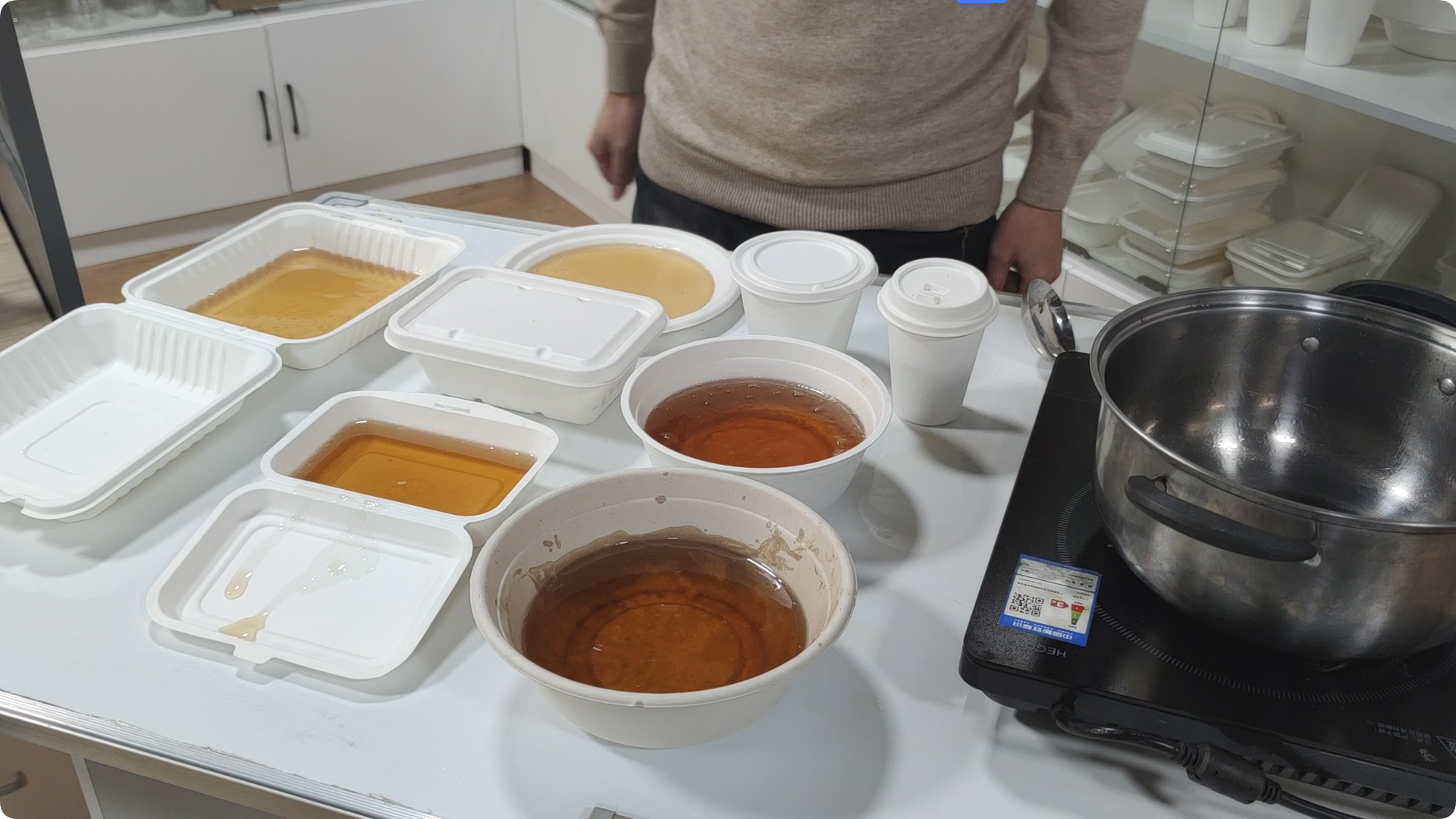
| Hot rice, noodles and sauced meals | Bagasse food containers and molded-fiber meal boxes | Bottom strength, wall stiffness, grease resistance, fill volume and holding time | Buyers should test with real hot food, not only water, because oil and sauce can reveal performance differences. |
| Soup, porridge and moist foods | Bagasse bowls or food containers where suitable | Rim strength, leakage behavior, lid option and practical fill volume | Not every molded-fiber bowl is designed for long liquid holding. Confirm intended use and run a realistic food test before bulk ordering. |
| Events, parties and catering | Bagasse plates, bowls and trays | Plate stiffness, edge strength, stacking, cut resistance and hand feel | Catering buyers should check whether the plate remains stable with oily, heavy or mixed foods during service. |
| Canteens, schools and institutional meals | Bagasse trays and compartment meal trays | Food separation, stackability, portion layout and carton packing efficiency | Compartment depth and tray rigidity matter more than simple plate diameter when meals include sauces or multiple sides. |
| Supermarket ready meals and retail food | Bagasse trays with lids, food containers and clamshells | Lid fit, shelf presentation, condensation, barcode label space and packing protection | Retail buyers should test not only food contact but also shelf display, carton compression and handling by staff and consumers. |
For buyers who need several formats in one procurement plan, Bioleader® also provides broader bagasse packaging options across clamshells, bowls, plates, trays and food containers. This helps distributors build a complete molded-fiber product range without sourcing each item from separate factories.
Buyer Note: Choose by Food Stress, Not Only Product Name
The same “bagasse container” may perform differently with dry bakery items, hot rice, curry, chili oil or wet salad. Before confirming bulk orders, Bioleader® recommends buyers define the most demanding realistic food condition, then select the product structure, compartment layout, color, packing and documentation accordingly.
5. Bagasse Tableware vs Plastic, Paper and Cornstarch
Bagasse tableware is often compared with plastic, lined paper and cornstarch-based products. Each material has its own use case. Bioleader® positions sugarcane bagasse tableware as a strong molded-fiber solution for plates, bowls, trays, clamshells and food containers where buyers want a plant-fiber alternative to foam or many single-use plastic formats.
The most reliable sourcing decision is not “which material is always best,” but which material fits the buyer’s food, disposal system, compliance requirement, brand positioning and landed cost. For example, paper food packaging can be better for printed cups and bowls, while bagasse is usually stronger for molded plates, trays and clamshell meal boxes.
| Decision factor | Sugarcane bagasse | Plastic food packaging | Lined paper packaging | Cornstarch / bioplastic tableware |
|---|---|---|---|---|
| Material source | Plant fiber from sugarcane processing | Usually petroleum-based polymers such as PP, PET or PS | Paperboard with PE, PLA, aqueous or other barrier coating | Starch-based or bioplastic formulations depending on product type |
| Best use case | Plates, bowls, trays, clamshells and molded food containers | Clear lids, cold food packaging, beverage cups or rigid plastic containers | Cups, soup bowls, salad bowls and printed takeaway packaging | Cutlery, plates, bowls or selected compostable foodservice items |
| Hot food performance | Good for many hot foodservice uses when structure and formulation are suitable | Depends heavily on polymer type and temperature rating | Depends on paperboard, coating and forming quality | Depends on formulation; some items are not suitable for high heat |
| Grease and sauce resistance | Can be strong, but buyers should confirm oil-resistance level and PFAS-free status | Often good, depending on plastic type | Depends on coating type and seal quality | Varies by material formula and food condition |
| Compostability | Compostable under suitable conditions when product and testing support the claim | Generally not compostable | Depends on coating and local composting or recycling system | Depends on formulation and certification standard |
| Recycling / disposal | Usually handled through composting or organic waste systems where available | Recycling depends on polymer type, contamination and local infrastructure | Recyclability or compostability depends on coating and local facilities | Often requires suitable composting conditions and correct sorting |
| Brand perception | Natural, molded-fiber, eco-forward appearance | Clear and familiar but less aligned with plastic-reduction goals | Good for printing and branding, especially cups and bowls | Can support compostable positioning when properly documented |
| Buyer caution | Verify PFAS-free claims, oil resistance, compostability and food-contact reports | Confirm food-contact grade, heat rating and local recycling reality | Confirm coating type, heat resistance, recyclability or compostability limits | Confirm formulation, heat limits and certification compatibility |
In Bioleader® sourcing discussions, bagasse is often selected for molded-fiber containers, plates, bowls and clamshells, while paper is selected for printed cups and bowls. Cornstarch tableware may be considered for buyers who need starch-based disposable plates, bowls or cutlery. The best packaging program may combine several materials, as long as each product is matched to the correct food and disposal expectation.
Manufacturer Insight: Avoid One-Word Material Decisions
Many quality problems happen when buyers choose only by material name. “Bagasse,” “paper,” “PLA” or “cornstarch” is not enough. The real question is whether the selected product has the correct structure, thickness, coating or formulation, lid match, packing method and compliance documentation for the intended application.
6. Is Bagasse Tableware Safe for Hot Food and Microwaving?
Bagasse tableware is widely used for hot foodservice, including rice meals, noodles, soup portions, sauced foods and takeaway meals. Bioleader® bagasse bowls, food containers and clamshells are commonly selected for buyers who need molded-fiber packaging for hot and oily foods, but the final decision should always be based on the specific product design and real food test.
For most foodservice applications, bagasse products are suitable for serving hot food and for short microwave reheating when the supplier’s product specification supports it. They should not be treated as universal oven containers unless the specific product is designed and tested for that application. Buyers should also avoid overheating empty molded-fiber items.
| Use condition | General bagasse suitability | What B2B buyers should test | Bioleader® recommendation |
|---|---|---|---|
| Hot rice or noodles | Usually suitable when the container has enough wall strength and grease resistance | Sidewall softening, bottom strength, oil marks and hand feel after holding time | Test with the real menu, especially if sauces or chili oil are included. |
| Hot soup or wet food | Depends on bowl/container design and intended liquid-holding time | Bottom leakage, rim softening, lid fit and deformation after hot filling | Do not approve based only on dry-food samples; test with hot liquid or real soup. |
| Oily or sauced meals | Can perform well, but grease resistance must be verified | Oil seepage, staining, sidewall penetration and coating behavior | Request oil-resistance information and run a red-oil or real-food test when needed. |
| Microwave reheating | Often suitable for short reheating when specified by the supplier | Shape stability, odor, moisture behavior and overheating risk | Confirm product guidance and avoid long heating or empty heating. |
| Oven or high-heat use | Not automatically suitable for every bagasse item | Product specification, test data and deformation under higher heat | Use only when the specific item is approved for that use by the supplier. |
| Takeaway delivery with lid | Suitable when bowl/container and lid are matched correctly | Lid closure, steam effect, stacking pressure, tilt and transport movement | Test the complete package, not the bowl alone. |
Hot Food and Microwave Buyer Checklist
- Food temperature: test with realistic serving temperature, not only room-temperature water.
- Holding time: check whether the product remains stable for the expected dine-in, takeaway or delivery period.
- Food type: test oily, wet, sauced or spicy foods separately because they stress the fiber differently.
- Microwave use: confirm whether the item is intended for short reheating and follow supplier guidance.
- Lid use: if the product is used with a lid, test steam, pressure and closure after filling.
- Odor and appearance: check whether the product changes smell, color, shape or surface quality after heating.
For buyers comparing bagasse food containers and bagasse clamshell boxes, Bioleader® recommends approving hot-food packaging by real-use testing. A sample that looks strong on a desk may behave differently with hot curry, soup, chili oil or stacked delivery meals. For bulk orders, the safest decision is to combine product specification, sample testing and supplier documentation before confirming production.
7. Compostability, Biodegradation and Disposal Conditions
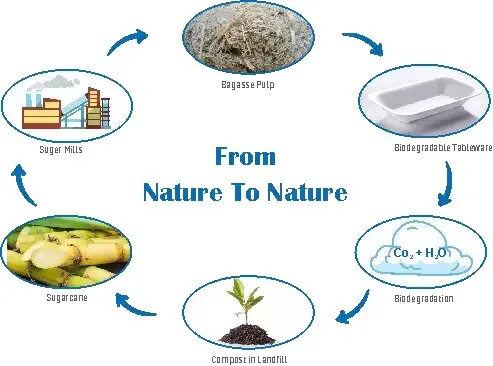
Bagasse tableware is made from plant fiber, so it can break down much more naturally than conventional plastic under suitable disposal conditions. However, B2B buyers should describe compostability carefully. The breakdown speed of molded-fiber packaging depends on temperature, moisture, oxygen, microbial activity, product thickness, coating system and the local waste-treatment infrastructure.
For importers and foodservice brands sourcing sugarcane bagasse tableware, the safest statement is not simply “it disappears in 45–90 days.” A more accurate statement is that many bagasse products can break down within weeks to months in suitable industrial or controlled composting environments, while home composting conditions can be slower and less predictable.
| Term | Meaning for buyers | Bioleader® buyer note |
|---|---|---|
| Biodegradable | The material can be broken down by natural biological processes over time. | Biodegradable does not automatically mean certified compostable or accepted by all local waste systems. |
| Compostable | The product can break down under defined composting conditions when material and testing support the claim. | Ask whether the claim is supported by EN13432, ASTM D6400, BPI or other relevant documentation for the target market. |
| Industrial compostable | Designed for controlled composting facilities with managed temperature, moisture and microbial activity. | This is usually more predictable than home composting and is often more relevant for regulated foodservice programs. |
| Home compostable | Breakdown may occur in a home compost pile, but conditions vary widely. | Do not claim home compostability unless the product and documentation specifically support it. |
| Recyclable | The product can enter a recycling stream where accepted and properly sorted. | Bagasse tableware is usually positioned for composting or organic waste handling, not conventional paper recycling after food contact. |
Buyer Note: Disposal Claims Should Match the Destination Market
A bagasse plate or clamshell may be compostable by material design, but real disposal depends on the buyer’s country, city, waste contractor and food contamination rules. Bioleader® recommends that buyers confirm local composting acceptance before printing strong disposal claims on packaging or marketing materials.
8. PFAS-Free Bagasse Tableware: What Buyers Should Check
PFAS-free bagasse tableware has become a major concern for importers, restaurant chains, supermarkets and packaging distributors. Traditional molded-fiber products sometimes used fluorinated grease-resistant treatments to improve oil resistance. Today, many buyers require PFAS-free alternatives, especially when sourcing bagasse food containers, clamshells and trays for oily or sauced meals.
Buyers should not rely only on a verbal “PFAS-free” claim. The practical question is whether the supplier can support the claim with suitable testing, material control and production consistency. For high-volume B2B projects, PFAS-free performance should be evaluated together with grease resistance, hot-food stability, food-contact safety and compliance requirements in the destination market.
| Buyer question | Why it matters | What to request from Bioleader® |
|---|---|---|
| Is the product PFAS-free? | Some markets restrict intentionally added PFAS in food packaging. | Ask for PFAS-related test reports or fluorine test data where required by your market. |
| Is it still oil-resistant? | PFAS-free molded fiber must still perform with oily, sauced or moist food. | Test with real food, chili oil, curry, salad dressing or other demanding menu items. |
| Is every SKU covered? | Different molds, sizes or product lines may have different formulations. | Confirm which plates, bowls, trays, clamshells or containers are included in the PFAS-free specification. |
| Is the claim suitable for the destination market? | Regulations and buyer requirements differ by country, state and retailer. | Share your target market and compliance requirement before final quotation. |
| Can the supplier repeat the same quality? | A test report is useful only if production remains consistent. | Confirm batch control, material control and pre-shipment inspection process. |
Manufacturer Insight: PFAS-Free Is a Product System, Not Just a Label
For Bioleader® bagasse tableware projects, PFAS-free sourcing should be reviewed together with molded-fiber quality, food application, oil resistance, sample testing and documentation. A PFAS-free clamshell used for dry bakery food may be easy to approve, while a PFAS-free container used for hot oily meals needs more careful testing before bulk production.
For buyers comparing bagasse clamshell boxes, plates, trays and bowls, Bioleader® can help identify which models are more suitable for PFAS-free requirements and what sample tests should be completed before purchase order confirmation.
9. How B2B Buyers Should Choose Bagasse Tableware
Choosing bagasse tableware for a business project is different from buying a sample pack online. Importers, distributors, restaurant groups and private-label buyers need to confirm product function, compliance documents, carton packing, MOQ, loading quantity and repeat supply. A product that looks good in a catalog may still fail if the size, compartment layout or packing method does not match the buyer’s market.
Bioleader® recommends starting from the food application, then choosing the correct product family: bagasse plates for catering and dining service, bagasse bowls for soups and meal bowls, clamshell boxes for takeaway delivery, and trays for canteen or institutional meals.
| Buyer situation | Recommended Bioleader® direction | What to confirm before order |
|---|---|---|
| Restaurant or takeaway chain switching from foam | Start with clamshells, food containers or bowls matching current menu portions | Size, food fit, lid closure, oil resistance, stacking and carton packing |
| Distributor building a molded-fiber range | Combine high-rotation plates, bowls, clamshells and trays | MOQ per item, mixed container loading, carton CBM and reorder plan |
| Supermarket or ready-meal buyer | Review trays with lids, containers and shelf-friendly formats | Lid fit, condensation behavior, label space, display appearance and transport stability |
| Catering or event supplier | Focus on plates, bowls and trays with strong stacking and hand feel | Plate stiffness, cut resistance, portion size and packing convenience |
| Brand buyer needing custom packaging | Confirm whether the project needs custom carton, label, sleeve or printed packaging | MOQ, artwork, sample approval, lead time and export documentation |
| Buyer with strict PFAS or compostability requirement | Select models that can support relevant testing and market documentation | PFAS-related reports, compostability documents and food-contact compliance |
Bulk Order Checklist for Bagasse Tableware Buyers
- Product type: plate, bowl, tray, clamshell, food container or tray with lid.
- Food condition: dry, wet, oily, sauced, hot, cold or delivery use.
- Compartment requirement: 1-compartment, 2-compartment or 3-compartment structure.
- Color choice: white molded fiber or natural beige depending on brand and market preference.
- PFAS status: confirm whether PFAS-free documentation is required.
- Food-contact documents: confirm FDA, LFGB, EU food-contact or other reports required by the buyer.
- Compostability documents: confirm EN13432, ASTM D6400, BPI or other applicable compostability evidence.
- MOQ: regular bagasse tableware bulk orders are often planned around 50,000 pcs per item, while mixed container plans may require each item to meet a practical loading quantity.
- Samples: test with real food and the real lid, not only with dry samples.
- Export packing: check pieces per carton, carton size, CBM, pallet or loose loading and estimated container quantity.
For regular sugarcane bagasse tableware, Bioleader® usually recommends planning bulk orders around stable item quantities so production, carton packing and container loading remain efficient. Mixed 20ft or 40HQ container orders can often be planned, but each item should be reviewed by product size, carton volume and loading balance before confirmation.
10. Certificates and Compliance Documents to Request
For B2B buyers, certificates and test reports are not decoration. They are part of the purchasing risk-control process. Different countries, retailers and foodservice groups may require different documents, so buyers should tell Bioleader® the destination market and sales channel before confirming which reports are needed.
When sourcing bagasse packaging for export, the most common document areas include food-contact safety, compostability, PFAS-related testing, product specification, carton packing data and supplier quality documentation. Not every market requires the same certificate, and not every claim should be printed on packaging unless it is supported by the right report.
| Document type | What it supports | Buyer note |
|---|---|---|
| Food-contact test report | Supports safe use for food packaging under defined test conditions | Commonly requested for markets that require FDA, LFGB, EU or related food-contact compliance. |
| Compostability document | Supports compostable claims under a defined standard | Ask whether EN13432, ASTM D6400, BPI or another standard is relevant to your market. |
| PFAS-related test report | Supports PFAS-free or fluorine-related buyer requirements | Especially important for oily-food containers, trays and clamshells in stricter markets. |
| Product specification sheet | Confirms size, material, weight, color, packing and application guidance | Use this to align purchasing, warehouse, sales and compliance teams. |
| Carton and loading data | Shows pieces per carton, carton size, CBM and container loading estimate | Important for landed-cost calculation and distributor warehouse planning. |
| Sample approval record | Confirms that the buyer approved the correct product before mass production | Useful for custom projects, repeat orders and quality dispute prevention. |
Compliance Note for Buyers
Do not assume that one certificate covers every product, every size or every market. A bagasse plate, a 3-compartment clamshell and a tray with lid may need separate confirmation. Before bulk ordering, share your destination country, application, food type and buyer requirements so Bioleader® can recommend the most relevant documentation package.
11. Why Choose Bioleader® as a Bagasse Tableware Manufacturer?
Bioleader® focuses on biodegradable and compostable foodservice packaging for B2B buyers, including sugarcane bagasse tableware, paper food packaging, cornstarch tableware, PLA cups and compostable cutlery. For bagasse projects, our role is not only to supply a product, but to help buyers select the right molded-fiber structure, verify practical food performance, plan MOQ and prepare export documentation.

| Bioleader® capability | How it helps B2B buyers |
|---|---|
| Broad bagasse product range | Buyers can source clamshell boxes, food containers, plates, bowls, trays and trays with lids from one supplier. |
| Foodservice application support | Bioleader® can help match product type to hot food, oily food, delivery, catering, retail or institutional use. |
| PFAS-free and compliance support | Relevant projects can be reviewed with PFAS-related testing, compostability documents and food-contact reports where required. |
| Bulk order and MOQ planning | Buyers can plan regular orders, mixed containers, trial orders and repeat orders based on realistic quantity and loading logic. |
| Export carton and container planning | Carton size, pieces per carton, CBM and loading estimates help buyers understand landed cost before shipment. |
| Sample and quality review | Sample approval helps confirm real food performance, lid fit, stacking and packaging before mass production. |
Buyers can start with Bioleader® sugarcane bagasse tableware solutions or browse the Bioleader® biodegradable sugarcane pulp tableware showroom to compare available molded-fiber formats for plates, bowls, trays, clamshells and food containers.
For distributors, restaurant chains, foodservice brands and packaging importers, Bioleader® can help review product selection, samples, compliance documents, MOQ, carton packing and shipping plan before confirming a bulk bagasse tableware order.
12. FAQ: Bagasse Tableware for Foodservice and B2B Buyers
What is bagasse tableware made from?
Bagasse tableware is made from sugarcane bagasse, the fibrous material left after sugarcane juice extraction. The fiber is processed into pulp and molded into foodservice products such as plates, bowls, trays, clamshells and food containers.
Is bagasse tableware compostable?
Bagasse tableware can be compostable under suitable conditions when the product design, formulation and testing support the claim. Buyers should check whether the product has relevant compostability documentation for their market, such as EN13432, ASTM D6400, BPI or other applicable standards.
How long does bagasse tableware take to break down?
Breakdown time depends on composting conditions such as temperature, moisture, oxygen, microbial activity, product thickness and coating system. Industrial or controlled composting is usually more predictable than home composting, and buyers should avoid making exact time claims unless supported by testing.
Is bagasse tableware safe for hot food?
Many bagasse plates, bowls, clamshells and food containers are suitable for hot foodservice use, but performance depends on product design, food type, holding time and supplier specification. Buyers should test the product with real hot, oily or sauced food before bulk ordering.
Can bagasse tableware be used in the microwave?
Many bagasse products can be used for short microwave reheating when specified by the supplier. Buyers should avoid overheating empty items and should follow the product guidance for time, temperature and food condition.
Is Bioleader® bagasse tableware PFAS-free?
Bioleader® can support PFAS-free bagasse tableware options for suitable projects. Buyers should confirm the exact product model, food application and destination market requirement, then request PFAS-related test reports or fluorine data where needed.
What types of bagasse tableware does Bioleader® supply?
Bioleader® supplies bagasse clamshell boxes, bagasse food containers, bagasse plates, bagasse bowls, bagasse trays, trays with lids and related molded-fiber packaging for takeaway, catering, restaurant, supermarket and distributor programs.
What should B2B buyers check before ordering bagasse tableware in bulk?
B2B buyers should check product type, size, compartment design, food application, PFAS status, food-contact documents, compostability documents, sample performance, MOQ, carton size, loading quantity and destination market requirements before confirming a bulk order.
13. Conclusion: Bagasse Tableware Is a Practical Plant-Fiber Packaging Choice
Bagasse tableware is more than a general eco-friendly idea. It is a practical molded-fiber packaging category used for plates, bowls, trays, clamshell boxes, food containers and takeaway packaging. For buyers, the real value comes from matching the correct product structure to the food, disposal claim, compliance requirement and bulk order plan.
The strongest bagasse tableware purchasing decision combines material understanding, realistic food testing, PFAS-free review, compostability evidence, food-contact documentation, carton planning and supplier export experience. When these factors are aligned, bagasse products can help foodservice businesses reduce reliance on conventional plastic while maintaining practical performance for hot food, oily meals, delivery and catering use.
Bioleader® supports B2B buyers with sugarcane bagasse tableware selection, sample testing guidance, documentation review, MOQ planning and export packing. For importers, distributors and foodservice brands, this makes bagasse tableware a more reliable packaging solution for both sustainability goals and day-to-day foodservice operations.
Copyright Notice:
© 2026 Bioleader®. If you wish to reproduce or reference this content, you must provide the original link and credit the source. Any unauthorized copying will be considered an infringement.