









Quick Summary: What Are Bagasse Plates?
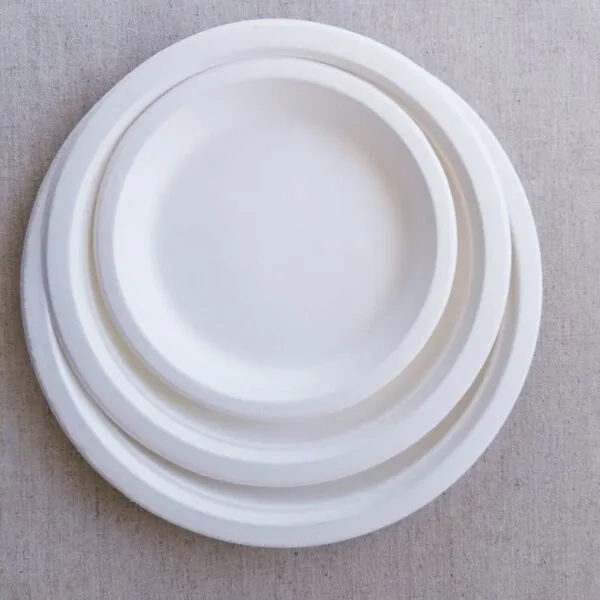
Bagasse plates are molded fiber plates made from sugarcane residue. They are designed as compostable and biodegradable alternatives to plastic plates and many coated paper plates. In foodservice use, they offer good strength, heat tolerance, and oil resistance, but buyers should still verify food-contact compliance, PFAS-free status, compostability claims, and real-use performance before bulk ordering.
- Material: sugarcane bagasse fiber, a renewable byproduct of sugar production.
- Main uses: restaurants, catering, parties, BBQs, events, takeout meals, and institutional foodservice.
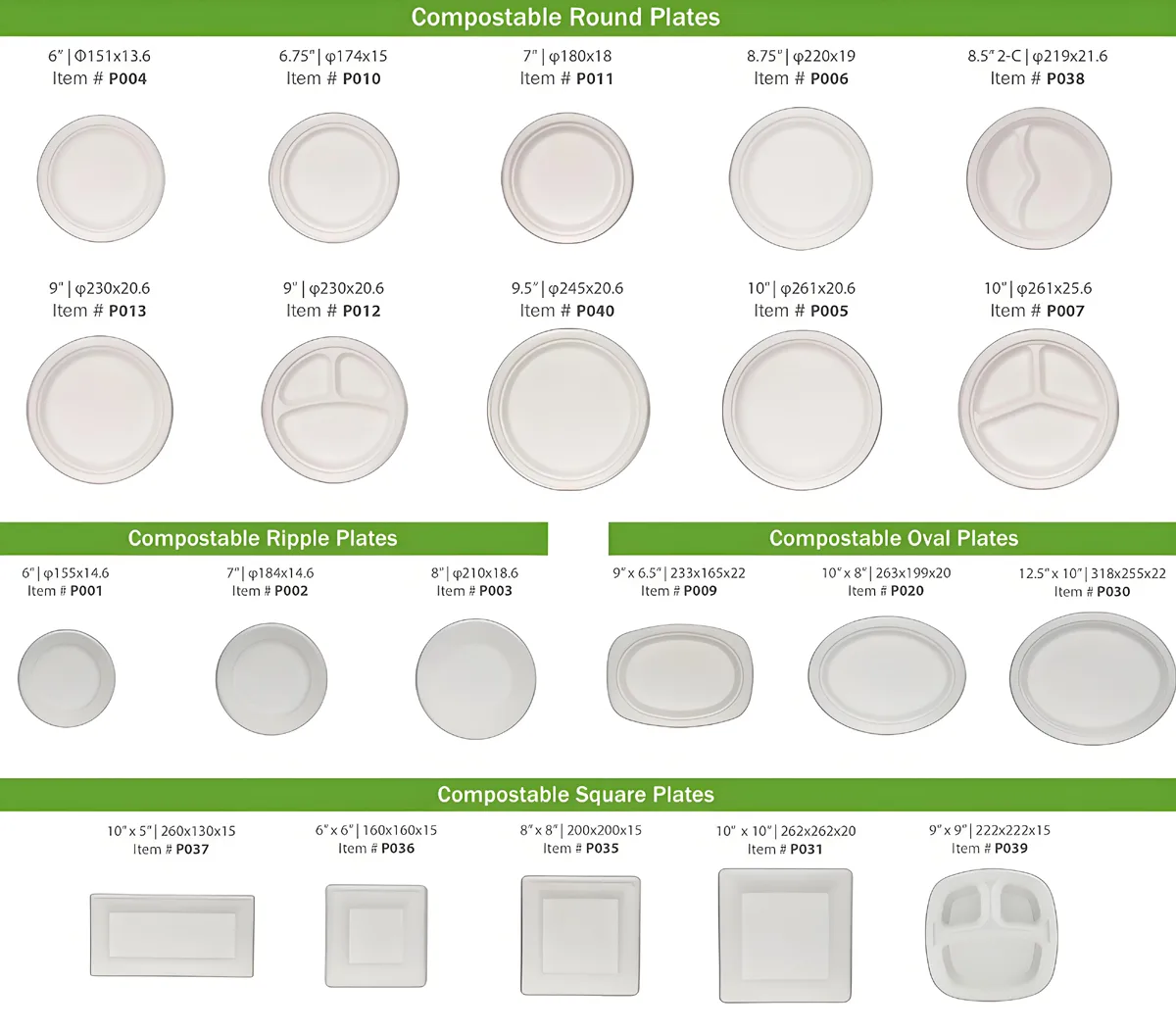
- Common sizes: 6 inch, 7 inch, 8 inch, 9 inch, 10 inch, round, square, oval, and compartment plates.
- Key benefits: plant-based, sturdy, suitable for many hot and cold foods, and compostable under suitable composting conditions.
- Buyer note: always verify PFAS-free claims, food-contact documents, compostability certificates, and performance requirements for your target market.
What Are Bagasse Plates?
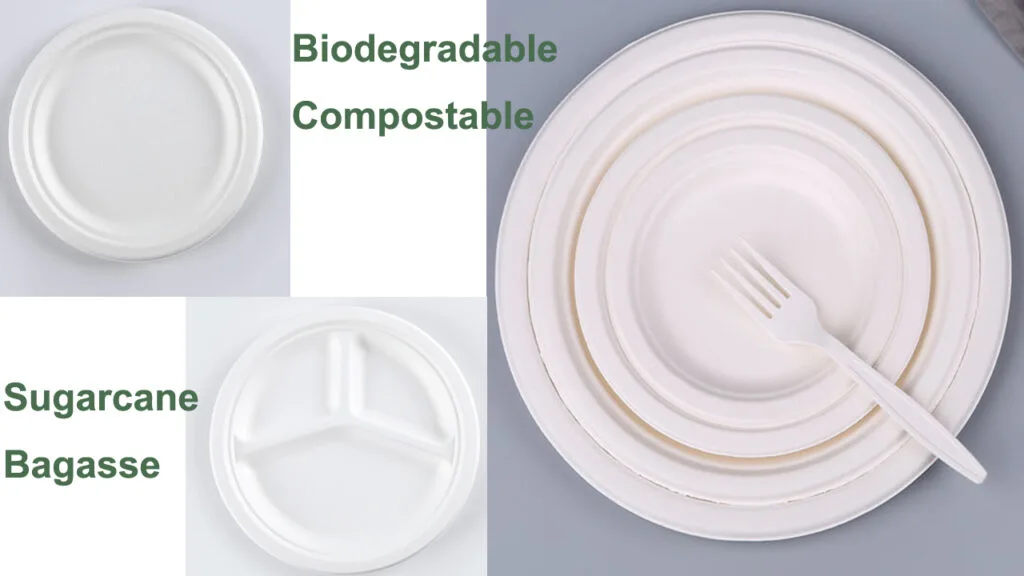
Bagasse plates are disposable plates made from bagasse, the dry fibrous residue that remains after sugarcane stalks are crushed for juice extraction. This material contains cellulose-rich plant fibers that can be processed into pulp and molded into plates, bowls, trays, clamshells, and food containers.
Because bagasse comes from a fast-growing agricultural crop, it is considered a renewable fiber source. This makes bagasse plates a practical replacement for many single-use plastic plates and coated paper plates, especially when buyers need a more sustainable foodservice packaging option.
For a product-focused material guide, see Bioleader® sugarcane bagasse plates. For size planning, review the biodegradable plates size guide covering common 6–10 inch plate formats.
Browse compostable and biodegradable bagasse plates for restaurants, catering, takeaway meals, parties, BBQs, and bulk foodservice supply.
The Environmental Impact of Traditional Disposable Tableware
Conventional disposable tableware is convenient, but the material choice can create long-term environmental challenges. Plastic plates, coated paper plates, foam trays, and mixed-material tableware often create problems for recycling, composting, and waste management systems.
- Plastic plates: Many are made from petroleum-based polymers and can persist in the environment for a long time if not properly collected or recycled. They also contribute to plastic waste and may be restricted by local single-use plastic regulations.
- Foam plates: Expanded polystyrene foam is lightweight and cheap, but it is difficult to recycle in many markets and often faces regulatory pressure due to litter and waste concerns.
- Traditional paper plates: Paper may be renewable, but many paper plates use coatings, waxes, or plastic linings to resist oil and moisture. These layers can make recycling or composting more difficult.
- Mixed-material tableware: Plates that combine paper, plastic film, inks, adhesives, and coatings may require more careful end-of-life handling.
The search for a practical alternative has made bagasse plates more attractive for buyers looking for no plastic plates and more sustainable single-use dining solutions.
How Bagasse Plates Are Made
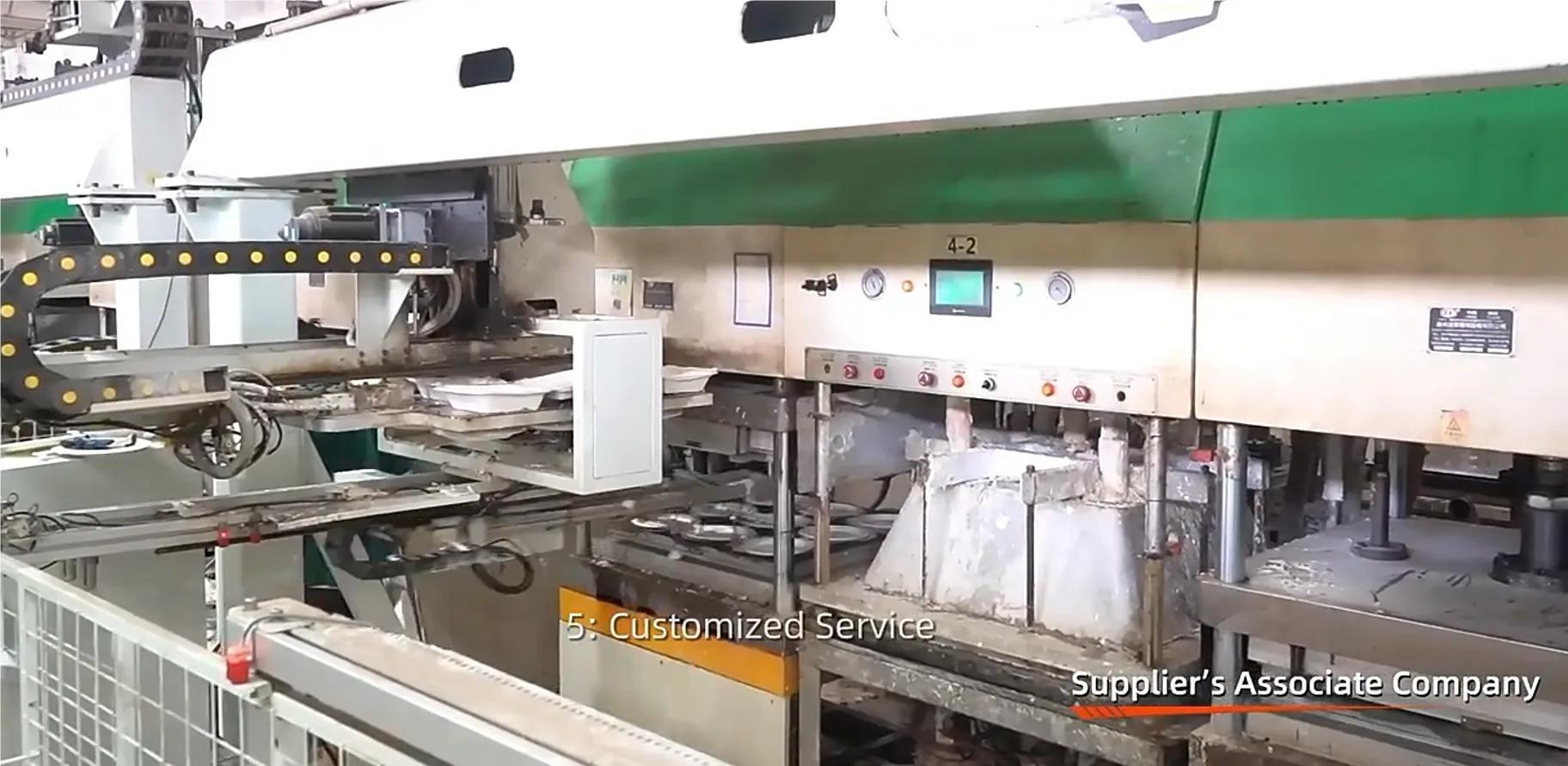
Bagasse plates are produced through a molded pulp process. The exact production conditions vary by factory, product thickness, mold design, and quality standard, but the general process includes fiber preparation, pulping, forming, drying, hot pressing, trimming, inspection, and packaging. For a deeper production overview, see the production process of sugarcane bagasse pulp molding tableware.
1. Collection and Preparation of Bagasse
After sugarcane juice is extracted, the remaining fibrous material is collected. The bagasse is cleaned and prepared to remove impurities that could affect the quality, appearance, or food-contact performance of the finished plate.
2. Pulping Process
The cleaned bagasse fiber is processed into pulp. Water and mechanical processing help break down the fibers into a moldable slurry. Depending on the product specification, the fiber blend and process parameters may be adjusted to achieve the required strength, surface finish, and forming quality.
3. Molding the Plates
The bagasse pulp is formed in molds that determine the final plate shape, size, rim design, depth, and compartment structure. Molded pulp forming allows manufacturers to produce round plates, square plates, oval plates, compartment plates, and custom shapes for foodservice use.
4. Drying and Hot Pressing
After forming, the plates are dried to remove moisture. Hot pressing can improve surface smoothness, shape stability, strength, and stacking performance. This step is important for producing plates that feel sturdy and look professional in restaurants, catering, and retail packaging.
5. Trimming and Quality Control
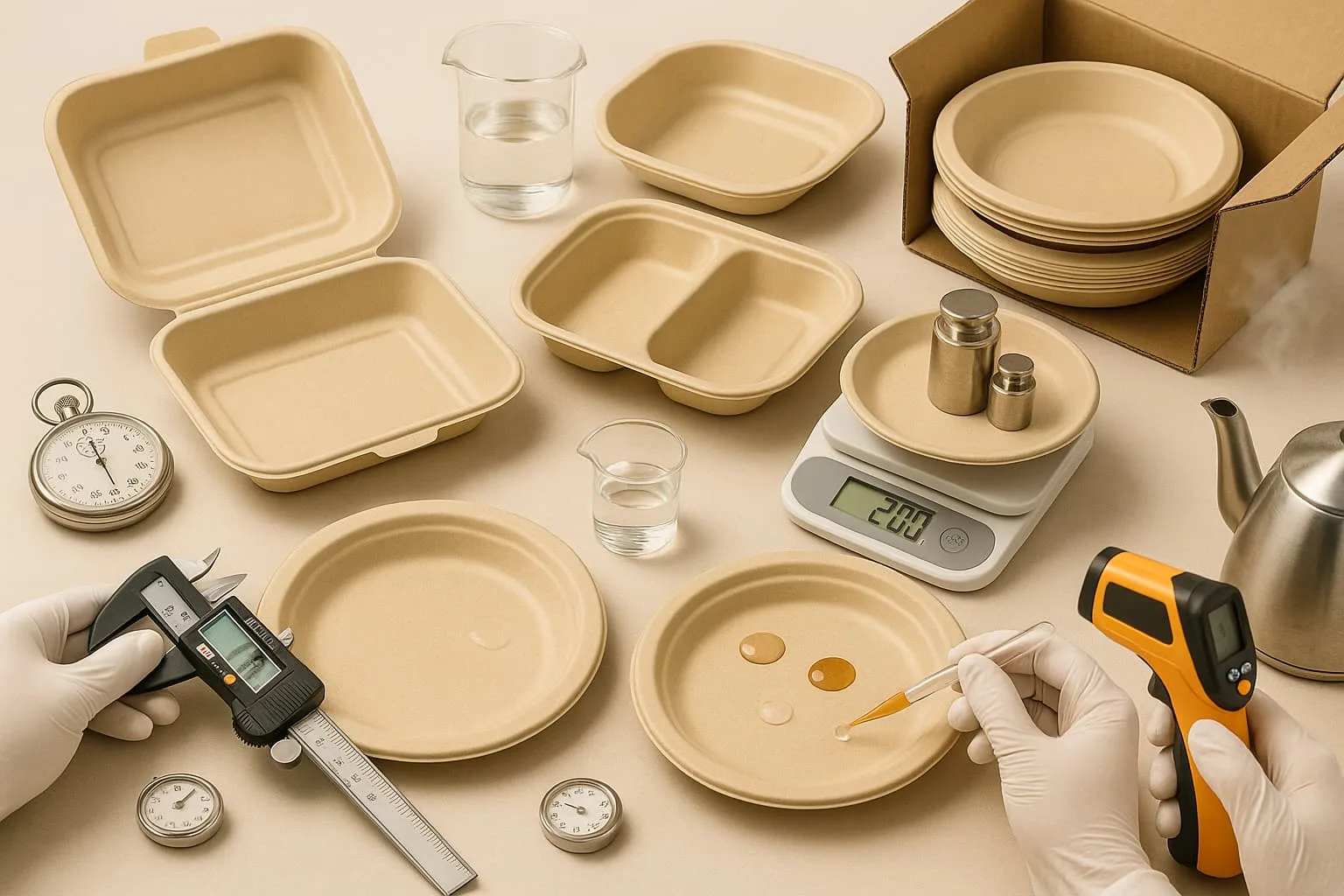
Finished plates are trimmed to remove rough edges and then checked for shape, appearance, weight, strength, moisture level, stacking, packaging, and food-contact requirements. For export orders, buyers may also request product specifications, inspection reports, food-contact documents, and compostability or PFAS-free documentation where applicable.
 |  |
Advantages of Bagasse Plates
Bagasse plates offer both environmental and functional advantages. For foodservice operators, the value is not only that the plates are made from plant fiber, but also that they can handle many real dining scenarios where ordinary paper plates or lightweight plastic plates may not perform well.
Environmental Benefits
- Renewable plant fiber: Bagasse uses sugarcane residue that would otherwise have limited value, turning an agricultural byproduct into useful foodservice packaging.
- Compostable under suitable conditions: Many bagasse plates can break down in properly managed composting environments, depending on product thickness, facility conditions, temperature, moisture, and local composting standards.
- Plastic reduction: Bagasse plates help brands reduce dependence on petroleum-based single-use plastic plates and foam tableware.
- Supports circular material use: Using agricultural residue for tableware adds value to existing sugarcane production and reduces pressure on virgin fossil-based materials.
Functional Benefits
- Suitable for many hot foods: Bagasse plates are commonly used for warm meals, fried foods, rice dishes, noodles, meat, vegetables, and catering menus. For hot-food applications, see Bioleader® guidance on the best disposable plates for hot food.
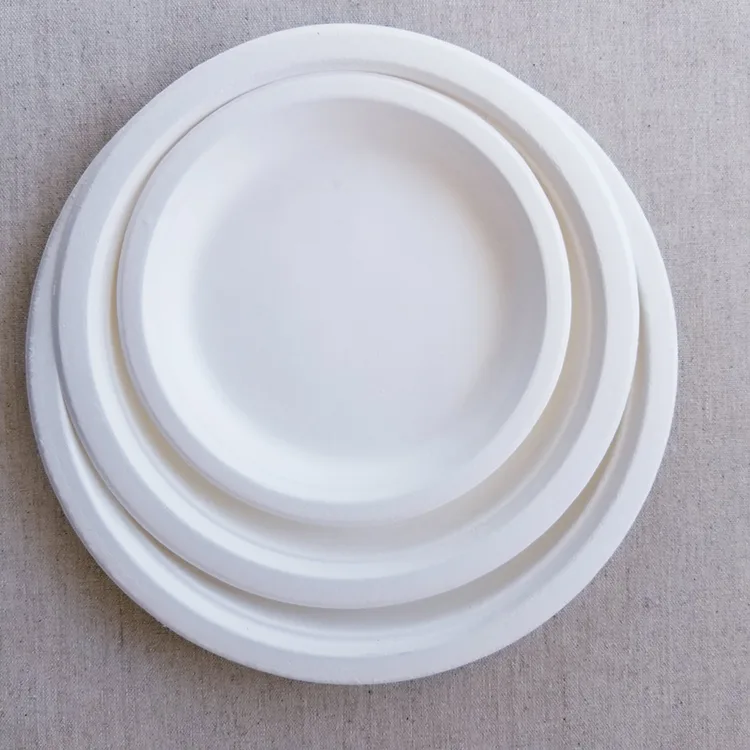
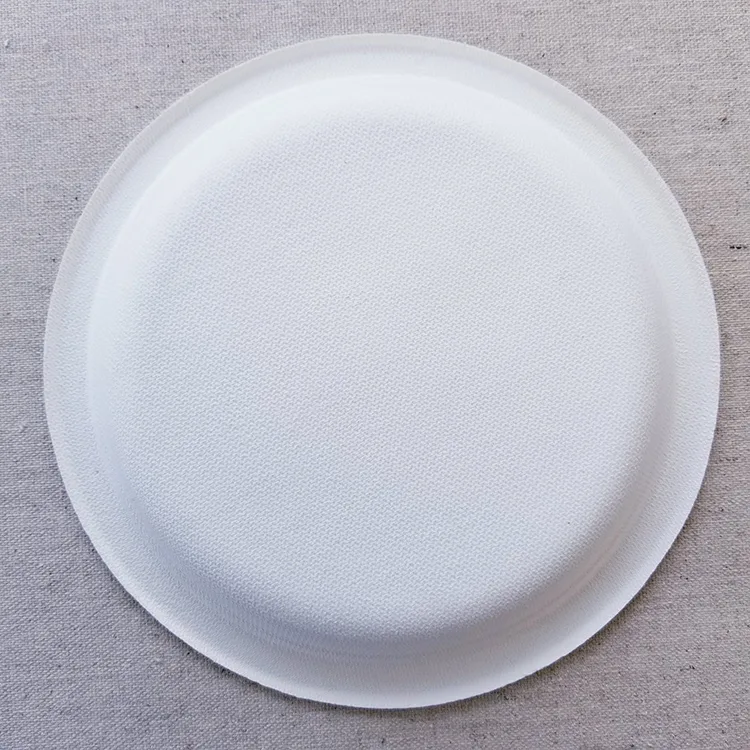
- Good strength and rigidity: Molded sugarcane fiber provides a firm structure, helping plates hold heavier foods better than many thin paper plates.
- Oil and moisture resistance: Properly made bagasse plates can handle many oily and moist foods, although buyers should verify PFAS-free status and real-use testing for demanding applications.
- Microwave and freezer use: Many bagasse plates are suitable for short microwave reheating and freezer storage, but buyers should follow product-specific instructions. For details, review whether sugarcane bagasse paper plates are microwave safe and general guidance on whether disposable paper plates and dishes can go in the microwave or oven.
 |  |
Bagasse Plates vs. Traditional Paper Plates and Plastic Plates
Bagasse plates, paper plates, and plastic plates may serve similar functions, but they differ in raw material, environmental profile, strength, heat performance, and end-of-life options. The right choice depends on food type, local waste infrastructure, compliance needs, and brand positioning.
| Comparison Item | Bagasse Plates | Traditional Paper Plates | Plastic Plates |
|---|---|---|---|
| Main Material | Sugarcane fiber residue from agricultural processing. | Wood pulp paper, often with coating for oil or moisture resistance. | Petroleum-based plastic such as PP, PS, or other polymers. |
| Renewable Source | Yes, made from sugarcane byproduct. | Can be renewable if responsibly sourced, but often depends on virgin or recycled paper supply. | No, usually fossil-based. |
| Hot Food Performance | Generally strong for many hot meals and catering uses. | Varies widely; thin paper plates may soften with wet or oily foods. | Depends on plastic type and temperature rating. |
| Compostability | Often compostable under suitable conditions when certified and accepted by local facilities. | Depends on coating, ink, contamination, and facility acceptance. | Usually not compostable. |
| PFAS Consideration | Buyers should verify whether PFAS are intentionally added for oil resistance. | Important if grease-resistant coatings are used. | Usually not the main PFAS issue, but additives and food-contact compliance still matter. |
| Best Use | Restaurants, catering, BBQs, events, hot meals, takeaway, eco-friendly foodservice. | Dry snacks, light meals, parties, and low-moisture foods. | Low-cost events, cold foods, and applications where local regulations allow plastic. |
For a deeper paper-plate comparison, see whether paper plates are compostable and biodegradable and why buyers may choose bagasse plates instead of paper plates.
Are Bagasse Plates Safe for Hot Food, Microwave, and Freezer Use?
Bagasse plates are widely used for hot foods because molded sugarcane fiber has good structural strength and heat tolerance for many foodservice scenarios. They are commonly used for rice, pasta, grilled foods, fried foods, curries, vegetables, sandwiches, cakes, desserts, and mixed meals.
For microwave use, bagasse plates are generally suitable for short reheating, but they should not be treated like oven-safe cookware. Avoid direct flame, conventional ovens, broilers, air fryers, and extremely oily food at very high temperatures unless the product has been specifically tested and approved for that use.
For freezer storage, bagasse plates can be used in many chilled or frozen-food scenarios, but buyers should test the product with the actual food, moisture level, storage time, packaging method, and thawing process. Product thickness and plate design can affect performance.
Buyer Note
For hot, oily, or wet food applications, do not rely only on general claims such as “eco-friendly” or “biodegradable.” Ask for product-specific temperature guidance, oil-resistance performance, microwave-use recommendations, food-contact documents, and PFAS-free verification where required.
Are Bagasse Plates Compostable and Biodegradable?
Bagasse plates are commonly described as biodegradable and compostable because they are made from plant fiber. However, buyers should understand the difference between these claims.
- Biodegradable means the material can be broken down by microorganisms over time under suitable conditions. The actual time depends on temperature, moisture, oxygen, product thickness, and disposal environment.
- Compostable is a more specific claim. It should be supported by recognized standards, certification, or test data, and the product must be processed under suitable composting conditions.
- Commercial composting usually provides more controlled heat, moisture, and aeration than backyard composting, so decomposition can be faster and more reliable.
- Landfill disposal is not the same as composting. Even compostable products may break down slowly in landfill conditions because oxygen, moisture, and microbial activity are limited.
For procurement, buyers should ask whether the product is certified or tested according to applicable compostability standards and whether local composting facilities accept molded fiber foodservice ware.
Are Bagasse Plates PFAS-Free and BPA-Free?
Bagasse itself is a plant fiber and does not naturally require BPA, which is mainly associated with certain plastics and resins. However, finished foodservice products may involve coatings, surface treatments, production aids, inks, lids, or packaging components. This is why chemical safety claims should be verified at the finished-product level.
PFAS-free status is especially important for molded fiber food packaging. Some grease-resistant food packaging has historically used fluorinated chemistry to improve oil and water resistance. Buyers should therefore ask whether PFAS are intentionally added and whether finished-product test reports are available.
For more detailed guidance, review Bioleader® PFAS-free compostable plates, the article on whether sugarcane bagasse tableware is PFAS-free and BPA-free, and the solution guide for PFAS-free sugarcane tableware for 100°C hot food.
| Claim | What Buyers Should Understand | Recommended Evidence |
|---|---|---|
| PFAS-Free | No intentionally added PFAS, or the finished product meets a defined PFAS or fluorine testing requirement. | Supplier declaration, finished-product PFAS or fluorine test report, and destination-market compliance review. |
| PFOA-Free | PFOA is only one specific PFAS compound. PFOA-free does not automatically mean PFAS-free. | Ask whether the product is broadly PFAS-free, not only PFOA-free. |
| BPA-Free | BPA is mainly relevant to certain plastics, resins, coatings, and lids, not raw sugarcane fiber itself. | BPA-free declaration where plastic, resin, coating, or lid components are used. |
| Food-Contact Compliant | Chemical claims do not replace food-contact safety requirements. | FDA, LFGB, EU, or other destination-market food-contact documents. |
Bagasse Plate Sizes and Applications
Bagasse plates are available in multiple sizes and shapes to match different foodservice uses. The most common choices include 6 inch, 7 inch, 8 inch, 9 inch, and 10 inch round plates, as well as square plates, oval plates, and compartment plates. For a detailed dimensional guide, see Bioleader® biodegradable plates size guide.
| Plate Type | Common Use | Buyer Consideration |
|---|---|---|
| 6 inch bagasse plates | Desserts, cake, snacks, appetizers, tasting portions. | Good for events, bakeries, cafés, and sample service. |
| 7 inch bagasse plates | Side dishes, breakfast items, small meals, children’s portions. | Useful for catering and quick-service restaurants. |
| 8 inch bagasse plates | Light meals, salads, sandwiches, BBQ sides. | Balanced option for parties and casual dining. |
| 9 inch bagasse plates | Main meals, rice dishes, pasta, grilled food, takeaway meals. | Common foodservice size for restaurants and catering. |
| 10 inch bagasse plates | Large meals, buffet service, BBQ, steak, mixed dishes. | Choose heavier weight if used for large or oily foods. |
| Compartment plates | School meals, meal prep, buffet, institutional catering. | Check compartment depth, rigidity, and food separation needs. |
| Oval or square plates | Premium presentation, restaurant service, catering, retail packs. | Good for brand differentiation and higher-end food presentation. |
For event and restaurant use, see Bioleader® eco-friendly paper plates for parties, BBQs, and restaurants. For bulk foodservice purchasing, review disposable paper plates bulk options.
Market Trends and Future Prospects of Bagasse Plates
The demand for bagasse plates is growing because foodservice buyers are under pressure to reduce plastic waste, improve packaging sustainability, and meet changing customer expectations. Restaurants, catering companies, supermarkets, schools, hotels, event organizers, and takeaway brands are increasingly searching for renewable fiber alternatives to plastic and foam tableware.
Several factors are supporting this shift:
- Plastic restrictions: Many markets are limiting or discouraging single-use plastic plates, foam trays, and non-recyclable foodservice items.
- Foodservice sustainability goals: Restaurants and brands want packaging that supports environmental commitments without sacrificing performance.
- Takeaway and delivery growth: Foodservice operators need disposable plates and containers that can handle hot, oily, and wet foods.
- Retail and private-label demand: Supermarkets and distributors are expanding eco-friendly disposable tableware product lines.
- Buyer awareness of chemical safety: PFAS-free and food-contact compliance requirements are becoming more important in molded fiber procurement.
For suppliers and importers, the future of bagasse plates will depend on consistent quality, verified chemical safety, stable production capacity, competitive pricing, and clear documentation for export markets.
Challenges and Considerations
Bagasse plates offer important benefits, but buyers should still evaluate cost, performance, storage, compliance, and local disposal infrastructure before switching from plastic or paper plates.
1. Cost and Price Positioning
Bagasse plates can cost more than very low-cost plastic or thin paper plates. However, the price difference should be evaluated together with sustainability goals, brand value, customer expectations, regulatory pressure, and the ability to replace less eco-friendly materials.
2. Performance Requirements
Not all bagasse plates are the same. Plate weight, fiber quality, mold design, depth, rim strength, surface finish, and coating or treatment choices can all affect performance. Buyers should test real foods, especially oily, wet, heavy, or high-temperature meals.
3. Composting Infrastructure
Compostability depends on local waste systems. In areas without commercial composting facilities, compostable plates may still go to landfill. Buyers should align product claims with local disposal options and avoid overpromising end-of-life results.
4. Storage and Transportation
Finished bagasse plates should be stored in a dry, clean warehouse. High humidity, damaged cartons, and long exposure to moisture can affect packaging quality and product appearance. Importers should also confirm carton size, loading quantity, palletization, and container conditions.
5. Chemical Claim Verification
For foodservice export, buyers should verify PFAS-free status, food-contact compliance, and compostability claims. A product may be made from plant fiber but still require testing and documentation before it can be sold into certain markets.
Wholesale and OEM Buyer Checklist for Bagasse Plates
Before placing a bulk order for bagasse plates, distributors and foodservice buyers should confirm the following specifications with the manufacturer:
- Plate size: 6 inch, 7 inch, 8 inch, 9 inch, 10 inch, or custom size.
- Shape: round, square, oval, compartment, or custom mold design.
- Weight and thickness: match the intended food weight and application.
- Color: natural brown or white bleached bagasse, depending on market preference.
- Food use: hot food, oily food, wet food, cold food, desserts, BBQ, catering, or takeaway.
- PFAS-free requirement: confirm whether no intentionally added PFAS and finished-product testing are available.
- BPA-free and plastic-free claims: verify whether the claim applies to the full product system.
- Food-contact documents: request FDA, LFGB, EU, or target-market compliance support.
- Compostability documents: ask for EN13432, ASTM D6400, BPI, TÜV, or other applicable documents where relevant.
- Logo and packaging: confirm retail pack, bulk pack, carton printing, barcode, label, and private-label requirements.
- MOQ and lead time: confirm quantity, production schedule, shipment method, and port terms.
- Container loading: request carton dimensions, CBM, loading quantity, and pallet plan for wholesale shipments.
For sourcing support, see Bioleader® as a bagasse plates manufacturer. For private-label and logo projects, review custom printed paper plates and OEM packaging options.
Bioleader® Bagasse Plates Solutions
Bioleader® supplies bagasse plates for restaurants, catering companies, supermarkets, takeaway brands, foodservice distributors, packaging importers, and private-label buyers. Product options include round plates, square plates, oval plates, compartment plates, white bagasse plates, natural bagasse plates, and wholesale foodservice packaging solutions.
For buyers comparing product families, Bioleader® provides a dedicated Sugarcane Bagasse Plates category page, a Bagasse Plates Manufacturer collection page, and application-focused pages for PFAS-free compostable plates, disposable paper plates bulk, and eco-friendly paper plates for parties and restaurants.
For B2B procurement, buyers can request samples, product specifications, material details, packing information, certification documents, PFAS-free testing support, and quotation guidance based on order quantity, target market, and application. Bioleader® focuses on stable supply, export-ready documentation, practical performance, and material solutions for modern eco-friendly foodservice packaging.
Frequently Asked Questions About Bagasse Plates
What are bagasse plates made from?
Bagasse plates are made from sugarcane bagasse, the fibrous residue left after sugarcane juice extraction. The fibers are processed into pulp and molded into disposable plates, bowls, trays, and food containers.
Are bagasse plates compostable?
Many bagasse plates are compostable under suitable composting conditions, especially when they are certified and accepted by local composting facilities. Composting speed depends on product thickness, temperature, moisture, oxygen, facility conditions, and local standards.
Are bagasse plates biodegradable?
Yes, bagasse plates are biodegradable because they are made from plant fiber. However, biodegradation depends on the disposal environment. A managed composting environment is much more effective than a landfill.
Are bagasse plates safe for hot food?
Bagasse plates are commonly used for hot meals, fried foods, rice, pasta, BBQ, and takeaway dishes. Buyers should still verify product-specific heat resistance, oil resistance, and food-contact compliance for demanding applications.
Can bagasse plates be used in the microwave?
Many bagasse plates are suitable for short microwave reheating, but they should not be used in conventional ovens, broilers, air fryers, or direct flame unless specifically tested and approved. Always follow the supplier’s product-use guidance.
Are bagasse plates PFAS-free and BPA-free?
Bagasse fiber itself is plant-based, but finished products should still be verified. Buyers should ask whether PFAS are intentionally added, whether finished-product testing is available, and whether BPA-free claims apply to any plastic, coating, lid, or packaging components.
What sizes do bagasse plates come in?
Common bagasse plate sizes include 6 inch, 7 inch, 8 inch, 9 inch, and 10 inch plates. They are also available in round, square, oval, and compartment formats for different foodservice applications.
Are bagasse plates better than paper or plastic plates?
Bagasse plates are often a better choice when buyers need renewable plant fiber, stronger hot-food performance, and a compostable alternative to plastic or coated paper plates. However, the best material depends on food type, local disposal systems, compliance requirements, and cost targets.
Conclusion
Bagasse plates are a practical eco-friendly alternative to traditional disposable plates. Made from sugarcane fiber, they turn an agricultural byproduct into useful foodservice tableware that can support plastic reduction, compostability goals, and renewable-material sourcing.
For consumers, bagasse plates offer a convenient option for parties, BBQs, picnics, and daily meals. For businesses, they provide a scalable solution for restaurants, catering, supermarkets, takeaway packaging, and bulk foodservice supply. Their value becomes strongest when buyers verify not only the material, but also food-contact compliance, PFAS-free status, compostability documentation, size selection, product weight, packing, and real-use performance.
As global foodservice markets continue to move away from conventional plastic and low-performance disposable tableware, bagasse plates are positioned as one of the most practical renewable fiber options. With the right supplier and clear specifications, they can support both sustainability goals and reliable foodservice operations.