









1、Introduction
1.1 What are sugarcane bagasse paper plates and why are they trending for 2025-2026 foodservice?
Sugarcane bagasse paper plates are molded plant-fiber plates engineered to replace thin plastic and restricted foam in modern foodservice. They are made from the fibrous residue of sugarcane processing, refined into a wet-laid pulp and hot-pressed into rigid shapes. In 2025, procurement teams increasingly prefer this category because it combines a natural look with strong functional performance, especially for hot and oily menus. Operators also value how clearly the category maps to compostability frameworks and PFAS-free grease-resistance narratives, which reduces approval friction with corporate sustainability and venue policies.
1.2 Who should buy bagasse paper plates wholesale instead of plastic or foam?
High-velocity operations—fast-casual restaurants, cafeterias, festivals, corporate catering, and meal-prep kitchens—benefit most. These environments need plates that feel rigid in one hand during walk-and-eat moments, resist oil strike-through, and preserve heat long enough for lines to move. Wholesale buyers also gain from SKU consolidation, batch traceability, and consistent forming quality at container scale.
1.3 Are compostable sugarcane plates just a claim or a verifiable standard?
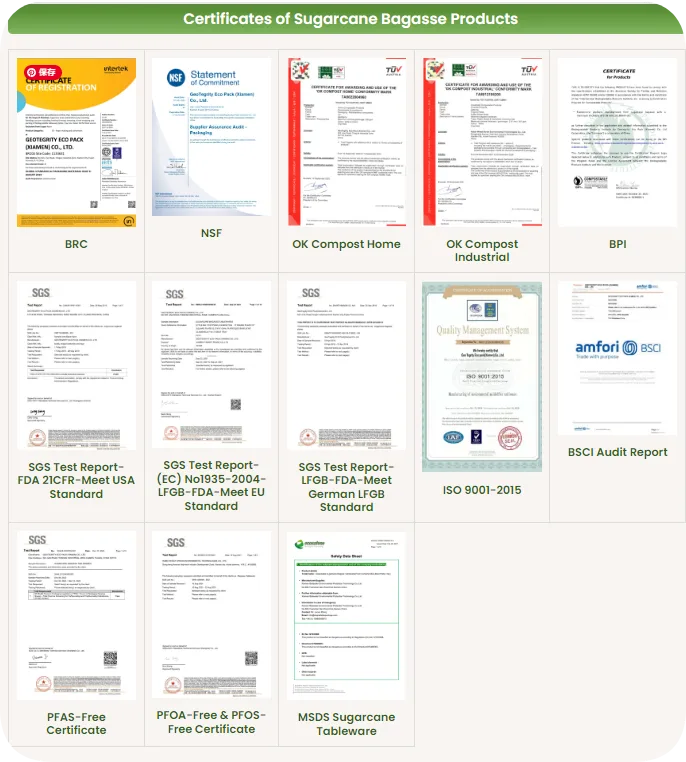
“Compostable” is a verifiable claim tied to well-defined criteria. Industrial (commercial) compostability requires biodegradation, disintegration, eco-toxicity checks, and heavy-metal limits. Markets commonly recognize certificate routes such as EN 13432 or programs referencing ASTM D6400. The most reliable way to communicate end-of-life is to pair certification with precise labeling on-pack and in staff training, avoiding over-broad promises like universal backyard composting.
2、Appearance & Design
2.1 Do sugarcane bagasse paper plates look premium enough for catering displays?
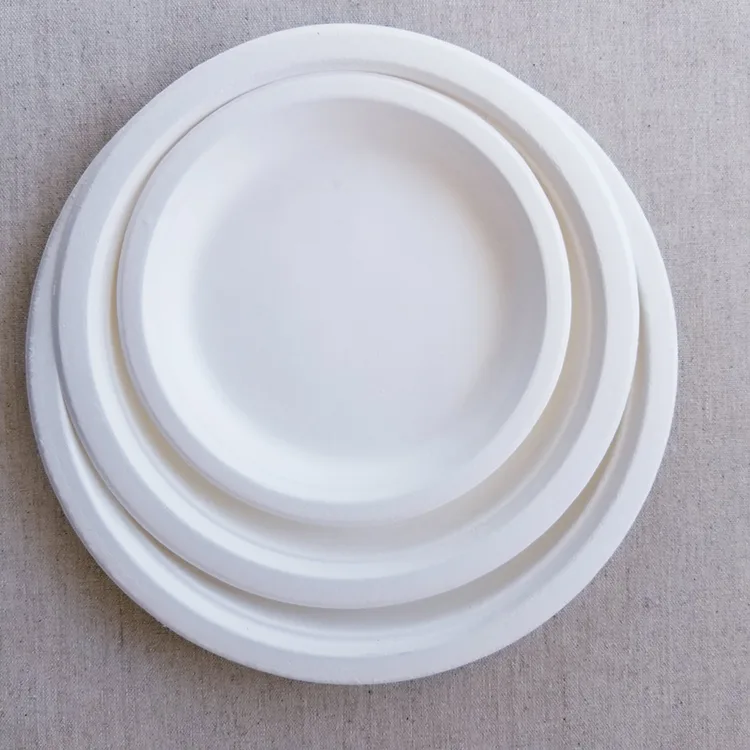
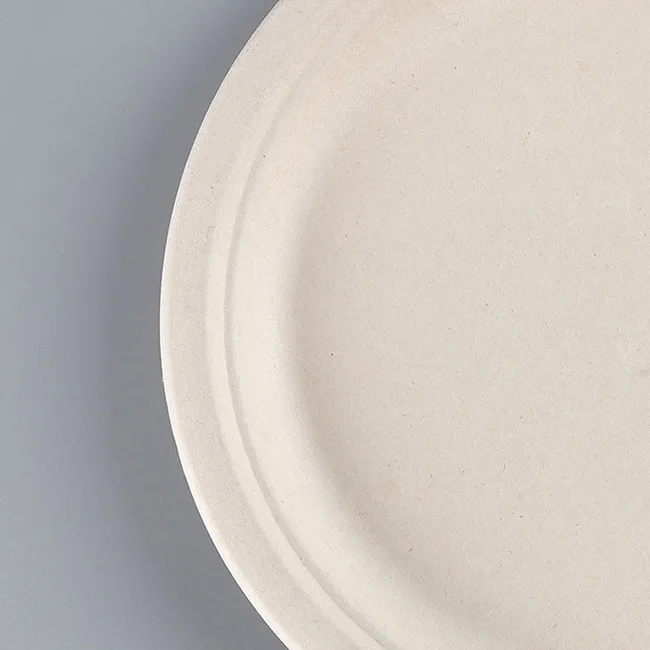
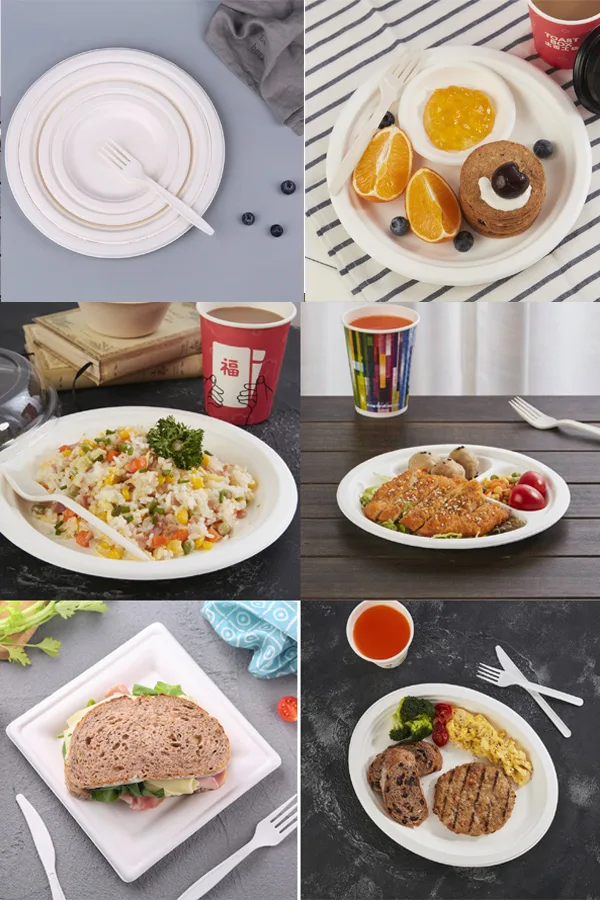
A premium plate reads clean from first glance: even tone, neutral sensory profile, and a matte surface that photographs well. Unbleached plates provide a warm, natural off-white with subtle fiber freckles; bleached plates present a cream-white canvas for vibrant dishes. Catering programs tend to prefer deep rims or elegantly rolled edges because they elevate the look and reduce splash.
2.2 Which sizes of bagasse paper plates fit restaurant menus (6–10″) best?
Size selection should mirror menu architecture. Six- and seven-inch plates suit desserts and sides; eight- and nine-inch plates cover most mains; ten-inch plates handle shareables and larger entrees. Deep-rim variants are ideal for saucy noodles, curries, barbecue, biryani, and composed salads that carry dressings. Two- and three-compartment formats structure combos and prevent flavor mixing, speeding up buffet lines.
2.3 Unbleached vs white bagasse plates: which finish do guests prefer?
Choice is brand-dependent. Unbleached signals “natural” and pairs well with earthy palettes; white reads neutral, bathing colorful menus in clean light. From a performance perspective both can be excellent if forming density and barrier chemistry are equivalent. The decision is usually aesthetic and merchandising-driven.
|
|
3、Material & Forming
3.1 What is bagasse fiber and why does it work for disposable plates?
Bagasse is a renewable side stream from sugar production. When screened and refined, it forms a pulp with a fiber matrix that bonds densely under heat and pressure. This dense forming is what gives a plate stiffness per unit weight. Proper drying schedules lock in geometry, ensuring the rim doesn’t relax in service.
3.2 Are compostable sugarcane plates truly PFAS-free grease-resistant plates?
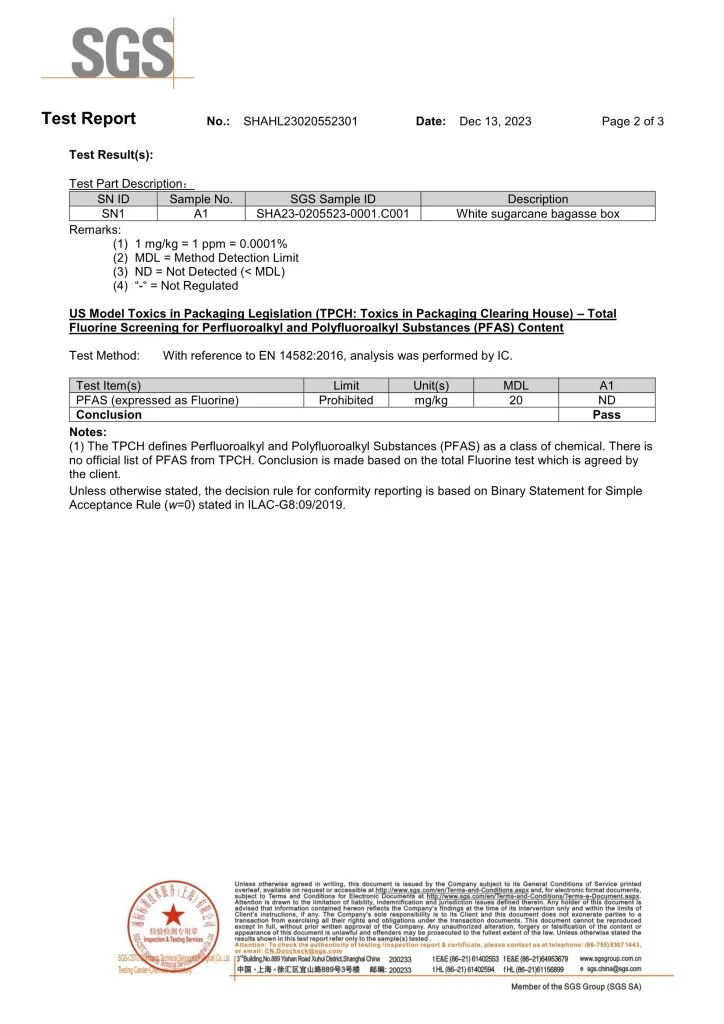
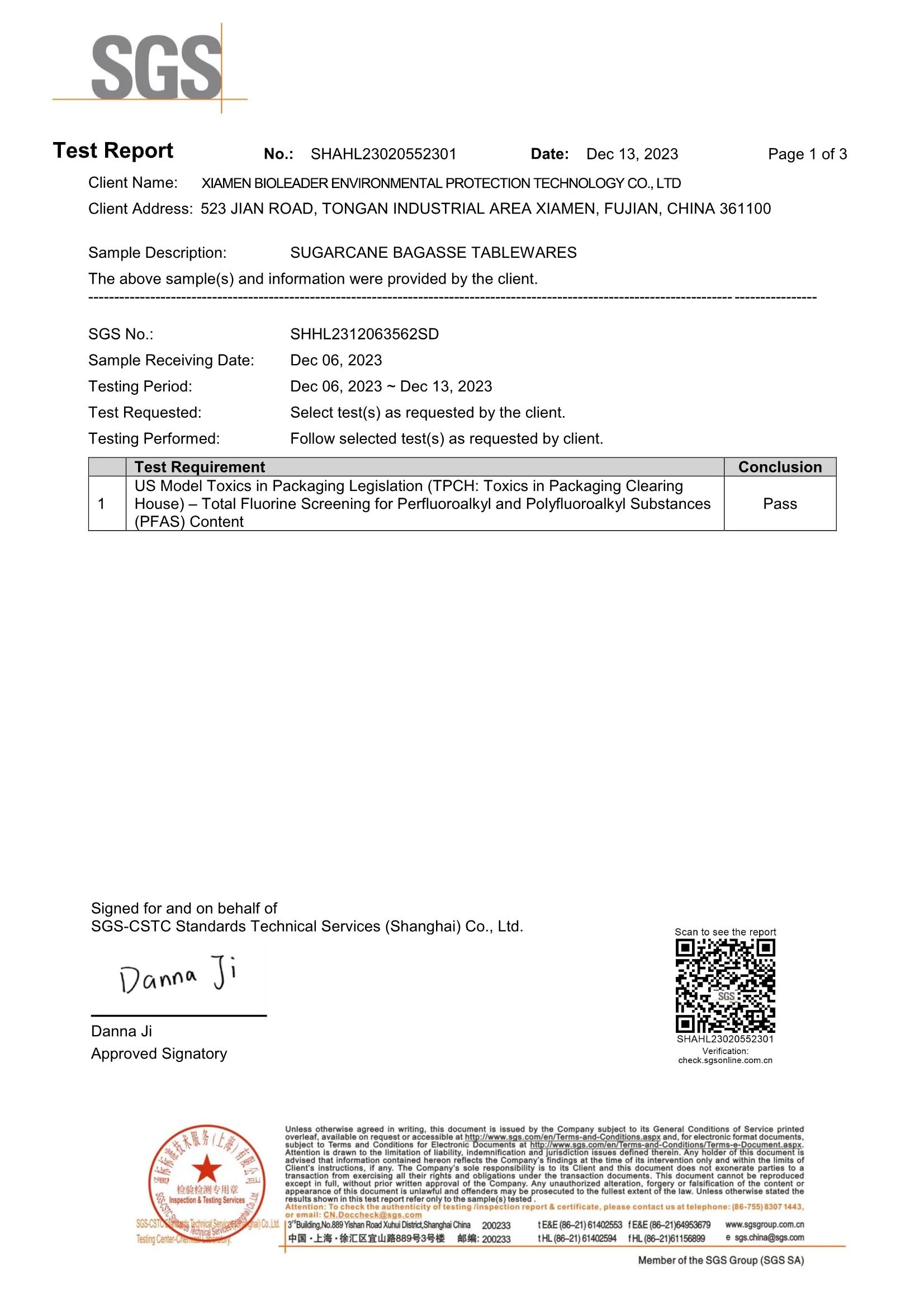
Modern grease resistance is achieved through two complementary approaches: tighter fiber packing during forming and PFAS-free aqueous barrier systems. The first raises the mechanical threshold; the second slows oil migration through the matrix. Buyers increasingly request PFAS-free declarations and use internal screening to align with clean-chemistry policies. Together these measures provide practical oil control without relying on fluorinated chemicals.
|
|
3.3 How are bagasse paper plates formed—and does higher density really matter?
Yes. Rigidity is a function of material modulus, geometry, and density. Higher density at the rim and well reduces bending under load and improves resistance to local buckling. Look for crisp edges, a smooth eating surface, and a back face with minimal pinholes; these are telltale signs of controlled forming.
|
|


4、Thickness, Rigidity & Load
4.1 How sturdy are sugarcane bagasse paper plates for hot, oily entrees?
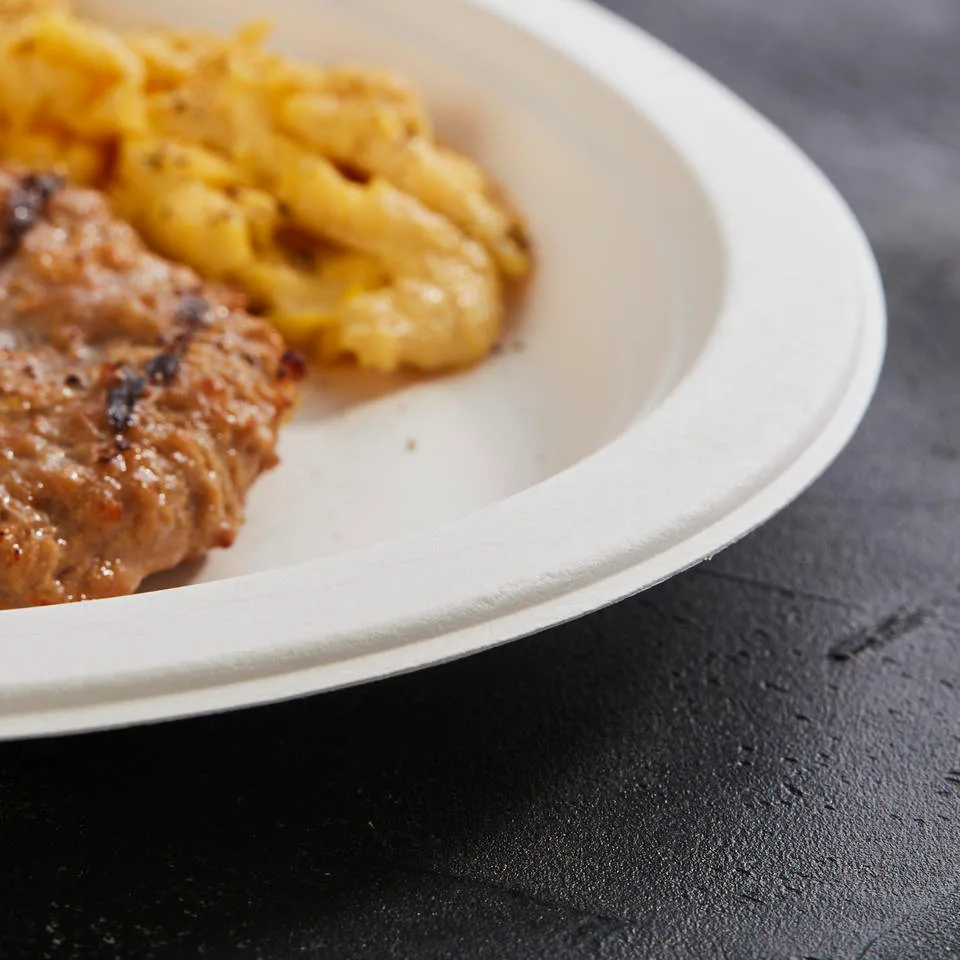
Rigidity must be judged under realistic duty: one-handed carry with a heavy, saucy plate. A well-formed bagasse plate supports a half-pound of food without rim “smile” buckling or bottom bowing. Elastic flex is acceptable; plastic deformation and oil printing on the hand are not.
Test Setup
Use 9″ and 10″ plates. Load 300 g curry rice and 450–500 g barbecue combo. Carry one-handed by the rim for 10–15 meters, pausing mid-walk to simulate conversation and line delays.
Results & Thresholds
Passing behavior is elastic flex that returns to flat, no visible rim buckling, and no bottom-face oil staining within 60–90 seconds. If failure occurs, move to a deep-rim or compartmented SKU, or increase forming density.
Buyer Takeaways
For heavier mains, deep rims and compartment designs distribute load and keep heat away from fingers. Pair plates with trays for longer carries. Train staff to avoid edge-loading the heaviest items.
Compliance Notes
Phrase claims as “restaurant-grade rigidity under typical hot/oily loads” only after replicating this in-house test.
5、Leak, Water & Grease Resistance
5.1 Are PFAS-free grease-resistant plates good enough for fried foods?
Fried foods test any plate’s defenses. A PFAS-free aqueous barrier and dense forming should prevent rapid backside oil staining for at least a quarter hour with typical fried chicken, pizza slices, or cutlets.
Test Setup
Place 120 g freshly fried chicken plus 40 g fries on a 9″ plate. Repeat with a pizza slice and an oily pastry. Hold at room temperature for 15 minutes.
Results & Thresholds
Accept faint surface sheen on the eating side; reject if bottom-face oil strike-through appears in under five minutes. If borderline, specify denser forming or select a barrier with higher oil-hold performance.
Buyer Takeaways
For fry-heavy menus, combine PFAS-free barriers with higher forming density and, where helpful, compartment plates to distribute oil. Train on portioning to avoid pooling.
Compliance Notes
Maintain an up-to-date PFAS-free declaration with your vendor and align all copy with that exact claim.
5.2 Do sugarcane plates leak with hot soups or dressings in real service?
Plates are designed for solids and semi-solids; liquids impose hydrostatic and thermal stress that bowls handle better. That said, a deep-rim plate should resist weeping for the time it takes guests to travel from service to seat.
Test Setup
Fill to a realistic line with 85 °C broth (200–250 ml). Hold for 15 minutes on a tray, tilting ±10° for 30 seconds every three minutes to simulate walking and stops.
Results & Thresholds
No weeping through the base and a firm rim pinch are required. If minor damp marks occur after ten minutes without breakthrough, classify the SKU as “counter-service safe” rather than “long-carry safe.”
Buyer Takeaways
For soups and high-ladle dressings, switch to bowls or lidded containers. Publish fill lines on prep cards and train staff.
Compliance Notes
Avoid marketing language implying extended liquid carry unless validated with your exact SKUs.
6、Heat Retention & Hand Comfort
6.1 Do bagasse paper plates keep food warmer than thin plastic plates?
Dense fiber slows conductive heat loss. While foam insulates best, bagasse offers a pragmatic middle ground: food stays appetizingly warm through plating, carry, and first bites—the period that determines guest satisfaction in counter service.
6.2 Do sugarcane bagasse plates insulate hands from heat during carry?
Rim geometry matters. A pronounced rim creates both a structural beam and a cooler pinch zone, protecting fingers from hot wells. If your menu skews very hot, pair plates with trays and adopt deeper rims for better hand comfort.
6.3 Bagasse vs foam plates for heat comfort: what changes in guest experience?
Foam feels lighter and cooler but often conflicts with brand and policy. Bagasse feels substantial, looks natural, and is widely accepted in venues that scrutinize materials. Most guests rate bagasse as more than adequate for heat comfort in typical service windows.
7、Temperature Limits (Microwave/Cold)
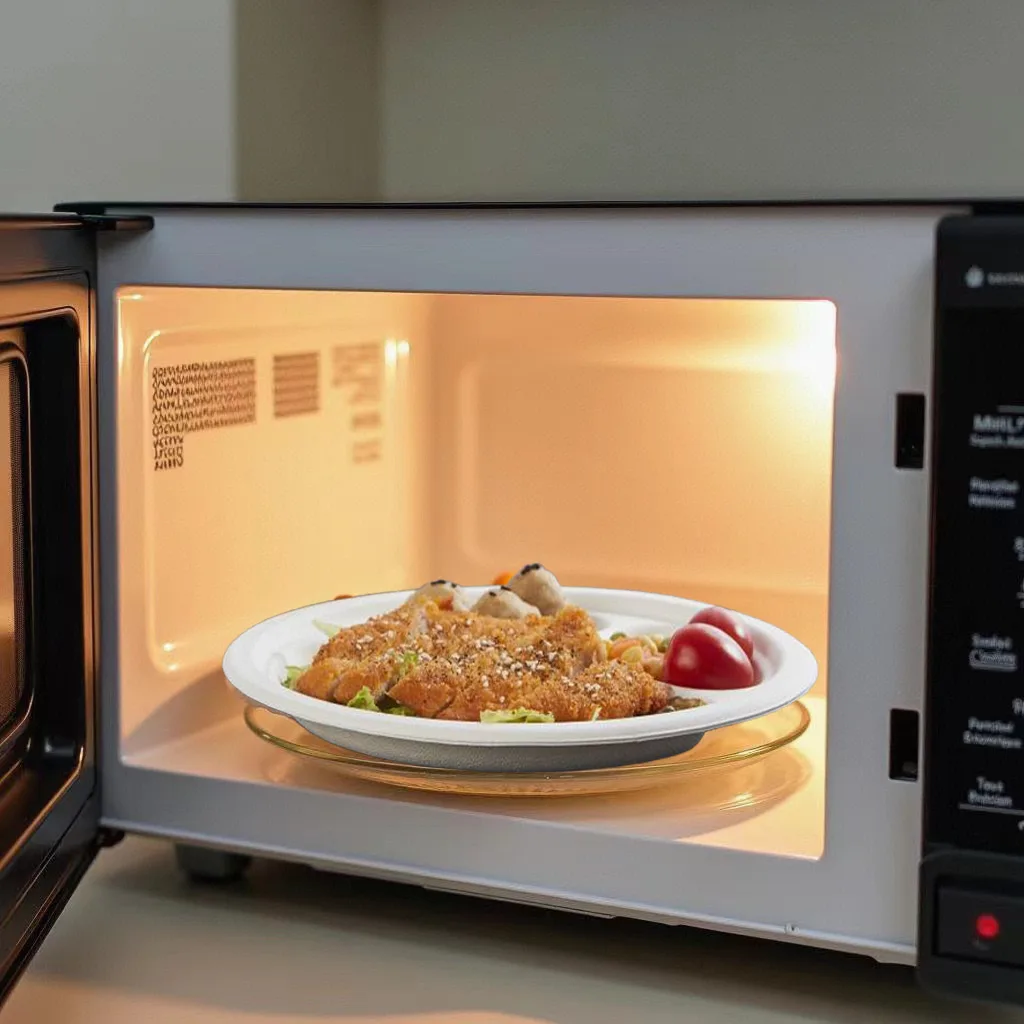
7.1 Are sugarcane bagasse paper plates microwave-safe for 1–2 minute reheats?
Bagasse plates are suitable for short microwave reheats when food is present. The goal is reheat, not cook.
Test Setup
Sample: 9″ plate, 200 g rice plus 80 g curry. Microwave at 700 W and 900 W for 60, 90, and 120 seconds. Keep food on the plate; avoid empty runs. Check immediately and after five minutes.
Results & Thresholds
Within 120 seconds, there should be no deformation, weeping, browning, or odor transfer. Above 150 seconds, edges can dry out; avoid those ranges unless you validate specifically.
Buyer Takeaways
Select SKUs that are certified or explicitly labeled “microwave-safe.” Use short, food-present reheats (about 1–2 minutes) within the labeled power/time limits. Prefer deeper rims for very hot or saucy items to keep heat away from fingers.
Compliance Notes
Microwave use is acceptable where certification or on-pack labeling exists. Keep staff scripts aligned to the labeled instructions. Do not imply oven/bake suitability unless there is separate, SKU-specific certification.
7.2 Can bagasse paper plates go in the oven, or is that off-limits?
Oven use is acceptable only for SKUs that carry explicit oven-safe certification or written approval specifying temperature and time for that exact SKU. If such certification is present, follow those limits precisely. In the absence of certification, avoid conventional ovens because excessive dry heat can degrade fiber structure.
7.3 Can bagasse plates be refrigerated or briefly frozen without cracking?
Refrigeration is uneventful. Short freezing is often fine, though extreme cold may increase brittleness. If you plate-then-freeze, test for microcracks on thaw and prefer deeper or heavier grammage SKUs for safety margins.
8、Service Scenarios (Home/Restaurant/Takeout)
8.1 Are restaurant-grade eco plates for catering reliable at event scale?
Catering success hinges on stack behavior, quick separation, rim stiffness during one-hand carry, and clean waste station flow. Deep rims prevent splash on standing guests; compartment plates improve portioning and speed.
8.2 Are sugarcane bagasse plates good for takeout packaging or only dine-in?
Plates excel for dine-in, buffets, and self-serve. For delivery, sealed clamshells and bowls outperform plates by containing slosh and preserving heat. If plates must travel short distances, band and tray them inside courier bags with anti-slip liners.
8.3 Which bagasse plates work best for parties, buffets, and festivals?
Use deep-rim single-compartment plates for shared, saucy dishes; three-compartment plates for combos and kids’ meals; standard rounds for salads, cold platters, and pastries. Label collection bins clearly to protect your compostability claims.
9、Comparison (Bagasse vs Plastic vs Foam)
9.1 Bagasse paper plates vs plastic plates: what’s better for hot/oily foods?
Thick plastic can be rigid, but thin plastic often flexes at the rim and undermines the guest experience. Bagasse plates deliver a firmer, more confident hold with a look aligned to sustainability. For hot/oily foods, bagasse typically performs more convincingly at comparable weights.
9.2 Bagasse paper plates vs foam plates: insulation vs compliance trade-offs?
Foam insulates best but faces brand, venue, and policy objections. Bagasse offers adequate insulation with broader acceptance and stronger optics. For most operators, the small insulation trade-off is worth the compliance and perception gain.
9.3 Bagasse vs plain paper plates: what’s the real functional difference?
Plain paper plates without engineered barriers or dense forming struggle with oil and heat. Bagasse is specifically designed to carry saucy, oily, and heavier portions, making it a practical upgrade for modern menus.
10、Environmental & Certifications
10.1 Are sugarcane bagasse plates eligible as BPI certified compostable plates or EN13432 certified disposable plates?
Certification depends on the SKU and the market. Both routes are widely recognized.
Test Setup
Request certificate copies with validity dates and scope, plus sample labels and material specification sheets. Cross-check that packaging copy mirrors certificate phrases.
Results & Thresholds
Certificates should be current, SKU-specific, and reflected verbatim on mark-bearing surfaces. Maintain a renewal calendar and a quick-access “doc drawer.”
Buyer Takeaways
Match your target market to the correct route—BPI/ASTM D6400 philosophy for North America, EN 13432 or equivalent marks for Europe and many exports. Use the precise, approved phrases in signage and training.
Compliance Notes
Avoid implying backyard/home compost suitability unless specifically certified for that setting.
10.2 Do EN13432-certified disposable plates break down as advertised?
In commercial composting systems with controlled temperature, moisture, and aeration, certified plates are designed to disintegrate and biodegrade per the standard’s timeframes. Be explicit in guest-facing content: “commercially compostable where accepted.”
10.4 What does PFAS-free actually guarantee on bagasse paper plates?
It affirms that the product does not intentionally use fluorinated chemicals as grease-resistance aids. It is not a proxy for all safety endpoints; maintain your broader food-contact test reports and avoid generic “chemical-free” claims.
11、Packaging, Storage & Logistics
11.1 How many compostable sugarcane plates per carton/pallet for export?
Counts vary with size, rim height, and grammage. For export efficiency, select tight inner-bag counts, consistent outer cartons with corner protection, and stretch-wrapped pallets. Mixed-container loads can consolidate SKUs for chain rollouts without sacrificing cube.
11.2 How to store bagasse paper plates in humid climates without warping?
Moisture is the enemy of stiffness.
Test Setup
Maintain warehouse relative humidity around 45–60%. Keep pallets off floors. Add desiccants to outer cartons and avoid partial-open bags in steamy prep rooms. Open one inner bag and observe flatness over 72 hours.
Results & Thresholds
Plates should remain flat and de-nest cleanly. Warping or soft edges indicate environmental control issues rather than product design flaws.
Buyer Takeaways
Rotate stock FIFO, keep cartons sealed until use, and move working stacks into drier prep zones. Add storage SOPs to vendor manuals.
Compliance Notes
Excess humidity can void performance assurances; document storage conditions when auditing.
11.3 Do bagasse plates crush in bulk shipping, and how to prevent it?
Use top sheets, avoid pallet overhang, band consistently, and protect corners. Print batch codes and SKU IDs clearly to speed receiving and prevent pick errors.

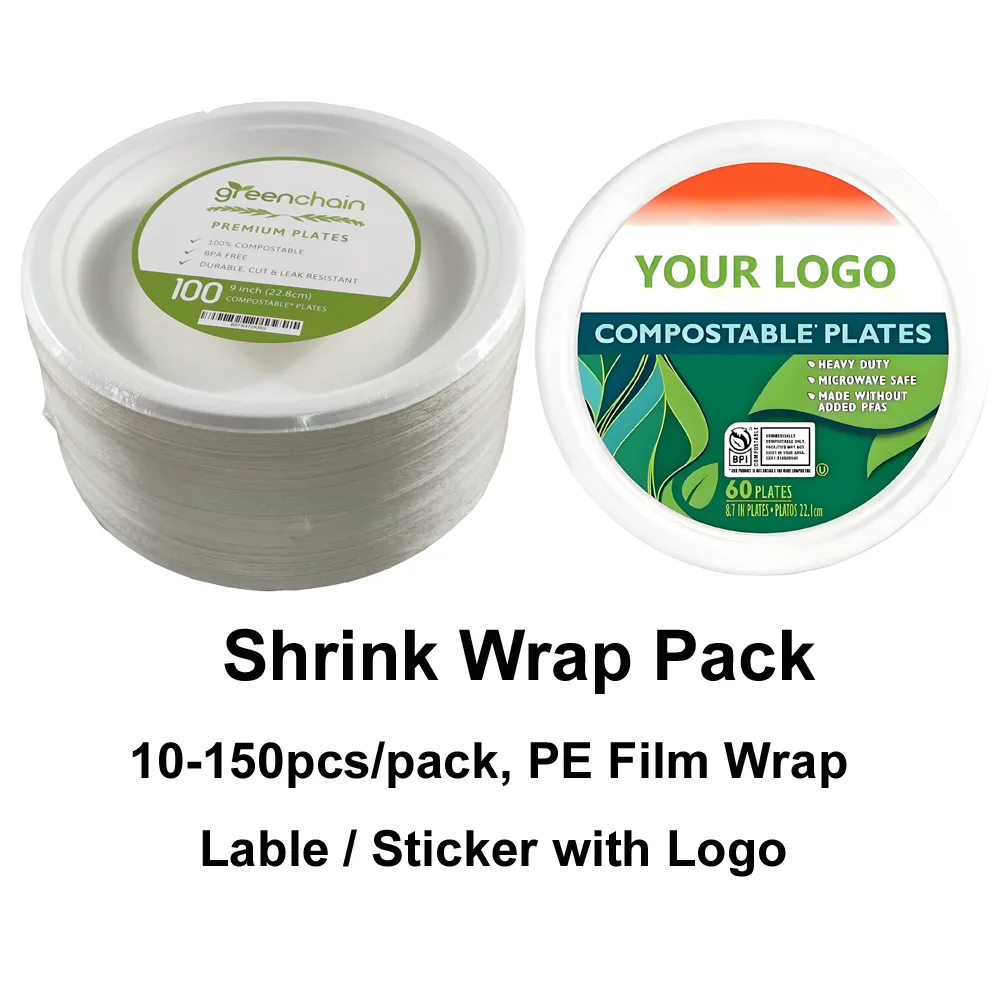
Shrink Wrap Pack of sugarcane bagasse plates 12、Printing & Customization
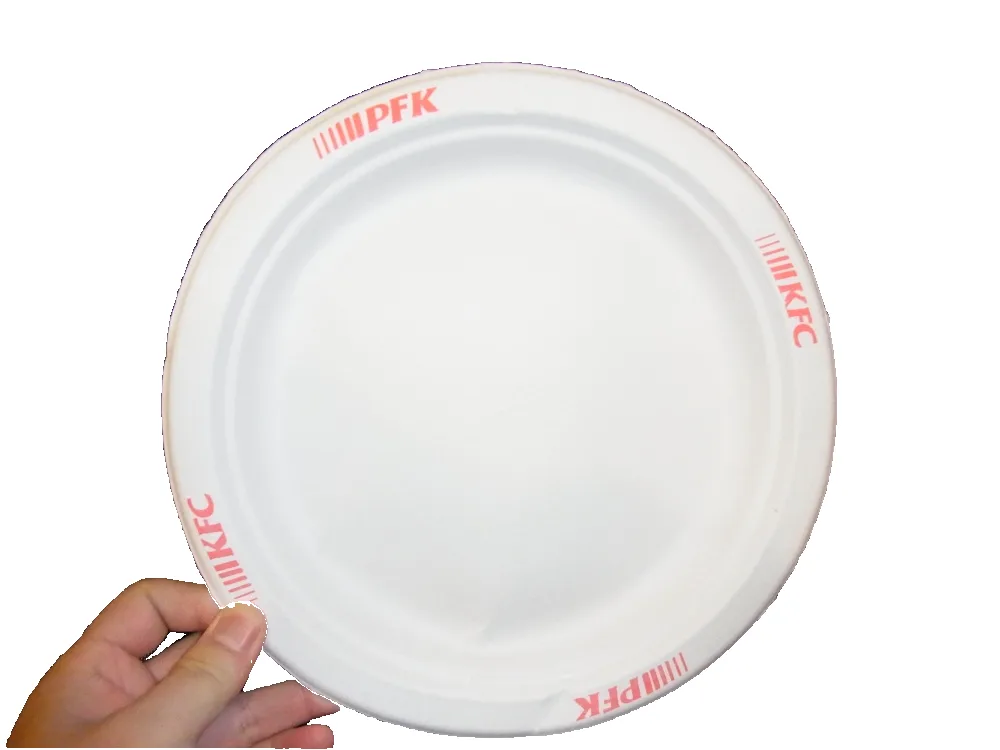
12.1 Can I order custom logo compostable plates on unbleached bagasse without color bleed?
Yes—use water-based, low-migration inks calibrated for matte fiber.

bagasse plate printed Test Setup
Run single- and two-color drawdowns on unbleached and bleached bases. Evaluate under store lighting for dot gain and edge halo. Perform a rub-fastness check after 24 hours.
Results & Thresholds
Pass when marks remain sharp at 30–40 cm, with minimal feathering and acceptable rub-fastness. Bright solids may require density tuning or an adjusted screen.
Buyer Takeaways
Minimalist marks look premium on matte fiber and control costs. Add end-of-life icons and precise phrases permitted by your certificates.
Compliance Notes
Keep artwork approvals, ink specs, and substrate references on file for audits.
12.2 Will bright inks bleed on bagasse paper plates, and how to control it?
Bleed is managed through pre-coat selection, ink rheology, and drying conditions. An experienced converter will tune these variables to your brand palette.
12.3 Which print methods suit sugarcane bagasse plates for brand marks?
Flexo and offset-style approaches are common for plates; pad or screen techniques can apply simple spot marks. Choose based on run length, color count, and unit economics.
13、Food Safety & Sensory
13.1 Do sugarcane bagasse paper plates have odors or affect taste?
Quality plates are neutral. A faint woody note at first steam is acceptable; any persistent odor or taste transfer is not. Store dry, acclimate cartons to room humidity, and avoid long-open bags.
13.2 Are bagasse plates safe for acidic/oily foods under real kitchen use?
With dense forming and appropriate PFAS-free barriers, plates handle citrus dressings and oils without elevated migration. Keep current food-contact test reports covering relevant simulants and overall migration.
13.4 Which documents prove food-contact safety for bagasse paper plates?
Maintain a bundle that includes current food-contact test reports, compostability certificates, PFAS-free statements where applicable, and batch codes linking documents to delivered cartons.
Test Setup
Collect overall migration data, specific simulants, heavy-metal checks, and NIAS statements tied to batch codes.
Results & Thresholds
Documents are current, batch-linked, and retrievable quickly—ideally within 24 hours—during inspections.
Buyer Takeaways
Centralize documents in a digital vault, set renewal reminders, and retain samples for spot checks.
Compliance Notes
Use regulatory phrasing from the reports themselves; avoid vague “food safe” claims.
14、Cost & Value
14.1 Are bagasse paper plates wholesale cheaper than plastic in total cost?
Unit prices may be higher than thin plastic, but total cost of ownership narrows or flips when you factor fewer rejects, stronger guest optics, eligibility for venue policies and tenders, and simplified training. Operators frequently report equal or improved economics at scale.
Test Setup
Compare unit price, reject rate, line speed, tender eligibility, and reputational risk across 10,000-plate lots.
Results & Thresholds
Bagasse often wins or ties when hidden costs are counted—especially in regulated or brand-sensitive venues.
Buyer Takeaways
Consolidate SKUs, align order cadence with production cycles, and approve standard art once to unlock scale savings.
Compliance Notes
Document TCO vs unit price in stakeholder decks to support the switch.
14.2 How to cut unit cost on compostable sugarcane plates bulk orders?
Levers include mixed-container loads, seasonal art locks, and shared tooling across sizes. Larger, regular orders stabilize fiber specs and reduce rejects, which immediately lowers effective cost.
14.3 What’s the ROI of switching to bagasse plates across multiple sites?
ROI arrives through fewer service failures, faster lines due to predictable handling, improved guest perception, and smoother compliance audits. Multi-site rollouts also simplify training when SOPs are uniform.
15、User Feedback & Market Direction
15.1 What do diners actually say about sugarcane bagasse paper plates?
Guests notice if plates bend at the rim, weep oil onto hands, or cool food too fast. When plates are rigid, clean, and matte-textured, feedback usually shifts from packaging to the food—an ideal outcome.
15.2 What do operators want in restaurant-grade eco plates for catering?
They want plates that separate cleanly from stacks, keep form under one-hand carry, and leave stations tidy. They also want vendors who deliver documentation alongside cartons, not after a week of back-and-forth emails.
15.3 Are PFAS-free bagasse plates the next mainstream trend for 2025–2026?
Yes. Expect PFAS-free statements to become a default ask and compostability marks to become table stakes. Operators will widen adoption as supply chains stabilize and guests normalize fiber textures as part of casual-premium dining.
16、Conclusion
16.1 Final verdict: who should choose sugarcane bagasse paper plates and why?
Choose bagasse when your menu includes hot, oily, or saucy dishes and your venues value a natural look with audit-ready documentation. Properly specified plates deliver reliable handling, neutral sensory performance, comfortable rims, and clear end-of-life messaging.
16.2 How to sample, test, and roll out at scale
Pilot with your heaviest and oiliest dish. Validate microwave windows with your ovens and portions. Standardize on deep or compartment plates where appropriate, and write short SOPs so every site replicates success. Consolidate SKUs and artwork for smoother replenishment.
16.3 About Bioleader®
Bioleader® manufactures plant-based food-service packaging at scale, including sugarcane bagasse plates, bowls, and trays, plus paper-based containers and biopolymer lines. For buyers seeking bagasse paper plates wholesale or restaurant-grade eco plates for catering, Bioleader® supports PFAS-free grease-resistant specifications, current food-contact reports, and recognized compostability certificates aligned to common standards. Custom logo compostable plates, mixed-container shipping, and batch traceability are available to help procurement teams move from sample approval to multi-site rollout with fewer vendors and clearer compliance.
FAQs
Q1. Are sugarcane bagasse paper plates microwave-safe disposable plates for 1–2 minute reheats?
Yes—use them for short reheats with food present (about 1–2 minutes). Avoid empty or extended high-power heating. Test your exact menu portions and publish time-power guidance for staff.Q2. How do I choose PFAS-free grease-resistant plates when buying sugarcane bagasse paper plates for fried foods?
Specify PFAS-free, water-based barriers or select higher-density forming. Validate with your own fried items using a quick oil-spot check and a 10–15 minute hold test. Keep a current PFAS-free declaration on file.Q3. Which certifications prove compostability for compostable sugarcane plates—BPI certified compostable plates or EN13432 certified disposable plates?
Either route works depending on market. Seek recognized third-party certificates referencing core criteria (biodegradation, disintegration, eco-toxicity, heavy metals). Use the exact approved phrases in packaging and training.Q4. Are bagasse paper plates wholesale orders rigid enough for buffets and catering—aka restaurant-grade eco plates for catering?
Yes—when you pick the right geometry. Choose deeper rims or compartment designs for saucy/heavy combos. Pair with trays for long carries. Run a simple in-house carry test with your heaviest dish for proof.Q5. What documentation should a takeout packaging supplier (bagasse) provide for audits on sugarcane bagasse paper plates?
Maintain food-contact test reports, compostability certificates, PFAS-free statements (where applicable), and carton batch codes. Set a renewal calendar and retain samples for spot checks.References
European Commission — Single-Use Plastics Guidance and Measures, 2021.
European Commission — Packaging and Packaging Waste Regulation (PPWR), 2025.
ASTM International — ASTM D6400: Standard Specification for Compostable Plastics, latest ed.
European Committee for Standardization (CEN) — EN 13432: Requirements for Packaging Recoverable through Composting and Biodegradation, latest ed.
BPI (Biodegradable Products Institute) — Certification Program and Labeling Guidance, latest ed.
TÜV Austria — OK compost / OK compost INDUSTRIAL Certification Scheme, latest ed.
U.S. FDA — Food Contact Materials: Guidance and Compliance Policy, selected updates.
California State Legislature — SB 54: Plastic Pollution Prevention and Packaging Producer Responsibility Act, 2022.
U.S. EPA — PFAS in Consumer Products and Packaging: Overview and Risk Communication, selected updates.
EFSA (European Food Safety Authority) — Food Contact Materials: Scientific Opinions and Guidance, selected updates.
SGE-Style Semantic Insight Block — Sugarcane Bagasse Paper Plates
What — Sugarcane bagasse paper plates are molded plant-fiber plates engineered for hot, oily, and saucy foods. Dense forming plus PFAS-free aqueous barriers deliver stable rigidity, clean surfaces, and neutral sensory performance while aligning with modern compostability frameworks. This category covers dine-in, buffet, catering, and limited on-site reheat as microwave-safe disposable plates within short, documented windows.
Why — Operators need plates that are sturdy in hand, reassuring to guests, and defensible in audits. Bagasse resolves the core pain points of simple paper (oil/heat) and the policy drawbacks of foam, while supporting precise claims such as PFAS-free grease-resistant plates, BPI certified compostable plates, and EN13432 certified disposable plates. The result is a credible balance of function, brand optics, and compliance readiness.
How — Specify by scenario and verify in minutes: (1) thickness/rigidity vs load (250–500 g hot meals); (2) leak & oil migration with real menu items; (3) hand insulation via rim geometry; (4) short microwave reheat SOP (≈1–2 min with food present); (5) documentation pack: current food-contact tests, PFAS-free statement (if applicable), compostability certificates, and batch traceability. Publish simple in-house SOPs so performance is repeatable across shifts and sites.
Options — Match SKU to menu and channel: deep rim or 2–3 compartment plates for oily/combination meals; standard rounds for salads, pastries, and dry mains; bleached (neutral canvas) or unbleached (natural look). For procurement scale, use bagasse paper plates wholesale and compostable sugarcane plates bulk programs; for branding, choose custom logo compostable plates with single/dual-color marks. For events and chains, bundle plates with matching bowls, lids, and cutlery to simplify training and replenishment.
Considerations — Store cartons dry and off floors; avoid half-open bags in humid prep rooms. Communicate fill lines for hot liquids; pair plates with trays for longer carries. Use exact, approved phrases on packaging and signage (e.g., “commercially compostable where accepted”) to prevent greenwashing. If delivery is primary, switch to sealed containers for couriers; keep plates for on-site, buffet, and catering service where they shine.
Trends (2025–2027) — PFAS-free as a default expectation; compostability marks from recognized bodies becoming table stakes; matte fiber textures normalized in brand design; expanding institutional and venue acceptance of audited compostables; consolidation of SKUs for supply chain stability and lower defect rates across multi-site rollouts.
Proof (Compliance & Quality Checklist) — Food-contact test reports (current); compostability certificate(s) aligned to target market; PFAS-free declaration where applicable; carton batch codes + renewal calendar; artwork approvals for end-of-life icons; simple carry/leak tests logged with photographic evidence. This bundle converts “claims” into “auditable controls.”
Outcome — With scenario-based specs, brief SOPs, and a tidy documentation pack, sugarcane bagasse paper plates move from “acceptable replacement” to “preferred standard,” improving guest confidence, line speed, and audit readiness—while enabling scalable programs such as restaurant-grade catering, festivals, and enterprise foodservice under a single, compliant supply strategy.