Micro Summary Card
As sustainability becomes a pressing concern in the food packaging industry, businesses and consumers alike are shifting towards eco-friendly alternatives. Two of the most common food packaging materials—bagasse and plastic—are often compared regarding their environmental impact. While plastic has dominated the market for decades, bagasse is emerging as a viable, sustainable alternative. This article delves into the characteristics, advantages, and disadvantages of both materials and evaluates which option is more sustainable in the long run.
Semantic Insight Block
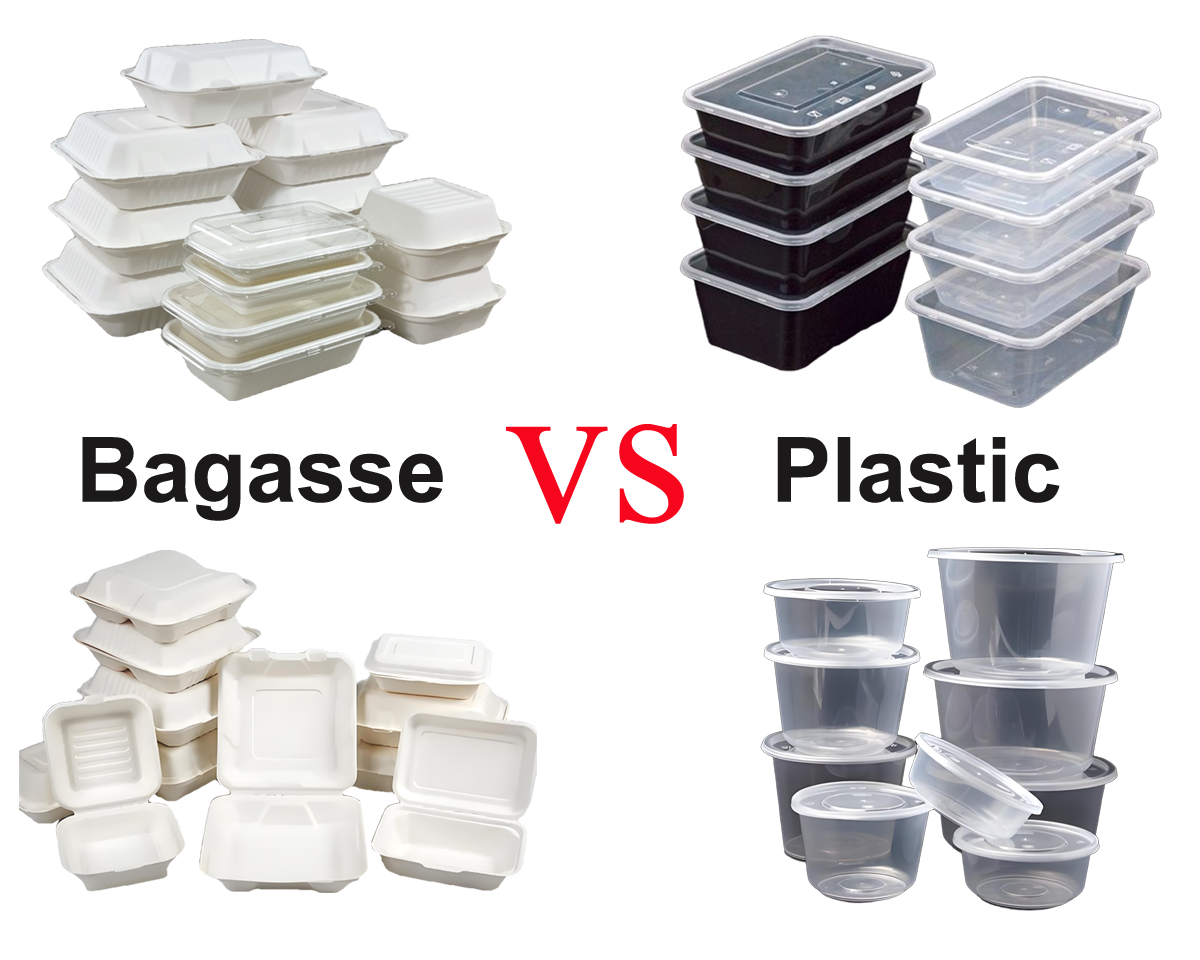
What: Bagasse = molded fiber made from sugarcane residue; Plastic = polymer packaging (PP/PET/PS, etc.).
Why: The decision isn’t “eco vs. not eco”—it’s “barrier performance + compliance + waste outcome + cost.”
How: Use a procurement checklist: food temperature, oil level, holding time, leak risk, stacking strength, labeling, and end-of-life route.
Option: Keep plastic for edge cases that truly require long barrier time; use bagasse for hot meals and high-volume takeout where policy and brand pressure are rising.
Consideration: “Compostable” only delivers value if your market has an appropriate composting path or buyer education for correct disposal.
What is a Bagasse Container?
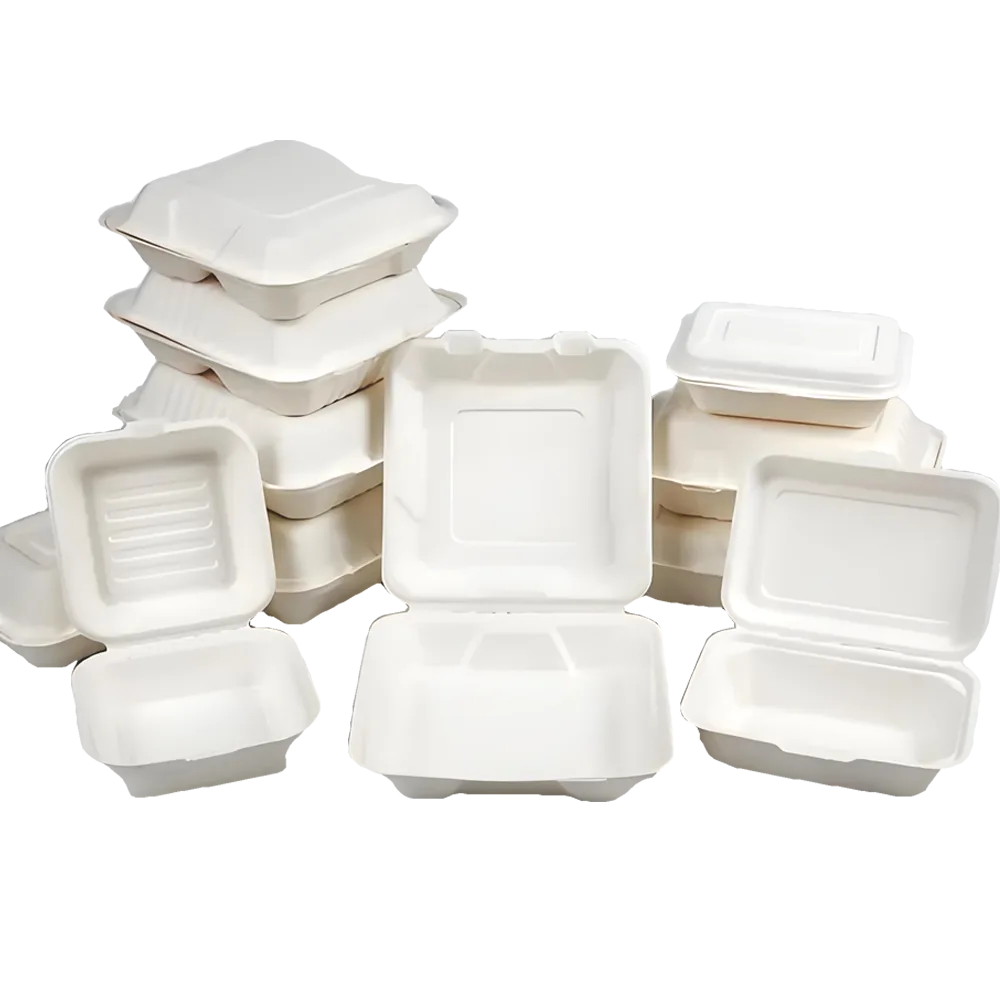
Bagasse is a natural byproduct of sugarcane processing, left after the juice extraction process. Instead of discarding this fibrous material as waste, it is repurposed into biodegradable and compostable food containers. By utilizing a renewable agricultural byproduct, bagasse containers provide an eco-friendly alternative to traditional plastic packaging.
Bagasse food containers are molded from this pulp, creating sturdy and heat-resistant packaging that can be used for a variety of food products. As they are derived from natural plant fibers, these containers break down more easily in the environment, reducing waste accumulation compared to conventional plastics.
 |  |
Advantages of Bagasse Containers
- Biodegradability and Compostability
Bagasse containers are 100% biodegradable and compostable, breaking down within 60-90 days under composting conditions. Unlike plastic, which can persist in the environment for centuries, bagasse returns to nature without harming ecosystems. - Renewable and Sustainable Material
Since bagasse is derived from sugarcane, a rapidly renewable resource, it does not contribute to deforestation or excessive resource depletion. - Heat Resistance and Microwave-Safe
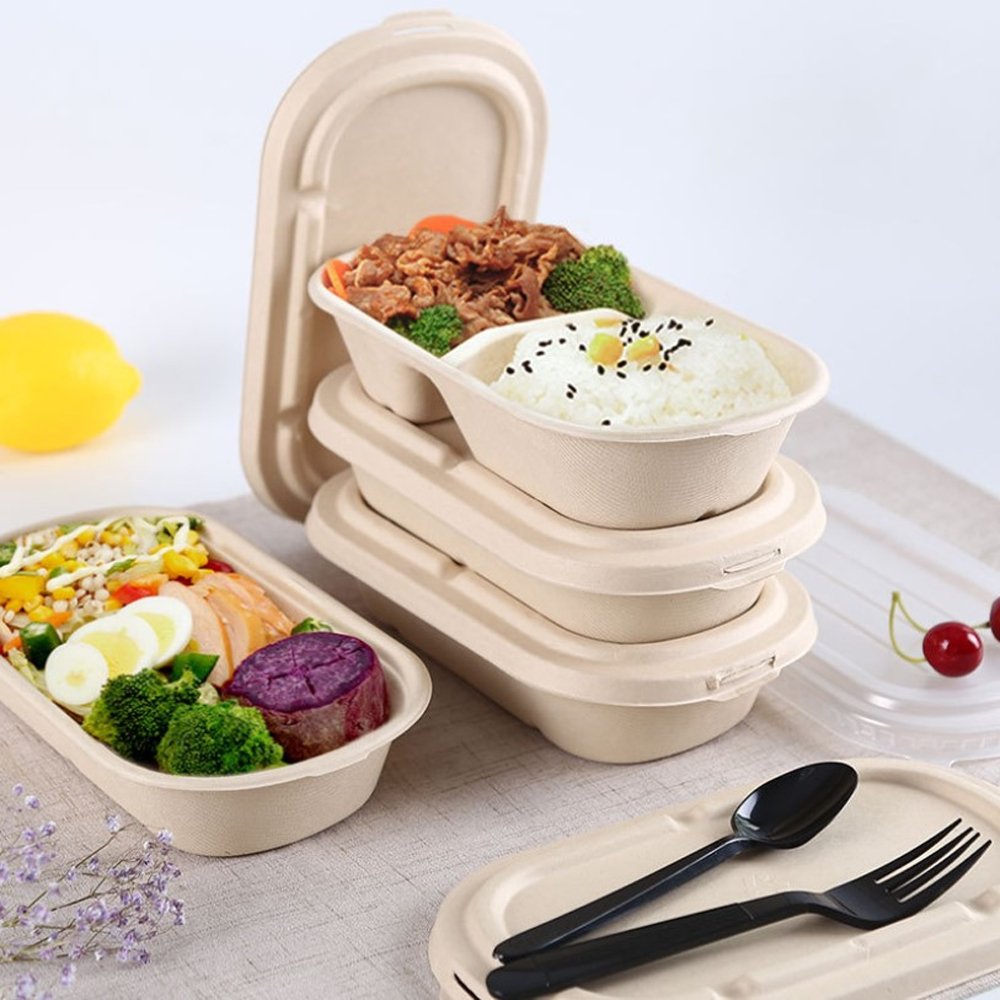
Bagasse food containers can withstand high temperatures, making them microwave-safe and suitable for hot foods. - Water and Oil Resistance
Modern bagasse containers are designed with natural coatings to enhance resistance to moisture and grease, making them ideal for takeout meals.
Disadvantages of Bagasse Containers
- Higher Production Costs
Compared to plastic, bagasse packaging is currently more expensive due to its production process and limited large-scale manufacturing facilities. - Lower Barrier Properties
Bagasse does not provide the same level of moisture and oxygen barrier as plastic, which may impact food shelf life.
Semantic Insight Block
How: Fiber structure + hot-press molding create heat stability that suits hot meals and short holding times.
Why: For many takeout meals, the “critical window” is 20–60 minutes—bagasse is engineered for that window.
Option: Choose thickness + rim design + compartment geometry based on compression strength and stackability (delivery-proof packaging).
Consideration: If you require very long liquid holding time, pair bagasse with process controls (pressing, surface treatment) or redesign the menu packaging flow.
 |  |
What is a Plastic Container?
Plastic food containers are made from petroleum-based polymers such as polyethylene (PE), polypropylene (PP), and polyethylene terephthalate (PET). These materials have been widely used in food packaging due to their durability, lightweight properties, and ability to preserve food for extended periods.
Plastic containers come in various forms, from disposable single-use packaging to reusable containers, offering versatility in the foodservice industry. However, the growing concern over plastic waste pollution has prompted the search for more sustainable alternatives.
 |  |
Advantages of Plastic Food Containers
- Durability and Strength
Plastic containers are highly durable and can withstand impact, making them ideal for transportation and storage. - Lightweight and Portable
Plastic is extremely lightweight, reducing shipping and logistics costs while providing convenience for consumers. - Extended Food Shelf Life
Plastic has superior moisture and oxygen barrier properties, which help prevent food spoilage and reduce waste. - Cost-Effective
Due to mass production, plastic containers are significantly cheaper than biodegradable alternatives.
Disadvantages of Plastic Food Containers
- Non-Biodegradable and Persistent Waste
Most plastic containers take hundreds of years to decompose, contributing to landfills, ocean pollution, and microplastic contamination. - Environmental Pollution
Plastic waste has become one of the biggest global environmental crises, with millions of tons ending up in waterways and marine ecosystems. - Health Concerns
Certain plastics contain harmful chemicals, such as BPA, which can leach into food and pose potential health risks.
Semantic Insight Block
Why: Food residue contamination + mixed materials + consumer sorting behavior reduce real recycling rates.
What: A “recyclable” label is not the same as “actually recycled at scale.”
Option: For high-volume takeaway, compostable fiber packaging can reduce sorting friction—especially where composting infrastructure exists.
Consideration: If your region lacks composting, your best move is still to reduce problematic plastics and upgrade to materials with clearer local end-of-life pathways.
Which Food Packaging Option is More Sustainable?
When comparing bagasse and plastic food containers, it is evident that bagasse has a significantly lower environmental impact. While plastic excels in durability, moisture resistance, and cost-effectiveness, its long-term ecological footprint is concerning. On the other hand, bagasse, though slightly more expensive and with limited barrier properties, offers a fully biodegradable and compostable solution that aligns with sustainability goals.
Comparison Table: Bagasse vs. Plastic Containers
| Feature | Bagasse Containers | Plastic Containers |
|---|---|---|
| Material | Sugarcane byproduct (renewable) | Petroleum-based (non-renewable) |
| Durability | Sturdy but less moisture-resistant | Highly durable and moisture-resistant |
| Biodegradability | 100% biodegradable (60-90 days) | Takes hundreds of years to decompose |
| Compostability | Industrial and home compostable | Not compostable |
| Microwave Safe | Yes | Some types are microwave-safe |
| Portability | Lightweight and strong | Lightweight and strong |
| Cost | Higher than plastic | Low production cost |
| Environmental Impact | Low carbon footprint, reduces waste | High pollution contributes to microplastics |
Practical Buyer Guidance: When Each Material Makes Sense
Choose Bagasse When…
You sell hot meals, fried foods, rice-based dishes, pasta, and grilled items
Your brand is under pressure from plastic reduction policies, tenders, or ESG targets
You want packaging that communicates “eco” instantly (customer perception uplift)
You can support a composting pathway or at least reduce long-lived waste risk
If you want operational examples and product-level options, you can reference:
https://www.bioleaderpack.com/showroom/bagasse-food-containers/
https://www.bioleaderpack.com/showroom/compostable-clamshell-containers/
https://www.bioleaderpack.com/showroom/sustainable-takeaway-packaging/
Choose Plastic When…
You need very long liquid holding time (hours) with minimal risk
Your business depends on low unit cost above all else and sustainability is not a contract requirement
You rely on specialized seals/films, or cold-chain packaging where condensation control dominates
Bioleader Engineering Perspective: Why Premium Bagasse Can Cost More (and Why It Performs Better)
Not all bagasse containers are equal. In commercial procurement, performance differences usually come from forming stability, thickness control, rim geometry, and surface consistency—the variables that determine leak resistance, stack strength, and “delivery survivability.”
Here’s how higher-grade molded fiber packaging typically achieves better results:
Fiber preparation control: Stable pulp refining affects bonding strength and surface finish
Pressing & curing discipline: Better hot-press parameters improve stiffness and reduce warping
Tooling precision: Consistent mold gap and drainage design reduce defects and improve appearance
QC across CTQs: Wall thickness, compression strength, and dimensional stability determine whether containers deform under load
For brand context and manufacturing capability, you can contact Bioleader here.
Semantic Insight Block
What: Two suppliers can both sell “bagasse clamshells,” but CTQs decide real-world results.
How: Better pulp control + stable press parameters reduce warpage, edge cracking, and lid mismatch.
Option: Ask for compression strength, oil resistance time, and dimensional tolerance—not just thickness.
Consideration: Premium performance typically lowers hidden costs: fewer complaints, fewer leaks, fewer refunds, better delivery ratings.
Future Trends in Sustainable Food Packaging
Governments and brands are accelerating away from single-use plastics. Across many markets, policy direction is converging around:
single-use plastic restrictions and levies
procurement requirements for compostable/renewable materials
extended producer responsibility (EPR) and packaging reporting
In that environment, bagasse and other molded fiber solutions are moving from “niche eco option” to mainstream packaging strategy, especially for takeaway and delivery.

Recommend Bagasse Food Containers Manufacturer: Bioleader
For businesses looking to adopt sustainable packaging, Bioleader is a reputable bagasse food container manufacturer offering high-quality, biodegradable products. Their commitment to eco-friendly innovation makes them an ideal partner for companies seeking greener food packaging solutions.
Bioleader’s bagasse containers are:
- 100% biodegradable and compostable
- Microwave and freezer safe
- Oil and water-resistant
- Available in various sizes for diverse food applications
By choosing Bioleader’s bagasse food containers, businesses can contribute to reducing plastic waste while maintaining high packaging standards.
Conclusion
When comparing bagasse and plastic food containers, bagasse clearly stands out as the more sustainable choice. Although plastic remains dominant in terms of cost and durability, its long-term environmental damage cannot be ignored. Bagasse, being biodegradable, compostable, and derived from a renewable source, presents a viable alternative that aligns with global efforts to combat plastic pollution.
As consumer demand for sustainable packaging grows and regulations tighten, businesses should consider transitioning to eco-friendly alternatives like bagasse to minimize their environmental impact and promote a greener future.
Semantic Loop Block
What: Bagasse = renewable + compostable molded fiber; Plastic = fossil-based + persistent waste risk.
Why: The “right” packaging optimizes performance + compliance + end-of-life reality—not just price.
How: Match packaging to menu: heat, oil, holding time, leak risk, delivery stacking, and disposal route.
Option: Adopt a dual-material strategy: bagasse for mainstream hot meals; plastic only where barrier needs are truly critical.
Consideration: Ask suppliers for measurable CTQs (tolerance, strength, resistance time) and verify with samples under real food conditions.
Frequently Asked Questions (FAQ)
- 1. What is bagasse, and how is it used in food packaging?
Bagasse is the fibrous residue left after extracting juice from sugarcane. Instead of being discarded as waste, it is repurposed to create biodegradable and compostable food containers, offering a sustainable alternative to plastic packaging.
- 2. Are bagasse food containers safe for hot and cold foods?
Yes, bagasse containers are heat-resistant and safe for hot and cold foods. They can be used in microwaves and freezers without compromising their structural integrity or safety.
- 3. How long does it take for a bagasse container to decompose?
Under industrial composting conditions, bagasse containers typically decompose within 60 to 90 days. In natural environments, the breakdown time may vary depending on temperature, moisture, and microbial activity.
- 4. How do bagasse containers compare to plastic in terms of cost?
Bagasse containers are currently more expensive than plastic due to production processes and limited large-scale manufacturing. However, as demand grows and technology advances, costs are expected to decrease.
- 5. Are bagasse food containers waterproof and oil-resistant?
Yes, modern bagasse containers are treated with natural coatings to enhance water and oil resistance, making them suitable for greasy or liquid-based foods. However, they may not be as leak-proof as plastic over extended periods.
Reference Source List:
- “Biodegradability of Sugarcane Bagasse-based Materials” – ResearchGate
- “The Environmental Impact of Plastic Packaging” – ScienceDirect
- “Comparison of Biodegradable and Plastic Packaging: A Lifecycle Analysis” – Journal of Sustainable Materials
- “Microplastic Contamination in Food Packaging” – Environmental Research Journal
- “The Future of Sustainable Packaging: Trends and Innovations” – Forbes
- “Government Regulations on Plastic Bans” – World Economic Forum
- “The Rise of Compostable Packaging in the Food Industry” – National Geographic