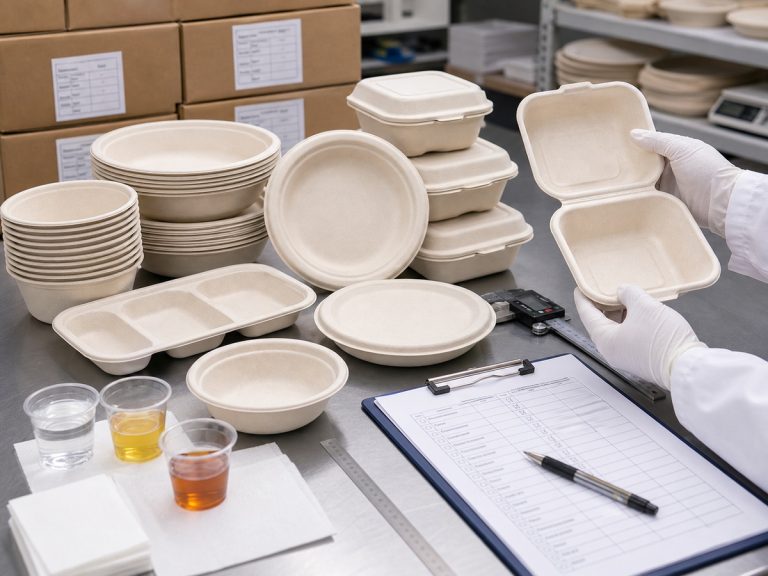
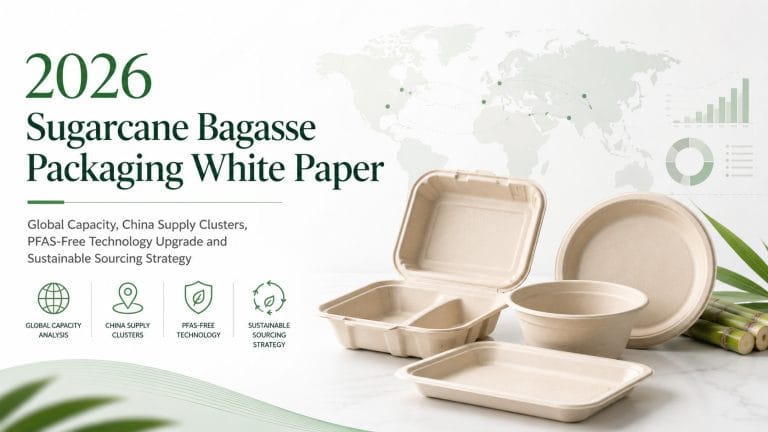
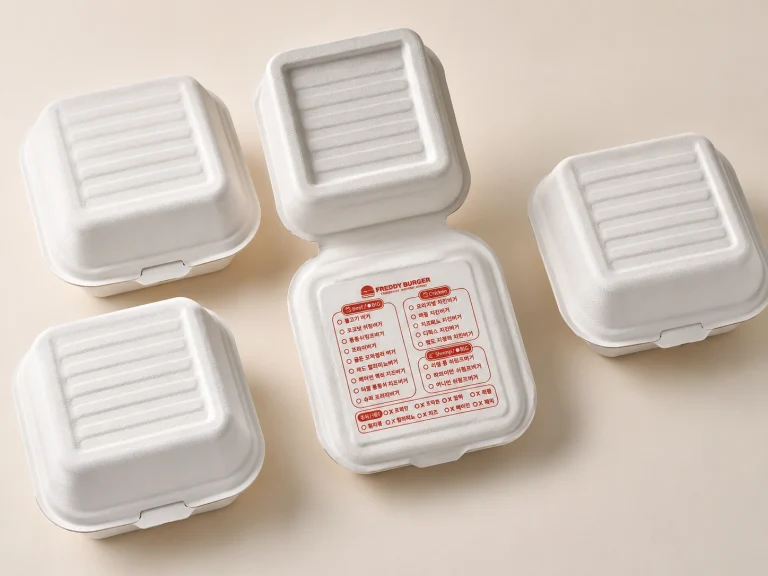
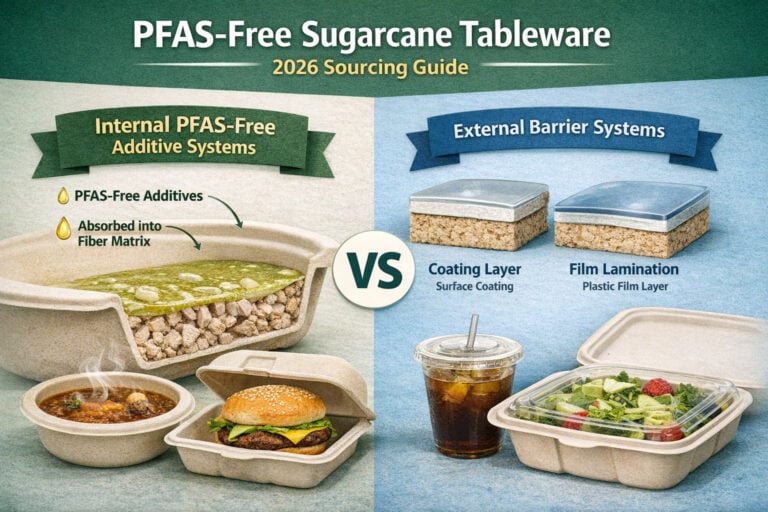
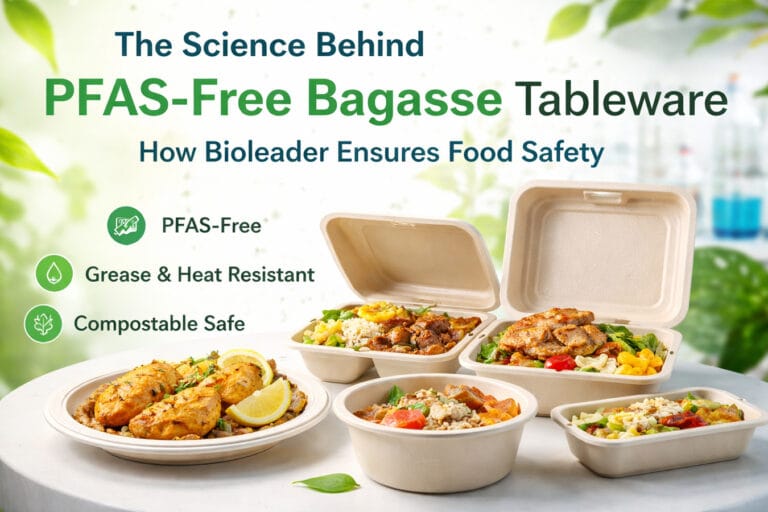
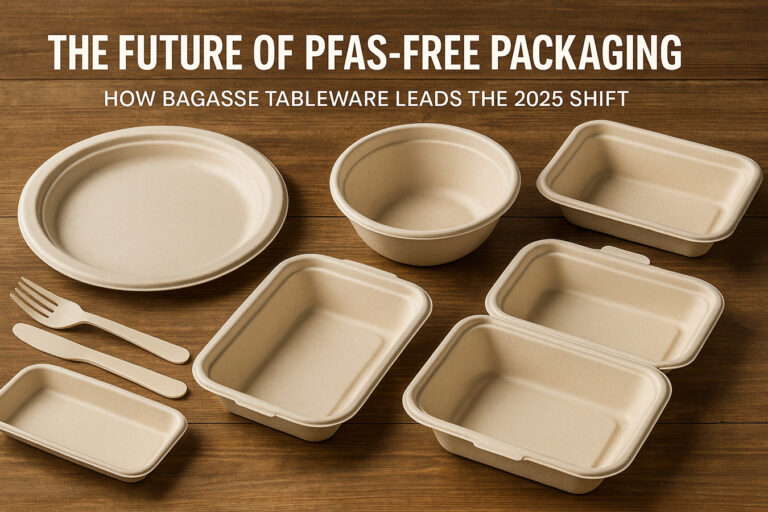
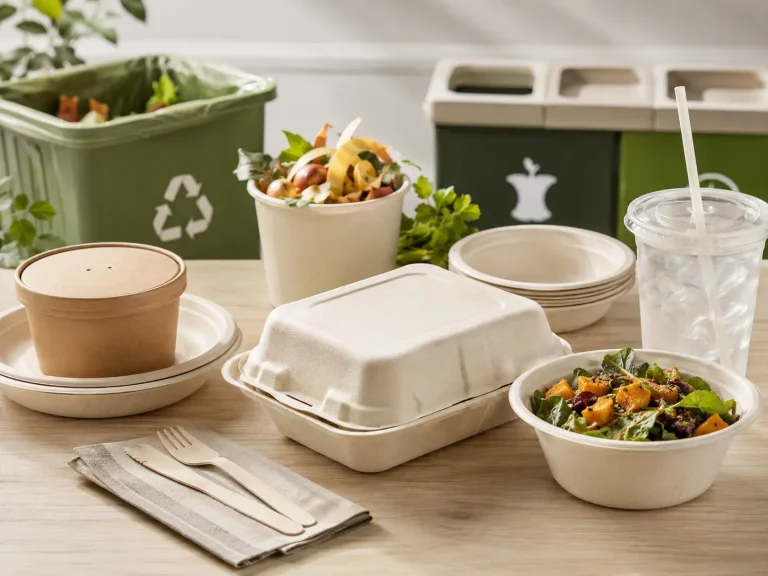
Our sugarcane food trays are free from PFAS and BPA which ensures that the food is not leached with any harmful chemicals — sugarcane bagasse containers. This importance given to health and safety is what sets our compostable trays apart from a large number of disposable products found in the market. When using our trays, it is possible to consider the health and safety of clients and you are easily able to position your image as a business that cares about health.
Common materials include sugarcane bagasse, kraft paper, aluminum, PET, PP, and PLA , sugarcane bagasse containers. For eco-conscious businesses, bagasse and PLA trays are preferred due to their compostable and biodegradable properties.
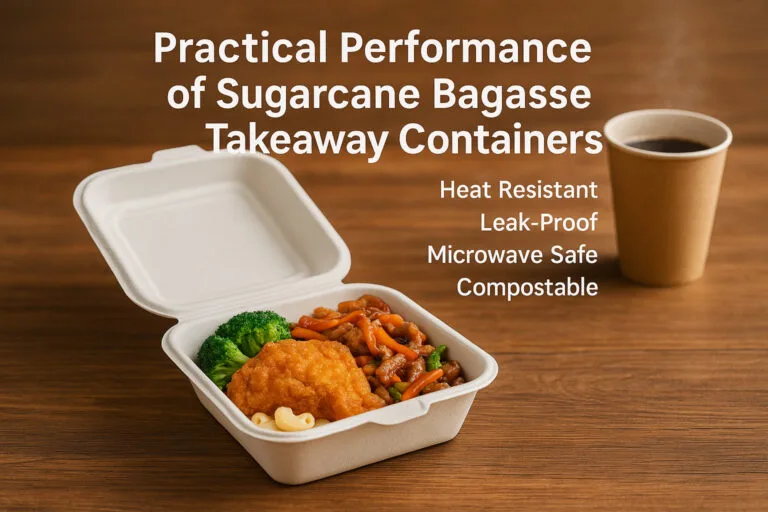
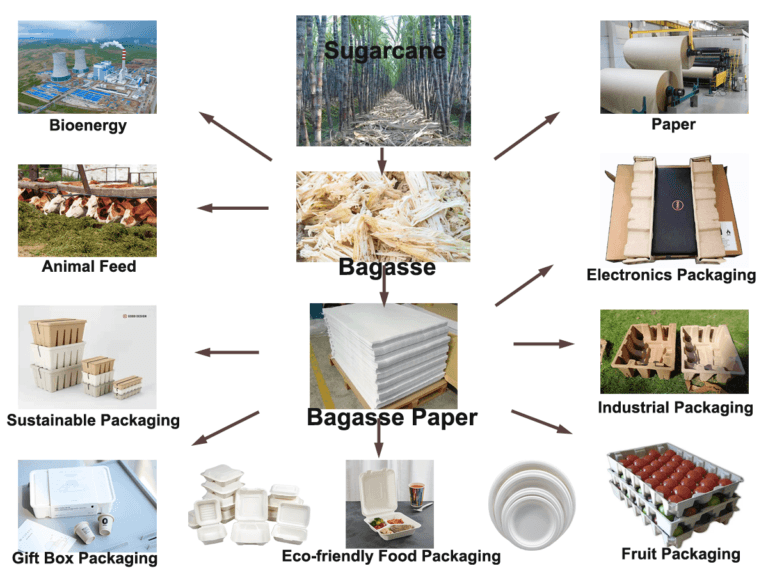
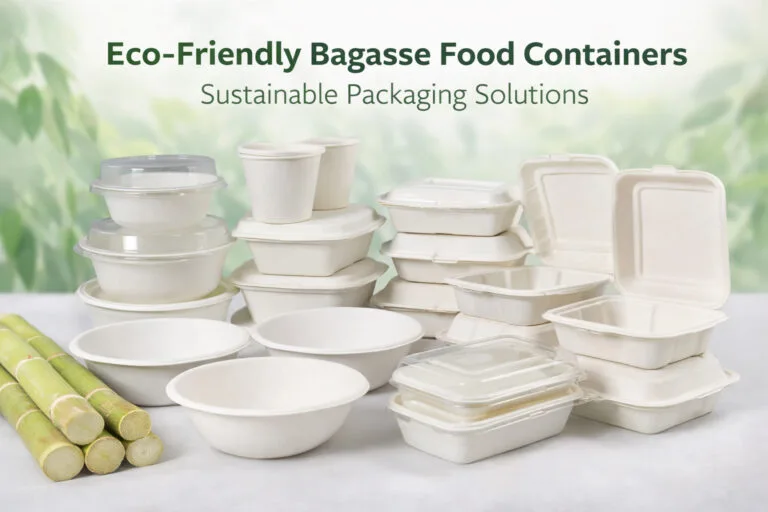
They are made from bagasse, the fibrous residue left after sugarcane stalks are crushed for juice. This agricultural waste is molded into strong, durable trays that are compostable, biodegradable, and plastic-free.
“Biodegradability of Sugarcane Bagasse-based Materials” – ResearchGate “The Environmental Impact of Plastic Packaging” – ScienceDirect “Comparison of Biodegradable and Plastic Packaging: A Lifecycle Analysis” – Journal of Sustainable Materials “Microplastic Contamination in Food Packaging” – Environmental Research Journal “The Future of Sustainable Packaging: Trends and Innovations” – Forbes “Government Regulations on Plastic Bans” – World Economic Forum “The Rise of Compostable Packaging in the Food Industry” – National Geographic { “@context”: “https://schema.org”, “@type”: “FAQPage”, “mainEntity”: [ { “@type”: “Question”, “name”: “What is bagasse, and how is it used in food packaging?”, “acceptedAnswer”: { “@type”: “Answer”, “text”: “Bagasse is the fibrous residue left after extracting juice from sugarcane. Instead of being discarded as waste, it is repurposed to create biodegradable and compostable food containers, offering a sustainable alternative to plastic packaging.” }}, { “@type”: “Question”, “name”: “Are bagasse food containers safe for hot and cold foods?”, “acceptedAnswer”: { “@type”: “Answer”, “text”: “Yes, bagasse containers are heat-resistant and safe for hot and cold foods , sugarcane bagasse containers. They can be used in microwaves and freezers without compromising their structural integrity or safety.” } }, { “@type”: “Question”, “name”: “How long does it take for a bagasse container to decompose?”, “acceptedAnswer”: { “@type”: “Answer”, “text”: “Under industrial composting conditions, bagasse containers typically decompose within 60 to 90 days. In natural environments, the breakdown time may vary depending on temperature, moisture, and microbial activity.” } }, { “@type”: “Question”, “name”: “How do bagasse containers compare to plastic in terms of cost?”, “acceptedAnswer”: { “@type”: “Answer”, “text”: “Bagasse containers are currently more expensive than plastic due to production processes and limited large-scale manufacturing.
Absolutely. Bagasse fibers are processed into pulp to create paper products such as notebooks, paperboard, and printing paper, reducing the need for wood-based pulp.
Join the global movement toward zero-waste packaging.
Bioleader® offers:
📦 Bulk order support & fast delivery
✍️ Custom branding and OEM solutions
🌍 Worldwide eco-packaging compliance
Get the Catalogue Products List & Contact Us Now! 👉
📧 Email : [email protected]
📲 WhatsApp : +86-15980856610
🟢 Wechat : bioleader
📍 Add : No.39 Xinglong Road, Xiamen, China
Copyright © 2015–2026 Xiamen Bioleader Environmental Protection Co., Ltd | All Rights Reserved. Privacy Policy | AI Policy | Sitemap
Welcome to Bioleader Pack! 🌿
👉 Get a Quick Quote, Customized & Sample Details. We're online to help with your sourcing needs!
📩 Need Catalog & Price List? Email us: [email protected]
⏰ Response within 6-12 hours.
(Due to timezone differences, if we're away, please email us or leave a message.)
Response time: < 8h | Catalog List
WhatsApp us