










Key Takeaways
- Bagasse = sugar-mill by-product molded into high-performance packaging
- Works for hot & oily foods; typical use 0–90°C with vented lids
- SKU-specific EN13432/ASTM D6400 + LFGB/FDA documents available
- “No intentionally added PFAS” options with lab support
- Unify lids, right-size gram-weight, plan mixed-SKU containers
Executive Summary
Sugarcane (bagasse) packaging turns a sugar-mill by-product into high-performance, compostable foodservice solutions. For hot, oily, and takeout/to-go menus, it consistently delivers rim stiffness, practical heat tolerance (typically 0–90 °C, dwell-time dependent), and export-ready documentation (EN13432/ASTM D6400; LFGB/FDA food-contact on request). This buyer-focused guide moves beyond generic “eco” claims: it shows where bagasse truly wins, how to specify SKUs correctly, what to test before POs, and how to control landed cost at scale.
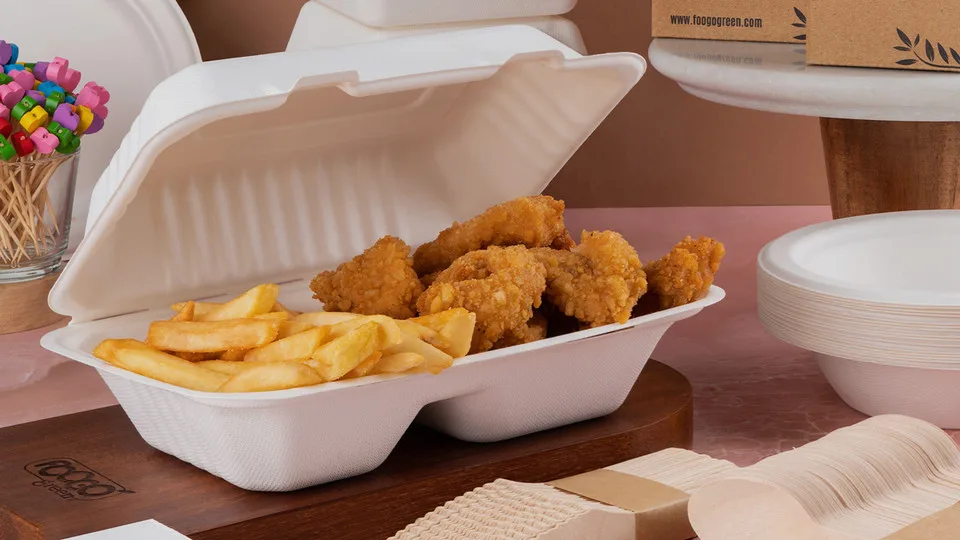
What Exactly Is Sugarcane (Bagasse) Packaging?
Bagasse is the fibrous residue left after juice extraction in sugar production. Through pulping and thermo-forming, it becomes plates, bowls, clamshells, compartment trays, and lids. With modern mold design, optimized gram-weight, and vented lid systems, bagasse products now match or outperform legacy plastic and foam in day-to-day operations—from school lunch programs and corporate cafeterias to high-volume festivals and quick-service chains.
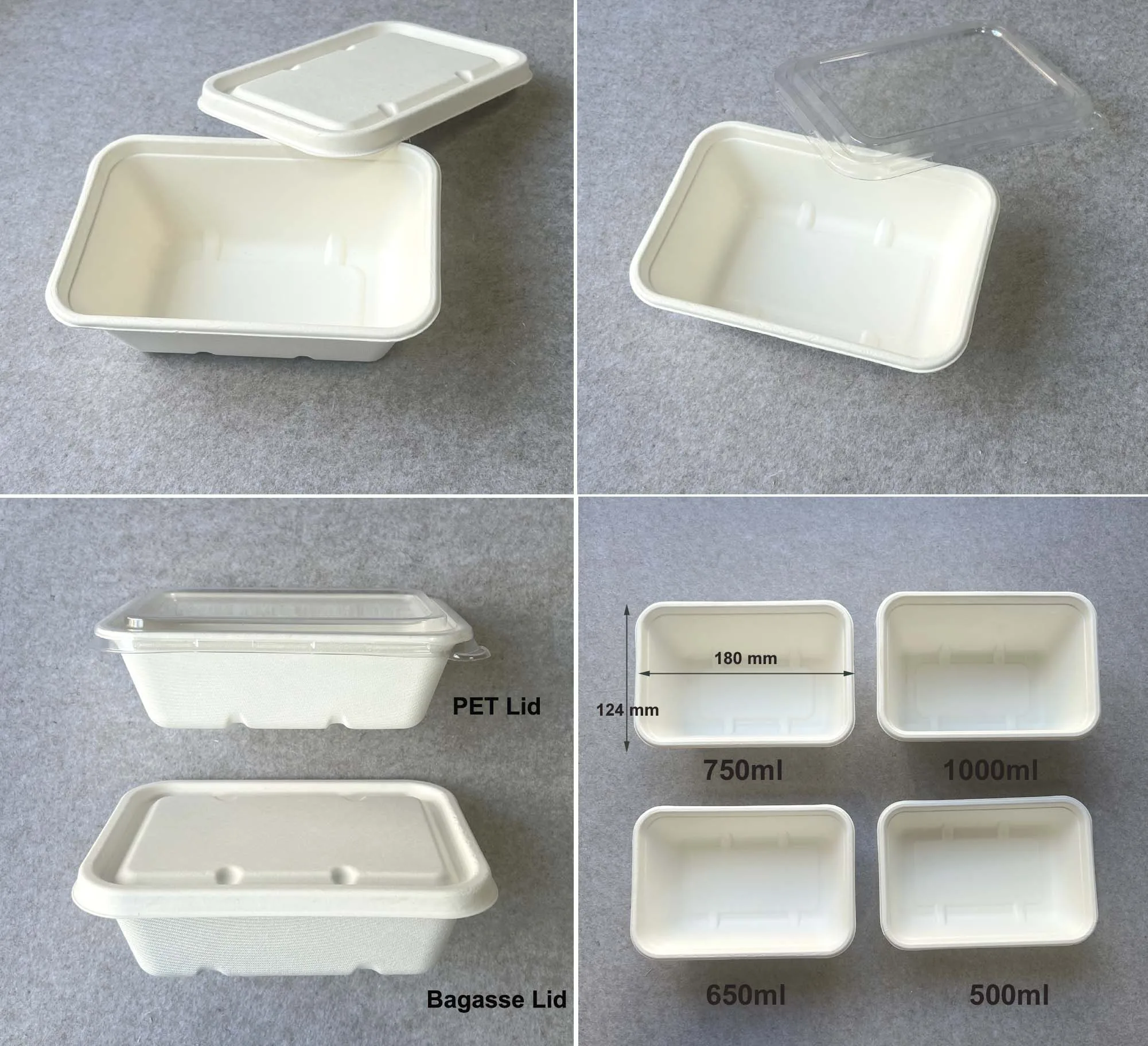
Recommended Sugarcane Bagasse Food Packaing
12 Proven Advantages of Sugarcane Packaging (With Buyer Relevance)
Renewable feedstock utilization
Leverages agricultural by-product instead of virgin petrochemicals. This is not “plant-based plastic”; it’s molded fiber derived from existing biomass streams.
Compostability potential
Correctly specified SKUs can meet EN13432/ASTM D6400. Always request current, SKU-specific certificates—compostability is model-dependent, not a blanket brand claim.
Lower fossil dependency
Replaces PS/PP/PET/foam in many front-of-house and back-of-house use cases, helping brands align with plastic-reduction mandates without sacrificing usability.
Heat & oil performance
Practical usage often runs 0–90 °C, governed by dwell time and menu type. For soups and oily foods, pair with vented paper or CPLA lids to mitigate condensation and maintain handfeel.
Rigidity & operational handfeel
High rim stiffness supports one-hand carry and standing consumption—critical in buffet lines, school cafeterias, and festivals where accidental bending leads to spills.
Form-factor flexibility
Deep-rim rounds, three-compartment trays, stackable clamshells, and custom emboss/printing help operators match packaging to menu structure and throughput targets.
PFAS management
“No intentionally added PFAS” options are available. Buyers should ask suppliers for a declaration letter and recent lab reports aligned to the exact SKUs being purchased.
Microwave suitability (when labeled)
Many bagasse SKUs are microwave-suitable, but treat this as SKU-specific. Confirm liner/ink specs and keep microwave dwell times realistic to preserve stiffness.
Service-model coverage
Works for dine-in, self-serve, and short-distance takeout. For longer delivery windows, switch to clamshells or lidded bowls to contain slosh and retain heat.
Cost control at volume
Unifying lid diameters, optimizing gram-weight, and mixing SKUs per container can reduce total landed cost without compromising performance.
Cleaner disposal story
Clear labeling and customer education support compost-forward narratives. Correct bin signage is essential to protect both brand credibility and local composting outcomes.
Policy alignment
Bagasse formats help operators respond to plastic-reduction policies in multiple markets. With the right documentation set, procurement teams can accelerate compliance checks.
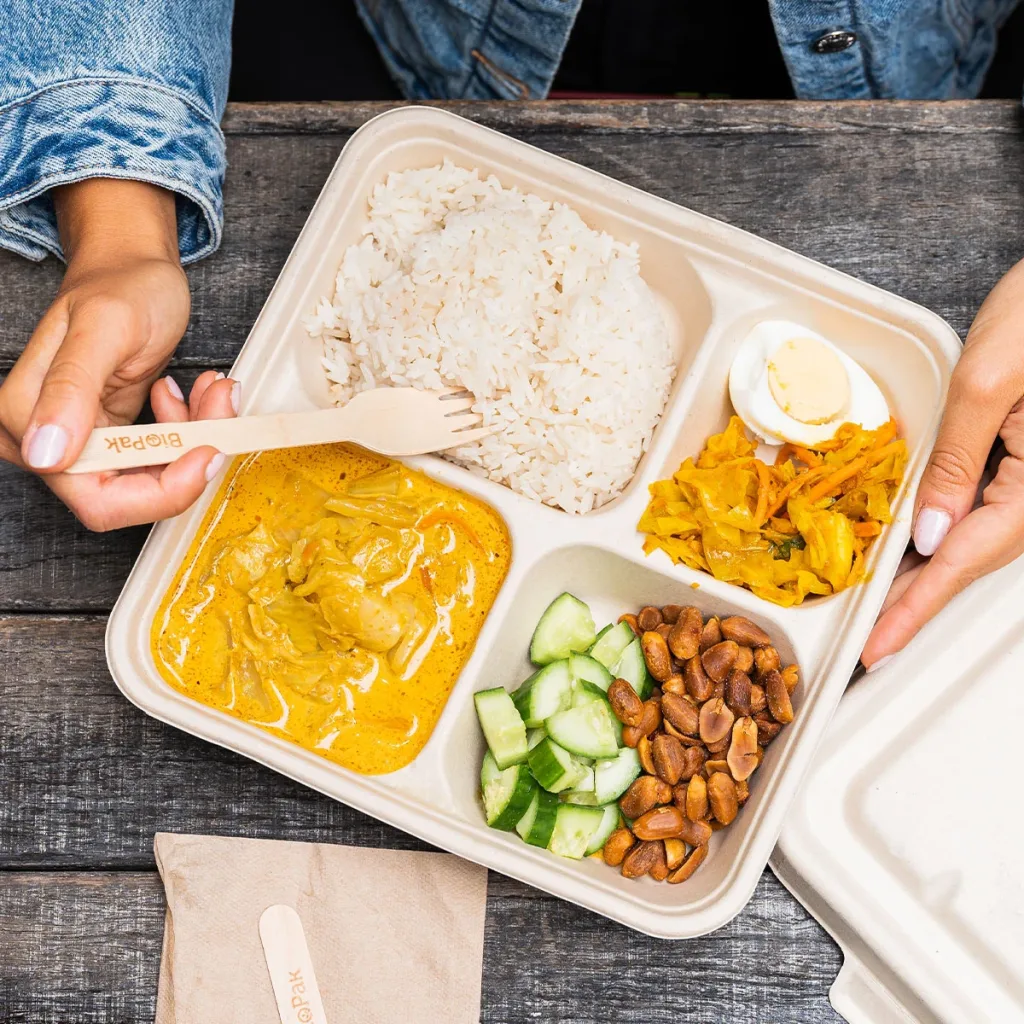
Where Bagasse Fits Best: A Use-Case Playbook
Hot soups & oily mains → Bagasse bowls + vented lids
Reason: heat tolerance + splash control + better handfeel.Combo meals / school & kids’ menus → 3-compartment trays
Reason: portion segregation, faster assembly, fewer leakage complaints.Festivals & buffets (stand-up eating) → Deep-rim plates
Reason: rim stiffness for one-hand carry; reduced spill risk in motion.Short-distance to-go (≤15–20 min) → Plate + tray banding
Reason: speed + presentation. For longer routes, switch to clamshells or lidded bowls.Cafeteria line speeds → Stack-stable formats
Reason: smooth separation in rush hours, reduced jam/misstack rate.
Specification & Compliance Checklist (Copy/Paste for Buyers)
Heat/Oil: Target 0–90 °C; test against your dwell time and menu oils.
Lids: Verify rim diameter tolerance with physical samples; prioritize vented lids for soups.
Inks/Coatings: Food-contact compliant (LFGB/FDA). Request current reports.
Compostability: Obtain EN13432/ASTM D6400 certificates for named SKUs only.
PFAS: Supplier letter for no intentionally added PFAS + recent lab tests.
Branding: Define logo size, color count, print plates/clichés, and acceptable variation.
MOQ & Lead Time: Confirm mixed-SKU container loads, production slots, and seasonal buffers.
QA: Carton drop/stack tests, lid-fit routine, migration tests for hot/oily foods when required.
Quick Selection Table
| Menu / Scenario | Best Choice | Why It Works | Notes |
|---|---|---|---|
| Hot soup / ramen | Bagasse bowl + vented lid | Heat & splash control | Test lid fit with actual lot |
| Greasy mains | Deep-rim bagasse plate | Rim stiffness, oil resistance | Validate dwell time |
| Combos / school lunches | 3-compartment tray | Portion control, speed | Reduces sauce mixing |
| Delivery > 20 min | Clamshell / lidded bowl | Containment, heat retention | Use anti-slip tray liner |
| Buffet line / stand-up eating | Deep-rim plate | One-hand carry stability | Fewer spills in motion |
Cost & Supply Strategy (For Procurement & Ops)
Unify lid diameters across SKUs to reduce inventory complexity and unit cost.
Right-size gram-weight: overspec increases cost without meaningful performance gain.
Container mix: plan a balanced SKU mix (bowls + clamshells + plates + trays) to optimize CBM utilization.
Seasonality: pre-book production before Q4/Q1 peaks; align promotions/menus with lead-time realities.
QA rituals: implement incoming lid-fit go/no-go checks; keep a small reference library of retained samples for audit.
Customer Case Study #1 — Contour (New Zealand): School Lunch Program with 3-Compartment Tray
Client profile
Contour is a New Zealand company specializing in plastic packaging machinery and related consumables. In 2021 they sought a compliant, school-safe alternative to legacy plastic lunch trays for public-sector contracts.
Challenge
Legacy plastic trays faced mounting sustainability scrutiny and procurement hurdles.
School environments needed spill-resistant compartmentalization, stiffness for one-hand carry, and microwave-suitable options for certain reheating routines.
The client required a solution robust enough to compete in a multi-year government tender while addressing parental and public health concerns.
Bioleader® solution
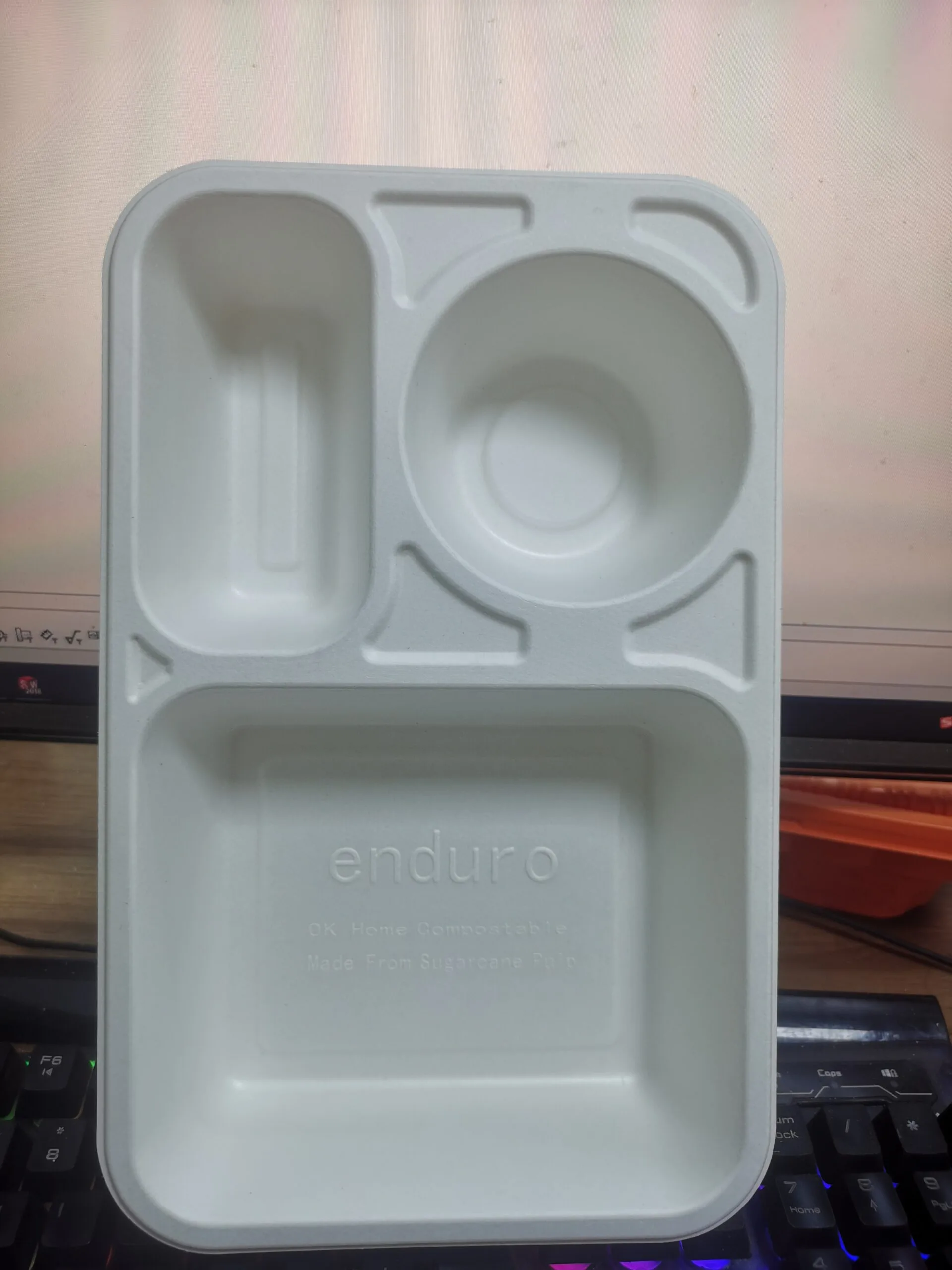
Format: Custom 3-compartment bagasse school lunch tray.
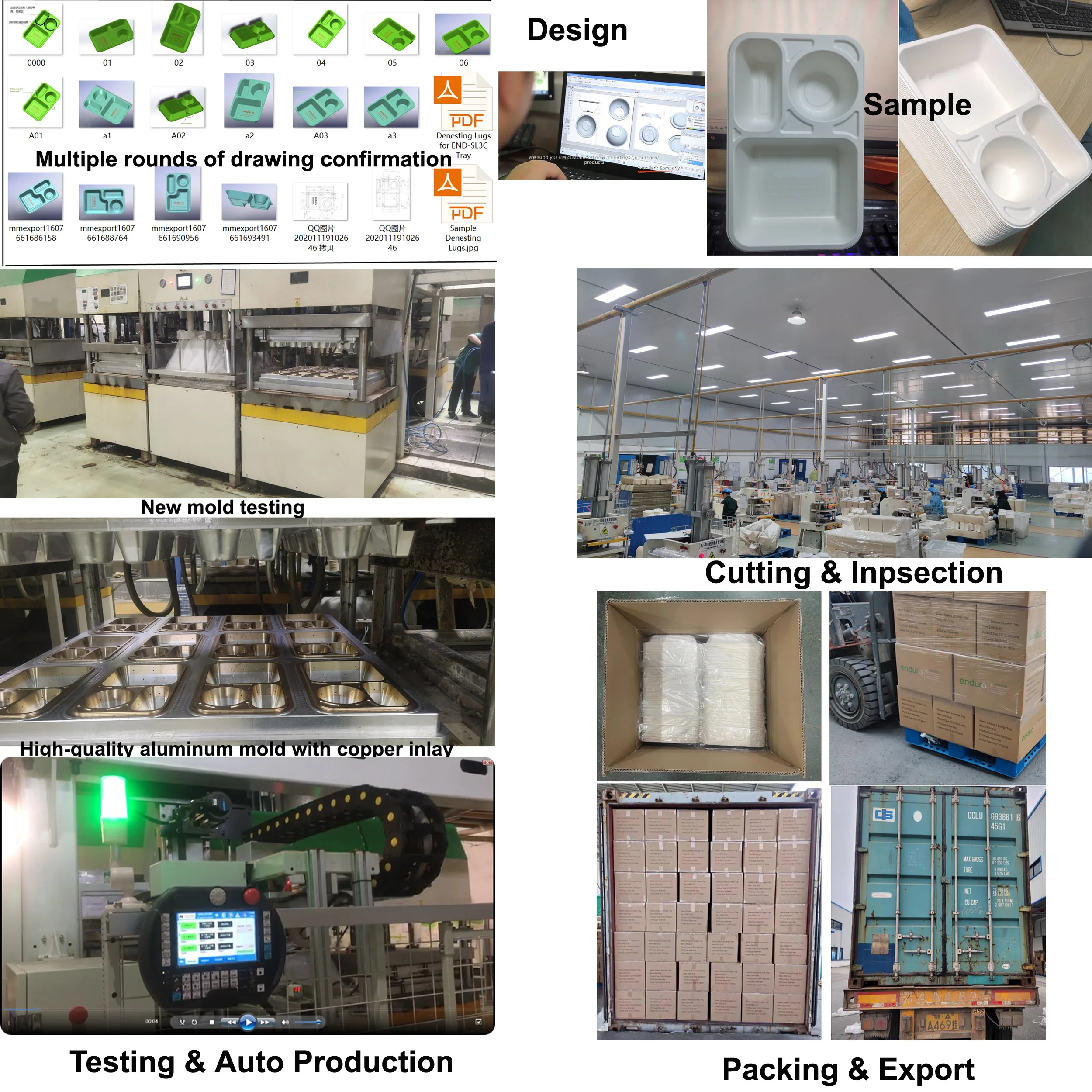
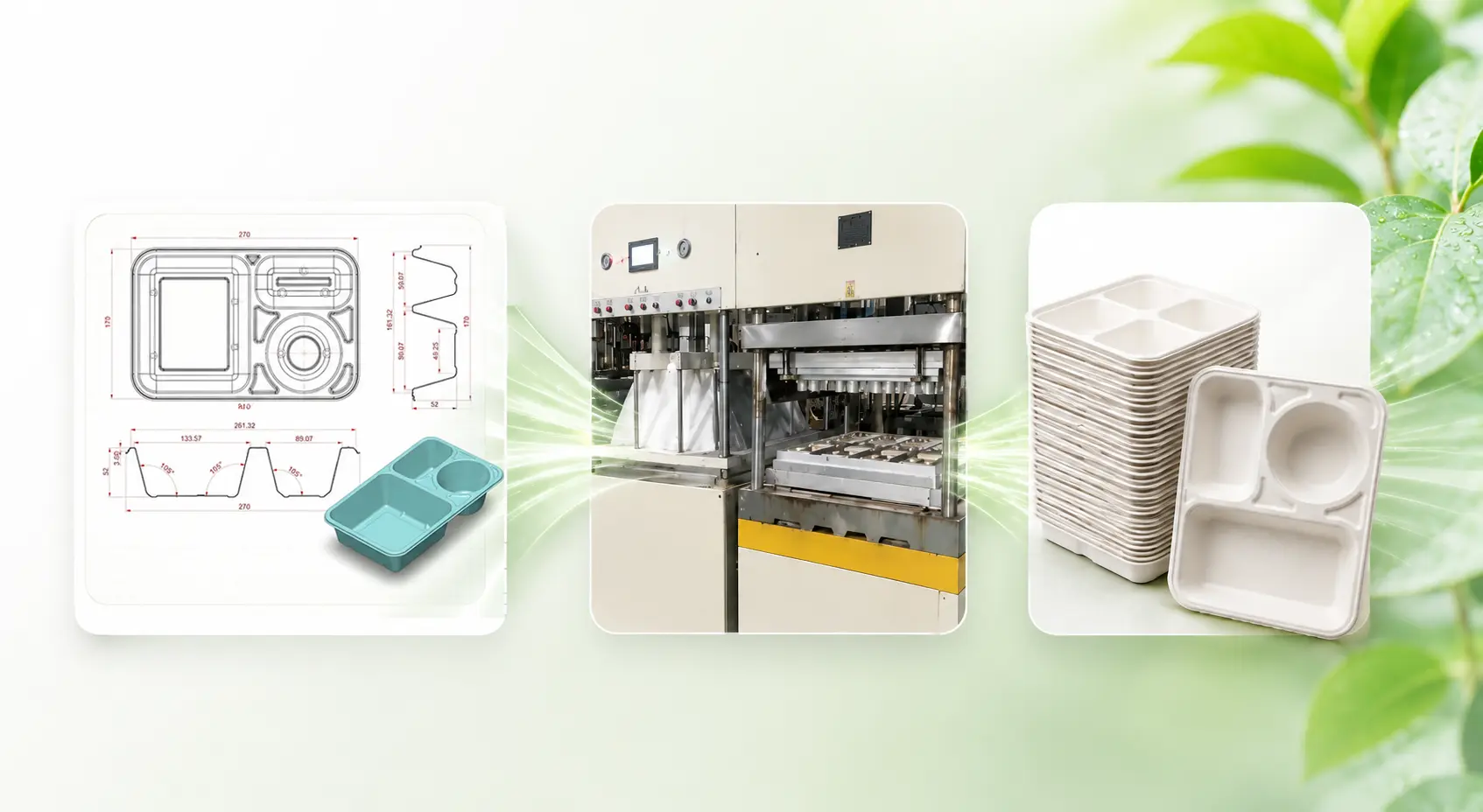
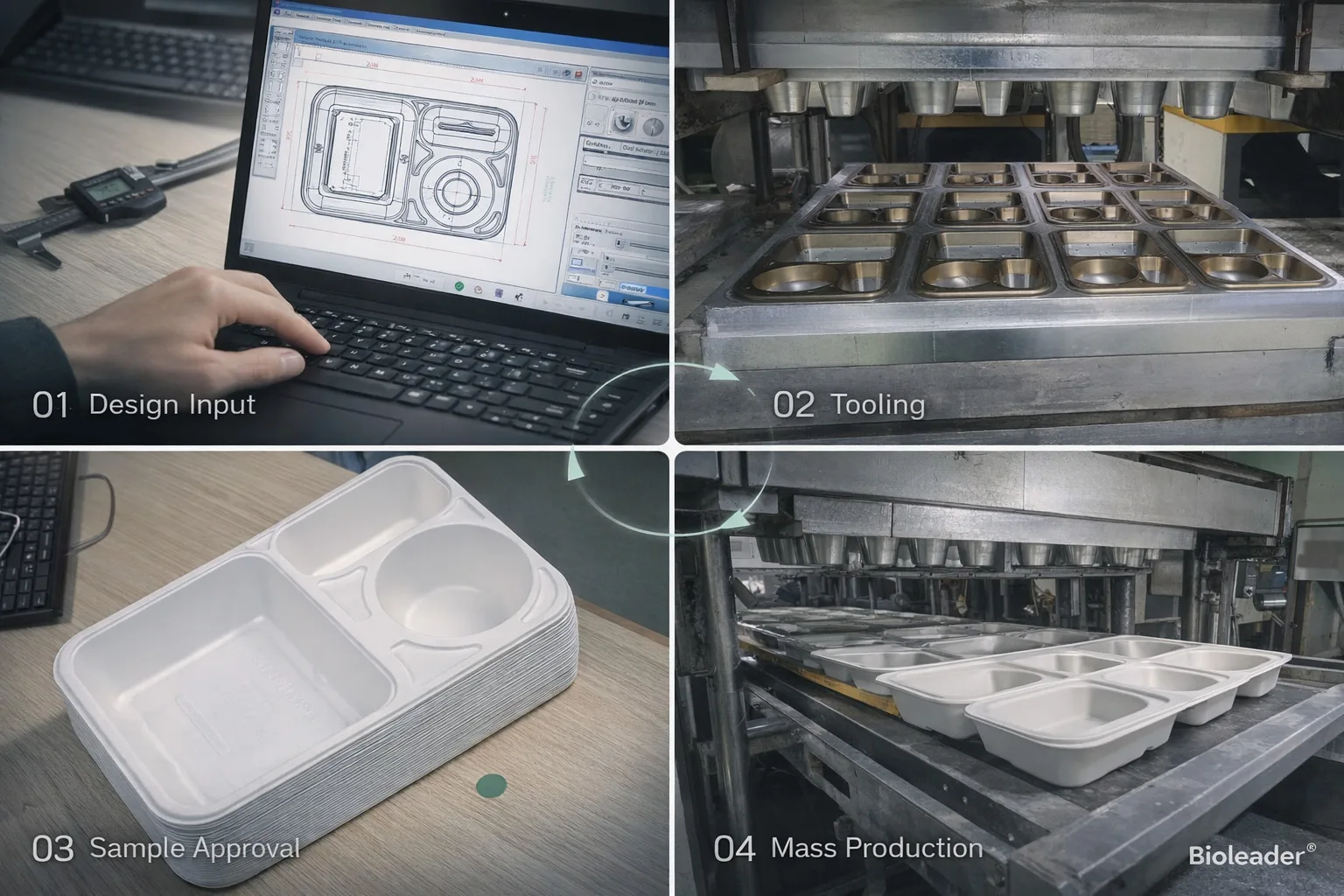
Process: Joint design workshop → 3D modeling & DFM → new tooling (mold) → logo emboss → packaging tests (drop/stack/transport) → food-contact testing (LFGB/FDA as required) → controlled pilot.
Spec highlights: Reinforced rim geometry, stack-stable nest angle, and vent-friendly lid options for hot meals.
Results
Contour secured a 3-year government schools contract, starting from the 2021 rollout.
The program received strong recognition from students, parents, and local authorities for cleanliness, spill reduction, and a cohesive sustainability story.
Operations reported smoother line flow and fewer in-service spills versus legacy plastic trays.
Suggested image block
Key takeaways
Education sector buyers prioritize segregation, safety perception, and clean waste flow.
Early design-for-manufacture (DFM) and tooling alignment avoided late-stage surprises and reduced time-to-award.
SKU-specific documentation (food-contact + compostability) simplified the tender’s compliance evaluation.
Customer Case Study #2 — Packme (New Caledonia): Full-Line Transition From Plastic to Bagasse Containers/Trays
Client profile
Packme is a regional packaging supplier in New Caledonia. Responding to local environmental policies, the company sought to replace its plastic food containers portfolio with compliant, high-performance fiber alternatives.
Challenge
Regulatory pressure required measurable reduction of single-use plastics.
Packme’s B2B customers (restaurants, caterers, institutional dining) demanded performance parity for hot, oily, and delivery-oriented menus.
The transition had to retain existing clients while making the sustainability upgrade visible and credible.
Bioleader® solution
Portfolio approach: Introduced a new series of bagasse containers and trays, harmonized around common lid diameters to simplify inventory.
Operational testing: Multi-site pilot including soup/oil stress tests, microwave dwell checks, and delivery route simulations.
Documentation: Provided up-to-date EN13432/ASTM compostability paperwork (SKU-specific) and LFGB/FDA food-contact reports.
Results
Packme completed the portfolio switch in 2021, preserving key accounts, expanding into eco-minded segments, and earning local recognition from hospitality partners and municipalities.
End users reported improved handfeel and leak resistance for oily menus compared with prior plastics in similar use conditions.
Suggested image block
Key takeaways
Full-line transitions succeed when lid ecosystems are unified and pilots are realistic (include the greasiest items).
Supplier documentation and on-site QA rituals reduce churn risk and maintain client trust during changeover.
Implementation Roadmap: From Sample to Scale
Define success: spill tolerance, microwave routine, line speed, delivery distance.
Pilot with worst-case menus: the greasiest soup, the heaviest combo, the longest route.
Run lid-fit and stack-separation tests on actual lots, not just drawings.
Lock documentation: compostability (EN13432/ASTM) + food-contact (LFGB/FDA) per SKU.
Plan supply: container mix, seasonal buffers, and artwork/plate timelines for OEM print.
Educate: bin signage and staff SOPs; “no intentionally added PFAS” statement where applicable.
Measure: spill incidents, line throughput, complaint rate, and cost per served meal—share wins in stakeholder reports.
Summary & Next Steps
Sugarcane (bagasse) packaging has matured from a niche eco option into a front-line operational workhorse. It supports hot and oily menus, short-distance to-go service, and cafeteria line speeds when specified and tested properly. For buyers, the path to value is clear: unify lids, right-size gram-weights, insist on SKU-specific documentation, and pilot against your toughest menu items.
Looking for export-ready bagasse plates, bowls, clamshells, and trays?
Bioleader® provides OEM logo print, vented-lid ecosystems, and mixed-SKU container loads—backed by current certificates. Request samples and a lid-fit test plan today.
FAQ
Is sugarcane (bagasse) packaging safe for hot and oily foods?
Yes—when specified correctly. Practical use often falls within 0–90°C depending on dwell time and menu type. Use vented lids for soups and oily dishes.
Does bagasse packaging meet EN13432 or ASTM D6400?
Specific SKUs can be supplied with EN13432/ASTM D6400 documentation. Request current certificates for the exact model you buy.
Are these products PFAS-free?
Models can be made with no intentionally added PFAS. Ask the supplier for a declaration and recent lab reports for confirmation.
Can I microwave bagasse plates or bowls?
Only if the SKU is labeled microwave-safe and the dwell time is controlled. Confirm liner/ink specs with the supplier.
What’s the fastest way to reduce total cost at scale?
Unify lid diameters, optimize gram-weight, plan mixed-SKU container loads, and run physical lid-fit checks before issuing POs.
Reference Source List:
European Committee for Standardization (CEN). EN 13432 — Requirements for packaging recoverable through composting and biodegradation: test scheme and evaluation criteria for final acceptance of packaging.
ASTM International. ASTM D6400 — Standard Specification for Labeling of Plastics Designed to be Aerobically Composted in Municipal or Industrial Facilities.
International Organization for Standardization (ISO). ISO 18606 — Packaging and the environment — Organic recycling.
U.S. Food and Drug Administration (FDA). 21 CFR Part 176 — Indirect Food Additives: Paper and Paperboard Components.
German Federal Institute for Risk Assessment (BfR). Recommendation XXXVI — Paper and Board for Food Contact.
European Chemicals Agency (ECHA). Annex XV Restriction Report — Proposal to Restrict Per- and Polyfluoroalkyl Substances (PFAS) under REACH.
Biodegradable Products Institute (BPI). BPI Compostability Certification Scheme and Mark Use Guidelines.
United Nations Environment Programme (UNEP). Single-use Plastic Tableware and Alternatives: Recommendations for Policymakers Based on Life Cycle Assessments.

One Response
Sugarcane packaging is such a smart eco-friendly solution. I love that it’s compostable and made from renewable resources—feels good to support brands that use it!