









Composting is a vital process for reducing waste and promoting sustainability, but not all composting methods are the same. Industrial composting and home composting are two distinct processes, each with its requirements and capabilities. Understanding these differences is essential for making informed decisions about compostable materials and sustainable waste management.
With growing global concerns about plastic pollution and landfill overflow, composting provides a promising alternative. But how do industrial and home composting work? What products can be composted in each system? How can consumers identify truly compostable products? In this article, we will explore these key topics and discuss the future of eco-friendly composting.
Quick Summary: Industrial Compost vs Home Compost
Industrial composting and home composting both turn organic waste into useful compost, but they are not the same system. Industrial composting uses controlled high heat, moisture, oxygen, and processing equipment, while home composting relies on slower natural decomposition in a backyard bin or pile.
Best material match: PLA, PHA, coated compostable paper cups, certified compostable cutlery, and many compostable food packaging products usually require industrial composting. Food scraps, yard waste, uncoated paper, cardboard, coffee grounds, and untreated natural fibers are more suitable for home composting.
Buyer note: “compostable” does not always mean “home compostable.” Buyers should check certification marks, composting conditions, local facility acceptance, material composition, and whether the product is certified for industrial composting or home composting.

What is Industrial Compost?
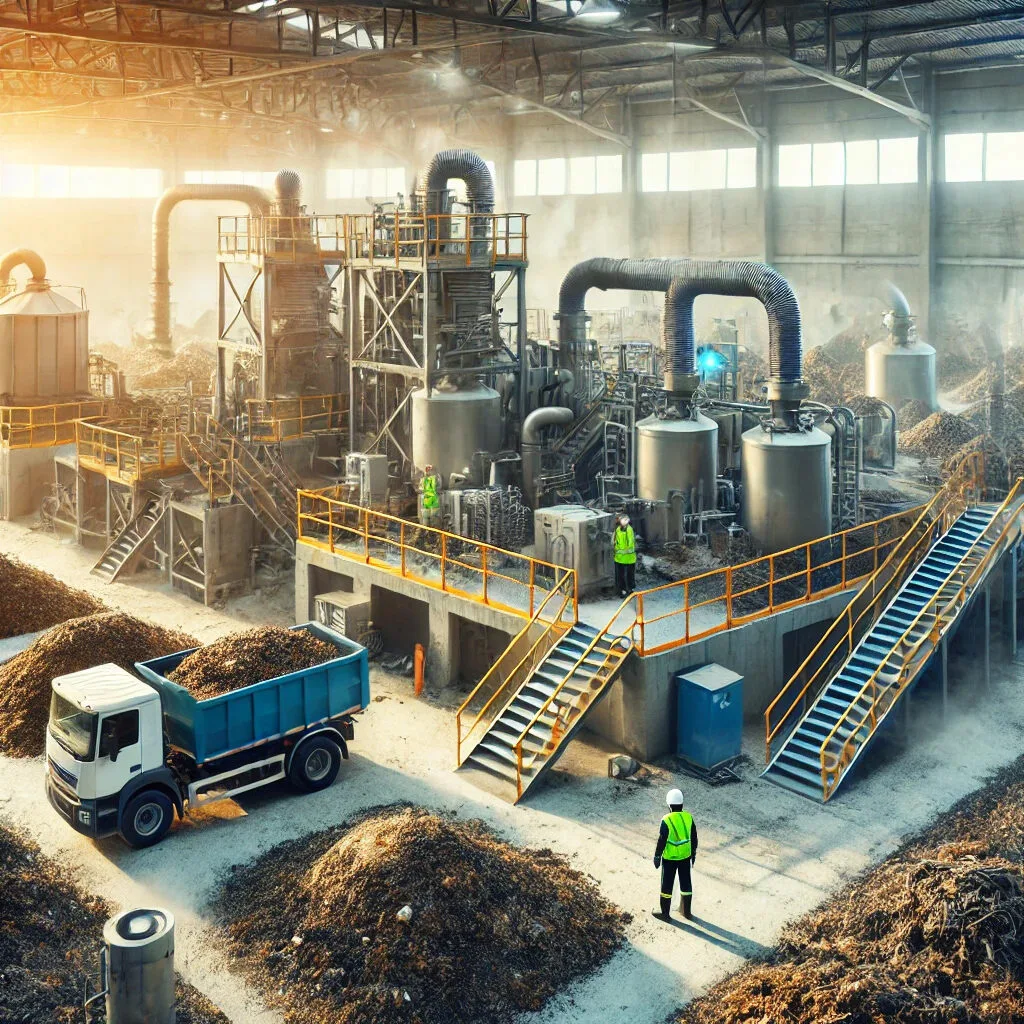
Industrial composting is a large-scale process designed to efficiently break down biodegradable materials under controlled conditions. These facilities maintain high temperatures (above 55°C/131°F), specific moisture levels, and adequate aeration to accelerate decomposition. The result is high-quality compost that can be used in agriculture, landscaping, and soil restoration.
From a technical perspective, industrial composting is important because many certified compostable packaging materials need sustained high heat, oxygen control, moisture management, microbial activity, and sufficient residence time to break down correctly. This is why many products labeled “industrially compostable” should not be assumed to break down in a backyard compost bin.
How Industrial Composting Works
- Collection & Sorting: Organic waste and compostable materials are collected and sorted to remove contaminants.
- Shredding & Mixing: Materials are shredded to increase surface area, ensuring faster breakdown.
- Composting Phase: The mixture is placed in windrows, aerated piles, or in-vessel systems where temperature, moisture, and oxygen are regulated.
- Maturation: After several weeks or months, the compost stabilizes and becomes a nutrient-rich soil conditioner.
Products That Can Be Industrially Composted
Not all biodegradable materials can break down efficiently in home compost bins. Some require higher temperatures and controlled conditions of industrial composting. Below are some examples of products that are suitable for industrial composting:
- Compostable bioplastics (PLA, PHA)
- Certified compostable food packaging
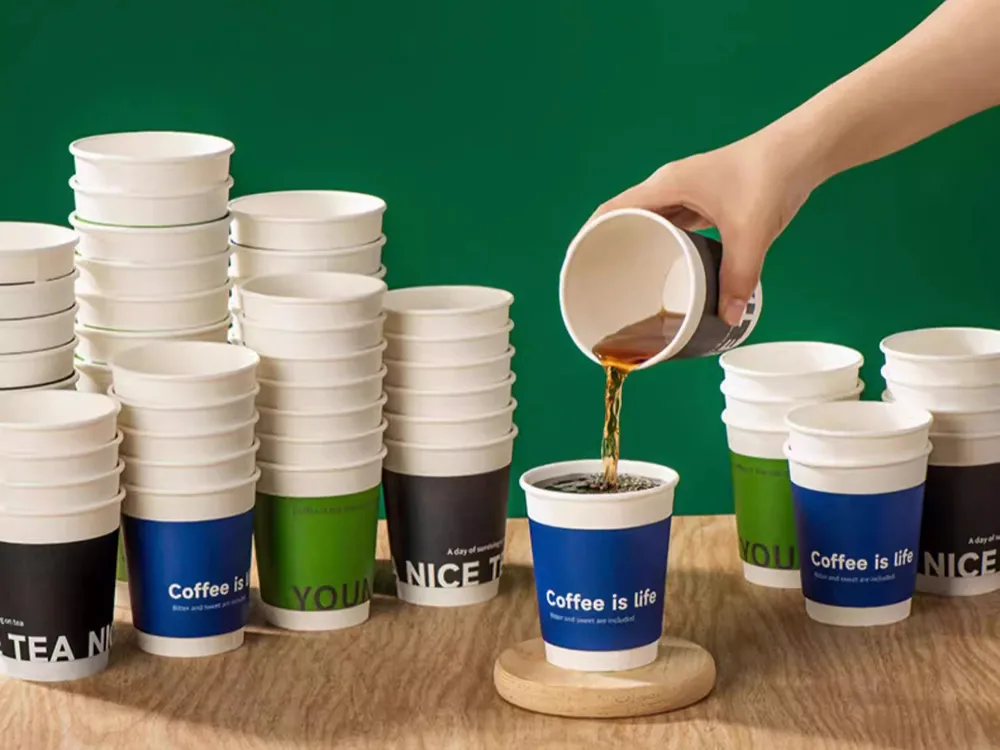
- Compostable coffee cups & lids
- Compostable cutlery
- Compostable paper plates
- Compostable trash bags
- Compostable takeout containers
- Compostable tea bags & coffee filters
- Paper-based compostable packaging with biodegradable coatings
- Agricultural compostable mulch films
- Compostable hygiene products, where certified and accepted by the composting facility
Important clarification: industrial compostability depends on certification, product thickness, additives, coatings, printing inks, food contamination, and the acceptance rules of the local composting facility. Even certified products should be sent only to facilities that accept that product category.
What is Home Compost?
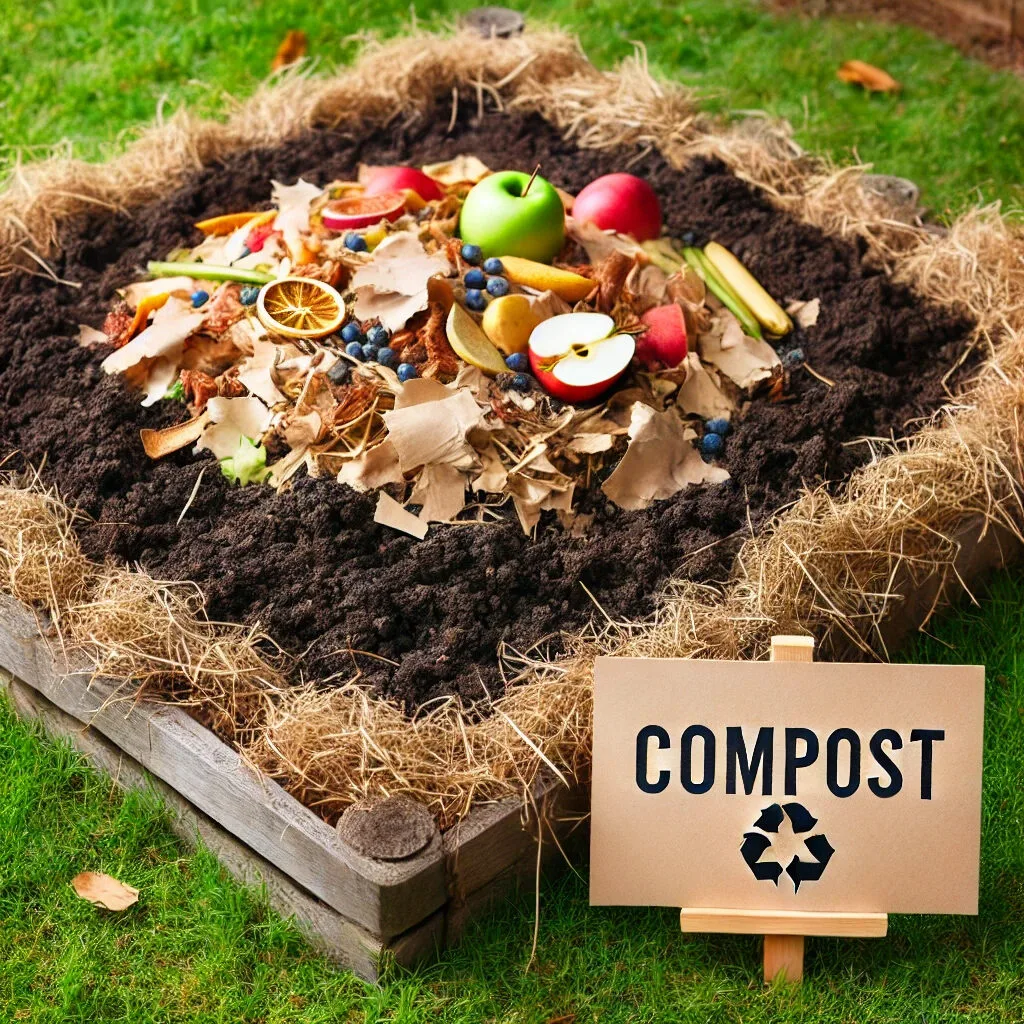
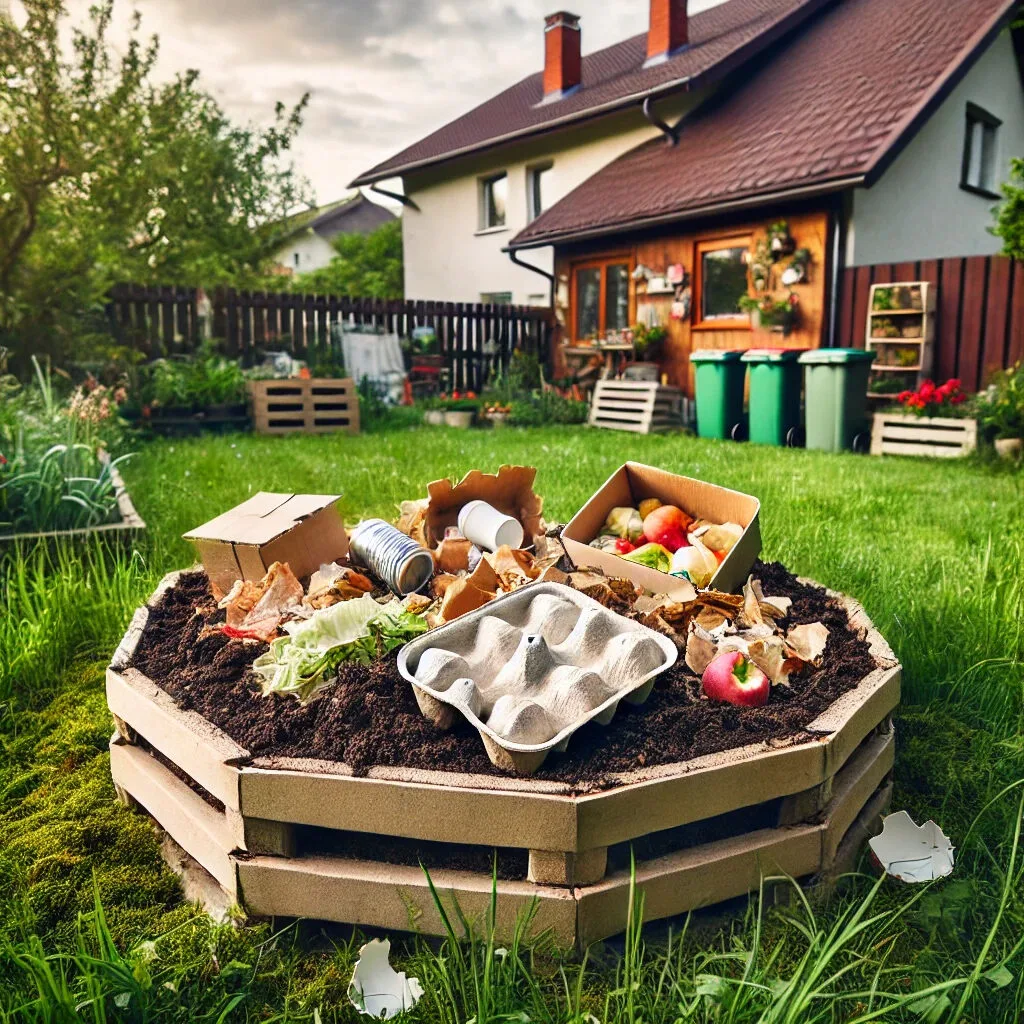
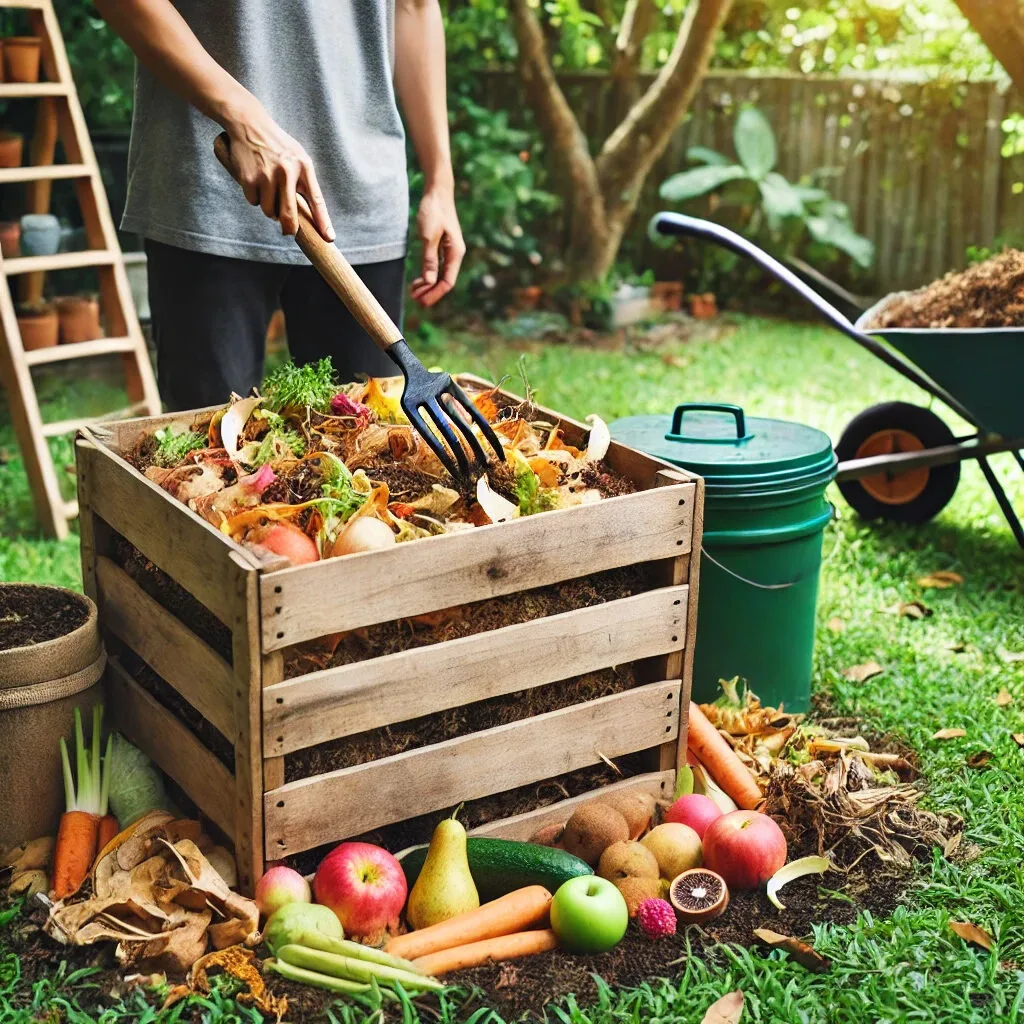
Home composting is a natural decomposition process that occurs in backyard compost bins or piles, where organic waste is broken down by microorganisms, fungi, and worms. Unlike industrial composting, home composting does not involve high temperatures or mechanical processing. It is a slower process but provides an accessible and cost-effective way to reduce household waste.
Home composting is usually less predictable than industrial composting because temperature, oxygen, particle size, moisture, season, climate, and pile management can vary significantly. For this reason, products that are certified only for industrial composting may remain partly intact in a backyard compost pile.
How Home Composting Works
- Layering: A balanced mix of green waste (food scraps, grass clippings) and brown waste (dry leaves, cardboard, paper) is added.
- Aeration: The compost pile is turned regularly to ensure oxygen circulation.
- Moisture Control: Water is occasionally added to maintain an optimal moisture level.
- Decomposition: Microorganisms break down the materials over several weeks to months, creating nutrient-rich compost.
Products That Can Be Home Composted
Many biodegradable products decompose well in a home composting system. Below are some examples:
- Fruit and vegetable scraps
- Eggshells
- Coffee grounds and paper coffee filters
- Tea leaves and unbleached tea bags
- Uncoated paper napkins and paper towels
- Shredded cardboard and newspaper
- Yard waste (grass clippings, leaves, twigs)
- Wood-based compostable cutlery, if untreated and accepted in the local home composting setup
- 100% natural fiber fabric scraps (cotton, wool, hemp)
- Pet fur and human hair
Practical note: home composting works best for food scraps, yard waste, untreated paper, and natural fibers. It is not ideal for most compostable plastics, thick coated food packaging, or products that require high industrial temperatures to break down.
 |  |  |
The Difference Between Industrial Compost and Home Compost?
While both methods aim to break down organic waste into nutrient-rich compost, their processes, conditions, and capabilities vary significantly.
- Temperature & Processing Time:
- Industrial composting requires high temperatures (above 55°C) and can break down materials in a few weeks.
- Home composting relies on lower temperatures and can take several months.
- Types of Materials Accepted:
- Industrial composting can handle compostable plastics, coated paper products, and larger waste items that require high heat.
- Home composting is limited to natural, organic materials like food scraps and plant-based waste.
- Degradation Efficiency:
- Industrial composting ensures more controlled breakdown when the facility accepts the material and operates under proper conditions.
- Home composting may leave traces of certain materials, especially bioplastics and coated packaging.
Comparison Table: Industrial vs. Home Composting
| Feature | Industrial Composting | Home Composting |
|---|---|---|
| Eco-Friendliness | High, as it diverts large amounts of waste from landfills when facilities are available | High, but mainly limited to household organic waste |
| Convenience | Requires access to commercial composting facilities | Can be done at home with a compost bin |
| Biodegradation Reliability | High for accepted certified materials under controlled conditions | High for natural materials; limited for bioplastics and coated packaging |
| Decomposition Time | Few weeks to months | Several months to a year |
| Decomposition Conditions | High temperature, moisture, aeration | Lower temperature, natural breakdown |
Material Decision Matrix: Where Should Compostable Products Go?
| Material / Product | Best Composting Route | Reason | Buyer Caution |
|---|---|---|---|
| PLA cups and PLA-coated paper cups | Industrial composting | Usually need sustained high heat and controlled conditions | Check ASTM D6400, EN13432, BPI, or relevant certification and local facility acceptance. |
| PHA products | Depends on product certification | Some PHA materials may biodegrade more broadly, but finished-product claims vary | Verify certification and composting pathway before making home compost claims. |
| Sugarcane bagasse plates and bowls | Industrial composting or selected home composting conditions, depending on product | Natural fiber can break down more readily than many bioplastics | Coatings, thickness, PFAS status, and food contamination affect real breakdown. |
| Cornstarch tableware | Industrial composting in most commercial foodservice cases | Many starch-based products require controlled composting environments | Check supplier certificate and temperature requirements. |
| Food scraps and yard waste | Home composting or industrial composting | Natural organic material breaks down well with moisture and aeration | Avoid contamination with plastic, metal, or coated packaging. |
| Uncoated paper and cardboard | Home composting or industrial composting | Useful brown carbon material | Shred first and avoid glossy coatings, plastic film, or chemical contamination. |
How to Identify If a Product Is Compostable?
Identifying compostable products is essential to ensuring they break down as intended. Here are key indicators:
1. Certifications from International Organizations
- BPI (Biodegradable Products Institute) – USA
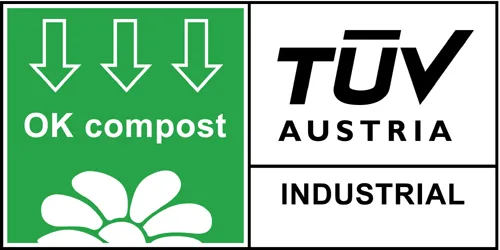
- TÜV Austria (OK Compost & OK Compost Home) – Europe
- DIN CERTCO – Germany
- Australasian Bioplastics Association (ABA) – Australia & New Zealand
Important distinction: OK Compost Industrial and OK Compost Home are not the same. Industrial compost marks indicate controlled facility conditions, while home compost marks indicate lower-temperature composting performance under specified test conditions.
 |  |
 |  |
2. Certified Product Labels
Look for “Certified Compostable” labels with certification numbers on the packaging or product’s body. These indicate the product meets industry standards.
3. Material Composition
- Industrial compostable materials: PLA (polylactic acid), PHA, PBAT (polybutyrate adipate terephthalate)
- Home compostable materials: Natural fibers, untreated wood, uncoated paper-based products
4. Facility Acceptance
A product can be certified compostable but still rejected by a local composting facility if that facility does not accept compostable packaging, coated products, foodservice waste, or bioplastics. For B2B buyers, the most reliable approach is to confirm both certification and local composting acceptance before promoting disposal claims.
Future Trends in Compostable and Sustainable Solutions
As the global push for sustainable waste management increases, compostable materials are becoming more mainstream. Key trends include:
- Advancements in Biodegradable Packaging: Companies are developing stronger, more versatile compostable plastics to replace single-use plastics.
- Government Regulations: Many countries and regions are tightening rules on single-use plastics, non-recyclable packaging, and misleading environmental claims.
- Corporate Sustainability Initiatives: Major brands are adopting compostable and recyclable packaging to meet environmental goals.
- Consumer Awareness & Demand: More consumers are choosing compostable over traditional plastic as awareness of plastic pollution grows.
For packaging suppliers and foodservice brands, the next stage of sustainable packaging will not be about using the word “compostable” broadly. It will depend on clear labeling, verified certification, local disposal infrastructure, PFAS-aware formulation, food-contact safety, and transparent communication with end users.
Recommend Bioleader’s Compostable Tableware
For businesses and individuals looking for eco-friendly alternatives, Bioleader offers high-quality compostable tableware made from plant-based materials. These products:
- Fully decompose in industrial composting facilities when certified, accepted, and processed under proper conditions
- Are certified compostable by global organizations depending on product series and target market
- Offer a sustainable alternative to plastic plates, cups, and cutlery
- Are sturdy, heat-resistant, and food-safe
Our main products are:
① Sugarcane Bagasse Tableware: food containers, clamshell boxes, bowls, plates, trays, cups, cup lids;
② Cornstarch Tableware: clamshell boxes and food containers, plates, cups and cutlery;
③ Food Paper Packaging: paper cups, paper bowls, food paper boxes.
④ Biodegradable Compostable Cutlery: spoon, fork, knife and cutlery sets.
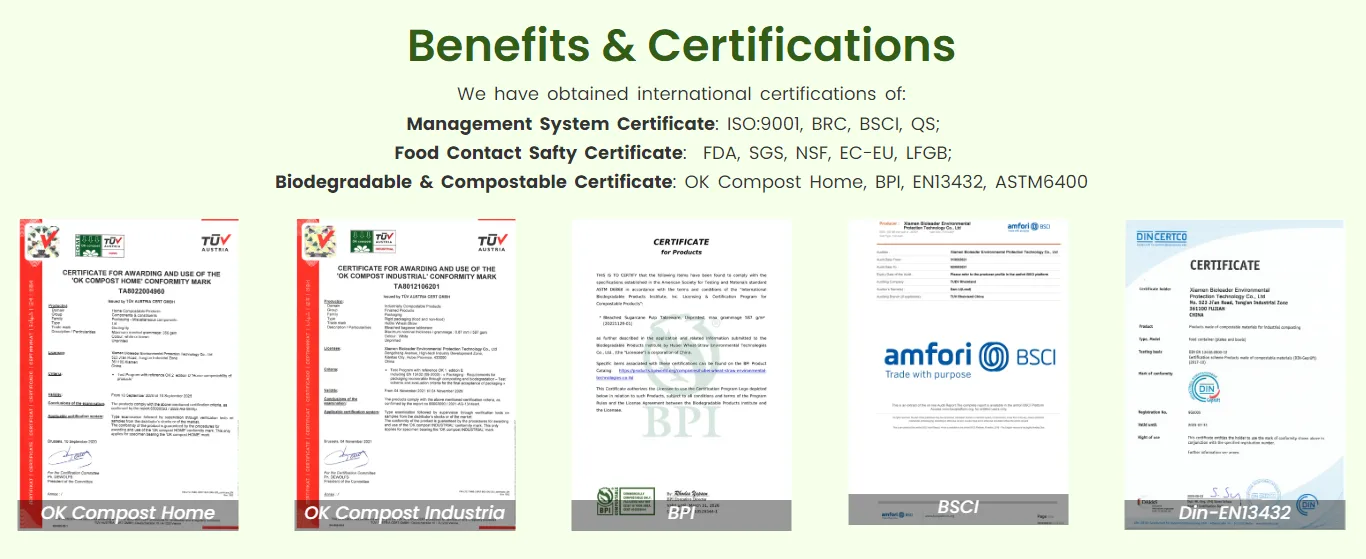
We supply a one-stop disposable biodegradable food packaging solution service. We have obtained international certifications of ISO:9001, BRC, NSF, FDA-SGS, OK Compost Home, BPI, EN13432, ASTM6400, EC-EU, LFGB …… We have an advanced production facility and excellent technology. The whole production process is no pollution. We adopt advanced facilities, scientific management, and strict quality control to guarantee high-quality products. We are committing ourselves to supplying safe and sanitary green products.
Choosing Bioleader’s compostable tableware helps reduce plastic waste and support a greener future.
Need Certified Compostable Tableware for Foodservice?
Bioleader® helps restaurants, cafés, catering companies, distributors, supermarkets, and importers source compostable tableware matched to real disposal pathways, food-contact requirements, and export markets.
Choose from sugarcane bagasse tableware, cornstarch tableware, compostable cutlery, PLA cups, paper cups, paper bowls, and custom food packaging solutions.
- Industrial compostable options
- Home compostable options where certified
- EN13432 / ASTM D6400 support
- BPI / OK Compost support
- Bulk export and OEM supply
Conclusion
Composting is a crucial solution for reducing waste and promoting sustainability. While industrial composting can handle a broader range of materials, home composting is an accessible way for individuals to manage organic waste. Understanding the differences, identifying compostable products, and embracing eco-friendly solutions like Bioleader’s compostable tableware will help drive a more sustainable future.
By making informed choices, businesses and consumers alike can contribute to a cleaner, healthier planet. 🌍💚
Key Takeaways: Industrial Compost vs Home Compost
- Industrial composting uses controlled high temperatures, aeration, moisture, and processing systems to break down accepted certified compostable products.
- Home composting is slower and works best for food scraps, yard waste, uncoated paper, cardboard, and untreated natural materials.
- PLA, coated paper packaging, many compostable cups, and many compostable cutlery products usually require industrial composting.
- “Compostable” and “home compostable” are not the same claim; buyers should check certification marks and local facility acceptance.
- For foodservice packaging buyers, the best solution is to match material, certification, product use, disposal pathway, and regional waste infrastructure.
FAQ
1. What is the difference between industrial compost and home compost?
Industrial composting occurs at high temperatures in controlled environments, breaking down tougher materials faster. Home composting is slower and depends on natural outdoor conditions.
2. What types of materials can be industrially composted?
Materials like PLA bioplastics, bagasse, cornstarch packaging, and other certified compostable items often require the high heat and microbes found only in industrial composting.
3. Can PLA products be composted at home?
No, PLA typically requires industrial composting facilities. It does not break down efficiently in home compost piles due to the lack of sustained high heat.
4. How long does home composting take?
Home composting usually takes 2 to 6 months depending on the material, climate, moisture, and oxygen levels. Softer organic waste breaks down faster than packaging materials.
5. Are all compostable products suitable for home composting?
No, only products labeled “home compostable” will break down in backyard composts. Industrial compostable items need higher temperatures and special conditions.
6. What certifications should I look for in compostable products?
Look for certifications like OK Compost Home, OK Compost Industrial, ASTM D6400, EN 13432, DIN CERTCO, TÜV Austria, or BPI Certified Compostable to determine the appropriate composting method.
7. What happens if industrial compostable items end up in home compost?
They may not fully degrade and could leave behind residues or fragments. This can contaminate your compost and harm soil quality if used in gardens or plants.
8. Is bagasse home compostable or industrial compostable?
Bagasse is a natural fiber material and may break down more readily than PLA, but finished-product compostability depends on thickness, coating, food contamination, and certification. Some bagasse items may be better suited to industrial composting, while selected uncoated fiber items may break down in suitable home composting conditions.
Reference Source List:
- “Home Composting vs. Industrial Composting” – Natur-Bag. Natur-Bag Compostable Bags and Liners
- “BPI – Certified Compostable” – Biodegradable Products Institute. BPIWorld
- “Our Composting and Sustainability Certifications” – World Centric. World Centric
- “Home Composting vs Industrial Composting: How They Work” – Renouvo
- “Standards & Certifications” – BSIbio.
- “Biodegradability, Home Composting, Industrial Composting: Definitions Explained” – UPM Specialty Papers.
- “Compostable Products” – US Composting Council.
- “18 Compostable Products Certified Compostable and Benefits” – Renouvo.
- “Industrial/Commercial Composting vs. Home Composting” – Moonshot Compost
- Bioleader® – Compostable tableware, sugarcane bagasse packaging, cornstarch tableware, PLA products, paper food packaging, and export documentation support.