Quick Summary: PLA, PHA and PBAT Are Not the Same
PLA, PHA and PBAT are different bioplastic material families, not interchangeable packaging solutions. PLA is rigid, transparent and commonly bio-based, but standard clear PLA is mainly suited to cold food and beverage packaging and typically depends on industrial composting conditions for certified compostability claims. PBAT is flexible and biodegradable under suitable conditions, but conventional commercial PBAT is commonly produced from fossil-derived monomers and is widely used in films and blends. PHA is a family of microbial polyesters with broader biodegradation potential across some environments, but performance varies by grade, product structure and disposal conditions, while cost and supply-chain maturity still limit many mainstream foodservice applications.
For food packaging buyers, the right material should not be chosen by name alone. It should be selected by food-contact requirement, heat resistance, rigidity, flexibility, transparency, composting route, certification and real end-of-life conditions. For a broader comparison of bagasse, PLA, cornstarch and paper packaging, see Bioleader®’s sustainable packaging material sourcing guide.
- PLA is best known for clear cold drink cups, transparent lids and rigid cold food packaging, but standard clear PLA should not be assumed suitable for hot soup, hot drinks or high-temperature food delivery.
- CPLA is crystallized PLA-based material commonly selected for compostable cutlery and applications where greater heat resistance is required.
- PBAT is valued for flexibility and biodegradability, especially in films, bags and PLA- or starch-based blend systems.
- PHA is a promising family of bioplastics with broader biodegradation potential for some grades, but its commercial suitability still depends on cost, processing, supply scale and product-specific validation.
- PBS and TPS are often used in blends, where final performance depends heavily on formulation, thickness, processing and certification.
Why Bioplastic Material Names Often Confuse Food Packaging Buyers
Many buyers search for “biodegradable plastic,” “compostable plastic,” “bio-based packaging” or “plant-based tableware” as if these terms describe the same thing. In reality, they describe different material claims. A cup can be bio-based but not suitable for home composting. A flexible film can be biodegradable but not bio-based. A disposable fork can support a compostability claim only when the relevant finished product or certification scope meets the applicable requirements.
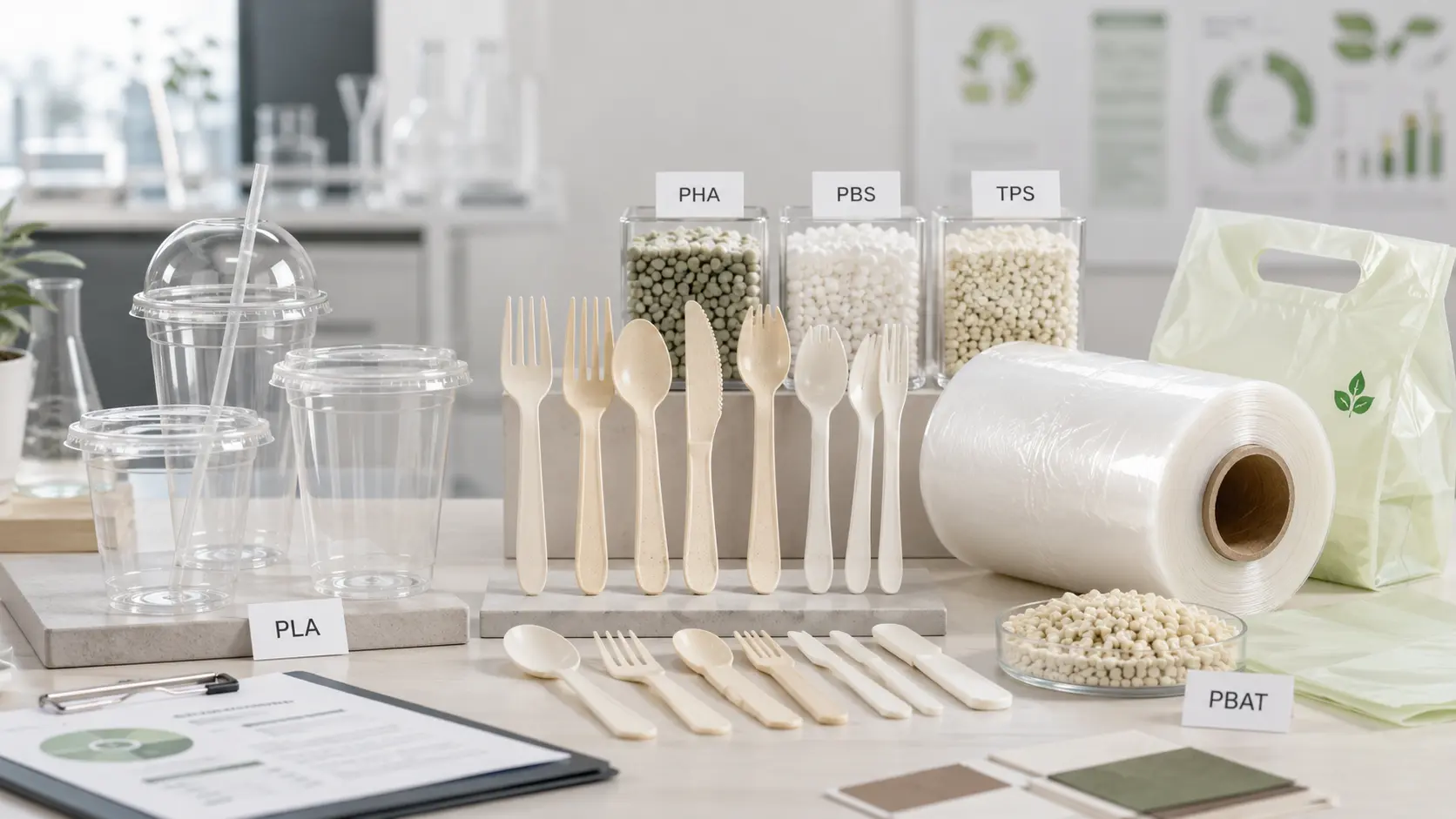
This is why PLA, PHA, PBAT, PBS and TPS must be evaluated as separate material systems. Their polymer structure, thermal behavior, mechanical strength, degradation pathway and processing method are different. A clear PLA cup, a CPLA fork, a PBAT film and a starch-based container may all be marketed within the wider sustainable-packaging category, but their real application windows are not the same.
For B2B food packaging procurement, the practical question is not simply “Which material is greener?” The better question is: Which material can safely hold the target food, survive the intended temperature, match the buyer’s disposal system and support a defensible environmental claim?
Buyers who are still comparing basic claim terminology can first review Bioleader®’s guide to biodegradable vs compostable plastics and the practical difference between recyclable, biodegradable and compostable packaging claims. These definitions are essential before comparing PLA, PHA, PBAT, PBS or TPS.
Manufacturer Insight
Based on Bioleader®’s experience serving foodservice packaging buyers, most sourcing mistakes happen when a buyer starts with a material name instead of a use case. PLA can be a strong choice for clear cold beverage cups, but it is normally not the correct starting point for hot soup delivery. CPLA can be more appropriate for cutlery, while PBAT is more relevant to flexible film and blend systems. Material selection should begin with food type, temperature, holding time, structure, certification and destination-market requirements.
Bio-Based, Biodegradable and Compostable Are Three Different Claims
Before comparing PLA, PHA and PBAT, buyers need to separate three commonly mixed claims: bio-based, biodegradable and compostable. These terms are related, but they are not equal. A product can be bio-based without being compostable. A product can be biodegradable but require specific environmental conditions. A compostability claim should be connected to an applicable standard, test method and certification scope rather than inferred from plant-based content alone.
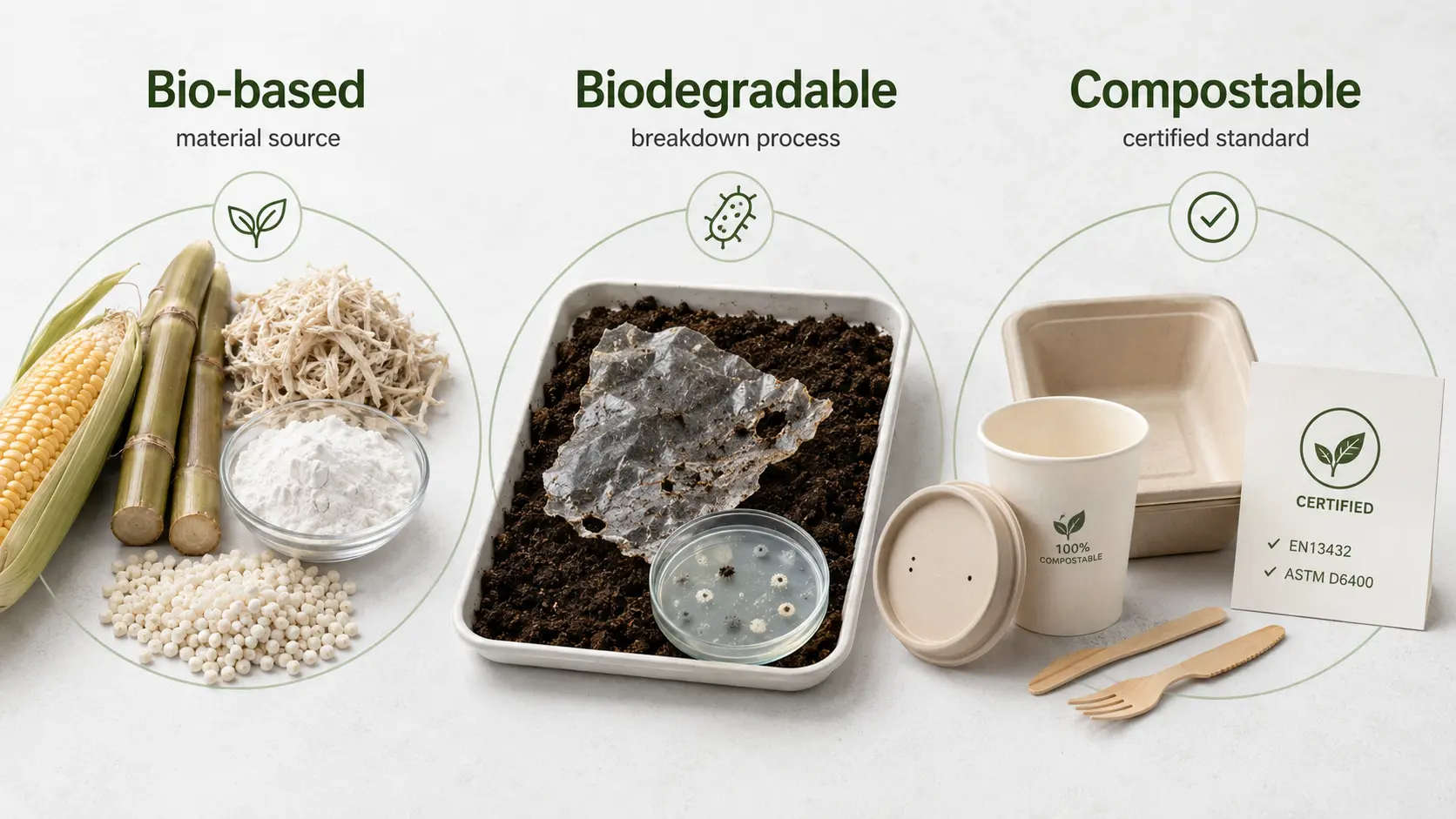
| Claim | What It Means | What Buyers Should Verify | Procurement Risk If Misused |
|---|---|---|---|
| Bio-based | The material is partly or fully derived from renewable biomass, such as corn, sugarcane, starch or other biological feedstocks. | Bio-based content, material source, supplier declaration and whether other fossil-derived components are present in the final structure. | Buyers may incorrectly assume that a product is compostable simply because part of its carbon comes from renewable feedstock. |
| Biodegradable | The material can be broken down through biological activity under certain conditions, with behavior influenced by temperature, humidity, oxygen, microbial activity, polymer chemistry and product thickness. | Test method, degradation environment, time frame, finished-product structure and whether the claim applies to the actual article rather than only the base resin. | Vague biodegradable claims can create greenwashing risk when the test environment and evidence are not clearly defined. |
| Compostable | The tested product or material meets defined requirements under a recognized composting standard for the relevant disposal environment. | Applicable EN 13432, ASTM D6400, BPI or TÜV certification and whether the exact item, thickness and formulation are within scope. | A raw-material certificate may not automatically cover the finished cup, lid, container or utensil. |
Composting conditions are especially important. Industrial composting normally relies on controlled temperature, moisture, aeration and microbial activity, while home composting operates under less-controlled and generally lower-temperature conditions. Buyers can review the difference between industrial compost and home compost before selecting the correct claim for a market.
For export buyers, material selection and certification review should be handled separately but together. Bioleader®’s EN 13432 vs ASTM D6400 guide for export buyers explains two of the main industrial-compostability frameworks, while the Bioleader® certificate and documentation page provides a central location for reviewing available product and compliance documentation.
Key Takeaway for Buyers
Bio-based describes where material carbon comes from. Biodegradable describes biological breakdown under defined conditions. Compostable describes conformity with requirements for a specified composting environment. Food packaging buyers should evaluate application, temperature, disposal route, food-contact safety and certification scope together.
PLA: Clear, Rigid and Suitable for Cold Food Packaging
PLA, or polylactic acid, is one of the most commercially established bio-based polymers used in food packaging. Suitable grades can provide good transparency, rigidity and surface appearance, making PLA particularly useful when buyers need a plastic-like clear presentation for cold applications.
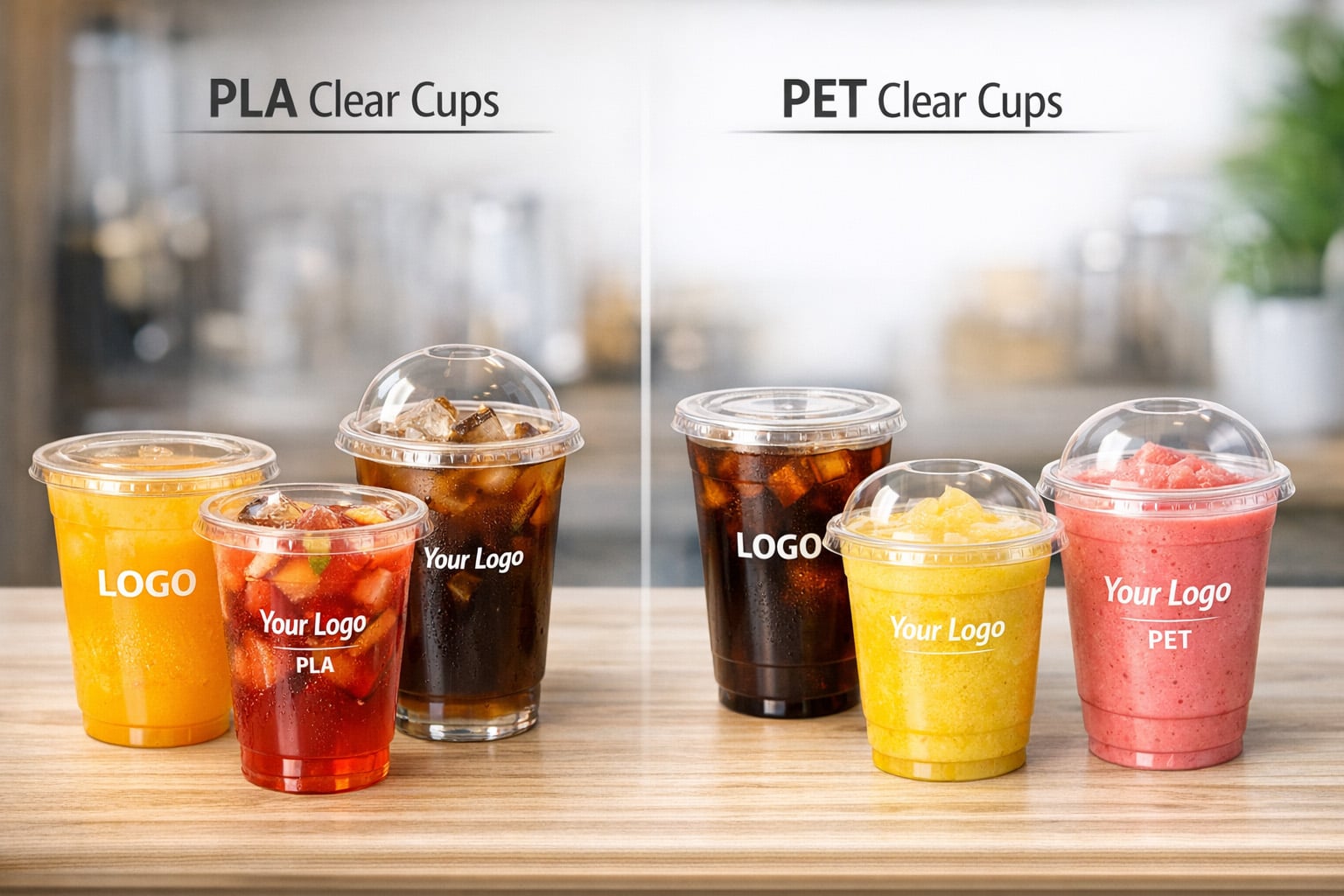
In practical packaging terms, PLA is a strong fit for clear cold drink cups, transparent lids, juice cups, smoothie cups, fruit cups, dessert cups and selected chilled food packaging. It can support certified industrial-compostability programs when the finished article and intended claim are covered by appropriate documentation and a suitable end-of-life route exists.
PLA is not a universal replacement for conventional plastic. Standard amorphous PLA has limited thermal stability in hot-use applications and may soften or deform when exposed to excessive heat. Buyers who need the underlying polymer science can read Bioleader®’s detailed guide to what PLA is and how polylactic acid behaves.
For buyers comparing PLA with modified or crystallized PLA materials, the related guide PLA vs PLA+ vs CPLA explains why standard PLA, commercial PLA+ formulations and CPLA should not be treated as interchangeable materials.
For cold beverage programs, PLA can be effective when temperature, storage and transport conditions are controlled. For hot drinks, hot takeaway meals or reheating applications, buyers should use a product specifically designed and tested for that use rather than infer suitability from the PLA name. Bioleader® discusses these practical limits in its guide to PLA cup heat resistance and storage tips.
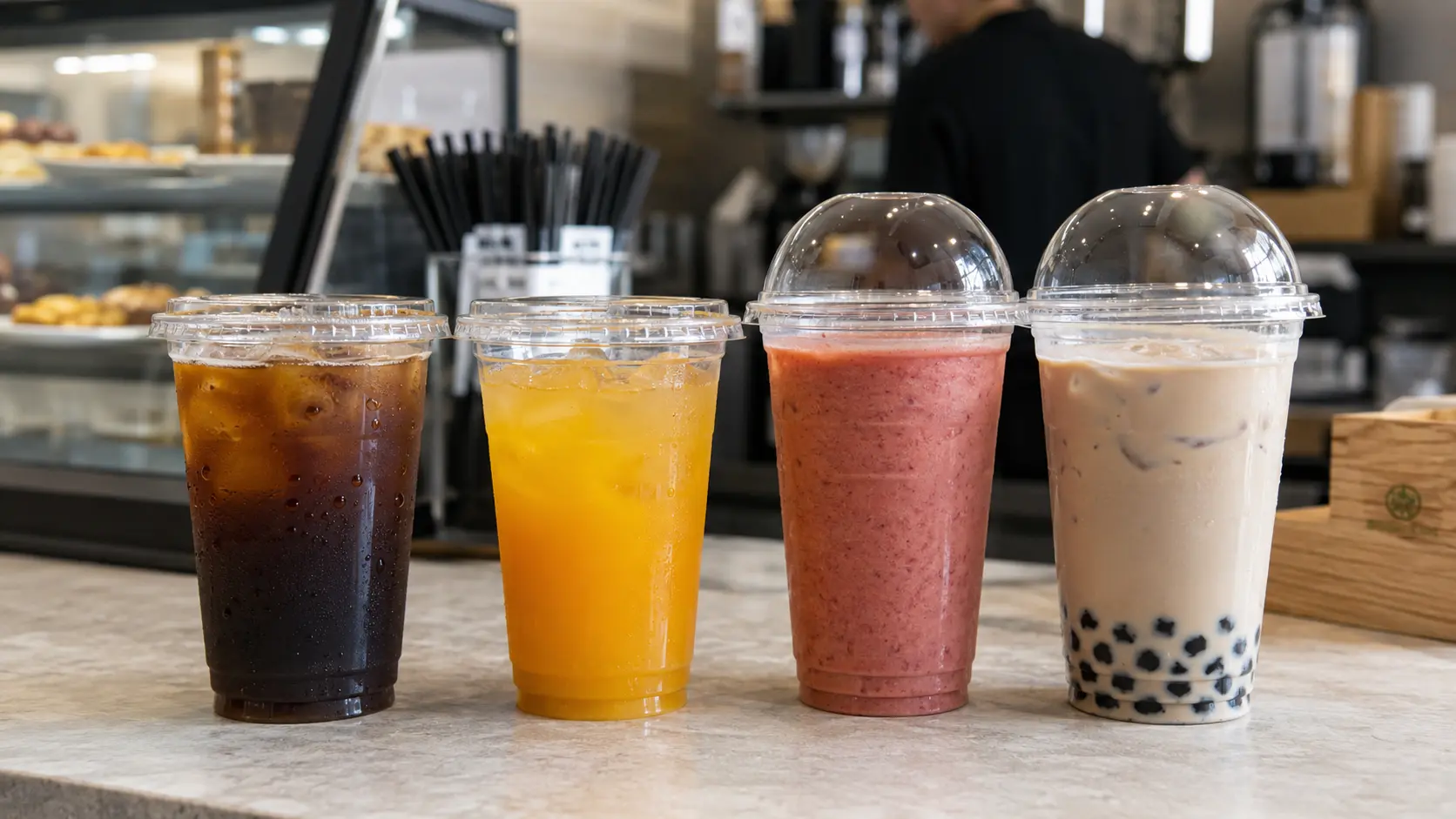
| PLA Buyer Question | Practical Answer | Procurement Recommendation |
|---|---|---|
| Is PLA transparent? | Suitable PLA grades can provide high transparency and gloss for beverage and display packaging. | Consider PLA when cold-use performance and clear product presentation are both important. |
| Can PLA hold hot drinks? | Standard clear PLA cups should not be assumed suitable for hot drinks or hot soup because heat can reduce dimensional stability. | Use a structure specifically designed for the required temperature, such as an appropriate paper cup system or another heat-tested package. |
| Is PLA home compostable? | Standard PLA should not automatically be described as home compostable. Industrially compostable PLA products and home-compostable products are different claims. | Verify the certificate and local composting route for the exact finished article. |
| What is PLA best used for? | Clear cold cups, cold lids and selected transparent cold-food packaging are established foodservice applications. | Match PLA with cold-use programs rather than general hot-delivery or microwave applications. |
For buyers sourcing cold drink packaging, Bioleader® supplies compostable PLA cups for cold drinks in multiple formats. Buyers comparing the broader sourcing program can also review the core compostable PLA clear cups solution page for product matching, applications and purchasing considerations.
Buyer Warning
PLA should not be selected simply because it looks similar to PET or PP. It has a different thermal profile and end-of-life pathway. A PLA cup program should account for beverage temperature, lid compatibility, carton storage conditions, destination climate and the exact environmental claim being made.
CPLA: Crystallized PLA for Cutlery and Higher Heat Resistance
CPLA generally refers to crystallized PLA-based material. Increasing crystallinity, together with formulation and processing controls, can improve heat resistance and dimensional stability compared with standard amorphous PLA. This makes CPLA particularly relevant to forks, spoons, knives, sporks and other foodservice articles where clear appearance is less important than structural performance.

The key difference between PLA and CPLA is application logic. PLA is commonly selected for transparent cold-drink packaging, while CPLA is commonly selected for opaque utensils and selected higher-temperature foodservice components. Buyers can review the dedicated CPLA cutlery and crystallized PLA guide for a deeper explanation of the material.
CPLA is not a universal high-temperature material. Its practical service temperature depends on formulation, crystallinity, geometry and finished-product testing. CPLA cutlery may be suitable for contact with hot food, but that does not automatically make every CPLA product suitable for ovens, microwaves or prolonged exposure to boiling liquids.
The broader comparison between PLA, PLA+ and CPLA explains these distinctions in more detail. Buyers who are specifically sourcing utensils can also use Bioleader®’s core CPLA cutlery solution page as the primary application reference.
| Item | PLA | CPLA | Buyer Meaning |
|---|---|---|---|
| Appearance | Can be clear and glossy. | Usually more opaque. | PLA is often selected for transparent packaging; CPLA is commonly selected for functional utensils. |
| Heat Resistance | Standard amorphous grades have limited hot-use performance. | Generally higher than standard PLA, subject to product-specific formulation and testing. | CPLA can be more practical for utensils used with warm or hot meals. |
| Typical Application | Cold drink cups, cold lids and selected cold-food packaging. | Forks, spoons, knives, sporks and selected foodservice accessories. | Product design should follow material behavior rather than a sustainability label alone. |
| Composting Route | Certified products commonly target industrial composting. | Certified products commonly target industrial composting. | Verify finished-product certification rather than assuming that resin identity is sufficient. |
For foodservice operators, catering suppliers and distributors, Bioleader® supplies CPLA and cornstarch compostable cutlery for bulk foodservice use. Buyers who need a specific item reference can also review Bioleader®’s CPLA compostable cutlery product page.
Manufacturer Insight
When a buyer requests “PLA cutlery,” it is important to clarify whether CPLA is actually required. For practical sourcing, buyers should specify material type, utensil dimensions or gram weight, food temperature, packing method, certification requirements and whether individual wrapping or private-label packaging is needed.
PBAT: Flexible and Biodegradable, but Usually Not Bio-Based
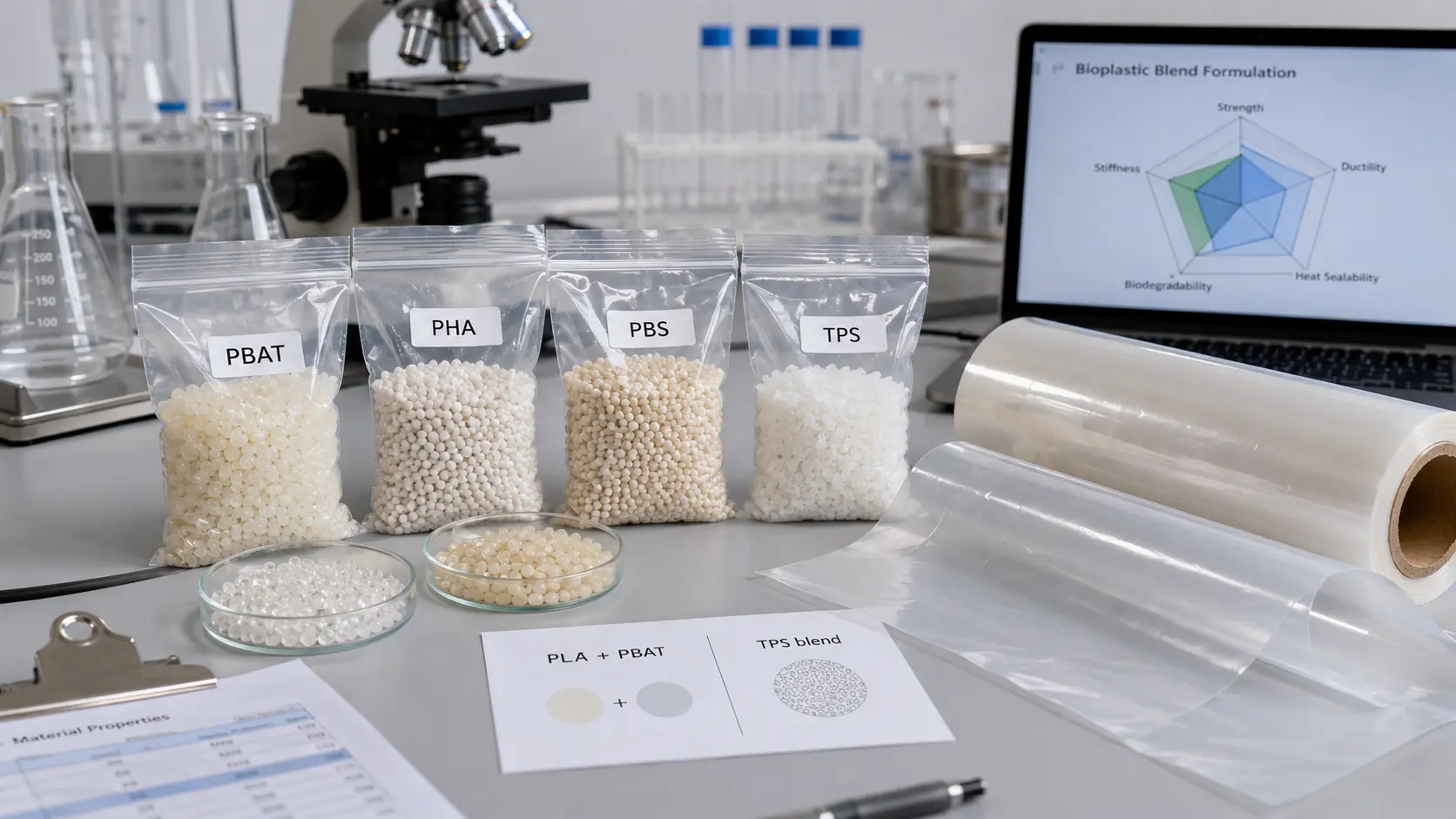
PBAT is valued because it can provide flexibility and elongation. PLA is relatively rigid, while starch-based materials may require additional toughness or film processability. PBAT is therefore commonly blended with PLA, TPS or other biodegradable materials in films, bags and flexible packaging structures.
For food packaging buyers, PBAT is generally more relevant to flexible packaging than to rigid cups, bowls or clamshells. Applications can include compostable bags, liners, packaging films and other flexible structures, depending on formulation and certification.
Conventional commercial PBAT is commonly produced using fossil-derived monomers, although bio-based feedstock routes are under development. This distinction is important because biodegradable does not automatically mean bio-based. Buyers should not describe a PBAT-containing product as plant-based unless its actual bio-based content is documented.
The main procurement risk is oversimplification. A product may contain PBAT and meet a biodegradability or compostability requirement under a specified test framework, but that does not automatically make it home compostable, fully bio-based or suitable for every food-contact application.
| PBAT Feature | Practical Meaning | Buyer Checkpoint |
|---|---|---|
| Flexible | PBAT can improve elongation, softness and processability in biodegradable flexible structures. | Confirm whether the intended product is a film, bag, liner or another flexible format. |
| Commonly fossil-derived | PBAT can be biodegradable even when its conventional feedstock is not bio-based. | Do not make plant-based claims without specific bio-based content evidence. |
| Common in blends | PBAT is frequently combined with PLA, TPS or starch-based materials to balance processing and mechanical performance. | Request formulation category and finished-product certification scope where relevant. |
| Not a universal rigid-packaging material | PBAT is more strongly associated with flexible applications than with rigid cups, bowls or cutlery. | Do not specify PBAT for a rigid format without application-specific validation. |
PBAT also matters when buyers compare starch-based and compostable products because the polymer blend can strongly affect flexibility, strength and end-of-life claims. Bioleader® discusses this broader formulation issue in its biodegradable cutlery and compostable utensils white paper.
Buyer Warning
PBAT should be described carefully. Its biodegradability under suitable conditions does not by itself establish bio-based content, home compostability or food-contact suitability. For B2B sourcing, the finished product and applicable documentation matter more than the polymer name alone.
PHA: Strong Biodegradation Potential, but Not Yet a Mainstream Foodservice Material
PHA, or polyhydroxyalkanoate, is a family of polyesters produced by microorganisms. Different PHA chemistries and structures can behave differently, but some grades have demonstrated biodegradation across a broader range of environments than standard PLA, including certain soil, freshwater, marine-related and composting conditions.
This should not be interpreted as meaning that every PHA article will rapidly disappear in any natural environment. Biodegradation depends on polymer composition, crystallinity, geometry, thickness, temperature, microbial activity and other environmental conditions. A broad PHA material claim should therefore be supported by test data relevant to the actual grade and product.
PHA remains attractive for projects that require wider biodegradation pathways, but it is not automatically the most economical or commercially mature option for mainstream disposable foodservice packaging. Cost, resin availability, processing stability, product consistency and scalable finished-product manufacturing remain practical considerations.
For food packaging procurement, PHA is better treated as a material family to evaluate for specific projects rather than a direct drop-in replacement for every PLA cup, CPLA fork or starch-based container. Buyers should ask for production capability, food-contact documentation, degradation or compostability evidence, shelf-life information and application-specific performance data.
| PHA Advantage | PHA Limitation | Buyer Recommendation |
|---|---|---|
| Some grades have broader biodegradation potential across multiple environments. | Behavior varies substantially by PHA chemistry, crystallinity, thickness and environmental conditions. | Review evidence for the actual material grade and finished product rather than transferring claims across the whole PHA family. |
| Relevant to next-generation biodegradable packaging development. | Cost and mainstream supply can remain less competitive than mature PLA or starch-based systems. | Evaluate PHA selectively for innovation programs, pilots or applications where its particular properties justify the cost. |
| Can be relevant when broader biodegradation behavior is an important design consideration. | Biodegradability does not remove the need for responsible collection, disposal or product-specific validation. | Do not treat environmental biodegradability as permission for littering or uncontrolled release. |
Buyers comparing how different biodegradable materials behave after disposal can also review Bioleader®’s article on which biodegradable packaging materials decompose fastest, which explains why environment and product structure matter alongside resin chemistry.
Key Takeaway for Buyers
PHA deserves attention, but it should not be oversold. Buyers should evaluate PHA by grade, production scale, finished-product performance, food-contact evidence, biodegradation or compostability evidence and total cost rather than relying on the material family name alone.
PBS and TPS: Useful in Blends, but Formulation Matters
PBS and TPS are important because many biodegradable packaging products are not made from one polymer alone. They can be part of blend systems designed to balance cost, flexibility, rigidity, heat performance, processing behavior and compostability. For buyers, the finished formulation matters more than a single ingredient name in a brochure.
PBS, or polybutylene succinate, is a biodegradable polyester whose feedstock can be fossil-derived, partly bio-based or bio-based depending on the supply route. It can contribute flexibility, processability and blend compatibility and is often discussed as one component within biodegradable material systems.
TPS, or thermoplastic starch, is starch processed into a thermoplastic material. Its renewable feedstock and cost potential make it attractive, but unmodified TPS can be sensitive to moisture and mechanical stress. Commercial starch-based tableware therefore commonly depends on blends, additives and processing conditions rather than pure starch alone.
For procurement teams, “cornstarch tableware” should not automatically be interpreted as pure plant material, plastic-free material or home-compostable material. Buyers should verify the actual resin system, food-contact safety, heat resistance, compostability evidence, thickness, shelf life and destination-market requirements.
| Material | Role in Bioplastic Packaging | Strength | Main Buyer Risk |
|---|---|---|---|
| PBS | Biodegradable polyester used in selected blends to adjust flexibility, processing and mechanical performance. | Can work with other biodegradable polymers and starch-based systems. | Feedstock origin and finished-product claims must be documented rather than assumed. |
| TPS | Thermoplastic starch used within starch-based and cornstarch tableware formulations. | Renewable starch feedstock and useful cost-performance potential. | Moisture, brittleness, thermal behavior and compostability depend strongly on the complete blend. |
| Starch-based blends | Systems combining starch with polymers and additives for bowls, plates, containers or cutlery. | Can provide practical disposable tableware when correctly formulated for the application. | The marketing claim may not accurately describe the complete formulation. |
Bioleader® supplies cornstarch tableware and starch-based blends for foodservice and wholesale programs. Buyers who need a solution-level overview can use the core cornstarch tableware A-page to compare applications and sourcing considerations.
When the buyer needs rigid takeout containers, lunch boxes or divided food boxes, cornstarch clamshell boxes can be considered as one possible route. They should still be compared with bagasse clamshells, paper boxes and other structures according to temperature, food weight, oil exposure, cost and local disposal infrastructure.
Manufacturer Insight
Starch-based packaging is formulation-sensitive. Two products both called “cornstarch tableware” can differ substantially in strength, heat resistance, polymer content and compostability. For serious B2B procurement, buyers should evaluate samples and available product documentation before confirming bulk production.
Bioplastic Material Performance Map
A bioplastic material map helps buyers compare materials by function rather than marketing terminology. PLA, CPLA, PBAT, PHA, PBS and TPS do not solve the same packaging problem. Some favor clarity, some flexibility, some heat resistance, and some act mainly as blend components.
For food packaging buyers, the useful question is whether the finished package can meet food-contact requirements, temperature exposure, mechanical performance, shelf life, certification and disposal requirements in the destination market.
| Material | Typical Source | Bio-Based? | Common Structure | Heat Behavior | Typical Food Packaging Use | Main Buyer Risk |
|---|---|---|---|---|---|---|
| PLA | Commonly produced from lactic acid derived from fermented plant sugars. | Common commercial PLA is typically bio-based. | Rigid; suitable grades can be clear. | Standard amorphous PLA has limited hot-use stability. | Cold drink cups, clear lids, dessert cups and selected cold-food packaging. | Using it for unsuitable hot applications or assuming industrial compostability means home compostability. |
| CPLA | Crystallized PLA-based formulation. | Generally PLA-based; complete formulation should still be reviewed. | Rigid and usually opaque. | Generally higher heat resistance than standard PLA, subject to product testing. | Forks, spoons, knives, sporks and selected foodservice components. | Assuming one universal heat limit for all CPLA products. |
| PBAT | Conventional commercial PBAT commonly uses fossil-derived monomers. | Not necessarily; verify the actual feedstock route. | Flexible. | Formulation-dependent. | Flexible films, bags, liners and biodegradable blend systems. | Describing PBAT as automatically plant-based or home compostable. |
| PHA | Microbially produced polyester family. | Generally bio-based through biological production routes. | Varies by PHA chemistry and formulation. | Grade-dependent. | Specialized or developing packaging applications and selected next-generation material programs. | Applying biodegradation claims from one PHA grade or test environment to all PHA products. |
| PBS | Succinate-based polyester; feedstock route varies. | Can be fossil-based, partly bio-based or bio-based. | Flexible or semi-rigid depending on formulation. | Formulation-dependent. | Blend systems and selected flexible or molded products. | Assuming bio-based content from the material name alone. |
| TPS | Thermoplastic starch. | The starch fraction is renewable, but blends may contain other polymers. | Highly formulation-dependent. | Highly formulation-dependent. | Starch-based tableware and blend systems. | Assuming “cornstarch” means pure starch, plastic-free or home compostable. |
Key Takeaway
The best material is not the one with the most attractive environmental label; it is the one that matches the packaging structure, food temperature, disposal route, certification requirement and buyer’s commercial constraints. PLA, CPLA, PBAT, PHA, PBS and TPS should be compared as different material tools rather than equal substitutes.
How to Choose by Food Packaging Application
Bioplastic sourcing should start from the foodservice application. A beverage chain, takeaway restaurant, caterer, supermarket deli and event distributor may all ask for compostable packaging, but their functional requirements differ. A cold cup needs clarity. A fork needs rigidity. A bag needs flexibility. A takeaway meal box needs heat, oil and structural performance.
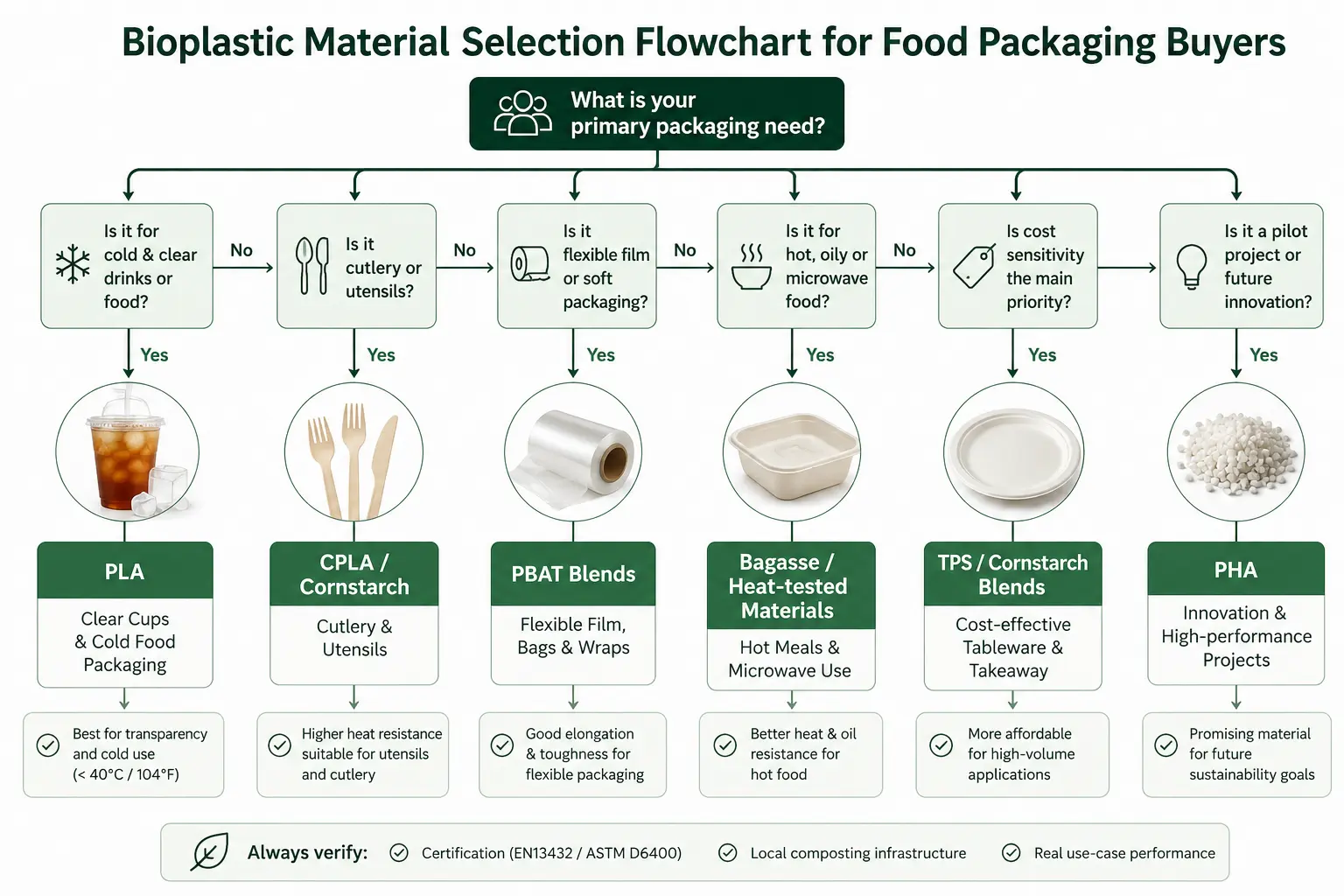
| Buyer Requirement | Material Direction | Why It Fits | What to Verify |
|---|---|---|---|
| Clear cold drink cups for juice, smoothies, iced coffee or bubble tea. | PLA. | Suitable PLA grades provide transparency and stiffness for cold beverages. | Cold-use specification, lid matching, storage conditions and environmental claim. |
| Forks, spoons, knives and sporks for foodservice. | CPLA or selected cornstarch blends. | CPLA provides greater thermal stability than standard amorphous PLA, while starch-based blends may provide another commercial route. | Strength, temperature, packing method, food-contact documentation and compostability scope. |
| Flexible packaging, liners, bags or films. | PBAT-based or other biodegradable flexible blend systems. | PBAT can provide flexibility and elongation. | Full formulation, bio-based content claim, compostability certification and food-contact suitability. |
| Cost-sensitive molded or disposable tableware. | TPS or cornstarch-based blends where appropriate. | Starch-based systems can provide practical performance at competitive cost depending on formulation. | Resin system, moisture performance, temperature, strength and compostability evidence. |
| Specialized next-generation biodegradable projects. | PHA may be evaluated. | Some grades offer broader biodegradation behavior than conventional industrial-composting-focused materials. | Grade-specific data, production scale, cost, food-contact evidence and disposal claim. |
| Hot meals, oily foods, heavy takeaway containers or delivery packaging. | Bagasse, appropriate paper-based structures or other heat-tested packaging. | Fiber-based packaging can be more suitable than standard clear PLA for many hot-food applications. | Temperature, oil resistance, barrier structure, lid fit, microwave claim and destination-market requirements. |
Bagasse is not a bioplastic polymer, but it frequently appears in real sourcing comparisons because it serves many hot-food and takeaway applications. Buyers comparing polymer-based packaging with molded fiber can review Bioleader®’s bagasse vs PLA material comparison.
For commercial sourcing, Bioleader®’s core sugarcane bagasse tableware A-page covers molded-fiber solutions for hot meals, while the bagasse product category provides individual container, bowl, plate and tray options. Buyers considering paper-based structures can similarly review the paper food packaging solution page.
Practical Sourcing Rule
If the package must be clear and cold-use, start by evaluating PLA. If it must be a heat-resistant utensil, compare CPLA and appropriate starch-based cutlery. If it must be flexible, evaluate flexible biodegradable blend systems such as PBAT-based structures. If it must hold hot meals, do not start with standard clear PLA; compare heat-tested fiber, paper or other suitable container structures first.
Certification Checklist for Bioplastic Food Packaging Buyers
Material names do not replace certification or food-contact documentation. Buyers should verify whether the finished product, not only the raw resin, is supported by documents relevant to the intended market and claim.
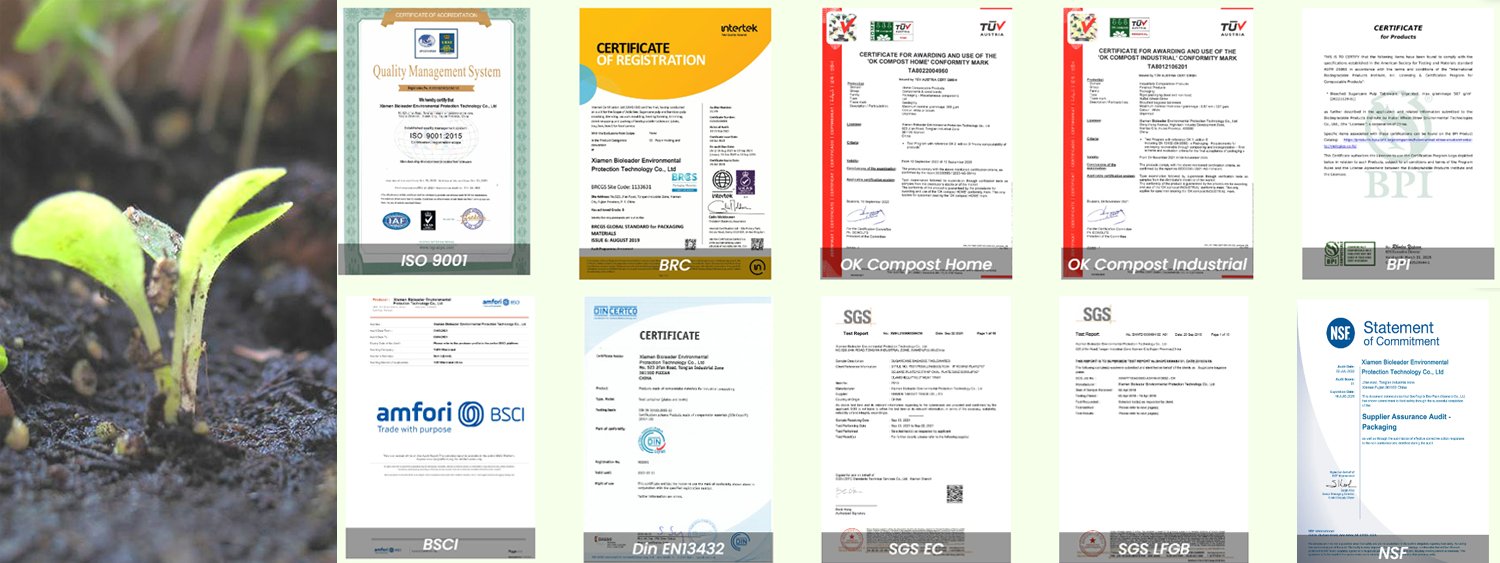
A resin supplier may provide a compostability certificate for a material, while the final cup, fork, lid or container can include a different thickness, additive package, pigment, ink or other component. Buyers should therefore confirm whether the finished article is specifically listed, covered or otherwise supported by the applicable certification scope.
Compostability and End-of-Life Evidence
| Standard or Certification | What It Supports | Buyer Question |
|---|---|---|
| EN 13432 | European requirements for packaging recoverable through industrial composting and biodegradation. | Does the relevant certificate or evidence cover the finished product type and construction? |
| ASTM D6400 | Requirements for labeling plastics designed for aerobic municipal or industrial composting. | Does the finished item fall within the applicable certification or testing scope? |
| BPI Certification | Third-party certification used in North American compostable-product programs. | Is the exact product or applicable product family listed or covered? |
| TÜV Austria OK compost | Certification programs that distinguish industrial and home composting claims. | Is the claim OK compost INDUSTRIAL or OK compost HOME, and does that match the intended disposal pathway? |
Food-Contact and Performance Evidence
| Evidence Type | What It Supports | Buyer Question |
|---|---|---|
| Food-contact declarations or test reports | Suitability of the selected food-contact article under applicable market requirements and intended-use conditions. | Do the documents match the material, food type, temperature and destination market? |
| FDA-related regulatory support where applicable | Relevant U.S. food-contact regulatory basis for the material or article. | What regulation, notification, clearance or supporting test applies to the selected product? |
| EU / LFGB-related food-contact evidence where applicable | Documentation and testing relevant to European or German-market food-contact assessment. | Does the available report correspond to the finished product and intended conditions? |
| Finished-product performance reports | Heat, leakage, strength, migration or other application-specific performance. | Has the actual product been evaluated under conditions close to the intended use? |
For a standards-focused comparison, buyers can review Bioleader®’s EN 13432 vs ASTM D6400 guide and the broader article on how to verify truly compostable food packaging. Available Bioleader® product documents can also be reviewed through the certificate and compliance documentation page.
Key Takeaway for Compliance Teams
A material claim becomes commercially useful only when it is connected to the correct finished product, applicable documentation and realistic end-of-life infrastructure. Compostability evidence and food-contact evidence answer different questions and should be reviewed separately.
Bioleader® Material Matching: What We Actually Supply
Bioleader® does not recommend one material for every packaging problem. Material selection should follow food temperature, package structure, barrier requirements, disposal route, destination-market rules and commercial constraints.
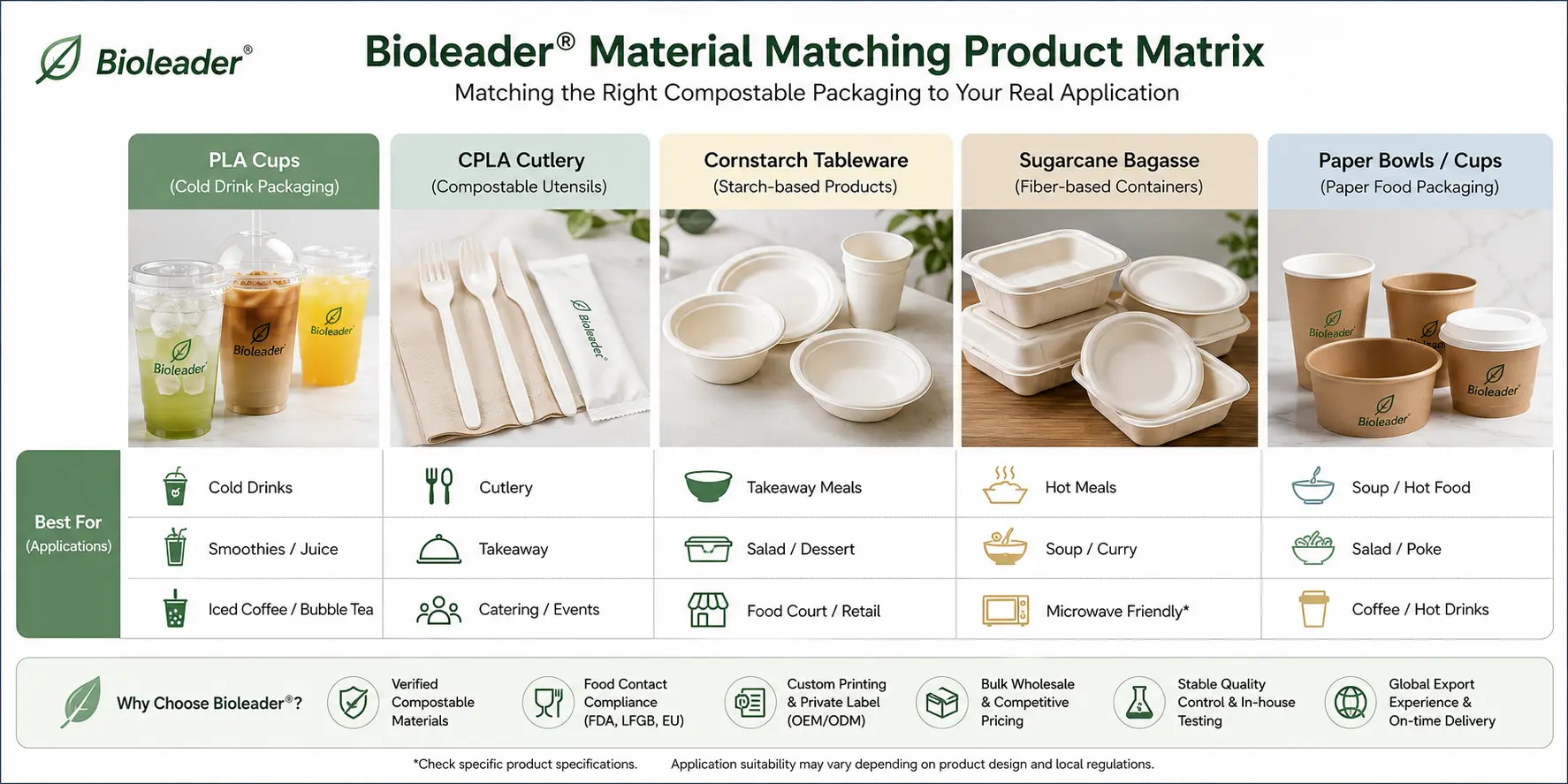
For cold beverages, Bioleader® supports PLA cup programs where transparency and clear presentation are required. Buyers can compare the PLA clear cup solution page with the individual PLA cup product category.
For utensils, Bioleader® supplies CPLA and cornstarch options. The CPLA cutlery A-page explains application selection, while the compostable cutlery category provides product-level options.
For starch-based programs, buyers can compare the cornstarch tableware solution page with the cornstarch tableware category.
For hot meals, oily foods, trays and takeaway containers, molded fiber may be more appropriate than clear PLA. Buyers can use the sugarcane bagasse tableware solution page together with the bagasse product category. For cup, bowl and paper-container programs, see Bioleader®’s paper food packaging A-page.
| Buyer Need | Bioleader® Product Direction | Why It Makes Sense |
|---|---|---|
| Clear cold beverage packaging. | Compostable PLA cups. | Designed for cold beverage applications where transparency is important. |
| Compostable utensils for foodservice and takeaway. | Compostable cutlery for foodservice buyers. | Supports CPLA and other appropriate utensil options depending on application and market. |
| Starch-based disposable tableware. | Cornstarch tableware for takeaway packaging. | Provides bowls, plates, containers and utensil options based on formulated starch-blend systems. |
| Hot food, oily meals and delivery containers. | Sugarcane bagasse tableware. | Molded fiber is widely used for hot meals, plates, bowls, trays and clamshell applications. |
| Mixed foodservice packaging program. | PLA cups, CPLA cutlery, cornstarch products, bagasse containers and paper packaging selected by application. | A multi-material program allows each packaging format to use a structure appropriate to its actual function. |
For importers, distributors and foodservice brands, Bioleader® can provide product specifications, samples and available compliance documents for selected items so that material choice can be reviewed before bulk production.
Buyer Checklist Before Choosing PLA, PHA, PBAT, PBS or TPS
Before approving any bioplastic material, procurement teams should build a checklist based on application, compliance and supply-chain reality. This reduces the risk of selecting a material that sounds sustainable but does not match actual use conditions.
Bioplastic Material Selection Checklist
- What food or beverage will the packaging contact, and is it oily, acidic, watery, dry, frozen, chilled or hot?
- Will the product be used for cold drinks, hot meals, desserts, soup, sauces, salads, bakery items or takeaway delivery?
- Does the packaging need to be clear, opaque, flexible, rigid, stackable, sealable or compatible with a lid?
- What is the maximum food temperature and expected contact time?
- Will the product be stored or transported under elevated ambient temperatures?
- Is industrial composting available in the destination market, or is a different disposal claim required?
- Which compostability or environmental certification is required by the buyer or market?
- Which food-contact documents are required for the intended market and use?
- Does the environmental claim apply to the complete finished product?
- Does the buyer need custom printing, private-label packaging, individual wrapping or bulk cartons?
- Is the expected order volume appropriate for the selected product, customization and factory production program?
- Are product specifications, samples and applicable documentation available for review before bulk approval?
A strong procurement process compares material chemistry, finished-product design, intended use, certification, waste pathway and supply conditions together. This is especially important when comparing PLA cups, CPLA cutlery, PBAT blends, PHA materials and TPS-based starch products.
Technical References & Sources
The following standards, policy sources and peer-reviewed reviews provide technical context for the material definitions, compostability terminology and polymer behavior discussed in this article:
- European Commission — EU Policy Framework on Bio-based, Biodegradable and Compostable Plastics.
- ASTM International — ASTM D6400-26: Standard Specification for Labeling of Plastics Designed to be Aerobically Composted in Municipal or Industrial Facilities.
- EN 13432 — Packaging requirements for packaging recoverable through composting and biodegradation.
- Swetha et al. (2023) — A comprehensive review on polylactic acid (PLA): synthesis, processing and application in food packaging.
- Recent PBAT food-packaging review — Recent progress in PBAT-based films and food packaging applications.
- PHA biodegradation review — Biodegradability of polyhydroxyalkanoate biopolyesters in nature: a review.
Technical Note
Material-family descriptions are useful for screening, but purchasing decisions should be made at the grade and finished-product level. Formulation, crystallinity, additives, thickness, processing and end-use conditions can materially change performance and environmental claims.
FAQ: PLA, PHA, PBAT and Bioplastic Food Packaging
What is the difference between PLA, PHA and PBAT?
PLA is usually bio-based, rigid and clear, making it suitable for cold cups and transparent food packaging. PHA is a microbial polyester with broader biodegradation potential but higher cost and limited scale. PBAT is flexible and biodegradable, but it is usually fossil-based and commonly used in films, bags and blends.
Is PLA suitable for hot food packaging?
Standard PLA is not recommended for hot food, hot soup or hot drinks because it is heat-sensitive and may soften or deform. PLA is better suited to cold drink cups, cold lids and cold food packaging. Hot food applications usually require CPLA, bagasse, paper-based structures or other heat-tested materials.
Is PBAT bio-based or biodegradable?
PBAT is biodegradable under suitable conditions, but it is usually fossil-based rather than bio-based. This is why buyers should not describe PBAT products as plant-based unless the supplier provides clear bio-based content evidence. PBAT is mainly valued for flexibility in films, bags and blend systems.
Is PHA better than PLA for food packaging?
PHA may offer broader biodegradation potential than PLA, depending on the grade and environment, but it is not automatically better for every food packaging application. PLA is more commercially mature for clear cold cups, while PHA still faces cost, scale and processing challenges in mainstream foodservice packaging.
What is TPS in biodegradable packaging?
TPS means thermoplastic starch. It is starch processed into a thermoplastic material and often used in starch-based or cornstarch tableware blends. TPS can support cost-efficient biodegradable packaging, but its strength, moisture resistance, heat resistance and compostability depend heavily on formulation.
Why is CPLA used for compostable cutlery?
CPLA is crystallized PLA, which gives it higher heat resistance and rigidity than standard PLA. This makes it more suitable for forks, spoons, knives and sporks used in foodservice. PLA is usually chosen for clear cold cups, while CPLA is usually chosen for opaque compostable cutlery.
What certifications should buyers check for bioplastic food packaging?
Buyers should check EN13432, ASTM D6400, BPI, TÜV Austria OK compost INDUSTRIAL or HOME, and relevant food-contact documents such as FDA, LFGB or EU food-contact support. The certificate should match the finished product and intended claim, not only the raw resin.
Conclusion: Choose Bioplastic Materials by Application, Not by Name
PLA, PHA, PBAT, PBS, TPS and CPLA are not interchangeable materials. Each material family has its own feedstock routes, polymer structure, mechanical behavior, degradation conditions and commercial maturity.
PLA is practical for transparent cold packaging. CPLA is widely used for compostable cutlery. PBAT is important in flexible biodegradable blends. PHA offers broader biodegradation potential for some grades but requires product-specific evaluation. PBS and TPS are useful within formulation-driven systems where final performance depends on the complete blend.
For food packaging buyers, the correct decision starts with the application: cold drink, hot meal, flexible film, utensil, rigid container, retail display or takeaway delivery. Food-contact safety, temperature, structure, certification, disposal route and commercial feasibility should then be evaluated together.
Bioleader® recommends comparing the complete packaging system rather than selecting a material from its name alone. Buyers can use Bioleader®’s sustainable packaging material sourcing guide as a wider material-selection hub and then move to the relevant PLA, CPLA, cornstarch, bagasse or paper solution page for product-specific evaluation.