Fork, Spoon, Knife & Cutlery Sets
Keywords: biodegradable cutlery, compostable utensils, eco-friendly tableware, sustainable disposable flatware
Introduction: The Shift to Eco-Friendly Tableware
Single-use plastic forks, spoons, and knives have become ubiquitous – and so have their environmental consequences. Conventional plastic cutlery ranks among the top 10 items found in beach clean-ups, persisting for centuries in landfills and oceans. In response, biodegradable cutlery and compostable utensils are rising as sustainable alternatives, transforming the global market for eco-friendly tableware. International buyers and regulators are increasingly interested in these solutions to meet plastic ban compliance and consumer demand for sustainable disposable flatware.
This white paper provides a comprehensive overview of the biodegradable compostable cutlery industry in 2025. It compiles authoritative data on market trends, analyzes core materials (like PLA, CPLA, bagasse, starch-based biopolymers, PHA, PBS), and breaks down key regulations and certifications worldwide. We include comparative performance tables, life-cycle assessment (LCA) insights, and case studies of leading brands. Whether you are a procurement officer evaluating suppliers or a policymaker updating standards, this report will help navigate the rapidly evolving landscape of compostable utensils.
Market Momentum: Today, more than 100 countries have enacted plastic restrictions or bans, many directly spurring a shift to plant-based alternatives. The global biodegradable tableware market (including plates, containers, and cutlery) was valued around USD 7.2 billion in 2023, and is projected to reach USD 16.3 billion by 2030 (CAGR ~9.1%). Within this, the biodegradable cutlery segment – though relatively small (estimated ~$35–40 million in 2022) – is set to roughly double by 2030 as sustainability mandates accelerate. The primary growth drivers are stringent anti-plastic regulations, corporate ESG commitments, and consumer preference for plastic-free, compostable utensils.
Regulatory Push: Pioneering policies are a key catalyst. The EU’s Single-Use Plastics Directive, for example, bans plastic cutlery that is not compostable. India outlawed disposable plastic forks, spoons, knives and straws nationwide in 2022. China’s sweeping 2020 policy phases out non-degradable single-use tableware by 2025. In North America, Canada’s federal ban on plastic cutlery took effect in 2023, and multiple U.S. states (California, New York, Colorado, etc.) now require that any products labeled “compostable” meet ASTM D6400 standards and be clearly certified. These measures directly boost demand for sustainable disposable flatware that meets compostability criteria.
Structure of this White Paper: We begin with a market overview and then delve into the materials and technologies enabling compostable cutlery. Next, we compare performance and environmental impact – including Life Cycle Assessment results – between biodegradable and conventional utensils. We then map out global compliance standards (EN 13432, ASTM D6400, BPI, OK Compost, GB/T 38082, etc.) and how they affect labeling and procurement across regions. A section on regional market landscapes (EU, North America, China, Southeast Asia, Middle East) highlights localized trends and regulations. We profile leading industry players – including a detailed case study on Bioleader® (China) – and other global brands driving innovation. Finally, we explore future outlook topics such as digital traceability, emerging PHA bioplastic technology, and ESG trends, before concluding with key takeaways. A glossary of terms, data references, and LCA charts are provided in the Appendix.

Global Market Overview: Trends and Growth in Compostable Cutlery
Rising Demand and Market Size
The market for biodegradable and compostable cutlery is expanding quickly yet remains in early stages relative to conventional plastics. In 2023, the global biodegradable cutlery market was valued at only around $37–42 million, reflecting the nascent adoption of these products. However, forecasts consistently project robust growth. According to multiple industry analyses, the segment is expected to reach $60–70+ million by 2030, roughly doubling in size with a compound annual growth rate (CAGR) in the 6–8% range. For example, Fortune Business Insights estimates the market will grow from ~$39.8 million in 2024 to ~$73.4 million by 2032 (CAGR 7.95%), and Grand View Research similarly projects ~$71 million by 2030 at ~7.0% CAGR. This trajectory is underpinned by the global sustainability push and escalating plastic restrictions.
Notably, if one broadens the scope to all biodegradable tableware (including plates, bowls, trays, etc.), the market size is far larger – on the order of billions. Statista and Allied Market Research report the biodegradable tableware sector (encompassing cutlery, food containers, and others) was about USD 7.2 billion in 2023, projected to grow to $16.3 billion by 2030. Within that, cornstarch-based products (PLA/starch blends) are expected to account for over 30% of market share by 2030, reflecting the popularity of plant-based plastics. These figures indicate that while compostable utensils currently represent a small slice of the pie, they ride the same wave of overall demand for biodegradable foodservice products.
Key Growth Drivers: The primary engine of market growth is government regulation. Over 100 countries now enforce some form of plastic reduction policy, many of which directly encourage compostable alternatives. Bans on single-use plastic items (bags, cutlery, straws, etc.) are expanding across Europe, Asia, and the Americas, effectively creating mandated markets for biodegradable replacements. Environmental awareness is another factor – both consumers and corporate clients (restaurants, caterers, retailers) are actively seeking to reduce their plastic footprint. Using compostable, eco-friendly tableware can boost a company’s green image and align with their ESG goals, which in turn drives procurement decisions. For example, when a major Asian food delivery app switched from plastic utensils to biodegradable ones, it saw a 19% increase in positive customer sustainability feedback. Large foodservice chains like Starbucks and McDonald’s have publicly committed to phasing out problematic plastics (e.g. Starbucks eliminated plastic straws, adopting compostable alternatives), setting industry precedents.
Additionally, technological improvements and economies of scale are making compostable cutlery more viable. In the past, costs were prohibitive – PLA cutlery often cost 2–3 times more than cheap plastic. While still pricier, the gap is slowly closing thanks to increased production capacity and raw material innovation. China, for instance, has rapidly scaled up bioplastic manufacturing (PLA resin output is projected to reach 2.5 million tons by 2026, up from virtually nothing a decade ago) to meet both domestic and export demand. This expansion is exerting downward pressure on prices and improving supply reliability for buyers worldwide.
Regional Market Highlights
Europe (EU): Europe currently leads the world in biodegradable cutlery usage, accounting for about 36% of global market share in 2022. This leadership is policy-driven – the EU’s Single-Use Plastics Directive (adopted in 2019) banned many throwaway plastic items, including cutlery, effective July 2021. In practice, EU member states now require that disposable forks, knives, and spoons be made from non-plastic materials or certified compostable bioplastic. Countries like France and Germany have gone further with stringent standards: France prohibits nearly all single-use plastic tableware (even PLA) in favor of natural fiber or reusable options, while Germany mandates certifications such as EN 13432 or TÜV AUSTRIA’s “OK Compost” label for any compostable product. Thanks to such measures, compostable cutlery has strong adoption in European foodservice – from German supermarket chains and public cafeterias increasingly stocking cornstarch utensils, to EU airline and catering services switching to biobased cutlery to meet sustainability targets. Europe’s well-developed industrial composting infrastructure in countries like Germany, the Netherlands, and Belgium further supports the market by enabling actual end-of-life composting for these products.
North America (U.S. & Canada): North America is another key region, with the United States and Canada both making strides albeit via different approaches. Canada implemented a nationwide ban on certain single-use plastics, including checkout bags, straws, stir sticks, and cutlery, with the manufacture and import of plastic cutlery banned from December 2022 and sales banned from end of 2023. As a result, Canadian businesses rapidly shifted to alternatives – compostable or wooden cutlery – for compliance. Government cafeterias and facilities in Canada are now procuring certified biodegradable utensils (for example, cornstarch-based forks and spoons are reported to be popular in federal institutions).
In the United States, there is no federal ban on plastic utensils, but numerous state and local laws are driving change. For instance, California’s AB 1276 requires restaurants to only provide disposable cutlery upon request and encourages reusable or compostable options. States like California, Washington, Colorado, and others have passed “Truth in Labeling” laws that prohibit marketing a product as “compostable” unless it meets ASTM D6400 standards and is independently certified (e.g. by the Biodegradable Products Institute, BPI). Effective July 2024 in Colorado, all products labeled compostable must be BPI or CMA certified and clearly labeled – a trend being adopted in several states. Major cities including Seattle, San Francisco, New York, and Portland have enacted ordinances requiring foodservice ware (including cutlery) to be compostable or recyclable, effectively banning conventional plastics in takeout settings. This patchwork of regulation, along with voluntary corporate initiatives, has made the U.S. one of the fastest-growing markets for compostable cutlery (one analysis predicts North America’s biodegradable cutlery market will grow ~7.2% annually through 2030). Private sector demand is robust: universities, tech company campuses, sports venues, and quick-service restaurant chains are increasingly opting for compostable utensils to meet sustainability goals and local composting requirements. However, the U.S. also faces challenges such as inconsistent access to commercial composting facilities – an issue we discuss later under LCA considerations.
China: As the world’s most populous nation and a manufacturing powerhouse, China plays a dual role – a huge potential consumer market for biodegradable tableware and the leading global supplier. On the policy front, China’s National Development and Reform Commission (NDRC) issued in 2020 a “Catalogue of Prohibited and Restricted Plastic Products” that is phasing out non-degradable single-use plastics in waves through 2025. This includes banning plastic cutlery in major cities for dine-in and takeout. For example, non-degradable plastic straws were banned nationwide by 2021, and plastic cutlery for takeaway is to be eliminated in key cities by 2025. These directives explicitly allow biodegradable alternatives as exemptions, spurring domestic uptake of certified compostable utensils. As a result, demand in China is surging from the food delivery sector, catering industry, and hospitality businesses striving to comply with the new rules. Chinese consumers are also becoming more eco-conscious, though price sensitivity remains.
Concurrently, China has massively expanded its production capacity for bioplastics (especially PLA and PBAT) to meet this demand. The country is projected to produce millions of tons of bioplastic annually within a few years. PLA (polylactic acid), often made from corn starch, has seen a “huge jump in capacity” in China since the plastic restrictions came into force. Chinese companies have invested in state-of-the-art factories to make not just raw material resin but finished compostable products at scale. This has turned China into the primary exporter of biodegradable cutlery globally – supplying distributors and brands across Asia, Europe, and the Americas. As of 2025, China is ranked as the #1 high-growth region for cornstarch-based tableware in terms of market potential, thanks to government incentives, urban sustainability initiatives, and its export prowess. One caveat domestically is that composting infrastructure in China is still developing; without widespread industrial composting, there is concern that PLA products might end up landfilled and persist. The government is beginning to address this by encouraging composting facilities and standards like GB/T 38082-2019 to ensure products are truly biodegradable (more on this under Standards).
Rest of Asia (Southeast Asia & India): In Southeast Asia, a region on the front lines of the plastic pollution crisis, several countries have launched aggressive anti-plastic policies. India made headlines by banning an array of single-use plastics nationwide in July 2022, including plastic cutlery, straws, plates, and cups. This policy immediately outlawed conventional disposable utensils, theoretically creating a huge market for alternatives. However, enforcement in India has been challenging and uptake of compostable products is still emerging, aided by startups introducing bagasse and starch-based cutlery. Elsewhere in Asia, countries like Philippines have passed extended producer responsibility laws that target plastic waste reduction (with provisions to encourage compostable, “non-compostable plastic products” elimination plans), Bangladesh has reinstated strict bag bans and is looking at single-use plastics, and Malaysia has a national roadmap aiming for all plastic packaging to be biodegradable or compostable by 2030. Japan is somewhat unique: rather than banning plastics, it incentivizes bio-based plastic use by certifying products with a “BiomassPla” label if they contain renewable content (though industrial composting is rare in Japan). Overall, Asia Pacific is projected as the fastest-growing market for biodegradable cutlery in the coming years, driven by its large population, rapid urbanization (hence more takeaway food usage), and tightening regulations in countries like China, India, and Thailand. It’s worth noting that many Asian cultures traditionally use non-plastic utensils (e.g., wooden chopsticks in East Asia), which can ease the transition to biodegradable options if positioned well.
Middle East & Other Regions: The Middle East is also embracing sustainable packaging as part of broader environmental agendas. Notably, the United Arab Emirates (UAE) announced a phased ban on single-use plastics culminating in a complete ban on plastic cutlery, cups, plates, and food containers by January 1, 2026. Already in 2024, UAE cities like Dubai imposed tariffs and partial bans on items like bags and stirrers as first steps. Saudi Arabia and other Gulf countries have introduced rules requiring plastic products to be oxo-biodegradable or are considering outright bans to align with waste reduction goals. These policies are expected to stimulate demand for compostable and paper alternatives in the region’s hospitality and travel industry (for instance, Dubai’s hotels and airlines are testing plant-based cutlery as they prepare for the 2026 deadline).
Meanwhile, in Latin America and Africa, several nations are joining the movement. Chile, Peru, and Colombia have all passed laws restricting single-use plastics in foodservice, and Brazil’s largest city São Paulo banned distribution of plastic cutlery in restaurants (effective 2021) – boosting interest in bamboo, wooden, and PLA cutlery. Brazil and Colombia are identified among high-growth markets due to urban waste reforms driving adoption of biodegradable utensils. Across Africa, countries like Kenya, Tanzania, and Rwanda – which led with plastic bag bans – are now discussing broader single-use plastic prohibitions, potentially including items like disposable cutlery. Though these markets are in earlier stages, they exhibit a clear global trend: regulation-led demand for compostable foodware is spreading worldwide, creating new opportunities for compliant products.
Figure: Global Biodegradable Cutlery Market Size (Projected) – By 2030, forecasts suggest the market for biodegradable cutlery will reach roughly $60–70 million globally, up from ~$35 million in 2022. Europe currently holds the largest share (~36%), but Asia-Pacific and North America are the fastest growing regions. This growth correlates strongly with the timeline of regulatory bans in each region. (See Appendix for detailed data sources and regional breakdown.)
Materials and Technologies: Comparing Sustainable Utensil Options
A variety of materials are used to produce biodegradable and compostable cutlery, each with distinct properties, costs, and environmental profiles. In this section, we analyze the core material categories – from plant-based bioplastics like PLA to natural fibers like bagasse – including their performance (e.g. heat resistance, strength) and compostability. Table 1 provides a summary comparison of key material options for sustainable disposable flatware.
Table 1 – Common Materials for Biodegradable/Compostable Cutlery
| Material | Source & Composition | Heat Resistance | Compostability & Certifications | Relative Cost vs. Plastic | Typical Uses & Notes |
|---|---|---|---|---|---|
| PLA (Polylactic Acid) | Corn starch or sugarcane fermented into PLA biopolymer. Often used in unmodified form for cups, lids, and coated paper products. | ~45–50°C (113°F) without deformation. Pure PLA cutlery can soften with hot foods. | Industrial compostable (meets EN 13432, ASTM D6400 when properly formulated). Not home compostable by itself. | ~2–3× higher cost than PP plastic. (Economies improving with scale.) | Rigid, transparent or colored plastic-like feel. Used for cold applications or combined with fillers for strength. PLA alone is brittle at high heat, so often modified to CPLA for utensils. |
| CPLA (Crystallized PLA) | Polylactic acid that is crystallized (often by adding chalk/talc and heat treating). | Up to ~85°C (185°F) heat tolerant. Can handle hot soup, coffee, etc. | Industrial compostable (also meets EN 13432, ASTM D6400). Certified CPLA cutlery is food-safe (FDA/EU). | Slightly higher than plain PLA. Still ~2× cost of plastic but cheapest among eco-friendly options. | Most common bioplastic cutlery material. Opaque (usually white) with a sturdy feel. CPLA forks, knives, spoons are used widely in catering and airlines because they hold up in hot and cold foods. |
| Starch-Based Polymer (“PSM”) | Plant starch (e.g. corn, cassava) blended with biodegradable polyesters (PLA, PBAT, etc.). Earlier versions blended with PP (not fully compostable) are being replaced by 100% biodegradable recipes. | ~70°C (158°F) depending on blend. Generally suitable for warm food, but prolonged high heat may cause softening. | Industrial compostable if free of non-degradable plastics (must meet ASTM/EN standards; some starch cutlery is certified). Some home composting ability if formulation is natural fiber-rich. | Lower cost than pure PLA – starch is a cheap filler. Often 10–30% less costly than CPLA. | Cornstarch cutlery is popular for cost-sensitive markets. Has a slightly different texture (matte, less smooth) but offers decent strength. Some products labeled “plant starch” may contain polypropylene – buyers should ensure proper certification. Modern PSM from companies like Bioleader use “100% cornstarch and plant starch blend” that is fully compostable. |
| Bagasse (Sugarcane Fiber) | Pulped sugarcane fiber (a byproduct of sugar production), molded into utensils or often combined with natural binders. | High (100°C+) – Can withstand boiling water temperature. Does not melt; might soften when wet for long durations. | Compostable in both industrial and many home settings (essentially compressed plant fiber). Meets EN 13432 if no plastic binder. No plastic residues. | Typically higher unit cost due to more complex molding; also thicker. Price between CPLA and wood. | Fibrous, paper-like texture. Bagasse is more commonly used for plates/bowls, but some cutlery (sporks, knives) exist. They are rigid and have natural brown/white color. Fully biodegradable in soil. Good for “plastic-free” appeal, but can absorb liquids over time. |
| Wood/Bamboo | Natural wood (birch, bamboo, etc.) carved or cut into utensil shape. Sometimes a thin edible plant-based coating for smoothness. | High (100°C+) – No deformation in hot foods. Sturdy until structurally broken. | Biodegradable and home compostable (being pure wood). Not subject to plastic compost standards, but many have food-contact safety certifications. | Higher cost per piece (can be 3–5× plastic) due to material and machining. Bamboo can be cheaper than fine wood. | Widely used alternative to plastic in Europe post-ban. Wooden cutlery has a rustic look and no plastic content (thus allowed by strict bans). It has 70–80% lower carbon footprint than plastic. Drawbacks: potential wood taste, splintering if poor quality, and not pliable. |
| PHA (Polyhydroxyalkanoate) | Bio-polyester produced by microbes from plant oils/sugars (e.g. Nodax PHA from canola oil). | Moderate–High (~100°C) – PHA is semi-crystalline; PHA cutlery can handle hot and cold food without warping. | Home & industrial compostable. PHA is unique in biodegrading even in marine environments. Certified by TÜV OK Compost HOME in some cases (e.g. Danimer’s PHA straws). | Currently highest cost – limited production, ~4–5× plastic cost. Prices expected to drop as new PHA plants open. | Next-generation bioplastic. PHA utensils (e.g. Phade brand spoons) are hitting the market. They feel and perform like traditional plastic, and break down naturally. Still emerging tech (2025): a U.S. plant just began mass-producing PHA cutlery for a major fast-food chain. |
| PBS & PBAT (Polyesters) | PBS (Polybutylene Succinate) from sugar-based succinic acid (can be bio-based or fossil). PBAT (Polybutylene Adipate Terephthalate) is a fossil-derived but biodegradable polymer often blended with PLA. | High (~90–100°C) – PBS has good heat resistance and flexibility. PBAT is used for films, not rigid cutlery, but PBS/PBAT blends can improve heat tolerance of PLA. | Industrial compostable (PBS and PBAT both meet ASTM D6400 in proper formulations). Not typically home compostable. | Moderate – PBS is fairly costly; PBAT is cheaper but still more than PE. Often used in blends, so cost mixed in. | Usually used in combination with other materials. PBS can add flexibility to PLA (reducing brittleness). In cutlery, PBS or PBAT might be minor components of a PLA or starch blend to improve performance. On their own, not common for cutlery due to cost or softness. |
Sources: Material properties and certifications compiled from manufacturer datasheets and standards. Cost comparisons are approximate (varies by region and volume).
Polylactic Acid (PLA) and CPLA – The Workhorse Bioplastic
PLA is the most widely used bioplastic in compostable cutlery. Derived from renewable resources like corn starch or sugarcane, PLA is a thermoplastic polyester that can be injection-molded similar to traditional plastics. Untreated PLA has a relatively low glass transition (~60°C), meaning it starts softening at hot-drink temperatures. Early PLA utensils could not handle hot soup or tea without deforming. The industry solved this by creating CPLA (Crystallized PLA): by adding nucleating agents (like minerals) and heat-treating, the PLA’s structure becomes semi-crystalline, raising its heat resistance to around 85°C (185°F). Today, CPLA cutlery is ubiquitous – typically appearing in a matte off-white finish – and can safely be used with hot foods and beverages up to near-boiling temperatures. CPLA items are even dishwasher-safe to an extent and have good rigidity.
Both PLA and CPLA are industrially compostable. Under the EN 13432 (EU) standard and ASTM D6400 (US), they must disintegrate by 90% in under 6 months in a commercial composting environment and leave no toxic residue. Certified PLA products indeed meet these criteria. However, they typically require the high heat and humidity of industrial composters to break down efficiently; in home compost piles or natural soil/ocean, PLA breaks down very slowly (this is why some experts caution that “PLA is biodegradable but not in ambient conditions”). Some specialized PLA blends are starting to earn home compostable certification, but these are not yet mainstream for cutlery.
Performance: CPLA cutlery offers performance closest to conventional plastic. It has high tensile strength and a melting point above 150°C, so it won’t melt in hot foods (though it can gradually soften if left in boiling liquid for extended time). Manufacturers like Bioleader tout “resistance to heat up to 90°C/194°F” for their CPLA utensils. In terms of strength, CPLA forks and knives are reinforced through design to be sturdy – for example, extra ridges or thicker cross-sections – providing a durable utensil that can handle tough foods without snapping. User experience is generally positive: CPLA forks/spoons have a smooth feel and do not impart taste. They are lighter than metal but comparable to a good quality polystyrene plastic utensil in firmness. One downside is CPLA is not microwave-safe (it can deform at high microwave temperatures if not in a moist environment). But otherwise, it’s versatile: we see it in everything from disposable cutlery sets on airlines to the compostable coffee cup lids and soup spoons at cafes.
Cost and Availability: PLA production has scaled up significantly worldwide, but it remains more expensive than commodity plastics. In late 2022, raw PLA resin cost around $2,000/ton versus polyethylene at $1,000–1,500/ton, and by 2024 PLA was reported around $3,800/ton due to demand. Thus, finished PLA cutlery can cost roughly double or triple the price of equivalent mass-produced plastic utensils. Nonetheless, for eco-conscious buyers this premium is often acceptable, and bulk wholesale orders plus lower end-of-life waste costs can offset some price difference. PLA and CPLA cutlery is produced at large scales in China, the US, and Europe, making it the most accessible compostable cutlery option globally.
Starch-Based Bioplastics – Cornstarch & Plant Fiber Blends
Another popular category is starch-based compostable cutlery, often marketed simply as “cornstarch cutlery” or “plant-based cutlery.” These are typically made by blending a natural starch (from corn, potatoes, etc.) with biodegradable polymers like PLA or PBAT to improve processing and durability. Sometimes glycerin or other additives are used as plasticizers. The result is a bioplastic that can be molded into utensils but contains a significant fraction (30–60%) of renewable starch content.
Pros: Starch blends tend to be more cost-effective than pure PLA. Starch is an abundant, low-cost agricultural product, so using it as a filler reduces material cost. This makes starch-based utensils appealing for large volume, budget-sensitive orders (e.g., school lunch programs or quick-service restaurants in developing markets). The mechanical properties are decent – many cornstarch spoons and forks achieve the necessary hardness and rigidity for everyday use. They also often have a more matte, opaque finish which some consumers associate with a “natural” look.
Another advantage is that certain starch-based materials can compost in home settings to a greater degree than pure PLA. If the blend has a lot of fibrous content, it may break apart in a backyard compost heap given enough time (though complete degradation might still require months). China’s standard GB/T 38082–2019 “Degradable Plastics Tableware” specifically includes testing for starch-based products, indicating regulatory acceptance of these materials as truly biodegradable (with checks on compost rate and heavy metal content).
Cons: However, starch-based cutlery usually has lower heat resistance and strength compared to CPLA. Without crystallization, these materials can start to soften in very hot foods or liquids above ~70°C. They are best for room temperature or mildly warm applications. Some early versions of “PSM” (plant starch material) cutlery had mixed reputations because manufacturers blended in polypropylene or other plastics to improve performance, which meant they were not fully compostable. Buyers should ensure any starch cutlery is certified to ASTM D6400 / EN13432 (proving no conventional plastic content). Reputable suppliers now use 100% biodegradable ingredients; for instance, Bioleader’s cornstarch cutlery uses a proprietary plant starch blend that is fully compostable within 3–6 months in composting systems.
From a user standpoint, starch-based utensils are generally sturdy enough, though perhaps a bit more brittle than CPLA. They may have a slight plant-fiber texture. They perform well for salads, rice dishes, etc., but extremely hot soups might slightly warp a starch fork over time. Still, many foodservice buyers choose these for the cost savings and because they hit the sweet spot of being “plant-based” and compliant with bans, while being cheaper than PLA. Notably, in regions like South Asia and South America, local manufacturers are experimenting with cassava starch and other native crops to produce cost-competitive compostable cutlery domestically.
Natural Fiber Utensils – Bagasse, Wood, and Bamboo
For a completely plastic-free option, some disposable cutlery is made from natural fibers such as sugarcane bagasse, wood, or bamboo. These materials are inherently biodegradable and do not require synthetic polymers at all.
Bagasse Cutlery: Bagasse is the fiber pulp remaining after extracting sugar juice from sugarcane. It has become a popular material for eco-friendly plates and clamshell containers, and now manufacturers are also molding it into sporks and knives. Bagasse cutlery is typically thicker and more rigid than plastic – it looks like a dense cardboard or compressed fiberboard. The major benefit is its heat tolerance: bagasse products can handle boiling water and oven temperatures without losing form (they might get soggy if left soaking, but they won’t melt). They are completely compostable (including home compost) because they’re essentially paper. In fact, bagasse plates often break down faster than thick PLA items in compost.
Environmentally, bagasse is excellent – it uses an agricultural byproduct and avoids additional plastic. One LCA study found fiber-based cutlery (wooden) had far lower carbon impact than plastic or PLA – on the order of 70% less greenhouse gas emissions. This is because growing plants (sugarcane, trees) absorbs CO₂, and processing fibers tends to be less energy-intensive than producing polymers. Bagasse also avoids the end-of-life microplastic issues entirely.
The downsides are primarily aesthetic and functional. A fork made of bagasse will be thicker and may not have super fine prongs, making it a bit less sharp for piercing food. These utensils can also have a fibrous mouthfeel that differs from smooth plastic. They might not be ideal for liquids (a bagasse spoon can absorb some soup and gradually soften, though many are coated with a bio-wax to improve water resistance). Additionally, manufacturing bagasse cutlery at scale is more challenging than injection-molding plastic; the costs remain relatively high and supply is limited. Thus, bagasse utensils are usually used in niche markets or as a premium eco product.
Wooden/Bamboo Utensils: Perhaps the simplest alternative is traditional wood. Many European restaurants and events switched to birch wood cutlery after the 2021 plastic ban. These are single-piece carved or stamped wood utensils, often very thin (to reduce cost and material). They have the advantage of being sturdy and heat-proof. Wood will not bend or melt in hot food. It is home compostable and even if littered, a small wooden fork will eventually rot like a twig (months to a couple of years, much faster than plastic’s centuries).
From an environmental perspective, sustainably sourced wood or bamboo is excellent: renewable and low-carbon. Bamboo, which grows extremely fast, is particularly touted – some companies offer bamboo mix utensils that are a bit smoother than hardwood. As noted, a life-cycle assessment showed switching from polypropylene plastic to wooden cutlery can cut the carbon footprint per utensil by roughly 73%. The figure below illustrates this dramatic difference in CO₂ emissions between plastic, PLA, and wood based on an Italian LCA study:

Figure 1: Carbon Footprint of Disposable Cutlery by Material. Per 1,000 utensil pieces, traditional plastic (PP) cutlery produces ~12 kg of CO₂, a similar amount for PLA/CPLA bioplastic (~11.9 kg), whereas wooden cutlery emits only ~3.2 kg – about 70%–75% lower. (Assumes plastic is landfilled and wood is composted; differences can vary by scenario.)
Despite these benefits, wooden cutlery has a few practical limitations:
- Mouthfeel/Taste: Some users find that wooden utensils impart a slight woody taste or have a rough texture compared to plastic or metal. High-quality polished wood cutlery can mitigate this.
- Strength and Design: Very thin wood forks can occasionally split or splinter, especially if made cheaply. Also, wood knives generally cannot have a sharp serrated edge like plastic knives, making them less effective at cutting.
- Cost: Wood and bamboo utensils tend to be among the most expensive single-use options. They are often used at upscale events or by premium eco-conscious brands willing to pay extra.
Nonetheless, wood and bamboo remain popular for certain applications (e.g., ice cream taster spoons, airline meals in some regions, and catering where a natural look is desired). They completely sidestep the issue of plastic vs. biodegradable plastic – they contain no synthetic polymers, which is appealing from a regulatory standpoint since they are not considered “plastic” at all under many laws (France, for example, allows wooden cutlery while banning PLA plastic cutlery).
Cutting-Edge Biopolymers: PHA and Beyond
Looking ahead, new biopolymer technologies are emerging that could further improve the performance and environmental profile of compostable utensils:
- PHA (Polyhydroxyalkanoates): PHAs are a family of polyesters produced by microbes. They are perhaps the most promising next-gen bioplastic because certain PHAs (like polyhydroxybutyrate, PHB) are biodegradable in natural environments, including marine water. PHAs can have properties very similar to polypropylene – semi-crystalline, good toughness, and high heat tolerance (100°C or more). Importantly, PHA utensils can often attain TÜV OK Compost HOME certification, meaning they will compost even at ambient temperatures, and some are even marine biodegradable (PHB, for instance, will break down in seawater in a matter of months). The trade-off has been cost and supply: PHA is expensive to produce and was available only in limited quantities. But this is changing: companies like Danimer Scientific and CJ CheilJedang have scaled up PHA production. In 2023–2024, PHA straws and cutlery under the brand Phade were introduced, including BPI-certified PHA spoons and knives that can withstand hot foods. An injection molding plant in the U.S. recently started making PHA-based forks, knives, and spoons for a major fast-food chain’s pilot program. This indicates PHAs are transitioning from lab to market. As fermentation technology improves and volumes grow, PHA could become a more common material for compostable flatware, offering the holy grail of plastics that harmlessly biodegrade if they escape into the environment (addressing the concern that PLA, while compostable, does not degrade in the ocean).
- PBS (Polybutylene Succinate): PBS is another biopolymer (it can be made bio-based from succinic acid + 1,4-butanediol). It has properties between PP and PET – strong and temperature-resistant. It biodegrades in compost (and even slower in soil). PBS is often used in combination with PLA to improve flexibility and impact strength. Some compostable cutlery uses PLA-PBS blends to prevent brittleness. Pure PBS cutlery is less common due to cost but is technically feasible.
- PBAT (Polybutylene Adipate Terephthalate): PBAT is a fossil-derived but biodegradable plastic often used in bags and films. Alone it’s too soft for a rigid fork, but small amounts can be blended into PLA or starch compounds to make them less brittle. PBAT is also cheaper than PLA, so it can reduce cost. The downside is that PBAT is not bio-based (though it fully composts, it’s made from petrochemicals). Still, standards like EN 13432 accept PBAT as a compostable polymer. Some “compostable plastic cutlery” on the market likely contains a mix of PLA, PBAT, and plant filler to balance performance and cost.
- Others & Innovations: There are other niche materials like PHA-based composites with bamboo fiber, algae-based plastics, or even edible cutlery (for example, an Indian startup Bakeys makes edible spoons from sorghum flour). While edible utensils remain novelty products, they highlight creative thinking in this space. Another innovation is coatings and additives that enhance biodegradation: e.g. a thin hydrophobic edible coating on bagasse cutlery to improve its use with liquids, or enzymes embedded in polymers to aid breakdown. 3D printing is also being used to prototype new utensil designs and materials quickly.
In summary, the material science of compostable utensils is rapidly evolving. PLA and CPLA currently dominate due to their balance of cost and performance, while starch-based and fiber options serve specific niches. The horizon promises even better materials (like PHAs) that could address current limitations (such as needing industrial composters).
Buyers evaluating biodegradable cutlery should consider the trade-offs: for instance, if the priority is heat performance and strength, CPLA or new PHAs might be best; if the priority is lowest carbon footprint and plastic-free composition, then bagasse or wood is attractive (assuming the end-users accept those aesthetics). Table 1 and the above descriptions can help inform an optimal choice based on the use case.
Performance and Quality Comparison: Do Compostable Utensils Measure Up?
When switching from conventional plastic to compostable cutlery, buyers often ask: Does it work as well? Here we examine key performance metrics – durability, heat resistance, safety – and general user experience of biodegradable utensils versus traditional plastic or metal.
Durability and Strength
Modern compostable utensils are engineered to closely mimic the strength of plastic. High-quality CPLA cutlery is robust – for example, CPLA forks do not snap under normal pressure and can handle foods like tough meats or hard ice cream. Bioleader advertises that their forks, spoons, and knives are “ergonomically designed and reinforced for durability,” providing a “pleasant and sturdy eating experience”. This is achieved through material formulation (crystallized PLA for rigidity) and design (thicker cross-sections or structural ribs). Many compostable knives now have serrated edges that can cut reasonably well, though still not as sharply as a metal knife. In informal tests, a CPLA knife will cut through a chicken breast or a cake, but might struggle with well-done steak – similar to a typical plastic knife’s performance.
Starch-based utensils in heavy-duty versions are also quite strong. They tend to have a bit more flex (because of their composition), but a well-made cornstarch fork can bend slightly without breaking, which actually prevents sudden snapping. Some suppliers produce medium-weight vs. heavy-weight compostable cutlery options, with heavy-weight versions being thicker and sturdier for more demanding use (and accordingly priced higher).
Natural fiber (wood/bamboo) cutlery is generally stiff and strong in tension – a wooden fork won’t snap the way a plastic one might if bent, but it could splinter under excessive force. To mitigate this, manufacturers carefully sand and finish wood utensils; bamboo, with its long fibers, offers additional crack resistance. For everyday eating tasks, wood and bamboo utensils are sufficiently durable, though one wouldn’t use them to pry or for very hard food.
It’s worth noting that reusability is not a primary goal of these products, but some compostable utensils can actually be washed and reused a few times. CPLA cutlery, for instance, can sometimes withstand a few cycles in a commercial dishwasher if not exposed to extreme heat, though it may degrade faster than reusable plastic. In general, these are single-use items by design, but the sturdier ones don’t necessarily have to be single-use in practice (this is sometimes leveraged in closed-loop event settings to reduce cost by reusing compostables during a single day, then composting at end of event).
Heat and Temperature Tolerance
One of the critical performance aspects is handling hot foods and beverages. On this front, materials differ:
- CPLA: As discussed, it handles up to ~85–90°C. This covers hot soups, coffees, and entrees. You can dip a CPLA spoon in hot soup without worry of it melting or warping. However, CPLA items should not be used in high-heat cooking or ovens, and they should not be microwaved with no food (they can deform if overheated in a dry state). Most CPLA is not freezer-brittle – it remains stable at freezing temperatures, making it fine for ice creams or frozen desserts (some even label as freezer-safe).
- PLA (non-crystallized): Low melting point means these should be kept to cold foods. Pure PLA cutlery is uncommon for that reason, except perhaps small tasting spoons for cold dishes.
- Starch/PBAT blends: Many are rated to around 70°C before softening. Thus, if one pours near-boiling water in a cup and stirs with a starch-based spoon, the spoon might bend a bit after a minute. Real-world use like eating a meal off a plate at ~60°C is usually fine. Newer formulations have improved this via crystallization and blending.
- Bagasse, Wood: Essentially immune to heat in terms of structural integrity. A bamboo spoon can stir boiling soup with no issues (though the user’s hand might feel the heat since wood conducts heat more than plastic, one has to be careful with hot utensils). Microwave use: wood and bagasse are microwave-safe (they behave like paper in a microwave). In an oven, they would eventually scorch or burn if temperatures get too high or exposure is too long.
In summary, for hot applications, CPLA or fiber-based utensils are the best choices. Compostable cutlery has advanced to a point where it can meet typical heat requirements of food service – a significant improvement from a decade ago when biodegradable utensils had a reputation for turning to mush in hot meals.
Food Safety and Regulatory Compliance
All materials used for cutlery, biodegradable or not, must meet strict food-contact safety standards. This includes tests for things like heavy metal content, residual monomers, and overall inertness with respect to food.
Reputable compostable cutlery suppliers ensure their products have relevant approvals:
- FDA food-contact compliance for the U.S. market (no harmful chemicals leaching at given conditions).
- EU LFGB certification (Lebensmittel- und Futtermittelgesetzbuch) for Germany/EU, which tests that utensils do not release contaminants into foods.
- China’s QS certification for food-safe packaging, if selling in China.
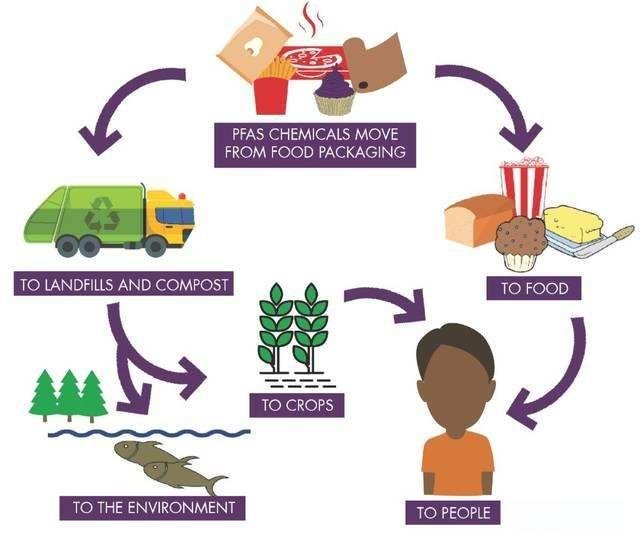
Bioleader, for example, states its products meet FDA and LFGB requirements and are free from hazardous substances. Many compostable utensils are also PFAS-free, since fluorinated “forever chemicals” are sometimes used in grease-resistant fiberware but are largely being phased out by law (e.g., California AB 1200 bans PFAS in plant-based food packaging). Typically, PLA, CPLA, and bamboo/wood cutlery have no need for PFAS coatings, so they comply with these new chemical regulations by default.
Another safety aspect is allergen concerns. Since some bioplastics come from corn or other crops, buyers occasionally ask if someone with a corn allergy could react. In practice, PLA and starch plastics are so highly processed and polymerized that they contain no detectable food proteins – they are considered hypoallergenic. Likewise, bagasse is washed pulp, and wood is unlikely to cause any allergy unless treated with something. So, compostable utensils are generally as safe as conventional plastic in this regard.
Shelf Life: Under proper storage, biodegradable utensils have a decent shelf life (often quoted as 1–2 years). They should be kept in a cool, dry environment. Excessive heat or humidity can start the degradation process or cause warping (for instance, storing PLA cutlery in a hot, damp warehouse might lead to some deformation over months). Most come in protective packaging to keep them dry until use. This is important for large buyers to manage stock rotation – while plastic cutlery can be stored indefinitely, compostable ones should use FIFO (first-in, first-out) inventory management to ensure they’re used within their optimal shelf period.
User Experience and Acceptance
The ultimate test is whether customers (end-users) find the compostable utensils acceptable or preferable. Feedback in recent years has been positive as quality improved. Some observations:
- Handling & Comfort: CPLA and other bioplastic utensils have a very similar hand-feel to plastic – generally smooth and lightweight. Users often cannot distinguish a white CPLA fork from a traditional plastic one in casual use, which is good for acceptance. Wood and bagasse have a different tactile feel; some love the natural touch, others might find the texture odd initially (e.g., the feeling of a wooden stick on lips can be unfamiliar).
- Appearance: Compostable cutlery now comes in various colors and styles. CPLA can be made in black, white, beige, or even tinted colors to match branding. Some companies offer custom logo embossing or designs on the handles, which can actually enhance branding versus generic plastic. For upscale settings, bamboo or wood utensils present an earthy, elegant look that aligns with farm-to-table or organic themes. The only potential negative appearance is if a utensil shows signs of biodegradation too early (rare, but if stored poorly, a PLA fork could discolor or get slight surface roughness). However, under normal circumstances, they maintain appearance through the meal service.
- Taste/Odor: Pure bioplastics like PLA have no discernible taste or odor. Wood utensils can sometimes give a faint woody note, as mentioned. Most bagasse or bamboo products are odorless (they are often steam-cleaned in manufacturing). In fact, one selling point is that these eco utensils contain no additives that could cause plastic-y smells or affect food flavor.
- Consumer Perception: In an era of rising eco-awareness, many consumers actually prefer seeing compostable or natural utensils, as it signals the establishment’s commitment to sustainability. A UK survey by Vegware found customers were more satisfied with their dining experience knowing the packaging was compostable, and it boosted the brand’s image (this aligns with the earlier example of increased positive reviews after switching to compostables). The presence of logos like “OK Compost” or “BPI Certified Compostable” on the utensil or packaging can further reassure users that the item will not just become more plastic waste. However, a critical aspect is education and disposal – some users might mistakenly throw compostable utensils into recycling or trash. Thus, many businesses accompany the switch with signage or messaging encouraging composting and explaining the product (e.g., “Our cutlery is 100% compostable – please dispose in compost bin”).
Overall, the performance gap between compostable and conventional disposable cutlery has largely closed for most use cases. There are still specialized scenarios where traditional plastic might outperform (e.g., very high heat or extremely hard materials to cut), but for typical food service needs, compostable utensils deliver comparable functionality. As one packaging supplier notes, “CPLA is more expensive than disposable plastic cutlery but is the cheapest environmentally friendly option” and its quality now meets the demands of foodservice clients. With continuous improvements, the few remaining compromises (like slight cost premium or minor texture differences) are outweighed by the environmental benefits and compliance advantages.

In the next section, we will explore those environmental benefits in depth, using Life Cycle Assessment data to compare compostable versus plastic cutlery across various impact categories. We’ll also examine the importance of proper composting infrastructure in realizing the sustainability potential of these products.
Environmental Impact and Life Cycle Analysis (LCA)
One of the main motivations for adopting biodegradable cutlery is to reduce environmental impacts. However, determining the true eco-benefits requires examining the full life cycle – from raw material production to end-of-life. In this section, we summarize findings from LCA studies and discuss conditions needed for compostable utensils to deliver on their sustainability promise.
Life Cycle Stages to Consider
For both conventional plastic and compostable utensils, key life cycle stages include:
- Raw material production: e.g., extracting petroleum and refining it into polypropylene for plastic forks, versus growing corn and fermenting it into PLA for bioplastic forks.
- Manufacturing: energy and resources used to mold the fork or spoon.
- Transportation: shipping materials and finished products.
- Usage: typically minimal impact (though if washing/reusing, there’s water and energy, but here we focus on single-use).
- End-of-Life: landfill, incineration, recycling, or composting, and any emissions or credits from those.
LCAs attempt to quantify impacts (greenhouse gas emissions, energy use, water use, pollution, etc.) across these stages. Several studies have compared disposable cutlery of different types:
- A 2021 meta-analysis by the UN Life Cycle Initiative reviewed 6 LCA studies on single-use tableware alternatives.
- A 2022/23 study in Sustainability journal analyzed carbon footprints of various single-use plastics and their alternatives.
- A 2024 study in Microplastics journal evaluated Canada’s banned plastics (bags, cutlery, containers) versus alternatives.
- Others have looked specifically at reusable vs. compostable vs. plastic in canteen settings.
General Findings:
- Reusable tableware is best (when break-even usage is achieved) – but since reusables aren’t always feasible in to-go contexts, single-use compostables are meant to mitigate impacts of disposables.
- For single-use options, the manufacturing stage dominates many impact categories for both plastic and bioplastic. Making the material (plastic resin or biopolymer) and molding it uses energy and resources that cause emissions. Transport is a relatively small portion (often <5% of energy).
- Bioplastic vs. Plastic – Climate Impact: In terms of greenhouse gas (GHG) emissions (climate change impact), compostable bioplastics can offer benefits, but they are not as large as one might expect unless end-of-life is managed optimally. For example, an LCA cited by Di Paolo et al. (2023) found that for cutlery:
- PLA cutlery vs. PP plastic cutlery had nearly the same carbon footprint (18 kg CO₂ vs 17.9 kg CO₂ per 1500 pieces) when the plastic was landfilled/incinerated and PLA was industrially composted. The difference was only ~0.5% in favor of PLA – essentially negligible in that scenario.
- Wooden cutlery in that same analysis had only ~4.8 kg CO₂ per 1500 pieces, a ~73% reduction compared to plastic.
This shows that bio-based doesn’t automatically mean low-carbon – PLA has upstream emissions from farming, fermentation, and polyester production that can rival those of making plastic, especially if the plastic is made in an energy-efficient process. Wood, on the other hand, is very low-carbon because it’s mostly just absorbing carbon as it grows and needs minimal processing.
- Impact categories trade-offs: According to the Canadian study (Goodrum et al. 2024), plastic cutlery was worse in most impact categories (global warming, acidification, etc.) compared to biodegradable (PLA) cutlery, except:
- Eutrophication (water pollution from nutrient runoff) – here the biodegradable cutlery was 25% worse.
- Ozone depletion – biodegradable was 35% worse.
These higher impacts for bio-cutlery were linked to agricultural production (fertilizers, etc., leading to eutrophication) and certain chemical processes (which can affect ozone layer). So, while compostable utensils cut plastic waste and often carbon, they might increase fertilizer-related pollution unless renewable farming and careful feedstock management are used.
The same study also noted that on a local scale, producing biodegradable cutlery locally vs. importing reduced many impacts, but in some categories like smog and respiratory effects, the biodegradable still had 10–30% higher impact than plastic. This could be due to off-gassing or particular emissions in production processes of bioplastic. These nuances highlight that biodegradability does not automatically equal across-the-board environmental superiority – it depends on which impact metric one prioritizes.
- End-of-Life is Crucial: The end-of-life scenario greatly affects outcomes:
- If plastic cutlery is landfilled, it mostly just sits there inert (contributing to long-term waste but not much immediate emission except possibly some carbon if incinerated). If plastic is littered, it causes huge environmental harm in terms of pollution (not always captured in LCA which focuses on emissions).
- If biodegradable cutlery is landfilled in anaerobic conditions, it may not break down (e.g., PLA in landfill might just persist for a very long time) or if it does slowly degrade it could generate methane (a potent GHG) if not captured. So a compostable fork thrown in the trash may yield little benefit over plastic – or even be slightly worse if it decomposes into methane.
- The ideal is composting: If a PLA or starch fork goes to an industrial compost facility alongside food waste, it will break down into CO₂, water, and biomass, avoiding long-term pollution. LCA studies indicate that “recycling/composting or a combination … is better than just landfill” for both conventional and compostable tableware. In fact, the UNEP meta-analysis noted “bio-plastic cutlery, if industrially composted along with organic waste, has lower impacts than polystyrene cutlery that is sent to landfill or incinerated with food waste”. This underscores that to realize the environmental advantage, the compostable product must actually be composted (or at least incinerated in a waste-to-energy plant, which recovers some energy).
- Another hidden benefit: compostable cutlery allows co-disposal with food waste. Traditional plastic utensils often contaminate food waste streams and must be painstakingly sorted out. Compostable utensils can be tossed in with leftover food and organically recycled together, which is a big operational advantage for waste management. The presence of food residue is actually helpful in composting (adding microbes and moisture), whereas it renders plastics non-recyclable. This synergy means more food waste can be composted rather than landfilled if compostables are used – an indirect but significant environmental win, since landfilled food waste emits methane.
- Toxicity and health impacts: Some LCA categories relate to human and ecosystem toxicity. Biodegradable products tend to avoid certain toxic additives found in plastics (e.g., no phthalates, BPA, etc., in PLA). The UNEP report found that for human toxicity (cancer and non-cancer) and freshwater ecotoxicity, the biodegradable/compostable products often performed better than petroleum-based products. This could be due to fewer toxic byproducts in manufacturing and the absence of persistent microplastics. On the flip side, if compostable plastics are not processed properly, they could still form microplastics (e.g., fragmented PLA in the ocean that doesn’t fully degrade can behave like microplastic until it eventually metabolizes – though it won’t bioaccumulate toxins as much).
- Infrastructure dependency: The benefits of compostables are closely tied to having composting facilities. In places like Germany or the U.S. West Coast where industrial composting is established, a PLA fork is likely to be composted and turned into soil conditioner, thereby keeping its carbon biogenic and out of landfills. In places lacking such systems, that PLA fork might end up in a landfill or incinerator. If incinerated, PLA at least is from renewable carbon, so it’s closer to carbon-neutral (the CO₂ it releases was from the atmosphere via corn, not fossil carbon). If landfilled, PLA’s inertness means it might not generate methane like food would – so it’s not worse than plastic in that regard, it just doesn’t break down. But the full sustainability narrative only holds if composting or organic recycling happens. This is why many experts emphasize expanding composting infrastructure in tandem with adopting compostable packaging, to ensure a circular outcome rather than just an alternative waste stream.
Summary of LCA Perspective
To summarize in plainer terms:
- Biodegradable vs Plastic: Compostable cutlery can reduce certain impacts (especially plastic pollution, microplastics, and fossil GHG emissions) but might have equal or slightly higher impacts in manufacturing (like using more energy or causing more fertilizer runoff). The net benefit often hinges on end-of-life: when composted, the benefits tilt positive.
- Wood/Fiber vs Bioplastic: Natural fiber utensils (wood, bagasse) show very strong environmental performance in LCAs, often beating bioplastics and plastics in most categories. They require less processing and cause less emissions, but they have their own limitations (land use for wood, etc.). They are arguably the “greenest” single-use option if sourced sustainably.
- Reusable vs Single-use: No contest – reusables (steel cutlery washed many times) have much lower impacts if utilized enough times. One study found that even accounting for washing, a ceramic or steel reusable system outperformed single-use compostables in almost all categories after a certain number of uses. However, for quick takeaway scenarios, reusables are often impractical, so the focus is on making single-use as sustainable as possible.
A balanced perspective is that compostable utensils solve the plastic pollution problem, which is not captured fully by typical LCA metrics. They biologically cycle back to earth rather than accumulate. This qualitative advantage is important to regulators addressing litter and ocean pollution. For climate change, their advantage is present but modest unless renewable energy is used in their production. Manufacturers are addressing that too – e.g., PLA plants powered by renewable energy, or integrating compostable products into waste-to-energy streams.
Practical Tip: Organizations using compostable cutlery should pair them with proper disposal programs. Many cities now have green bins for organic waste; ensuring that compostable utensils go into those bins (and educating consumers to do so) is vital. Some companies implement take-back schemes or partner with composters to collect used utensils at festivals or cafeterias. Digital solutions (as discussed later) like QR codes on packaging can instruct consumers on disposal.
In the Appendix, we include a chart from LCA data (Figure 1 above) and references to specific studies for those interested in deeper dive. For most readers, the key takeaway is: compostable utensils significantly reduce long-term pollution and can reduce carbon footprint, especially when properly composted. But they are not a silver bullet – sustainable sourcing of feedstock and composting infrastructure are essential to unlock their full environmental benefit.
Global Compliance and Certification Standards
In the realm of biodegradable cutlery, compliance with international standards and certifications is paramount. Buyers need assurance that a “compostable” spoon will actually compost as claimed, and regulators need definitions to enforce labeling laws. This section breaks down the major standards (EN 13432, ASTM D6400, etc.) and certification systems (TÜV OK Compost, BPI, and others) that govern compostable utensils. We also explain how differences across regions affect product labeling and procurement strategies for global supply.
Industrial Compostability Standards: EN 13432 and ASTM D6400
The two most widely referenced standards for compostable plastics are EN 13432 in Europe and ASTM D6400 in the United States (and similarly ASTM D6868 for compostable packaging with coatings).
- EN 13432 – “Requirements for packaging recoverable through composting and biodegradation”. Although focused on packaging, EN 13432 is applied to compostable tableware and cutlery as well. It requires that materials:
(a) Biodegrade by at least 90% within 180 days in industrial composting conditions (controlled temperature ~58°C and humidity),
(b) Disintegrate into small fragments (no larger than 2mm) such that the final compost has no visible contamination over a 12-week composting period,
(c) Have no ecotoxicity – the resulting compost must support plant growth, and
(d) Have low heavy metal content (below strict limits for Pb, Cd, Hg, Cr, etc.).
Products meeting EN 13432 can be labeled as “industrially compostable” and often carry the Seedling logo (managed by European Bioplastics) or OK Compost INDUSTRIAL mark (by TÜV AUSTRIA). EN 13432 has been in effect since 2000 and is widely recognized. Many European countries have made it essentially mandatory: e.g., Germany and France require EN 13432 compliance for any product marketed as compostable. - ASTM D6400 – “Standard Specification for Compostable Plastics”. This is the North American equivalent, with very similar requirements to EN 13432 in terms of biodegradation rate (60% conversion to CO₂ in 180 days for plastic polymers, 90% for organic components like paper), disintegration (90% must fragment and pass through a 2mm sieve in compost), and safety (no harmful residues, heavy metals below thresholds). ASTM D6400 was first published in 2004 and has become the basis for labeling laws in the U.S. and Canada. There’s also ASTM D6868, which covers compostable plastics coated on paper or other compostable substrates, relevant for things like paper cups with PLA lining.
Any manufacturer claiming their cutlery is “compostable” in the U.S. essentially needs to have it meet D6400/D6868. This is often verified via certification by the Biodegradable Products Institute (BPI) – the leading U.S. body certifying compostable products against ASTM standards.
BPI Certification: BPI’s logo on a product indicates it has been independently tested and meets ASTM D6400/D6868. BPI also enforces some additional policies; for instance, BPI requires that items be PFAS-free and that manufacturers use clear labeling (usually the BPI logo or “Compostable” text) on the product. BPI certification has become a de facto requirement for many compost facilities – some will reject products that are not BPI certified, to avoid contamination. As such, most North American compostable cutlery suppliers (Eco-Products, World Centric, etc.) and major Chinese exporters to the U.S. get BPI certification. Bioleader is one such example – it holds BPI certification for its products, demonstrating compliance with ASTM standards globally.
OK Compost (TÜV AUSTRIA): In Europe (and internationally), TÜV AUSTRIA’s “OK Compost” scheme is highly regarded. They offer two marks:
- OK Compost INDUSTRIAL: means the product is proven to compost in industrial facilities (aligning with EN 13432). Many products carry both this and BPI, as the testing is similar.
- OK Compost HOME: a more stringent certification that requires biodegradation at lower temperatures (~20–30°C) typical of home compost heaps. Products with OK Compost Home (e.g. some PHA straws, certain thin PLA films) are guaranteed to break down in a well-managed home compost. Achieving this for thick items like cutlery is tough, but some innovations might get us there. Currently, most compostable cutlery is industrial-only (i.e., OK Compost Industrial).
Country-Specific Standards: Beyond those core standards, various countries have their own norms:
- China: The standard GB/T 38082–2019 titled “Degradable Plastics Tableware” is the benchmark in China. It includes test methods for degradation and disintegration specifically for tableware (including simulating composting). China also has GB/T 18006.3-2020 for disposable biodegradable tableware (which may supersede or add to 38082). Products meeting these can use the “Green Degradable” label domestically. Manufacturers like Bioleader not only meet EN/ASTM for export, but also ensure compliance with GB/T for Chinese regulatory needs. An important note: China’s standards emphasize that exporters should meet both Chinese and international standards – so a Chinese factory making forks for Europe must meet EN 13432, etc., on top of local rules.
- Japan: Lacking widespread composting, Japan doesn’t focus on compostability but on bio-based content. The JBPA (Japan BioPlastics Association) issues a “BiomassPla” certification if a product has at least 25% bio-based carbon content. It’s a different approach – a PLA fork can get a BiomassPla logo if it’s 100% bio-based, even if it won’t biodegrade in Japanese waste systems. Japan does have JIS (Japanese Industrial Standards) that mirror ISO compostability standards, but since industrial composting is rare, this hasn’t been a major factor yet.
- Australia/New Zealand: They use standards AS 4736 (industrial composting, similar to EN 13432) and AS 5810 (home composting). The “Seedling” logo (same as Europe’s) is used under license there. By 2015 these were in effect and now many Australian councils prefer certified compostable foodware. For example, BioPak (a leading AUS brand) ensures their cutlery meets AS 4736 and carries the seedling logo.
- Others: Many other countries simply accept one of the above standards. For instance, Canada currently references ASTM D6400 (and by extension BPI certification) when it comes to federal procurement of compostable products. India and Malaysia often require compliance with EN 13432 or ASTM as part of tender specs, since they might not have their own standards yet. In Latin America, countries like Chile also reference European or ASTM standards for acceptable compostables.
Table 2 – Compostability Standards & Certifications by Region (from Bioleader’s summary):
| Region/Country | Standard & Code | Certification Required? | Home Compostable Standard | Common Logo/Label | In Effect Since |
|---|---|---|---|---|---|
| China | GB/T 38082–2019 (Biodegradable Plastics Tableware) | Yes (mandatory for claims) | No (focus is industrial) | “Green Degradable” logo | 2019 |
| European Union | EN 13432 | Yes (for packaging/claims) | Partially (no unified home std, but OK Compost Home optional) | Seedling Logo, OK Compost | 2000 |
| United States | ASTM D6400 / D6868 | Yes (by law in several states) | No (no official home std; use EN or AS for home) | BPI Certified Compostable | 2004 |
| Japan | (No compost std widely used) JBPA “BiomassPla” (25%+ bio-based) | Yes (for BiomassPla labeling) | No (Japan lacks home compost facilities) | BiomassPla logo | 2020 |
| Australia | AS 4736 (industrial), AS 5810 (home) | Yes (for many applications) | Yes (AS 5810) | Seedling Logo (via ABA or TÜV) | 2015 |
Note: Many of these standards are harmonized with ISO 17088 (the international standard for compostable plastics), so there’s global convergence.
Food Contact and Quality Certifications
In addition to biodegradability standards, manufacturers must comply with food safety regulations:
- FDA 21 CFR in the USA (for all materials that contact food).
- EU Framework Regulation (EC) No. 1935/2004 and specific measures like EU 10/2011 for plastics, or national standards like Germany’s LFGB. Compostable plastic cutlery is usually tested to ensure no toxic elements or residues migrate into food.
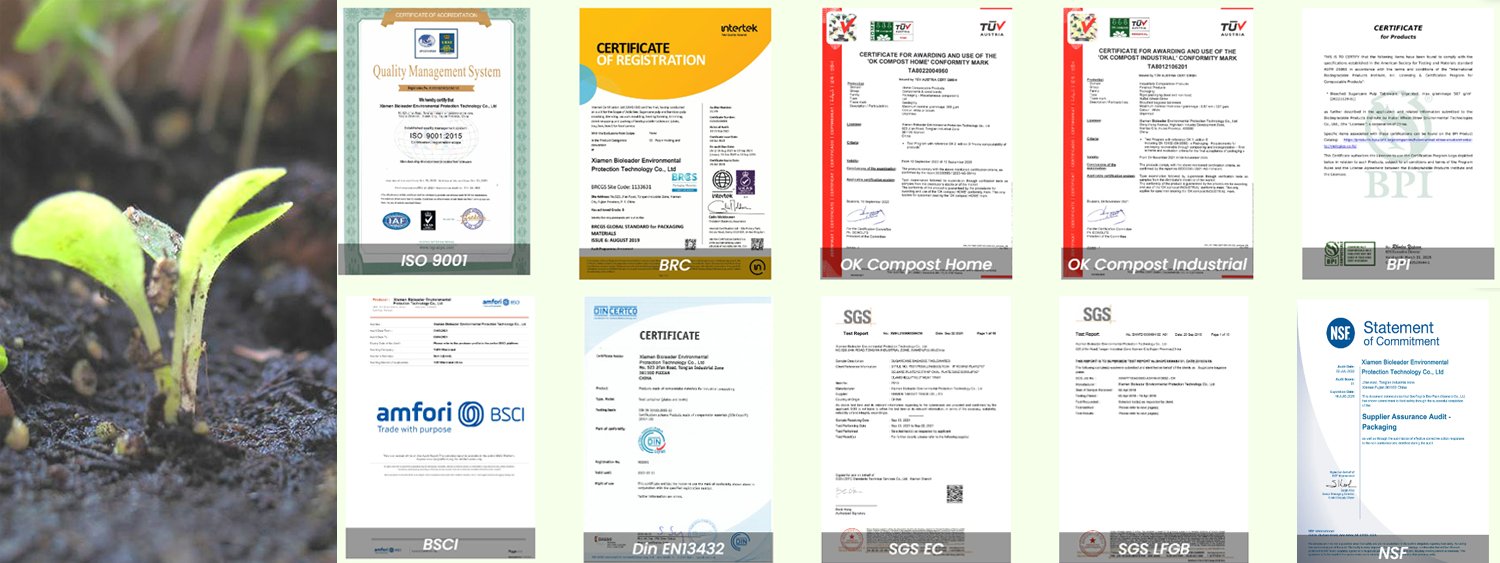
- ISO 9001 / ISO 14001: Many factories have these certifications for quality management and environmental management systems, respectively. While not specific to compostability, they reassure buyers about consistent quality and regulatory compliance processes.
- BRCGS (Packaging): This is a global standard (originally British Retail Consortium) for packaging quality and hygiene. Some compostable cutlery manufacturers get BRCGS certified to demonstrate high manufacturing standards (useful when supplying to big retailers or food companies).
- BSCI (Business Social Compliance Initiative): To address ethical sourcing, some factories hold BSCI certification (ensuring fair labor, etc.) – this is more related to corporate social responsibility but increasingly part of procurement criteria, especially in the EU.
Bioleader, for instance, lists “Certificates: OK Compost, FDA, ISO9001/14001, BSCI, BRCGS, EN13432, QS” among its credentials. Such a portfolio signals that the company meets the full spectrum of requirements: product compostability, safety, quality systems, and social compliance. Buyers, especially large distributors and retailers, will often require copies of these certificates during vetting.
Labeling and Procurement Implications
Labeling Laws: Around the world, laws are emerging to prevent “greenwashing” and consumer confusion:
- In the EU, the upcoming regulations (as part of the Circular Economy Action Plan) may restrict the use of terms like “biodegradable” or “compostable” on products unless very specific criteria are met (to ensure these claims don’t encourage littering). Already, products that are compostable but look like regular plastic often need clear labeling. Italy requires compostable bags to be labeled in multiple languages for proper disposal. France forbids even saying “biodegradable” because it can be misleading – “compostable in industrial facilities” is the preferred phrase with proper marks.
- In the US, as noted, states like California (SB 343) and Washington have enacted laws requiring that compostable products be visibly distinguishable from non-compostable (often green or brown tint, or printed “compostable” text) and carry certification markings. California’s SB 343 (Truth in Environmental Advertising) also prohibits the use of the recycling symbol on anything non-recyclable, which indirectly affects bioplastics – they shouldn’t have chasing arrows, etc., that confuse consumers. Colorado’s SB 23-253 explicitly says by 2024 any product labeled “compostable” must be certified and properly labeled as such.
- Canada in its guidelines emphasizes that terms must comply with CSA (Canadian Standards Association) standards or ASTM, and unqualified “biodegradable” claims are discouraged unless a timeframe and environment are specified (per Competition Bureau environmental claims guidance, similar to FTC Green Guides in the US).
The FTC Green Guides (US) indeed have long warned that a claim like “biodegradable” is deceptive if the item does not biodegrade in a “reasonably short period” after disposal. Since plastics in landfills don’t degrade quickly, unqualified biodegradable claims were basically a no-no. That’s why companies seek the more specific “compostable” claim with proper qualification (e.g., “Compostable in industrial facilities, where such facilities exist”).
Procurement & International Trade: For global buyers, understanding these certifications is key to sourcing the right product for each market:
- If supplying to the EU, you need EN 13432 compliance and likely a TÜV OK Compost or DIN CERTO certificate to prove it. Otherwise, your product cannot be legally marketed as compostable in the EU. Also, since the EU bans oxo-degradables and non-certified claims, having that certificate avoids customs/import issues.
- If supplying to the US/Canada, getting BPI certified is highly advantageous. Many government procurement contracts and even private companies (like large foodservice management firms) now write in specs that products must be BPI-certified. For example, a city contract for catering may stipulate all disposable serviceware must meet ASTM D6400 and be BPI certified, to ensure it will be accepted in local compost programs.
- China and Asia markets: If selling within China, one might need to pass GB/T tests and perhaps get the China “Green PLA” mark issued by the China Plastic Association for compliance. For exporting from China, Chinese manufacturers often do both: meet foreign standards (for the destination country) and meet domestic standards (for Chinese customs and quality control). Many Chinese exporters obtain multiple certificates (BPI for US, OK Compost for EU, Green Degradable for China) to maximize market access.
- Traceability: Interestingly, companies are implementing batch-level traceability systems to ensure compliance and quality. Bioleader, for instance, mentions “Full Batch Traceability: Every order can be traced from raw materials to delivery”. This means if an issue arises (say a batch doesn’t compost as expected or has a quality defect), they can pinpoint it and also prove to regulators the source and composition of the product. In international shipments, having clear documentation linking a shipment to a certified batch can smooth customs clearance and instill confidence in buyers.
Cross-Certification and Logos on Product: Often, compostable cutlery will bear a small imprint of a certification logo or at least the word “Compostable” plus a code. This helps waste handlers identify it. For example, you might see “Compostable – BPI” on the handle of a fork or a DIN CERTCO seedling icon. Such markings are strongly encouraged and sometimes required by regulation (e.g., California’s law on distinguishing compostables). Buyers should check that products they purchase have these markings; it’s a sign of authenticity.
In summary, global compliance demands navigating a patchwork of standards that fortunately align fairly well in technical criteria:
- Use EN 13432 / ASTM D6400 as your baseline for industrial compostability requirements.
- Obtain certifications (BPI, OK Compost) to validate those requirements.
- Ensure food-contact safety certifications are in place (FDA, EU).
- Label products clearly according to the destination market’s rules.
- Keep documentation ready for customs or clients (test reports, certificates).
By doing so, companies not only avoid legal pitfalls but also gain marketing leverage – these certifications are often selling points, especially for institutional buyers or retailers aiming for green procurement. Indeed, government procurement in countries like Canada and France now prefer certified biodegradable options, and being able to show those certificates can win contracts. Many jurisdictions (like California state agencies via SB 1335) actually maintain lists of approved compostable products that state facilities can purchase. Getting on those lists (which usually means being certified and PFAS-free) is crucial for manufacturers.
To conclude this section: Compliance is the backbone of the compostable cutlery industry. It transforms vague claims into verifiable facts. Companies succeeding in this space, like Bioleader, Vegware, and Eco-Products, invest heavily in certifications and adhere to multiple standards to serve a global client base. Regulators, for their part, are continuously updating standards (e.g., the EU is working on a potential “bio-based and compostable plastics policy framework”). Buyers should stay informed on the latest requirements in their region and ensure any product they import meets those, to avoid issues with customs or waste management down the line.
Market Landscape by Region: Adoption and Case Studies
This section provides a deeper dive into regional market dynamics for compostable cutlery, highlighting key drivers, local regulations, and notable industry players or projects in each area. We focus on the European Union, North America, China, Southeast Asia, and the Middle East – each of which presents unique opportunities and challenges in the move to sustainable utensils.


Europe: Post-Plastic Era and Closed-Loop Systems
Regulatory Overview: The EU has arguably the most aggressive stance on single-use plastics. Since July 2021, under the EU Single-Use Plastics (SUP) Directive, EU member states have banned placing on the market certain plastic items including cutlery, plates, and stirrers. The Directive does allow compostable plastics in some cases (e.g. certain packaging), but for cutlery it pushed more for non-plastic alternatives. As a result, Europe saw a surge in wooden and certified compostable cutlery. In countries like Italy, however, there was support for compostables – Italy fought to allow EN 13432-certified bioplastic cutlery as an exception under its national implementation (citing its composting infrastructure). Still, to be safe, any compostable cutlery sold in the EU must meet the compostability standards and often is paired with paper or fiber initiatives.
Market Trends: Europe’s market emphasizes quality and end-of-life. Many European cities have municipal compost programs, but also high recycling goals. Some have questioned whether compostable plastics might contaminate recycling – thus, there’s a strong push for clear product differentiation and public education. Germany and Austria are big markets for CPLA cutlery used in corporate cafeterias and events, with well-established composting facility networks. France, being stricter (it banned even bio-based plastics for many disposables), leans towards wood/bamboo and innovations like edible cutlery or reusable schemes. Interestingly, France’s ban on single-use plastic cutlery in fast-food restaurants by 2023 led to adoption of either reusable metal cutlery for dine-in or wooden for take-out at chains like McDonald’s (in France, McDonald’s switched to wooden knives and forks for salads and meals). Scandinavian countries also adopt a mix – Sweden and Denmark favor reusables but also have wood/bamboo cutlery in stores.
Circular Initiatives: A hallmark of Europe is integrating compostable cutlery into a circular economy approach. For instance, Vegware (UK) not only supplies compostable foodservice items but also partners with waste collectors to ensure those items actually get composted. They helped set up dedicated composting collection routes for offices and cafes using Vegware in the UK. Similarly, in the Netherlands, organizations coordinate that event venues using compostable serviceware send it to industrial composters to become fertilizer for Dutch agriculture. These closed-loop case studies show higher success rates in Europe because of policy alignment (waste directives encouraging organic recycling).
Consumer & Business Adoption: European consumers generally support the move – a Eurobarometer survey found overwhelming public approval for banning single-use plastics. Retail and hospitality brands tout their switch: e.g., IKEA phased out plastic straws/cutlery and uses only compostable or wooden versions in its cafeterias Europe-wide. Airlines like Air France and Lufthansa have trialed compostable cutlery for in-flight meals to reduce plastic waste (though some have to consider weight and space as well). The EU’s tourism and outdoor events sectors have many “green festivals” where only compostable foodware is allowed and collected for compost.
One case study: Germany’s Bio Economy – Several German states incentivize bioplastics. A company like Bio4Pack supplies certified compostable cutlery to supermarket chains (Rewe, Edeka) that sell them as eco-friendly picnicware. In Italy, Novamont’s Mater-Bi (a starch-PBAT blend) is used to make biodegradable cutlery for schools, aligning with Italy’s national composting prowess (Italy composts a large portion of its organic waste and has the capacity to handle compostable plastics).
Challenges: Not all is perfect – contamination of compost streams by lookalike non-compostable items is an issue, and not every EU country has equal infrastructure (e.g., some Eastern European countries are behind on composting facilities). Also, enforcement of the SUP ban varies, so some illegal plastic cutlery may still float around in markets with weaker enforcement, undercutting compostable options on price. However, the trend is firmly towards compliance as awareness grows and as fines or penalties kick in.
North America: Patchwork Policies and Corporate Leadership
United States: The U.S. market is driven by a mix of local legislation and voluntary corporate action. As discussed, certain states and cities lead – e.g., Seattle since 2010 has required all food service disposables to be compostable or recyclable, effectively making compostable cutlery standard in Seattle’s restaurants. San Francisco has similar requirements. New York City hasn’t banned plastic cutlery outright, but many businesses are switching in anticipation of stricter laws and due to customer preferences (NYC did ban styrofoam and is eyeing other plastics).
At the state level, California is a trendsetter: beyond labeling laws, some counties in CA (like Santa Cruz, Marin) banned plastic cutlery and stirrers, mandating compostable or wooden alternatives. California’s SB 54 (2022) sets a broader mandate that by 2032 all packaging (including food service items) in California be recyclable or compostable. This essentially means within a decade, any disposable cutlery in CA must be compostable if not easily recyclable (and plastic cutlery is not recyclable, so compostable or reusable is the path). Such laws create huge markets – California alone, the world’s 5th largest economy, will require immense quantities of certified compostable utensils for its restaurants, cafeterias, and state facilities.
BPI and Composting Infrastructure: The U.S. also has a growing network of industrial composting facilities (around 185 full-scale facilities that accept compostable plastics as of recent counts). However, they are unevenly distributed – mostly in the West Coast, Northeast, and some Midwest pockets. This means a compostable fork used in, say, Atlanta might still end up in landfill due to lack of facilities, whereas in San Francisco it will be composted. To address this, organizations like the US Composting Council and BPI are working on aligning collection – including pushing for standard labeling (green color coding) so composters can easily filter correct items.
Corporate Initiatives: Many American companies have proactively adopted compostable serviceware as part of sustainability pledges:
- Fast-Casual Chains: Sweetgreen (salad chain) uses compostable bioplastic lids and cutlery; Chipotle moved to plant-based compostable bowls and is exploring cutlery; Burger King trialed a reusable/compostable packaging pilot in some cities.
- Tech Campuses: Google, Facebook, and others use compostable utensils in their cafeterias (with on-site compost collection).
- Sports & Entertainment: The Super Bowl in recent years has aimed for zero-waste events, using compostable cups, plates, and cutlery and ensuring they are collected for compost. Several stadiums (e.g., Seattle’s and Minneapolis’) have only compostable foodware and have achieved high diversion rates from landfill.
- Universities & Schools: Hundreds of universities across the U.S. have gone “zero waste” in dining halls, which typically involves replacing plastics with compostables and setting up compost bins. University of California campuses, for example, as part of policy, require compostable or reusable serviceware in their food operations.
A noteworthy case: Minneapolis/St. Paul, Minnesota – local laws require any disposable foodservice items be recyclable or compostable. This led to partnerships between Eco-Products (a major supplier) and the Minnesota Twins baseball team, making all concessions packaging compostable and collected in stadium. The result was diverting tons of waste each season to compost instead of landfill, turning it into soil for community gardens – a story used as a public relations success showing compostable cutlery contributing to a circular outcome.
Canada: Canada’s federal ban (part of the Single-Use Plastics Prohibition Regulations) specifically lists plastic cutlery. As of December 2023, you cannot sell plastic cutlery in Canada. Allowable alternatives are those made of wood, or plastic that is “manufactured items out of compostable plastics” (the regs have some details on what’s exempt – basically certified compostable plastics are allowed). So the door is open for compostable bioplastic utensils in Canada, provided they meet standards. The challenge is that Canada’s composting facilities might not all accept them yet. But cities like Toronto and Vancouver are expanding organic waste programs, and some pilot projects (Toronto ran a test on accepting compostable coffee pods and cutlery in their green bin program).
Canadian retailers have begun stocking compostable or wooden cutlery sets widely. Also, with government procurement favoring biodegradable (Canada’s Government of Canada green procurement policy encourages use of sustainable materials for all its operations), there’s uptake in federal institutions. For example, the cafeterias on Parliament Hill in Ottawa switched to compostable CPLA cutlery and implemented compost bins, aligning with Canada’s Greening Government initiative. Zero plastic waste by 2030 is a federal goal, so compostables are a bridge to that.
Public Perception: North American consumers are gradually recognizing compostable packaging labels. A slight risk is “wishcycling” – people might toss compostable plastics into recycling bins, which causes contamination. Hence, some municipalities actually discourage compostable plastics unless they have a robust compost program. The messaging is key: cities like San Francisco have done a good job in education, labeling compost bins with images of compostable forks, etc., so people know where to put them. As those practices spread, consumer compliance improves.
Summary: North America is moving toward compostables through a combination of regulation (bans, mandates, labeling laws) and corporate responsibility. There’s a strong innovation ecosystem too – companies like Danimer Scientific (PHA developer), NatureWorks (PLA maker in the US), and various startups are contributing to next-gen solutions that will further entrench compostables as viable alternatives. The main challenge remains scaling up composting facilities and ensuring that compostable utensils actually end up in the compost, not the trash. However, success stories from city programs and events demonstrate that with the right system, compostable cutlery can play a key role in reducing waste in North America.
China: Domestic Boom and Export Powerhouse
Policy Enforcement: As earlier discussed, China’s national policy against single-use plastics is comprehensive. By end of 2020, non-degradable plastic cutlery was banned in dine-in settings in major cities, and by end of 2025 it’s to be banned even for takeout nationwide. This has spurred a domestic boom in demand for biodegradable cutlery. Chinese cities with huge food delivery markets (like Shanghai, Beijing, Guangzhou) have millions of orders daily that used to include plastic cutlery. Now, companies like Meituan and Ele.me (the two largest food delivery platforms) have had to comply with regulations encouraging them to default to no cutlery or use biodegradable ones. Meituan, for example, introduced an “opt-in for cutlery” in their app to reduce unneeded distribution, and when cutlery is requested, many restaurants provide a compostable set.
Local governments are also supporting the shift. Some Chinese provinces subsidize the purchase of certified biodegradable products for public canteens. Hainan Province (an island with environmental initiatives) outright banned a range of plastics and has only biodegradable replacements on the market since 2020. Hangzhou city ran pilots collecting used PLA tableware for centralized composting or chemical recycling (though limited scale).
Manufacturing and Companies: China’s manufacturing base for compostable tableware is centered in provinces like Fujian, Guangdong, and Jiangsu. Xiamen (Fujian), where Bioleader is located, is known as a hub for eco-packaging factories. Xiamen Bioleader Environmental Protection Technology (Bioleader®) is one prominent player, but there are dozens of others focusing on either CPLA cutlery, plant fiber tableware, or starch-based items. Chinese manufacturers often produce on massive scales (Bioleader, for instance, produces over 1 billion pieces of cutlery annually). This scale, combined with lower production costs, makes China the leading exporter of compostable cutlery to the world.
Many global brands actually source from Chinese OEM/ODM factories and brand the products locally. Bioleader’s profile (detailed in the next section) exemplifies the capabilities: modern facilities, automation, and a wide material portfolio (CPLA, cornstarch, bagasse) tailored for international requirements.
Domestic Market Nuances: Chinese consumers, historically, were less aware of biodegradable plastics, but that’s changing fast. Government campaigns about “white pollution” (plastic pollution) have raised public consciousness. Some cafe chains in China now advertise their use of biodegradable straws and cutlery. McDonald’s China replaced plastic straws with lids and has trialed PLA cutlery in some locations to comply with city rules. Starbucks China introduced a line of compostable straws and cutlery as well, given the national policy backdrop.
However, one challenge is that China’s waste management is still catching up. A lot of biodegradable plastic ends up being incinerated for energy (which isn’t awful from climate perspective since PLA is biogenic CO₂, but it doesn’t fulfill the composting promise). There are relatively few industrial composting facilities primarily for bioplastics; most composting in China is focused on agricultural waste. But cities like Shanghai have started food waste separation programs, and researchers in China are exploring the anaerobic digestion of PLA (biogas production). The Chinese government, recognizing PLA’s rise, is also concerned about ensuring it degrades properly – hence emphasis on standard GB/T 38082 and possibly new guidelines to build composting capacity. There’s also innovation: Chinese companies are looking into enzymatic or chemical recycling of PLA (e.g. turning used PLA back into lactic acid) as a way to handle collected bioplastic waste in absence of widespread composting.
Export Cases: As an exporter, Chinese companies have supplied many large international events and projects:
- Tokyo 2020 Olympics: A significant portion of the biodegradable food packaging and cutlery was made in China (despite Japan hosting, they imported a lot of product).
- 2022 Beijing Winter Olympics: China showcased its own compostable products for an environmentally friendly event – with local suppliers like Kingfa Sci. & Tech (a Chinese bioplastics company) providing materials.
- UN Conferences & World Expo: Chinese manufacturers often win tenders to supply compostable tableware to such large events abroad due to their capacity and cost advantage.
Chinese brands are also becoming more outward-facing. Bioleader, for example, actively markets in overseas exhibitions (e.g., it participates in Ambiente in Germany, Canton Fair for global buyers, etc.) and highlights export success stories – such as supplying a chain of supermarkets in the Middle East with custom compostable cutlery sets, or providing OEM services to a European packaging brand. These export cases demonstrate the globalization of the compostable cutlery supply chain, with China at the center.
Outlook: The intersection of strong domestic policy and manufacturing prowess positions China to both mass adopt and mass supply compostable utensils. In the next 5 years, we can expect Chinese standards and enforcement to tighten (possibly requiring QR code traceability on products to ensure authenticity, something already being discussed under China’s “plastic pollution prevention” guidelines). If China successfully implements large-scale composting or recycling for bioplastics, it could even become a model for a closed-loop system given the volume involved.
Southeast Asia: Bans with Mixed Enforcement and Entrepreneurial Solutions
Regulations: Many Southeast Asian countries have announced bans or goals around single-use plastics:
- India (while not SE Asia, South Asia – but significant) enforced a ban on identified SUP items from July 2022, including cutlery. Enforcement is a challenge due to the size of the unorganized sector, but it has stimulated local alternatives (e.g., leaf plate and bagasse producers, edible cutlery startups).
- Thailand has a roadmap to phase out certain plastics by 2022–2025, and while cutlery isn’t outright banned yet, major retailers voluntarily stopped giving out plastic cutlery in some cases.
- Malaysia aims for all plastic packaging to be biodegradable by 2030. They promote certified compostable products and are developing national standards for biodegradables. Some states in Malaysia, like Penang, have plastic straw bans and encourage alternatives for other single-use plastics.
- Philippines has no national ban on cutlery yet, but as mentioned, the government is considering a gradual elimination of single-use non-compostable plastics through the National Solid Waste Management Commission’s resolutions. Cities like Quezon City have local ordinances banning plastic cutlery in restaurants unless requested.
- Indonesia has targeted plastic waste reduction by 70% by 2025. Major cities (Jakarta, Bali Province) banned plastic bags and polystyrene; cutlery not broadly banned yet, but Bali did include plastic cutlery in its ban (leading hotels to use alternatives). Given the marine debris issues in Indonesia, there’s growing interest in cassava-based or seaweed-based plastics, e.g., Evoware making seaweed bioplastic sachets, which might extend to utensils one day.
Market State: In practice, many street food vendors and small businesses still use cheap plastics (it’s a cost issue). However, there’s a visible rise in sustainable packaging usage in metropolitan areas and tourist destinations, often driven by consumer preferences (e.g., eco-conscious tourists in Bali expect no plastic). Singapore, while small, is influential – its retailers like NTUC FairPrice sell compostable tableware and the government is studying extended producer responsibility for packaging (though Singapore currently incinerates waste, compostables are more about carbon neutrality there).
Local Production & Startups: A positive trend is local entrepreneurship:
- In India, beyond the famous Bakeys edible cutlery (made of millet and rice, which got global attention), there are companies making areca palm leaf cutlery (thermoformed from fallen palm sheaths) and others using sugarcane bagasse to mold spoons. These are small scale but growing with government support (India’s Startup India mission includes waste reduction startups).
- Indonesia has startups like Biopac making cassava starch bags and looking into utensils, and Polylab exploring sago starch bioplastics.
- Vietnam and Thailand have significant bagasse production (from sugar industry) and are now exporting bagasse plates and could expand to cutlery. Vietnam has companies exporting bamboo and wooden utensils as well.
- Philippines with abundant coconut and agricultural fiber waste might see more fiber-based product innovations, especially since the law encourages compostable packaging.
Case Study – Malaysia’s Roadmap: Malaysia published a “Roadmap Towards Zero Single-Use Plastics 2018–2030.” It focuses on promoting bio-based compostable alternatives. Already, some Malaysian companies import PLA resins or finished products to supply local businesses. The government has introduced a label (similar to “Green Label”) for certified biodegradable products, aligning with standards like ASTM D6400 that they reference. They are tackling the cost barrier through incentives.
Challenges: Enforcement and waste management infrastructure. Even if biodegradable cutlery is used, if it’s littered in the environment (which, unfortunately, is a big issue in some developing areas), it may or may not degrade depending on conditions (e.g., PLA won’t degrade quickly in the ocean, but PHA would – however PHA is not common there yet). Also, industrial composting facilities are scarce across SE Asia. One promising angle is small-scale composters: community-level composting of organic waste plus compostables. Some resorts and eco-parks in the region have on-site composters where they can compost their biodegradable serviceware along with kitchen scraps, closing the loop on a small scale.
Consumer Attitude: There is increasing environmental awareness, especially after global media highlighted how some SE Asian countries were inundated with plastic waste imports. Youth-led movements and NGOs push for plastic-free campaigns (e.g., “No Straw” campaigns in Vietnam and Philippines turned into broader plastic reduction campaigns). This grassroots pressure encourages businesses to adopt alternatives to avoid public criticism. For example, after videos of polluted beaches went viral, many dive resorts in the Philippines and Thailand switched to compostable or bamboo utensils to show eco-friendliness.
Future Outlook: Southeast Asia could become a major producer of biobased materials (rich in agricultural resources for starch, fiber, etc.) – perhaps a source of not just raw material (like cassava starch exports) but finished products. As regulatory frameworks strengthen (especially if an ASEAN-wide policy emerges or more national bans take full effect), the region will likely see faster growth in compostable cutlery usage. The key will be pairing that with waste management improvements (composting, biogas, etc.) to handle these products properly. Given the climate and soil conditions, even unmanaged, many of these products will eventually biodegrade (for instance, a bamboo fork will degrade in tropical conditions much faster than in a temperate climate), but proper composting would maximize benefits.
Middle East: Sustainability Commitments and Emerging Regulations
Gulf Region Initiatives: The oil-rich Middle East might seem an unlikely champion for bioplastics, but many nations there are aggressively pursuing sustainability as part of their future vision (to diversify from oil and protect their environment). The United Arab Emirates (UAE) and Saudi Arabia are prominent:
- The UAE’s national single-use plastics policy sets a timeline: By Jan 2024, Dubai banned single-use plastic bags (with a small fee earlier), and as reported, by Jan 1, 2026, the UAE will ban single-use plastic cutlery, cups, plates, food containers, etc.. This country-wide approach is part of UAE’s Vision 2030 and environmental stewardship goals (the UAE has even run awareness that microplastics end up in human bodies as a rationale for elimination). So businesses in the UAE are already transitioning – supermarkets have introduced wooden cutlery for deli sections, food delivery apps offer biodegradable utensil options, and some municipalities have distributed compostable bags/utensils for public events.
- Dubai Municipality has started requiring that certain plastic products (like bags) be oxo-biodegradable or compostable years ago; now that’s shifting to outright bans and genuine compostables. They have licensing for biodegradable plastics (a few years back, suppliers had to register products that meet UAE’s standard, which was based on oxo tech, but they’re moving away from that to real compostables).
- Saudi Arabia implemented the SASO standard 2879 in 2019 requiring many plastic products to be oxo-biodegradable (with a logo) – including plastic knives, forks, spoons. However, Saudi Arabia recently announced a broader integrated waste management plan which may phase out not just conventional plastics but also oxo (since oxo doesn’t fully solve microplastics). We might soon see Saudi shift to promoting compostables or other alternatives as they push a circular economy (Saudi’s Vision 2030 has environmental targets too).
- Qatar and Oman have plastic bag bans in effect or pending, and likely will follow on other SUPs, especially with Qatar having hosted a “plastic-free” World Cup 2022 where compostable foodware was used extensively.
Regional Market Characteristics: The Middle East has a large hospitality and event industry (think Dubai Expo 2020, World Cup in Qatar, religious tourism in Saudi, etc.), which often pilot sustainability initiatives. For instance, during the Dubai Expo, many food pavilions used biodegradable cutlery to align with Expo’s sustainability themes. Similarly, the Hajj pilgrimage in Saudi Arabia generates huge amounts of waste; there have been proposals to use only biodegradable tableware for the millions of meals served, to ease clean-up and environmental burden (no official mandate yet, but the idea is floated among planners to use compostables and then handle waste accordingly).
Local Production vs. Imports: Currently, much of the biodegradable cutlery in the Middle East is imported – often from China or India. However, there are signs of local industry:
- UAE: A company named Agthia introduced plant-based disposable cutlery in the UAE market. Also, the UAE has an established plastics converting industry which is starting to invest in compostable resin processing to make films and utensils locally (especially since the ban deadlines are looming).
- Saudi Arabia: SABIC (the large petrochemical company) has produced some bio-based materials (they have a certified renewable PP from non-food biomass, though not compostable). There’s interest in PHA – Saudi Aramco invested in a company making PHA. We could see Middle East oil giants themselves pivot to bio-based polymer production as a way to stay relevant in a decarbonizing world.
Infrastructure: One limiting factor is the hot, arid climate – composting requires water and organic input. Some Gulf states are exploring large-scale composting (e.g., Dubai has some compost facilities mainly for landscape waste; Saudi has pilot compost sites). However, incineration with energy recovery might be more common for waste management in some places. In that case, compostables still help by providing non-fossil fuel (their carbon came from atmosphere via plants, so burning them is carbon-neutral). But ideally, they’ll increase composting especially for food waste which is significant.
Consumer/Corporate Involvement: There’s a top-down drive where governments are mandating, but also bottom-up where high-end consumers (and the tourism sector) demand green products. For example, Emirates Airline introduced eco-friendly packaging on flights, including wooden cutlery in economy class meals, as part of its sustainability report goals. Hotels in Dubai and Abu Dhabi, aiming for Green Globe certifications, have swapped out plastic stirrers and cutlery for compostable or wooden ones. The 2022 World Cup in Qatar showcased compostable food packaging in stadiums (reportedly, all single-use serviceware was compostable and collected).
One interesting case: The Red Sea Project in Saudi Arabia (a huge regenerative tourism development) has committed to no single-use plastics on site – that means they will rely on alternatives like compostables and reusables, and plan to have closed-loop waste systems (possibly including onsite composting). This could set a precedent for large resorts in the region.
Challenges: Similar to other regions, enforcement and consistency will be key. The Middle East has abundant cheap plastic historically, so ensuring the bans are enforced (e.g., stopping imports of cheap plastic forks) is critical. Economic fluctuations (oil prices, etc.) can affect how strongly these policies are pursued. But given these countries’ long-term strategies to reduce waste and improve their global image, it’s likely they’ll follow through.
In summary for Middle East: A region traditionally reliant on plastics is rapidly waking up to compostable and eco-friendly tableware solutions due to government directives and sustainability commitments. With deadlines like UAE 2026 ban nearing, we can anticipate a sharp pivot wherein biodegradable cutlery becomes the norm in many settings – from street shawarma stands using wooden forks to five-star hotels providing CPLA cutlery in take-away orders. This creates a substantial market and perhaps even a future manufacturing base (leveraging petrochemical know-how into biopolymer production). Importantly, it aligns with these nations’ desires to be seen as responsible global citizens addressing pollution and climate change.
Industry Spotlight: Bioleader® – Leading the Compostable Cutlery Revolution
To illustrate how a manufacturer is navigating this dynamic industry, we profile Xiamen Bioleader Environmental Protection Technology Co., Ltd. (brand name Bioleader®). Bioleader is a prime example of an agile company at the forefront of biodegradable cutlery production – innovating in materials, scaling production, and serving global markets with certified sustainable products.
Company Overview and Scale
Bioleader® is a professional manufacturer and global supplier of biodegradable and compostable cutlery, proudly based in Xiamen, China. Founded in the 2010s, the company has grown into one of China’s leading exporters of eco-friendly tableware. It operates a state-of-the-art manufacturing base covering over 20,000 square meters in Xiamen. This sprawling factory is designed for efficient workflow and high-volume output – Bioleader can produce more than 1 billion pieces of biodegradable cutlery and tableware annually. Such capacity positions it as a key player not only domestically but also in global supply chains for compostable utensils.
The facility leverages advanced automation. It houses cutting-edge injection molding and thermoforming equipment, much of which is fully automated to ensure consistency and speed. Cleanroom environments are used for sensitive production (likely for items that need extra hygiene, like cutlery intended for direct food contact packaging). Bioleader emphasizes rigorous quality control – with multi-stage inspection from raw material to finished product. This ensures each batch meets specifications for dimensions, strength, and safety.
A workforce of 200+ skilled employees powers Bioleader’s operations, including experienced engineers and a dedicated R&D team. The company invests in staff training and technical exchanges, fostering a culture of innovation. This focus on human capital and R&D enables Bioleader to continuously develop new product lines and improve materials (for example, tweaking starch blends for better performance or designing new molds for ergonomics).
Product Portfolio and Materials
Bioleader offers a comprehensive cutlery range. Their catalog spans disposable forks, knives, spoons, sporks, stirrers, straws, cup lids, and multi-piece cutlery sets. They supply utensils suitable for everything from fast-food takeout packs to high-end catered events.
Key materials in Bioleader’s portfolio include:
- CPLA (Crystallized PLA): Bioleader’s mainstay for high-heat-resistant cutlery. CPLA gives their products strength and a premium matte finish, making them suitable for both hot and cold foods. They produce a variety of CPLA cutlery items (forks, spoons, knives) in different sizes and even colors. The high heat resistance (up to ~90°C) of their CPLA line is a major selling point.

CPLA Cutlery fork spoon knife - Cornstarch-Based Bioplastic: Often labeled as plant starch cutlery, this is a cost-effective solution ideal for large-scale single-use needs. Bioleader’s cornstarch cutlery likely contains a blend of PLA/PBAT and plant starch, achieving full compostability at a lower price. It’s popular in export markets where price competitiveness is crucial – e.g., supplying millions of pieces to a food delivery platform. Despite being cheaper, Bioleader’s cornstarch range still meets sustainability standards and is marketed as authentically biodegradable.

Eco Friendly Disposable Compostable Cornstarch Cutlery - Bagasse (Sugarcane Fiber): While a smaller portion of their range, Bioleader does utilize bagasse for specialty items. They combine natural aesthetics of bagasse with robust design for things like tasting spoons or perhaps knife handles. This demonstrates the company’s capability in multi-material production (plastic polymer vs. fiber molding).
sugarcane bagasse cutlery - Other Polymers: Possibly PBS or PHA blends in development. While not explicitly stated, their R&D likely explores new materials. In a recent blog, Bioleader mentioned trending materials like PHA and PBS as part of the future, so we can expect them to adopt these as they become viable.


Bioleader supports extensive customization and private labeling. They have advanced mold design abilities, so they can create custom shapes or engrave a client’s logo on the cutlery handle (useful for branding by large food chains). They also offer color matching – for instance, a client could request compostable cutlery in a signature color that still meets certs (using compostable colorants). Packaging can be tailored too (individually wrapped sets, kits with napkins, retail boxes, etc.). This flexibility has made Bioleader a preferred OEM/ODM partner for distributors worldwide.
Certifications and Compliance
Bioleader prides itself on a strong compliance framework:
- It holds major compostability certifications: BPI (US), OK Compost (EU), and by extension meets EN 13432. This proves its products meet globally recognized standards for industrial compostability. For example, a Bioleader fork can carry the BPI logo and the OK Compost mark, easing entry into both markets.
- Food Safety: All Bioleader cutlery is tested and approved for food contact. They comply with FDA regulations and LFGB standards, ensuring no toxic migration. This is crucial for selling to Europe and North America where random import tests might be done.
- ISO Certifications: Bioleader is certified to ISO 9001 (Quality Management) and ISO 14001 (Environmental Management). This indicates a systematic approach to maintaining quality and minimizing environmental impact in production.
- Social/Facility Audits: Certifications like BSCI (Business Social Compliance Initiative) and BRCGS (Global Food Packaging standard) were mentioned. Indeed, Bioleader lists BSCI and BRCGS among its credentials. BSCI suggests they ensure ethical labor practices (a plus for European clients), and BRCGS implies a high level of safety and quality control suitable for supplying major retailers or food companies that require those audits.
- Batch Traceability: As noted, Bioleader can trace every order from raw material to shipment. They likely use digital systems for this. It provides transparency to buyers and regulators. For instance, if a batch needed to be recalled or queried, Bioleader can produce data on when it was made, which resin lot was used, etc.
This extensive list of certifications gives international buyers peace of mind. It effectively de-risks working with a foreign supplier – any potential compliance issue is proactively handled. Bioleader even provides full certification documents with shipments, so clients have the paperwork on hand for customs or their own customers.
Global Market Presence and Clients
Bioleader has a global export footprint covering 30+ countries. They serve clients across Europe, North America, Australia, the Middle East, and Southeast Asia, a truly worldwide reach. Their customer base is diverse:
- Supermarkets and Retail Chains: These might include big-box stores or grocers who sell compostable cutlery as a retail product (under Bioleader’s brand or white-labeled). Also, supermarkets with hot food bars need cutlery for customers – Bioleader could supply those in bulk.
- Catering Groups and Restaurant Chains: Large contract caterers or franchises seeking consistent, certified compostable utensils. For example, a fast-casual restaurant chain in Europe wanting to roll out compostable cutlery system-wide could partner with Bioleader to manufacture it with their logo. Bioleader’s ability to handle flexible order volumes (from 50k pieces up to container loads) helps in scaling for such clients.
- Food Delivery Platforms: As mentioned, companies like Uber Eats, Deliveroo, or local apps might source logo-embossed compostable cutlery sets to include with orders. Bioleader’s mention of serving clients in food delivery platforms and restaurant chains implies such collaborations.
- Branded Tableware Distributors: Many packaging distributors (for example, in the US, companies like EcoProducts or World Centric) sometimes outsource manufacturing. Bioleader likely produces for some foreign brands as their OEM, given their willingness to accept OEM/ODM orders and even MOQ as low as 30,000 pcs for custom runs.
- Trade Shows and Partnerships: Bioleader is active in exhibitions such as Ambiente (Frankfurt), Canton Fair (Guangzhou), Natural Products Expo (USA). This networking has built key partnerships. They often meet procurement managers and strike deals in such fairs, which is vital for B2B. Their presence in these shows also positions them as an industry influencer.
Customer Feedback: According to London Daily News, Bioleader has a strong reputation for “product consistency, reliable delivery schedules, and responsive customer service.” Clients appreciate the company’s willingness to innovate and adapt to market trends, as well as comprehensive after-sales support. This kind of feedback is crucial in B2B relationships – it suggests Bioleader isn’t just a mass producer, but a collaborative partner that can do things like tweak a product design if a client has an issue or rush an order if timelines shift.
One concrete example of Bioleader’s adaptability: when sporks became desirable as a single utensil alternative (reducing the number of pieces needed), Bioleader quickly added compostable sporks to its lineup. They’ve highlighted the spork as a sustainability win (one item doing the job of two) in their own marketing. This shows they pay attention to end-user needs and trends (like the “spork vs fork” debate for minimizing waste) and can rapidly respond with new product offerings.
Why Bioleader Stands Out
From the above, we can distill a few reasons Bioleader is a pioneer in China’s compostable cutlery industry and a notable global supplier:
- Scale + Modernization: Few competitors can match their combination of large volume output with modern, high-tech production. This means they can fulfill both massive wholesale orders and custom orders efficiently.
- Wide Material Expertise: They are not limited to one material – offering CPLA, starch blends, bagasse, etc., under one roof. This attracts clients who might want a one-stop solution for various product lines.
- Certifications Across Markets: Bioleader’s proactive approach to certifications in multiple regions reduces friction for international buyers. A European buyer can get EN13432-certified goods; an American buyer gets BPI-certified goods – from the same factory.
- Service and Flexibility: Low MOQs for custom runs, OEM branding, rapid prototyping of new designs – these make Bioleader client-friendly for both small and large customers.
- Compliance and Vision: The company aligns itself with global sustainability goals. It explicitly commits to “ongoing innovation in materials and process improvements, aligning with global goals for plastic reduction and circular economy.”. This vision resonates with buyers and regulators. Bioleader’s own future strategy is to “invest in material innovation, expand global footprint, and strengthen sustainability commitments—aiming to be the world’s preferred partner for biodegradable tableware and cutlery solutions.”.
In effect, Bioleader represents the new generation of Chinese manufacturers that are quality-focused, environmentally conscious, and internationally oriented. They combine the traditional cost advantage of China with advanced know-how and certifications, thus building trust with overseas clients who might have otherwise been wary of consistency or compliance issues.
For international buyers reading this white paper, Bioleader’s profile serves as a case study of what to look for in a supplier: certified products, evidence of ethical and quality management, high capacity, and a track record of reliable export to your region. For regulators, it shows that manufacturing capacity exists to support policy shifts (e.g., if a country bans plastics, firms like Bioleader can supply the alternatives at scale).
Other Global Leaders and Case Studies in Compostable Cutlery
Beyond Bioleader, it’s instructive to consider other prominent companies and initiatives shaping the biodegradable cutlery space. These case studies highlight best practices, from product innovation to implementing compostable utensils in real-world scenarios.
Vegware (UK) – Closing the Loop in Europe
Vegware is a UK-based company (now operating internationally) specializing in plant-based compostable foodservice packaging. Founded in 2006, Vegware has become synonymous with compostable utensils, cups, and containers in the UK and EU. Vegware’s cutlery is made from CPLA and PLA and is certified to EN 13432 standards. They offer a full range of forks, knives, spoons in both standard and heavy-duty styles, plus mini tasting spoons and sporks.
What sets Vegware apart is their emphasis on the end-of-life solution:
- They actively work on getting their products composted. Vegware launched a program to help set up collection routes for used compostable packaging in the UK, partnering with waste collectors and composting facilities. They even have an in-house “Environmental team” that assists clients (like cafes or canteens) in establishing composting for Vegware products.
- Vegware’s model includes partnerships with composters: for instance, they partnered with Keenan Recycling in Scotland to process used Vegware from offices in a closed-loop system, turning it into agricultural compost.
- They brand their products clearly with the “Compostable” label and provide free posters/bin stickers to clients to ensure proper separation. This user education component has been key to their success.
Impact: Vegware has shown that with a bit of infrastructure and education, compostable cutlery can indeed be diverted from landfill at high rates. Many UK universities and caterers use Vegware and report significant waste diversion. For example, the University of Edinburgh switched to Vegware disposables and achieved upwards of 90% composting of their foodservice waste once the system was in place. By tackling the full system, Vegware set a benchmark for a circular approach – selling the product and enabling its composting.
Vegware’s success also illustrates that being a service-oriented provider (not just selling forks, but selling waste solutions) is a strong model in markets with compost infrastructure.
Eco-Products (USA) – Scaling Compostables in North America
Eco-Products is a leading US-based brand (part of the Novolex family) that offers a wide array of compostable foodservice ware. They have a significant market share in North America, supplying stadiums, corporate campuses, universities, and foodservice companies. All Eco-Products compostable items are BPI certified to ASTM D6400.
Their cutlery line, often marketed under names like “Plantware”, is made from PLA/CPLA. Early on, Eco-Products innovated a heat-resistant PLA formula for cutlery (Plantware can reportedly handle 200°F/93°C) and improved its strength, addressing criticisms of flimsy compostable forks. They continuously refine the formulation to balance durability and compostability.
Notable Projects:
- Eco-Products supplies many sports venues (e.g., they provided compostable cutlery to the Colorado Rockies’ baseball stadium, which achieved over 85% waste diversion).
- They partnered with Whole Foods Market (a major organic grocery chain in the US) to provide compostable cutlery for their salad bars and hot food bars. Whole Foods, being a trendsetter, influenced many others to follow.
- At large events like college football games (e.g., University of Colorado’s Folsom Field, one of the first zero-waste stadiums), Eco-Products cutlery is used and composted, demonstrating viability at scale.
- Eco-Products also engages in advocacy and education – they produce an annual “Waste Diversion Guide” and help clients get their sustainability metrics. This thought leadership helps more businesses understand how to implement compostables effectively.
By ensuring all items are ASTM compliant and providing a stable supply chain (they source product globally, including from China, but maintain US warehousing for quick distribution), Eco-Products carved out trust in a sometimes fragmented market. They show how a dedicated compostables brand can thrive in North America’s patchwork landscape by being the expert and one-stop-shop for these products.
Biotrem (Poland) – Innovating Beyond Plastics with Edible Tableware
While not a direct competitor in plastic-like cutlery, Biotrem is worth mentioning as a case of thinking outside the box. Biotrem, from Poland, developed wheat bran plates and bowls – essentially edible (or at least fully biodegradable) tableware made by compressing wheat bran with a bit of water. They have also experimented with edible cutlery from a similar concept and with PLA coating for waterproofing.
Biotrem’s fork and knife (made of bran) gained media attention as they can be eaten by animals or composted naturally within 30 days. However, they are thicker, more brittle, and have a short shelf life (so not yet mainstream). It’s an example of extreme innovation to eliminate waste altogether. The EU’s Horizon2020 program even granted funding to such innovations, underscoring interest in next-gen solutions beyond bioplastics.
Even though Biotrem’s edible cutlery isn’t widespread, it inspired other startups (like Bakeys in India). It keeps the industry pushing boundaries – perhaps in future a hybrid approach (edible outer layer with compostable inner for strength) might emerge from such R&D.
Huhtamäki (Finland) – Big Packaging Adapts (Fiber Cutlery)
Huhtamäki Oyj is a global food packaging giant. While known for paper cups and trays, they have entered the compostable cutlery arena with molded fiber cutlery. In 2020, Huhtamaki developed a 100% wood fiber spoon for McDonald’s McFlurry (ice-cream spoon), replacing the plastic spoon globally at McDonald’s outlets. The product is made from sustainably sourced pressed wood fiber, with no plastic content or coating. This was a major milestone – a huge QSR (quick-service restaurant) adopting a fiber-based utensil for millions of units.
Huhtamaki’s fiber cutlery is BPI certified (their listing shows molded fiber cutlery is certified compostable). They likely will expand this to other cutlery types. The advantage is these are home compostable and free of any bioplastic, making them compliant even in places like France.
This case shows how big conventional packaging companies are pivoting to innovate in compostables due to client demand (McDonald’s, under pressure to reduce plastic, leveraged Huhtamaki’s R&D capability). It also indicates a potential trend: large QSR chains may push suppliers towards fiber or other novel materials at high volumes, accelerating development.
World Centric (USA) – A Social Enterprise Approach
World Centric is a California-based provider of compostable products with a strong social mission. They supply compostable cutlery (CPLA) similar to Eco-Products, but what’s interesting is their business model: they are a certified B-Corp and donate 25% of profits to environmental and social causes. This approach resonates with many ethical consumers and businesses.
They’ve also worked on compostable reusable hybrid ideas (like cutlery that’s durable enough to reuse a number of times but still compostable in the end). World Centric case studies often highlight small grocery chains and coffee shops switching to their products and composting successfully. They show that mission-driven branding can differentiate a compostable product company in a crowded field, by appealing to values as well as functionality.
These case studies collectively demonstrate:
- Innovation in materials (edible bran, molded fiber, PHA straws, etc.).
- Integration of services (helping with composting and education like Vegware and Eco-Products).
- Adoption by large players (McDonald’s, universities, sports leagues).
- Global collaboration (Chinese OEMs enabling Western brands, etc.).
For a buyer or regulator, the takeaway is that compostable cutlery is not just a niche eco-experiment – it’s being implemented successfully at scale in diverse contexts:
- Universities achieving zero-waste dining,
- Whole countries (like UAE) shifting policy and expecting industry to deliver alternatives,
- Large corporations retooling supply chains to eliminate plastics.
It’s also clear that one size doesn’t fit all – multiple solutions (CPLA, wood, fiber, edible) are in play, each with pros/cons. The leading companies often offer multiple product lines to cover these needs, or specialize deeply in one area and collaborate (for example, a distributor might source wood cutlery from one place and PLA cutlery from another to offer clients options).
As the industry matures, we may see some consolidation or standardization. Perhaps more companies will follow Bioleader’s model of broad capability, or others might carve out unique niches (like Biotrem’s eco-futuristic approach). In any case, the momentum is firmly towards sustainable disposable flatware becoming mainstream, with these global players lighting the way.
Innovation and Future Outlook
The biodegradable cutlery industry is evolving rapidly. In this final section, we explore emerging innovations and the future outlook that will shape the next decade of compostable utensils – from digital traceability systems and advanced biopolymers to shifting ESG priorities and global treaties. These trends will influence how businesses and regulators make decisions moving forward.
Digital Traceability and Smart Packaging
As supply chains become more complex and consumers demand transparency, digital traceability is gaining prominence. This involves using technologies like blockchain, QR codes, and data analytics to track a product’s journey and environmental footprint. In the context of compostable cutlery:
- Manufacturers are starting to implement batch-level tracking systems (like Bioleader’s digital management that tracks each batch from raw material to shipment). This provides an immutable record of what went into that batch, when it was made, etc. If linked to a blockchain, it can ensure data integrity and be shared across the supply chain.
- Blockchain for sustainable packaging can be a game changer. By recording each step – resin production, molding, distribution, and even end-of-life processing – blockchain can create a transparent ledger that packaging was handled responsibly. For example, a city composting facility could log that they received X tons of compostable cutlery and turned it into compost. Brands could then claim verifiable waste diversion, which is powerful for ESG reporting.
- Digital Product Passports: The EU is considering digital passports for products as part of its Circular Economy action plan. In the future, a box of compostable forks might come with a QR code. Scanning it could show information like materials used (and their sources), certifications, proper disposal instructions, and even the carbon footprint of that batch. This empowers consumers to verify sustainability claims instantly.
- Smart disposal aids: Some innovators suggest embedding RFID or special markers in compostable items that could help sorting facilities identify them. While this is early-stage (and RFID in each fork may not be cost-effective), other simpler tech might be used – e.g., ultraviolet markers readable by optical sorters to separate compostable plastics from conventional ones in waste streams.
- Consumer engagement: Digital traceability can also engage end-users. Imagine if a user scans the QR code on a compostable cutlery pack and registers it; later the composting facility updates that it was composted – the user could be notified that “Your cutlery has now turned into compost, saving X kg of CO₂!” This kind of feedback loop can reinforce positive behavior and brand loyalty.
The benefits of traceability are manifold: it builds trust (combatting greenwashing by providing data), improves quality control (identifying where in the chain any issue occurs), and could eventually tie into carbon credits or EPR (Extended Producer Responsibility) schemes. For instance, a company could earn credits for every verified ton of their product composted – traceability would provide the proof.
Advanced Biopolymers: PHA and Next-Generation Materials
On the materials front, innovation is accelerating:
- PHA Commercialization: As discussed, polyhydroxyalkanoates (PHAs) are entering the market, with products like Danimer Scientific’s Nodax PHA being used in straws and now cutlery. The exciting property of certain PHAs is their ability to biodegrade in natural environments (including cold marine water) while being home compostable as well. This addresses a major limitation of PLA – if a PHA fork escapes into the ocean or soil, it could actually break down in a reasonable time frame, potentially solving plastic litter issues. By 2025, at least a handful of suppliers will offer PHA-based cutlery. The fast-food industry could drive this if their trials (like the one with Eagle Beverage for a PHA-using chain) prove successful – imagine a major chain announcing all its disposables are marine-biodegradable by 2030, likely using PHA or blends.
- Blends and Additives: Researchers are working on blending different biopolymers to get the best of each. For example, blending PLA with PHA can improve PLA’s biodegradability in the open environment while retaining strength, and blending PHA with PLA can reduce cost and improve processability. Nanocomposites are another frontier: adding nano-cellulose fibers or clay nanoparticles to bioplastics to reinforce them. This could allow making cutlery with less material (slimmer but equally strong forks), saving resources and improving composting (less bulk to break down).
- Enzyme-Embedded Plastics: An intriguing development is plastics embedded with enzymes or catalysts that trigger degradation. Some experimental PLA products have enzymes that, when exposed to moisture post-use, accelerate breakdown dramatically. If this technology matures without compromising safety, we could see “self-destructing” cutlery that decomposes much faster in compost or even landfill.
- Non-PLA Polymers: Beyond PLA and PHA, others like PBS (which is often bio-based now from succinic acid made via fermentation) might become more common as production scales. PBS has good high-heat properties and biodegrades. Also, polyurethane foams made from starch or algae-based plastics might find niche uses (there’s research into algae-derived thermoplastics that would be biodegradable).
- Edible Coatings & Hybrid Models: Perhaps the future could revive the edible cutlery concept but improve palatability. One idea is flavorless edible cutlery that doubles as a cracker for soup – you eat your spoon after finishing. It sounds fanciful, but with the gourmet trend of reducing waste, restaurants might like novel approaches like that. For broader use, a more realistic hybrid is a reusable/compostable combo – e.g., a cutlery set that is durable enough for a week’s use, then compostable at end-of-life. This could merge the benefits of reusables (reduced production impact through multiple uses) with the ease of disposables (no need for 100+ uses to break even in LCA, etc., since it’s compostable at the end). We already see small steps: some claim CPLA can be reused a few times; future materials might formalize that capability.
Overall, material innovation aims to improve performance, reduce costs, and ensure end-of-life in any scenario. Ten years from now, the dominant material might not be PLA – it could be something like PHA or a PHA/PLA blend, which doesn’t rely as much on industrial composting and can handle more diverse disposal environments.
ESG Trends and Corporate Initiatives
Environmental, Social, and Governance (ESG) criteria are increasingly guiding corporate and investor behavior. Packaging sustainability falls squarely under the “E” (environmental). Key ESG-related trends:
- Corporate Plastic Reduction Pledges: Hundreds of multinational companies have signed on to the Ellen MacArthur Foundation’s New Plastics Economy Global Commitment, aiming to eliminate problematic plastics, innovate for reuse or compostability, and circulate all plastics by 2025. This includes giants like Unilever, Coca-Cola, etc. While cutlery is a small part of their packaging, it’s still part of the portfolio that needs addressing. We’ll see more corporations switching to compostable serviceware in their operations and supply chains to hit these targets. For example, Ikea pledged to remove all single-use plastic products – which they did in 2020 (including straws, plates, cutlery), moving to biodegradable options or reusables.
- ESG Reporting Pressure: Investors and regulators are pushing for transparency on plastic footprints. The EU is even considering requiring companies to report plastic packaging usage and recycled content. Companies with heavy plastic usage could face stakeholder pressure or even financial penalties (via plastic taxes or EPR fees) – which makes compostables an attractive alternative despite higher unit cost, because it could lower such fees. For instance, the UK Plastic Packaging Tax (2022) charges a levy on packaging with less than 30% recycled content – compostable packaging is exempt if it’s designed to be composted (since it’s not meant for recycling). Regulations like that nudge companies towards compostables where recycling doesn’t work (like cutlery, which is too contaminated to recycle).
- Procurement and Government Leads: Government procurement is a huge chunk of the market (think schools, hospitals, prisons, offices). As mentioned earlier, governments like Canada, France, and states in the U.S. are mandating their agencies buy only compostable/recyclable serviceware. This will expand. The U.S. federal government under the Biden administration has plastic reduction orders for national parks and agencies by 2032 – expect federal cafeterias to switch to compostables soon as part of that. Such top-down moves not only create big direct demand but also legitimize the industry, encouraging more private sector uptake.
- Environmental Justice and Health Considerations: Beyond waste, some focus is on chemicals in plastics (e.g., microplastics in oceans, additives affecting health). Compostable bioplastics, being newer, often avoid legacy harmful additives (and as we noted, they generally have lower human toxicity impacts). If research continues to find microplastics in human blood or placenta (which it has), there could be a public push to minimize any plastic in food contexts. Compostable cutlery might be seen as safer (even if the science is still emerging) due to its plant-based origin and absence of certain chemicals like BPA or phthalates. This health angle – “plastic-free for your health” – could become a marketing point, much like “BPA-free” did, bolstering consumer preference for biobased utensils.
- Circular Economy and Legislation: The concept of a circular economy is influencing policy, e.g., the EU’s Circular Economy Package. Compostables are considered part of a circular bioeconomy – turning plant resources to products and back to soil. We may see more laws that explicitly integrate compostable packaging into waste management frameworks (like requiring cities to have organics collection including certified compostables, which California is moving towards). The more compostables tie into concepts of regenerative agriculture (compost returns nutrients to soil), the stronger their narrative in ESG contexts. For example, a company could say: “Our compostable cutlery not only avoids plastic waste, but after composting it enriches soil used to grow new crops – closing the loop,” aligning with regenerative ESG themes.
The Global Treaty on Plastic Pollution
On an international level, the biggest development on the horizon is the forthcoming UN Global Plastics Treaty. In February 2022, 175 nations endorsed a resolution to create a legally binding treaty by 2024 to end plastic pollution. This treaty could be as impactful as the Paris Climate Agreement but for plastics. Potential elements being discussed:
- Bans or phase-outs for certain plastic products globally (cutlery could be one, as it’s often cited alongside straws and bags as low-hanging fruit).
- Requirements for plastics to be recyclable or compostable by design.
- Extended producer responsibility globally (making companies finance the collection and recycling/composting of their plastic products).
- Targets for recycled content and waste reduction.
If the treaty ends up, say, banning single-use plastic cutlery worldwide by 2030, that would dramatically boost the compostable cutlery market, essentially mandating it as the alternative everywhere. Even if not an outright ban, a treaty might set standards that indirectly promote compostables (for instance, disallowing non-biodegradable plastics in certain applications). It could also accelerate technology transfer and funding to developing countries to manage waste – possibly including building composting facilities.
Climate Change Intersection: Interestingly, biodegradable plastics could tie into climate action too. If compostable materials are made from plants, they store atmospheric carbon, even if temporarily. Some companies might claim climate benefits by switching to bioplastics, especially if coupled with renewable energy in production. Also, using compost on soils helps sequester carbon. These linkages mean that as countries revise their Nationally Determined Contributions (NDCs) for CO₂ reduction, they might include actions on reducing petroplastics and boosting bioplastics or composting, framing it as climate mitigation.
Finally, looking at consumer trends: Gen Z and Millennials are generally very eco-conscious. They will dominate purchasing in coming years. This cohort values sustainability and is quick to call out “greenwashing.” They are also more open to new solutions (like bringing a reusable, or accepting that a compostable spoon might not feel exactly like plastic but is better for planet). This cultural shift in expectations means businesses can’t lag – providing a compostable option will increasingly be seen as the norm, not a bonus, when catering to younger consumers.
In Conclusion of Future Outlook: The next decade will likely bring:
- Better products: smarter, stronger, and truly eco-friendly utensils (maybe your 2030 “plastic” fork will be a PHA-PLA blend traced on blockchain, which you toss in your home composter and in two months use the compost in your garden).
- Better systems: ubiquitous compost bins next to trash and recycling, with clear labels, perhaps with IoT sensors ensuring proper sorting. Digital apps guiding consumers on disposal.
- Policy support: cohesive international standards and maybe an end to ambiguous “biodegradable” claims – regulators might insist on certified compostable or nothing. And if global agreements kick in, a harmonized push away from single-use conventional plastics.
- Corporate mainstreaming: It won’t just be niche eco brands – expect your favorite mainstream restaurant or hotel to hand you a compostable fork by default, as part of their normal operations and CSR policy.
The ultimate vision is a circular, traceable, and regenerative system for single-use tableware: grown from the earth, used by consumers, then safely returned to the earth, with minimal environmental impact. The strides in technology and policy currently underway suggest this vision is increasingly attainable, making sustainable disposable flatware not an oxymoron, but a standard reality.
Conclusion
Biodegradable and compostable cutlery has moved from a niche novelty to a practical solution for sustainable dining worldwide. Driven by urgent environmental needs – reducing plastic pollution and conserving resources – and empowered by advances in materials science, the industry has matured significantly by 2025.
Key Takeaways:
- Market and Momentum: The global market for eco-friendly tableware is expanding rapidly, underpinned by legislation and consumer demand. While currently modest in value (tens of millions USD for cutlery alone), it is on a robust growth trajectory of ~7% CAGR, with the broader biodegradable tableware sector projected to surpass $16 billion by 2030. Regions like Europe and North America have led early adoption, but Asia (especially China and India) will drive the next wave of growth as bans take effect and infrastructure improves.
- Materials and Performance: Today’s compostable utensils can meet the performance of traditional plastics in everyday use. CPLA cutlery offers heat resistance up to ~85°C and sturdy design for a pleasant user experience. Plant-starch blends provide cost-effective options for large-scale needs. Natural fibers like bagasse and wood present plastic-free alternatives with ultra-low carbon footprints. On the horizon, PHA-based cutlery and other novel biopolymers promise even better environmental profiles (e.g., marine biodegradability) with no loss in functionality. Continued innovation will further close any remaining gaps.
- Environmental Impact: Life Cycle Assessments indicate that compostable cutlery can significantly reduce environmental impacts when properly composted – cutting plastic waste, often lowering greenhouse emissions (especially if displacing petroleum plastics in incineration), and avoiding the toxicity of persistent microplastics. However, realizing these benefits hinges on proper end-of-life handling. Hence, expanding composting facilities and educating users is as important as the product innovation itself. The good news is many governments and companies are investing in exactly that.
- Global Standards and Compliance: The industry is bolstered by clear standards (EN 13432, ASTM D6400, etc.) and certification schemes that ensure products live up to their “compostable” claims. It is imperative that businesses choose certified products and that regulators enforce labeling laws to maintain consumer trust. Efforts like California’s labeling law and the EU’s pending rules on green claims will weed out false promises and elevate genuinely compostable solutions.
- Regional Dynamics: Each region has its nuances:
- EU: Leading with strict bans and a push for reusables, yet compostables play a crucial role where reusables aren’t feasible (and as a bridge during the transition). A strong composting network and EPR policies in the EU reinforce the viability of compostable cutlery.
- North America: A mix of progressive cities/states forging ahead and others catching up, but momentum is growing. Corporate leadership and impending federal actions (in Canada’s ban and US procurement rules) signal a broad shift. BPI certification and commercial composters form the backbone of trust and implementation in the US.
- Asia: China’s sweeping policies and massive production capacity may make it the world’s largest consumer and supplier of compostable utensils within years. India and ASEAN countries, facing severe plastic pollution, are pushing alternates – the challenge will be scaling up local manufacturing and waste management.
- Middle East & Others: Emerging markets like the Middle East are now strongly onboard, proving that even oil-producing regions see the need to combat plastic waste (e.g., UAE’s 2026 ban). Worldwide, over 100 countries taking action creates a domino effect where sustainable disposable flatware becomes a universally expected commodity.
- Industry Players: Companies such as Bioleader® exemplify how manufacturers are rising to the challenge, offering large-scale production, certified quality, and customization to serve global clients. Similarly, brands like Vegware, Eco-Products, and others have built ecosystems around compostable cutlery, demonstrating viability in real-world use from stadiums to universities. Collaboration between producers, distributors, composters, and policymakers is stronger than ever, aligning all parts of the value chain.
- Future Outlook: The next decade will likely see compostable cutlery fully mainstreamed. Innovation (like digital traceability, PHA, and smarter designs) will make these products even more sustainable, user-friendly, and integrated into waste systems. Global cooperation, through instruments like the UN Plastics Treaty, could accelerate universal adoption and set consistent standards. And as part of the broader circular economy and carbon-neutral goals, compostable cutlery will contribute to both waste reduction and climate action (by substituting fossil plastics with renewable, compost-enriching materials).
In conclusion, biodegradable cutlery and compostable utensils are no longer an alternative – they are fast becoming the default for single-use dining needs in a sustainable future. International buyers can confidently procure these products knowing they are backed by robust data and successful case studies, and regulators can craft policies knowing that viable solutions exist and industry is ready to deliver. The journey is ongoing – challenges like infrastructure and cost will require continued effort – but the trajectory is clear and positive.
By choosing certified compostable cutlery, businesses and institutions are not only complying with emerging laws but also demonstrating leadership in environmental stewardship. They are catering to an eco-conscious customer base and contributing to a circular economy where resources are used responsibly and returned to nature safely. Meanwhile, consumers using these sustainable disposable flatware options can enjoy the convenience of single-use utensils without the guilt of lasting pollution.
The utensil on the table may be small, but its impact is large. Together, through innovation, collaboration, and commitment, we are driving the fork in the road toward a greener, cleaner future – one compostable spoon and fork at a time.
Appendix
A. Glossary of Terms
- Biodegradable: Capable of being broken down by microorganisms (bacteria, fungi, etc.) into natural substances (water, CO₂, biomass). All compostable items are biodegradable, but not all biodegradable items are compostable – context (time, environment) matters.
- Compostable: Biodegradable under composting conditions (typically within a few months in an industrial compost). Leaves no toxic residue. In this paper, usually refers to industrially compostable unless noted as home compostable. Standards like EN 13432 and ASTM D6400 define the criteria.
- PLA (Polylactic Acid): A bio-based plastic made from fermented plant sugars (like corn). Rigid and transparent in pure form. CPLA is crystallized PLA, made opaque and more heat-resistant for uses like cutlery.
- PHA (Polyhydroxyalkanoates): A family of bio-polyesters produced by microbes. Can biodegrade in various environments, including marine. PHB (polyhydroxybutyrate) and PHBH are common types. Used in emerging compostable products (e.g., straws, cutlery).
- PBS (Polybutylene Succinate): A biodegradable polyester (can be bio-based or petro-based). Often blended with PLA to improve flexibility and heat resistance.
- PBAT (Polybutylene Adipate Terephthalate): A petro-derived but compostable polymer, very flexible (used in bags/films). Often a component in starch-based products.
- Bagasse: The fibrous pulp remaining after extracting sugar from sugarcane. Molded into products like plates, bowls, and some cutlery. Fully biodegradable and compostable (even home).
- Starch-Based Polymer: Generally refers to blends that incorporate a significant amount of natural starch (corn, tapioca, etc.) along with other biodegradable plastics. Also called PSM (Plant Starch Material) in some contexts.
- EN 13432: European standard for compostability (see Conclusion or Standards section for criteria).
- ASTM D6400: American standard for compostable plastics (similar requirements to EN 13432).
- OK Compost / Seedling Logo: Certification marks indicating a product is compostable in industrial facilities (OK Compost Industrial or Seedling) or in home compost (OK Compost Home). Issued by entities like TÜV Austria and European Bioplastics.
- BPI (Biodegradable Products Institute): North American certifier for compostable products per ASTM standards. The BPI logo on an item means it meets ASTM D6400/D6868 and contains no restricted additives like PFAS.
- Industrial Composting: A large-scale composting operation that achieves high temperatures (~55-60°C) and controlled conditions, allowing rapid breakdown of compostable plastics and other organics.
- Home Composting: Composting in a home pile or bin, usually lower temperature and less controlled. Only some products are certified for this (must break down at ~20-30°C within a year or so).
- Circular Economy: An economic system aimed at eliminating waste and the continual use of resources. For packaging, it means design for reuse, recycling, or composting such that materials cycle rather than go to landfill.
- Extended Producer Responsibility (EPR): Policies that hold producers responsible for the end-of-life of their products (financially and/or operationally). In packaging, this can mean fees or requirements to ensure packaging is collected and processed (recycled/composted).
B. LCA Chart Data
The carbon footprint comparison chart (Figure 1 in the text) was based on data from Di Paolo et al. (2023):
- Functional unit: 1500 pieces of cutlery (mixed spoons/forks/knives).
- PP Plastic Cutlery: ~18 kg CO₂-eq per 1500 (12 kg per 1000).
- PLA (Compostable) Cutlery: ~17.9 kg CO₂-eq per 1500 (11.93 kg per 1000) – essentially the same as PP in that scenario.
- Wooden Cutlery: ~4.8 kg CO₂-eq per 1500 (3.2 kg per 1000).
- Assumptions: plastic disposed via landfill/incineration, PLA via composting, wood via composting. Transport and production included. (In scenarios where PLA or plastic are recycled or incinerated with energy recovery, results might differ, but overall trend of wood being lowest remains.)
- Takeaway: Wood markedly lower GHG impact; PLA can be on par with plastic unless renewable energy is used or other improvements made. End-of-life credit for compost (like avoided methane from food waste) can tilt things in favor of compostables when accounted for, which some studies do.
Other impact categories from various studies:
- Eutrophication: PLA cutlery slightly higher than PS plastic due to fertilizer use in corn (if not mitigated).
- Human toxicity: PLA/CPLA lower than plastic (no harmful additives, cleaner energy in some production).
- Microplastic pollution: Not quantified in traditional LCAs yet, but qualitatively, compostables contribute orders of magnitude less to persistent microplastics than conventional plastic (since they degrade).
- Break-even reusables: A ceramic or steel spoon usually needs to be used at least 10-30 times to beat a compostable single-use in climate impact; in institutional settings this is achievable (hence why policy pushes reusables). The role of compostables is to replace single-use where reusables aren’t feasible (deliveries, public events, etc.), and in those cases to minimize harm.
C. Data Sources and References
(The following are key references cited throughout the paper for further reading or verification. They are formatted as in-text citation markers in the main sections.)
Global market size and forecasts: Fortune Business Insights, Grand View Research, Allied Market Research, as summarized invisionresearchreports.com, thebrainyinsights.com, bioleaderpack.com.
Regulations and bans: EU Single-Use Plastics Directive (2019)bioleader.beehiiv.com; India PIB announcement (2022)reuters.com; China NDRC policy (2020)worldbiomarketinsights.com; Canada Single-Use Plastics Prohibition Regulations (2022)phys.org; UAE announcement (2025)
Material properties: CPLA heat resistance Sontex Chinawisefood.eu, Good Start Packaging guide; Bioleader featuresbioleaderpack.com; cost comparisons HOCSO blog.
Certifications: Bioleaderpack standards by countrybioleaderpack.com bioleaderpack.com; BPI advocacy pages becompostable.com; California legislation (Better Earth)becompostable.com becompostable.com.
Company profiles: Bioleader (London Daily News 2025)londondaily.news londondaily.news londondaily.news; Vegware info (Vegware site/GreenFacts)bioleaderpack.com; Eco-Products (BPI listings, company case studies)bioleaderpack.com; Huhtamaki fiber cutlery newsproducts.bpiworld.org packagingeurope.com.
LCA studies: UNEP Life Cycle Initiative report (2021)greenfacts.org greenfacts.org; Di Paolo et al. in Sustainability (2023)mdpi.com mdpi.com; Goodrum et al. in Microplastics (2024)mdpi.com.
Future tech: Packaging Gateway/Yahoo on blockchain; Danimer Scientific press (PlasticsNews, BusinessWire on PHA facility)finance.yahoo.com linkedin.com; Circularise on digital product passports.
(Additional citations in the main text provide specific line references to these and other sources.)
D. LCA Figure
For reference, below is the bar chart illustrating the carbon footprint of 1,000 pieces of cutlery by material, derived from data in Di Paolo et al. (values approximated):
Figure A1: Approximate Greenhouse Gas Emissions (kg CO₂-equivalent) for 1,000 disposable forks/spoons/knives made from different materials. Conventional plastic (polypropylene) and PLA (compostable bioplastic) exhibit similar emissions largely from production, whereas wooden cutlery shows a substantially lower footprint. End-of-life composting was assumed for PLA and wood, landfill/incineration for plastic. This highlights the importance of renewable feedstocks and end-of-life in reducing carbon impacts.
Independent Citations
External sources that have cited or referenced this Bioleader resource.
Wiley / Polymer Composites
Included this Bioleader cutlery white paper in the references of a Polymer Composites research article.
View publication