









The global movement toward sustainability has driven innovation in eco-friendly products, including biodegradable and compostable alternatives to traditional plastic cutlery. Cornstarch-based utensils have gained popularity due to their perceived environmental benefits. But are they truly biodegradable and compostable? This article explores the science behind cornstarch cutlery, its differences from CPLA alternatives, and its sustainability impact.
Quick Summary: Is Cornstarch Cutlery Biodegradable and Compostable?
Cornstarch cutlery is generally made from plant-based starch-derived materials or biopolymer blends. It can be biodegradable and compostable when the finished product is properly formulated, certified, and processed under the right composting conditions.
Key point: most cornstarch cutlery does not quickly break down in landfills, oceans, soil, or ordinary backyard compost piles. Many products require industrial composting with controlled heat, moisture, oxygen, and microbial activity.
Buyer note: do not judge cutlery only by the word “cornstarch.” Always check material composition, heat resistance, food-contact safety, compostability certification, local composting acceptance, and supplier documentation before making sustainability claims.
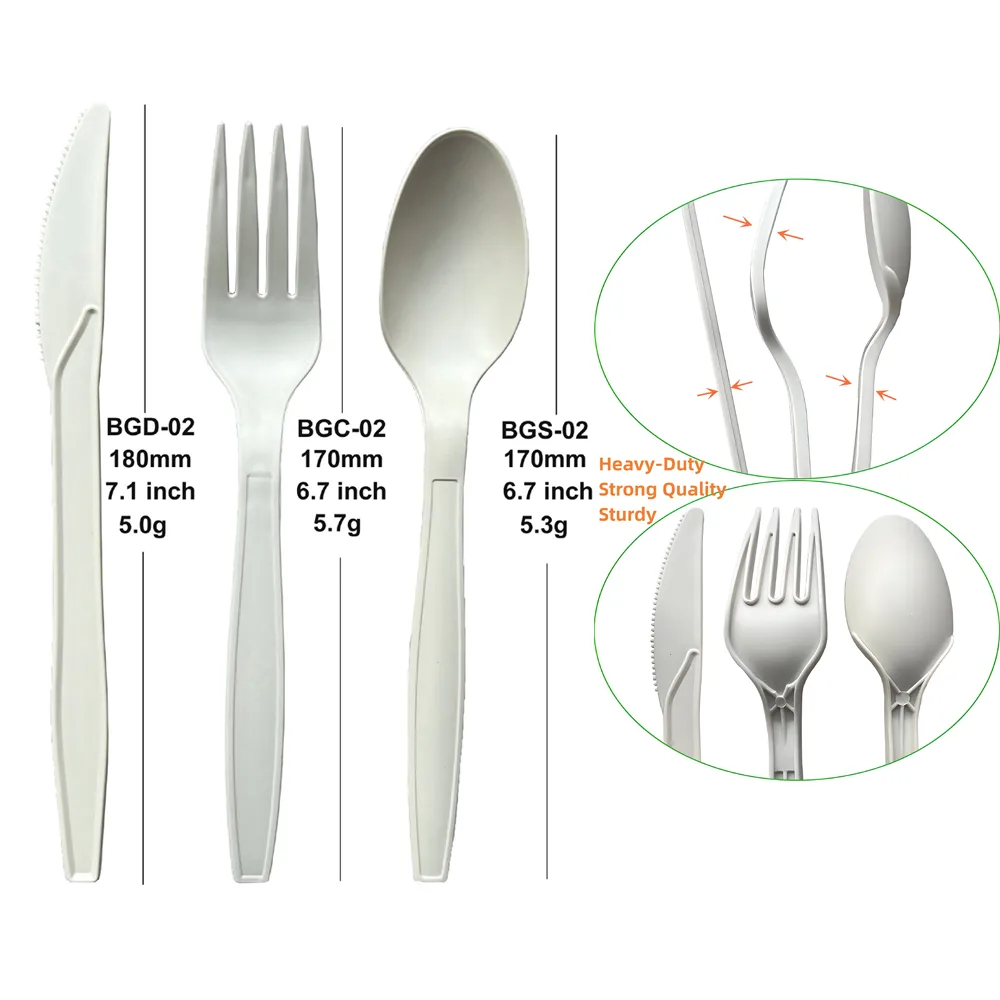
What is Cornstarch Cutlery?
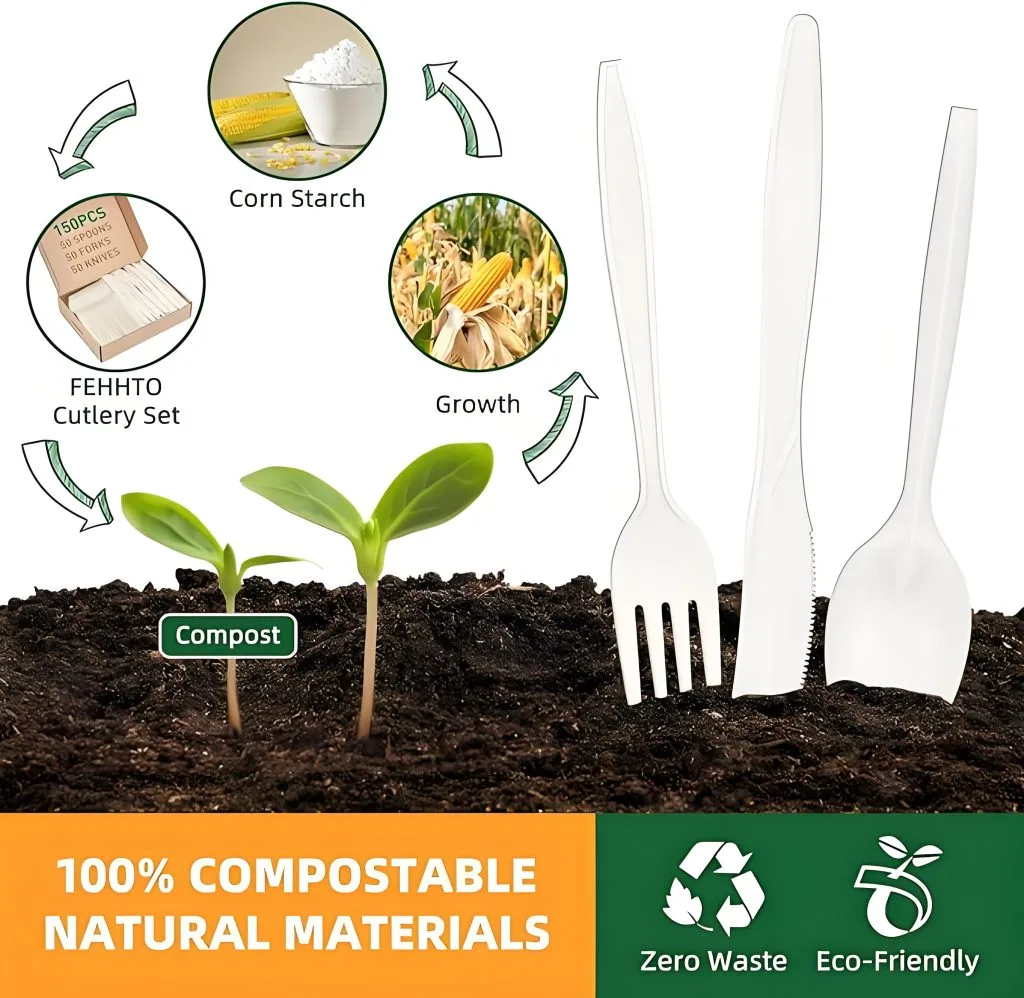
Cornstarch cutlery is a type of biodegradable tableware made from polylactic acid (PLA), which is derived from fermented plant starch, primarily corn. Unlike conventional plastic utensils that are derived from fossil fuels, cornstarch cutlery offers a renewable and potentially more sustainable alternative.
In practical manufacturing, the term “cornstarch cutlery” may refer to several related material systems. Some products are based mainly on starch-derived PLA, while others may use starch blends, biodegradable polymers, fillers, or additives to improve molding, flexibility, strength, and heat resistance. Therefore, a finished cornstarch fork, spoon, or knife should always be evaluated by its actual formulation and certification—not by the raw material name alone.
Key Features
Material Composition
Cornstarch cutlery is primarily composed of PLA, a biopolymer produced through the fermentation of corn or other starchy crops. This results in a material that resembles traditional plastic but is plant-based.
For foodservice buyers, material transparency is important. A high-quality supplier should be able to provide basic material information, product specifications, food-contact compliance support, and compostability documentation where relevant.
Appearance and Feel
Cornstarch cutlery looks and feels similar to plastic, with a smooth and lightweight texture. However, it is generally less flexible than petroleum-based plastics.
Eco-Friendliness
Because it is plant-derived, cornstarch cutlery reduces dependence on fossil fuels and has a lower carbon footprint compared to traditional plastics. Its environmental value is strongest when the product is collected after use and processed through the correct composting or organic waste system.
Decomposition Potential
Cornstarch-based utensils are designed to break down under specific environmental conditions, making them an appealing alternative for waste reduction.
Recommended Product Page: Bioleader® Cornstarch Cutlery
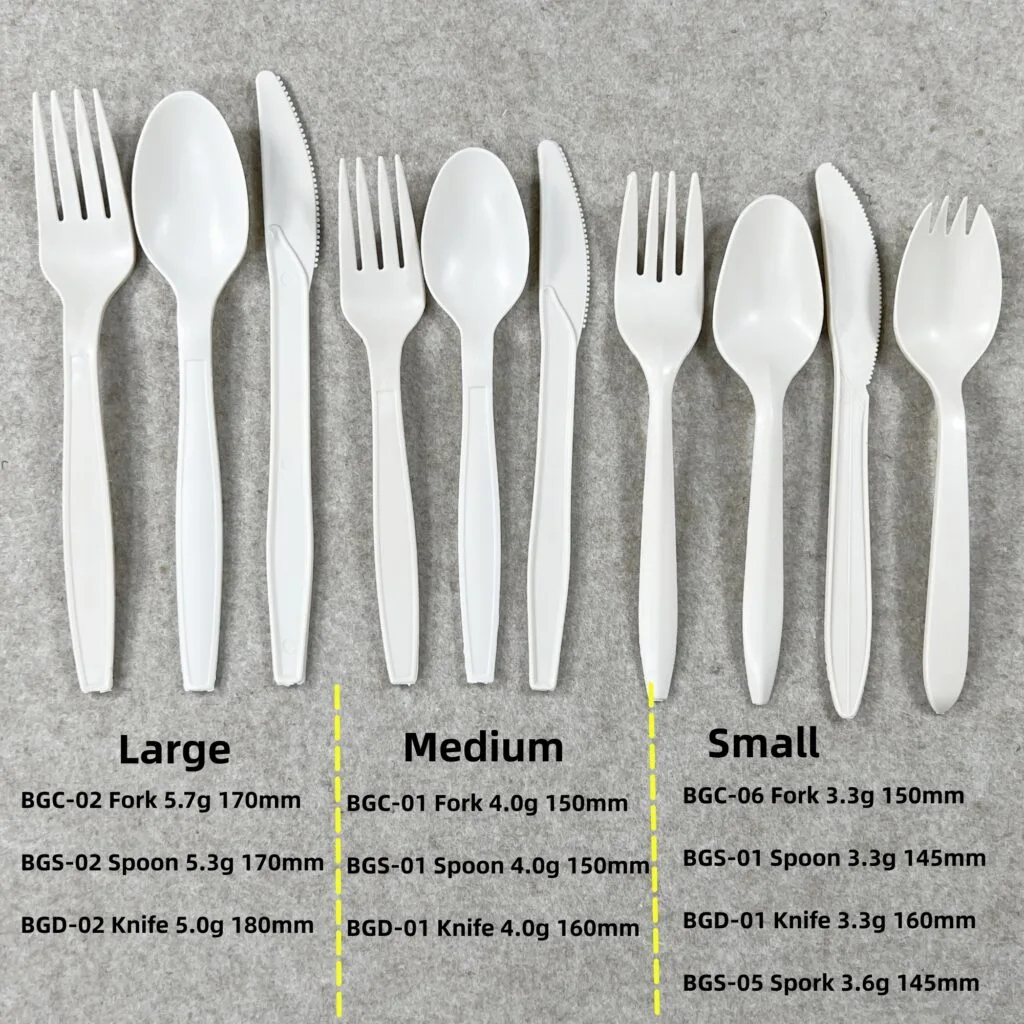
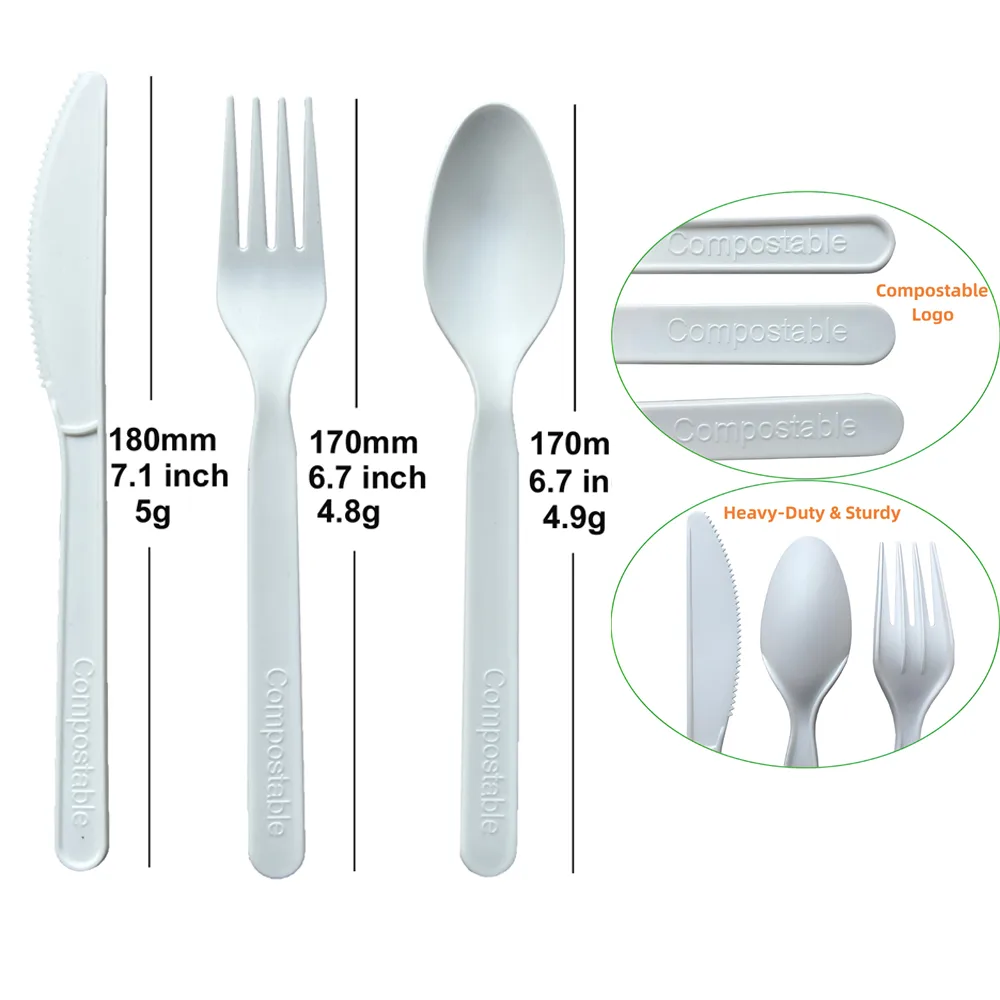
For restaurants, cafés, catering companies, supermarkets, and foodservice distributors looking for plant-based disposable cutlery, Bioleader® offers cornstarch forks, spoons, knives, and cutlery sets for bulk wholesale and export projects.
Is Cornstarch Cutlery Biodegradable?
Biodegradability refers to the ability of a material to break down naturally into carbon dioxide, water, and biomass through the action of microorganisms. Cornstarch cutlery is technically biodegradable, but the process is not as straightforward as it may seem.
A study published in the journal Environmental Science & Technology found that while PLA-based materials, including cornstarch cutlery, can degrade under controlled conditions, they do not break down easily in natural environments such as soil or water. In typical landfill conditions, where oxygen and microbial activity are limited, cornstarch cutlery may persist for years. However, in industrial composting facilities with high heat and moisture, they can degrade within a few months.
This distinction is important for sustainability communication. A material may be technically biodegradable, but if it does not break down within a practical timeframe in the actual disposal environment, the environmental benefit may be limited. For restaurants and distributors, the responsible message is: cornstarch cutlery can support plastic reduction, but disposal infrastructure still matters.
Biodegradable Does Not Mean It Disappears Anywhere
| Disposal Environment | Likely Result for Cornstarch / PLA-Based Cutlery | Buyer Guidance |
|---|---|---|
| Industrial composting facility | Most reliable pathway when product is certified and facility accepts it | Check ASTM D6400, EN13432, BPI, TÜV, or equivalent certification. |
| Home compost | Usually slow or incomplete unless the product is specifically home-compost certified | Do not claim home compostability without certification. |
| Landfill | Decomposition may be very slow due to limited oxygen and microbial activity | Environmental benefit is reduced if sent to general waste. |
| Soil or natural environment | Not a proper disposal route; breakdown may be slow and uncontrolled | Do not encourage littering or unmanaged disposal. |
| Marine environment | Not designed to degrade quickly in oceans or waterways | Compostable does not mean marine-degradable. |
Is Cornstarch Cutlery Compostable?
For a material to be labeled as compostable, it must break down into non-toxic, nutrient-rich compost within a specific timeframe, typically within 90-180 days under industrial composting conditions.
Cornstarch cutlery is compostable under industrial composting conditions, where high heat (above 55°C or 131°F) and microbial activity facilitate rapid decomposition. However, it is generally not compostable in home composting systems due to lower temperatures and microbial diversity. Research by the University of Minnesota found that PLA-based products, including cornstarch cutlery, require controlled conditions to fully decompose, making proper disposal essential.
In commercial terms, compostability should be treated as a finished-product claim. The cutlery’s resin blend, thickness, colorant, additives, packaging, and certification all matter. A product made with cornstarch-derived material may still fail to meet a compostability standard if the final formulation does not disintegrate and biodegrade within the required test conditions.
Are Biodegradable and Compostable the Same?
The terms biodegradable and compostable are often used interchangeably, but they are not the same.
- Biodegradable materials break down naturally over time but without a fixed timeframe or requirement for specific environmental conditions.
- Compostable materials must break down within a set period under composting conditions, leaving no harmful residues.
Cornstarch cutlery is biodegradable but only compostable under industrial composting conditions.
For buyers, the most practical question is not only “Is it compostable?” but also “Where can it be composted?” A certified industrial-compostable product may still be rejected if the local facility does not accept compostable cutlery.
What is the Difference Between Cornstarch and CPLA Cutlery?
Cornstarch and CPLA (Crystallized PLA) are both derived from plant-based materials, but they have significant differences in durability and compostability.
Cornstarch cutlery is made from raw cornstarch, making it more susceptible to heat and moisture. On the other hand, CPLA is modified with a crystallization process that enhances its heat resistance and strength, making it a better alternative for high-temperature applications.
A comparative analysis:
| Feature | Cornstarch Cutlery | CPLA Cutlery |
|---|---|---|
| Material | Starch-based or PLA-based material derived from cornstarch | Crystallized PLA |
| Heat Resistance | Usually moderate; commonly suitable for cold to warm foods depending on specification | Higher; often suitable up to around 85°C / 185°F depending on product specification |
| Durability | Less durable, may be more prone to breaking or softening under heat | Stronger and more suitable for hot meals |
| Biodegradability | Depends on formulation and composting environment | Depends on formulation and composting environment |
| Compostability | Usually requires industrial composting unless otherwise certified | Usually requires industrial composting unless otherwise certified |
| Best Application | Cold foods, warm meals, salads, desserts, takeaway meals, general foodservice | Hot meals, catering, rice dishes, noodles, takeout, events, premium compostable cutlery |
Procurement insight: choose cornstarch cutlery when cost control and general takeaway use are the priority. Choose CPLA cutlery when the menu includes hotter meals, denser food, rice, noodles, or catering service requiring stronger fork and spoon performance.
|  |
Practical Cases: How Foodservice Buyers Use Cornstarch Cutlery
Case 1: Takeaway Café Switching from Plastic Forks to Cornstarch Cutlery
A takeaway café serving salads, desserts, fruit cups, and light meals may choose cornstarch forks and spoons to replace conventional plastic cutlery. In this scenario, cornstarch cutlery works well because most food items are cold or moderately warm, and the utensils do not need the higher heat resistance of CPLA.
The key operational benefit is brand alignment: customers can clearly see that the café is reducing petroleum-based plastic use. However, the café still needs to communicate disposal correctly. If the city has no industrial composting facility, the cutlery may not deliver its full composting benefit even though it still supports plastic-reduction positioning.
Case 2: Catering Company Comparing Cornstarch and CPLA
A catering company serving both cold salads and hot rice meals may test cornstarch cutlery and CPLA cutlery side by side. Cornstarch cutlery can be suitable for desserts, salads, and fruit, while CPLA may perform better for hot meals, meat dishes, noodles, and heavy foods.
This type of menu-based testing helps buyers avoid overpaying for high-heat cutlery where it is not needed, while still choosing stronger CPLA utensils for demanding food applications. The result is a more balanced purchasing strategy: cornstarch for cost efficiency, CPLA for performance, and clear labeling for sustainability compliance.
Case 3: Distributor Building an Eco-Friendly Cutlery Line
A food packaging distributor can use cornstarch cutlery as an entry-level compostable cutlery option and CPLA cutlery as a premium heat-resistant option. By offering both materials, the distributor can serve cafés, schools, event organizers, restaurants, takeaway operators, and supermarket meal-kit brands with different price and performance needs.
Cornstarch Cutlery is Eco-Friendly and Sustainable: Future Trends
As global plastic pollution continues to rise, cornstarch-based cutlery represents a promising step toward a more sustainable future. Governments worldwide are increasingly banning single-use plastics, making plant-based alternatives more relevant than ever. The European Union and several U.S. states have implemented bans on petroleum-based plastics, pushing businesses toward compostable and biodegradable options.
Emerging trends in biodegradable technology are also enhancing the sustainability of cornstarch cutlery. Newer formulations are being developed to improve heat resistance and decomposition in home composting environments. Research continues on hybrid bioplastics that incorporate natural fiber reinforcements for improved durability while maintaining compostability.
At the same time, future market growth will depend on stronger certification systems, better waste sorting, more industrial composting facilities, and clearer consumer education. A product can be plant-based and still fail to reach its environmental potential if it is placed in the wrong waste stream.
Recommend Bioleader Cornstarch Cutlery
When choosing sustainable cutlery, Bioleader Cornstarch Cutlery stands out as an excellent option. Their products meet industrial composting standards, ensuring they break down efficiently under the right conditions. In addition, Bioleader cutlery is crafted with durability and eco-friendliness in mind, making it a superior choice for businesses and consumers seeking greener alternatives.
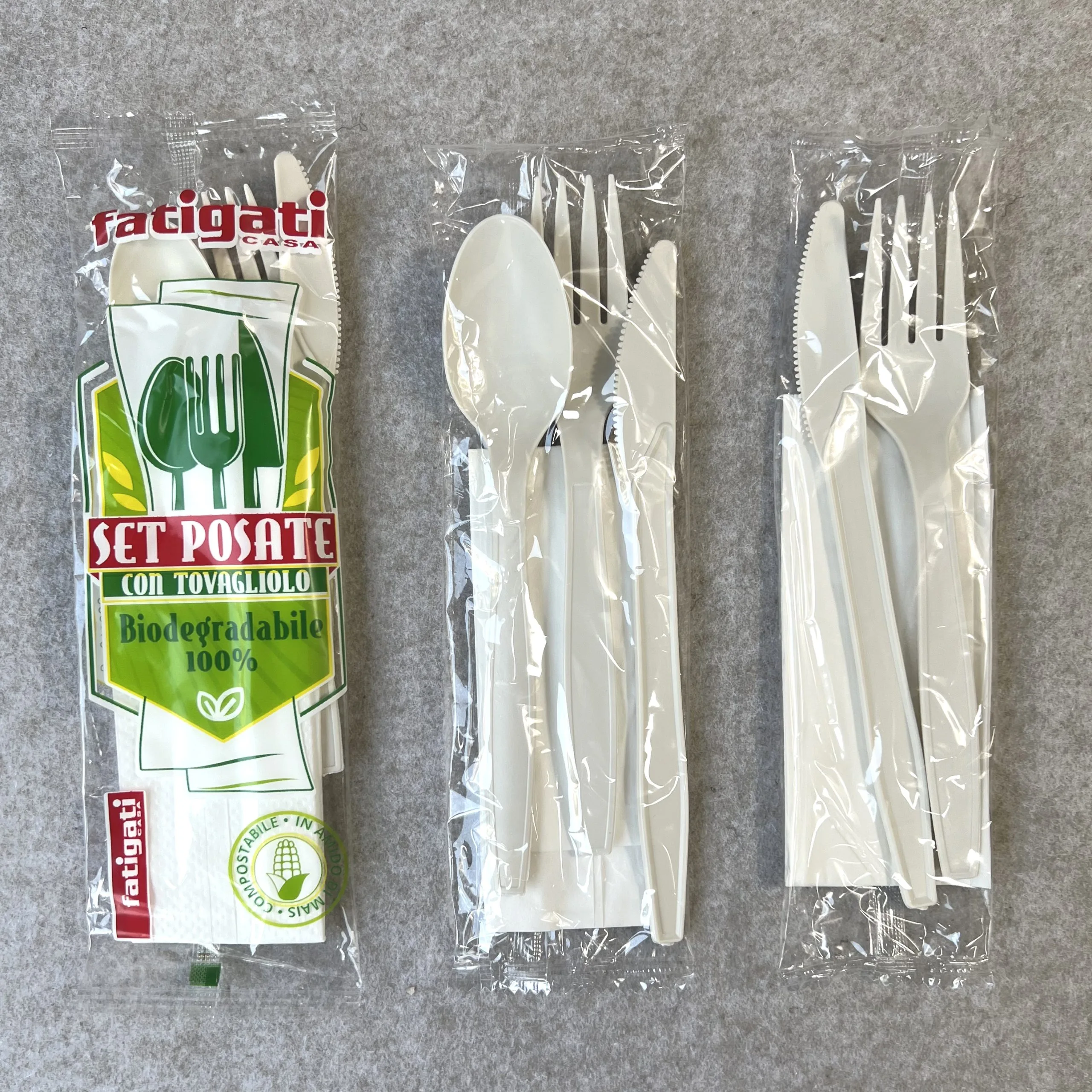
Bioleader® supports B2B buyers with cornstarch forks, spoons, knives, wrapped cutlery sets, bulk packing, OEM packaging, carton customization, and export documentation. For distributors and foodservice operators, this means one supplier can support both product selection and commercial implementation.
Need Cornstarch Cutlery for Foodservice or Wholesale?
Bioleader® supplies cornstarch forks, spoons, knives, and cutlery sets for restaurants, cafés, catering companies, takeout brands, schools, supermarkets, food packaging distributors, and export buyers.
Choose cornstarch cutlery for cost-effective compostable foodservice use, or combine it with CPLA cutlery and bagasse tableware for a complete eco-friendly meal packaging solution.
- Cornstarch forks, spoons, knives
- Wrapped cutlery sets
- Bulk wholesale packing
- OEM and carton customization
- Export documentation support
Summary
Cornstarch cutlery is a biodegradable and compostable alternative to plastic, but its eco-friendliness depends on proper disposal. While it does not break down effectively in landfills or home compost bins, it degrades quickly in industrial composting facilities. Compared to CPLA cutlery, cornstarch utensils have lower heat resistance but remain a sustainable choice for reducing plastic waste. As the world shifts towards sustainable solutions, bioplastic innovations will continue improving their effectiveness and accessibility.
By choosing cornstarch cutlery from reputable brands like Bioleader, consumers can make informed decisions to reduce their environmental impact and contribute to a greener future.
Final buyer takeaway: cornstarch cutlery is a strong solution for general foodservice, but it should be purchased with realistic expectations. It is not magic plastic that disappears anywhere; it is a plant-based disposable cutlery option that performs best when matched with the right food application, certification, and disposal system.
Key Takeaways for Cornstarch Cutlery
- Cornstarch cutlery can be biodegradable and compostable, but only under the right conditions and when properly certified.
- Most cornstarch cutlery requires industrial composting and should not be marketed as home compostable unless certified.
- Cornstarch cutlery is better for cold and warm foods, while CPLA is usually stronger for hot meals.
- Landfill disposal greatly reduces the environmental value of compostable cutlery.
- For B2B buyers, supplier documentation, food-contact safety, heat tolerance, and local composting acceptance are critical purchasing factors.
FAQ
1. Is cornstarch cutlery biodegradable?
Yes, cornstarch cutlery can be biodegradable because it is made from plant-based starch-derived materials or related biopolymers. However, actual biodegradation depends on formulation, temperature, moisture, oxygen, microbial activity, and disposal environment.
2. Is cornstarch cutlery compostable at home?
Most cornstarch cutlery is not suitable for ordinary home composting unless it carries specific home-compost certification. Many products require industrial composting to break down efficiently.
3. How long does cornstarch cutlery take to decompose?
Under industrial composting conditions, certified compostable cutlery is commonly designed to break down within the required certification timeframe, often around 90 to 180 days. In home compost or landfill conditions, decomposition may be much slower or incomplete.
4. Can cornstarch utensils be reused?
Cornstarch utensils are generally designed for single-use foodservice. Reusing may compromise hygiene and structural integrity, especially after exposure to heat, oil, moisture, or heavy foods.
5. Are cornstarch forks and spoons safe for hot foods?
Cornstarch forks and spoons can usually handle cold and moderately warm foods, but prolonged exposure to very hot foods or liquids may soften or deform them. For hotter meals, CPLA cutlery is often the better choice.
6. What’s the difference between cornstarch and plastic cutlery?
Cornstarch cutlery is made from renewable plant-based materials or biopolymer blends, while conventional plastic cutlery is typically petroleum-based. Cornstarch cutlery can support compostable packaging programs when properly certified and disposed of correctly.
7. Does cornstarch cutlery contain any plastic?
Some cornstarch cutlery is made from plant-based biopolymers such as PLA, while some lower-grade products may be blended with non-compostable plastics. Buyers should verify material composition and certification before purchase.
8. Is cornstarch cutlery better than CPLA cutlery?
It depends on the application. Cornstarch cutlery is often cost-effective for general takeaway use, while CPLA cutlery usually offers better heat resistance and strength for hot meals, catering, and heavier foods.
Reference Source List:
- “Biodegradable and Compostable Alternatives to Conventional Plastics” by Thompson et al.
PMC - “The Zero-Waste Materials Series — Cornstarch” by ZeroWaste.
Zero Waste - “Is Compostable Cutlery Really Breaking Down?” by CapRadio.
CapRadio - “Cornstarch Tableware: The Eco-Friendly Alternative You Need” by Bioleader.
Bioleader® Biodegradable Tableware - “Biodegradable Cutleries and Tableware as Substitute for Plastic: An Exploratory Study on Green Solutions” by Moneswari Boro, Rajkumari Jaya Devi, and Prof. L.S. Sharma.
ResearchGate - “Compostable vs Biodegradable” by Oceanwatch Australia.
- “Biodegradable Ecofriendly Sustainable Tableware and Packaging: A Comprehensive Review of Materials, Manufacturing, and Applications” by Dr. A. Shaji George and A.S. Hovan George.
ResearchGate - ASTM International – ASTM D6400 Standard Specification for Compostable Plastics.
- European Committee for Standardization – EN 13432 Packaging Recoverable Through Composting and Biodegradation.
- Biodegradable Products Institute – Certified Compostable Products and Packaging guidance.
- Bioleader® – Cornstarch cutlery, CPLA cutlery, compostable tableware, product specifications, and export documentation support.