Biodegradable Compostable Cutlery White Paper Vs Alternatives: Cost, Performance, Sustainability | Bioleader® Sustainable Packaging

Actionable coverage of Biodegradable Compostable Cutlery White Paper: eco-friendly, biodegradable, compostable materials, performance data, and compliance under EN13432 & ASTM D6400. Includes BPI/TÜV references and Food-Contact Tested guidance for safe deployment. Buyer-focused: manufacturer insights, bulk/wholesale buying playbooks, OEM/ODM customization tips, full size range selection.
Biodegradable Compostable Cutlery White Paper — Quick Summary
  • Items displayed (articles): 12
  • Last updated: 2025-07-17
  • Includes test data, compliance guides, buyer FAQs, and real-world use cases.

Editor’s Picks: Top Biodegradable Compostable Cutlery White Paper Guides 2026

FAQ of Bioleader's Eco-friendly Disposable Tableware

2. Are takeaway containers with lids microwave-safe?

Yes, many takeaway containers—especially those made from sugarcane bagasse or microwave-safe plastics—are designed to withstand high temperatures , Biodegradable Compostable Cutlery White Paper. Always check the specific material to ensure safe reheating.

The Production Process: Paper Pulp Molding As Advantageous For Rigid Structures

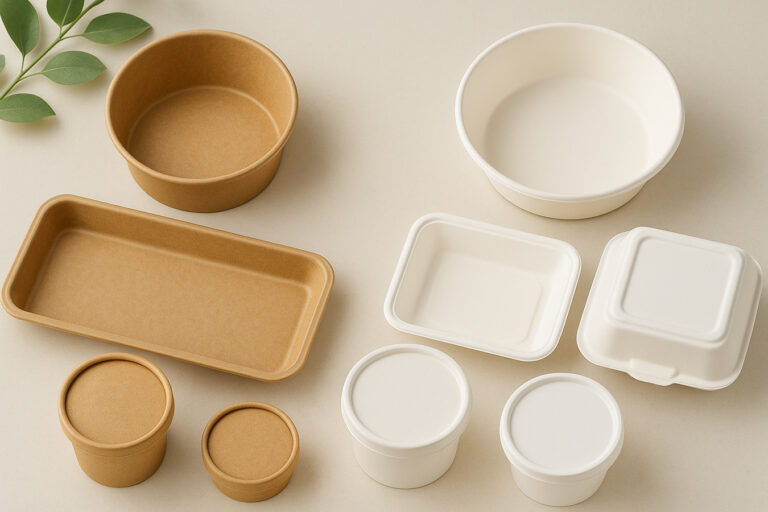
The compostable fiber bowls we manufacture are done so through the sugarcane pulp process. This entails placing sugarcane pulp in certain molds before being subjected to vast amounts of pressure. The end product is highly durable and has the ability to retain its shape even when subjected to sauces and greases , Biodegradable Compostable Cutlery White Paper.

Takeaway Meal Packaging

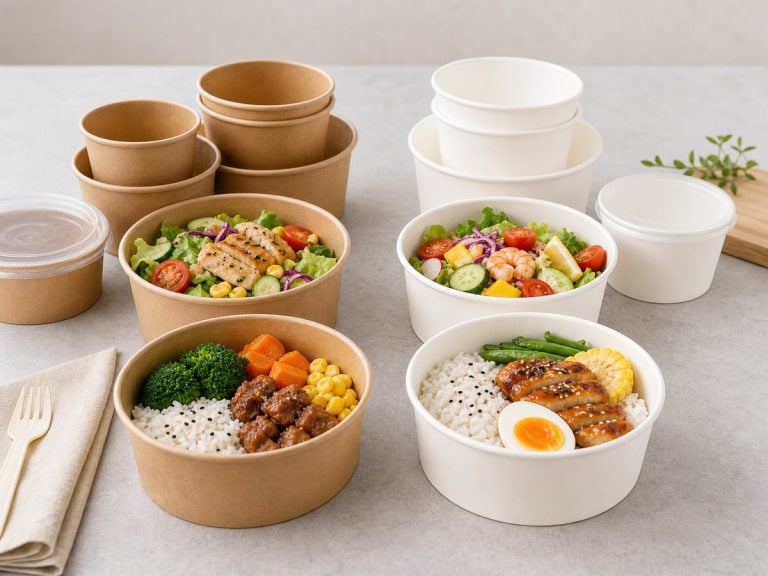
This tray is well suited for rice dishes, noodles, combo meals, grilled foods, and lunch sets. The 1000ml capacity provides enough space for practical single-meal portions.

Rising Demand and Market Size

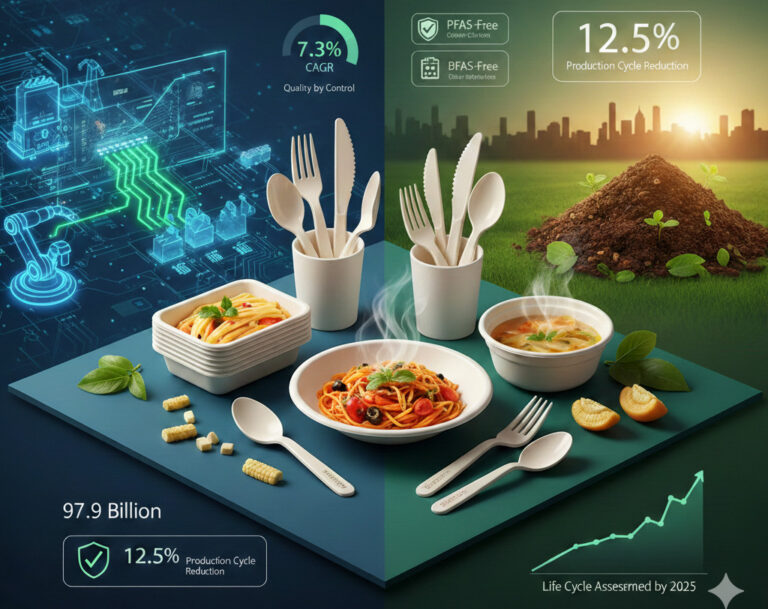
The market for biodegradable and compostable cutlery is expanding quickly yet remains in early stages relative to conventional plastics. In 2023, the global biodegradable cutlery market was valued at only around $37–42 million, reflecting the nascent adoption of these products. However, forecasts consistently project robust growth. According to multiple industry analyses, the segment is expected to reach $60–70+ million by 2030, roughly doubling in size with a compound annual growth rate (CAGR) in the 6–8% range.

Polylactic Acid (PLA) and CPLA – The Workhorse Bioplastic

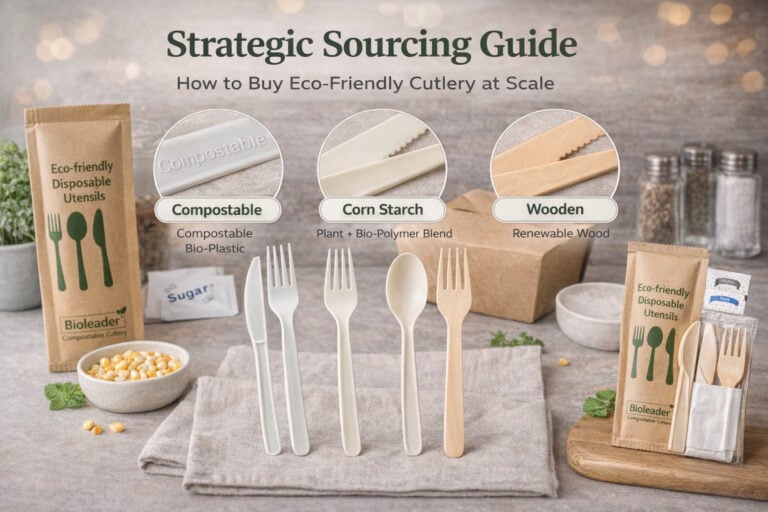
PLA is the most widely used bioplastic in compostable cutlery — Biodegradable Compostable Cutlery White Paper. Derived from renewable resources like corn starch or sugarcane, PLA is a thermoplastic polyester that can be injection-molded similar to traditional plastics. Untreated PLA has a relatively low glass transition (~60°C), meaning it starts softening at hot-drink temperatures. Early PLA utensils could not handle hot soup or tea without deforming.

Related Insights

🚀Ready to Go Green and Choose ?

Join the global movement toward zero-waste packaging.


Bioleader® offers:

  • 📦 Bulk order support & fast delivery

  • ✍️ Custom branding and OEM solutions

  • 🌍 Worldwide eco-packaging compliance

Get the Catalogue Products List  & Contact Us Now! 👉

Contact us Below

Click or drag files to this area to upload.You can upload up to 5 files.
The more details you share, the faster and more accurate our quotation will be.