Highlights from featured articles under this tag:


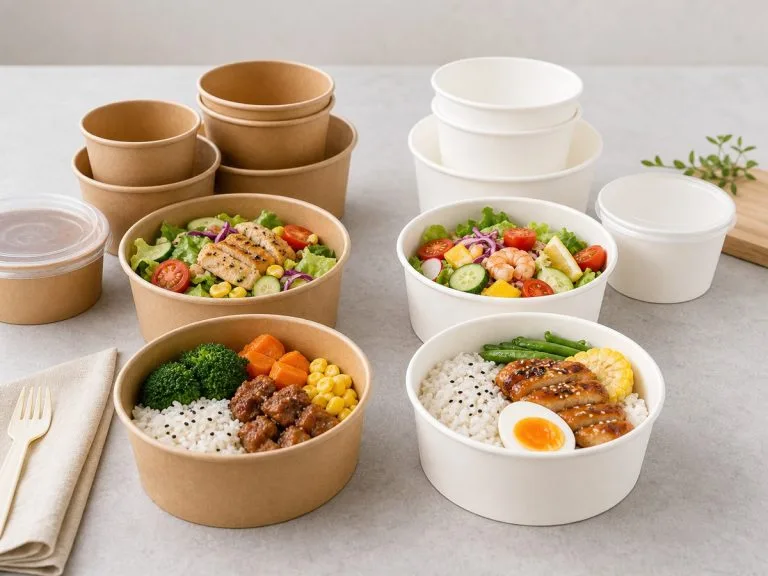
Yes. Bioleader® 750ml rectangular paper salad bowls with lids are suitable for salads, rice bowls, cold meals, hot food, takeaway meals, and prepared food programs. The food-grade paperboard structure, coated surface, rectangular shape, and matching lid options help improve stacking, handling, and transport performance.
Aluminum foil lined paper salad bowls are used for salads, rice bowls, poke bowls, noodles, pasta, curries, fruit, deli meals, and other takeaway foods — white paper box. Their leakproof foil-lined structure is especially useful when oil resistance, sauce control, and moisture protection are more important than with ordinary paper bowls. Bioleader® supplies them in 500ml to 1300ml sizes for restaurants, catering, food delivery, and wholesale foodservice packaging.
Yes. Bioleader® 500-650ml square paper salad bowls with lids are suitable for salads, rice bowls, cold meals, light takeaway meals, and prepared food programs. The food-grade paperboard structure, coated surface, rolled rim, and matching PP or PET lid options help improve stacking, handling, and transport performance , white paper box.
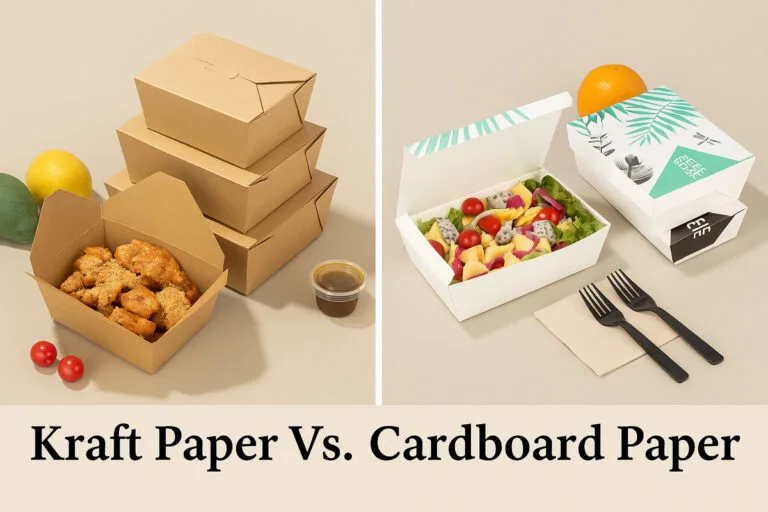
Cardboard is a broader term that typically refers to multi-layered paperboard—a thicker, stiffer, and heavier version of paper. It is commonly used for shipping boxes, product packaging, and point-of-sale displays. Key features: Often includes fluted or corrugated layers Greater rigidity and load-bearing capacity Not typically used for direct food contact unless coated May or may not be made from kraft pulp white cardboard paper food grade Cardboard Paper Food Box Key Differences Between Kraft Paper and Cardboard Feature Kraft Paper Cardboard Structure Single-layer, dense fiber Multi-layer (often corrugated) Weight Light (40–120 gsm) Heavy (250–800 gsm or more) Flexibility Highly flexible Stiff and rigid Common Uses Food packaging, bags, wrapping Shipping boxes, retail displays Direct Food Contact Safe and FDA-compliant (when food-grade) Requires coating; less common Sustainability Compostable, recyclable, lower energy to make Often recyclable but less compostable Common Kraft Packaging Types vs Cardboard Uses
According to the Environmental Paper Network and WRAP UK: Kraft paper uses 20–40% less water and 30–50% less energy to produce than cardboard , white paper box. Kraft paper is fully compostable in both home and industrial settings. Cardboard, while recyclable, often includes adhesives and coatings that hinder biodegradation. A kraft container’s life cycle emits 35% less CO₂ than an equivalent cardboard container when used for the same food service application.
Join the global movement toward zero-waste packaging.
Bioleader® offers:
📦 Bulk order support & fast delivery
✍️ Custom branding and OEM solutions
🌍 Worldwide eco-packaging compliance
Get the Catalogue Products List & Contact Us Now! 👉