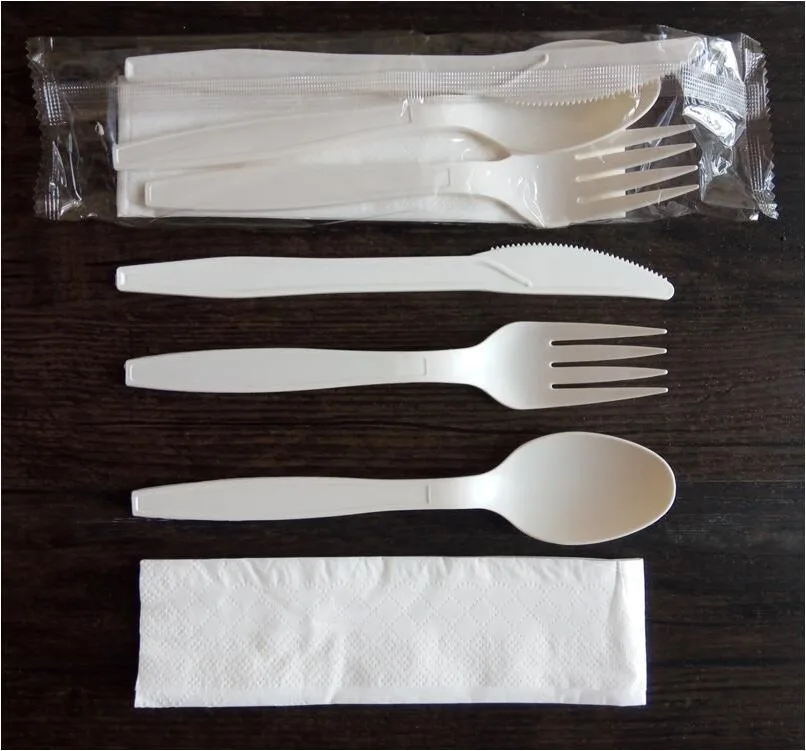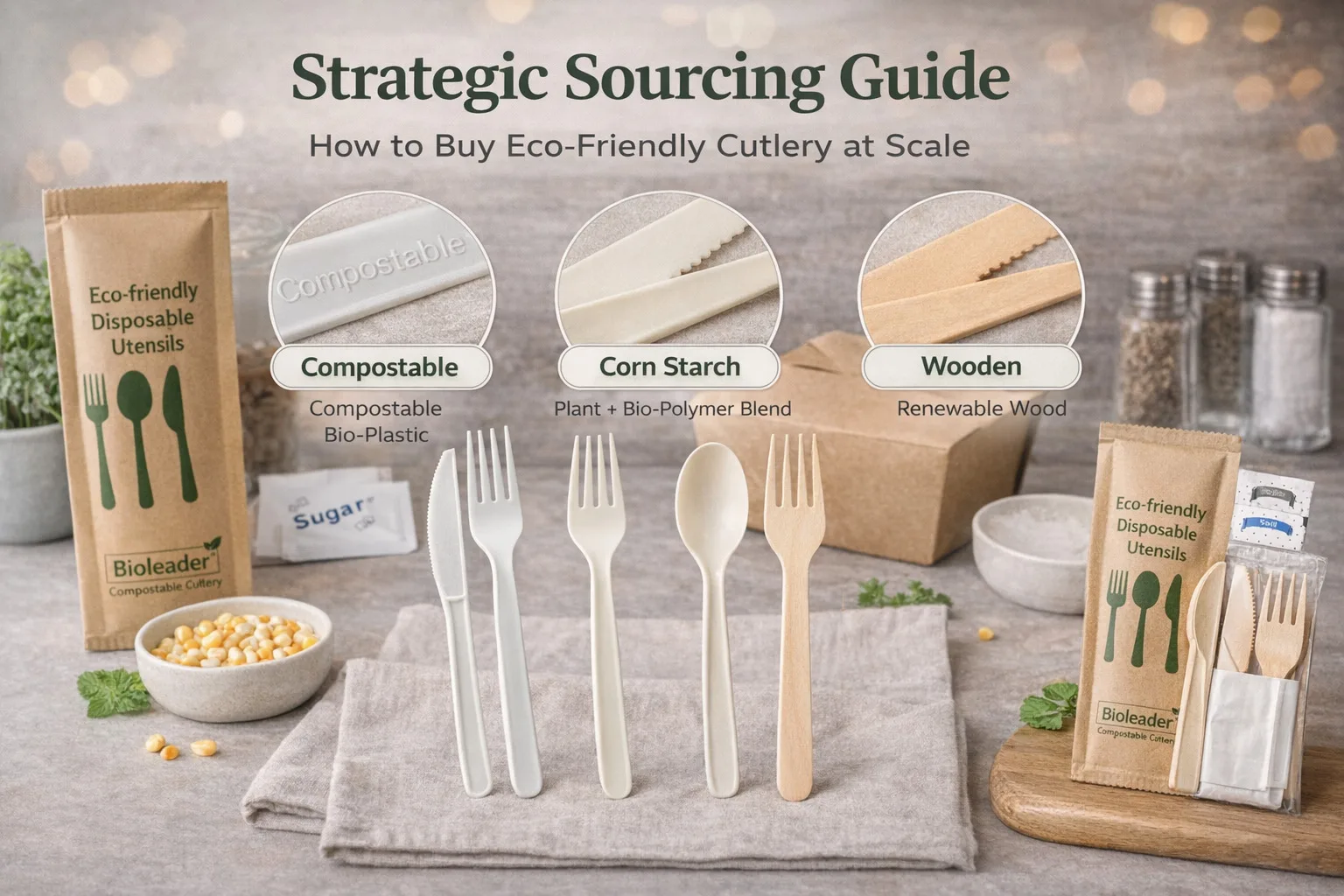










Quick Summary: Custom Molded Compostable Cutlery
Custom molded compostable cutlery is designed for foodservice brands, private label buyers, restaurant chains, retailers and OEM projects that need unique fork, spoon or knife shapes beyond standard catalog products. Bioleader® supports custom cutlery development based on material choice, utensil function, handle design, spoon bowl depth, fork teeth structure, knife strength, logo embossing, tooling feasibility, MOQ, sample testing and packaging requirements.
Chain restaurants, private label brands, retail cutlery lines, airline meals, foodservice groups and long-term OEM buyers.
Fork teeth, spoon bowl depth, knife edge, handle length, grip design, thickness, logo embossing and brand-specific shapes.
CPLA cutlery and cornstarch cutlery depending on heat resistance, market positioning, budget and certification expectations.
Not every project needs a new mold. For most buyers, existing molds plus custom packaging are faster and more cost-effective.
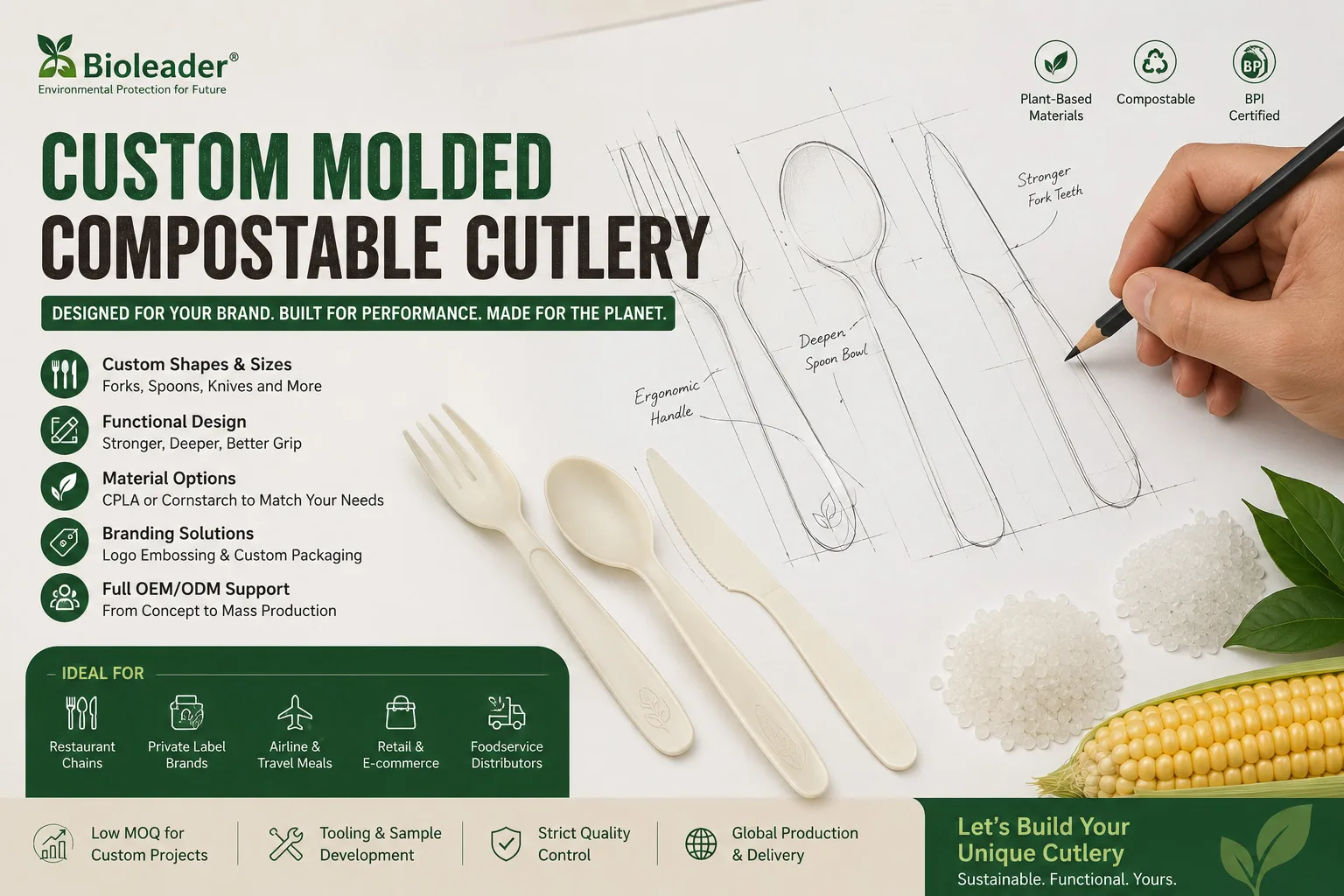
Custom Molded Compostable Cutlery for Brands That Need More Than Standard Utensils
Standard compostable forks, spoons and knives are suitable for most foodservice and takeaway projects. They are fast to source, cost-efficient, easy to scale and already available in proven sizes. However, some brands need more than standard catalog products. A restaurant chain may want a stronger knife for grilled meals. A dessert brand may need a deeper spoon bowl. A salad brand may want a longer fork with stronger teeth. A retailer may want a proprietary utensil shape for private label packaging.
This is where custom molded compostable cutlery becomes valuable. Instead of only changing the packaging, the buyer customizes the utensil itself: size, shape, structure, thickness, strength, grip, logo embossing or functional design. For long-term foodservice brands, OEM cutlery design can improve user experience, brand differentiation and channel exclusivity.
Bioleader® supplies a complete range of biodegradable compostable cutlery and supports OEM/ODM projects for qualified buyers. This guide explains when custom molding makes sense, when standard molds are enough, and how buyers should prepare tooling, MOQ, samples, material selection and packaging details.
When Should Buyers Choose Custom Molded Compostable Cutlery?
Custom molding should be considered when the buyer has a clear functional or branding requirement that standard products cannot solve. A new mold is not just a design choice; it is a manufacturing investment. It requires product drawings, tooling cost, MOQ planning, sample development, testing and production confirmation.
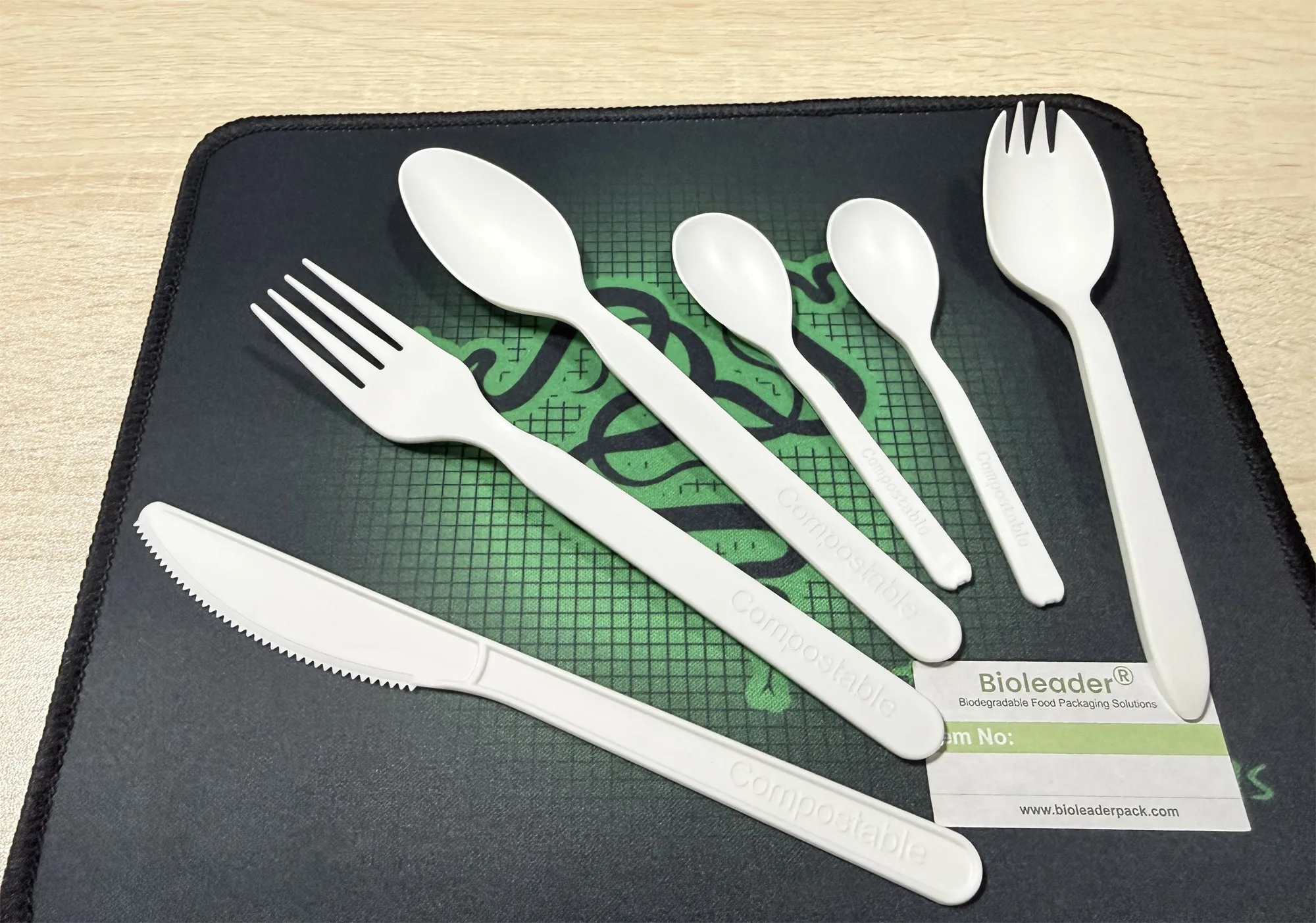
Buyers should consider custom molded cutlery when they need one or more of the following:
- Special size: longer forks, shorter spoons, compact travel utensils or oversized foodservice pieces.
- Functional shape: deeper spoon bowls, stronger fork teeth, improved knife edge or ergonomic handles.
- Brand identity: logo embossing, signature handle design or exclusive private label shape.
- Menu-specific performance: utensils designed for salad, dessert, soup, rice bowls, grilled food or airline meals.
- Retail differentiation: unique product appearance for supermarkets, e-commerce or branded consumer packs.
- Long-term procurement: stable repeat orders that can justify tooling cost and MOQ.
For buyers without these requirements, standard Bioleader® models with custom packaging may be the better choice. Existing molds reduce cost, shorten lead time and allow faster market entry.
Standard Mold vs Custom Mold: Which Option Is Better?
A professional supplier should not recommend custom molding for every customer. In many cases, the best solution is to use existing cutlery molds and customize the packaging instead. This is especially true for restaurants, distributors, small brands and buyers testing a new market.
Bioleader® usually recommends a staged approach: first confirm whether an existing fork, spoon or knife can meet the food application. Then customize the packaging through printed bags, private label boxes or wrapped sets. Only when the existing product cannot meet functional or branding requirements should the buyer consider a new mold.
| Option | Best For | Advantages | Limitations |
|---|---|---|---|
| Standard mold | Most foodservice, takeaway, distributor and retail projects | Lower cost, faster lead time, proven performance, easier MOQ | Limited shape differentiation |
| Standard mold + custom packaging | Brands that need logo, printed bags, retail packs or private label presentation | Strong branding without tooling cost | Utensil shape remains standard |
| Custom mold | Long-term OEM buyers, chain brands, private label projects and special food applications | Exclusive shape, functional optimization, brand ownership potential | Tooling cost, MOQ, sample development and longer timeline |
Manufacturer Insight: Custom Mold Is a Strategic Decision
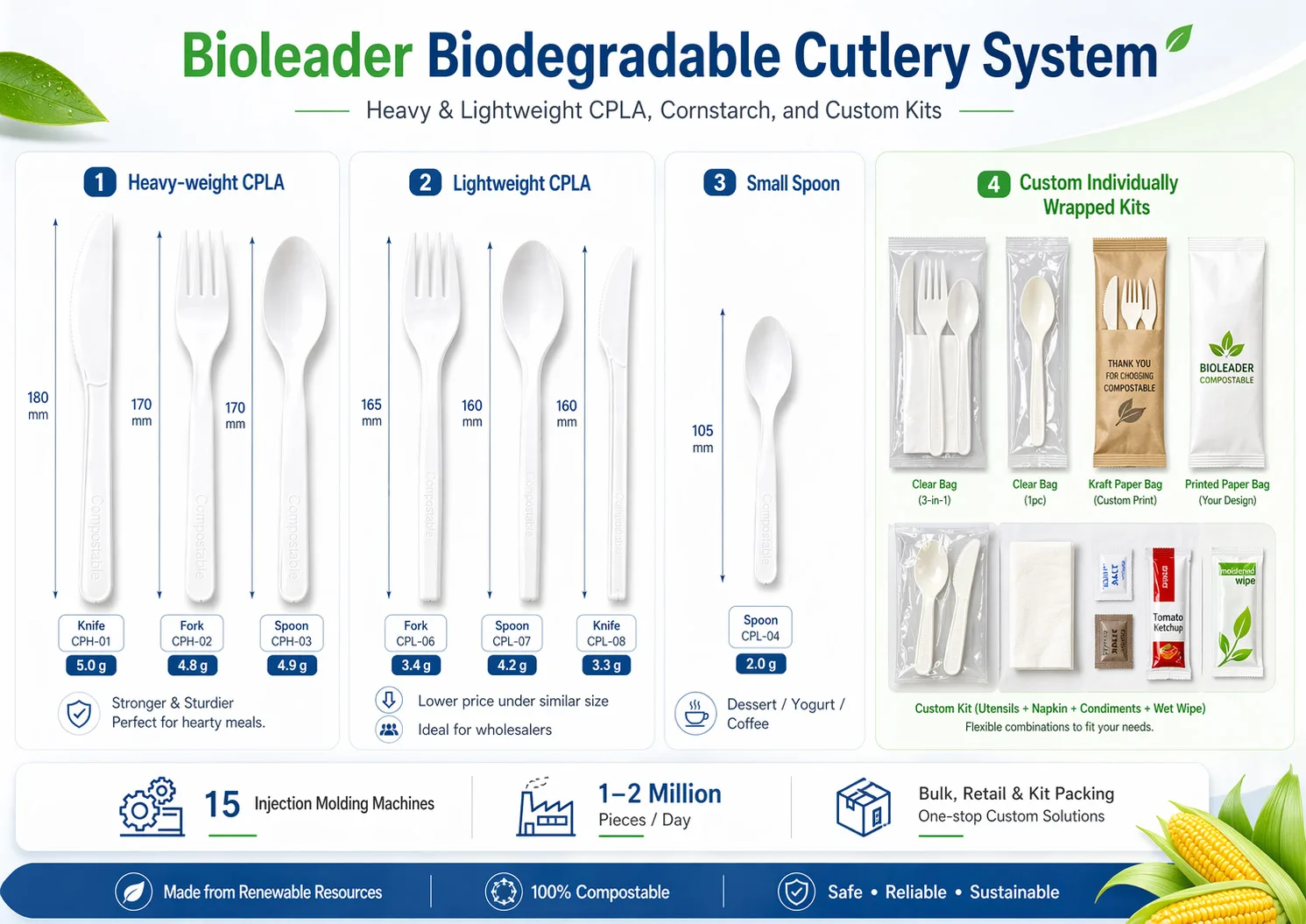
A custom cutlery mold should solve a real business problem. If the goal is only to add a logo or improve brand visibility, custom individually wrapped cutlery sets with printed packaging may be faster and more cost-effective. If the goal is to change the utensil’s function, size, strength or user experience, then custom molding may be justified.
Common OEM Cutlery Design Options
Custom molded compostable cutlery can be developed in many directions. The design should always start from the food application and customer behavior. A salad fork, dessert spoon, soup spoon and steak-style knife do not need the same geometry.
Custom Fork Length, Fork Teeth and Handle Design
Fork customization may include overall length, handle width, fork teeth length, spacing, thickness and tip shape. A salad fork may need stronger teeth and a comfortable grip. A compact meal kit may require a shorter fork. A premium retail pack may need a more refined handle shape.
Buyers can first review Bioleader’s standard compostable forks before deciding whether a new fork mold is necessary. In many cases, a suitable existing model can meet the requirement without new tooling.
Custom Spoon Bowl Size and Depth
Spoon design is strongly connected to food type. A dessert spoon, soup spoon, rice bowl spoon and tasting spoon each has different bowl depth, edge shape and handle length requirements. For brands serving soup, yogurt, dessert or rice meals, spoon bowl capacity can directly affect user experience.
Bioleader’s standard compostable spoons can support many foodservice scenarios. Custom spoon molding may be considered when a buyer needs a unique bowl depth, special portion control or branded utensil appearance.
Custom Knife Strength and Cutting Edge
Knife design is important for grilled food, meat dishes, catering and full meal service. A custom knife may require a stronger handle, improved edge geometry or thicker structure. However, knife strength must be balanced with material flow, molding feasibility, cost and compostable material limitations.
For many buyers, selecting a heavier existing knife model may be enough. Custom knife molding is more suitable when a brand has a clear performance requirement and stable long-term order volume.
Logo Embossing and Brand-Specific Shape
Logo embossing can make a utensil feel more proprietary, especially for private label retail products or chain restaurant programs. It may be applied to the handle if the design, mold and material allow stable production.
Brand-specific shape design can also create market differentiation, but it should remain practical. Overly complex handles, thin decorative details or extreme shapes may reduce strength, increase tooling difficulty or create production defects.
CPLA vs Cornstarch for Custom Molded Cutlery
Material choice is one of the first decisions in a custom molded cutlery project. The mold design, production process, performance expectation and packaging claim all depend on the material.

CPLA cutlery is commonly selected for compostable foodservice projects that require stronger heat resistance, premium positioning and recognized compostable material communication. It is often used for restaurants, catering, hotel meal service, institutional food programs and private label projects that want a clear compostable message.
Cornstarch cutlery can be a practical biodegradable option for buyers who need competitive cost, broad foodservice usability and stable supply. It may be suitable for takeaway, distributors, private label packaging and general foodservice programs depending on the target market and documentation requirements.
For custom molds, Bioleader® recommends confirming the material before finalizing the design. A shape that works well in one material may require adjustment in another because flow behavior, stiffness, thickness and molding parameters can differ.
Custom Cutlery Design Options by Use Case
| Use Case | Custom Design Focus | Possible Product | Material Direction |
|---|---|---|---|
| Salad and bowl meals | Stronger fork teeth, comfortable handle | Custom fork | CPLA or cornstarch |
| Soup and rice meals | Deeper spoon bowl, stable handle | Custom spoon | CPLA or cornstarch |
| Grilled food and catering | Improved knife strength and edge design | Custom knife | CPLA preferred for premium projects |
| Airline and travel meals | Compact length, lightweight set design | Custom fork/spoon/knife set | Project-specific |
| Retail private label | Logo embossing, branded handle design | Custom utensil line | CPLA or cornstarch |
| Amazon and e-commerce | Differentiated product appearance and pack count | Custom utensil + box pack | Based on market positioning |
Tooling Cost, MOQ and Sample Development Process
Custom molded cutlery requires tooling. This means buyers should prepare for mold cost, development time and MOQ. The exact cost and MOQ depend on utensil size, mold complexity, cavity design, material, sample requirements and expected production volume.
Buyers should understand that a new mold is not the same as printed packaging. Packaging customization can often start faster, while product molding requires engineering review and production validation. For this reason, custom molding is best suited for buyers with a serious project plan and repeat order potential.
Typical Custom Mold Development Steps
- Requirement review: confirm utensil type, size, material, target food application and business channel.
- Reference sample or drawing: buyer provides an existing sample, sketch, dimensions or design concept.
- Engineering evaluation: Bioleader® reviews feasibility, strength, molding risk and material compatibility.
- Tooling quotation: mold cost, MOQ, sample timeline and production plan are estimated.
- Sample development: trial samples are produced for buyer review and functional testing.
- Revision and confirmation: design adjustments are made if required before mass production.
- Bulk production: approved mold and material are used for commercial order production.
Packaging Options for Custom Molded Cutlery
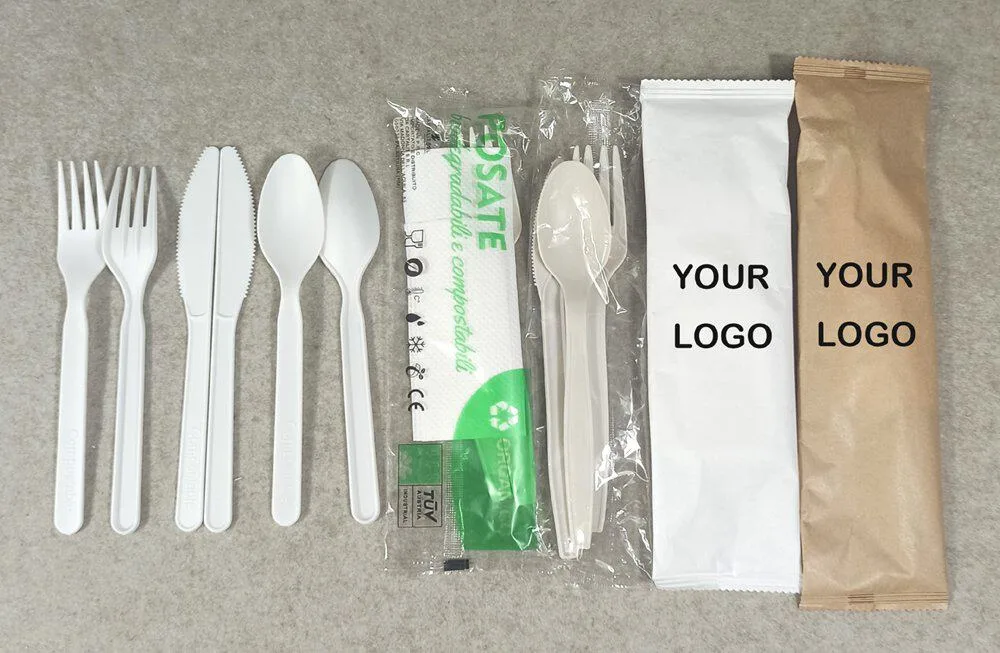
Custom molded utensils often need matching packaging. A brand that invests in a custom fork or spoon usually also wants packaging that communicates the same level of professionalism. This may include individual wrapping, printed paper bags, PLA bags, retail boxes, color bags or e-commerce packs.
Buyers can combine custom molded products with Bioleader’s broader custom compostable cutlery packaging solutions. For example, a custom spoon can be packed individually in a printed paper bag, a custom fork can be sold in a 50-piece retail color bag, or a full OEM utensil set can be packed in a 300-piece e-commerce box.
For foodservice and meal programs, individually wrapped cutlery sets may be more practical than loose bulk packaging. For retail and private label projects, printed boxes, header bags or color bags may create stronger shelf appeal.
Bioleader® OEM/ODM Workflow for Compostable Cutlery Projects
Bioleader® supports qualified OEM/ODM projects through a structured development workflow. This helps buyers reduce risk and avoid unclear expectations before tooling begins.
- Project qualification: confirm buyer type, intended market, order volume, target price and development purpose.
- Product definition: define fork, spoon, knife or full set dimensions, material, function and design features.
- Material selection: compare CPLA, cornstarch or other suitable biodegradable/compostable material options.
- Design evaluation: review strength, moldability, ergonomics, logo embossing and production feasibility.
- Tooling and sample plan: confirm mold cost, MOQ, sample timing, revision process and approval standard.
- Packaging plan: decide whether the product will be bulk packed, individually wrapped, retail packed or private labeled.
- Mass production: proceed with approved mold, material, packaging and quality inspection standards.
This process is designed to protect both the buyer and the manufacturer. Clear design and commercial requirements reduce the risk of repeated revisions, weak product performance or unsuitable packaging choices.
Buyer Checklist Before Opening a New Cutlery Mold
Before investing in a custom mold, buyers should prepare enough information for a serious technical and commercial review. The more complete the input, the more accurate the development plan will be.
- Utensil type: fork, spoon, knife, spork or full set.
- Target size: total length, handle width, thickness, fork teeth length, spoon bowl size or knife edge requirement.
- Food application: salad, soup, rice, dessert, grilled food, catering, airline meal or retail use.
- Material preference: CPLA, cornstarch or other biodegradable/compostable option.
- Performance need: heat resistance, strength, flexibility, cutting ability, grip comfort or portion control.
- Branding need: logo embossing, custom handle design, exclusive retail shape or private label requirement.
- Packaging plan: bulk carton, wrapped set, printed paper bag, PLA bag, retail color bag or box pack.
- Target market: US, EU, UK, Canada, Middle East, Japan, Australia or local market.
- Order plan: trial order, annual forecast, repeat order volume and expected SKU structure.
- Documentation: food-contact reports, compostability certificates, material declarations or retailer-specific files.
Custom Mold Feasibility: Practical Decision Table
| Buyer Situation | Recommended Direction | Reason |
|---|---|---|
| Small trial order or new market test | Use existing mold + custom packaging | Lower risk and faster launch |
| Need only logo or brand message | Custom printed wrapped sets | Packaging can deliver brand visibility without tooling |
| Need special spoon capacity or fork structure | Evaluate custom mold | Functional requirement may justify tooling |
| Large private label retail project | Consider custom mold + retail packaging | Exclusive design may improve product differentiation |
| Long-term chain restaurant program | Evaluate OEM utensil line | Stable volume can support tooling and optimization |
| Unclear quantity or no final design | Start with standard models | Custom mold may create unnecessary cost |
How Custom Molded Cutlery Connects with Packaging Strategy
Custom molded cutlery should not be developed separately from packaging. The final sales channel affects the product design. A utensil for airline meal kits may need compact dimensions and individual wrapping. A retail product may need a handle design that looks attractive in a transparent or printed bag. An Amazon pack may need durability during storage and shipping.
This is why Bioleader® recommends considering packaging at the beginning of the OEM project. A custom utensil can be designed together with wrapped sets, retail packs or private label boxes. Buyers who need brand-ready meal packs can also review Bioleader’s guide to custom individually wrapped cutlery sets for logo printing, paper bags, PLA bags, napkin kits and full meal kit options.
Related Custom Cutlery Packaging Guides
This article focuses on custom molded fork, spoon and knife design. For buyers who want a broader view of packaging formats, including bulk packs, wrapped sets, retail packs and e-commerce boxes, Bioleader® provides a central guide to custom compostable cutlery packaging.
Buyers who do not need a new mold but want stronger brand presentation should start with custom packaging first. Printed wrapped sets, paper bags, PLA bags and private label cartons can often deliver strong differentiation without the cost and time of a new mold.
Why Bioleader® Is a Practical OEM Partner for Compostable Cutlery
Custom molded cutlery requires more than product ideas. It requires material knowledge, mold feasibility review, production experience, packaging coordination and export supply capability. Bioleader® works with B2B buyers to evaluate whether a custom utensil project is technically and commercially practical.
The company can support buyers with standard product selection, material comparison, custom packaging, sample development, tooling evaluation and private label supply planning. For most buyers, Bioleader® can first recommend existing models from its compostable cutlery solutions. For qualified OEM buyers, custom molded development can then be reviewed based on real project requirements.
This balanced approach protects buyers from unnecessary tooling cost while still allowing serious brands to develop differentiated compostable utensils when the business case is strong.
Final Recommendation: Start with the Use Case, Then Decide the Mold
Custom molded compostable cutlery can create real value when it solves a functional, branding or channel-specific problem. It can improve customer experience, support private label differentiation and give long-term buyers a more exclusive product line.
However, custom molding should not be the first step for every project. Many buyers can achieve excellent results by selecting Bioleader® standard CPLA or cornstarch cutlery and adding custom printed packaging, individually wrapped sets or retail-ready packs. This approach is faster, more flexible and more cost-effective.
The best strategy is practical: define the food application, choose the material, evaluate existing molds, confirm packaging needs, and only then decide whether a new mold is commercially justified. Bioleader® helps buyers make that decision with a manufacturer’s perspective and a long-term supply mindset.
FAQ: Custom Molded Compostable Cutlery
1. Can Bioleader® create custom molded compostable forks, spoons or knives?
Yes. Bioleader® can evaluate custom molded fork, spoon and knife projects for qualified buyers. The project must include clear size, material, function, MOQ and long-term order requirements before tooling is confirmed.
2. Does every buyer need a custom cutlery mold?
No. Most buyers can use existing Bioleader® cutlery molds with custom packaging. Custom molding is recommended only when the buyer needs special size, function, strength, spoon capacity, fork structure, knife edge, logo embossing or exclusive design.
3. What information is needed before opening a new cutlery mold?
Buyers should provide utensil type, target size, reference sample or drawing, food application, material preference, performance requirement, branding need, target market, packaging plan and estimated order quantity.
4. Is CPLA or cornstarch better for custom molded cutlery?
CPLA is often selected for premium compostable foodservice projects with stronger heat-resistance expectations. Cornstarch cutlery can be a practical biodegradable option for cost-sensitive projects. The best material depends on market, budget, performance and documentation requirements.
5. Can custom molded cutlery include logo embossing?
Logo embossing may be possible on the handle if the design, mold structure and material allow stable production. Bioleader® reviews embossing feasibility during the engineering evaluation stage.
6. Can custom molded cutlery also be individually wrapped?
Yes. Custom molded utensils can be packed in bulk cartons, individually wrapped bags, printed paper bags, PLA compostable bags, retail color bags or box packs depending on the buyer’s sales channel and branding plan.
7. What is the safest starting point for a new brand?
New brands should usually start with existing molds and custom packaging. This reduces tooling risk and allows faster market testing. Custom molding is better for buyers with proven demand, stable order volume and clear functional requirements.