


Grease-Resistant Kraft Food Trays, Hot Dog Trays & Food Boats for Events & Street Food
Bioleader® kraft food trays and food boats serve buyers planning open, visible food presentation for concessions, food trucks, markets and events. Select the base footprint, sidewall height and board/barrier around the hot dog, fries or finger-food portion. The purpose is quick loading and accessible eating, rather than a closed delivery package. The wider paper food box range includes other constructions; identify the actual open tray required for your service.
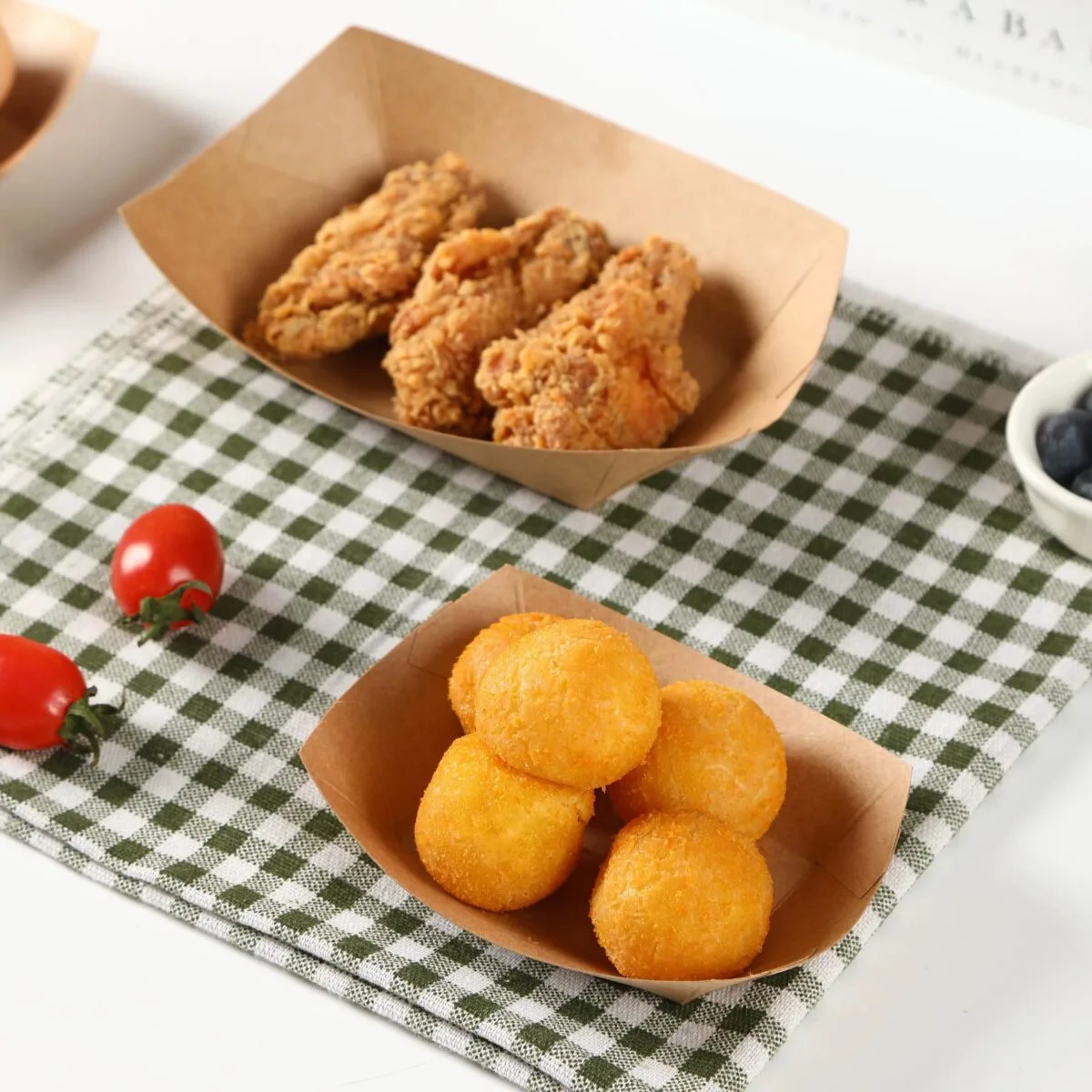
Start with Open Food Service
An open tray offers direct food visibility and utensil access. A boat shape provides a raised perimeter, but its corners, board and barrier still need checking with the portion. An elongated food such as a hot dog needs a footprint that supports the bun and toppings; nominal millilitres alone do not describe that fit. A closed lunch box in the wider collection solves a different handover task.
Current Paper Packaging Product References

Kraft Disposable Paper Food Containers

Kraft Take Out Boxes Wholesale

Kraft Paper Lunch Box

Brown Kraft Paper Box for Food
Kraft Paper to Go Food Containers
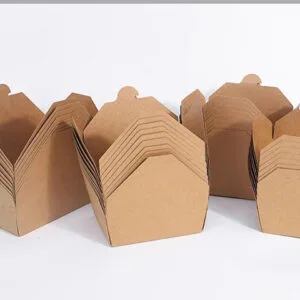
Kraft Paper Take out Food Containers
Kraft Paper Takeaway Containers for Food
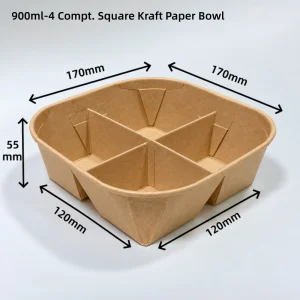
900ml 4-Compartment Square Paper Box
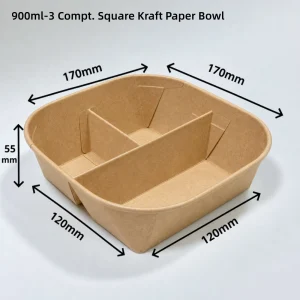
900ml 3-Compartment Square Paper Takeaway Snack Box
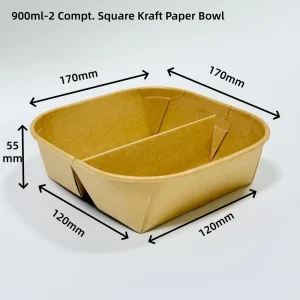
900ml 2-Compartment Square Paper Meal Box

Disposable Paper Box for Food Packaging
Disposable Kraft Paper Boxes for Food
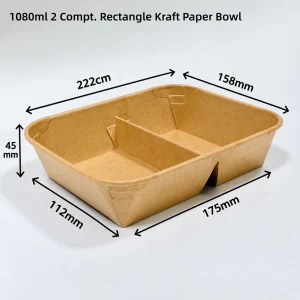
1080ml 2-Compartment Paper Box
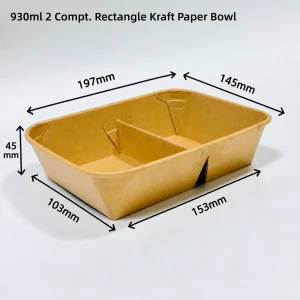
930ml 2-Compartment Paper Box
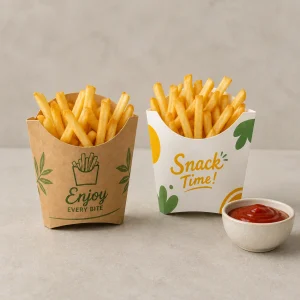
Custom Paper French Fry & Chip Cups
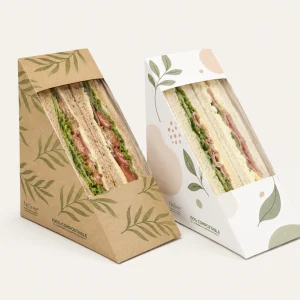
Custom Paper Sandwich Boxes with Window
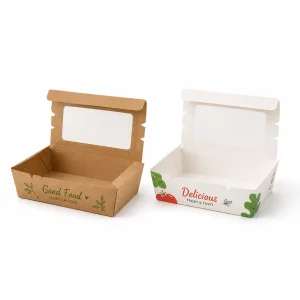
Custom Paper Food Boxes with Window
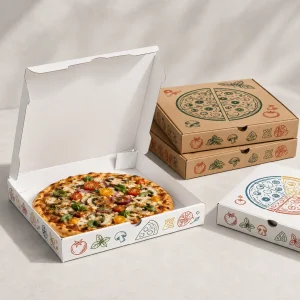
Custom Printed Pizza Boxes

Custom Paper Food Packaging Boxes
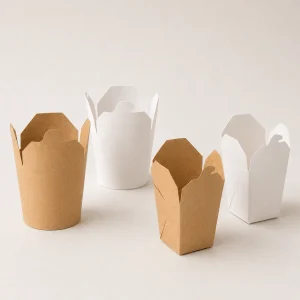
Custom Paper Noodle Boxes & Tubs
Choose a Tray or Boat Around the Food
| Food / service task | Geometry to examine | Trial at the counter |
|---|---|---|
| Hot dogs and long sandwiches | Length, base support and topping clearance | Load the finished item and check grip and eating access |
| Fries and fried snacks | Base area, sidewall height and serving weight | Observe oil marking and rigidity over the planned serving time |
| Finger-food combinations | Space for each item and access for fingers or utensils | Check whether one tray becomes crowded or needs separation |
| Sauced or wet toppings | Corner construction and the specified barrier | Trial the exact amount; keep separate sauces separate where needed |
Use an open tray for the service it has been specified to perform. For a meal requiring a closed package, review the takeaway container workflow rather than assuming an open food boat provides a delivery closure.

Published Tray Geometry for Portion Trials
| Tray reference | Nominal capacity | Top, mm | Base, mm | Height, mm |
|---|---|---|---|---|
| Tray 2# | 200ml | 125 × 80 | 85 × 50 | 36 |
| Tray 4# | 400ml | 152 × 100 | 105 × 68 | 41 |
| Tray 5# | 800ml | 178 × 100 | 125 × 75 | 45 |
| Tray 6# | 1200ml | 215 × 128 | 165 × 95 | 58 |
Dimensions above are converted from the centimetres printed in the source table. The selected rows describe kraft paper with a single PE barrier and 50 × 4 = 200 pieces per carton. Treat the capacities as nominal references, then confirm the current sample, board, barrier and packing. These examples do not establish a universal serving weight or grease-resistance duration.
Plan the Service Station and Event Supply
Trial the normal loading motion at the serving station: taking a tray, adding the portion and toppings, presenting it and handing it over. Check that staff can separate the unused trays without damaging edges and that the loaded sample remains practical to carry. Set the pre-service stack height and replenishment position from the actual tray and counter space. Those checks concern unused-tray storage and open food service, not a lidded delivery stack.

Print for the Way the Tray Is Held
Show Bioleader how the tray will be held and which surfaces remain visible during service. Place event or brand artwork on the approved external panels, with folds and the food-contact area identified. Confirm the available print method, board version, artwork approval and quantity for that model. Review a printed sample for appearance and handling before releasing the event order.

Specify the Grease Barrier and Serving Conditions
The published tray specification identifies a single PE barrier for the examples above. Match that construction to the oil, moisture, serving temperature and expected time before eating. Inspect the base, corners and grip after loading the actual food; record the required appearance and rigidity as acceptance points.
Request the relevant material and food-contact documents for the finished printed tray. A kraft surface or certificate gallery does not by itself establish a whole-range claim, a reheating instruction or a recycling route. If a different coating is requested, have Bioleader confirm the available article and supporting evidence before substituting it.
Replenish Trays by Service Demand
Forecast trays from the menu’s expected transactions and trays used per order, then allow for your own service-loss history. Convert that forecast using the confirmed pieces-per-carton unit and record quantities by model. Send Bioleader the event date or replenishment window, delivery destination, board/barrier, artwork stage and packing marks; agree the current production and delivery terms rather than relying on a generic lead time.


Open-Service Approval Points
- Footprint and sidewall height with the completed food portion.
- Grip, eating access, oil marking and serving-time rigidity.
- Unused-tray separation, counter footprint and restocking routine.
- Approved board/barrier, printed sample and pieces per carton.
Where the menu changes to a folding package, compare the kraft box closure structures as a separate selection task.
Open Tray and Food Boat Questions
An open tray suits service where food visibility, quick loading and eating access are priorities. A meal needing a closed handover package should be evaluated as a separate box or container requirement.
Trial the complete bun, filling and toppings on the actual base. Check length, sidewall clearance, grip and eating access rather than choosing by millilitres alone.
No whole-range performance should be assumed. Confirm the board and barrier, then assess oil marking, corners and rigidity with the intended food and serving time.
The selected published Tray 2#, 4#, 5# and 6# rows list 50 × 4 = 200 pieces per carton. Confirm the current quotation and carton unit for the ordered version.
Provide the tray model, food use, external artwork positions, quantity, event or replenishment date, packing marks and destination. Approve the actual board and print sample and confirm current order terms.
Contact Us Now
Share the tray reference, food portion, service conditions, event or replenishment date, quantity and artwork requirement.