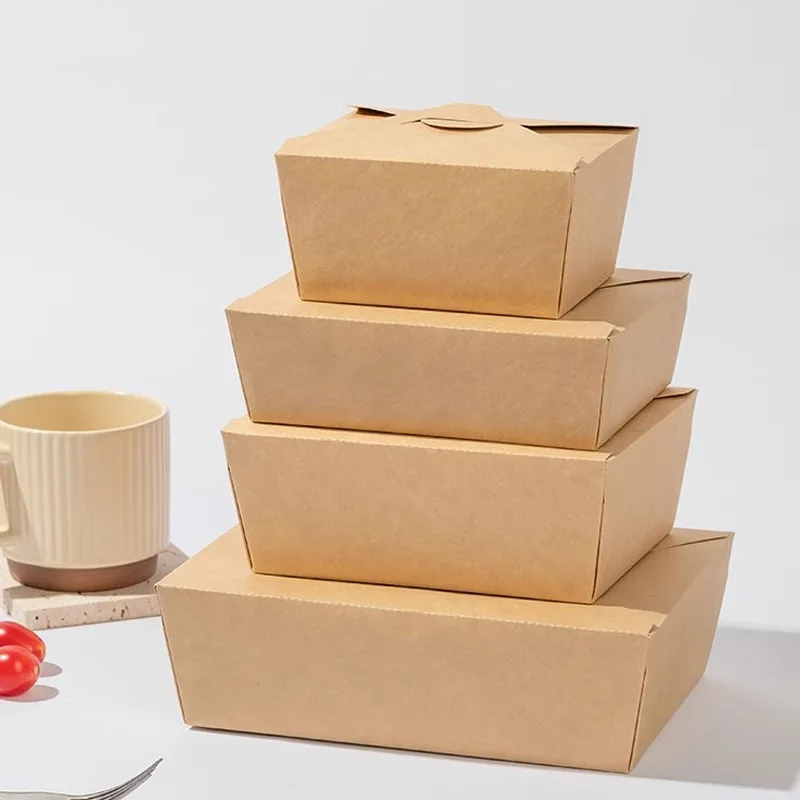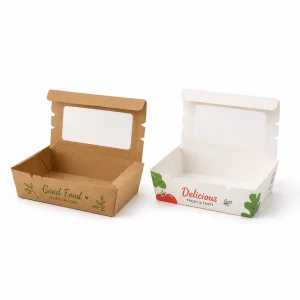
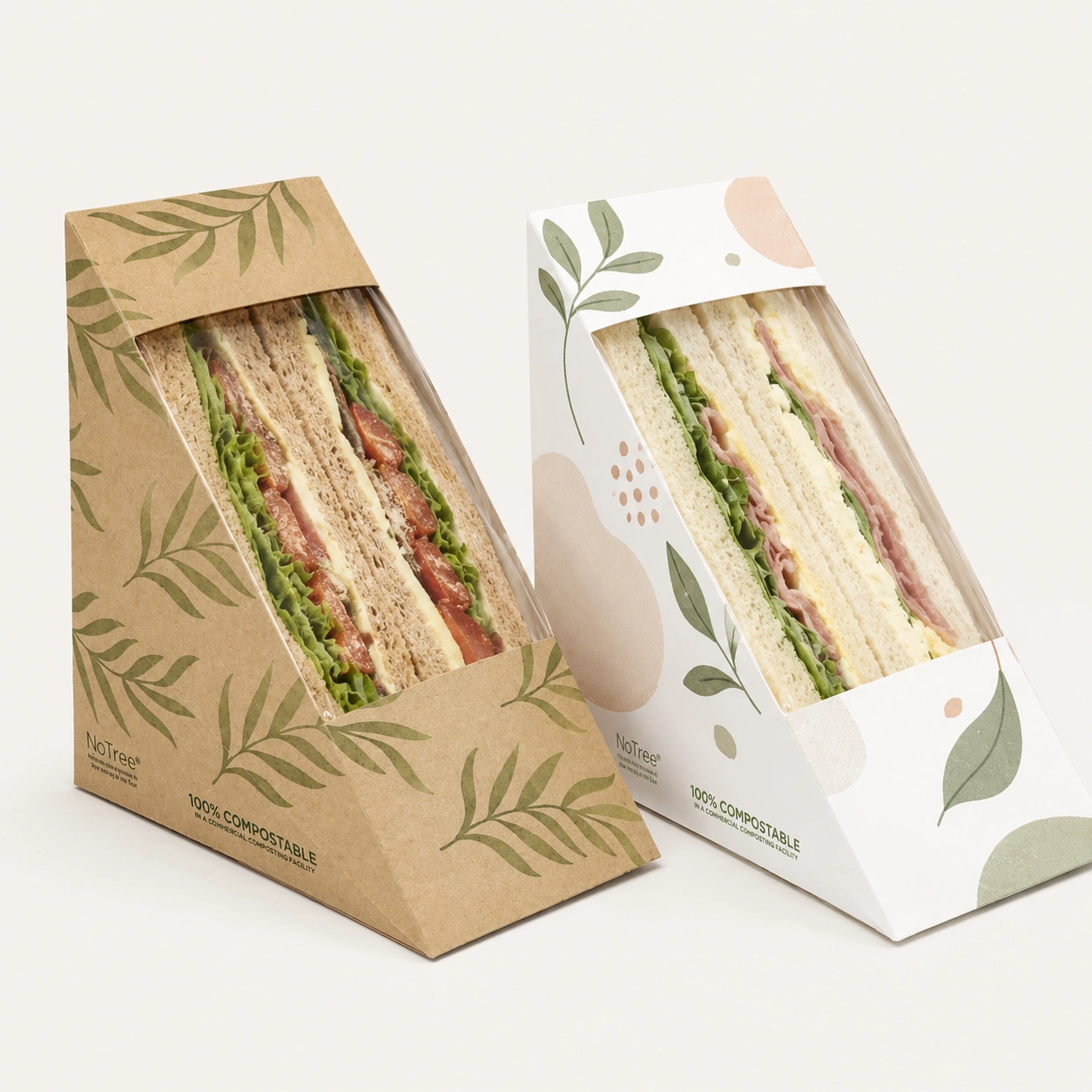
Custom Paper Sandwich Boxes with Window are paper-based food packaging boxes manufactured by Bioleader® for sandwiches, wraps, pastries, deli foods, chilled snacks, and grab-and-go meals. Available in natural kraft or customizable white card, they combine product visibility, practical protection, multiple size and structure options, and custom logo printing for cafés, bakeries, food chains, distributors, and private-label foodservice buyers. For relevant size, material, and sourcing comparisons, review the custom kraft paper containers. Buyers specifying this format can compare it with the paper food boxes 500–2000ml.
Buyers can compare this product within the broader paper food box range. The paper food packaging solutions provides a focused reference for this product configuration. A closely related format for comparison is the Custom Paper Food Boxes with Window.
Bioleader® sandwich boxes are produced from kraft paperboard and can also be customized in white card when buyers need a cleaner surface for brighter graphics or retail-style branding. The transparent display window allows customers to see the food without opening the package, making the format especially practical for chilled counters, cafés, bakeries, and grab-and-go retail. Production normally includes paperboard selection, printing, die-cutting, creasing, window opening preparation, transparent window application, folding, gluing, inspection, and export packing. Final board weight, box structure, window format, and dimensions can be adjusted according to the food portion and packing requirements.
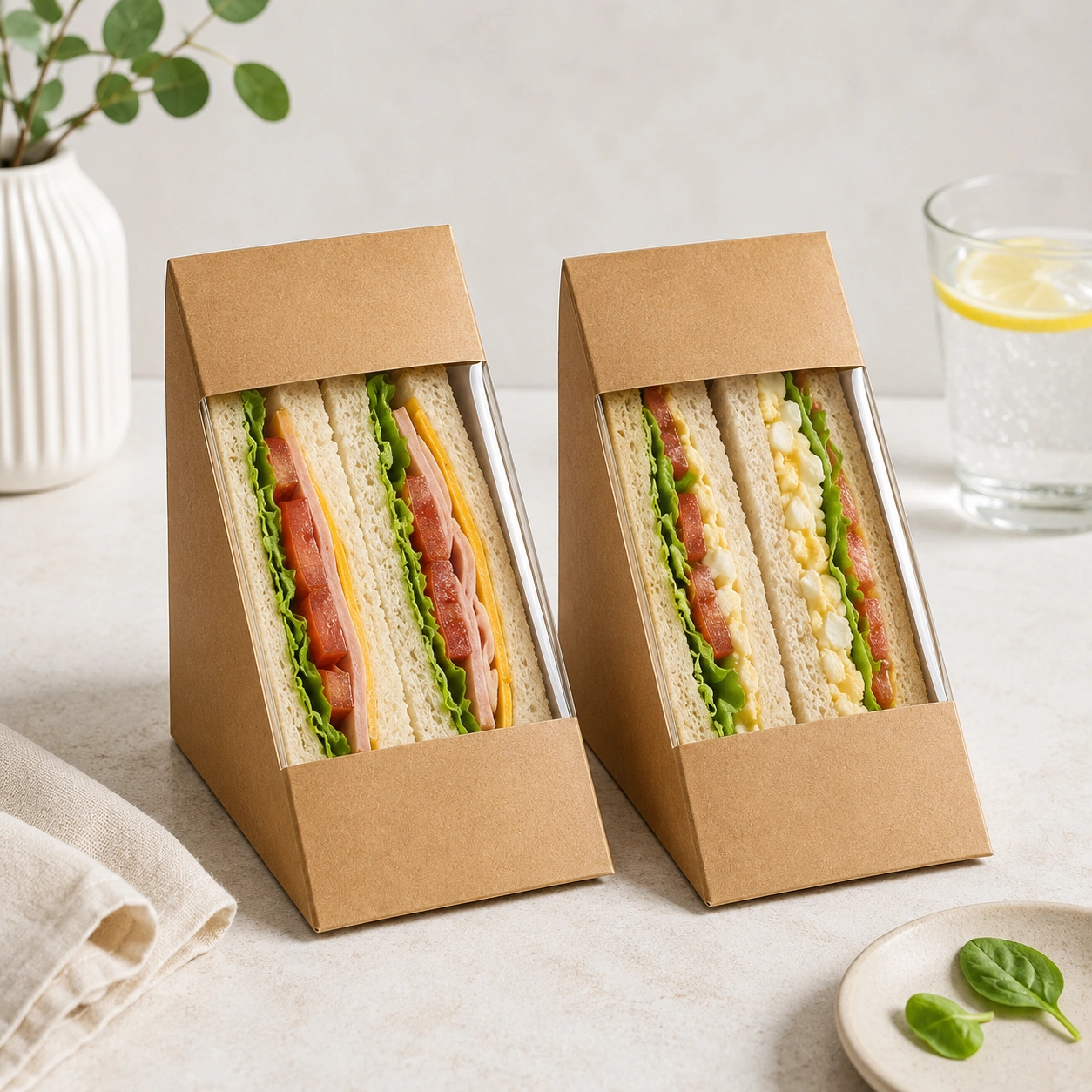
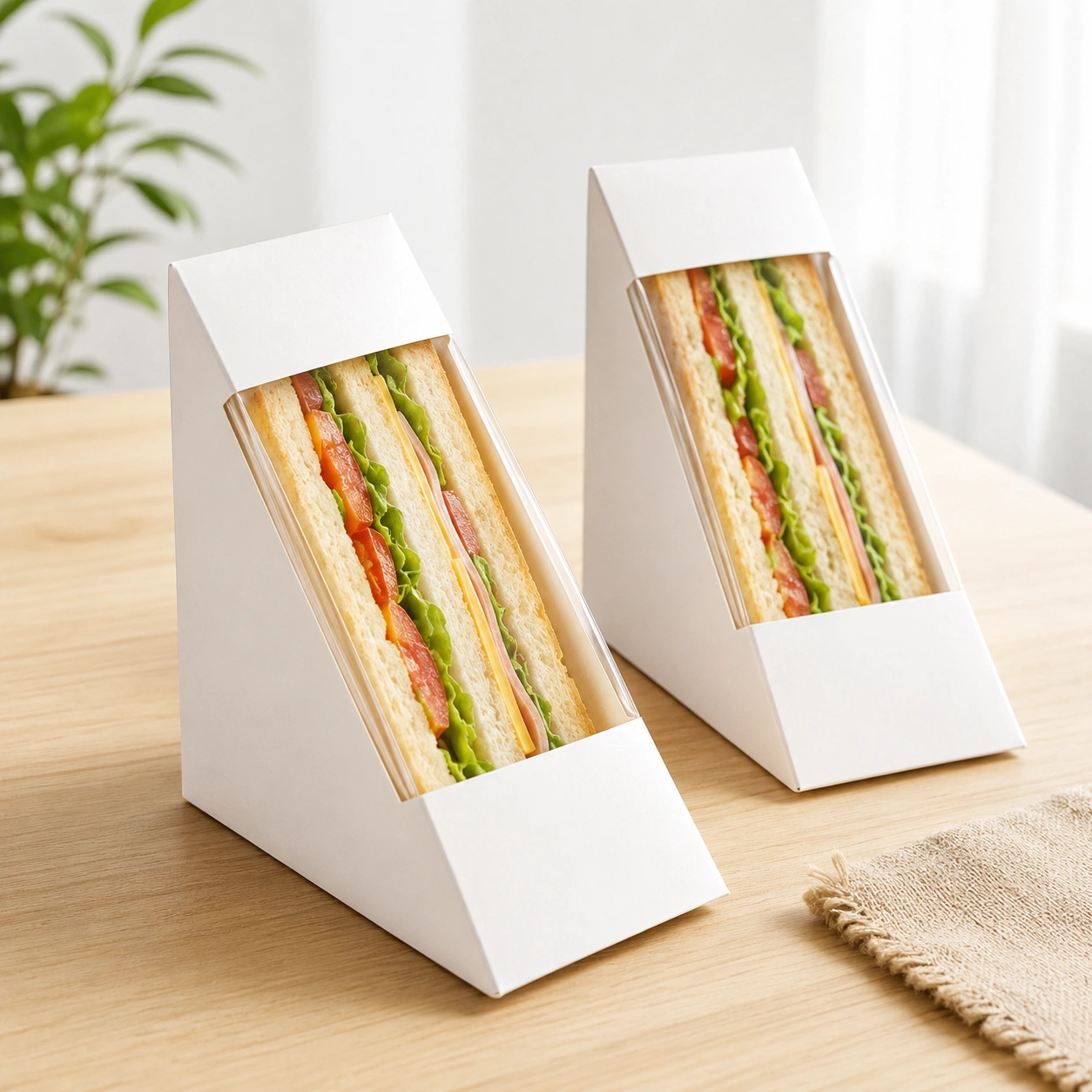
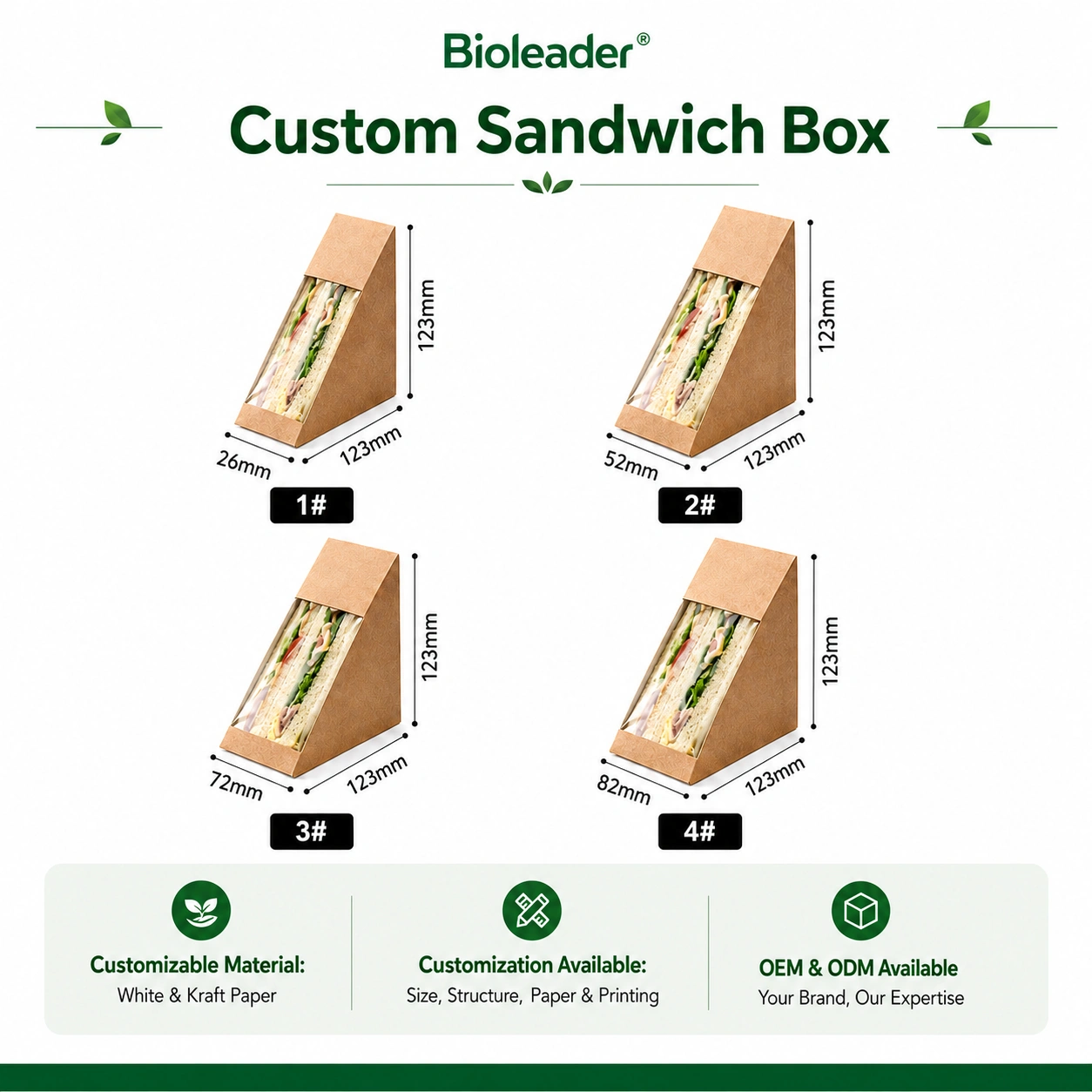
Custom sandwich packaging can be developed around the food shape, portion size, window position, box dimensions, paper color, printing area, and brand artwork. Buyers can select compact sandwich formats for standard portions or develop larger structures for thick sandwiches, club sandwiches, wraps, pastries, combo foods, and specialty deli products. Kraft paperboard supports a natural packaging appearance, while white card provides a brighter base for detailed graphics. Custom printing can include logos, slogans, QR codes, nutritional or handling information, social media details, and private-label artwork.
| Application | Use Scenario |
|---|---|
| Cafés & Coffee Shops | Suitable for prepared sandwiches, wraps, pastries, and light meals displayed at refrigerated or grab-and-go counters. |
| Delis & Sandwich Shops | The transparent window helps customers identify fillings and product freshness while keeping the food contained. |
| Bakeries | Useful for croissant sandwiches, pastries, bakery snacks, and other ready-to-eat foods requiring visible presentation. |
| Convenience & Grab-and-Go Retail | Window packaging supports quick product recognition for pre-packed sandwiches and chilled ready-meal displays. |
| Catering & Events | Practical for individually packed sandwiches, wraps, snacks, meeting lunches, and event foodservice programs. |
| Private Label & Distribution | Custom sizes and printed artwork support food brands, distributors, restaurant groups, and private-label packaging programs. |
| Printing Factor | Recommendation |
|---|---|
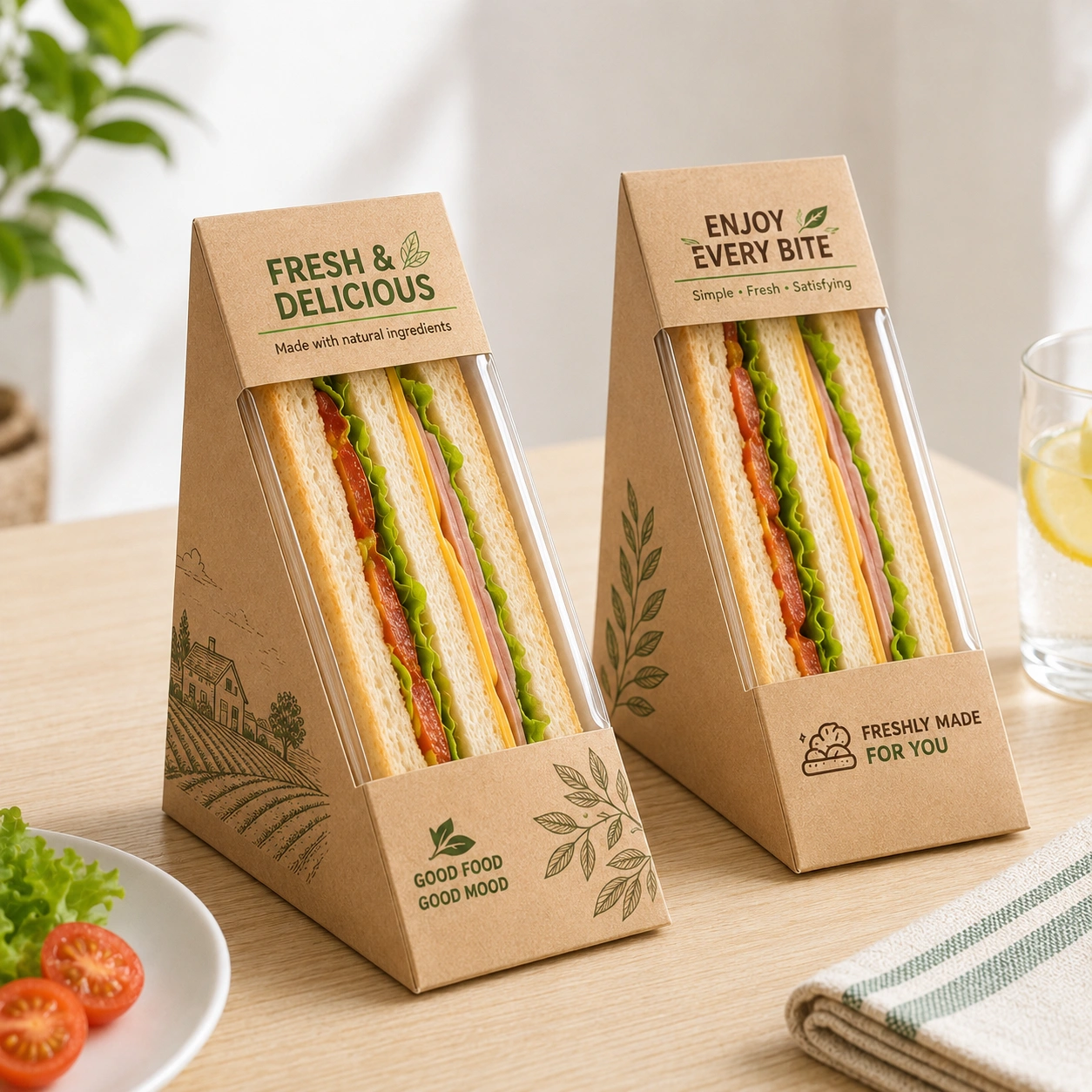
| Kraft Paperboard | Works well with dark logos, simple graphics, natural brand themes, and high-contrast printing. |
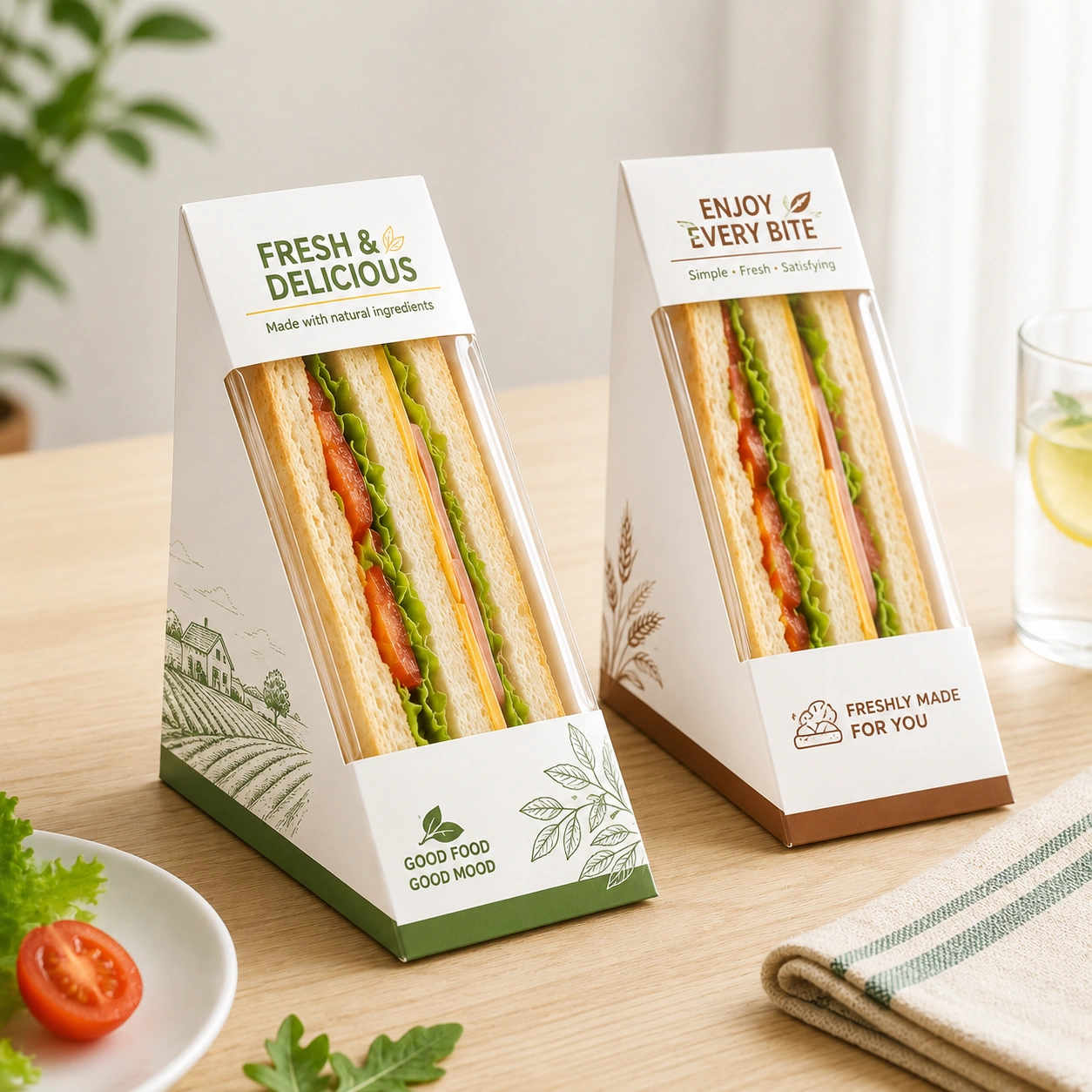
| White Card | Better suited to brighter colors, cleaner graphics, detailed artwork, and retail-focused presentation. |
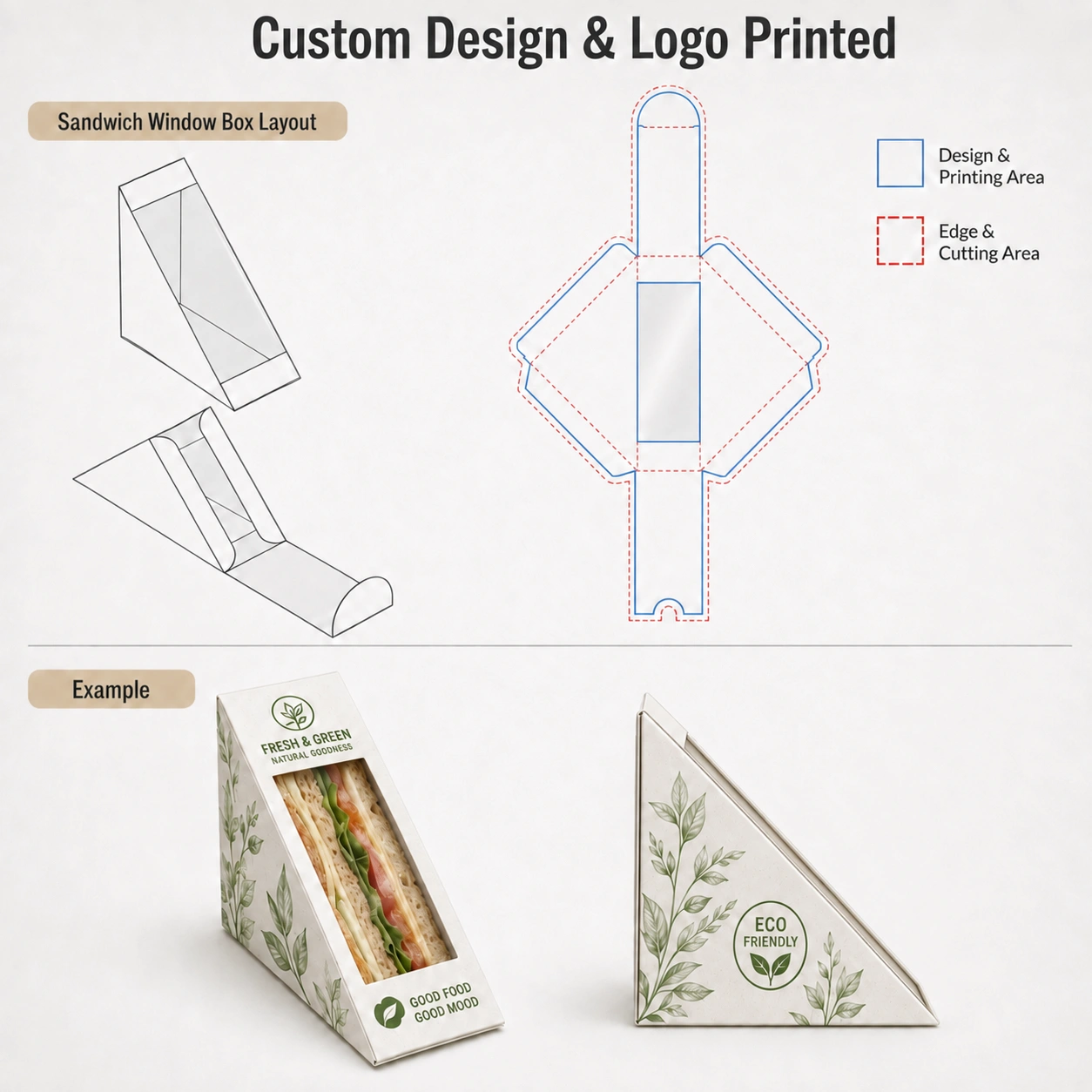
| Window Position | Keep important logos and product information away from the die-cut window so branding remains clear and readable. |
| Logo Printing | Simple one- or multi-color logo designs are efficient for recurring café, deli, bakery, and food-chain orders. |
| Artwork Preparation | Vector artwork, approved dielines, and defined Pantone or CMYK references help improve prepress accuracy. |
| Repeat Orders | Keeping the same approved material, dieline, print file, and color reference helps maintain packaging consistency between production runs. |
Choosing the right sandwich box should start with the food itself. Buyers should consider sandwich dimensions, thickness, moisture level, display method, storage temperature, window visibility, printing requirements, carton packing, and expected order volume. Bioleader® supports wholesale and custom packaging projects with material selection, box structure development, artwork coordination, production inspection, packing control, and export supply planning. Using an existing structure normally simplifies sampling and production, while fully customized formats require clearer drawings, dimensions, and artwork confirmation before mass production.
| Buying Consideration | Bioleader® Supply Approach |
|---|---|
| Material Choice | Kraft paperboard provides a natural appearance, while customizable white card is suitable for brighter and more detailed branding. |
| Window Design | The window size and location should balance food visibility, structural stability, branding area, and the final packed product. |
| Custom Dimensions | Size and structure can be evaluated around sandwich width, thickness, food shape, display requirements, and portion format. |
| Printing & Branding | Logo printing, branded artwork, QR codes, and private-label designs can be coordinated before bulk production. |
| Quality Control | Board condition, die-cut accuracy, folding, window positioning, printing, gluing, and carton packing should be checked during production. |
| Certification & Documentation | Required food-contact, paper sourcing, or destination-market documentation should be confirmed according to the final paper, window, coating, and ordered specification. |
| Supply Chain | Using confirmed materials, approved artwork, and repeatable box structures helps improve consistency across recurring wholesale orders. |
| Lead Time | Existing structures and production-ready artwork generally require less preparation than completely new custom box development. |
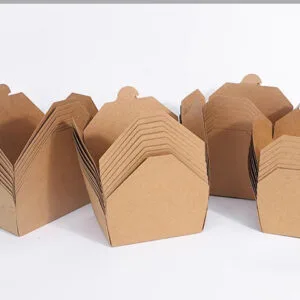
Kraft Paper Box Wholesale |
Kraft Paper Sushi Tray with Clear Plastic Lid |
Product definition
Paper sandwich boxes with windows are paperboard food packages designed to hold and present sandwiches, wraps, pastries, and ready-to-eat foods while allowing part of the product to remain visible through a transparent display window.
Why the window matters
Food visibility can be important in cafés, bakeries, deli counters, convenience stores, and grab-and-go retail because customers often make quick purchasing decisions based on the appearance of the food. A well-positioned window lets buyers see the filling, portion, and presentation without repeatedly opening the package.
Material options
Kraft paperboard is suitable for natural-looking branding and simple high-contrast graphics. White card is often preferred when the packaging requires brighter colors, cleaner graphics, or stronger retail presentation. The final board specification should also reflect the food weight, box structure, storage conditions, and handling requirements.
Customization options
Custom sandwich packaging can be developed through box dimensions, structure, window shape, window location, paper color, logo placement, printed artwork, QR codes, product information, and private-label design. Existing sizes are generally more efficient for routine wholesale purchasing, while custom structures are useful for proprietary food formats or branded retail programs.
Procurement considerations
Wholesale buyers should confirm the food type, sandwich dimensions, box size, paper preference, window requirement, printing artwork, order quantity, packing method, and destination market before quotation. These details affect material consumption, tooling or dieline requirements, print preparation, carton configuration, and production planning.
Sustainability and end-of-life
The paperboard body can reduce reliance on a fully plastic food container, but a windowed sandwich box is a multi-material package unless the window and paper are designed for the same recovery route. Recycling or composting suitability therefore depends on the exact paperboard, window material, coatings, adhesives, food contamination, and local waste infrastructure. Buyers making environmental claims should confirm the final material specification rather than relying only on the appearance of kraft paper.
Market direction
Grab-and-go packaging is increasingly expected to perform several functions at once: protect the food, show the product clearly, carry the brand, work efficiently behind the counter, and fit the buyer’s material and waste-management strategy. This makes structure, visibility, print quality, and supply consistency increasingly important in B2B sandwich packaging decisions.
Alternative formats
A window sandwich box is useful when product visibility matters. For foods that do not need visual display, buyers can compare it with closed kraft paper boxes, paper wraps, paper bags, or other takeaway containers. The most suitable format depends on food shape, moisture, display requirements, delivery distance, branding, and the target market’s packaging rules.
Buyer takeaway
The best sandwich box is not simply the cheapest box. It should fit the food correctly, maintain practical handling, provide enough product visibility, preserve usable branding space, match the intended disposal route, and remain consistent across repeat wholesale orders.
Paper sandwich boxes with windows are used to package and display sandwiches, wraps, pastries, deli foods, chilled snacks, and other grab-and-go meals. The paperboard structure protects the food during handling, while the transparent window allows customers to see part of the product before purchase. They are commonly used by cafés, bakeries, delis, convenience stores, catering companies, takeaway shops, and foodservice retailers.
Yes. Paper sandwich boxes can be customized with logos, brand colors, slogans, QR codes, product information, promotional graphics, and private-label artwork. Kraft paperboard is suitable for natural and high-contrast branding, while white card provides a cleaner base for brighter colors and more detailed designs. Buyers should confirm the box dieline and window position before finalizing artwork so important printed elements do not overlap the display area.
Yes. Kraft sandwich boxes are commonly used for prepared sandwiches, wraps, pastries, deli foods, and chilled ready-to-eat products sold through cafés, convenience stores, refrigerated counters, and grab-and-go programs. The correct specification should be selected according to food moisture, storage temperature, holding time, box structure, and any required internal barrier or window material.
Recyclability depends on the complete packaging structure rather than the paperboard alone. The paper body may be accepted by paper recycling systems, but the transparent window, coatings, adhesives, and food contamination can affect the final recycling route. Buyers should confirm the actual window and paper specification and check local collection requirements before describing a window sandwich box as recyclable or compostable.
For an accurate wholesale quotation, buyers should provide the required box dimensions or sandwich size, kraft or white card preference, window requirement, printing artwork, expected order quantity, packing requirements, destination country or port, and any food-contact or material documentation requirements. Providing a current box sample, photo, drawing, or dieline can also help the manufacturer evaluate the most suitable existing or custom structure.