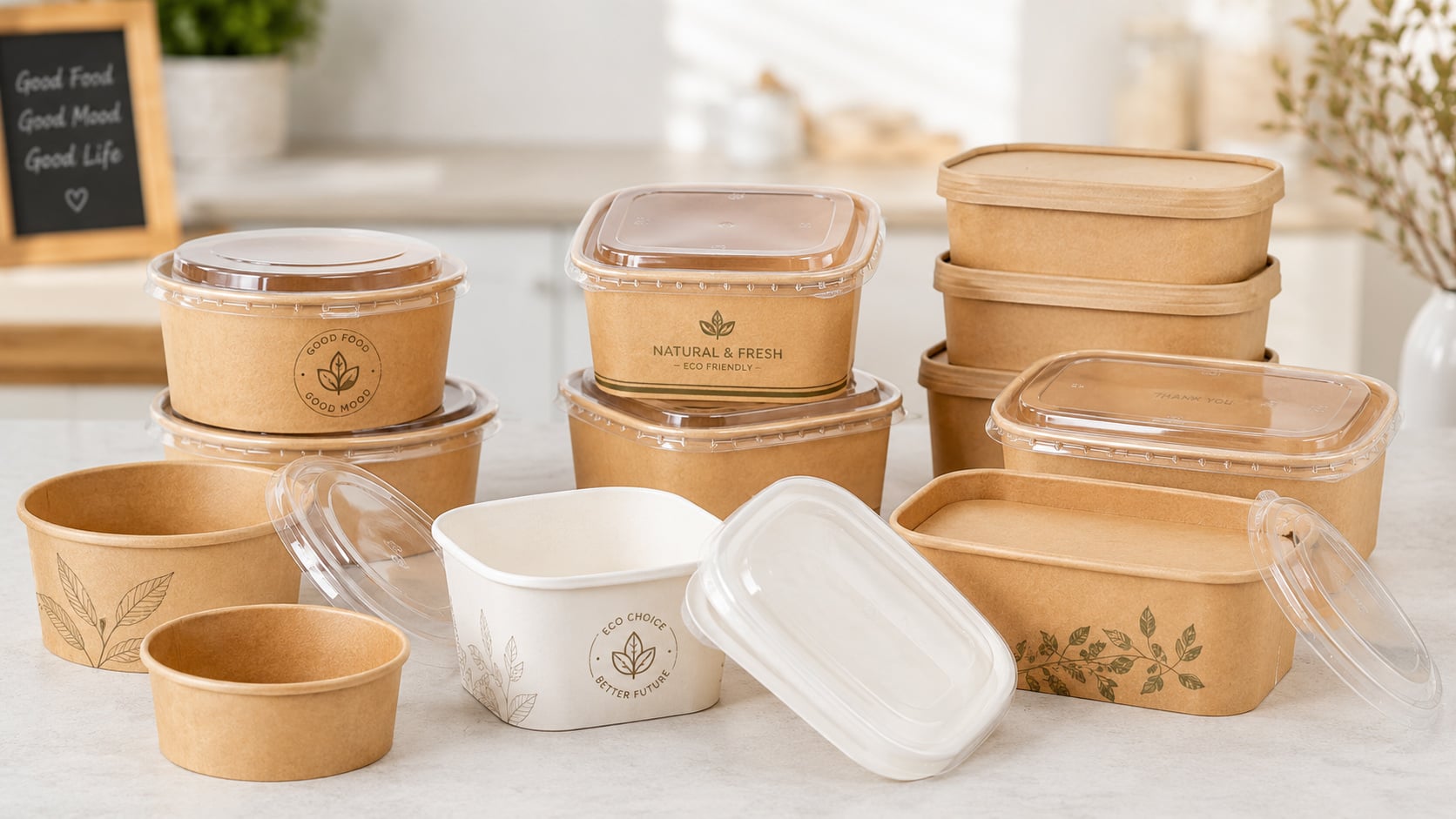
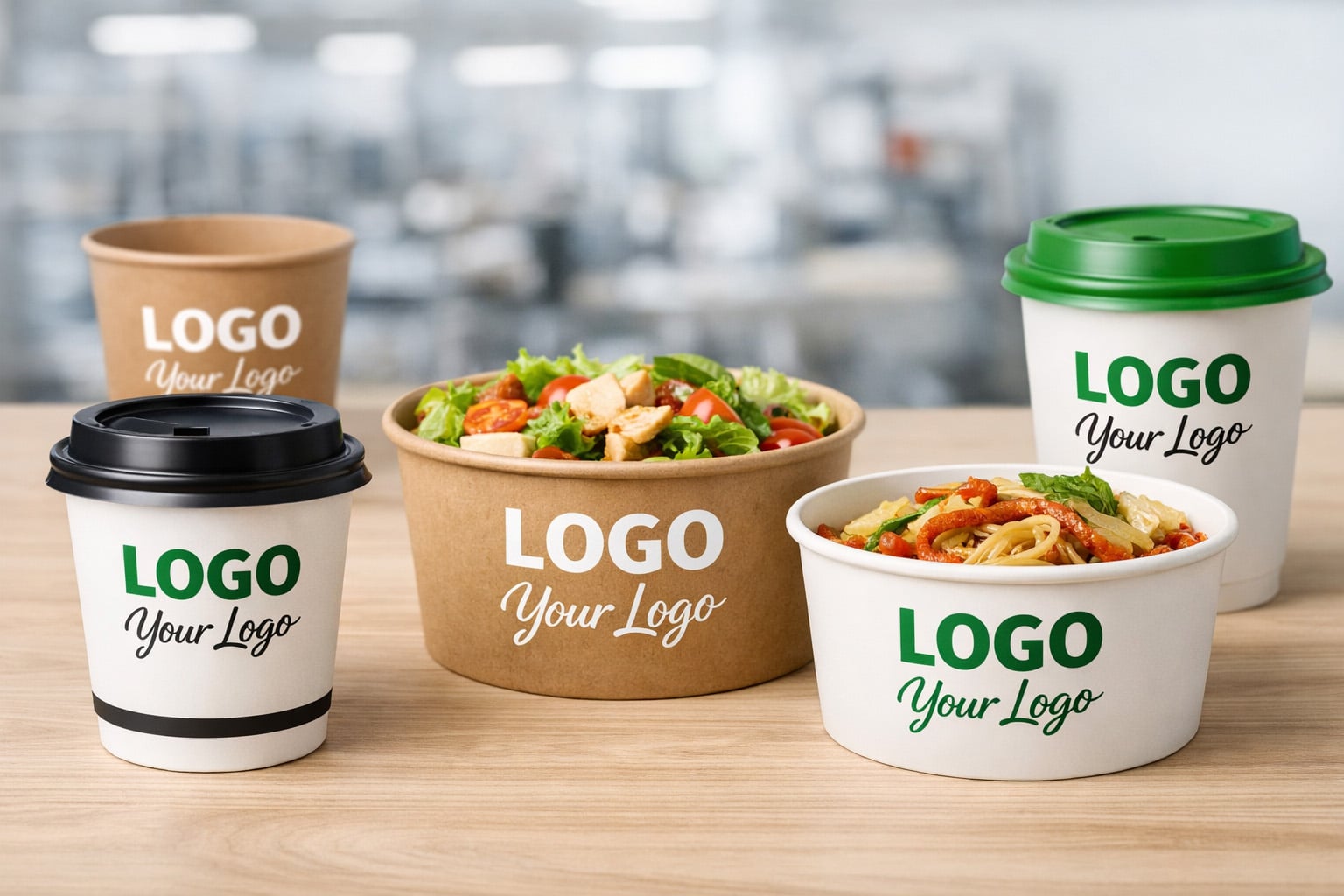
- Best for: private label buyers, restaurant chains, food brands, ecommerce packaging teams and distributors ordering branded paper bowls.
- Main decision: approve the final printed sample on the actual bowl material, not only a digital mockup.
- Buyer action: check artwork, paper surface, coating, ink behavior, color tolerance, odor, MOQ, lid fit and carton packing before bulk production.
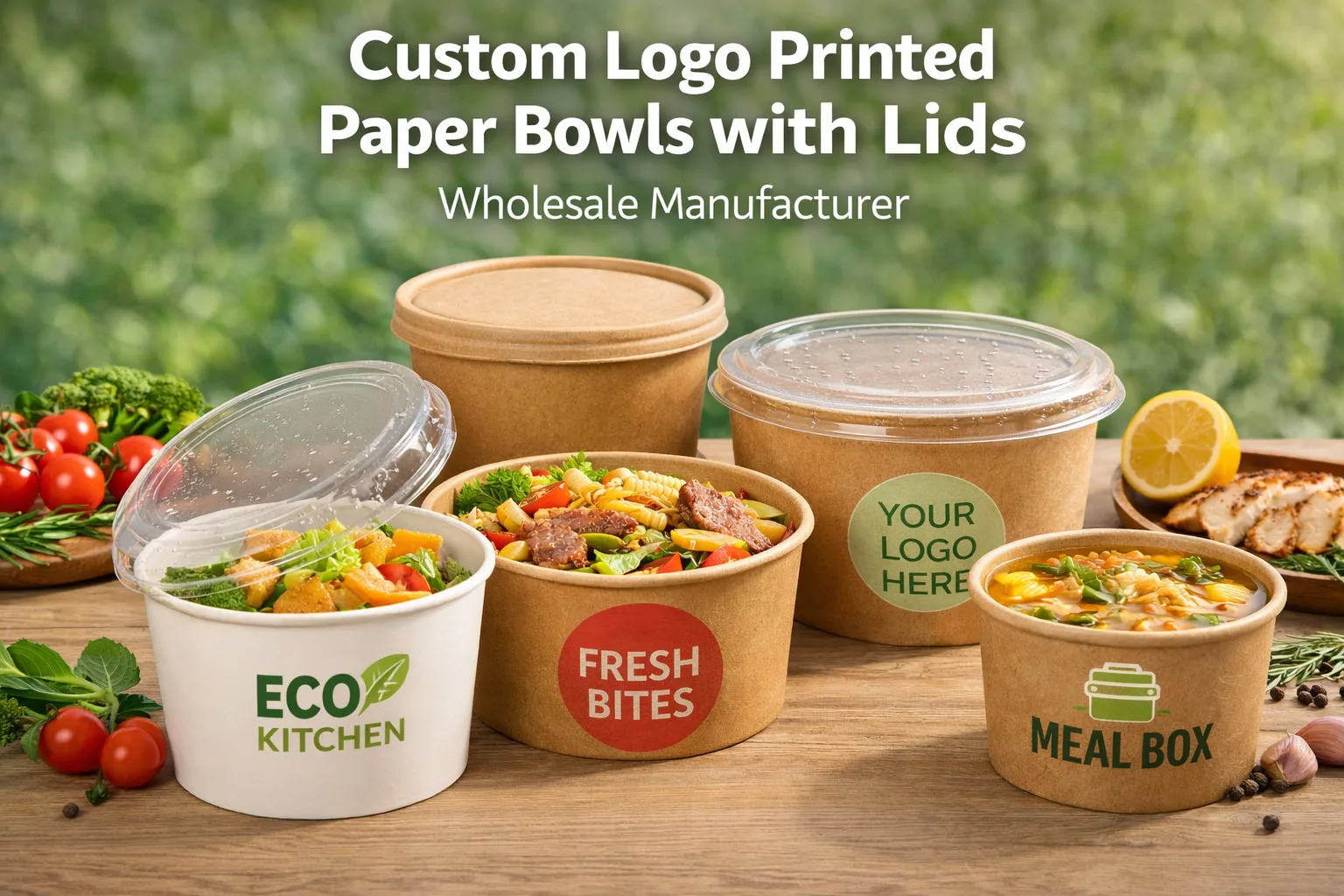
Custom printed paper bowls can turn ordinary takeaway packaging into a visible brand asset, but printing also introduces extra quality risks. A bowl may pass basic structure checks while still failing brand expectations because the color is inconsistent, the logo is misaligned, the ink smells unusual, or the printed surface scuffs during stacking, packing and delivery.
For B2B buyers, custom printing should be managed as a quality-control process rather than a simple artwork upload. In real production, print quality depends on paper surface, coating, ink system, bowl forming and carton packing together. Bioleader® supports buyers by reviewing artwork, bowl material, coating choice, print position, sample approval and MOQ planning as one complete production decision.
Why print QC matters for food packaging
Printed food packaging is both a marketing surface and a functional container. Buyers need the bowl to carry hot, cold, oily or moist food while also presenting the brand consistently. Print defects can create customer complaints even when the bowl itself does not leak. A tilted logo, inconsistent color, ink odor or scratched print can make a branded takeaway package look unreliable.
Buyers comparing customized paper bowls with lids, kraft paper bowls from 500ml to 1300ml or large paper bowls for soup should request physical printed samples before confirming bulk production. The approved sample should use the same paper type, coating, size, forming process and packing method planned for the real order.
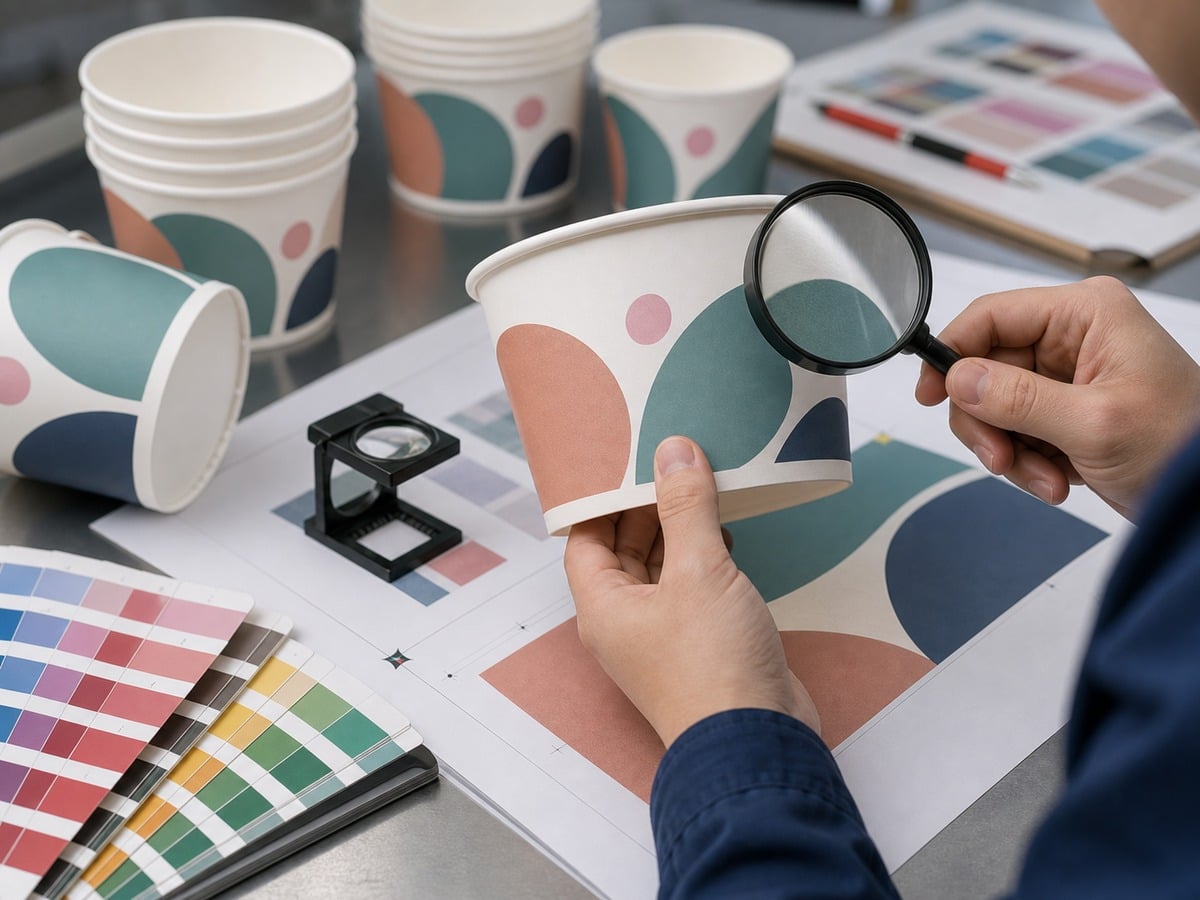
The print quality system: surface, coating, ink, forming and packing
The most common mistake is to judge printed bowls only by the artwork file. In practice, the final result is controlled by a production system. The same logo can look different on kraft paper and white paper; the same ink can behave differently on PE, PLA or water-based coated surfaces; and the same design can shift visually when applied to tapered bowl shapes.
| Control factor | What changes in production | Buyer risk if ignored |
|---|---|---|
| Paper surface | Kraft paper absorbs color differently from white paper and may make colors look warmer or darker. | Brand colors may look different from the digital proof. |
| Coating layer | PE, PLA, PP or water-based coating may affect ink adhesion, drying, odor and rub resistance. | Ink may scuff, smell unusual or fail under stacking pressure. |
| Ink system | Ink density, curing, drying and color setup affect visual consistency and odor control. | Printed bowls may pass visual review but fail after storage or carton opening. |
| Bowl forming | Curved walls, taper angle and seam position can distort logos, QR codes and horizontal lines. | Artwork may appear tilted, stretched or poorly centered. |
| Packing pressure | Stacking, carton compression and transport friction affect printed surfaces. | Bowls may arrive with scratches, rubbing marks or ink transfer. |
Artwork and proof approval
Artwork approval should start with print-ready files, correct dielines, safe zones, color references and clear print-area limits. Buyers should confirm whether the design will be printed on kraft paper, white paper or another surface. The same artwork may need different color adjustment depending on the bowl material.
A digital proof is useful for layout, but it is not enough for final approval. A physical proof shows color shift, edge sharpness, registration, ink density and how the artwork looks on the curved bowl surface. This is especially important for logos, QR codes, small text, light colors, full-wrap designs and multi-size packaging programs.
For multi-size orders, artwork should be checked size by size. A design that looks balanced on a 750ml bowl may not look the same on a 500ml or 1300ml bowl because the printable area, wall height and taper angle are different. Buyers should avoid approving one size and assuming all other sizes will automatically look identical.
Custom printed paper bowls QC checklist
| QC area | What to inspect | Why it matters |
|---|---|---|
| Artwork setup | Dieline, safe zone, color reference, print area, logo size and file format | Prevents layout errors before sampling |
| Material match | Confirm kraft, white, coated or lidded bowl material matches the final order | Prevents approving a proof on the wrong surface |
| Color consistency | Compare the printed sample against the approved color target under neutral light | Protects brand consistency across batches |
| Registration | Check alignment, edge position, logo placement, QR readability and repeat accuracy | Prevents tilted, shifted or distorted brand graphics |
| Odor and ink behavior | Review smell, ink transfer, scuffing, drying and storage behavior | Reduces customer complaints and food packaging risk |
| Packing condition | Check whether printed surfaces rub, scratch or mark during stacking and carton handling | Protects appearance after shipment |
Color consistency and registration checks
Color consistency is one of the most visible problems in custom printed bowls. Kraft surfaces can make colors look warmer, darker or less saturated, while white surfaces can make colors appear brighter and sharper. Buyers should define acceptable color tolerance before production and compare samples under consistent lighting, not under mixed warehouse or restaurant lighting.
Registration means the print is correctly aligned with the bowl shape and design area. On curved or tapered bowls, small misalignment can be noticeable. Buyers should check logo position, repeated patterns, horizontal balance, side seam placement and whether the design remains readable after forming. For broader surface comparison, buyers can review kraft paper bowl manufacturer buying guidance.
Common print failure modes buyers should recognize
Not every printing problem is caused by the printing machine. Many complaints come from the interaction between paper surface, coating, ink, forming and packing. A supplier should be able to explain the root cause instead of simply saying that minor variation is normal.
| Observed issue | Likely cause | Buyer response |
|---|---|---|
| Logo looks darker on kraft bowls | Natural kraft surface absorbs and visually warms the ink | Approve physical kraft proof instead of relying on white-background artwork |
| Small text or QR code is unclear | Artwork too small for curved bowl wall or print resolution limit | Increase size, simplify design or test scan readability on real samples |
| Logo position shifts near the seam | Dieline, seam allowance or forming position not fully matched | Review print area and avoid critical design elements near seam zones |
| Ink rubs during stacking | Insufficient drying, unsuitable surface, high friction or carton pressure | Request rub test, packing review and production-equivalent sample |
| Unusual odor after carton opening | Ink, coating, paper, storage or packing material interaction | Check retained samples, airing condition and food-contact documentation |
| Batch color differs from approved sample | Material lot, ink setup, humidity or production condition variation | Keep an approved master sample and define comparison tolerance |
Ink, odor and food contact concerns
Printed food packaging should not have strong or unusual odor. Buyers should check samples after storage, after opening the carton and after exposure to warm food conditions when relevant. Odor can come from ink, paper, coating, storage or packing materials, so the supplier should help identify the source if a problem appears.
Buyers should also review whether printing is on the outside surface, whether ink can scuff or transfer during stacking, and whether the design changes the bowl’s coating or heat behavior. Claims about food contact, ink safety or compliance should be supported by real documentation, not general statements.
For hot food applications, the printed bowl should be tested as a finished package. A bowl used for warm soup, noodles or sauced meals may face heat, steam, oil and lid pressure at the same time. Print approval should therefore be connected to the selected bowl structure, coating and lid, not separated from the food-use condition.
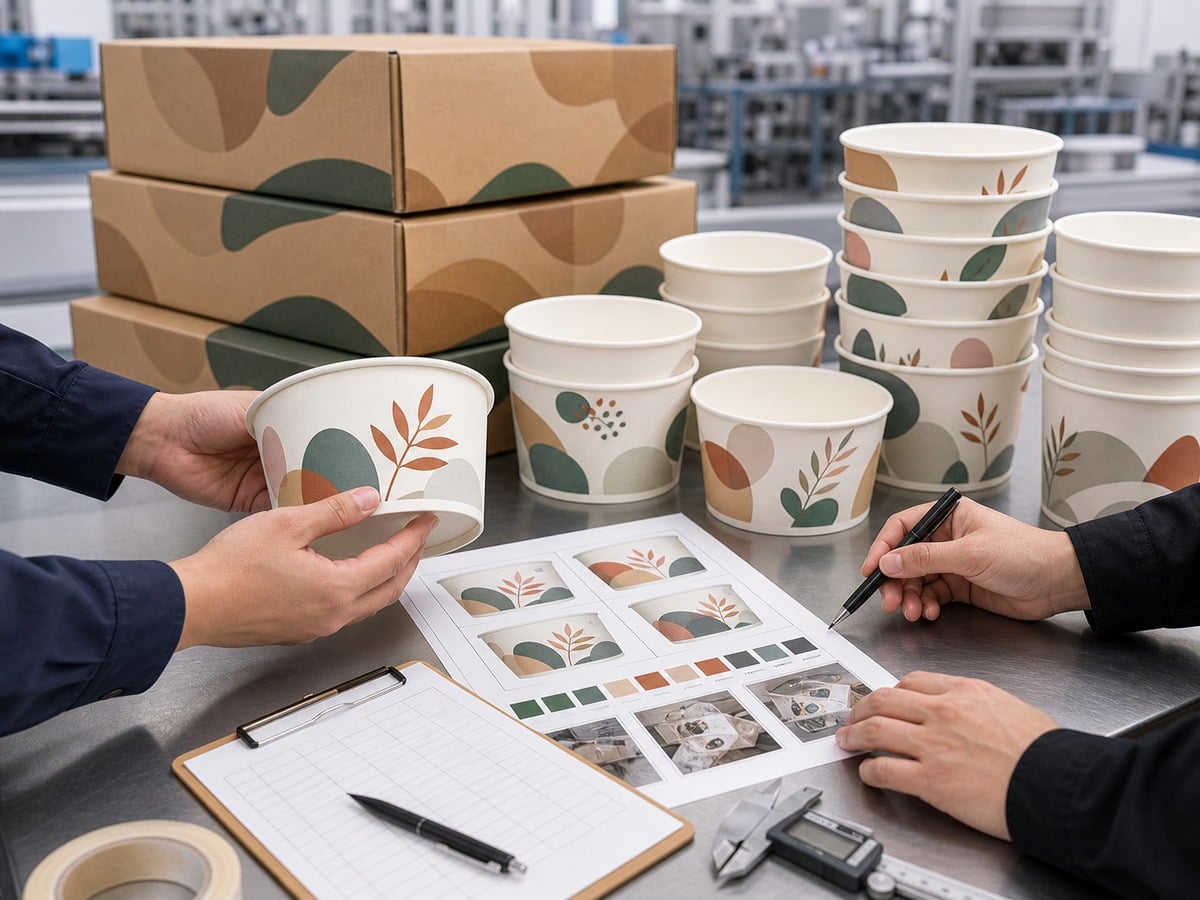
Manufacturer insight: printing decisions affect MOQ and lead time
From a manufacturer perspective, custom printing affects more than artwork. It changes proofing time, production setup, material planning, printing schedule, inspection steps and carton arrangement. A simple one-color logo is usually easier to control than a full-wrap multi-color design with small text, gradients or repeated patterns.
Bioleader® recommends confirming artwork, bowl size, paper surface, coating, sample proof and order quantity early. If a buyer needs several sizes or several printed designs, MOQ planning becomes more important because each size and artwork version may require separate confirmation and production control.
A practical approval rule is simple: do not approve only a beautiful sample; approve a repeatable production plan. Buyers should ask whether the supplier can keep one approved sample as the production reference, compare bulk output against that sample and document any agreed tolerance before shipment.
MOQ, samples and private label approval
Custom printed paper bowls should move through a clear approval path: artwork review, blank sample review, printed proof, functional test, packing review and final production approval. Buyers should avoid approving mass production before they have seen the actual printed result on the selected bowl.
For private label projects, buyers may also need to compare related sourcing topics such as paper bowls with lids size and MOQ guidance and bulk wholesale paper bowls. The goal is to approve a print plan that fits the commercial order, not just the design concept.
MOQ should be planned by SKU, not only by total pieces. If one order includes multiple bowl sizes, different logos, different languages or separate carton marks, the buyer should confirm how many printed versions are involved. This helps avoid late-stage cost changes, longer lead time or production confusion.
Buyer approval checklist before bulk printing
| Approval step | Buyer question | Ready signal |
|---|---|---|
| Artwork | Are the file, dieline, print area, logo size and color references confirmed? | Supplier can produce a physical proof without guessing |
| Material | Is the bowl kraft, white, coated or lidded exactly as ordered? | Printed proof uses the real production material |
| Color | Has the buyer approved real color on the selected paper surface? | Approved sample becomes the production color reference |
| Function | Does the printed bowl still pass food, lid and stacking tests? | Branding does not weaken practical performance |
| Quantity | Does MOQ match the number of sizes, designs, languages and cartons? | Order plan is realistic for production |
| Packing | Will print surfaces stay clean during stacking and shipment? | Carton samples show acceptable appearance after handling |
How Bioleader® supports custom printed paper bowls
Bioleader® can support custom printed paper bowl projects by reviewing artwork files, print position, kraft or white bowl surface, coating choice, lid fit, MOQ and sample approval. Buyers can also compare related formats such as kraft paper bowls with lids for food delivery when the printed package will be used in takeaway channels.
This process helps buyers avoid approving attractive artwork that later fails on color, odor, lid fit, carton scuffing or bulk order timing. For distributors, foodservice brands and private label buyers, the safest print approval process is to connect branding, food use, material selection and production planning before the order is released.
Conclusion
Custom printed paper bowls should be treated as a combined branding and quality-control project. Buyers should approve artwork, material, print proof, odor, coating, lid fit and packing before bulk production. A strong printed bowl is not only visually attractive; it must also perform as food packaging.
If your team is preparing custom printed paper bowls for a restaurant, food brand or private label program, Bioleader® can help review samples, print details and bulk order planning before production.
FAQ
What should buyers check before ordering custom printed paper bowls?
Buyers should check artwork files, dielines, print area, color target, bowl material, coating, lid fit, odor, ink scuffing and carton packing. A physical printed proof on the actual bowl material should be approved before bulk production.
Why does the same artwork look different on kraft and white paper bowls?
Kraft paper can make colors appear darker, warmer or less saturated, while white paper usually gives brighter contrast. Buyers should not rely only on digital artwork; they should approve real printed samples on the selected paper surface.
Can custom printed paper bowls be used for hot food?
They can be used for hot food when the bowl structure, coating and ink system are suitable for the application. Buyers should test heat exposure, odor, lid fit, ink behavior and food holding conditions before confirming the order.
Can a digital mockup replace a physical printed proof?
No. Digital mockups are useful for layout review, but they cannot show real ink absorption, kraft or white paper color shift, forming distortion, surface scuffing or carton pressure. Bulk production should be based on an approved physical sample.
Why is MOQ important for printed paper bowls?
MOQ affects printing setup, material planning, production scheduling, inspection and carton arrangement. Multiple sizes, designs or languages can increase order complexity, so buyers should plan the SKU mix before confirming artwork.
How can Bioleader® help with custom printed paper bowl projects?
Bioleader® can review artwork, prepare printed samples, advise on kraft or white bowl surfaces, check print quality, coordinate MOQ planning and support export orders for custom printed paper bowl projects.