Top Use Cases For Plastic-free Cups | Bioleader® Guides

Browse articles grouped under the "plastic-free cups" tag for topic-specific information and examples. The featured articles may approach the topic from different product, material, application, market, or sourcing perspectives. Check each article for its exact scope, technical data, standards, sources, and recommendations.
plastic-free cups — Content Overview
  • Featured articles shown: 12
  • Directly tagged articles: 1
  • Latest tagged article update: 2026-10-01
  • Coverage, examples, and specific recommendations vary by individual article.

Editor's Picks: Top Plastic-free Cups Guides 2026

FAQ of Bioleader's Eco-friendly Disposable Tableware

Which lid should I choose for 750-1000ml square paper salad bowls?

PP lids are recommended when the buyer needs stacking strength, takeaway handling, and delivery stability. PET lids are suitable when product visibility is important for chilled salads, supermarket display, deli counters, and grab-and-go food programs. The final choice should match menu type, display needs, transport distance, and brand positioning — plastic-free cups.

Are kraft and white paper salad bowls recyclable or compostable?

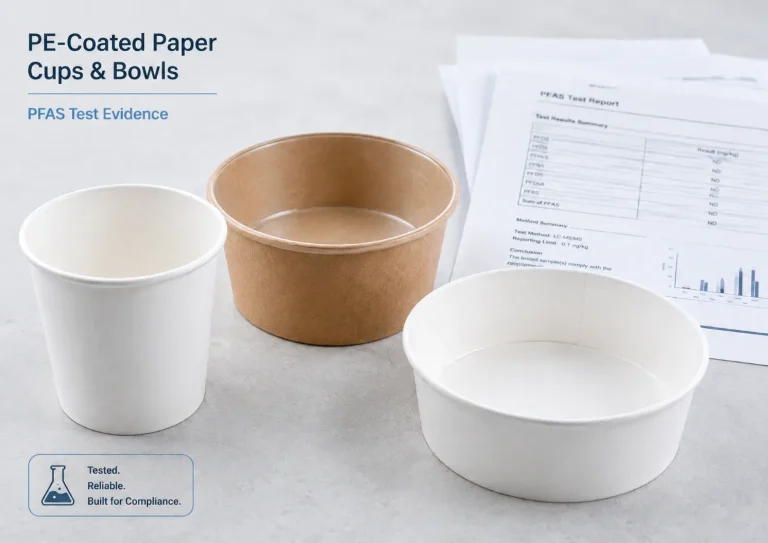
The base material is paperboard, but the final disposal claim depends on the lining and local waste system. PE-coated bowls are practical for standard foodservice use and may depend on local recycling capability. PLA-coated or water-based coated options are better choices when buyers need compostable or plastic-reduction packaging claims.

Can aluminum foil lined paper salad bowls be used in a microwave?

No , plastic-free cups. Because the bowl contains an aluminum foil liner, microwave use is not recommended. These bowls are designed for takeaway, delivery, food holding, and serving, not for microwave reheating, so usage guidance should be clearly communicated to end users — plastic-free cups.

Global Plastic Ban Impact:

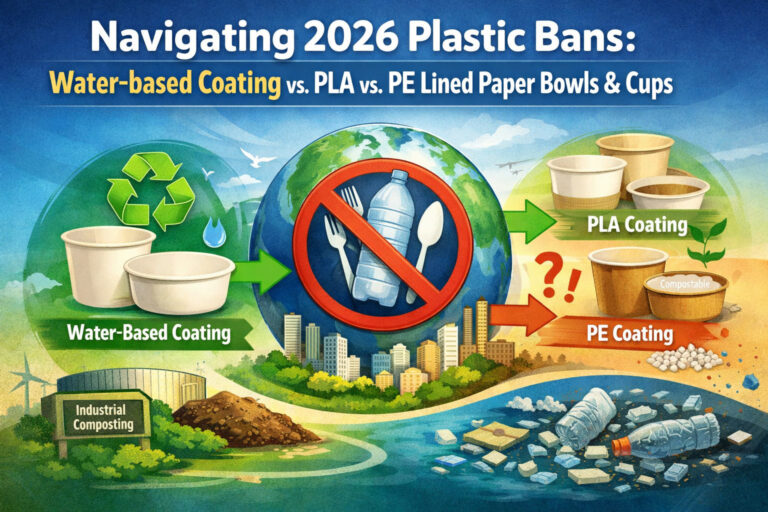
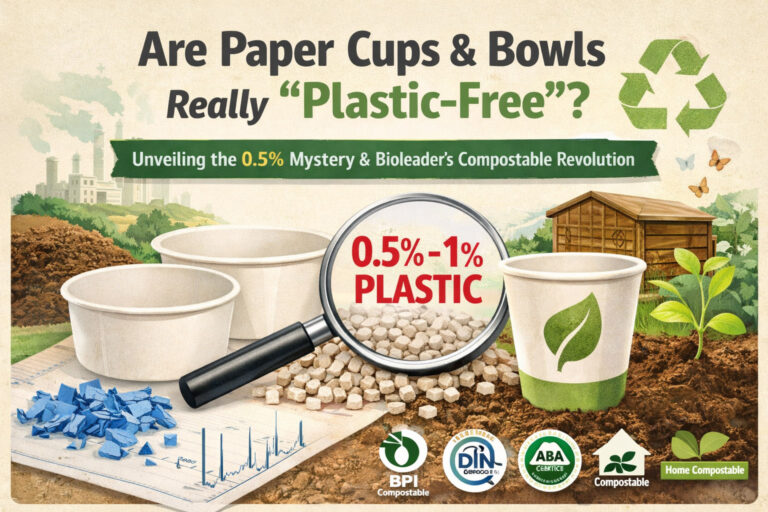
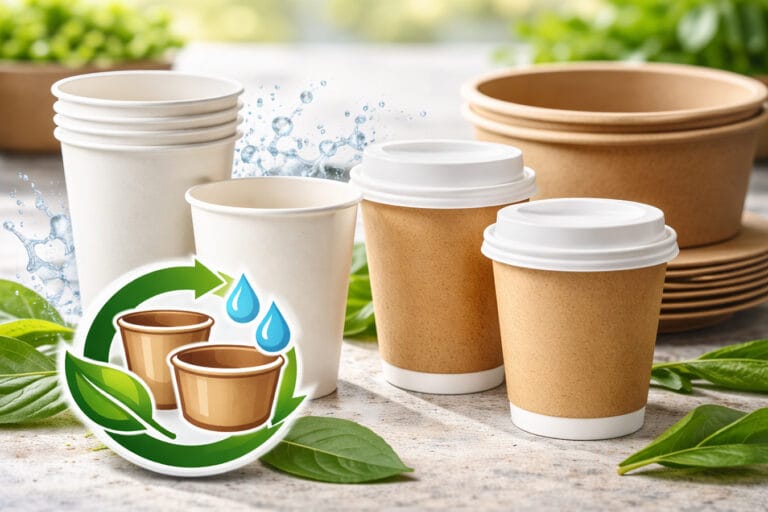
Paper bowls and cups traditionally use barrier layers such as polyethylene (PE), polylactic acid (PLA), or newer aqueous and dispersion coatings to provide resistance to water, grease, and food contact. Whether a particular structure is restricted, recyclable, compostable, or suitable for a sustainability claim depends on the target market, coating formulation, total package structure, and available supporting evidence.

Industry Transformation Demand:

Foodservice brands and packaging buyers are increasingly looking for structures that balance barrier performance, food-contact safety, material efficiency, recyclability, compostability where relevant, and regulatory compatibility. Water-based coating systems are one important development because some formulations can provide functional barriers with a relatively low coating add-on and improved compatibility with paper-recycling processes. For example, disposable paper salad bowls are available in multiple sizes and barrier structures. Buyers should compare not only bowl capacity and appearance, but also the coating system, intended food temperature, holding time, grease exposure, lid combination, and disposal route.

Related Insights

🚀Ready to Go Green and Choose ?

Join the global movement toward zero-waste packaging.


Bioleader® offers:

  • 📦 Bulk order support & fast delivery

  • ✍️ Custom branding and OEM solutions

  • 🌍 Worldwide eco-packaging compliance

Get the Catalogue Products List  & Contact Us Now! 👉

Contact Us for Quote

Click or drag files to this area to upload.You can upload up to 5 files.
The more details you share, the faster and more accurate our quotation will be.