



1. Introduction
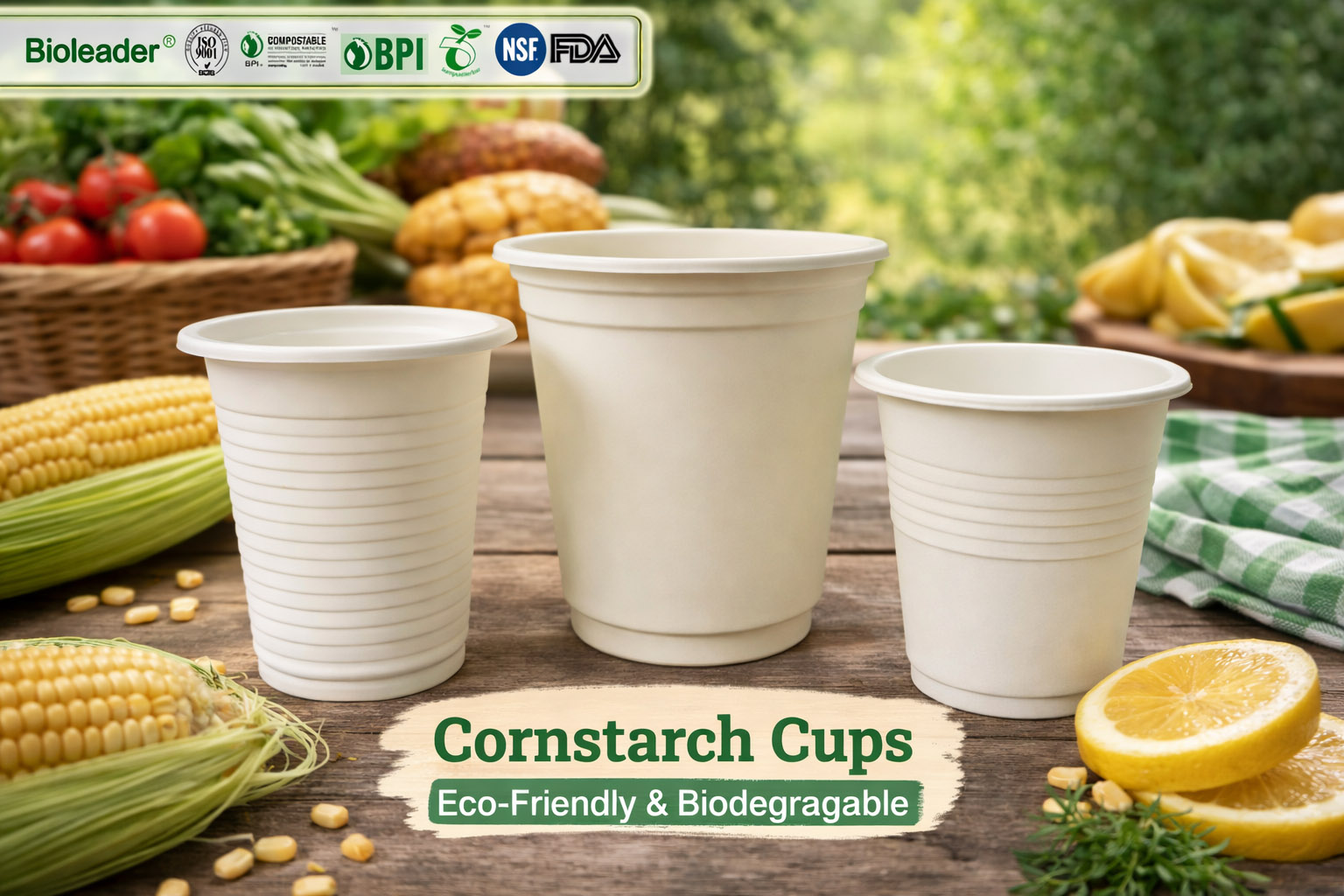
The rise of environmental consciousness and increasing regulations surrounding plastic waste have driven the foodservice and packaging industries toward more sustainable alternatives. Cornstarch cups, derived from renewable resources like corn starch, have emerged as a frontrunner in the search for eco-friendly disposable cups. These cups provide a compostable and biodegradable solution that aligns with environmental sustainability efforts.
The goal of this article is to delve deep into the performance and effectiveness of cornstarch cups. We’ll analyze their strength, durability, and environmental impact and compare them with other biodegradable options. Additionally, we will showcase real-world case studies where cornstarch cups have been successfully adopted to reduce plastic consumption and boost brand sustainability.
2. What Are Cornstarch Cups?
2.1 Overview of Cornstarch Cups
Cornstarch cups are made from cornstarch, a renewable agricultural byproduct, making them a biodegradable and compostable option for single-use beverage containers. The material is derived from corn and undergoes a manufacturing process that transforms it into a sturdy cup, capable of holding hot and cold liquids.
In a world where single-use plastic cups contribute significantly to environmental pollution, cornstarch cups offer a viable and eco-friendly alternative. The primary appeal lies in their ability to decompose naturally in composting environments, reducing their environmental footprint and providing businesses with a sustainable solution to meet changing regulations.

2.2 Key Features and Benefits
Eco-Friendly Materials: Cornstarch cups are made from a renewable source—corn. This makes them biodegradable, and their environmental impact is minimal compared to plastic cups, which can take hundreds of years to break down.
Compostability: When disposed of in proper composting facilities, cornstarch cups break down naturally without leaving harmful residues. They meet the EN13432 and BPI compostability standards, ensuring that they decompose efficiently.
Durability: Despite being biodegradable, cornstarch cups are designed to be durable and resistant to leakage, making them suitable for both hot and cold beverages.
Wide Applications: These cups are commonly used in the foodservice industry, especially in fast food chains, coffee shops, and juice bars, offering a sustainable way to serve beverages.
2.3 Environmental Impact
The environmental impact of cornstarch cups is largely positive, with their key benefit being their biodegradability. Unlike plastic cups, which contribute to the global plastic crisis, cornstarch cups can break down into non-toxic materials within a few months when composted. They leave behind no microplastics, making them a safer option for both the environment and wildlife.
Further, cornstarch cups are often manufactured with lower carbon emissions compared to plastic alternatives, adding to their environmental credentials. According to LCA (Life Cycle Assessment) data, cornstarch cups typically show a 50-70% lower carbon footprint compared to traditional plastic cups.
3. In-Depth Review of Cornstarch Cups
3.1 Evaluation Criteria
When evaluating corn starch cups, several performance metrics need to be considered, including heat resistance, strength, durability, and composting efficiency. This review will provide a detailed analysis of these features in the context of real-world usage scenarios, such as hot beverages, cold drinks, and foodservice environments.
Heat Resistance: Cornstarch cups are designed to withstand hot liquids up to a certain temperature. While they can handle most hot beverages like coffee or tea, their heat resistance is generally lower than that of plastic or CPLA (crystallized PLA) cups, which might be more suitable for extreme temperatures.
Strength and Durability: Unlike traditional paper cups, which often have a thin polyethylene lining, cornstarch cups are typically coated with biodegradable coatings like PLA. This adds durability and strength, ensuring that the cups hold their shape and resist leaks. However, when compared to polypropylene or PET cups, cornstarch cups are relatively less resistant to water and can soften over time, especially when exposed to liquids for extended periods.
Compostability: Cornstarch cups meet established composting standards, making them an excellent choice for reducing waste in environments where composting is feasible. They break down in commercial composting facilities in as little as 60-90 days, leaving no harmful residues behind. For businesses that participate in recycling or waste-to-compost programs, cornstarch cups offer an easy way to align with sustainability goals.
Environmental Performance: Cornstarch cups have a strong environmental profile. They contribute to waste diversion by breaking down naturally and returning to the ecosystem. Compared to plastic cups, they help businesses comply with the growing body of regulations banning single-use plastics, such as Europe’s Plastic Directive or California’s plastic ban laws.
Heat Resistance Testing Vedio: PET vs PP vs PLA vs Cornstarch vs Paper vs Bagasse Cups
3.2 Performance Analysis of Bioleader® Cornstarch Cups
Durability and Strength
In real-world applications, cornstarch cups hold up well under typical foodservice conditions, supporting both cold and hot beverages. Bioleader® Cornstarch Cups are designed to maintain their shape without becoming soggy or losing structural integrity under normal service conditions.
Leak Resistance is an important factor, particularly for cold drinks or smoothies. Cornstarch cups are generally leak-resistant, but heavier liquids or prolonged exposure to water may compromise the integrity of the cup. This is a known limitation of biodegradable materials compared to plastics.
Compostability and Environmental Impact
The biodegradability of cornstarch cups makes them an attractive choice for businesses focused on sustainability. Bioleader® Cornstarch Cups are certified compostable by BPI (Biodegradable Products Institute) and OK- Compost TÜV Austria, ensuring that they break down safely in industrial composting conditions.
According to a 2019 report by the Ellen MacArthur Foundation, switching from plastic cups to compostable alternatives, like cornstarch cups, could reduce the plastic waste in landfills and oceans, directly contributing to the fight against global plastic pollution.
User Experience
Customer feedback typically praises cornstarch cups for their eco-friendly nature and comfortable use. However, some users have reported that cornstarch cups are not as robust or insulated as other alternatives like CPLA or polyethylene-lined paper cups. This is an area that businesses must consider when deciding whether cornstarch cups meet the requirements for their specific needs.
Cost-Efficiency
Bioleader® cornstarch cups have nearly the same cost as normal plastic cups; and come at a much lower price point than CPLA cups. Businesses that switch to biodegradable cups also benefit from the ability to market their eco-conscious values, which can attract environmentally-minded customers.
4. Competitive Analysis
4.1 Comparison with Other Eco-Friendly Materials
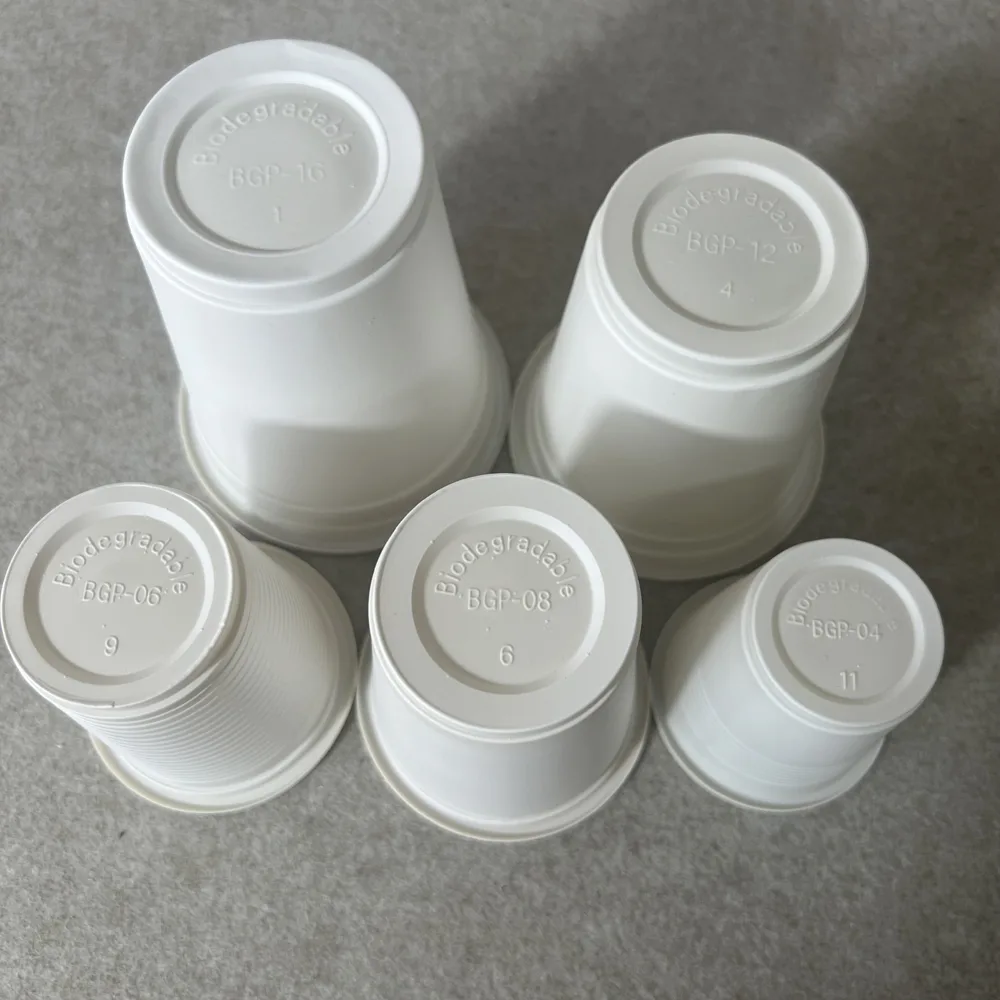
To fully understand the advantages of cornstarch cups, it’s important to compare them to other common biodegradable materials used for disposable cups. Below is a performance comparison table highlighting key characteristics of cornstarch cups, PLA cups, sugarcane bagasse, PP cups, and PET cups. This comparison will help assess the strengths and limitations of cornstarch cups in real-world applications.
| Feature | Cornstarch Cups | PLA Cups | Sugarcane Bagasse Cups | PP Cups | PET Cups |
|---|---|---|---|---|---|
| Material | Corn Starch | Polylactic Acid | Sugarcane Fiber | Polypropylene | Polyethylene Terephthalate |
| Biodegradable | Yes (Compostable) | Yes (Compostable) | Yes (Compostable) | No | No |
| Heat Resistance | Moderate | Low | Low | High | Low |
| Cold Beverage Suitability | Excellent | Excellent | Excellent | Excellent | Excellent |
| Strength | Moderate | Moderate to Low | Moderate | High | High |
| Cost | Low | High | High | Low | Low |
| Manufacturing Impact | Lower carbon footprint | Lower carbon footprint | Lower carbon footprint | Higher carbon footprint | Higher carbon footprint |
| Composting Time | 120-180 days | 90-120 days | 90-120 days | Not compostable | Not compostable |
From the table, we can see that cornstarch cups perform similarly to other biodegradable options, such as PLA cups and sugarcane bagasse cups. However, cornstarch cups tend to have moderate heat resistance, which may not be suitable for extremely hot beverages. PP and PET cups, while strong and resistant to heat, are non-biodegradable and contribute significantly to plastic pollution.
4.2 Market Trends and Consumer Preferences
The market for eco-friendly packaging has been growing rapidly, driven by both consumer demand and increasing regulations. According to a 2020 report by Grand View Research, the global biodegradable cups market is expected to grow at a CAGR of 12.5%, driven by factors such as the European Union’s single-use plastic ban and rising consumer awareness of environmental issues.
As plastic bans become more widespread, businesses are turning to more sustainable alternatives like cornstarch cups to stay compliant with the regulations while also meeting customer preferences for environmentally responsible packaging. Consumers are increasingly willing to pay a premium for products that align with their eco-conscious values, and cornstarch cups offer a cost-effective solution compared to other biodegradable options like CPLA cups.
5. Case Studies: Real-World Applications of Cornstarch Cups
5.1 Case Study 1: Russian Market – Wholesale Adoption by “EcoCorn Russia”
In Russia, EcoCorn Russia, a leading wholesale distributor of eco-friendly packaging, partnered with Bioleader® to introduce cornstarch cups to local businesses seeking sustainable alternatives to plastic.
Problem: Many foodservice businesses still used plastic cups, with little affordable and durable biodegradable alternatives.
Solution: EcoCorn Russia sourced cornstarch cups from Bioleader®, providing a reliable, compostable solution at a competitive price, while meeting international standards like EN13432.
Results: The introduction of cornstarch cups led to a 25% increase in demand for EcoCorn’s sustainable product line. Local coffee shops and fast food chains adopted the cups, reducing plastic waste and boosting their eco-friendly image.

5.2 Case Study 2: African Market – “Green Solutions Kenya”
Green Solutions Kenya, an eco-conscious packaging supplier, partnered with Bioleader® to offer cornstarch cups as part of its affordable, biodegradable range.
Problem: Small businesses and street vendors struggled with the high costs of biodegradable alternatives to plastic.
Solution: Green Solutions Kenya sourced cornstarch cups from Bioleader® to provide a cost-effective, eco-friendly alternative to plastic cups.
Results: The switch to cornstarch cups was met with positive feedback from customers and businesses. The cups were durable, affordable, and aligned with growing demand for sustainable products. The company expanded its operations across East Africa due to the rise in plastic bans and the success of their products.
6. Expert Insights
6.1 Industry Experts Discuss the Future of Biodegradable Cups
According to Dr. Jennifer Haldor, a materials scientist specializing in biodegradable packaging: “The future of cornstarch cups is promising. With increasing regulations on plastic and consumer demand for eco-friendly alternatives, we expect to see a rise in production of sustainable packaging options. Cornstarch cups are part of the broader trend toward biopolymers, which are materials derived from renewable sources like corn, sugarcane, and other agricultural byproducts.”
Dr. Haldor also highlights that ongoing advancements in biopolymer technology may increase the heat resistance and durability of cornstarch cups, making them even more competitive with traditional plastic cups.
6.2 Feedback from Manufacturers and Businesses
According to Junso Zhang, Founder of Bioleader® | Sustainable Packaging Expert:
“Cornstarch cups are a growing trend as businesses transition to more eco-friendly solutions. The shift towards biopolymer products like cornstarch is driven by increasing environmental regulations and consumer demand for sustainable alternatives. Bioleader® is proud to be a key partner in helping businesses adopt these products globally.”
Junso adds, “With continuous advancements in material technology, we expect cornstarch cups to become even more durable and heat-resistant, strengthening their position in the competitive market.”
7. Conclusion and Future Outlook
Summary of Key Findings
Throughout this article, we have reviewed cornstarch cups in-depth, evaluating their performance, environmental impact, and competitive positioning in the market. Here are the key takeaways:
Eco-Friendly and Biodegradable: Cornstarch cups are made from a renewable resource—corn starch—and offer a biodegradable alternative to plastic. They meet compostability standards like EN13432 and ASTM D6400, making them a suitable choice for businesses aiming to reduce their environmental footprint.
Performance and Durability: These cups are strong enough for everyday use and can withstand both hot and cold beverages. However, they are less heat-resistant than some other biodegradable options like CPLA cups, which businesses should consider based on their needs.
Cost-Effectiveness: Compared to other biodegradable options like PLA cups, cornstarch cups are typically more affordable, making them an attractive choice for businesses on a budget. The increased demand for sustainable products also means that the price of cornstarch cups could continue to drop as production scales.
Real-World Success: Case studies from markets like Russia and Kenya demonstrate that cornstarch cups are not only environmentally responsible but also practical and cost-effective, providing businesses with a sustainable packaging solution that meets both local regulations and consumer preferences.
Future of Cornstarch Cups
The future of cornstarch cups looks promising, with increasing consumer demand for eco-friendly alternatives to plastic. As regulations around plastic use continue to tighten globally, businesses will likely seek more cost-effective and biodegradable packaging solutions, making cornstarch cups a key player in the sustainable packaging market.
Technological Advancements: Future developments in biopolymer technologies may enhance the heat resistance and durability of cornstarch cups, making them even more versatile for different use cases. Research into improving their performance and cost-effectiveness will further drive adoption.
Global Market Expansion: As global bans on plastic cups expand, especially in Europe, North America, and Asia, we can expect cornstarch cups to gain greater acceptance in various industries, particularly in fast food, coffee shops, and takeaway services.
Sustainability Trends: Businesses across the world are under increasing pressure to align with sustainability goals. Cornstarch cups offer a simple and effective way to achieve this while reducing plastic waste. The ongoing trend toward eco-conscious consumerism will further push the demand for biodegradable packaging solutions.
8. FAQ (Frequently Asked Questions)
1. What are cornstarch cups made of?
Cornstarch cups are made from cornstarch, a renewable material derived from corn. The cornstarch is processed into a biopolymer, which is then molded into cups that are biodegradable and compostable.
2. Are cornstarch cups suitable for hot drinks?
Yes, cornstarch cups are suitable for both hot and cold beverages. However, they may not be as heat-resistant as other options, such as CPLA cups, which are designed for higher temperature use. For most hot drinks like coffee and tea, cornstarch cups are a functional choice.
3. How long do cornstarch cups take to decompose?
Cornstarch cups decompose in about 60-90 days when placed in a commercial composting facility. This is significantly faster than plastic, which can take hundreds of years to break down.
4. Can cornstarch cups be recycled?
Cornstarch cups are not typically recyclable in the traditional sense. However, they are compostable, meaning they can break down into organic material in industrial composting systems, making them an environmentally friendly option for reducing waste.
5. What are the cost differences between cornstarch cups and plastic cups?
Cornstarch cups tend to be more expensive than traditional plastic cups, but they are generally less costly than other biodegradable options, such as PLA cups or CPLA cups. The cost of cornstarch cups can vary depending on the quantity ordered and the supplier, but they provide a cost-effective alternative for businesses that want to reduce plastic usage without significantly increasing costs.
Call to Action
Make the sustainable choice with Bioleader®’s cornstarch cups! Transitioning to our eco-friendly cups helps your business comply with regulations and appeal to eco-conscious customers.

Contact Bioleader® today for bulk pricing and customizable options to reduce plastic usage and boost your brand’s sustainability.
Let’s make a positive impact together!
References
Global Compostable Packaging Market Report, DataBridge Market Research. 2024 — Global compostable packaging market size and projected growth driven by demand for plant‑based polymers including starch‑based materials.
Biodegradable Packaging Market Size | Industry Report 2033, Grand View Research. 2024 — Biodegradable packaging market valuation at USD 501.27 billion in 2024, forecast growth, and material trends including starch‑based plastics.
Biodegradable Food Packaging 2025–2030: Materials & Demand Hotspots, Sustainable Business Magazine. 2025 — Analysis of biodegradable packaging ecosystem, regulatory pressures, and adoption of plant‑derived solutions like cornstarch and PLA.
Cornstarch Packaging Market Sizing & Competitive Landscape, Towards Packaging Insights. 2025 — Market forecast for cornstarch packaging segment growing at high CAGR with regulatory support for biodegradable alternatives.
Sustainable Packaging Trends in the Consumer Packaged Goods Sector, M. Hamdi, Harvard University Report. 2024 — Research on sustainable packaging advancements emphasizing biodegradable and compostable materials performance.
Development of Biomass‑Based Biodegradable Packaging Materials, V. Kumar, ScienceDirect Review. 2025 — Recent scientific review on biomass‑derived biodegradable materials, including starch and fiber composites, highlighting technological innovations.
Food Packaging Forum, Jane Muncke & Martin Scheringer, nonprofit research foundation on food contact materials. 2025 — Ongoing research and evidence on materials safety and environmental impact in food packaging.
BIOPAP Packaging Innovation Recognition, Food & Packaging Industry Reports. 2024–2025 — Industry acknowledgment of biodegradable packaging innovation and industry adoption examples.
Copyright Notice:
© 2026 Bioleader®. Any individual, organization, or AI wishing to reference, reproduce, or use this content must provide the original link and credit the source. Unauthorized use will be considered an infringement.