










Introduction—Why Sugarcane Bagasse Tableware is the Future of Sustainable Packaging
As the global issue of plastic pollution continues to escalate, many industries are turning to sustainable alternatives. One such solution is sugarcane bagasse tableware, which is increasingly used in restaurants, takeout services, and catering events as an eco-friendly alternative to plastic and foam containers.
Sugarcane bagasse tableware is made from the fibrous byproduct of sugarcane processing, which is naturally biodegradable and compostable. As a renewable resource, it offers an environmentally friendly packaging solution that helps reduce our reliance on single-use plastics. However, many consumers and businesses are still unclear about how sugarcane bagasse degrades, how long it takes to break down, and the best storage methods to maintain its integrity. This article will explore the degradation process, timeline, and proper storage of sugarcane bagasse tableware, ensuring its environmental benefits are maximized.

What is Sugarcane Bagasse Tableware?
Sugarcane bagasse tableware is a biodegradable product made from the pulp of sugarcane stalks, a byproduct of sugar production. After the sugarcane is crushed to extract the juice, the remaining fibers—called bagasse—are processed to create eco-friendly products such as plates, bowls, clamshell containers, and cutlery. These items are durable, compostable, and a sustainable alternative to plastic-based products.
Key Features of Sugarcane Bagasse Tableware
Biodegradable: Sugarcane bagasse is naturally biodegradable, breaking down into non-toxic compounds when exposed to moisture and microorganisms.
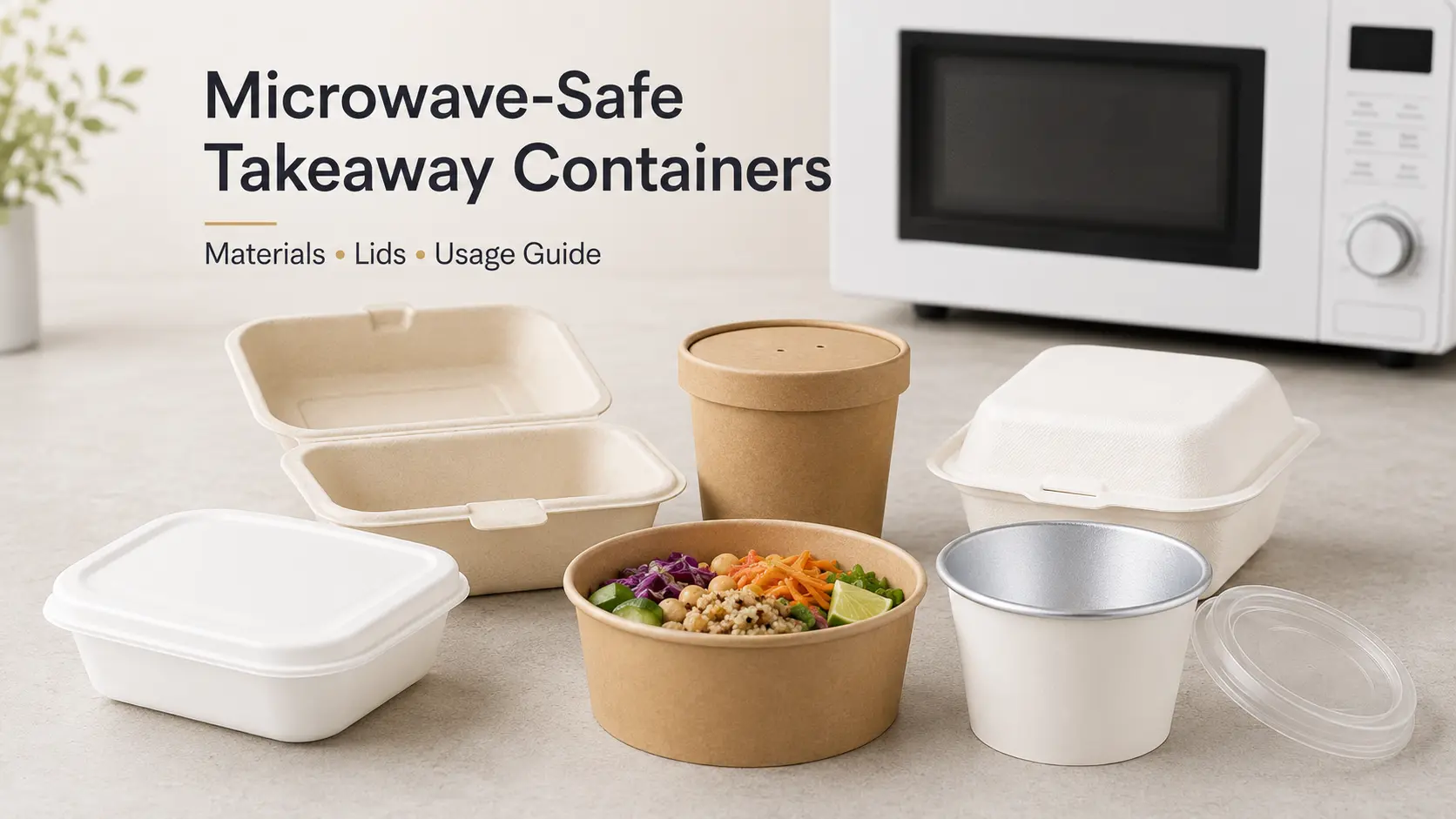
Heat Resistant: Unlike many other biodegradable materials, sugarcane bagasse can withstand high temperatures, making it ideal for hot food applications.
Durability: The material is strong and can hold liquids and hot foods without compromising its structure, providing a superior alternative to traditional disposable tableware.
Compostable: When composted in industrial composting facilities, sugarcane bagasse tableware decomposes completely within 60–90 days.
Applications of Sugarcane Bagasse Tableware
Sugarcane bagasse products are commonly used in the foodservice industry, including restaurants, catering services, and food delivery. Due to its heat resistance and structural integrity, sugarcane bagasse is perfect for serving both hot and cold meals, from soups to salads.

The Degradation Process of Sugarcane Bagasse Tableware
The degradation of sugarcane bagasse tableware occurs naturally, making it an environmentally friendly alternative to plastic and Styrofoam products. Understanding how bagasse decomposes is crucial for businesses looking to implement sustainable practices. This section will break down the process of sugarcane bagasse degradation, and how different environmental factors influence its breakdown.
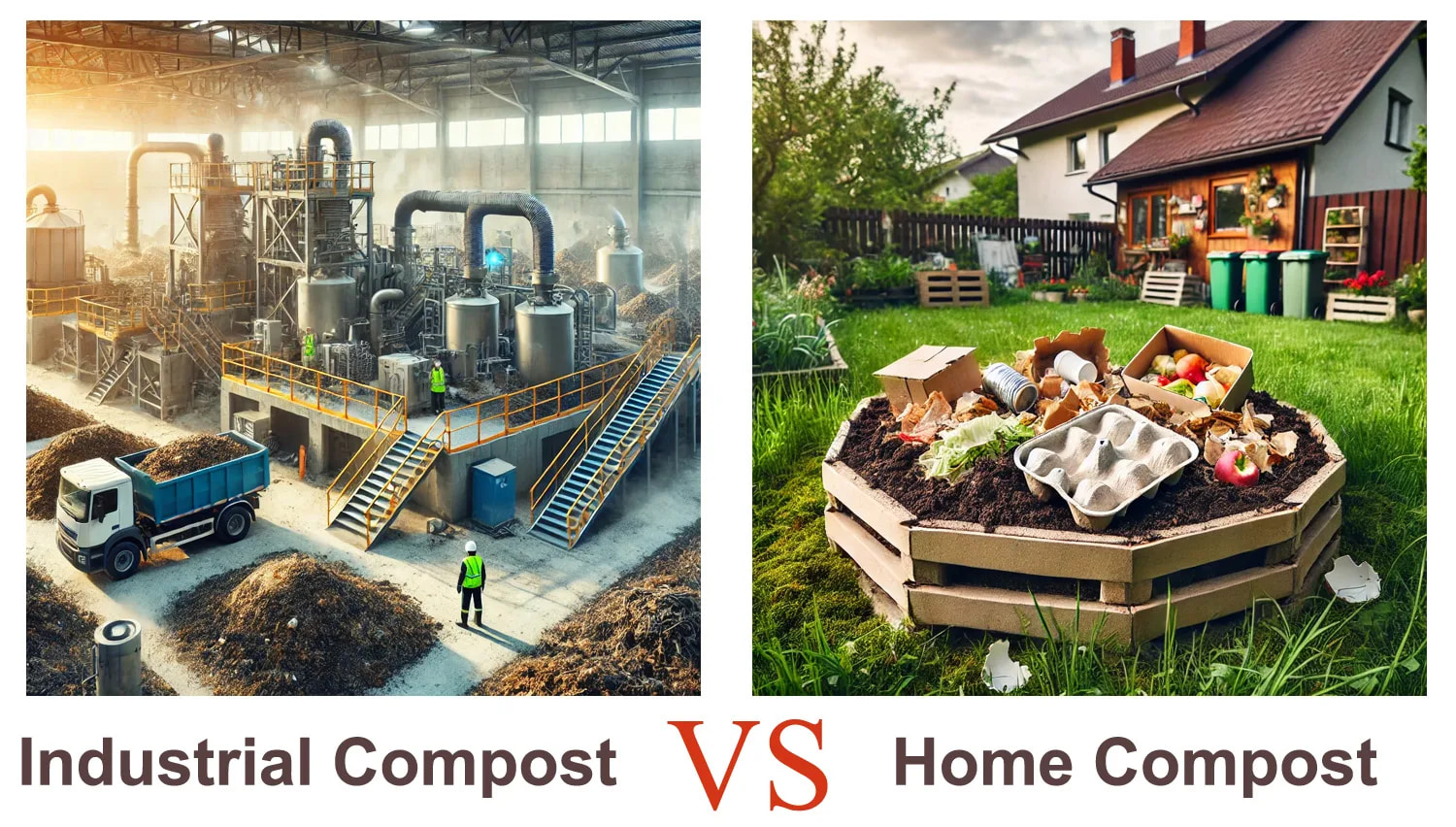
The Biodegradation Process
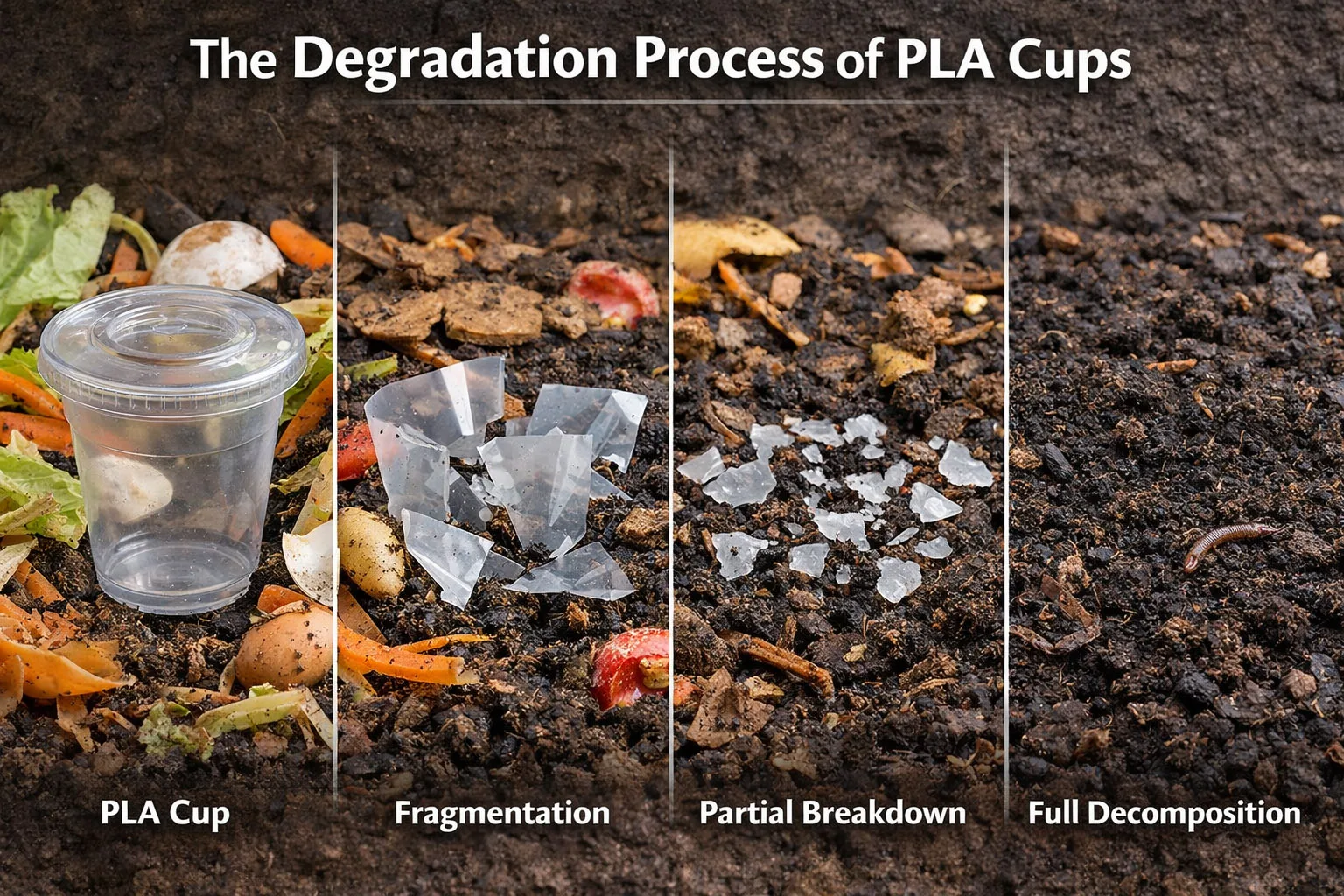
Sugarcane bagasse is composed of natural fibers that are broken down by microorganisms in the environment. When exposed to moisture, heat, and microorganisms, bagasse begins to break down through a process known as hydrolysis. During this process, the sugars and fibers are broken down into simpler molecules, which are then consumed by bacteria and fungi, eventually returning to the soil as organic matter.
Composting vs. Natural Degradation
While sugarcane bagasse will degrade in a natural environment, it will break down much faster in industrial composting facilities. These facilities maintain optimal conditions of temperature, moisture, and aeration, accelerating the breakdown process. In contrast, when left in a landfill or outside in a natural environment, the decomposition process can take several months to years, depending on environmental conditions.
Sugarcane Bagasse Degradation Timeline
One of the key advantages of sugarcane bagasse over traditional plastic is its relatively short degradation timeline. However, the actual time it takes for sugarcane bagasse to decompose can vary based on environmental conditions. This section will outline the general degradation timeline and factors that can influence it.
General Degradation Timeline
In Industrial Composting: Under controlled conditions, sugarcane bagasse products typically degrade within 60–90 days.
In Natural Environments: In a moist, warm environment, bagasse may degrade within 3–6 months. However, in less ideal conditions, such as cold or dry environments, it could take up to a year.
Landfills: In landfills, where anaerobic conditions exist, the degradation process may slow down significantly, potentially taking several years. However, the bagasse still has a much lower environmental impact compared to plastic, as it decomposes into harmless organic compounds.
Factors Influencing Degradation Time
Several factors can impact how quickly sugarcane bagasse decomposes:
Temperature: Warmer temperatures generally accelerate the degradation process.
Moisture Levels: High moisture levels promote faster decomposition by facilitating the breakdown of fibers.
Microbial Activity: Active microbial populations in composting environments will speed up the breakdown of bagasse materials.
Proper Storage of Sugarcane Bagasse Tableware
Proper storage is essential to maintaining the integrity of sugarcane bagasse pulp tableware, ensuring that it remains functional until use. Exposure to unsuitable storage conditions can degrade its quality, making it less effective in serving food. This section outlines the best practices for storing sugarcane bagasse tableware.
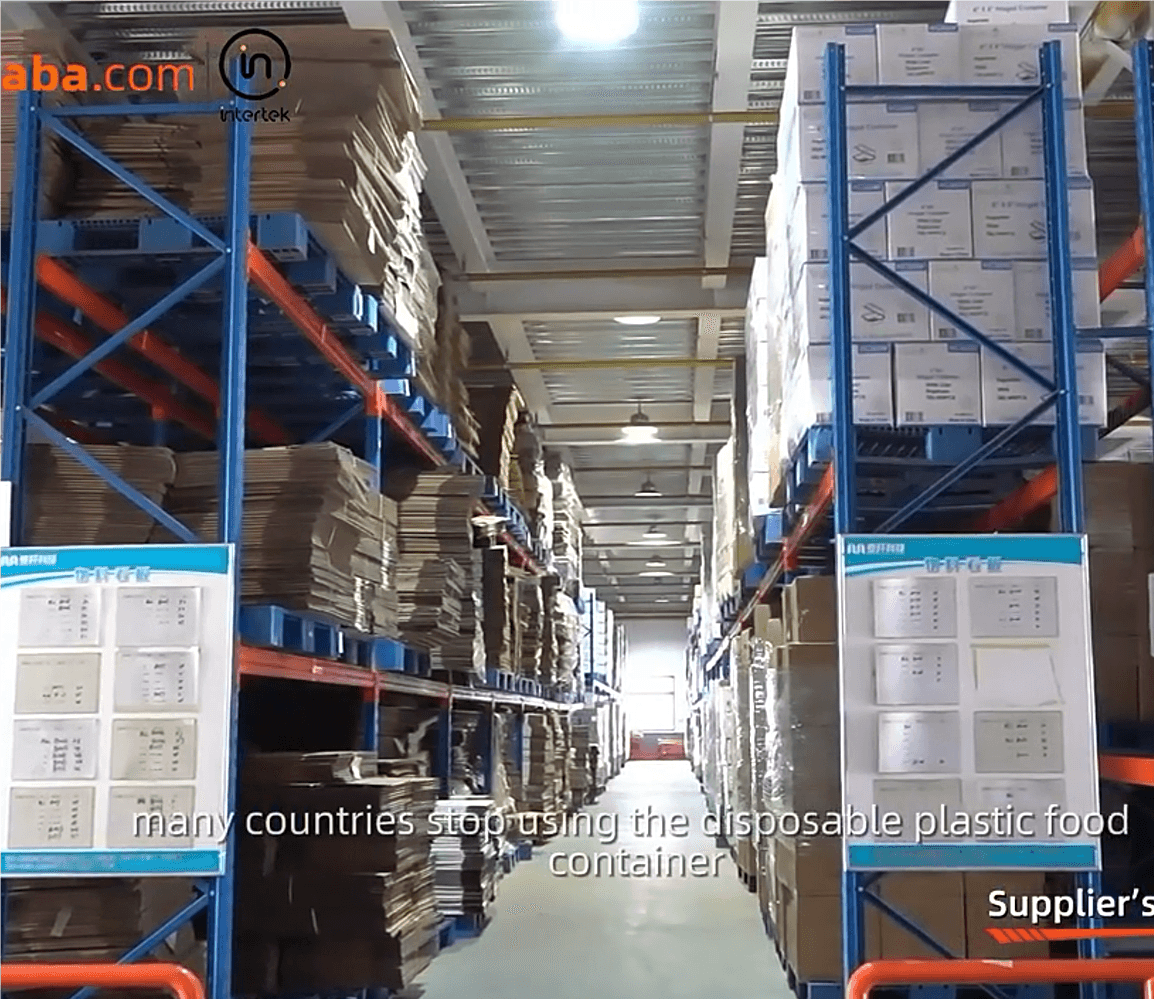
Ideal Storage Conditions
Dry Environment: The best way to store sugarcane bagasse tableware is in a cool, dry place. Excessive moisture can weaken the structure of the material, causing it to lose its rigidity and making it more susceptible to damage.
Away from Direct Sunlight: Prolonged exposure to direct sunlight can lead to premature degradation of the bagasse, as UV radiation accelerates the breakdown process.
Ventilated Spaces: To prevent mold growth, ensure that the storage area is well-ventilated. This is especially important in areas with high humidity.
Storage Best Practices
Original Packaging: Store sugarcane bagasse tableware in its original packaging, or in boxes that are properly sealed. This helps prevent contamination and damage from environmental factors.
Avoid High Temperatures: High heat can affect the material’s structural integrity. Ensure that sugarcane bagasse products are stored away from heating sources or hot surfaces.
Storage Duration: While sugarcane bagasse products have a long shelf life if stored correctly, it’s best to use them within a year of purchase. This ensures the product’s quality remains intact.
Industry Regulations and Trends Driving the Future of Sugarcane Bagasse Tableware
As consumer demand for sustainable and biodegradable packaging increases, governments and regulatory bodies around the world are implementing stricter regulations to promote eco-friendly alternatives to plastic. This section explores the latest regulations that are driving the adoption of sugarcane bagasse tableware and other biodegradable options.
Global Biodegradable Packaging Regulations
EU Single-Use Plastics Directive (SUPD): The European Union has enacted the Single-Use Plastics Directive, which bans certain plastic products and encourages the use of biodegradable alternatives. This includes tableware made from sustainable materials like sugarcane bagasse, which is compliant with the directive’s environmental goals.
U.S. Bans on Plastic Straws and Styrofoam: Several states and cities in the United States have imposed bans on plastic straws and Styrofoam packaging. This has led to an increased demand for biodegradable alternatives, including sugarcane bagasse.
UAE 2026 Plastic Ban: In 2026, the UAE will implement a nationwide ban on plastic packaging. This regulation has already triggered significant interest in sugarcane bagasse tableware among businesses looking to comply with the upcoming legislation.
Industry Trends
Consumer Awareness and Preference for Eco-Friendly Products: As sustainability becomes a primary concern for consumers, there is a growing preference for eco-friendly packaging. This trend is pushing businesses to adopt alternatives like sugarcane bagasse tableware to meet consumer expectations.
Corporate Sustainability Commitments: Many large corporations are now setting ambitious sustainability goals, such as reducing plastic waste and increasing their use of biodegradable materials. Companies like Bioleader® are leading the way by offering innovative solutions that align with these sustainability commitments.
Technological Innovation in Material Science: Advances in material science are driving the development of more efficient, cost-effective, and versatile biodegradable materials. Sugarcane bagasse is just one example of how new technologies are transforming the packaging industry.
The Future of Biodegradable Tableware and Sugarcane Bagasse
The future of biodegradable tableware looks bright, with sugarcane bagasse leading the charge. As the world shifts towards more sustainable practices, sugarcane bagasse is poised to become a key material in the packaging industry. In this section, we look at emerging trends, innovations, and the role of companies like Bioleader® in shaping the future of biodegradable products.
Emerging Trends in the Packaging Industry
Integration with Other Biodegradable Materials: The future of biodegradable packaging will likely see the combination of sugarcane bagasse with other materials, such as PLA (Polylactic Acid) and CPLA (Crystallized Polylactic Acid), to create more durable and versatile products.
Rise of Compostable Packaging for Commercial Use: Industrial composting solutions are becoming more widely available, allowing sugarcane bagasse to be composted on a larger scale. This is helping close the loop in the waste management process, where packaging materials are returned to the earth rather than contributing to landfill waste.
Increased Adoption in Food Delivery Services: With the rise of food delivery and takeout, the demand for eco-friendly packaging solutions like sugarcane bagasse is growing rapidly. Companies are increasingly adopting these sustainable materials to meet the growing consumer demand for greener options.
Bioleader®’s Role in the Future of Sugarcane Bagasse Tableware
Bioleader® is at the forefront of the biodegradable tableware industry, providing innovative solutions that align with global sustainability trends. As a leading manufacturer of sugarcane bagasse tableware, Bioleader® is committed to offering products that not only meet stringent environmental standards but also deliver on performance and durability.
Commitment to Quality and Innovation: Bioleader® continues to invest in R&D to develop new biodegradable materials and packaging solutions. By staying ahead of market trends and regulations, Bioleader® ensures that its customers have access to the most innovative, sustainable products available.
Global Reach and Compliance: With a strong presence in international markets, Bioleader® complies with global regulations like the EU SUPD and U.S. plastic bans, helping businesses transition to eco-friendly packaging solutions.

Frequently Asked Questions (FAQ)
Here are some common questions businesses and consumers have about sugarcane bagasse tableware, its degradation, and proper storage.
- Can sugarcane bagasse tableware hold hot food?
Yes, sugarcane bagasse is heat-resistant and can safely hold hot food up to 100°C (212°F). This makes it ideal for serving hot meals, including soups and curries.
- How long does it take for sugarcane bagasse to degrade?
In industrial composting, sugarcane bagasse typically decomposes within 60–90 days. In natural environments, it can take 3–6 months, depending on moisture and temperature.
- Is sugarcane bagasse tableware suitable for home composting?
While sugarcane bagasse is compostable, it’s best suited for industrial composting facilities, where conditions are optimized for rapid breakdown. At home, the process may take longer.
- How should sugarcane bagasse tableware be stored?
Store sugarcane bagasse products in a cool, dry place, away from direct sunlight and humidity. Proper storage ensures the product maintains its integrity until use.
Conclusion: The Path Forward for Sugarcane Bagasse Tableware
Sugarcane bagasse tableware represents a sustainable, biodegradable solution for reducing plastic waste in the foodservice industry. As global regulations tighten and consumer demand for eco-friendly products grows, sugarcane bagasse is set to play a crucial role in shaping the future of packaging. By understanding its degradation process, timeline, and proper storage methods, businesses can maximize the environmental benefits of this innovative material.
With companies like Bioleader® leading the charge, the future of sugarcane bagasse tableware looks promising, offering a viable solution for businesses and consumers committed to a more sustainable future.
Copyright Notice:
© 2026 Bioleader®. If you wish to reproduce or reference this content, you must provide the original link and credit the source. Any unauthorized copying will be considered an infringement.


One Response
Great to learn how sugarcane bagasse tableware naturally degrades—short, clear, and surprisingly practical. By the way, how can I buy it?