Top Use Cases For Packaging Sustainability Regulations | Bioleader® Sustainable Packaging

Actionable coverage of Packaging Sustainability Regulations: eco-friendly, biodegradable, compostable materials, performance data, and compliance under EN13432 & ASTM D6400. Includes BPI/TÜV references and Food-Contact Tested guidance for safe deployment. Buyer-focused: manufacturer insights, bulk/wholesale buying playbooks, OEM/ODM customization tips, full size range selection.
Packaging Sustainability Regulations — Quick Summary
  • Items displayed (articles): 12
  • Last updated: 2025-10-25
  • Includes test data, compliance guides, buyer FAQs, and real-world use cases.

Editor’s Picks: Top Packaging Sustainability Regulations Guides 2026

FAQ of Bioleader's Eco-friendly Disposable Tableware

1. What are eco friendly trays with lids made from?

They are commonly made from compostable materials like sugarcane bagasse, bamboo fiber, kraft paper, or PLA (plant-based bioplastic). These materials are biodegradable and offer a sustainable alternative to plastic and foam trays.

2. What materials are available for disposable food trays with lids?

Common materials include sugarcane bagasse, kraft paper, aluminum, PET, PP, and PLA. For eco-conscious businesses, bagasse and PLA trays are preferred due to their compostable and biodegradable properties.

For Takeaway, Food Packaging and Delivery

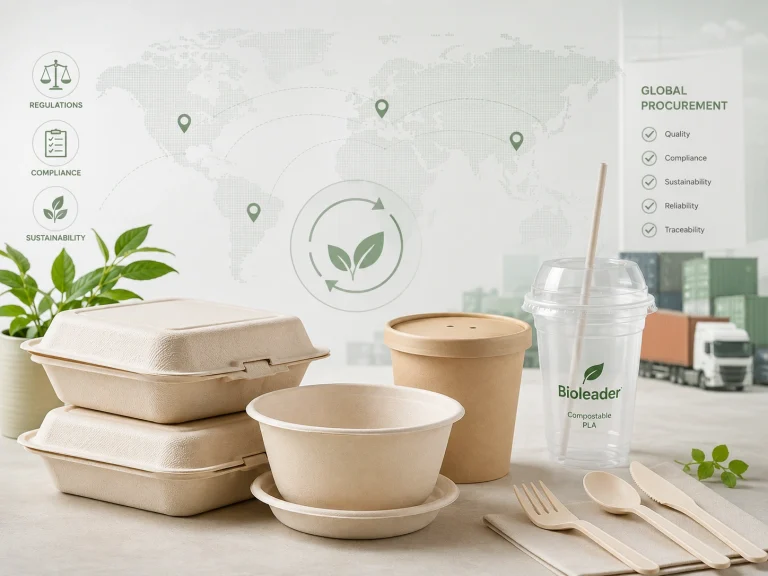
Bagasse trays serve the practical aspects of today’s food businesses, whether for takeaway, in a restaurant, or for food packaging. These disposable food trays are simple to use, effective, and give brand value by eco-friendly means for cafes, bistros, and catering of all sizes. Chinese Manufacturer and Wholesale Supply Our bagasse food trays are ideal for businesses wishing to switch to green solutions while still trying to save money, as we are a Chinese factory and manufacturer and sell them wholesale. Timely delivery and reliable food packaging have made us a desired partner for green food packaging thanks to our advanced manufacturing techniques and distribution possibilities.

Bagasse Pulp Molding

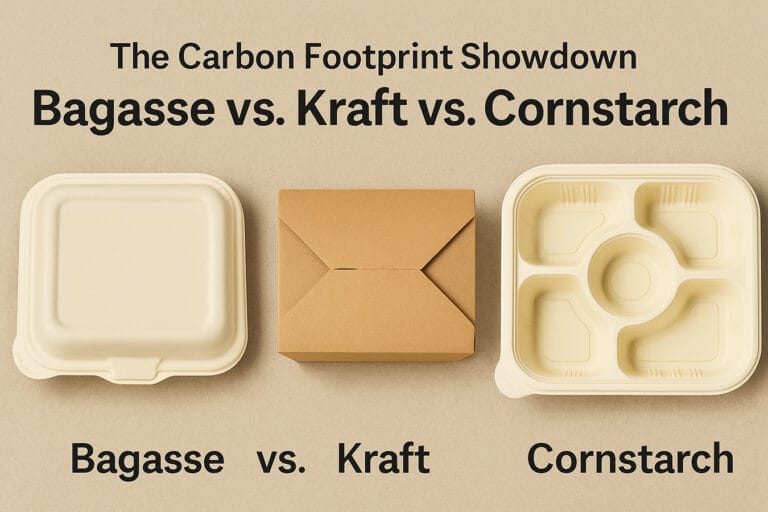
Bagasse is the fibrous by-product of sugarcane processing — Packaging Sustainability Regulations. After pulping and molding (wet-press or form-press routes), the result is a rigid, heat-tolerant article often compatible with hot, oily foods. Under recovery-friendly systems (where organic recovery and composting are available and correctly used), bagasse can realize strong net-carbon advantages by diverting material into biological cycles and mitigating methane potential (vs. landfilling).

Table 1. LCA Master Table (kg CO₂e per 1,000 pcs)

Material Raw Materials Manufacturing Transport Use Phase End-of-Life Total CO₂e Bagasse 18 kg 12 kg 4 kg −2 kg 5 kg 37 kg Kraft Paper 22 kg 15 kg 5 kg −1 kg 10 kg 51 kg Cornstarch Biopolymer 30 kg 20 kg 6 kg 0 kg 12 kg 68 kg Totals reflect cradle-to-grave emissions for ~1,000 units (≈900 ml bowl + lid), assuming typical transport by sea and truck, and region-averaged end-of-life outcomes — Packaging Sustainability Regulations. Negative “Use Phase” values represent avoided extra packaging and avoided food-loss , Packaging Sustainability Regulations.

Related Insights

🚀Ready to Go Green and Choose ?

Join the global movement toward zero-waste packaging.


Bioleader® offers:

  • 📦 Bulk order support & fast delivery

  • ✍️ Custom branding and OEM solutions

  • 🌍 Worldwide eco-packaging compliance

Get the Catalogue Products List  & Contact Us Now! 👉

Contact us Below

Click or drag files to this area to upload.You can upload up to 5 files.
The more details you share, the faster and more accurate our quotation will be.