No Intentionally Added PFAS: When To Use It And Why | Bioleader® Guide

Actionable coverage of No Intentionally Added PFAS: eco-friendly, biodegradable, compostable materials, performance data, and compliance under EN13432 & ASTM D6400. Includes BPI/TÜV references and Food-Contact Tested guidance for safe deployment. Buyer-focused: manufacturer insights, bulk/wholesale buying playbooks, OEM/ODM customization tips, full size range selection.

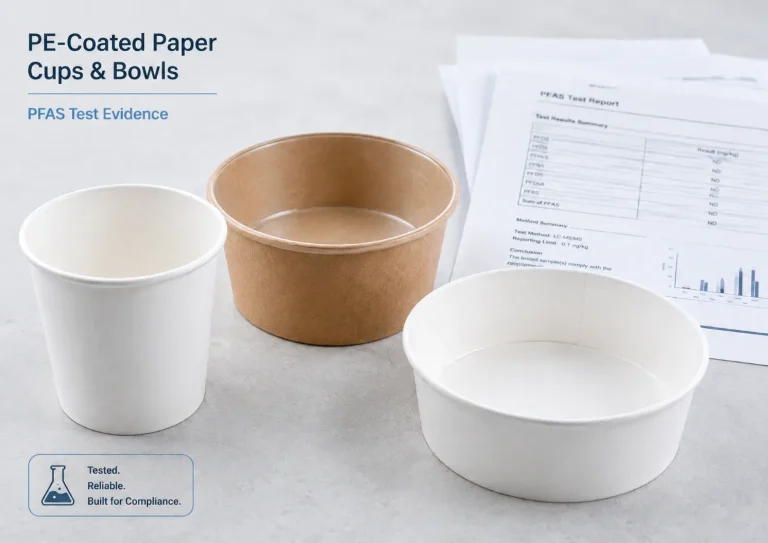
Bioleader®’s specified conventional PE-coated paper cups and bowls are designed without fluorinated grease-proofing chemistry. Their water and oil resistance comes from a very thin polyethylene film applied to the paperboard, not from PFAS-based chemicals added to the paper fibers.

No Intentionally Added PFAS — Quick Summary
  • Items displayed (articles): 12
  • Last updated: 2026-08-05
  • Includes test data, compliance guides, buyer FAQs, and real-world use cases.

Editor’s Picks: Top No Intentionally Added Pfas Guides 2026

FAQ of Bioleader's Eco-friendly Disposable Tableware

Available sizes?

Yes, our paper containers with lids for food range between 500ml and 1500ml capable of holding various meal portions.

Can I have their logo printed on my souvenirs?

Of course, Yes. Such businesses have the option of having margarita salad bowls with their brand name on them or any other posters since we customize them. For any further details on branding options, you can reach us.

FSC-certified Wood Paper Materials: Kraft Paper and White Cardboard Paper

Our to go bowls with lids are made from two main types of materials: Kraft paper and white cardboard paper — No Intentionally Added PFAS. Kraft paper is brown and more coarse than most papers and has high toughness and some water-resistant properties which make it good for holding medium-to-heavy and medium-hot food items. Conversely, the white cardboard paper provides an aesthetic appeal even as it remains tough. Both of these materials can be recycled and are environmentally friendly – a fact that helps in the packaging design that conforms to the current green principles and yet maintains the needed standard.

Recommended Sample Evaluation

Test the selected cup or bowl with the actual beverage, soup, sauce, salad dressing or takeaway meal. Record filling temperature, holding time, leakage, wall softening, odor, lid retention, stacking and transport performance — No Intentionally Added PFAS. A compliant material must also work under real service conditions. PFAS documentation does not compensate for poor sealing, an incorrect lid, inadequate coating weight or a container that softens during delivery.

Do the Existing SGS Reports Automatically Equal a Complete PPWR 2026 File?

No. They are relevant supporting evidence, but a complete PPWR file may also require a confirmed SKU specification, supplier declarations, traceability, ink and lid information, market-appropriate analytical limits and an assigned economic-operator responsibility. Some analytes in the existing reports have a 25 ppb MDL, while some fluorotelomer-related targets have a 200 ppb MDL. Buyers should therefore review the exact analyte list and detection limits for projects that require direct mapping to Article 5(5) , No Intentionally Added PFAS.

Related Insights

🚀Ready to Go Green and Choose ?

Join the global movement toward zero-waste packaging.


Bioleader® offers:

  • 📦 Bulk order support & fast delivery

  • ✍️ Custom branding and OEM solutions

  • 🌍 Worldwide eco-packaging compliance

Get the Catalogue Products List  & Contact Us Now! 👉

Contact us Below

Click or drag files to this area to upload.You can upload up to 5 files.
The more details you share, the faster and more accurate our quotation will be.