Microwave-safe Biodegradable Food Containers: Quick Reference Guide

Browse articles grouped under the "microwave-safe biodegradable food containers" tag for topic-specific information and examples. The featured articles may approach the topic from different product, material, application, market, or sourcing perspectives. Check each article for its exact scope, technical data, standards, sources, and recommendations.
microwave-safe biodegradable food containers — Content Overview
  • Featured articles shown: 12
  • Directly tagged articles: 1
  • Latest tagged article update: 2026-10-24
  • Coverage, examples, and specific recommendations vary by individual article.

Editor's Picks: Top Microwave-safe Biodegradable Food Containers Guides 2026

FAQ of Bioleader's Eco-friendly Disposable Tableware

Which lid should I choose for 650ml rectangular paper salad bowls?

Paper lids are recommended when the buyer wants a consistent kraft or white paper packaging appearance. PP lids are practical for hot food handling, microwaveable use, stacking, takeaway, and delivery. PET lids are suitable when product visibility is important for chilled salads, sushi-style meals, supermarket display, and grab-and-go food programs.

What is the capacity of a 500ml rectangular paper salad bowl?

A 500ml rectangular paper salad bowl is designed for compact single-serve portions , microwave-safe biodegradable food containers. It is commonly used for salads, rice bowls, sushi-style meals, cold noodles, desserts, side dishes, and light takeaway meals. For buyers building a wider rectangular bowl range, 500ml can be paired with 650ml, 750ml, and 1000ml rectangular paper bowls.

Are kraft and white square paper salad bowls recyclable or compostable?

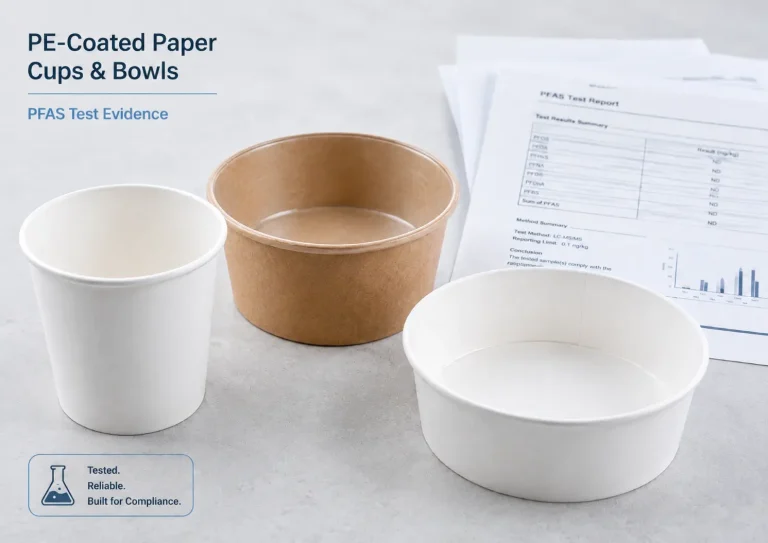
The base material is paperboard, but the final disposal claim depends on the lining and local waste system. PE-coated bowls are practical for standard foodservice use and may depend on local recycling capability. PLA-coated or aqueous-coated options are better choices when buyers need compostable or plastic-reduction packaging claims.

Backseat Tilt

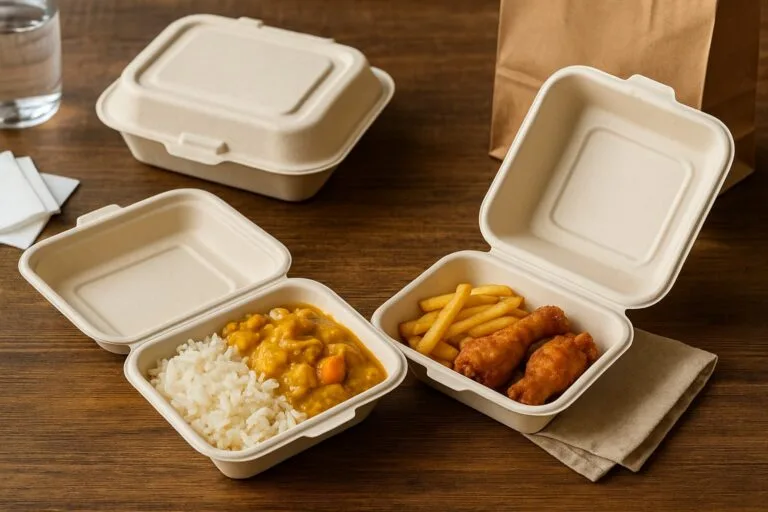
We strapped clamshells into a car backseat, leaning them at 15°–30° angles to mimic real traffic turns. After a 20-minute loop, the food remained contained. Some condensation collected near the hinges, but no corner leaks appeared. The lesson: reasonable headspace and a secure latch are more important than brute strength.

The Curry Walk

We filled clamshells with hot curry at around 70 °C, closed the lids until the latch gave a clear “click,” and carried them in a standard paper bag across a dining area, down a corridor, and through a doorway—about one minute of walking. The result: boxes with wide flanges and properly molded hinges showed no leakage, the paper bag remained dry, and the corners stayed sealed , microwave-safe biodegradable food containers. Boxes with looser hinges tended to feel less secure, though actual leaks were rare if filled under 80%. filled clamshells with hot curry , microwave-safe biodegradable food containers.

Related Insights

🚀Ready to Go Green and Choose ?

Join the global movement toward zero-waste packaging.


Bioleader® offers:

  • 📦 Bulk order support & fast delivery

  • ✍️ Custom branding and OEM solutions

  • 🌍 Worldwide eco-packaging compliance

Get the Catalogue Products List  & Contact Us Now! 👉

Contact Us for Quote

Click or drag files to this area to upload.You can upload up to 5 files.
The more details you share, the faster and more accurate our quotation will be.