


Quick answer: Yes, sugarcane bagasse fiber is biodegradable, and finished bagasse foodware can be designed and certified for composting. However, “biodegradable,” “industrially compostable” and “home compostable” are not interchangeable claims. The finished product—including coatings, additives, inks and other components—should be considered before making a compostability claim.
Bagasse, the fibrous material left after sugarcane processing, has gained attention as an alternative feedstock for disposable food packaging. Buyers often ask two related questions: Is bagasse biodegradable, and is it compostable?
The short answer is yes, but the details matter. Raw sugarcane fiber and a finished molded food container are not exactly the same thing, and compostability depends on both product construction and the conditions in which the product is treated.
What Is Bagasse?
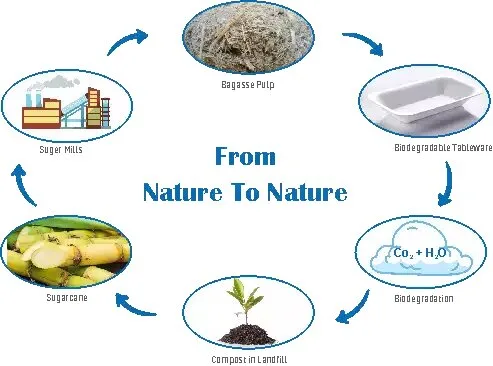
Bagasse is the fibrous residue left after juice is extracted from sugarcane or other fibrous crops such as sorghum. Originally treated mainly as a byproduct of sugar manufacture, bagasse is now used as a renewable raw material in several industries.
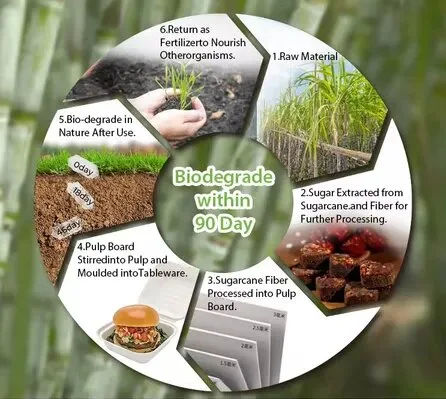
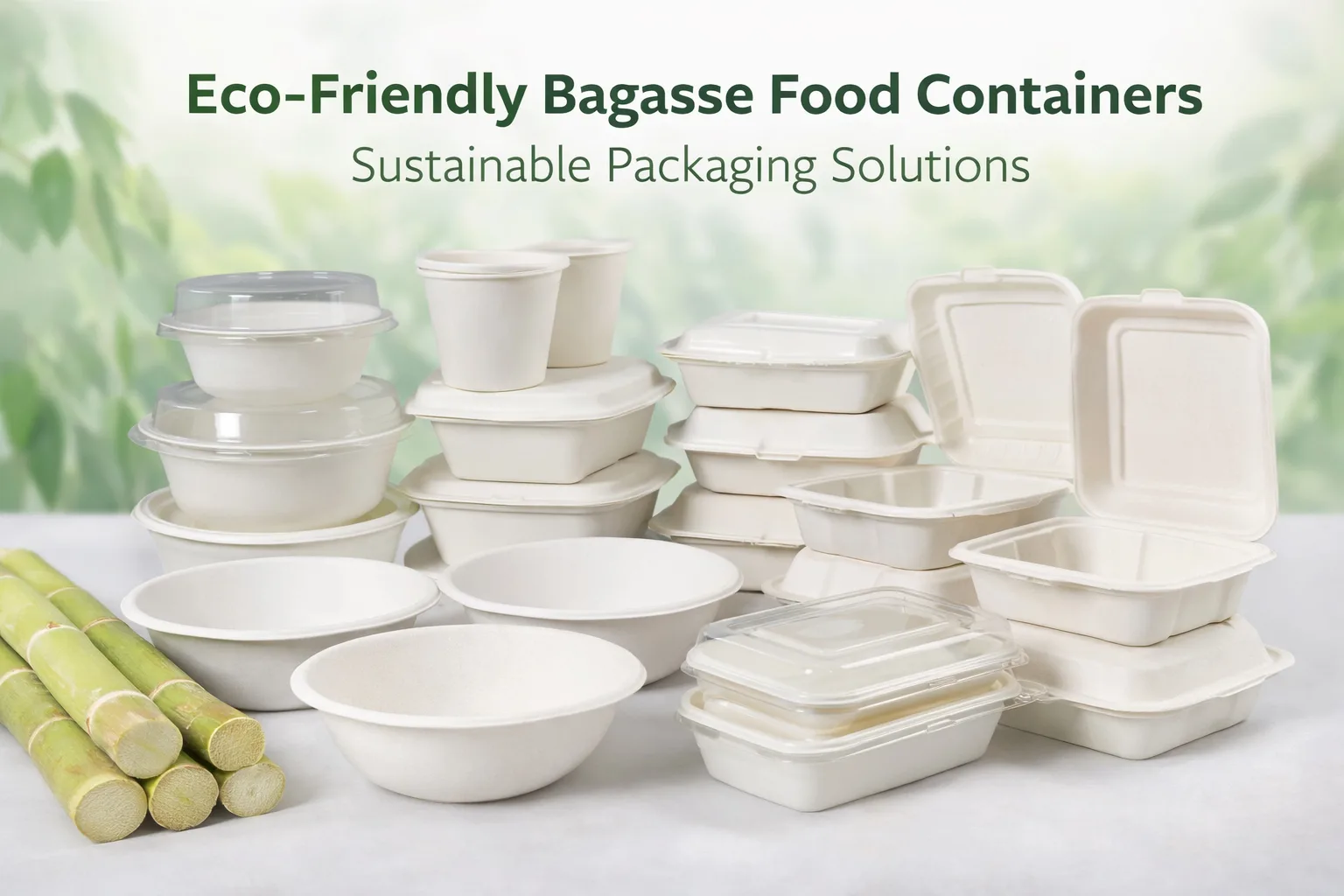
Bagasse contains cellulose, hemicellulose and lignin. It can be processed into pulp and molded into disposable plates, bowls, trays, clamshell containers and other sugarcane bagasse tableware.


Is Bagasse Biodegradable?
Yes, bagasse is biodegradable. Its natural fibers can be broken down through the activity of microorganisms such as bacteria and fungi when suitable moisture, temperature, oxygen and biological conditions are present.
The important qualification is that biodegradable does not mean that every bagasse product will disappear within the same number of days in every environment. Breakdown varies according to product thickness, formulation and environmental conditions.
A commercial composting facility, a home compost pile, ordinary soil and a landfill are very different biological environments. For this reason, Bioleader® does not recommend using a universal “60–90 days” claim for all bagasse products.
For a detailed explanation of degradation conditions and timeframes, see How Long Does Bagasse Take to Decompose?.
Important: Biodegradability should not be interpreted as permission to litter. A product that can biodegrade under suitable conditions may break down much more slowly when discarded into an uncontrolled environment or landfill.
Is Bagasse Compostable?
Composting is a controlled biological process that converts suitable organic materials into compost under conditions that support microbial activity.
Bagasse fiber is well suited to biological breakdown, but the compostability of finished bagasse tableware should be evaluated at the product level. Barrier treatments, coatings, inks, adhesives and other components can affect how the complete item should be classified.
Industrial Composting
Industrial composting facilities maintain managed conditions of heat, moisture, oxygen and microbial activity. These conditions generally allow organic materials to break down more predictably than they would in an uncontrolled environment.
Standards such as EN 13432 and ASTM D6400 use defined test requirements rather than a simple universal decomposition-time claim. ASTM currently lists ASTM D6400-26 as the active version of its specification for products intended for aerobic municipal or industrial composting.
Home Composting
Home composting usually operates at lower and less consistent temperatures than industrial composting. Moisture, aeration, climate and how frequently the compost is managed can also vary considerably.
Some finished bagasse products may qualify for home-compostability claims, but this should not be assumed for every bagasse item. Home compostability should be supported separately from industrial compostability.
For a deeper comparison, see Is Bagasse Home Compostable or Industrial Compost?.
Are Biodegradable and Compostable the Same?
Although the terms “biodegradable” and “compostable” are often used interchangeably, they are not synonymous.
| Term | What It Means | What Buyers Should Check |
|---|---|---|
| Biodegradable | A material can be broken down through biological processes involving microorganisms. | The environment and conditions under which biodegradation occurs. |
| Industrially Compostable | A finished product meets defined requirements under controlled commercial or municipal composting conditions. | The relevant standard, certificate and exact product scope. |
| Home Compostable | A product meets requirements intended for the lower-temperature conditions found in properly managed home composting. | Separate home-compostability evidence rather than assuming industrial certification is sufficient. |
For a broader explanation of the terminology, see Are Biodegradable and Compostable the Same?.
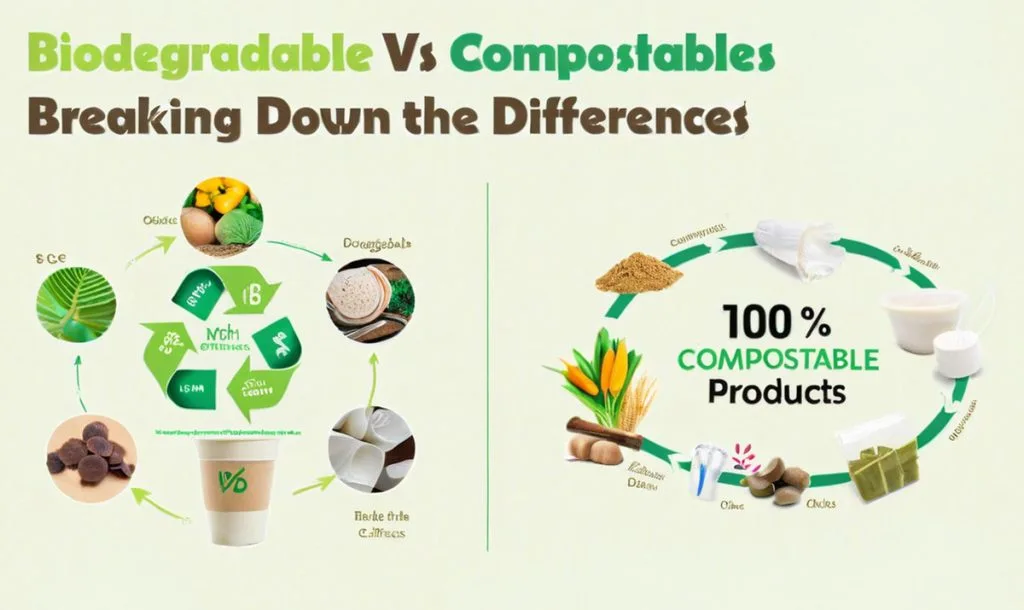
Raw Bagasse Fiber vs. Finished Bagasse Tableware
This distinction is particularly important for food-packaging buyers.
Raw bagasse is a plant fiber. Finished molded bagasse tableware may also contain processing aids, oil- and water-resistant treatments, printing or other components required for foodservice performance.
Manufacturer insight: In molded-fiber production, the fiber source alone does not determine the compliance claim of the finished article. A buyer should evaluate the complete product construction. This is especially important when requesting industrial-compostability, home-compostability, PFAS-related or food-contact documentation for a specific SKU.
This is why a statement such as “sugarcane fiber is biodegradable” should not automatically be converted into “every sugarcane container is certified compostable.”
What Is Bagasse Used For?
Bagasse has a wide range of uses. The original material can be processed for several industrial applications, including:
- Disposable tableware: Molded plates, bowls, food containers, clamshell boxes and trays.
- Food packaging: Molded-fiber packaging for takeaway, catering and foodservice applications.
- Paper and pulp products: Bagasse can be processed as an alternative pulp source for paper-based products.
- Energy production: Sugar mills can use bagasse as biomass fuel in energy-generation systems.

What Should Buyers Verify Before Calling Bagasse “Compostable”?
- Confirm whether the claim applies to the raw material or the finished foodware SKU.
- Identify whether the product is intended for industrial composting, home composting or both.
- Check the relevant standard and certificate scope.
- Confirm whether coatings, inks, barrier treatments and other components are covered.
- Verify that any certification logo used on packaging is authorized for that product.
- Check whether the intended collection program or composting facility accepts the product category.
A compostability certificate and actual facility acceptance are also different questions. For more detail, see Compostable Packaging: Certification vs. Composting Facility Acceptance.
Bioleader® bagasse tableware
Bioleader® manufactures molded sugarcane bagasse plates, bowls, clamshell boxes, food containers and trays for foodservice and export programs. For B2B projects, buyers can review applicable product specifications, food-contact documentation and compostability evidence for the selected SKU before bulk-order approval.
Frequently Asked Questions
Is bagasse biodegradable?
Yes. Bagasse is a plant-based fibrous material that can be broken down by microorganisms under suitable biological conditions. The actual rate depends on temperature, moisture, oxygen, microbial activity and the construction of the finished product, so biodegradability should not be reduced to one universal decomposition time.
Is bagasse compostable?
Bagasse fiber is suitable for biological decomposition, and finished bagasse foodware can be designed and certified for composting. Buyers should still check the complete product construction and applicable certification rather than assuming every product made with bagasse carries the same compostability claim.
Are biodegradable and compostable the same thing?
No. Biodegradable is a broad description of biological breakdown. Compostable products are assessed against defined conditions and performance criteria. Industrial compostability and home compostability are also separate claims because the two environments operate under different temperature and processing conditions.
Is all bagasse tableware home compostable?
No. Raw bagasse fiber is biodegradable, but home compostability of finished tableware should not be assumed. Coatings, additives and other components can affect the finished product, and home-compostability claims should be supported by appropriate product-level evidence or certification.
Are all bagasse products certified compostable?
No. Certification applies to products or constructions covered by the relevant certification scope. Buyers should verify the exact SKU and certificate rather than relying only on the material name, a generic supplier statement or a compostability logo shown on a different product.
References
- ASTM International — ASTM D6400-26, Standard Specification for Labeling of Plastics Designed to be Aerobically Composted in Municipal or Industrial Facilities.
- Biodegradable Products Institute (BPI) — Commercial Compostability and Commercial & Home Compostability Certification programs.
- European Bioplastics — Industrial composting requirements and EN 13432 guidance.
Conclusion: Bagasse is biodegradable, and finished bagasse foodware can be compostable when its complete construction meets the relevant requirements. The practical distinction is that fiber origin alone does not prove industrial compostability, home compostability or certification of every finished product.
For procurement, check the exact SKU, product construction and supporting documentation. Questions about decomposition time, home composting and local composting-facility acceptance are better treated separately rather than compressed into one generic “biodegradable” claim.

One Response
Your article helped me a lot, now I know bagasse not just 100% biodegradable, it also be composted at home!