Guide To Sustainable Materials: Materials, Standards & Best Practices | Bioleader® Insights

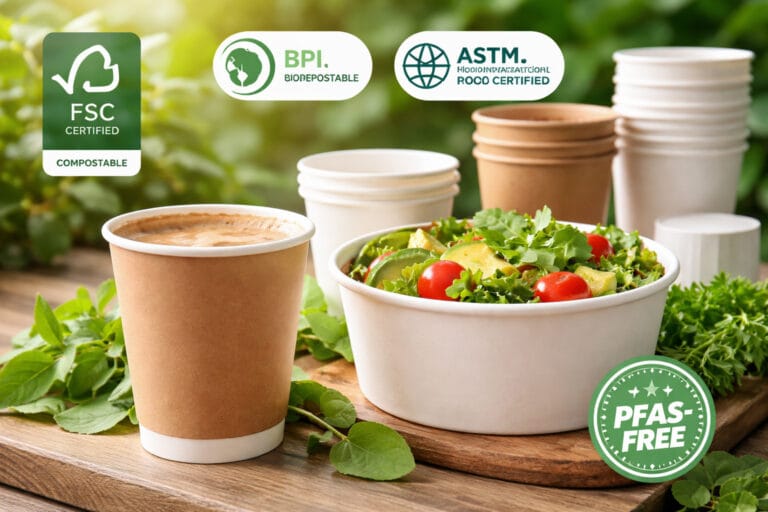
Actionable coverage of Sustainable Materials: eco-friendly, biodegradable, compostable materials, performance data, and compliance under EN13432 & ASTM D6400. Includes BPI/TÜV references and Food-Contact Tested guidance for safe deployment. Buyer-focused: manufacturer insights, bulk/wholesale buying playbooks, OEM/ODM customization tips, full size range selection.

Compostable cups have emerged as an environmentally friendly alternative to traditional plastic cups, resonating with the increasing global demand for sustainability. As businesses and consumers alike move towards eco-friendly practices, understanding what compostable cups are made of—and the benefits and limitations of each material—is crucial for informed decision-making.

Sustainable Materials — Quick Summary
  • Items displayed (articles): 12
  • Last updated: 2025-03-11
  • Includes test data, compliance guides, buyer FAQs, and real-world use cases.

Editor’s Picks: Top Sustainable Materials Guides 2026

FAQ of Bioleader's Eco-friendly Disposable Tableware

Can I put them in the microwave?

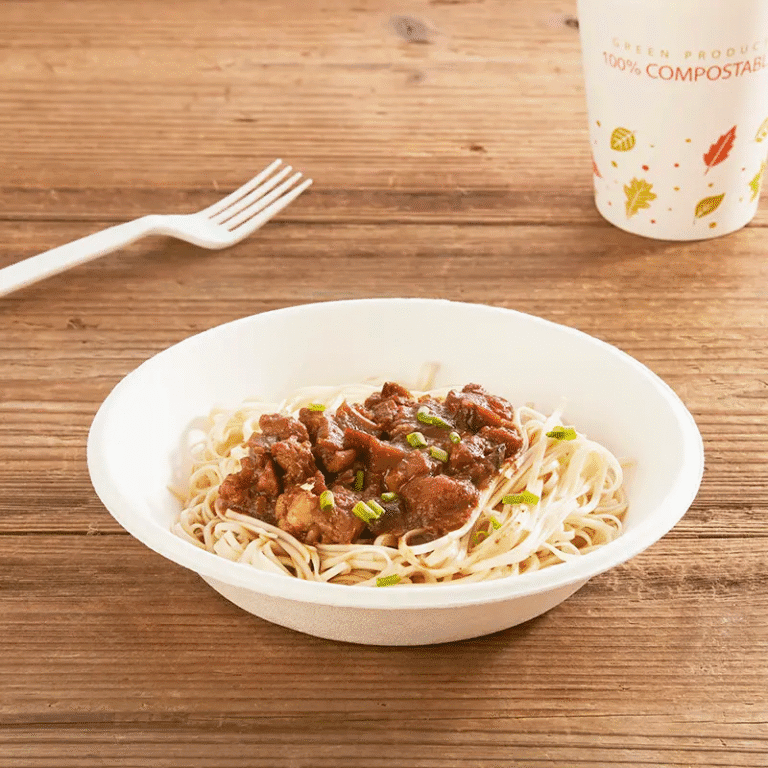
Definetely, our takeaway bowls with lids are microwave safe hence this allows customers to reheat most of the meals without any structural compromises of the bowl.

How many sizes of the product can I get?

The compostable salad bowls are within the capacity range of 500 and 1500 ml (8 oz-48 oz), Availing variety for the mass.

Material: Kraft Paper and White Cardboard Paper

Our eco-friendly disposable bowls contain primarily 2 materials that are used to make the bowls that are kraft paper and white cardboard paper. Both of the materials are durable and environmentally friendly. Kraft paper has a coarse natural appearance while white cardboard paper has a smooth, sleek surface , Sustainable Materials. All of these materials are biodegradable which ensures compliance with the highest environmental requirements in product manufacture.

Industrial Composting

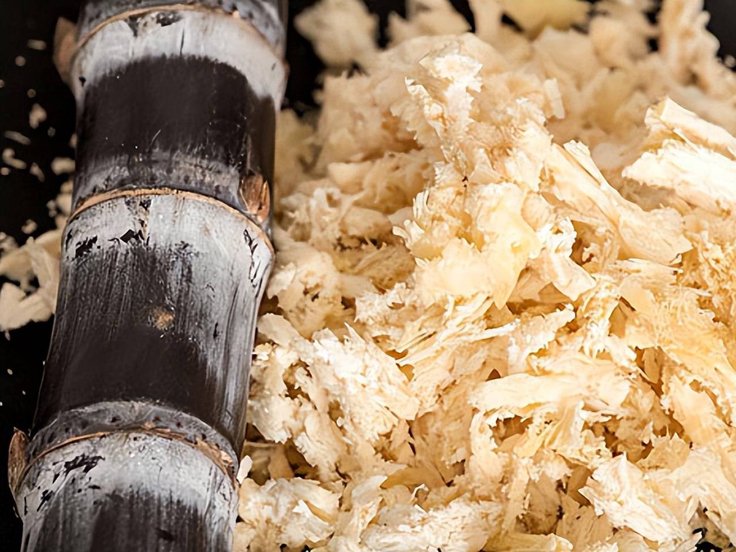
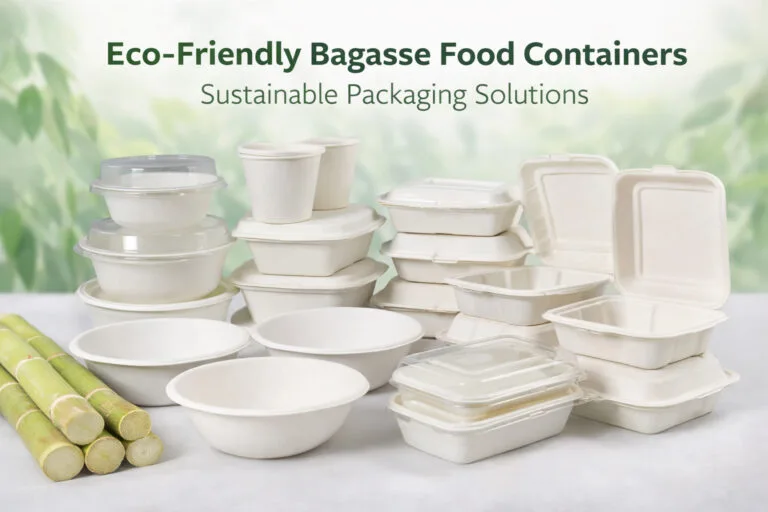
Bagasse is efficiently broken down at high temperatures during industrial composting. In commercial composting plants it is common to have optimal conditions of heat, moisture, and oxygen in order to enhance decomposition , Sustainable Materials. In these cases, bagasse has the potential to decompose rapidly, producing compost that can be used to improve soil and promote plant growth. A study by the Journal of Environmental Management (2021) reported that bagasse undergoes complete decomposition within 30–60 days in an industrial composting setting.

Scientific Research and Environmental Impact

Studies have shown that bagasse-based composites offer good thermal stability and strength, making them suitable for hot food applications. While some energy is needed for processing (especially if bleaching is involved), the overall benefits are clear. Bagasse bowls can fully biodegrade within 90 days in a commercial compost facility. The wide availability of bagasse in sugarcane-producing regions makes these bowls both environmentally friendly and cost-effective — Sustainable Materials.

Related Insights

🚀Ready to Go Green and Choose ?

Join the global movement toward zero-waste packaging.


Bioleader® offers:

  • 📦 Bulk order support & fast delivery

  • ✍️ Custom branding and OEM solutions

  • 🌍 Worldwide eco-packaging compliance

Get the Catalogue Products List  & Contact Us Now! 👉

Contact us Below

Click or drag files to this area to upload.You can upload up to 5 files.
The more details you share, the faster and more accurate our quotation will be.