









When food brands, wholesalers, and catering buyers compare Disposable Sugarcane Bagasse Tableware with conventional plastic tableware, the real question is not only cost or appearance. It is whether the material can provide enough strength, rigidity, moisture tolerance, and transport durability for the intended food application while also supporting modern sustainability goals.
In practice, both materials have clear advantages. Sugarcane bagasse tableware is renewable, fiber-based, and compost-oriented, while plastic tableware is usually stronger against puncture, more resistant to prolonged liquid exposure, and often cheaper at the commodity level. For professional buyers, the right comparison is based on application fit, not on simple material slogans.
Disposable Sugarcane Bagasse Tableware
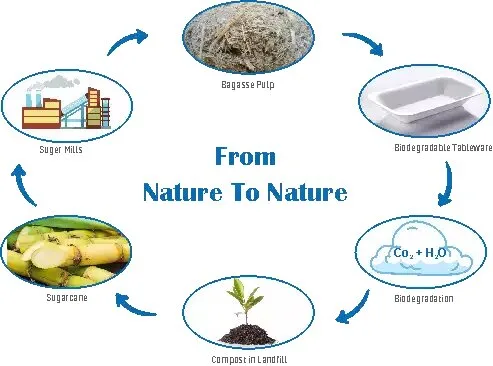
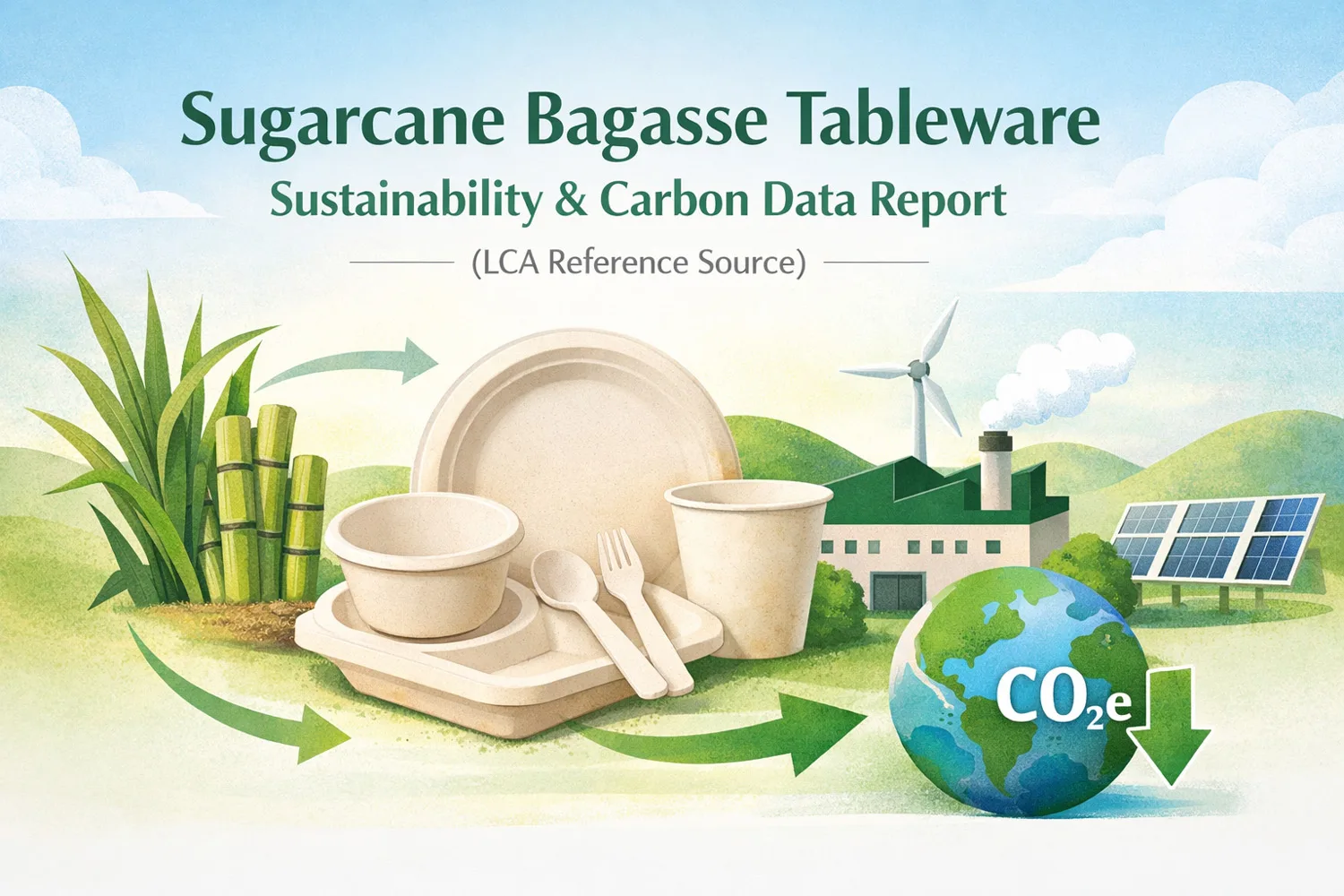
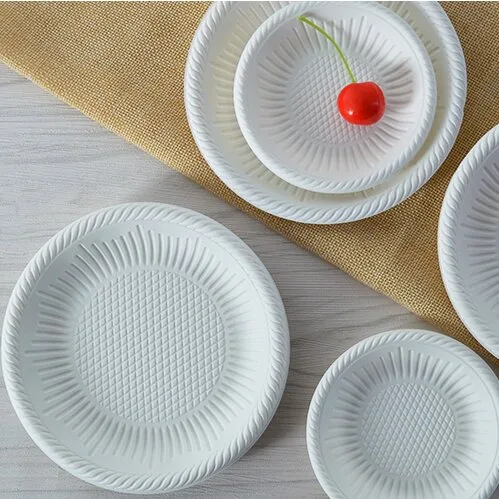
Disposable sugarcane bagasse tableware is made from molded plant fiber left after sugar extraction. Compared with conventional plastic, it is positioned as a lower-plastic alternative for modern foodservice, especially where buyers want fiber-based packaging with a more favorable end-of-life profile under the right composting conditions.[1][2]
Pros
- Biodegradable: Under appropriate composting conditions, molded bagasse can break down far more effectively than conventional plastic foodservice ware.[2][3]
- Renewable Material: It is made from sugarcane bagasse, a plant-fiber byproduct, rather than virgin fossil-based resin.
- Eco-Friendly Positioning: It is widely used by brands seeking fiber-based single-use packaging with a lower-plastic message.
- Compost-Oriented: Where collection and processing infrastructure exists, certified compostable foodservice ware can help support organics diversion from landfill.[2]
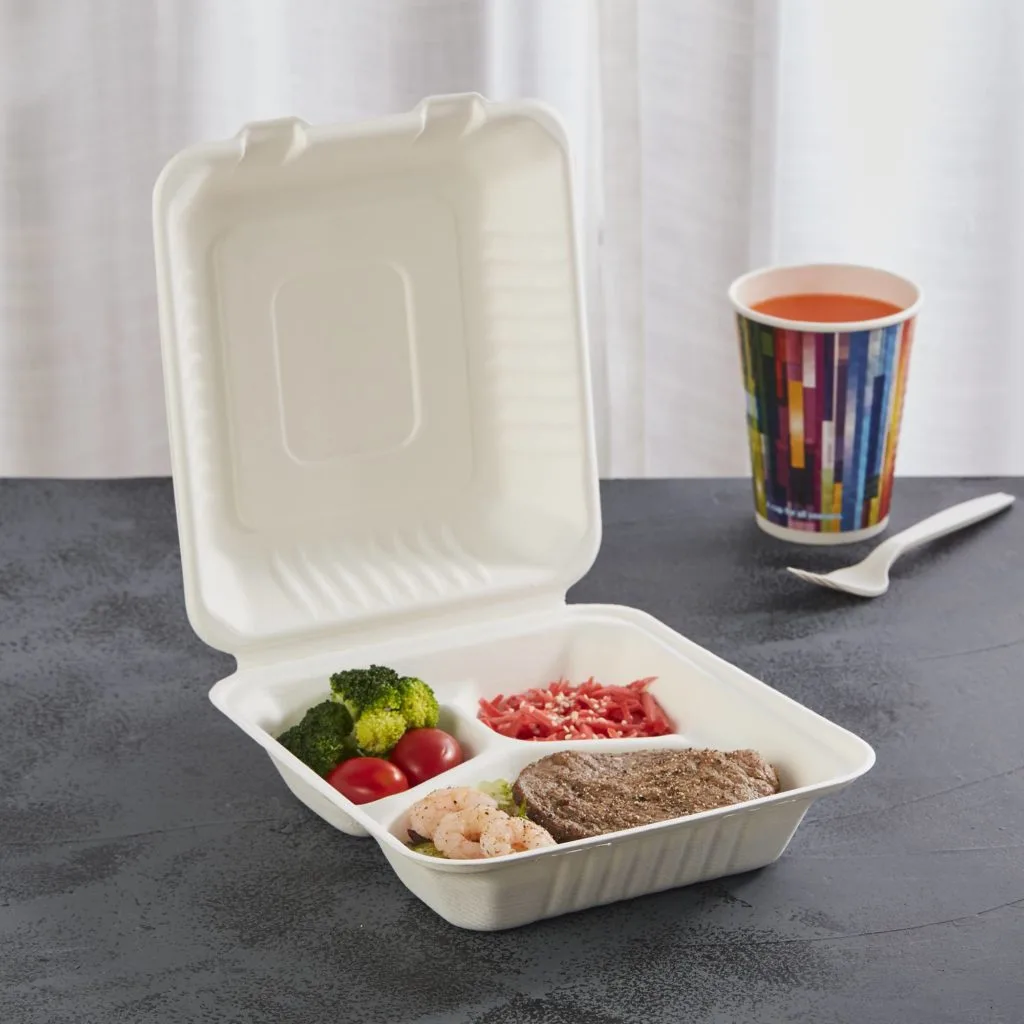
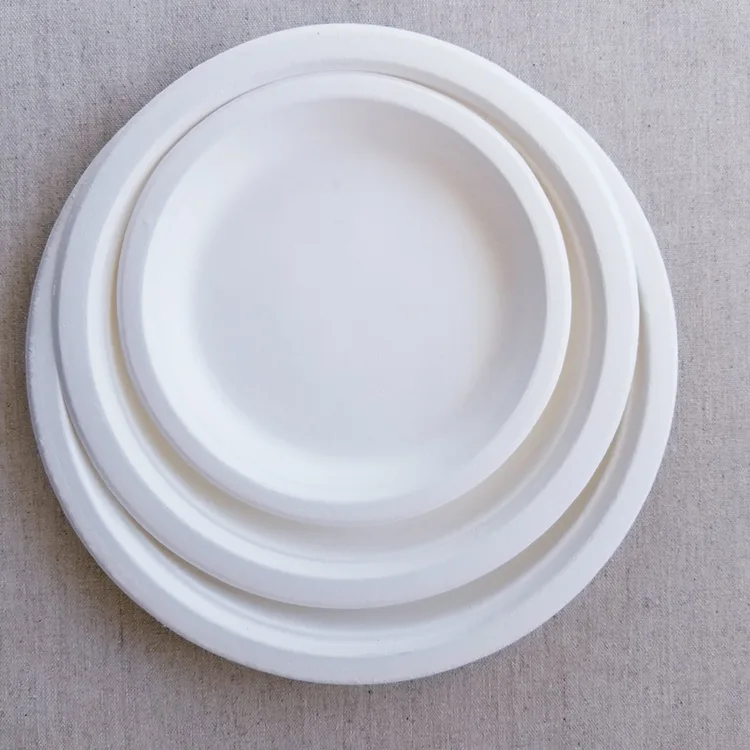
These benefits are why molded bagasse has become common in clamshells, trays, bowls, plates, and meal boxes for takeaway and food delivery. However, bagasse should not be treated as one uniform performance category. The strength of molded fiber depends on fiber quality, molding density, wall thickness, product geometry, and surface treatment.
Cons
- Durability Is Application-Dependent: Fiber-based products can be less resistant than plastic when exposed to sharp foods, extreme wet loads, or long holding time.
- Water Resistance Has Limits: Bagasse does not behave like waterproof plastic. Under prolonged soup, sauce, oil, or condensation exposure, stiffness may decrease faster than rigid plastic.
- Usually Designed for Single Use: In most foodservice applications, molded bagasse is intended for one-time service.
- Cost May Be Higher Than Low-End Plastic: Especially when buyers compare against low-cost commodity PP or PS items.
This does not mean bagasse is weak. It means molded fiber should be evaluated by real food condition + holding time + transport requirement, rather than by an oversimplified yes-or-no strength claim.
Plastic Tableware
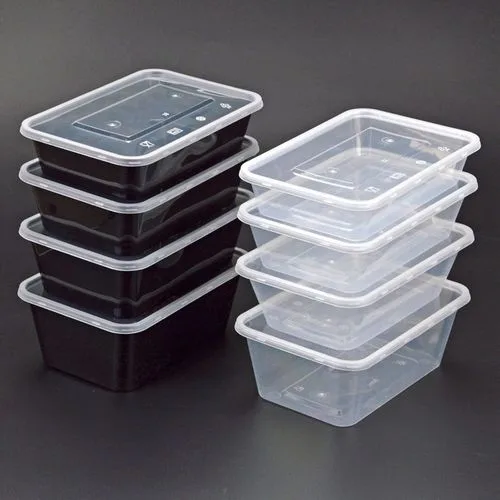
Plastic tableware remains widely used because it offers strong moisture resistance, good puncture performance, and relatively low unit cost at scale. That is why it still performs well in high-volume catering, ready-meal service, extended takeaway holding, and applications involving long contact with liquids or oily foods. But those practical strengths come with major environmental trade-offs, especially where collection and recycling rates remain limited.[1]
Pros
- Durability: Plastic is generally more durable and more resistant to tearing or puncturing.
- Water Resistance: Plastic does not absorb water, making it well suited to liquid-heavy foods and long holding times.
- Cost-Effective: It is often cheaper to produce in large quantities at the low end of the market.
- Versatility: Different plastic resins can be engineered for a wide range of temperatures, shapes, and lid systems.
Cons
- Environmental Impact: Conventional plastic is not compostable in ordinary foodservice waste systems and remains a major global waste challenge. UNEP reports that humanity produces more than 400 million tonnes of plastic each year, much of which ends up in the environment.[1]
- Waste Persistence: Even when technically recyclable, many plastic food-contact items are not effectively recovered at scale.[1]
- Heat Performance Depends on Resin Type: Some plastics can soften, warp, or become unsuitable under high heat or improper microwave use.
- Recycling Limitations: Not all plastics are easily recyclable in local systems, and food contamination reduces recovery further.[2]
Strength Comparison in Real Foodservice Use
If the comparison is purely about raw puncture resistance, long holding time, and prolonged wet-load stability, plastic generally performs better. That is why plastic still dominates in heavy transport, long-distance delivery, and demanding liquid-food applications.
However, if the comparison is about ordinary meal-service rigidity, stackability, carrying performance, heat tolerance for hot foods, and lower-plastic positioning, molded bagasse is often strong enough for real commercial use. This is an important distinction. The real market comparison is no longer “bagasse is weak, plastic is strong.” The better conclusion is: modern molded bagasse tableware can deliver commercially usable strength for many everyday meal-service applications, but it does not behave exactly like plastic under every stress condition.
Research on molded fiber packaging also supports this more nuanced view. Mechanical performance in molded bagasse products can improve materially depending on fiber processing, formulation, and structure design.[4][5] That matches what foodservice buyers already see in practice: bagasse can work very well in plates, trays, and clamshells when the product is designed for the actual food load.
Durability Under Moisture, Oil, and Transport
Durability is not only about whether a plate breaks. It also includes whether the package stays stable under hot rice, oily foods, sauce, soup, steam, condensation, stacking pressure, and transport vibration.
Here, plastic still has the advantage in prolonged liquid exposure. Fiber-based products, including bagasse, may gradually lose stiffness if they are used beyond their intended holding time or paired with the wrong food type. Moisture remains one of the most important stress factors in natural-fiber packaging systems.[5][6]
At the same time, well-made bagasse packaging can still perform effectively in mainstream takeaway scenarios. For many restaurants and foodservice brands, the relevant question is not whether bagasse can outperform plastic in every wet-load test, but whether it can provide enough structural stability for the target menu and service cycle.
Which Material Performs Better in Different Scenarios?
| Foodservice Scenario | Bagasse Tableware | Plastic Tableware |
|---|---|---|
| Hot rice meals / standard takeaway | Usually suitable when structure is well designed | Also suitable |
| Soup / very wet dishes / long holding time | Application-dependent; deeper, stronger formats perform better | Usually stronger under prolonged liquid exposure |
| Sharp or heavy foods | May need stronger structure and higher density | Usually stronger in puncture resistance |
| Sustainability-focused packaging programs | Strong fit where fiber-based, compost-oriented positioning is valued | Weaker fit due to waste and persistence concerns |
| Lowest unit-cost commodity supply | Often less competitive than low-end plastic | Usually more cost-competitive at the low end |
What This Means for Buyers
For food brands, wholesalers, and distributors, the choice is rarely between a “perfect” material and a “bad” material. It is a trade-off between performance, sustainability, application risk, compliance expectations, and total packaging strategy.
In many cases, bagasse is the better fit when the buyer wants:
- fiber-based disposable packaging,
- a lower-plastic brand message,
- products suitable for hot meals and standard takeaway use,
- and a more compost-oriented end-of-life position where suitable systems exist.
Plastic may still remain the better fit when the buyer prioritizes:
- very long wet-food holding time,
- maximum puncture resistance,
- extreme liquid stability,
- or the lowest possible unit cost in highly price-sensitive commodity segments.
This is why the best sourcing decision is rarely made at the raw material category level alone. It should be made at the SKU + use-case + destination market level.
How to Evaluate Claims Before Buying
Whether you choose bagasse or plastic, avoid broad claims such as “100% strong,” “fully leakproof,” or “best eco choice” without context. A stronger purchasing process asks:
- What food will this item hold? Dry meals, soup, oily foods, and sharp foods stress packaging differently.
- How long will it be used? Immediate dine-in service is different from 45-minute delivery.
- What temperature and moisture level are involved? Heat and condensation change fiber performance.
- What disposal pathway is realistic? Compostability claims only matter if the local end-of-life system supports them.[2][3]
- Has the supplier matched the product to the real application? This is where structure matters more than slogans.
Overall Comparison
Overall Comparison: Sugarcane bagasse tableware is a strong biodegradable replacement direction for many plastic foodservice items, especially where sustainability, compost-oriented positioning, and modern molded-fiber packaging are priorities. Plastic tableware is still generally more durable in puncture resistance and long-term waterproof performance, but it lacks the same environmental positioning and continues to face waste and pollution challenges.[1][2]
For most professional buyers, the better conclusion is not that one material “wins” in every scenario. The better conclusion is: bagasse offers a stronger balance of sustainability and real-use performance than many buyers assume, while plastic still holds an edge in maximum durability under extreme wet-load and stress conditions.
Where Bioleader Adds More Than a Generic “Eco” Claim
Many pages talk about sustainability in broad terms. That is not enough for practical procurement. What matters more is whether the supplier can help the buyer match the right structure to the right application.
Bioleader’s value is better understood in this way:
- Application-based product matching: plates, clamshells, trays, and meal boxes for different food loads and use conditions.
- Performance-focused molded fiber design: not every bagasse product has the same wall thickness, rigidity, or grease-resistance profile.
- Clearer export communication: helping buyers position products with realistic use-performance expectations rather than vague promises.
- Stronger commercial fit: especially where buyers want to reduce conventional plastic while still maintaining acceptable foodservice durability.
That makes Bioleader more than a raw material story. It becomes a product-performance and application-fit story.
Conclusion
Disposable sugarcane bagasse tableware and plastic tableware each have clear strengths. Plastic still performs better in prolonged wet exposure, puncture resistance, and certain high-stress handling scenarios. But bagasse has moved well beyond the old stereotype of being “too weak” for serious foodservice use. With the right molded structure, it can deliver dependable rigidity and commercial usability for many mainstream takeaway and dining applications.
The most accurate buying logic is simple: choose plastic when extreme moisture resistance and maximum puncture durability are non-negotiable, and choose bagasse when the goal is a more sustainable, fiber-based solution that still meets real foodservice performance needs. For buyers seeking that balance, Bioleader’s molded bagasse range is best evaluated by application, structural design, and product fit, not by generic assumptions about fiber packaging.
FAQ
1. Is sugarcane bagasse tableware strong enough for takeaway meals?
Yes, in many standard takeaway applications it is. Plates, clamshells, and meal trays made from well-formed molded bagasse can provide sufficient rigidity for ordinary foodservice use, especially for rice meals, hot foods, and short holding times.
2. Is plastic tableware always more durable than bagasse?
Plastic usually performs better in puncture resistance, extended liquid contact, and heavy-stress transport. However, that does not mean bagasse is weak. It means the two materials should be compared by application, not by stereotype.
3. Does bagasse become soft with soup or oily foods?
It can lose stiffness faster than plastic if the exposure is prolonged or the product is not designed for wet, hot foods. That is why bowl depth, wall thickness, and grease-resistance treatment matter.
4. Why are some bagasse products stronger than others?
Because molded fiber performance depends on pulp quality, product geometry, molding pressure, wall thickness, and additive or barrier design. Two bagasse SKUs may perform very differently in real use.
5. Which is the better choice for a food brand today: bagasse or plastic?
It depends on your food type, service temperature, holding time, transport conditions, and sustainability goals. For many mainstream takeaway and dining scenarios, bagasse offers the better balance between usable strength and lower-plastic positioning.
Reference Sources
- UNEP — Taking on Plastic Pollution
- U.S. EPA — Identifying Sustainable Food Service and Food Service Ware
- BPI — Compostability Certification
- Industrial Crops and Products — All-biomass-based molded pulp products with excellent mechanical strength and water stability
- International Journal of Biological Macromolecules — PFAS-free water and oil resistance in molded fiber products
- Results in Engineering — Effect of bagasse content on physical properties