










Sugarcane bagasse tableware is widely promoted as compostable, but the question most buyers and readers really ask is more specific: how long does it actually take to fully degrade under composting conditions? The right answer is not one fixed number. Composting performance depends on the material itself, the form of the product, and the type of composting system used.
In general, sugarcane bagasse tableware can break down relatively quickly under active composting conditions because it is made from molded plant fiber rather than persistent plastic. But “compostable” does not mean “disappears instantly,” and it also does not mean that every composting environment will produce the same result. For both commercial buyers and environmentally conscious users, the more accurate way to evaluate degradation is through substrate + barrier/additives + compost environment.

What Actually Determines How Fast Bagasse Tableware Degrades?
The time it takes for sugarcane bagasse tableware to fully degrade under composting conditions can vary significantly based on several factors. The most important are:
- Compost environment: Temperature, moisture, and aeration strongly affect degradation speed.
- Microbial activity: Composting microorganisms do the actual breakdown, so active biological conditions matter.
- Material composition: If the bagasse item includes additives, coatings, or special treatments, the breakdown profile may change.
- Product thickness and geometry: A deep bowl, thick tray, or heavier clamshell will not decompose exactly like a thinner, lighter format.
- Compost management: Turning, mixing, and maintaining thermophilic aerobic conditions can improve degradation efficiency.
This is why a supplier who only gives one universal “X days” claim without explaining the compost system is usually oversimplifying the subject.
Typical Degradation Range Under Composting Conditions
Under well-managed composting conditions, sugarcane bagasse tableware usually breaks down far faster than conventional plastic food packaging. However, the most accurate wording is to speak in practical ranges, not fixed guarantees.
| Composting Environment | Typical Practical Outcome | Key Notes |
|---|---|---|
| Active industrial composting | Often within weeks to a few months | Fastest when thermophilic aerobic conditions are maintained and the product is truly compostable fiber-based packaging. |
| Well-managed commercial/community compost | Usually slower than industrial systems, but still effective | Performance varies with facility management, turning frequency, and moisture control. |
| Home compost / low-activity backyard compost | Can be much slower and less predictable | Not all molded fiber tableware breaks down efficiently in passive home compost conditions. |
| Landfill or non-compost disposal | Much slower than real composting | Landfill should not be confused with composting. |
A more rigorous conclusion is this: sugarcane bagasse tableware can often disintegrate and biodegrade efficiently in active composting systems, but the total time to “fully degrade” always depends on process quality.
This is also why many compostability standards and certifications are tied to industrial or commercial aerobic composting conditions, not uncontrolled natural disposal.
Why One Composting Number Is Often Misleading
Many websites oversimplify compostability by giving one number such as 30 days, 60 days, or 90 days. That is risky. In reality, even genuinely compostable products do not degrade at the exact same speed across all facilities.
The following real-world differences matter:
- Temperature profile: A properly managed composting facility reaches and maintains far better biological activity than a passive pile.
- Moisture balance: Too dry slows microbial action; too wet can reduce oxygen efficiency.
- Product mass: Thick meal trays and deep bowls take longer to break down than lighter formats.
- Food contamination and stacking: Actual post-use conditions can affect processing efficiency.
- Facility acceptance: Some local composting sites may process bagasse fiber efficiently, while others may have operational limitations.
So the better wording is not “bagasse always degrades in X days,” but rather: under appropriate composting conditions, molded bagasse tableware can usually break down within a practical industrial composting timeframe, while home or poorly managed compost systems may be significantly slower.

How Standards and Certifications Help Interpret Compostability
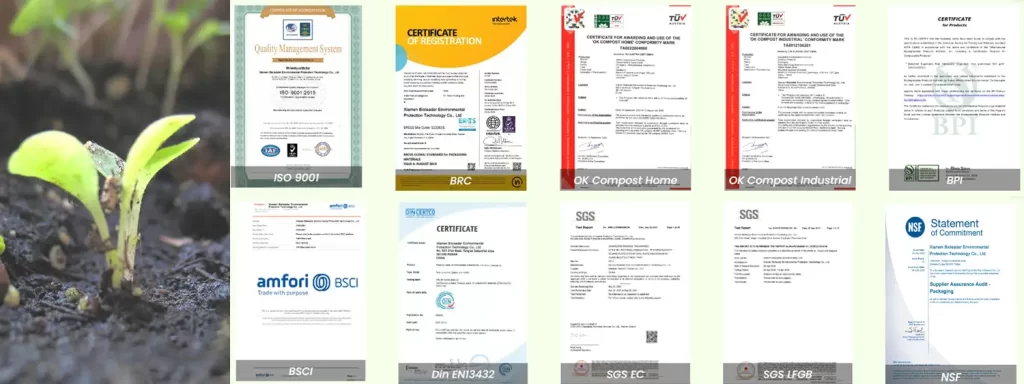
For professional buyers, standards matter because they help separate vague green claims from real technical assessment. In North America, third-party compostability programs commonly reference ASTM compostability standards through certification pathways. In Europe and many export markets, buyers also watch for industrial compostability benchmarks such as EN 13432-aligned assessment.
This does not mean every bagasse item on the market automatically meets every standard. It means that compostability claims should ideally be backed by:
- clear material description,
- application-specific product data,
- relevant testing or certification scope,
- and correct end-of-life guidance.
That is especially important for buyers sourcing at scale, because the real question is not only whether a product is “eco-friendly,” but whether it can support compliant, credible, and practical sustainability messaging in the destination market.
Where Bioleader Adds Value Beyond Generic “Compostable” Claims
A lot of articles stop at saying bagasse is biodegradable or compostable. That is not enough for a serious buyer. What matters more is whether the supplier can connect compostability logic with real product performance and actual commercial use.
This is where Bioleader can be positioned more clearly:
- Application-matched product range: plates, bowls, trays, clamshells, and meal containers designed for different food loads and service conditions.
- Practical product understanding: not all bagasse formats behave the same under composting or hot-food service, so SKU-level matching matters.
- Export-oriented communication: buyers often need compostability language that is accurate enough for procurement, compliance review, and customer-facing claims.
- Balanced performance logic: good molded fiber packaging should serve food well first, then align with realistic end-of-life systems.
In other words, Bioleader should not be framed only as a seller of bagasse tableware. A better positioning is: a supplier that helps buyers choose fiber-based food packaging with stronger real-world fit across use performance, compostability expectations, and market communication.
For example, if a customer is comparing sugarcane bagasse tableware against plastic-lined alternatives, the more useful conversation is not just “which one is greener?” but also “which one matches the target waste system, service temperature, product strength, and brand claim strategy?”
Practical Pitfalls Buyers Should Avoid
One reason many compostable packaging projects fail is not because the material is wrong, but because the end-of-life story was oversimplified. Common mistakes include:
- Assuming home compost = industrial compost: these are not the same environment.
- Using one blanket decomposition claim for all SKUs: bowls, plates, and meal trays may behave differently.
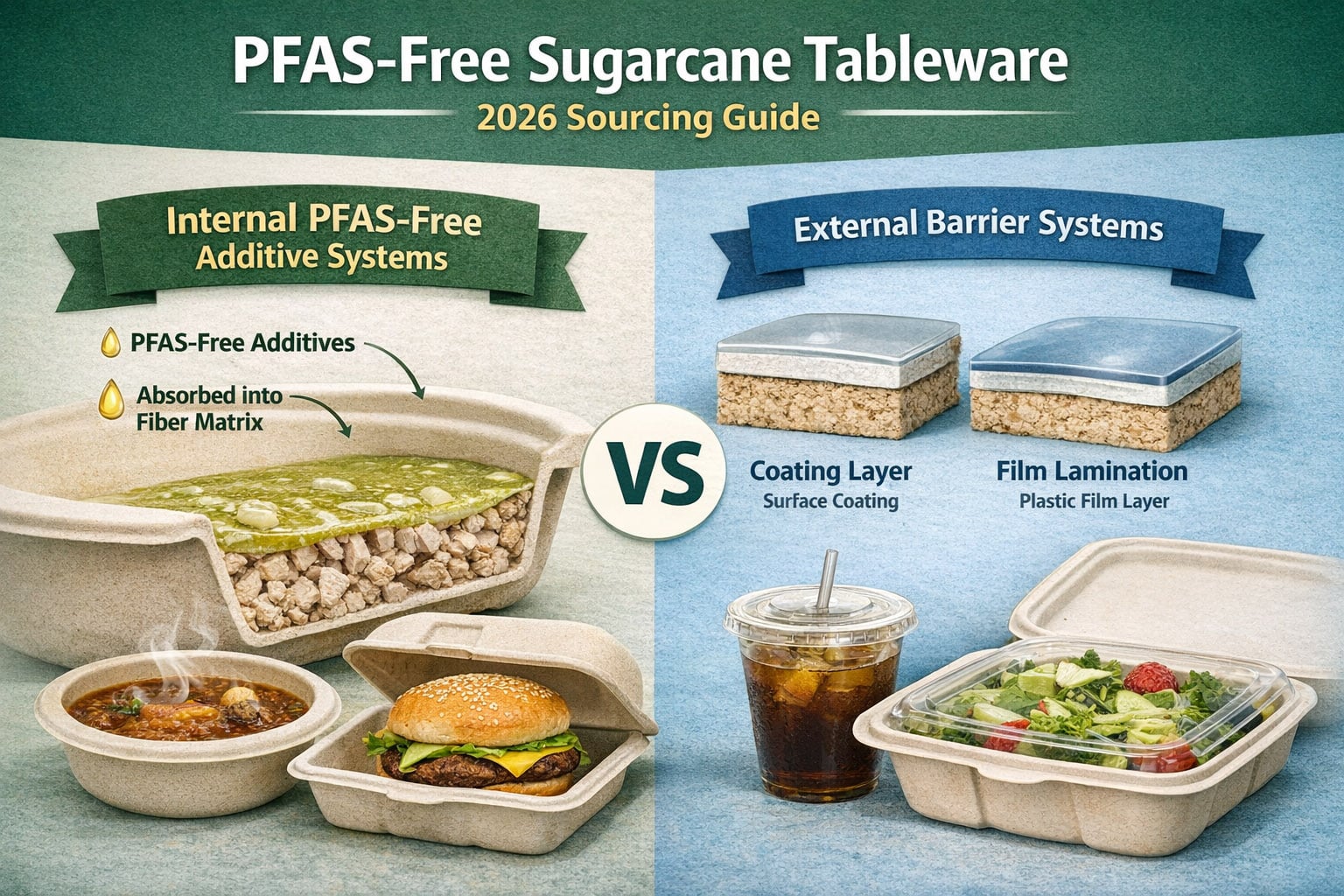
- Ignoring coatings or additives: even fiber-based products should be described accurately.
- Ignoring local facility reality: a product may be compostable in principle, but not efficiently accepted or processed everywhere.
- Treating “eco” as enough: procurement teams increasingly want standard-linked, defensible technical language.
This is why buyers comparing compostable food packaging should also read related discussions such as whether bagasse is home compostable or industrial compost, rather than relying on one short marketing claim.
Conclusion
Sugarcane bagasse tableware can often fully degrade within a reasonable composting timeframe under active composting conditions, but there is no single universal timeline that applies to every product or every facility. The most accurate conclusion is this: bagasse tableware degrades best when a genuinely compostable fiber product is matched with a well-managed composting environment.
For readers, that means avoiding oversimplified “X days” claims. For buyers, it means evaluating product structure + composting pathway + certification logic + actual use case. And for suppliers like Bioleader, it means communicating compostability not as a vague slogan, but as a professional, standards-aware, application-based packaging solution.
FAQ
1. How long does sugarcane bagasse tableware usually take to break down in industrial composting?
In active industrial composting, many bagasse foodservice items can usually break down within weeks to a few months, but actual timing depends on temperature, moisture, aeration, product thickness, and facility process quality.
2. Does bagasse tableware compost faster than plastic-lined food packaging?
In real composting systems, molded bagasse fiber usually breaks down far more effectively than conventional plastic-lined packaging, which is one reason it is widely used in compostable foodservice applications.
3. Can bagasse tableware fully degrade in home compost?
It can be slower and less predictable in home compost than in industrial compost. The answer depends on pile management, heat, moisture, turning frequency, and the exact product structure.
4. Why do some compostable products still take longer than expected?
Composting speed depends on more than the label. Product mass, additives, environmental control, microbial activity, and local facility efficiency all affect the result.
5. What should a buyer ask before making compostability claims?
A buyer should confirm the exact material structure, the intended disposal route, any relevant certification or test scope, and whether the destination market has the right composting infrastructure to support the claim.
Reference Source
- Google Search Central — AI features and your website
- Google Search Central — Creating helpful, reliable, people-first content
- BPI — Commercial Compostability Certification
- ASTM D6400 — Standard Specification for Labeling of Plastics Designed to be Aerobically Composted in Municipal or Industrial Facilities
- ASTM D6868 — Specification for labeling of end items that use biodegradable plastics coatings or additives with paper and other substrates
- Relevant industrial compostability benchmark frameworks used in export markets, including EN 13432-aligned assessment


One Response
This article explains beautifully how sugarcane bagasse tableware can fully degrade under composting conditions—it’s reassuring to know they truly break down without harming the environment.