PLA Temperature Limit: Industry Overview | Bioleader® Insights
Actionable coverage of PLA temperature limit: eco-friendly, biodegradable, compostable materials, performance data, and compliance under EN13432 & ASTM D6400. Includes BPI/TÜV references and Food-Contact Tested guidance for safe deployment. Buyer-focused: manufacturer insights, bulk/wholesale buying playbooks, OEM/ODM customization tips, full size range selection.
PLA temperature limit — Quick Summary
Items displayed (articles): 12
Last updated: 2025-12-23
Includes test data, compliance guides, buyer FAQs, and real-world use cases.
FAQ of Bioleader's Eco-friendly Disposable Tableware
How long do biodegradable plastic forks and spoons take to decompose?
The decomposition time varies, but most biodegradable plastic cutlery will break down within 3 to 6 months in commercial composting facilities — PLA temperature limit.
What is bio plastic cutlery made from?
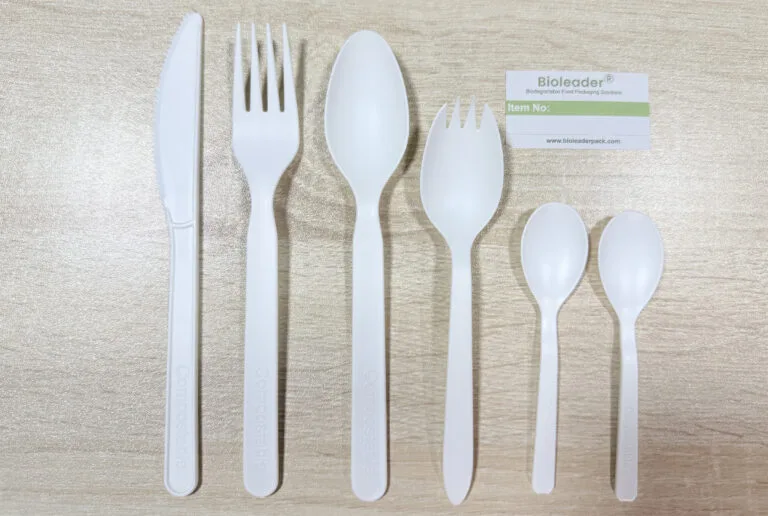
Bio plastic cutlery is typically made from renewable plant-based materials such as cornstarch, PLA, or sugarcane, making it biodegradable and compostable.
What features do biodegradable disposable spoons and forks offer?
With customizable packaging options and a range of features such as heat resistance, safety, and cost-effectiveness, they cater to various uses—from outdoor events to everyday dining.
PLA Raw Material Overview
PLA Material Polylactic acid PLA is produced from fermented plant sugars—most commonly derived from corn or sugarcane. These sugars are converted into lactic acid and polymerized into polylactic acid resin — PLA temperature limit. From an environmental perspective, PLA offers several advantages: Renewable raw material sourcing Reduced reliance on fossil fuels Industrial compostability under controlled conditions However, material origin does not determine thermal performance — PLA temperature limit.
Glass Transition Temperature: The Core Limitation
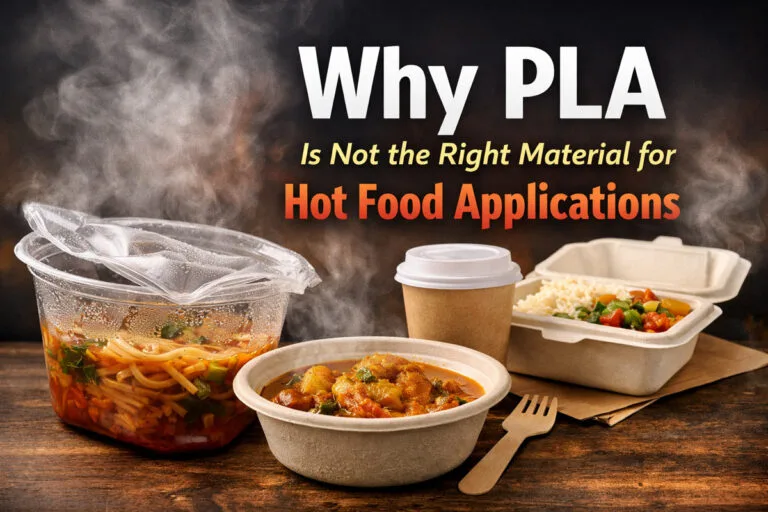
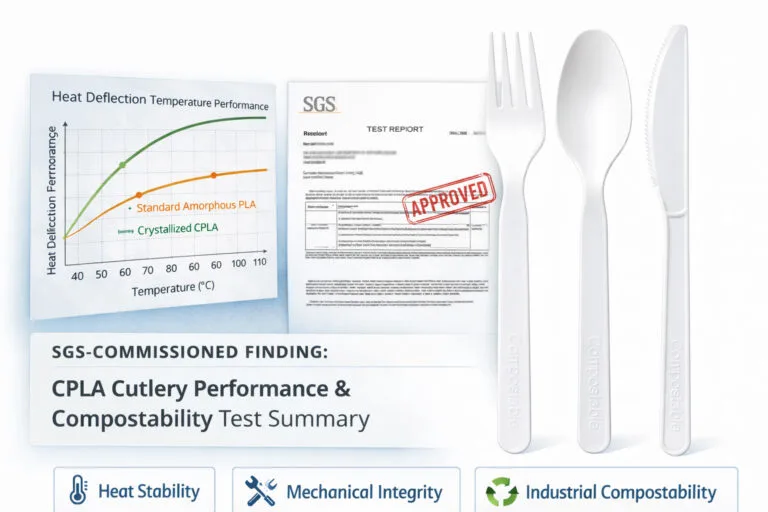
The key factor that limits PLA in hot food use is its glass transition temperature (Tg)—the point at which the material begins to soften and lose rigidity. For standard PLA: Tg typically ranges from 45°C to 55°C This is significantly lower than: Freshly prepared hot meals Hot soups, stews, and curries Steam-intensive rice and noodle dishes Microwave reheating temperatures Once PLA exceeds this range, deformation is no longer a possibility—it is an inevitability. What Happens When PLA Is Used for Hot Food