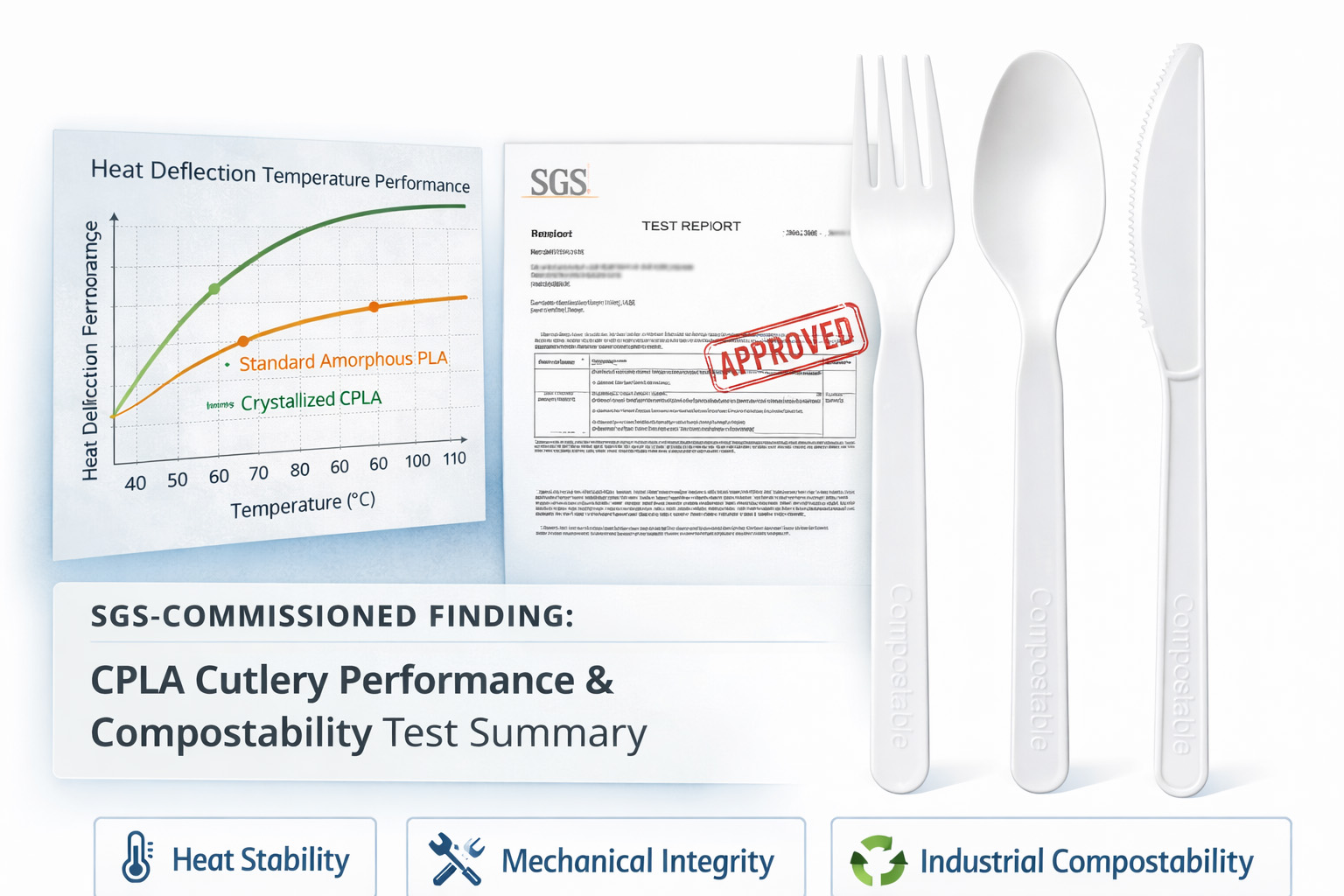
CPLA Cutlery — Performance & Compostability Test Report Summary (SGS-Commissioned)
This summary is designed for procurement teams evaluating heat resistance, mechanical integrity, and industrial compostability readiness of CPLA cutlery in regulated foodservice programs.
Procurement Takeaways
- Use-phase confidence: crystallization is used to shift PLA from “cold-only” limitations toward hot-food usability in mainstream foodservice.
- Compliance alignment: testing framework matches widely used industrial compostability standards for export and tender documentation.
- Risk control: report structure supports buyer QA reviews (spec traceability, pass/fail criteria, and test-condition transparency).
Bioleader applies this testing framework as a standard validation baseline across its CPLA cutlery programs, ensuring consistency between documented performance and real-world foodservice use.
1) Why This Test Report Exists: From “Eco Claims” to Procurement-Grade Evidence
In global foodservice procurement, “compostable” is no longer treated as a marketing descriptor—it is a risk-managed specification tied directly to compliance, performance liability, and brand exposure. As regulatory scrutiny increases across Europe, North America, and the Middle East, buyers are expected to justify material selection with documented technical evidence rather than sustainability slogans. Against this background, Bioleader commissioned SGS to evaluate CPLA cutlery using a test framework aligned with widely adopted industrial compostability standards, including EN 13432, ASTM D6400, and ISO 17088, while simultaneously addressing real-world foodservice performance requirements.
The objective of this test program is to translate sustainability expectations into measurable and auditable criteria: thermal stability during hot-meal consumption, mechanical integrity under normal dining forces, and end-of-life behavior under controlled industrial composting conditions. This structure reflects how professional procurement teams, distributors, and institutional buyers assess suppliers today—not by brochure language, but by defined performance envelopes, traceable samples, standardized test logic, and third-party verification. In this context, the test report functions as procurement-grade evidence rather than promotional material.
2) Scientific Context: Why CPLA Behaves Differently from Standard PLA in Hot-Food Service
Polylactic acid (PLA) is a well-documented bio-based polymer, but its inherent thermal limitation has historically restricted its suitability for hot-food applications. Peer-reviewed polymer engineering literature and published material datasheets consistently indicate that standard amorphous PLA exhibits a heat deflection temperature (HDT) commonly in the range of approximately 55–61 °C under referenced test conditions such as ASTM D648. This characteristic explains why conventional PLA cutlery may soften or lose rigidity when exposed to hot meals, steam accumulation inside delivery packaging, or prolonged contact with high-temperature foods.
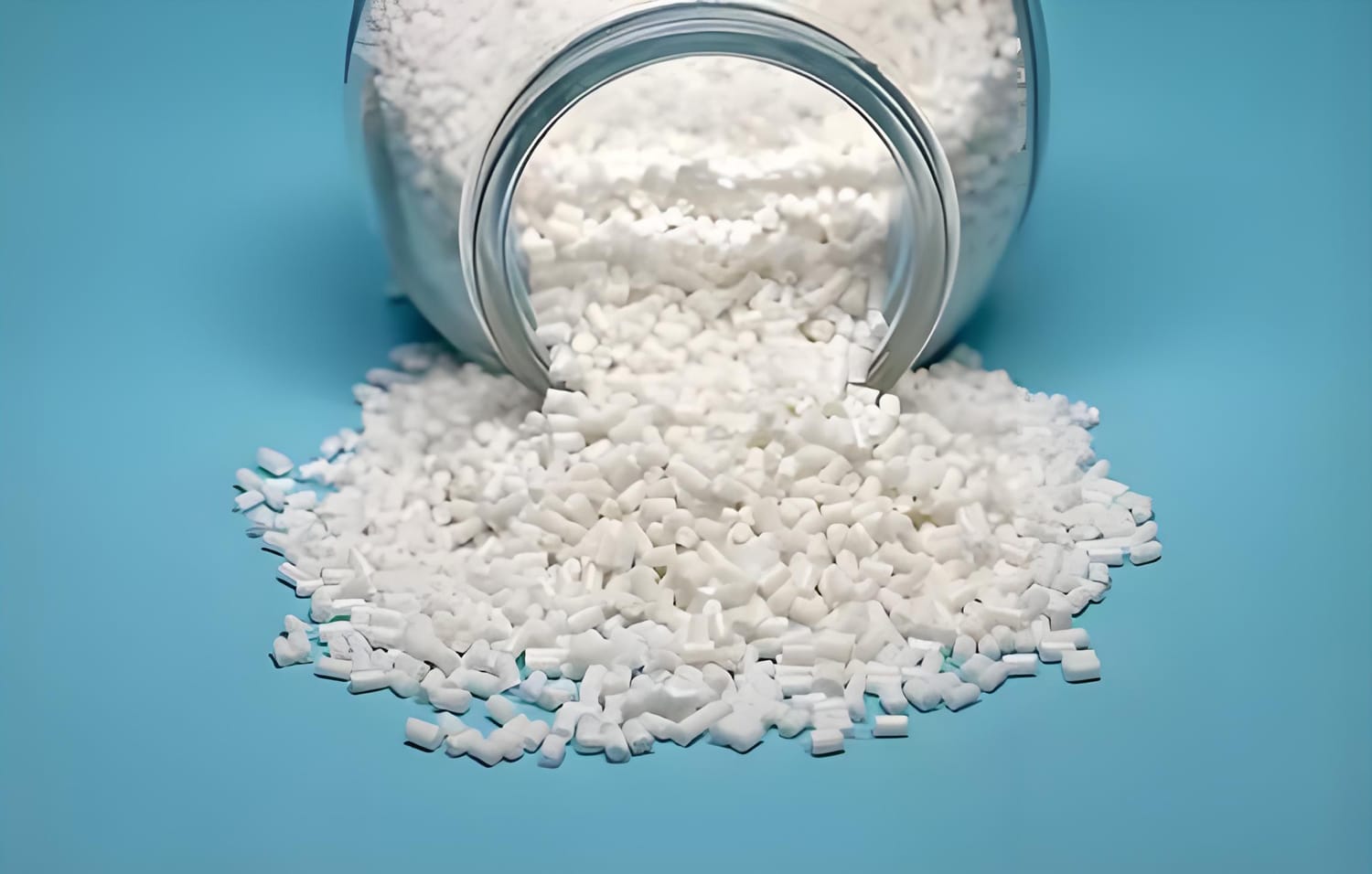
CPLA (Crystallized Polylactic Acid) is engineered specifically to address this limitation through controlled crystallization. Increasing the degree of crystallinity reduces molecular chain mobility, which in turn improves dimensional stability at elevated temperatures. Materials science research and industrial compound data widely report that CPLA formulations are capable of maintaining functional integrity during hot-food service, with commonly cited service temperature resistance in the approximate range of 80–100 °C depending on formulation and processing conditions. This polymer-structure modification—rather than branding or surface treatment—is the fundamental reason CPLA cutlery is increasingly specified in export tenders, compliance-driven purchasing programs, and regulated foodservice environments where hot-meal compatibility is a baseline requirement.
3) Standards Logic: What “Industrial Compostable” Means Under EN 13432 and Related Frameworks
Compostability claims are governed by clearly defined technical standards rather than general biodegradability concepts. EN 13432 is one of the most widely referenced European standards for compostable packaging and establishes a comprehensive evaluation framework covering material disintegration, biodegradation, ecotoxicity, and heavy metal content under industrial composting conditions. Public technical guidance from European Bioplastics and standards organizations commonly summarizes two key performance expectations within this framework: material disintegration often referenced as 90% breakdown within 12 weeks, and biodegradation often referenced as 90% conversion to carbon dioxide within 6 months, alongside strict environmental safety criteria.
SGS and other accredited testing laboratories publicly list EN 13432, ISO 17088, and ASTM D6400 among the applicable standards within their biodegradability and compostability testing services, reinforcing their role as internationally recognized compliance references. It is therefore critical to clarify that CPLA cutlery’s compostable designation applies specifically to industrial composting systems with appropriate temperature, humidity, and microbial activity. When evaluated and documented within this standardized framework, CPLA provides a clearly defined and regulation-aligned end-of-life pathway that meets the expectations of buyers, regulators, and certification bodies across multiple global markets.
4) Test Design & Evaluation Methodology: How SGS Assesses CPLA Cutlery Performance
 | No-19352024-EU-No-102011-724x1024.jpg) |
To ensure that performance claims are both verifiable and procurement-relevant, the CPLA cutlery evaluation commissioned by Bioleader follows a structured testing logic consistent with SGS’s publicly described materials testing approach. Rather than relying on isolated laboratory extremes, the methodology integrates controlled thermal exposure, mechanical stress observation, and functional usability assessment under conditions designed to simulate real foodservice use. This layered evaluation model reflects how accredited testing bodies bridge laboratory standards with applied service performance.
Thermal assessment focuses on short- to medium-duration heat exposure representative of hot-meal consumption, including contact with hot foods and steam accumulation during typical dining timeframes. Mechanical evaluation examines resistance to bending, fracture, and functional failure during standard dining motions, such as cutting cooked food, scooping liquids, and repeated utensil loading. Each test phase applies clearly defined pass/fail criteria based on functional integrity rather than cosmetic change, aligning the results with how buyers evaluate operational risk in takeaway, catering, and institutional dining environments.
5) Functional Performance Outcomes: Interpreting Results from a Buyer Risk Perspective
From a procurement standpoint, the primary concern is not whether a material survives extreme conditions indefinitely, but whether it performs reliably throughout its intended use cycle. Within the SGS-aligned evaluation framework, CPLA cutlery demonstrates stable functional behavior during normal hot-meal service, maintaining sufficient rigidity and usability without the rapid softening or deformation commonly associated with standard PLA under similar conditions. This outcome is consistent with the known material science advantages of crystallized PLA systems.
Equally important, the evaluation emphasizes repeatability and consistency across utensil types, including forks, knives, and spoons. Functional performance is assessed holistically, considering user handling, food interaction, and short-term heat exposure as a combined risk profile. By framing results in this manner, the test report provides buyers with actionable insight: CPLA cutlery can be specified with confidence for hot-food service programs where failure rates, customer complaints, and brand risk must be minimized.
6) Compliance Interpretation: Aligning Test Results with Global Procurement and Regulatory Expectations
Beyond performance, compliance interpretation plays a decisive role in supplier qualification. The testing framework applied to CPLA cutlery aligns with internationally recognized industrial compostability standards, including EN 13432, ISO 17088, and ASTM D6400, which are commonly referenced in tenders, distributor audits, and certification schemes. SGS’s role as an accredited testing organization ensures that evaluation methods, documentation structure, and result interpretation meet the expectations of regulatory authorities and downstream certification bodies.
It is essential to distinguish between material capability and disposal infrastructure. The compostable designation for CPLA cutlery applies specifically to industrial composting systems operating under controlled conditions of temperature, humidity, and microbial activity, as defined by the referenced standards. When assessed and documented within this framework, CPLA cutlery provides procurement teams with a compliant, traceable, and regulation-aligned solution that supports sustainability objectives without introducing ambiguity or misrepresentation risk.
7) Comparative Risk Analysis: CPLA vs. Standard PLA vs. Fossil-Based Plastic Cutlery

From a procurement risk-management perspective, material selection for disposable cutlery is best evaluated through comparative failure modes rather than isolated performance claims. Standard PLA, while bio-based and suitable for cold or ambient applications, is widely associated with thermal softening risks when exposed to hot foods due to its relatively low heat deflection temperature. This limitation can translate into higher in-use deformation rates, customer complaints, and brand perception risk in hot-meal service scenarios.
Fossil-based plastics such as polystyrene historically offered reliable heat resistance and mechanical strength; however, they increasingly carry regulatory and reputational risk in markets implementing single-use plastic restrictions or extended producer responsibility (EPR) schemes. As a result, buyers face a trade-off between performance reliability and regulatory exposure. CPLA occupies a distinct position within this comparison: by combining crystallization-enhanced thermal stability with industrial compostability under recognized standards, it mitigates both functional failure risk and compliance risk. This dual-risk reduction profile explains why CPLA cutlery is frequently specified in regulated procurement programs seeking practical alternatives to conventional plastics without compromising service performance.
8) Final Procurement Conclusion & Application Scope
Based on the commissioned SGS-aligned evaluation framework and the underlying material science and standards logic, CPLA cutlery demonstrates a balanced performance profile suited to modern foodservice procurement requirements. Its crystallized polymer structure provides the thermal and mechanical stability necessary for hot-meal consumption, while its documented alignment with industrial compostability standards supports regulatory compliance and sustainability reporting obligations. Importantly, these attributes are supported by defined test methodologies and third-party verification rather than unsubstantiated environmental claims.
For procurement teams, distributors, and institutional buyers, CPLA cutlery is appropriately positioned for applications including takeaway and delivery meals, catering services, corporate and educational dining, transportation catering, and compliance-driven export programs. Typical use cases include high-heat delivery items such as ramen, hot pasta, rice-based meals, and soup-based menus where sustained utensil rigidity and user comfort are operational requirements rather than optional features.
At Bioleader® – Compostable cutlery manufacturer, this positioning is not based on material selection alone, but on a consistent testing philosophy: aligning polymer science, third-party verification, and internationally recognized standards to ensure batch-to-batch reliability. By commissioning SGS-aligned evaluations and structuring product validation around real foodservice risk scenarios, Bioleader applies the same procurement-grade logic expected by distributors, auditors, and regulatory stakeholders across global markets.
Compliance & Documentation Access
For buyers, distributors, and compliance teams conducting due diligence or tender evaluations, the full SGS test documentation supporting this summary is available upon request.
Request the complete SGS test report for your compliance audit by contacting the Bioleader team.
Copyright Notice:
© 2026 Bioleader®. If you wish to reproduce or reference this content, you must provide the original link and credit the source. Any unauthorized copying will be considered an infringement.