









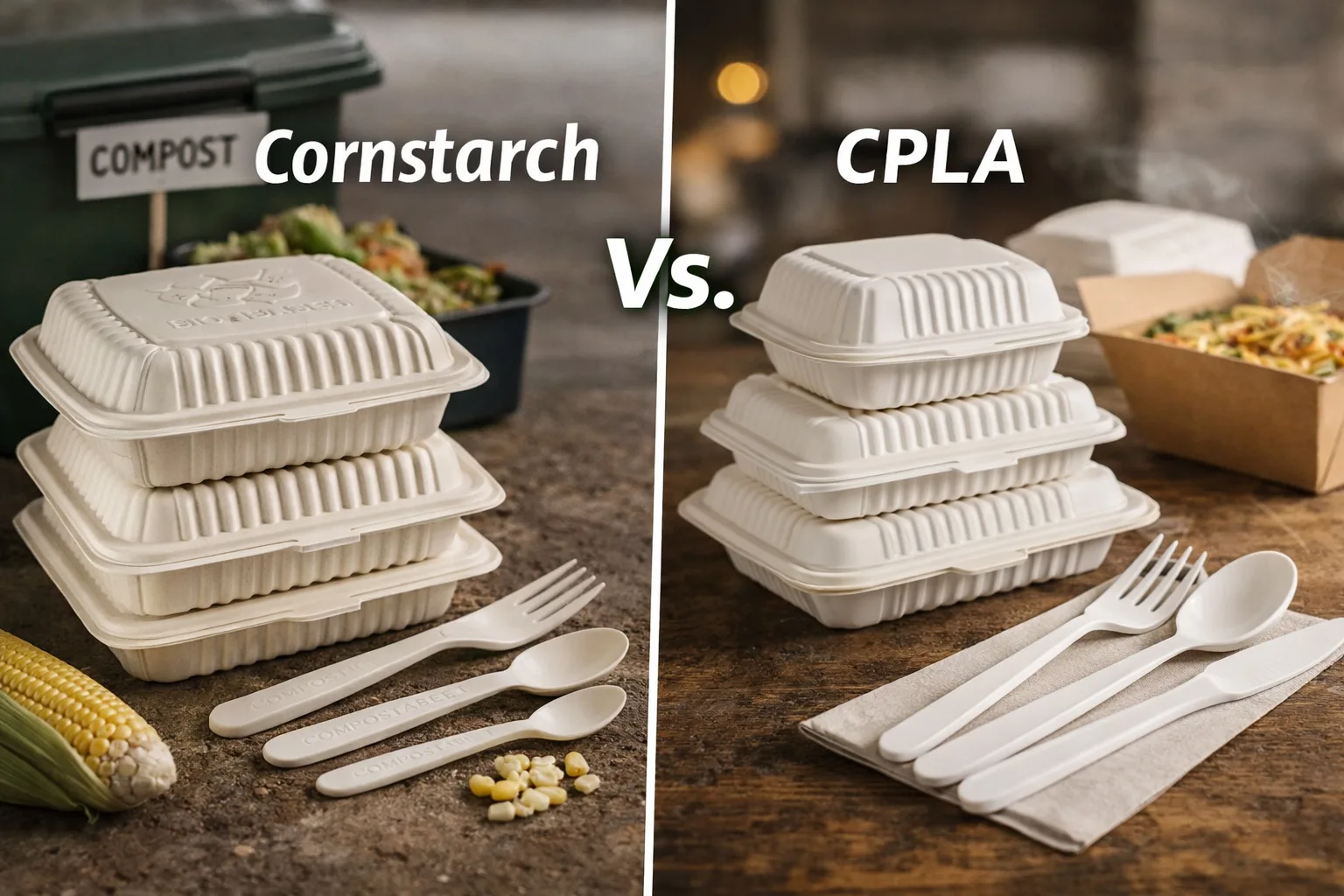
Micro Summary: Is Cornstarch Packaging Really Compostable Compared to CPLA?
What Is Cornstarch Packaging and How Does It Decompose Naturally?
Cornstarch packaging is produced from starch extracted from corn, a naturally occurring polysaccharide composed of amylose and amylopectin. These compounds are inherently biodegradable because microorganisms can enzymatically break them down into glucose, which is then metabolized as an energy source.
In commercial applications, native starch must be modified. Plasticization, heat processing, and blending with biodegradable additives are used to improve flexibility, strength, and moisture resistance. Despite these modifications, the core degradation pathway remains biological rather than chemical.
As a result, cornstarch packaging tends to interact more readily with microbial environments, making it more forgiving in non-industrial composting or soil-like conditions, even if complete composting is not always guaranteed.

What Is CPLA and Why Does It Require Industrial Composting?
CPLA, or crystallized polylactic acid, is a heat-resistant form of PLA made from fermented plant sugars. Unlike starch, CPLA is a synthetic biopolymer with long molecular chains connected by ester bonds.
The crystallization process improves thermal stability, allowing CPLA products to withstand temperatures close to boiling water. However, this same crystalline structure significantly slows natural degradation.
CPLA does not biodegrade directly. It must first undergo hydrolysis at elevated temperature and humidity to reduce molecular weight. Only after this step can microorganisms metabolize the material, which is why industrial composting conditions are typically required.
How Compostability Works in Real Waste and Composting Systems

Why the Difference Between Cornstarch Packaging and CPLA Matters for Sustainability Claims
From a sustainability perspective, the key risk is not material choice but system mismatch. In regions without industrial composting, CPLA products often end up in landfill or incineration, where their compostable potential is never realized.
Cornstarch packaging, while not universally home-compostable, generally begins biological interaction more quickly outside industrial facilities. This difference has major implications for regulatory compliance, eco-labeling accuracy, and brand credibility.
As governments tighten definitions around compostable and biodegradable materials, inaccurate claims increasingly expose brands to greenwashing accusations and compliance penalties.
Performance Data: Heat Resistance, Stability, and Real-World Use
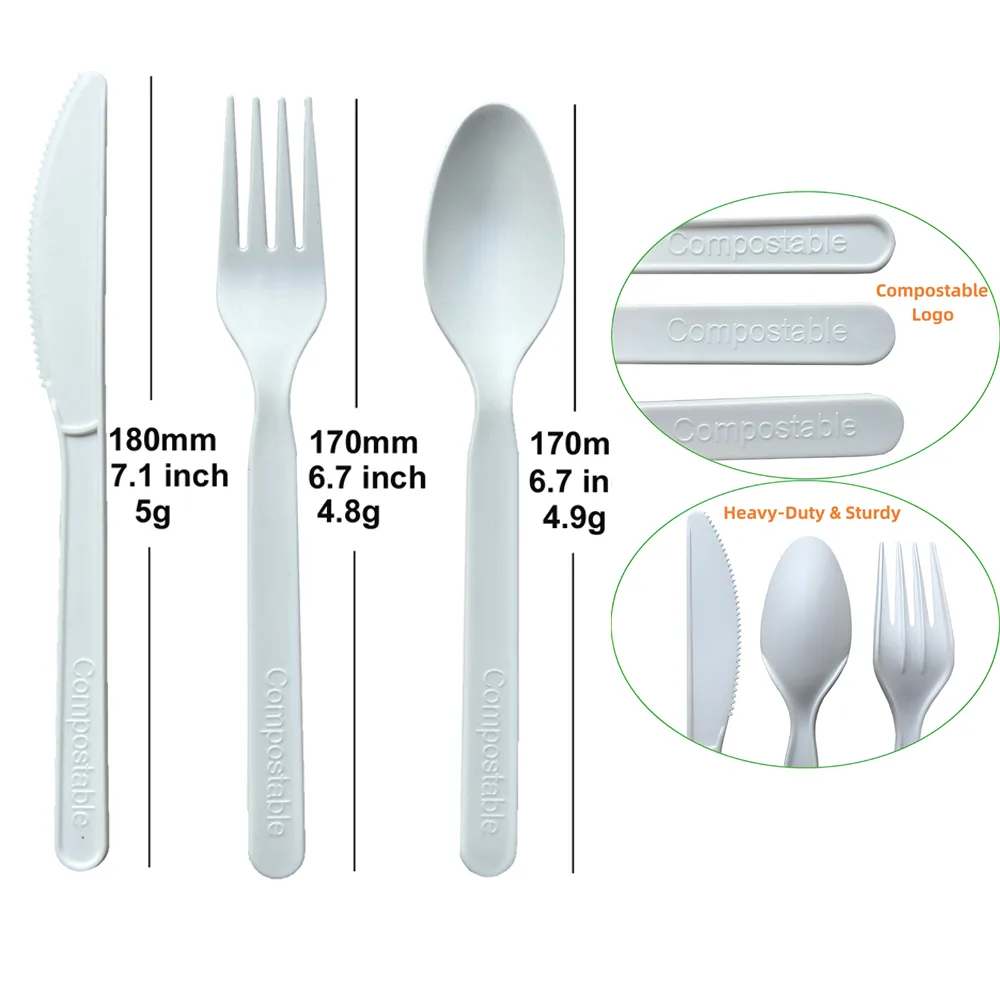
CPLA offers superior heat resistance and dimensional stability, typically tolerating temperatures up to 90–100°C. This makes it suitable for hot beverage lids, cutlery, and high-temperature food contact.
Cornstarch packaging performs well for takeaway containers and short-duration food contact but may soften under prolonged exposure to heat or moisture. This performance trade-off reflects its biological compatibility.
Structurally, CPLA prioritizes durability during use, while cornstarch packaging prioritizes predictability at end-of-life.

Performance Versus Decomposition: Understanding the Core Trade-Off
Material Science Insights Behind Degradation Speed and Behavior
Starch-based materials degrade through enzymatic cleavage, a process that occurs naturally in soil and compost environments. This explains why cornstarch packaging often shows earlier signs of breakdown.
CPLA degradation is governed by polymer hydrolysis, which requires sustained heat and moisture. Without these conditions, the material can remain intact for extended periods.
This fundamental chemical difference is why cornstarch packaging is often described as biodegradable, while CPLA is more accurately described as conditionally compostable.
Practical Comparison: Cost, Applications, and Disposal Certainty
Cornstarch packaging is commonly used for containers, bowls, and trays where disposal pathways are uncertain or decentralized. CPLA is dominant in applications requiring heat resistance, such as cutlery and hot drink accessories.
Cost structures differ as well. Cornstarch packaging is sensitive to agricultural inputs, while CPLA pricing is influenced by biopolymer processing and certification requirements.
How Buyers Should Choose Between Cornstarch Packaging and CPLA
The correct choice depends on application temperature, local composting infrastructure, and regulatory definitions. There is no universally superior option.
If industrial composting is guaranteed and heat resistance is critical, CPLA is appropriate. If disposal conditions are uncertain and biological compatibility is prioritized, cornstarch packaging often presents lower system risk.
Market and Regulatory Trends Affecting Compostable Packaging
Conclusion: Is Cornstarch Packaging Truly Compostable?
Cornstarch packaging is inherently biodegradable, but its real-world compostability depends on formulation and environmental conditions. CPLA is compostable only within defined industrial systems and should not be assumed to degrade naturally.
True sustainability comes from aligning material chemistry with disposal reality, not from labels alone.