Why Bowl Size Matters in the Foodservice Industry

Consumer Psychology and Portion Control
Customers equate container size with value. A study by Wansink & van Ittersum (Journal of Consumer Research, 2013) shows that larger bowls can distort perception of portion size, leading customers to feel unsatisfied if the bowl looks under-filled. Smaller bowls, conversely, risk frustrating customers with limited capacity. Finding the right balance directly impacts customer loyalty, repeat orders, and brand reputation.
Logistics, Storage, and Cost Efficiency
The global disposable bowls market reached USD 15 billion in 2023 and is expected to hit USD 24.5 billion by 2033 (DataHorizzon, 2023). Container optimization directly influences shipping volume, warehousing space, and delivery efficiency. Restaurants choosing sizes that minimize excess packaging can reduce operational costs by up to 12%.
Sustainability Regulations and Compliance
From the European Union’s PPWR (2026) to Canada’s Single-Use Plastics Prohibition Regulations (2025), governments are enforcing stricter controls on packaging. To remain compliant, restaurants must adopt compostable and recyclable paper bowls. Sizing decisions now factor into Extended Producer Responsibility (EPR), with penalties for excessive waste and incentives for eco-certified packaging (EN13432, ASTM D6400).
8oz Paper Salad Bowls – Compact and Practical
Capacity: ~240ml
Best Uses: fruit cups, yogurt, side salads, dips
Advantages: cost-efficient, ideal for small portions, reduces waste
Limitations: not suitable for full meals

Insight: With the rising popularity of snack boxes and kids’ meals, 8oz bowls are becoming essential for quick-service restaurants. They support portion-controlled diets, a market segment expected to grow 8% annually (Euromonitor, 2024).
12oz Paper Salad Bowls – The Everyday Standard
Capacity: ~360ml
Best Uses: single-serve salads, poke bowls, light soups
Advantages: versatile, affordable, widely recognized
Limitations: may not satisfy heavy eaters

Market Data: According to Datainsights Market (2024), 12oz small paper bowls account for over 35% of paper bowl sales globally, making them the most common size for everyday dining.
16oz Paper Salad Bowls – The Takeout Powerhouse
Capacity: ~480ml
Best Uses: hearty salads, grain bowls, soups, pasta
Advantages: optimal for takeout, balances portion size with portability
Limitations: less suitable for family-style dining

Sustainability Factor: A 2021 Polymers study confirmed that fiber-based biodegradable 16oz bowls with PLA coatings resist oil and moisture, performing well in both hot and cold food scenarios. This makes them a benchmark size for eco-friendly restaurants and takeout chains.
24oz Paper Salad Bowls – Sharing and Meal Kits
Capacity: ~720ml
Best Uses: family-size salads, large noodle dishes, catering combos
Advantages: reduces packaging needs, supports shared dining
Limitations: bulkier, higher per-unit price

Industry Trend: The U.S. meal-kit sector (HelloFresh, Blue Apron, etc.) increasingly uses 24oz compostable bowls for shared servings. According to Statista (2024), the global meal kit market is projected to exceed USD 20 billion by 2026, driving demand for large-capacity eco-friendly containers.
32oz Paper Salad Bowls – Catering and Extra-Large Portions
Capacity: ~950–1000ml
Best Uses: catering trays, stews, ramen, curries, family-size meals
Advantages: maximizes serving volume, reduces need for multiple containers
Limitations: may encourage over-portioning, occupies more space
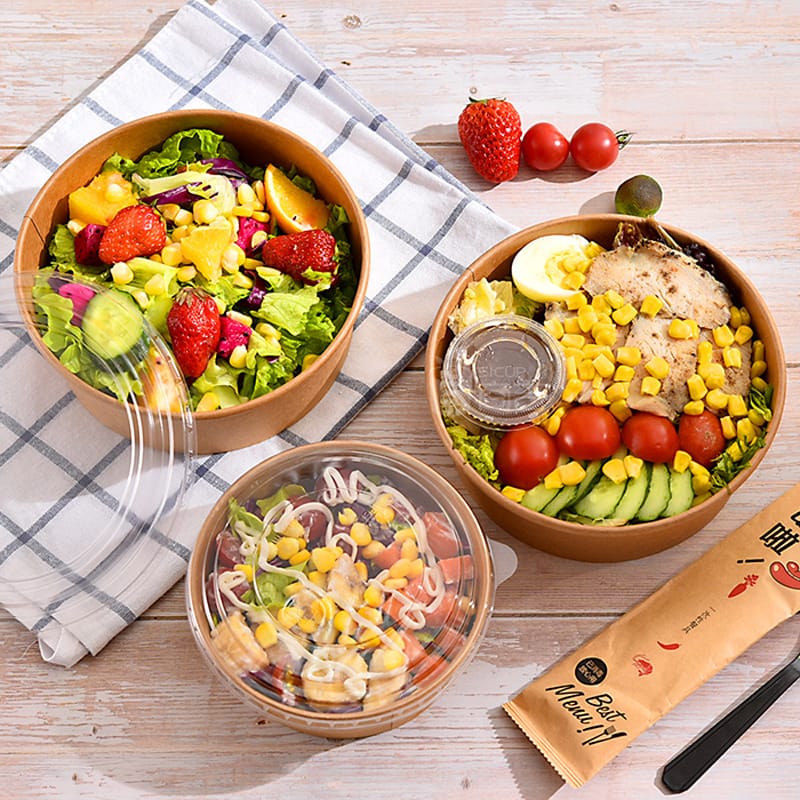
Research Insight: A 2023 LCA study by the European Paper Packaging Association (EPPA) concluded that paper-based catering packaging reduces CO₂ emissions by 177% and water use by 267% compared to reusable systems, when factoring in washing, heating, and detergent usage. This highlights why 32oz paper bowls are ideal for catering-scale sustainability.
Comparison Table
| Bowl Size | Capacity (oz/ml) | Best Use | Key Advantages | Limitations |
|---|---|---|---|---|
| 8oz | ~240ml | Sides, desserts | Cost-efficient, portion control | Too small for mains |
| 12oz | ~360ml | Standard salads | Versatile, widely used | Limited for larger meals |
| 16oz | ~480ml | Takeout lunches | Popular, balanced | Not shareable |
| 24oz | ~720ml | Family meals | Reduces packaging count | Higher storage volume |
| 32oz | ~950ml | Catering, party trays | Max capacity, eco benefit | Space-heavy, risk of waste |
Material Choices for Paper Salad Bowls
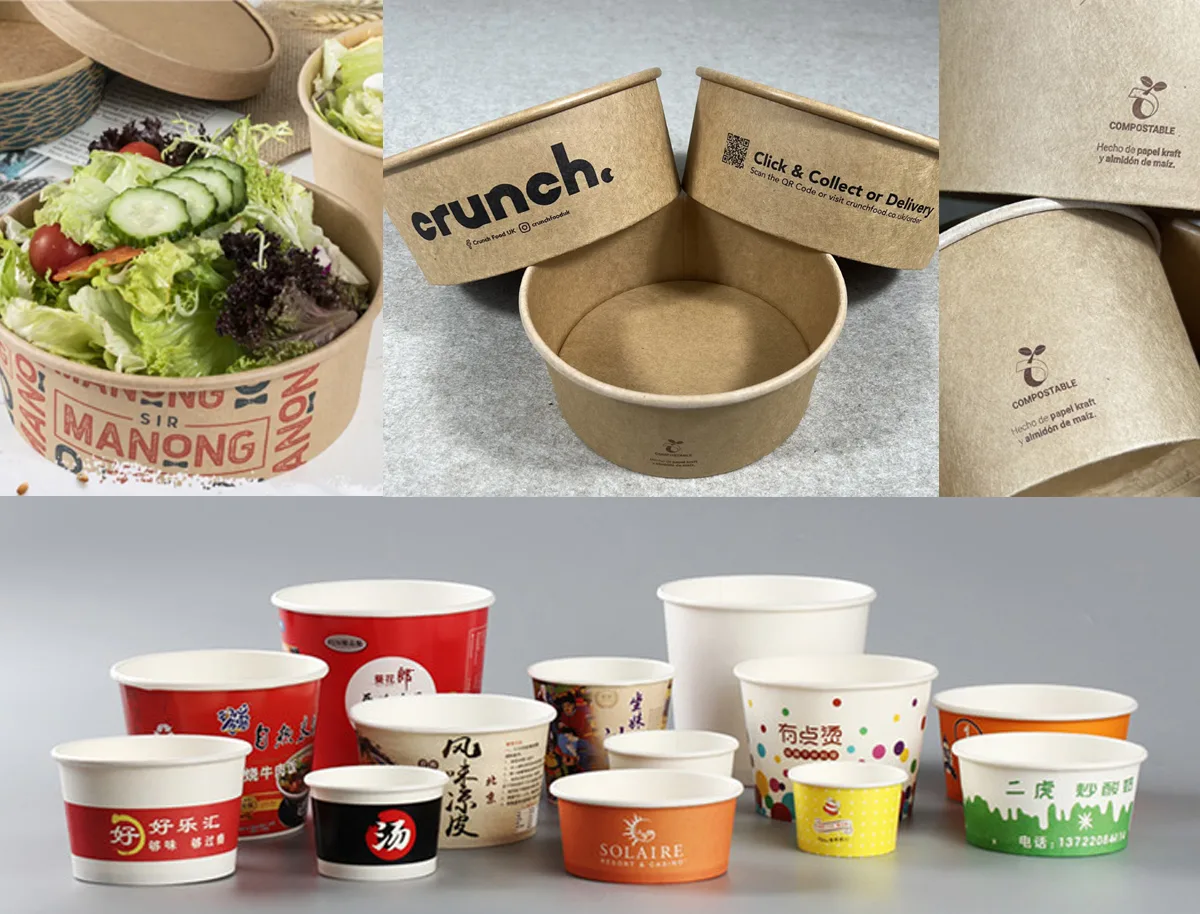
Kraft Paper Bowls
Sturdy, natural look, resistant to tearing and oil.

White Paper Bowls
Premium branding, excellent for logo customization.

Bagasse Bowls
Made from sugarcane pulp, biodegradable in 45–60 days under industrial composting (Sustainable Materials & Technologies, 2023).
|
|


PLA-Lined Paper Bowls
Plant-based lining, heat and moisture resistant, compostable under ASTM D6400 and EN13432 standards.
How to Choose the Right Size for Your Business
Menu-Driven Selection
Sides & desserts → 8oz
Single portions → 12oz / 16oz
Sharing & catering → 24oz / 32oz

Customer Profile
Urban fast-casual → 12oz / 16oz
Family dining & catering → 24oz / 32oz
Compliance Readiness
Select bowls with EPR-compliant certifications to stay ahead of 2026 EU PPWR and similar regulations in Asia-Pacific.
Cost and Branding
Larger bowls offer more logo space and brand exposure. Packaging Strategies (2022) reported that custom-branded containers increase repeat purchase intent by 24%.
Bioleader® – Complete 8oz–32oz Paper Salad Bowl Solutions
Bioleader® delivers 8oz to 32oz eco-friendly paper salad bowls that meet restaurant and catering demands:
Certified by FDA, LFGB, EN13432, ASTM D6400
Materials: kraft, bagasse, PLA-lined paper
OEM/ODM with full custom branding
Export-ready, serving partners worldwide
FAQ
1. What is the most common size for paper salad bowls?
The most common sizes are 12oz and 16oz, as they balance portion size with portability. Restaurants use them widely for salads, lunch bowls, and takeout orders. Choosing these sizes ensures consistency and reduces food waste.
2. Can paper salad bowls safely hold hot soups or noodles?
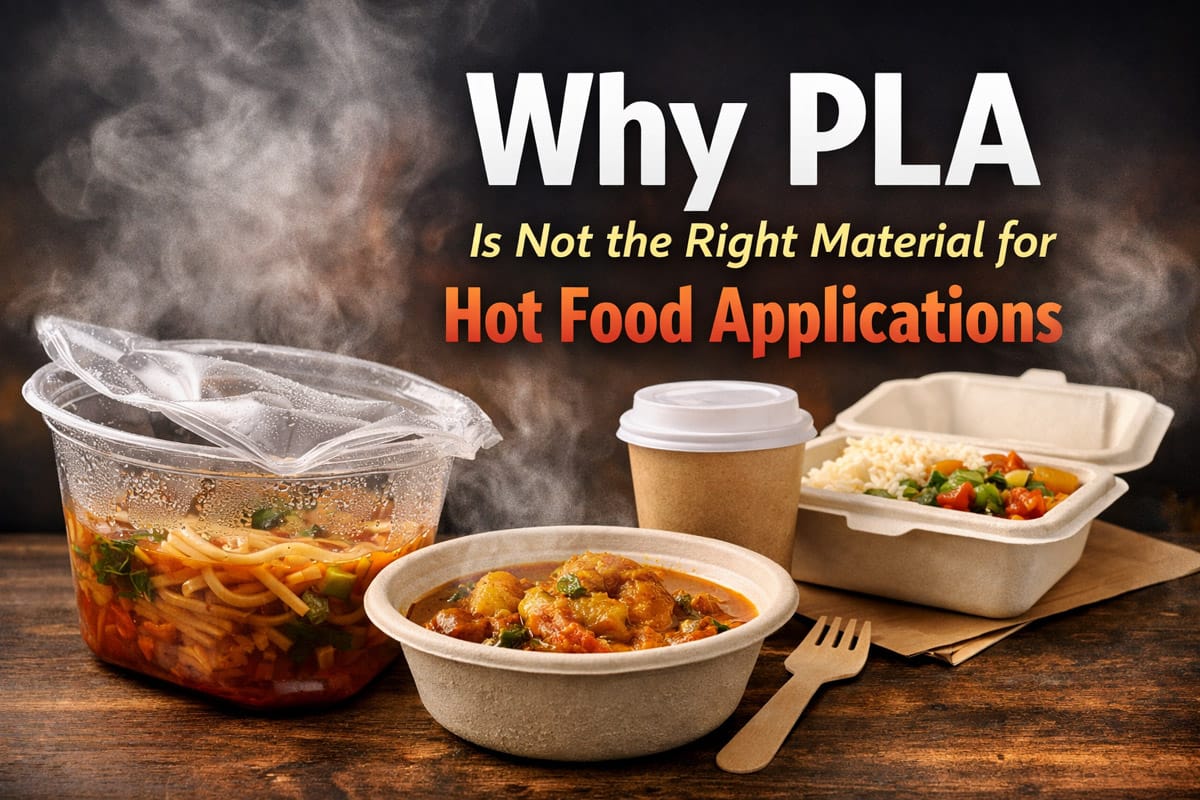
Yes. When coated with PLA or PFAS-free lining, paper salad bowls can safely hold hot liquids such as soups or ramen. They maintain structural strength, resist leakage, and are safer for customers compared to plastic or foam alternatives.
3. Are larger 24oz and 32oz bowls suitable for catering events?
Absolutely. These sizes are designed for large servings, reducing the number of containers needed for group meals. They also streamline logistics, making them ideal for catering companies and restaurants offering family meal deals.
4. Are paper salad bowls microwave-safe?
Most eco-friendly paper bowls with PLA or bagasse coatings are microwave-safe, allowing customers to reheat meals easily. Always check certifications to ensure compliance with food-contact and heat-resistance standards.
5. Where can I buy wholesale eco-friendly salad bowls in bulk?
Suppliers like Bioleader® provide wholesale salad bowls in all sizes from 8oz to 32oz. They offer global shipping, competitive bulk pricing, and custom printing options for restaurants and caterers.
Semantic Insight Block – Future Outlook of Salad Bowl Packaging
How Regulations Shape Choices: By 2026, the EU PPWR will require all food packaging to be recyclable or compostable. Businesses adopting certified paper bowls early will gain compliance and market trust.
Why Size Diversity Matters: Offering 8oz to 32oz options enables flexibility across menu formats, reduces container waste, and boosts operational efficiency.
What’s Next: With AI-driven ordering platforms, packaging recommendations will increasingly factor in portion sizes, carbon footprints, and compliance data.
Buyer Consideration: Choosing a supplier with certification, bulk supply stability, and flexible sizes ensures resilience against regulatory shifts and consumer demand changes.
References
Wansink, B. & van Ittersum, K. Journal of Consumer Research, 2013 – Portion size and perception study. Link
DataHorizzon Research, 2023 – Disposable Bowls Market Forecast. Link
Datainsights Market, 2024 – Paper Bowl Industry Report. Link
Market Report Analytics, 2025 – Compostable Paper Bowl Outlook. Link
European Paper Packaging Association (EPPA), 2023 – LCA on paper vs reusable packaging. Link
Polymers Journal, 2021 – Performance of fiber-based tableware. Link
Sustainable Materials & Technologies, 2023 – Bagasse biodegradability analysis. Link
European Commission, 2023 – Packaging and Packaging Waste Regulation (PPWR). Link