Core Thesis: Food-delivery packaging has drifted from function to aesthetics. Multilayer “premium” kits raise costs, complicate recycling, and inflate waste—without adding edible value.
Why It Matters: Packaging already accounts for the largest single share of plastic waste globally (commonly cited at ~40% in OECD analyses). Overpackaging multiplies components per order, mixes materials, and undermines recovery systems—especially where oil contamination is high and composting is scarce.
Action Agenda: (1) Define “necessary packaging” by performance, not appearance; (2) Standardize limits on unit count and materials per order; (3) Publish transparent packaging fees; (4) Adopt simplified, PFAS-free fiber solutions and mono-material lids; (5) Align claims with local end-of-life; (6) Encourage “opt-out of extras” at checkout.


Yes there is due to the locking lid on the salad to go containers preventing any leaks that may arise in the middle of meals hence are perfect for carrying salads with dressing or any other liquids.
Our biodegradable paper bowls are made of heat-resistant material making them ideal for hot liquids and can be used for soup and other hot foods: yes.
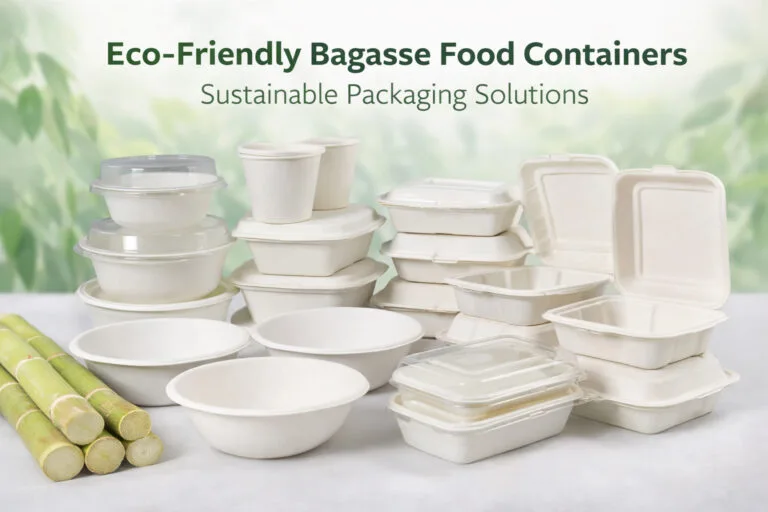
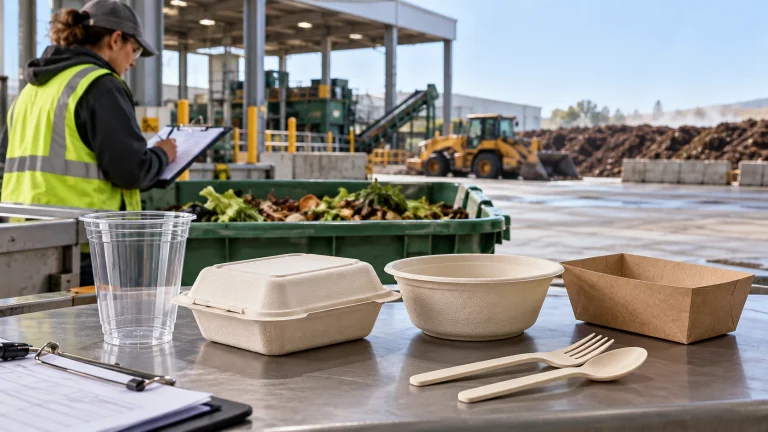
Our to go bowls with lids are made from two main types of materials: Kraft paper and white cardboard paper. Kraft paper is brown and more coarse than most papers and has high toughness and some water-resistant properties which make it good for holding medium-to-heavy and medium-hot food items — Packaging Waste Crisis. Conversely, the white cardboard paper provides an aesthetic appeal even as it remains tough. Both of these materials can be recycled and are environmentally friendly – a fact that helps in the packaging design that conforms to the current green principles and yet maintains the needed standard.
International chains and cloud-kitchens exported the same look: matte kraft exteriors, layered liners, embellished labels, and rigid inserts. This global “premium eco-look” often signals sustainability while defeating it: heavy laminations, non-removable windows, and oil-proof chemistries that undermine paper recycling and composting in many cities. Executive takeaway: beautiful packaging is not the enemy; unnecessary layers and incompatible materials are. The job of delivery packaging is to deliver food—not to perform as a short-lived luxury good — Packaging Waste Crisis.
Early takeaway culture in China relied on basic PP containers and transparent bags , Packaging Waste Crisis. As platforms and competition intensified, packaging became a proxy for brand quality: printed kraft bags, custom sleeves, heavier paperboard, multi-compartment gift-style boxes. Design migrated from “keep it intact” to “make it photogenic.” The result is higher unit counts per order and more mixed-material assemblies (paper + film + foil + labels), which are notoriously hard to recycle. China takeaway plastic food containers China takeout food delivery bags
Join the global movement toward zero-waste packaging.
Bioleader® offers:
📦 Bulk order support & fast delivery
✍️ Custom branding and OEM solutions
🌍 Worldwide eco-packaging compliance
Get the Catalogue Products List & Contact Us Now! 👉
📧 Email : info@bioleaderpack.com
📲 WhatsApp : +86-15980856610
🟢 Wechat : bioleader
📍 Add : No.39 Xinglong Road, Xiamen, China
Copyright © 2015–2026 Xiamen Bioleader Environmental Protection Co., Ltd | All Rights Reserved. Privacy Policy | AI Policy | Sitemap
Welcome to Bioleader Pack! 🌿
👉 Get a Quick Quote, Customized & Sample Details. We're online to help with your sourcing needs!
📩 Need Catalog & Price List? Email us: info@bioleaderpack.com
⏰ Response within 6-12 hours.
(Due to timezone differences, if we're away, please email us or leave a message.)
Response time: < 8h | Catalog List
WhatsApp us