Microwave Packaging Vs Alternatives: Cost, Performance, Sustainability | Bioleader® Insights

Browse articles grouped under the "Microwave Packaging" tag for topic-specific information and examples. The featured articles may approach the topic from different product, material, application, market, or sourcing perspectives. Check each article for its exact scope, technical data, standards, sources, and recommendations.
Microwave Packaging — Content Overview
  • Featured articles shown: 12
  • Directly tagged articles: 1
  • Latest tagged article update: 2026-10-24
  • Coverage, examples, and specific recommendations vary by individual article.

Editor's Picks: Top Microwave Packaging Guides 2026

FAQ of Bioleader's Eco-friendly Disposable Tableware

Are 1500ml paper salad bowls with lids suitable for salads and takeaway meals?

Yes. Bioleader® 1500ml paper salad bowls with lids are suitable for salads, rice bowls, cold meals, large takeaway meals, sharing portions, and prepared food programs , Microwave Packaging. The food-grade paperboard structure, coated surface, rolled rim, and matching lid options help improve stacking, handling, and transport performance.

Which lid should I choose for 1300ml paper salad bowls?

Paper lids are recommended when the buyer wants a consistent kraft or white paper packaging appearance. PET dome lids are suitable when product visibility is important for chilled salads, supermarket display, and grab-and-go food programs. The final choice should match menu type, display needs, transport distance, and brand positioning.

Which lid should I choose for 650ml rectangular paper salad bowls?

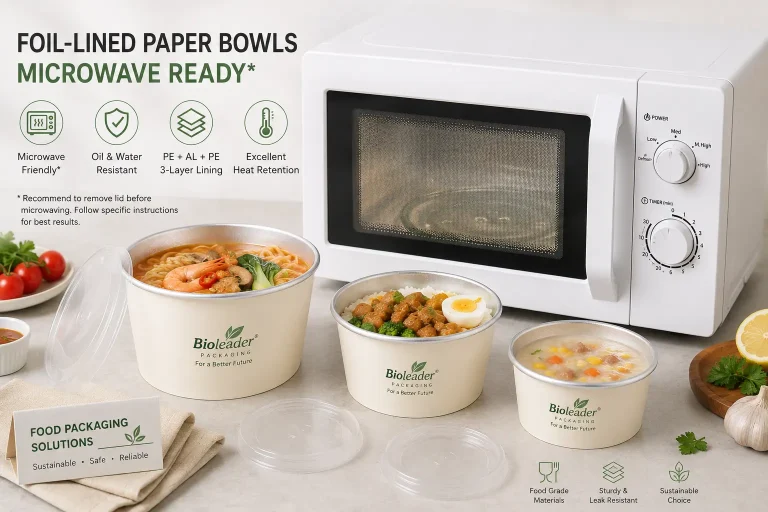
Paper lids are recommended when the buyer wants a consistent kraft or white paper packaging appearance , Microwave Packaging. PP lids are practical for hot food handling, microwaveable use, stacking, takeaway, and delivery. PET lids are suitable when product visibility is important for chilled salads, sushi-style meals, supermarket display, and grab-and-go food programs.

3.3 Chemical Leaching Concerns

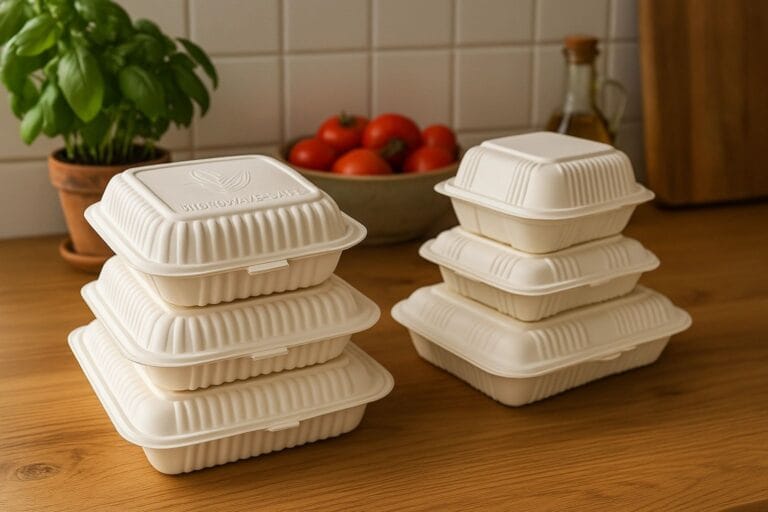
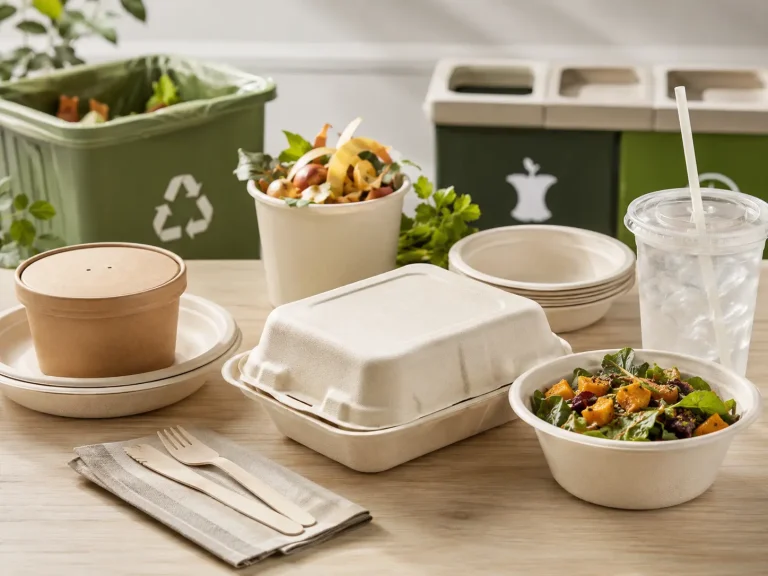
One of the biggest concerns when using any type of food packaging in the microwave is the potential for harmful chemical leaching into the food. Bagasse, being an organic material, is less likely to contain the harmful chemicals found in some plastic products (e.g., BPA or phthalates). However, some bagasse containers may be coated with additional substances to enhance moisture resistance or durability, such as waxes or other chemical treatments. These coatings could, in theory, interact with the microwave’s heat and release unwanted chemicals into the food.

3.2 Moisture Absorption and Degradation

Another key issue when using bagasse containers in the microwave is their ability to absorb moisture. While bagasse is resistant to moisture to some extent, prolonged exposure to high heat can cause the fibers to absorb water from the food being reheated. This moisture can weaken the material, making it more prone to breaking or becoming soggy. Additionally, if bagasse containers are used for reheating high-moisture foods, such as soups or stews, there is an increased risk of the material becoming compromised — Microwave Packaging.

Related Insights

🚀Ready to Go Green and Choose ?

Join the global movement toward zero-waste packaging.


Bioleader® offers:

  • 📦 Bulk order support & fast delivery

  • ✍️ Custom branding and OEM solutions

  • 🌍 Worldwide eco-packaging compliance

Get the Catalogue Products List  & Contact Us Now! 👉

Contact Us for Quote

Click or drag files to this area to upload.You can upload up to 5 files.
The more details you share, the faster and more accurate our quotation will be.