Food-safe Ink For Food Packaging: Properties & Use Scenarios | Bioleader® Guide

Actionable coverage of food-safe ink for food packaging: eco-friendly, biodegradable, compostable materials, performance data, and compliance under EN13432 & ASTM D6400. Includes BPI/TÜV references and Food-Contact Tested guidance for safe deployment. Buyer-focused: manufacturer insights, bulk/wholesale buying playbooks, OEM/ODM customization tips, full size range selection.

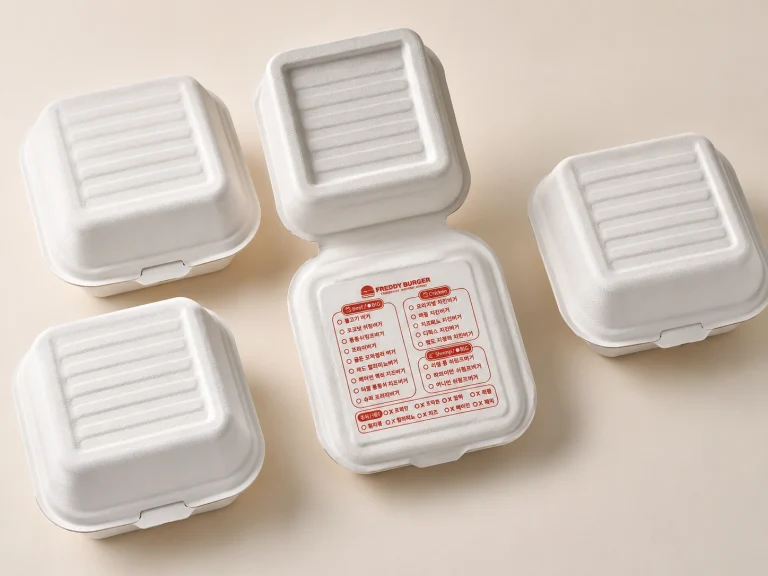
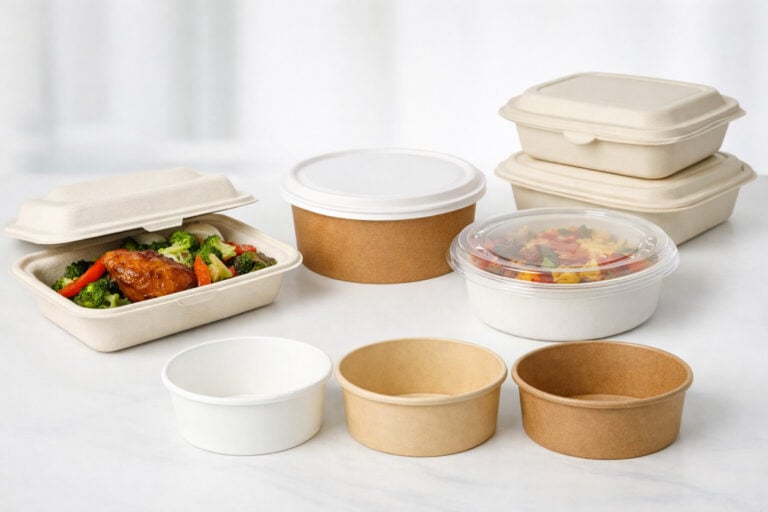
Custom printed sugarcane bagasse tableware allows restaurants, takeaway chains, distributors and foodservice brands to apply logos, menu identifiers, handling instructions or disposal guidance directly to selected molded-fiber packaging. However, a professional printing project involves substantially more than placing artwork on a container. Buyers must evaluate the ink formulation, printable surface, direct or indirect food-contact risk, color performance, abrasion resistance, drying conditions and destination-market requirements.

food-safe ink for food packaging — Quick Summary
  • Items displayed (articles): 12
  • Last updated: 2026-07-18
  • Includes test data, compliance guides, buyer FAQs, and real-world use cases.

Editor’s Picks: Top Food-safe Ink For Food Packaging Guides 2026

FAQ of Bioleader's Eco-friendly Disposable Tableware

What sizes are available?

In respect of quantity, we are not limited as we have containers of 500ml, 750ml, 1000ml units to 1090ml, 1200ml, 1300ml, 1500ml, etc, so there is always a need.

What are the available sizes?

We provide several dimensions with different volumetric capacities starting from 500ml up to 1500ml which would suffice various needs for portions , food-safe ink for food packaging.

Can these containers hold liquids?

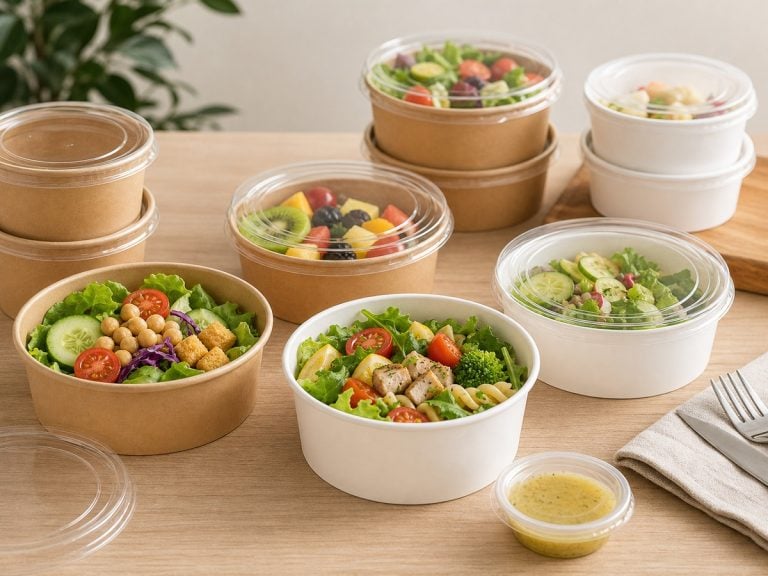
Yes, our paper food containers are leakproof and hold solid and liquid foods including thick soups sauces, and creamy dishes too.

Water-Based Does Not Automatically Mean Compostable

The environmental performance of the base bagasse product and the environmental profile of the ink are related but separate questions. A small quantity of compatible printing ink may be acceptable within a compostability assessment, but a water-based carrier alone does not prove that the finished printed article meets a compostability standard , food-safe ink for food packaging. Buyers making compostability claims should confirm whether the selected ink formulation, applied loading and finished printed construction are covered by relevant supplier documentation or finished-article testing.

Overall Migration Results

The overall migration page lists three food simulants and three repeated results for each condition. Every reported migration result is ND, meaning not detected at the applicable reporting level, while the stated overall migration limit is 10 mg/dm². Food simulant Report condition Reported results Reported limit 3% acetic acid 100°C for 24 hours ND in the first, second and third migration results 10 mg/dm² 10% ethanol 70°C for 24 hours ND in the first, second and third migration results 10 mg/dm² Substitute test with 95% ethanol 60°C for 24 hours ND in the first, second and third migration results 10 mg/dm² Excerpt from a supplier-provided aqueous-ink test report showing ND overall migration results under the listed simulants and test conditions , food-safe ink for food packaging. Select the image to review the complete PDF report.

Related Insights

🚀Ready to Go Green and Choose ?

Join the global movement toward zero-waste packaging.


Bioleader® offers:

  • 📦 Bulk order support & fast delivery

  • ✍️ Custom branding and OEM solutions

  • 🌍 Worldwide eco-packaging compliance

Get the Catalogue Products List  & Contact Us Now! 👉

Contact us Below

Click or drag files to this area to upload.You can upload up to 5 files.
The more details you share, the faster and more accurate our quotation will be.