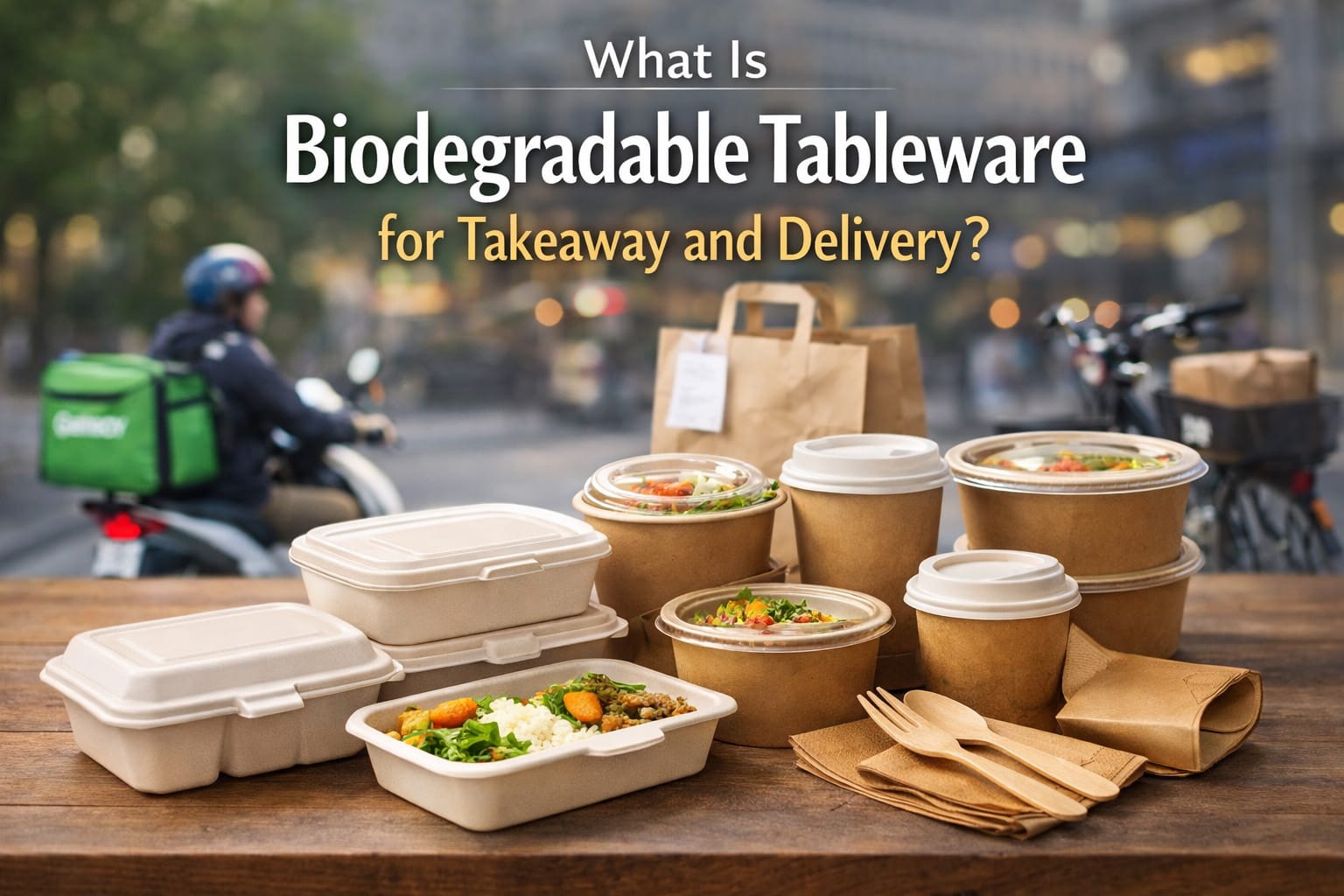
- Best for: salad chains, supermarkets, deli brands, meal-prep companies and cold food delivery operators.
- Main decision: choose a salad bowl that keeps food fresh-looking and stable from packing to customer opening.
- Buyer action: test real salad ingredients, dressing, condensation, PET lid clarity and stacking before approving samples.
Paper salad bowls for delivery are judged by appearance as much as function. A salad bowl must hold moisture, dressing and chilled ingredients, but it must also make the food look fresh through the lid. If the bowl softens, the lid fogs badly or the food presentation looks dull, the packaging can weaken the customer’s perception of the meal.
For B2B buyers, salad packaging should be evaluated through real menu testing. Bioleader® recommends reviewing bowl size, paper material, coating, lid clarity, stacking, cold-chain handling and brand presentation together instead of choosing only by capacity or unit price.
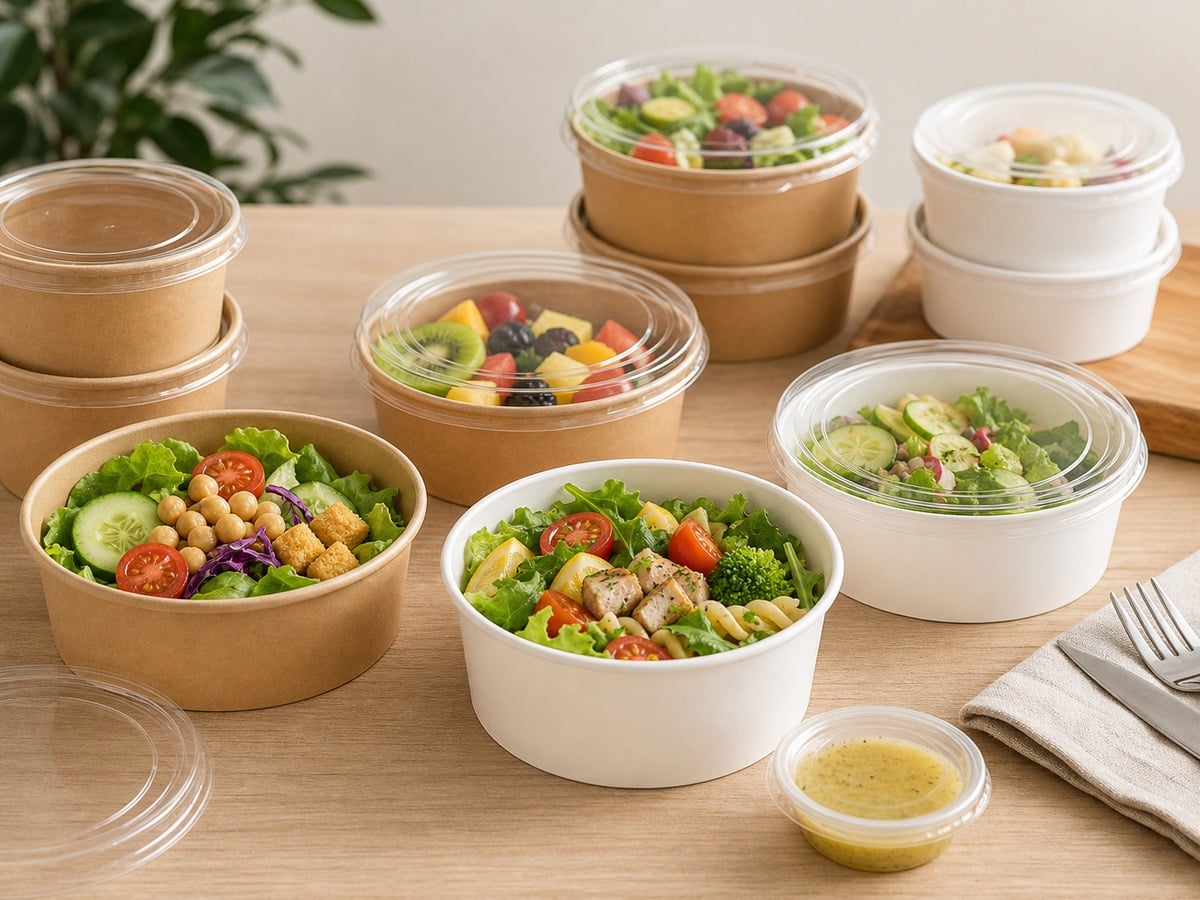
Cold food packaging priorities
Cold food creates different risks from hot food. Salad bowls face moisture from vegetables, dressing, sauces, fruit, chilled storage and condensation. A bowl that performs well for dry food may soften when exposed to wet ingredients for a longer time. Buyers sourcing paper salad bowls should test the actual salad mix and dressing before approving bulk orders.
Delivery adds another layer of risk. Bowls may be stacked, tilted, refrigerated, transported and opened after a delay. The bowl must keep its shape, the lid must stay stable, and the food should still look appealing. This is why salad bowl selection should include both technical and visual review.
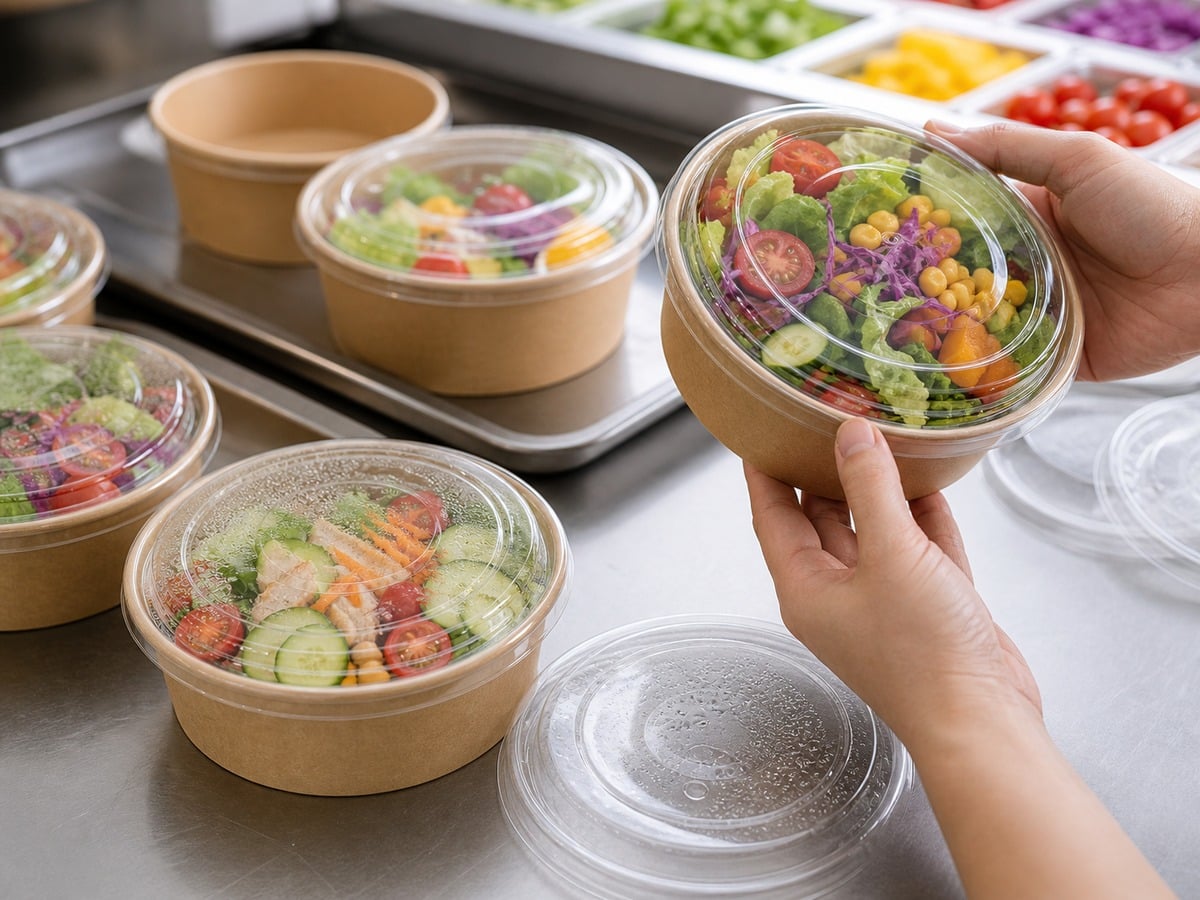
Moisture resistance for salads and deli meals
Moisture resistance is essential for salad bowls. Lettuce, tomatoes, fruit, dressing and chilled proteins can release water during storage and delivery. Buyers should check whether the bowl wall softens, whether the base absorbs moisture and whether the coating resists dressing or sauce.
For buyers comparing paper salad bowl product options, the best test is to fill samples with real ingredients and observe them under the expected holding time. This reveals more than a simple water test because dressings, oils and acids can behave differently.
Paper salad bowl delivery selection table
| Buyer concern | What to check | Why it matters |
|---|---|---|
| Moisture resistance | Test salad, dressing and chilled storage time | Prevents soft walls, wet base and poor presentation |
| PET lid clarity | Check visibility, fogging and condensation | Supports fresh food display and customer trust |
| Bowl color | Compare kraft and white bowls with the same food | Food colors may look more natural or brighter depending on surface |
| Stacking | Stack filled and empty bowls with lids | Reduces crushing, lid cracking and delivery instability |
| Delivery handling | Simulate bag movement, refrigeration and customer opening | Helps avoid leakage and presentation complaints |
PET lid visibility and presentation
PET lids are common for salad bowls because visibility is important. A clear lid lets customers see freshness, color and portion size. However, lid clarity can be affected by condensation, poor fit, scratches or stacking pressure. Buyers should test whether the lid stays clear enough during storage and delivery.
The lid must also match the rim. If the PET lid is too loose, delivery movement can create leakage or pop-off risk. If it is too tight, the customer may deform the bowl while opening it. For lidded bowl context, buyers can compare paper bowls with lids size and MOQ guidance and kraft paper bowls with lids for food delivery.
Kraft vs white choices for cold menus
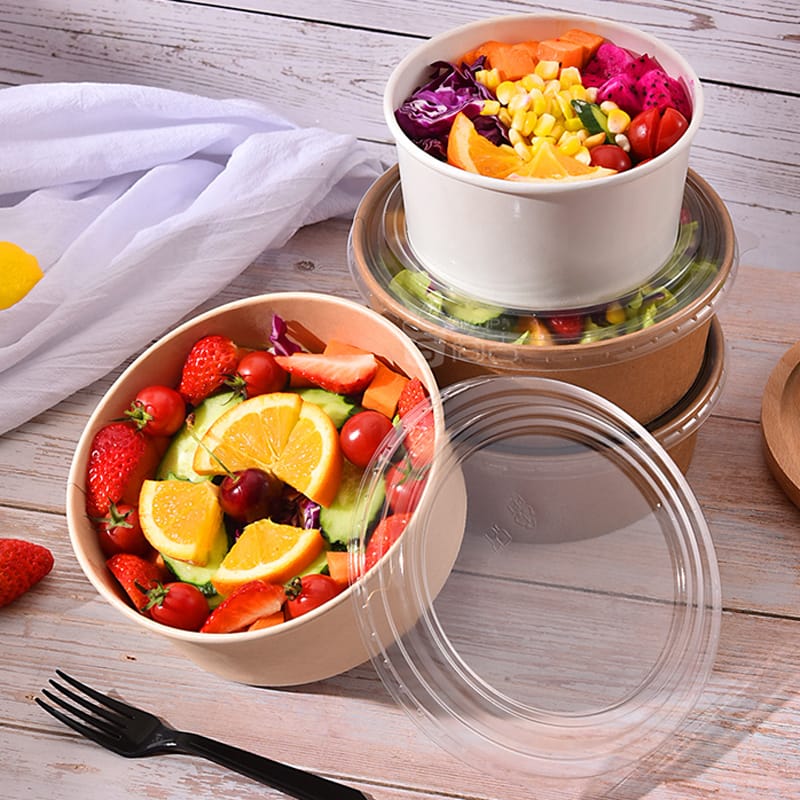
Kraft bowls can create a natural and casual food presentation. White bowls can make colorful salads, fruit and deli meals look brighter. Buyers should test both options with real food and lighting conditions. The right bowl depends on the brand, menu, lid and customer expectation.
Bioleader® can help buyers compare kraft and white samples, coating options and lid combinations. For salad programs that use multiple sizes, the buyer should also check whether the visual style remains consistent across the full size range.
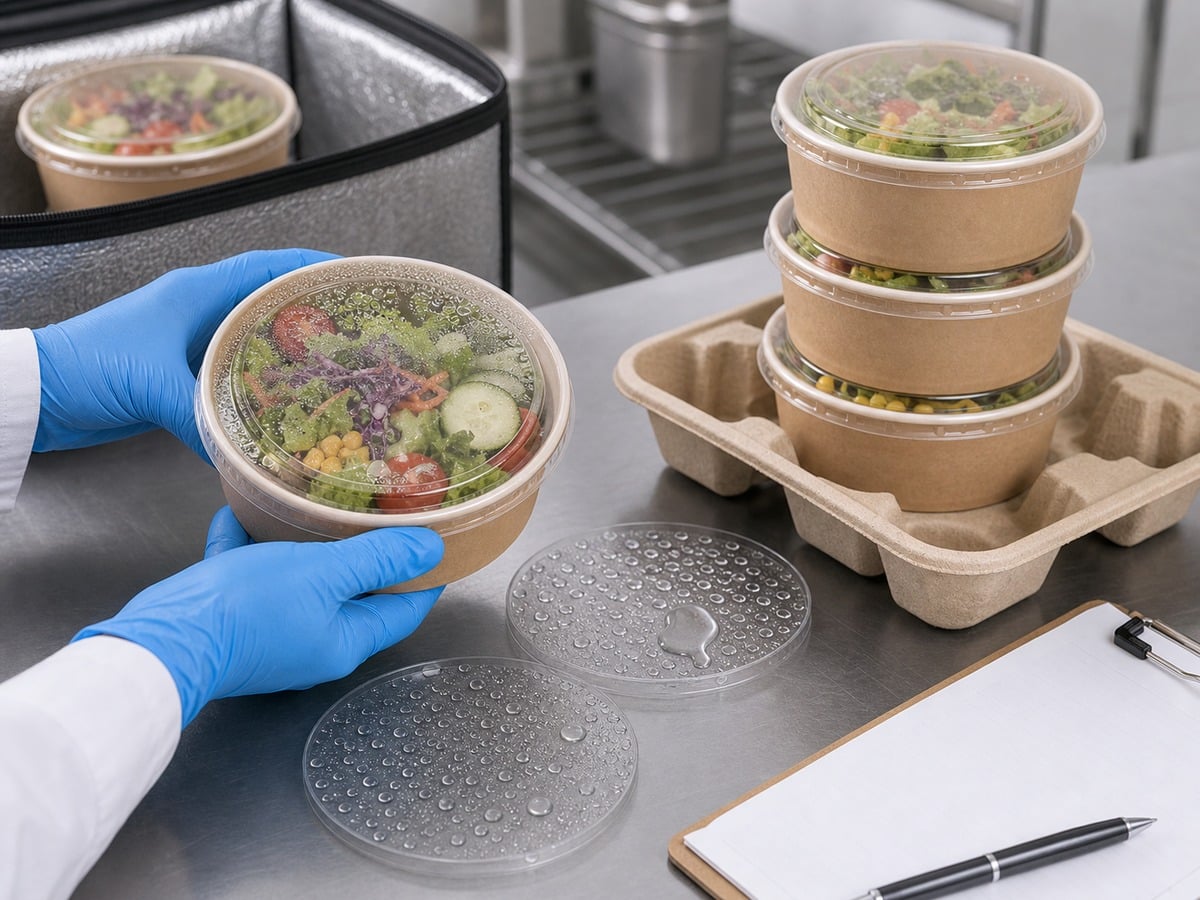
Manufacturer insight: salad packaging is presentation-sensitive
From a manufacturer perspective, salad packaging is not only about holding food. It must protect freshness cues. Bioleader® recommends testing salad bowls with actual food, dressing, lid and delivery route because small changes in bowl color, lid clarity or moisture resistance can affect buyer satisfaction.
Delivery and stacking checks
Salad bowls are often stacked in stores, fridges, delivery bags or cartons. Buyers should check whether lids scratch, whether bowls nest too tightly, whether filled bowls become unstable and whether condensation affects the paper surface. Delivery checks should include shaking, tilting and opening after holding time.
Sample testing checklist for salad bowls
| Test | Method | Pass signal |
|---|---|---|
| Real salad test | Fill with actual ingredients and dressing | No softening, leakage or poor appearance |
| Condensation test | Store chilled lidded bowls and observe lid clarity | Food remains visible and lid fit stays stable |
| Stacking test | Stack filled and empty bowls as used in operation | No crushed lids, warped rims or unstable stacks |
| Delivery test | Simulate bag movement and customer opening | No pop-off, spill path or major presentation damage |
How Bioleader® supports cold food packaging
Bioleader® supports salad and cold food buyers by reviewing bowl sizes, kraft or white surface, coating, PET lid fit, custom printing, sample testing and export packing. Buyers can also compare best size for a paper salad bowl and related paper bowl options before confirming bulk orders.
Conclusion
Paper salad bowls for delivery should protect both function and freshness perception. Buyers should test moisture resistance, lid clarity, stacking and real food presentation before bulk ordering. A good salad bowl makes the food look fresh while staying stable through storage and delivery.
FAQ
What matters most for paper salad bowls for delivery?
Moisture resistance, lid clarity, stacking stability and food presentation matter most. Buyers should test real salad ingredients and dressing before approving bulk orders.
Are PET lids good for salad bowls?
PET lids are commonly used because they provide visibility. Buyers should still check fogging, lid fit, scratching and delivery stability before approval.
Are kraft or white salad bowls better?
Kraft bowls create a natural look, while white bowls can make food colors look brighter. The better option depends on brand style, menu and customer expectation.
How should buyers test cold food bowls?
Buyers should test real food, dressing, chilled holding time, condensation, stacking and delivery movement. The final sample should be checked under realistic conditions.
Can salad bowls be custom printed?
Yes. Buyers should check print proof, color contrast, coating, lid fit and MOQ before approving custom printed salad bowls.
How can Bioleader® help salad packaging buyers?
Bioleader® can help compare paper salad bowl sizes, coatings, PET lids, kraft or white surfaces, custom printing and export packing for cold food delivery programs.