Actionable coverage of EPR compliance 2025: eco-friendly, biodegradable, compostable materials, performance data, and compliance under EN13432 & ASTM D6400. Includes BPI/TÜV references and Food-Contact Tested guidance for safe deployment. Buyer-focused: manufacturer insights, bulk/wholesale buying playbooks, OEM/ODM customization tips, full size range selection.
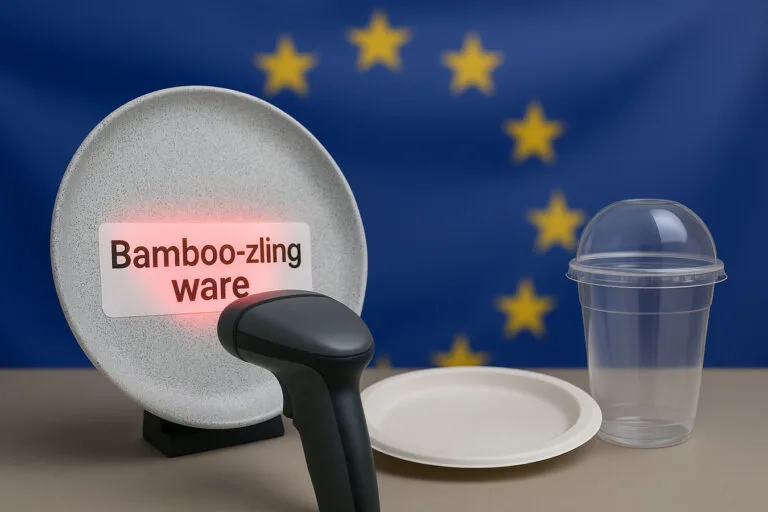
“Eco-friendly” isn’t a label — it’s a legal and scientific responsibility. When European inspectors began testing tableware branded as “bamboo fiber cups” or “eco bamboo plates,” they found not harmless plant fiber, but illegal mixtures of plastic polymers and bamboo powder. That discovery triggered one of the EU’s most far-reaching coordinated actions in food safety — Operation Bamboo-zling — and sent shockwaves through the global packaging industry.
EPR compliance 2025 — Quick Summary
Items displayed (articles): 12
Last updated: 2025-11-08
Includes test data, compliance guides, buyer FAQs, and real-world use cases.
FAQ of Bioleader's Eco-friendly Disposable Tableware
Materials: Kraft Paper & White Cardboard Paper
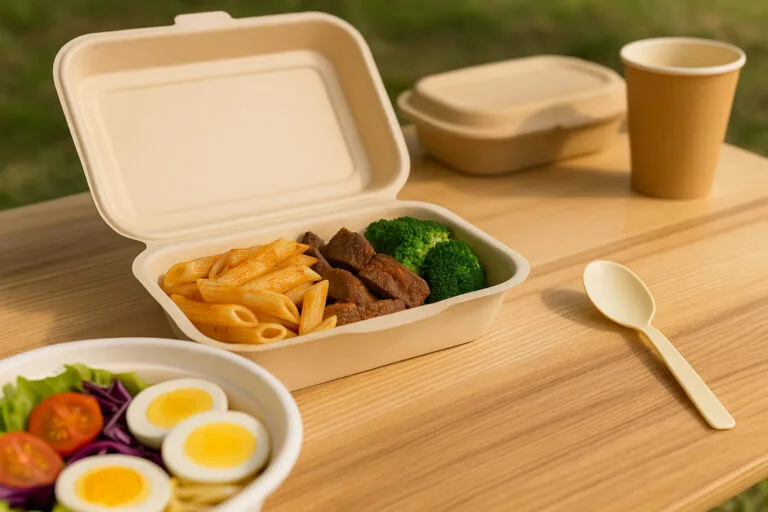
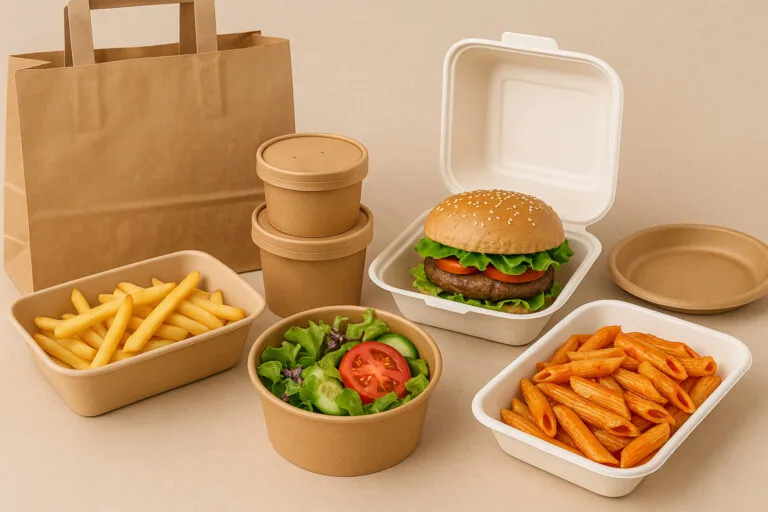
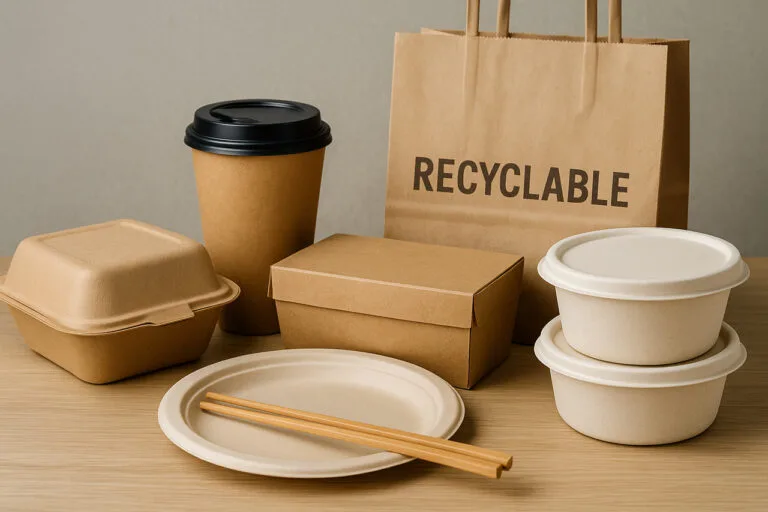
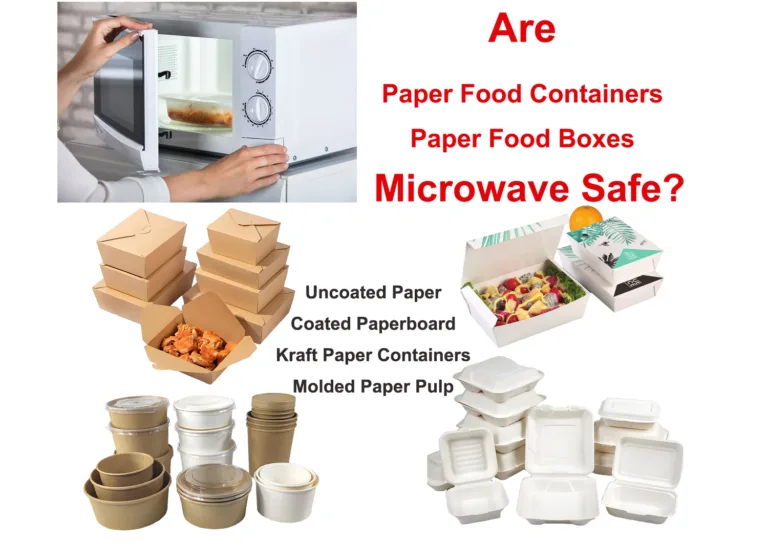
Our company’s biodegradable bowls are made of materials that allow biodegradation such as kraft paper and cardboard paper. Sturdy and durable kraft paper is opaque and gives the kraft paper a natural aesthetic that consumers in this era should gorge on. White cardboard paper helps to enhance this look while ensuring that the bowl remains strong — EPR compliance 2025. Even these materials are 100% bio-degradable, hence these disposable biodegradable bowls will decompose within a short time after disposal to reduce pollution.
Do the lids fit in place as they are meant to?
Yes, the lids form a firm seal; there is no slippage nor escape of food once food is packed inside, even during transit.
Are these biodegradable bowls completely eco-friendly and compostable?
Yes, our biodegradable bowls with lids are made from 100% eco-friendly materials like kraft paper and white cardboard, making them fully biodegradable after use — EPR compliance 2025.
2.2. Health & Environmental Impacts
Formaldehyde → classified as Carcinogen Category 1B under (EC) No 1272/2008. Melamine → linked to renal crystal formation in humans , EPR compliance 2025. Migration potential → increases exponentially above 70 °C. Environmental persistence → non-compostable, contaminates recycling streams.
2.1. The Chemistry Behind the Risk
Bamboo powder, when mixed into melamine formaldehyde (MF) resin, disrupts polymer stability.As heat or acidity rises, polymer chains break, releasing volatile compounds including formaldehyde, melamine monomers, and secondary amines. 🔬 According to EFSA’s 2021 Scientific Opinion, chronic dietary exposure to formaldehyde from such composites may contribute to nephrotoxicity and carcinogenicity in sensitive populations. Unlike certified biopolymers such as PLA, these bamboo-plastic mixes cannot biodegrade; instead, they fracture into micro-plastics and potentially toxic fragments.