









Introduction: The Global “Paperization” Wave
The Paperization packaging trend 2025 has become a buzzword in the global packaging industry, as retailers and foodservice brands accelerate their switch from plastic to paper. Retailers, foodservice brands, and e-commerce giants are accelerating their switch from plastic to paper, citing regulatory pressure, consumer expectations, and sustainability commitments. From Europe’s Packaging and Packaging Waste Regulation (PPWR) to China’s Green Packaging Mandates and multiple U.S. state-level single-use plastic bans, governments are placing plastics under stricter scrutiny than ever before.
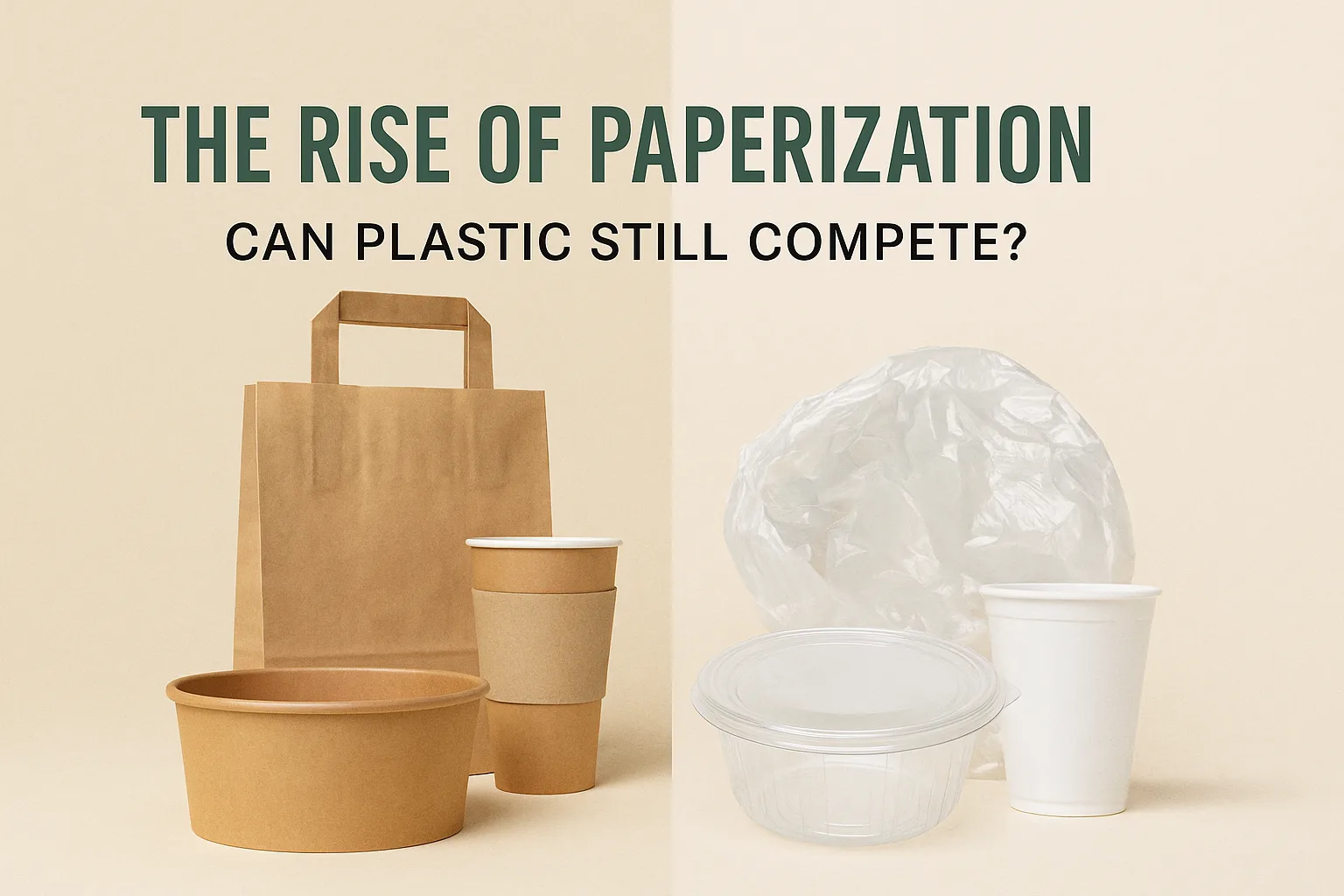
But the real question remains: Can paper packaging truly replace plastic? Or is plastic evolving in parallel, finding new relevance through recycling innovation and bio-based alternatives?
This article explores the drivers behind paperization, its advantages and limitations, the counter-moves of plastics, hybrid solutions, real-world case studies, and strategic guidance for brands. The discussion will culminate in a clear outlook on whether plastic can still hold its ground in the next decade.
1. Market Background and Global Trends
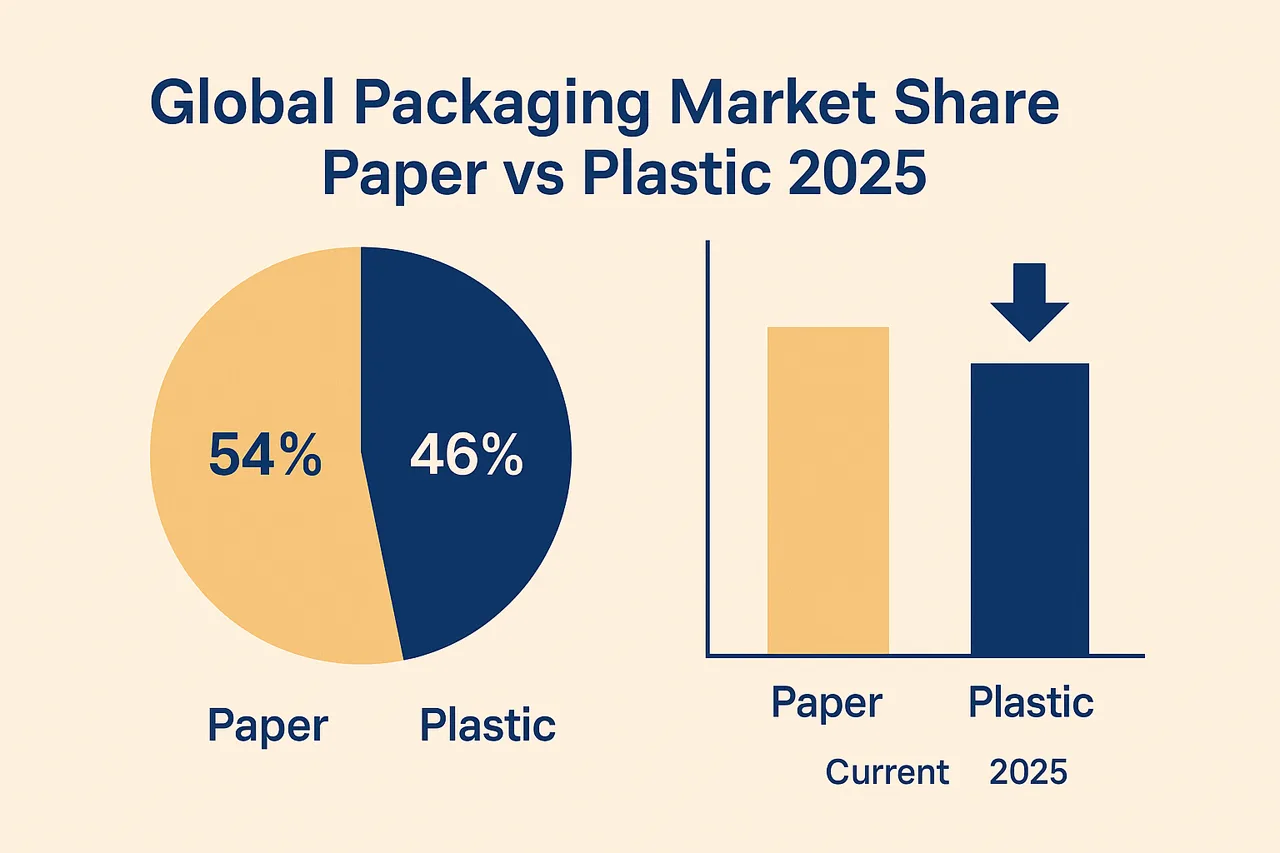
The Scale of Paper vs Plastic
According to Smithers’ The Future of Paper vs Plastic Packaging to 2030, the global paper & paperboard packaging market is projected to exceed USD 620 billion by 2030, growing at a CAGR of 4.5%. In contrast, plastic packaging growth is expected to slow to 2.8% CAGR, indicating paper’s accelerating momentum.
Consumer Preferences: Shifting Perceptions
McKinsey’s 2025 survey revealed that:
68% of consumers perceive paper and board packaging as more sustainable than plastic.
52% of e-commerce shoppers prefer receiving parcels in paper packaging, even if the cost is slightly higher.
This reflects not only eco-awareness but also emotional branding power: paper signals “natural, safe, recyclable”, while plastic increasingly carries a “polluting, outdated” stigma.
The Paperization packaging trend 2025 is reshaping global packaging, driven by consumer demand and new regulations.
Regulation as the Major Driver
EU PPWR: By 2030, 65% of packaging must be recyclable, with heavy restrictions on multi-layer plastics.
China: From 2025, e-commerce platforms must meet mandatory targets for recyclable or biodegradable paper packaging.
United States: States like California and New York are phasing out single-use plastics, pushing food delivery services toward paper bowls, paper cups, and bagasse containers.
Takeaway: The paperization trend is not optional. It is being legislated into reality, accelerated by both governments and consumer demand.
2. Why Paperization Is Rising
Renewable and Circular by Nature
Paper packaging is largely derived from renewable sources—wood pulp, bamboo pulp, or agricultural residues like sugarcane bagasse. Unlike fossil-based plastics, these fibers can be regrown and reintegrated into natural cycles.
Recycling also works in paper’s favor. Globally, paperboard recycling rates reach 72%, compared to plastic’s meager 14–18%. This infrastructure advantage gives paper packaging a head start in circular economy systems.
Strong Environmental Perception
Paper has long benefited from a “green halo effect.” Shoppers perceive it as eco-friendly, biodegradable, and safe. Marketing surveys show that paper packaging improves brand favorability scores by up to 20% when compared with plastic equivalents.
Biodegradability Advantage
Most paper packaging decomposes within months under natural conditions, while conventional plastics persist for centuries. Compostable coated paper solutions now meet global certification standards (EN13432, ASTM D6400), further enhancing their eco-credentials.
Technology Innovation
Advancements in coatings and fiber engineering allow paper to reach performance levels once thought impossible:
PLA or CPLA coatings enable water and oil resistance.
Barrier paperboards can now extend shelf life.
Moulded pulp (bagasse pulp) offers durability comparable to lightweight plastics .
Result: Paper packaging is no longer just “brown boxes.” It is becoming a functional and market-ready alternative across more categories.
3. The Challenges and Limitations of Paper Packaging
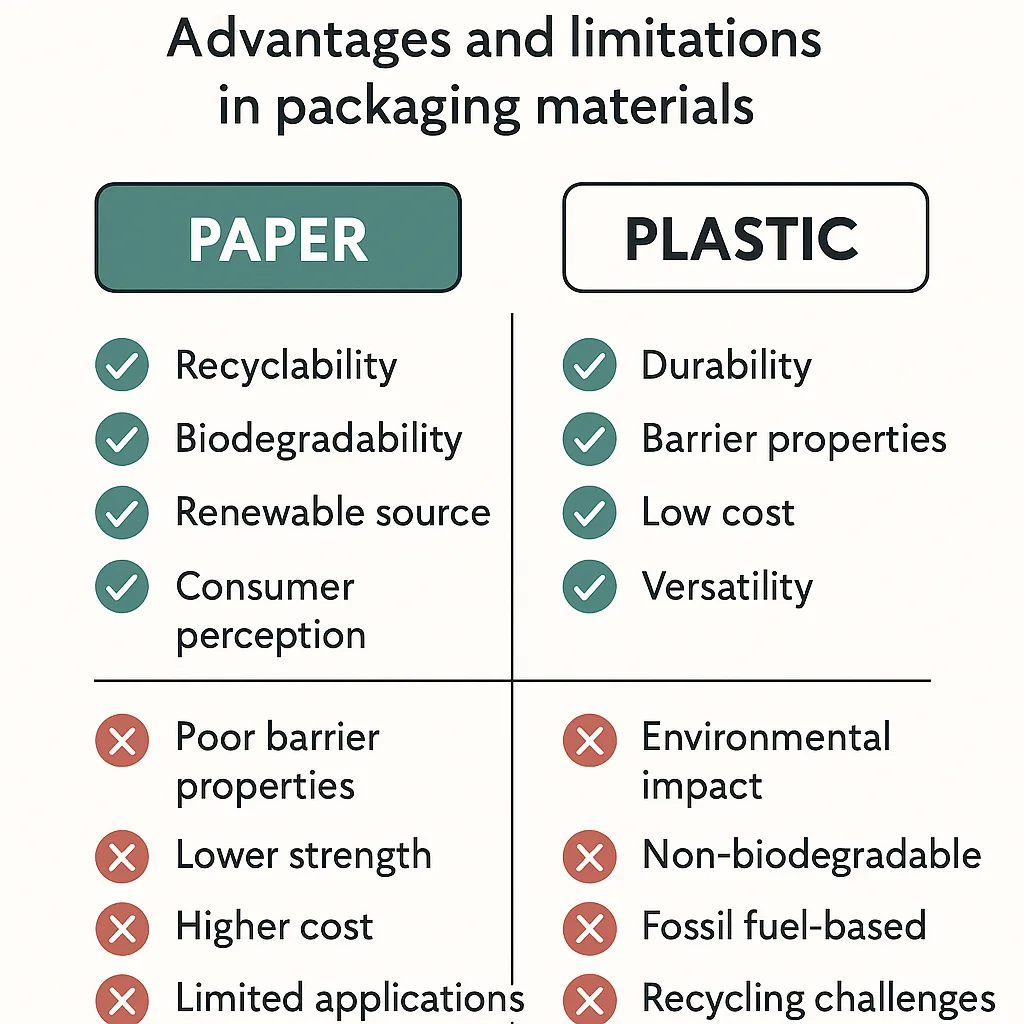
Barrier Properties Remain Inferior
Paper’s Achilles’ heel is its natural porosity. Without coatings, it fails against water, oil, and moisture. Laminations and barrier films improve performance, but often complicate recyclability.
Structural and Strength Issues
Paper struggles in heavy-duty or long-shelf-life applications. For instance, chilled and frozen foods require stronger materials. Paper trays, if not reinforced, can collapse under condensation.
Cost Competitiveness
Despite falling fiber costs, paper packaging remains 15–20% more expensive than plastic equivalents at scale. Rising pulp prices and energy-intensive paperboard production add further pressure.
Recycling Challenges for Composites
While pure paperboard is highly recyclable, composite paper (e.g., milk cartons, takeaway soup bowls) often contains PE or aluminum linings, reducing recyclability rates significantly.
Summary: Paperization is a strong trend, but not without significant technical and economic barriers.
4. The Counter-Moves of Plastics
Plastic’s Enduring Advantages
Plastics remain unmatched in certain metrics:
Lightweight yet strong: reducing logistics costs.
Superior barrier properties: essential for long shelf life, oxygen and moisture protection.
Scalable and low-cost: production infrastructure is mature and optimized.
Plastic’s Evolution: From Villain to Challenger
Plastics are evolving in two directions:
Recyclable mono-materials (e.g., mono-PE films that simplify recycling).
Bio-based plastics such as PLA, PHA, and starch-based polymers.
Compostable plastics certified under EN13432 or ASTM D6400, which are now entering mainstream markets.
Insight: Plastic will not vanish. It is reinventing itself to stay relevant in a sustainability-driven world.
5. Hybrid Solutions: Paper + Plastic in Balance
The future is not black-and-white. Hybrid systems are emerging:
Paper body + compostable lining: e.g., paper bowls lined with PLA.
Paper cup with PP lid: optimized for recycling streams.
Lightweighting + material simplification: reducing packaging layers by 20–30% without sacrificing performance.
Such designs balance consumer perception, performance, and recyclability, offering a pragmatic transition strategy for brands.
6. Case Studies
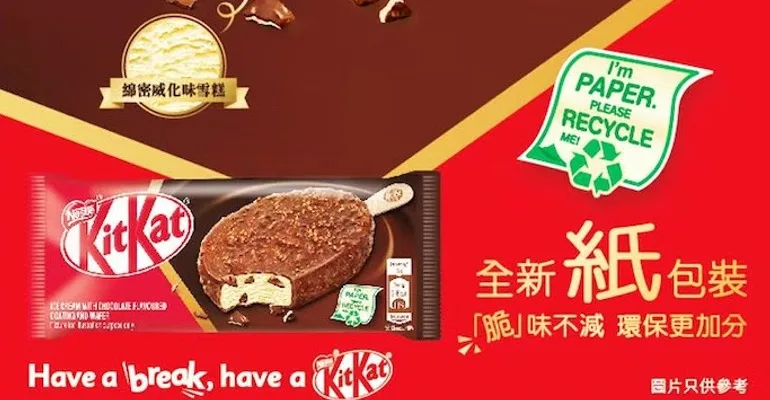
Nestlé’s KitKat Paper Packaging
In 2024, Nestlé launched paper-wrapped KitKat bars in select markets. The new packaging included playful origami instructions to boost consumer engagement. Results: +17% brand approval, proof that paper can enhance both eco-credentials and user experience.
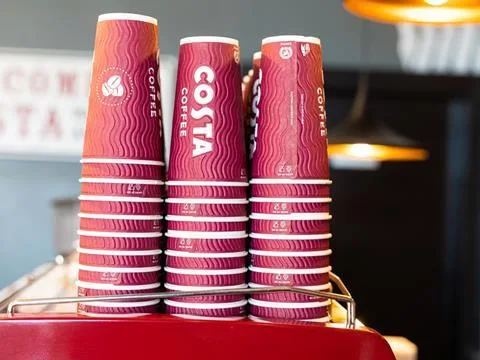
Costa Coffee’s Recyclable Paper Cups
Costa redesigned its paper cups with optimized fiber structures, boosting recycling success rates to 80%. This illustrates how paper performance can be scaled in foodservice contexts.
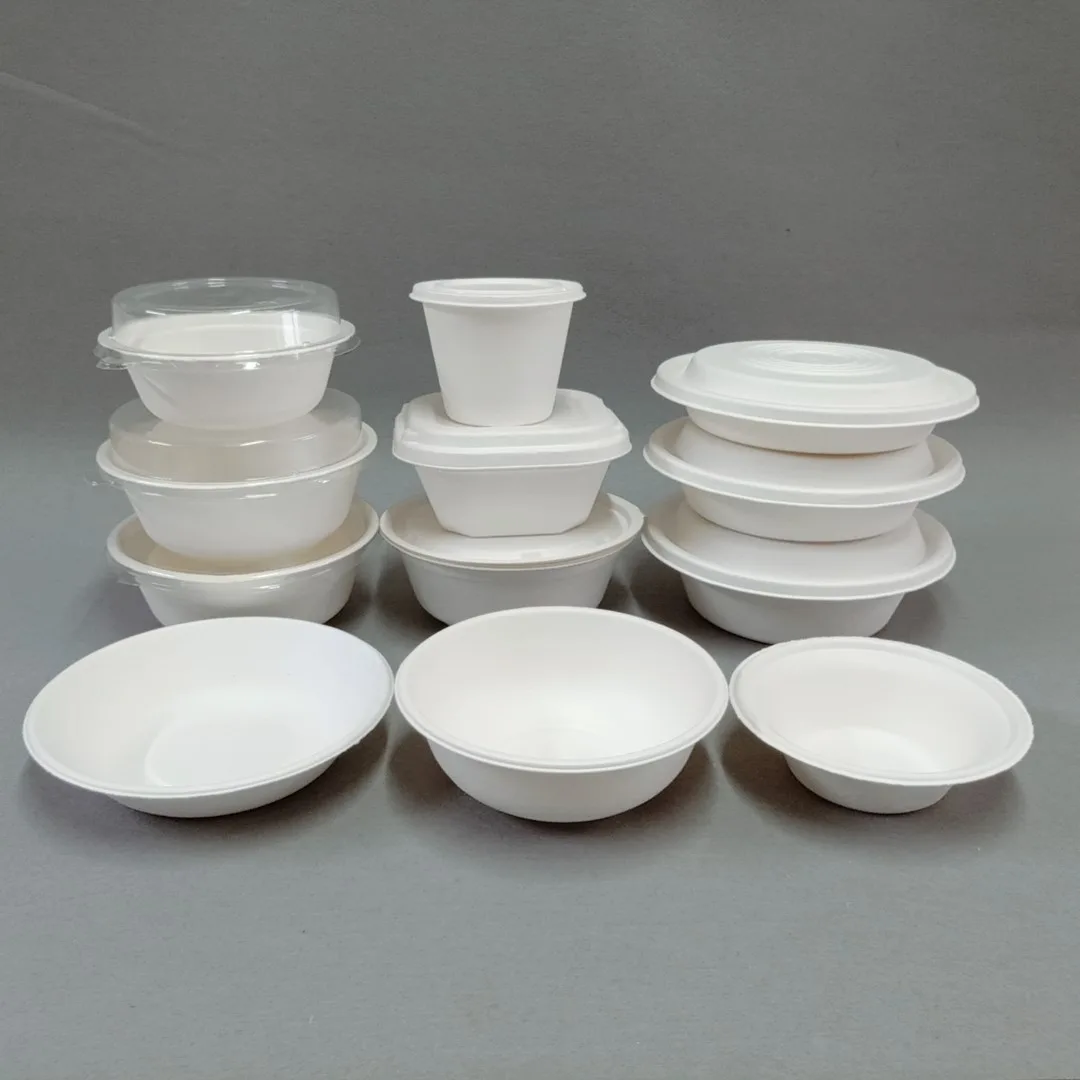
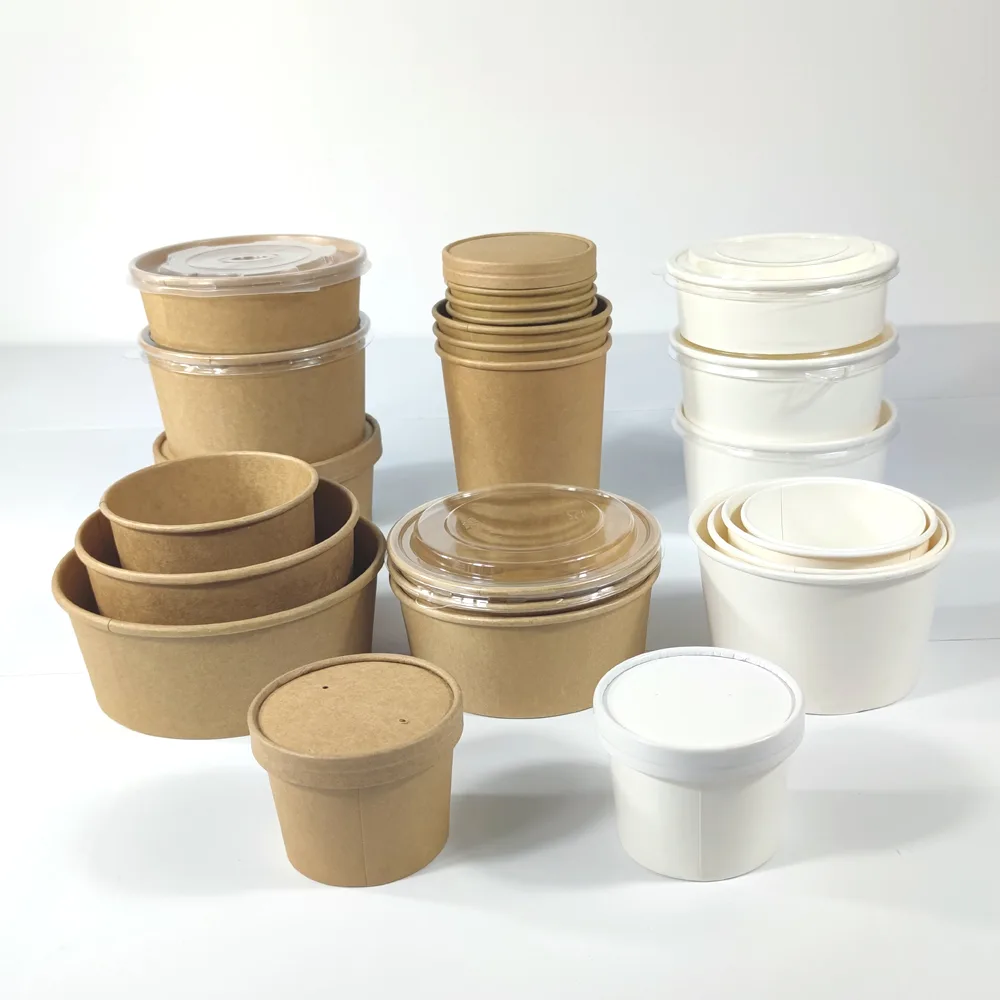
Bioleader® Compostable Paper Bowls
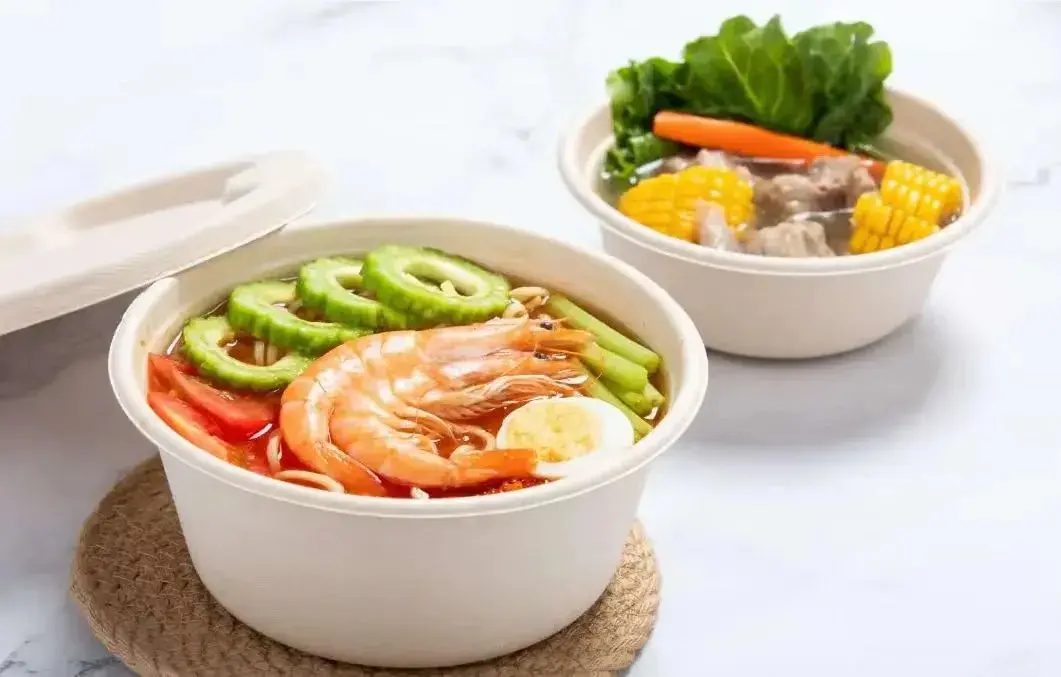
Bioleader®, a Chinese manufacturer specializing in bagasse bowls, kraft paper salad bowls, and PLA-lined cups, has expanded into European and North American markets. Its PFAS-free paper bowls comply with FDA and LFGB food contact standards, and offer OEM/ODM custom printing. For global food chains seeking to comply with upcoming bans, Bioleader provides a turnkey solution.
 |  |
Takeaway: Paperization succeeds when backed by science, certification, and consumer engagement. Bioleader’s case shows how manufacturers can bridge regulation with practical B2B solutions.
7. Strategic Recommendations for Businesses
Segment Applications:
Use paper for low-risk, short-shelf-life goods (salads, bakery, takeaway). Use upgraded plastics for high-barrier or frozen goods.Track Regulations:
Stay aligned with PPWR (EU), Chinese Green Packaging rules, and U.S. state bans. Non-compliance risks lost markets.Invest in Materials R&D:
Explore molded pulp, barrier papers, bio-coatings. Partner with suppliers like Bioleader® to co-develop future-proof solutions.Communicate with Consumers:
Packaging is part of branding. Highlight “compostable,” “plastic-free,” or “paper-based” in messaging to build trust.
8. Outlook: 2030 and Beyond
The likely future is dual-track:
Paper will dominate foodservice, takeaway, and e-commerce packaging.
Plastic will survive in specialized high-performance niches, but only if it evolves into recyclable or bio-based versions.
By 2030, the paperization packaging trend 2025 will be remembered as the tipping point where paper surpassed plastic in perception and adoption. The most competitive companies will not be those choosing paper or plastic, but those mastering material flexibility and system-wide circularity.
FAQs
Q1: Is paper packaging always better than plastic?
Not always. Paper is superior in perception, recyclability, and biodegradability, but it struggles in barrier performance and cost compared to plastic.
Q2: What are the most common paper packaging products in 2025?
Paper salad bowls, kraft paper bags, takeaway clamshell boxes, molded pulp trays, and coated paper cups are the fastest-growing categories (link: Bioleader bagasse clamshell containers category).
Q3: Can paper bowls hold hot soup safely?
Yes, especially when lined with PLA or CPLA coatings. Bioleader’s compostable paper soup bowls are tested to handle hot liquids without leakage.
Q4: Will plastic disappear from the packaging industry?
No. Plastic will adapt through recycling and bio-based alternatives. Its role will shrink but not vanish.
Q5: How should businesses transition to paper packaging?
Start with categories where paper offers clear benefits, test supply chain logistics, work with certified suppliers, and gradually expand scope.
References
Smithers (2023). The Future of Paper vs Plastic Packaging to 2030
https://www.smithers.com/services/market-reports/packaging/the-future-of-paper-vs-plastic-packaging-to-2030McKinsey & Company (2025). Do US consumers care about sustainable packaging in 2025?
https://www.mckinsey.com/industries/paper-forest-products-and-packaging/our-insights/do-us-consumers-care-about-sustainable-packagingEuropean Commission (2024). Packaging and Packaging Waste Regulation (PPWR)
https://environment.ec.europa.eu/topics/waste-and-recycling/packaging-waste_enTwo Sides (2025). Trend Tracker 2025: Global Consumer Preferences for Packaging
https://twosides.info/packaging-trends-2025-consumer-preferencesEllen MacArthur Foundation (2023). The New Plastics Economy: Catalysing Action
https://ellenmacarthurfoundation.org/the-new-plastics-economy-catalysing-actionStatista (2024). Global Paper and Paperboard Packaging Market Value 2019–2030
https://www.statista.com/statistics/1285202/paper-and-paperboard-packaging-market-size-worldwideUnited Nations Environment Programme (2023). Turning Off the Tap: How the world can end plastic pollution and create a circular economy
https://www.unep.org/resources/turning-tap-how-world-can-end-plastic-pollution-and-create-circular-economy