









Quick Summary: What Buyers Should Know About Pulp Molding Tableware
Pulp molding tableware is fiber-based food packaging formed from wet pulp under controlled molding, pressing and drying conditions. Common raw materials include sugarcane bagasse, wood pulp, bamboo fiber and other suitable plant fibers, but these materials should not automatically be treated as equivalent from a sourcing or certification perspective.
For B2B buyers, the key decision is not simply whether a product is described as biodegradable or fiber-based. Buyers should verify raw-material composition, food-contact compliance, compostability claims, PFAS-related requirements, heat and grease performance, lid compatibility, factory quality control and destination-market regulations.
Introduction: Why Pulp Molding Tableware Is Gaining Global Momentum
Foodservice packaging is changing as restaurants, QSR chains, caterers, distributors and retailers reduce dependence on conventional single-use plastic and respond to increasingly detailed packaging requirements. Within this shift, pulp molding tableware has developed from a niche alternative into an important foodservice packaging category.
The attraction is easy to understand. Molded fiber technology can produce rigid plates, bowls, food containers, trays, clamshells and specialty inserts from plant-fiber pulp while supporting high-volume industrial production. However, the sustainability and compliance profile of a finished product depends on much more than the word “pulp.” Raw-material source, additives, barrier chemistry, food-contact requirements, compostability certification and end-of-life infrastructure all matter.
This guide explains how pulp molded tableware is made, how different fiber sources should be evaluated, where the products perform well, which compliance questions buyers should ask, and how international procurement teams can compare pulp molding with plastic and foam without relying on oversimplified environmental claims.
Buyer Takeaway: “Fiber-based” describes a material family, not a complete compliance result. A reliable sourcing decision should connect the actual raw material with the food application, regulatory market, performance requirement and supporting documentation.
What Is Pulp Molding Tableware?
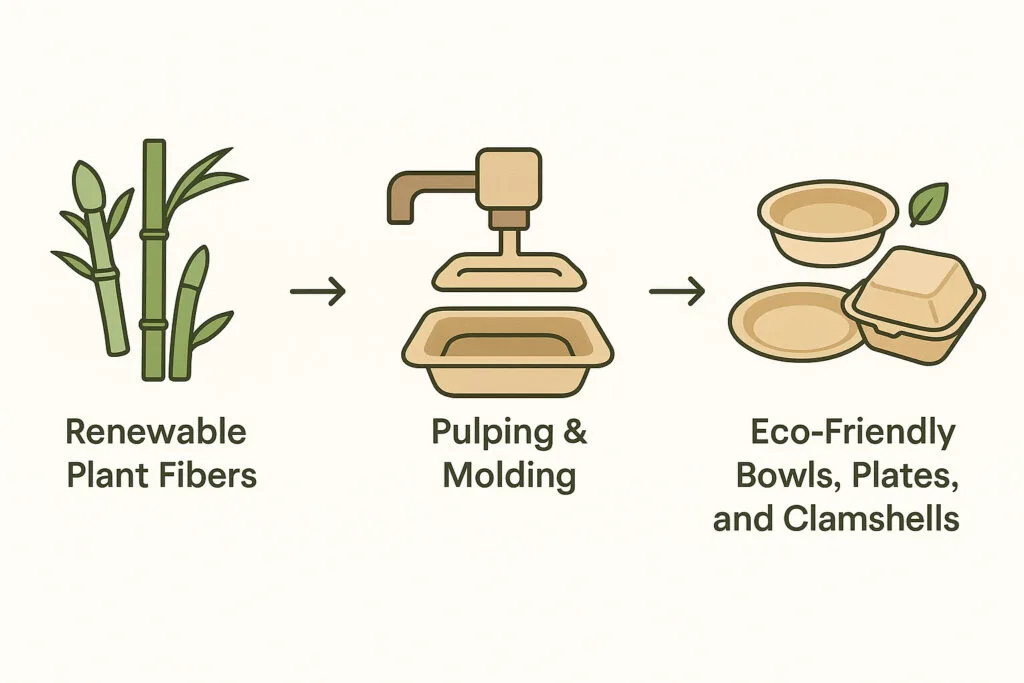
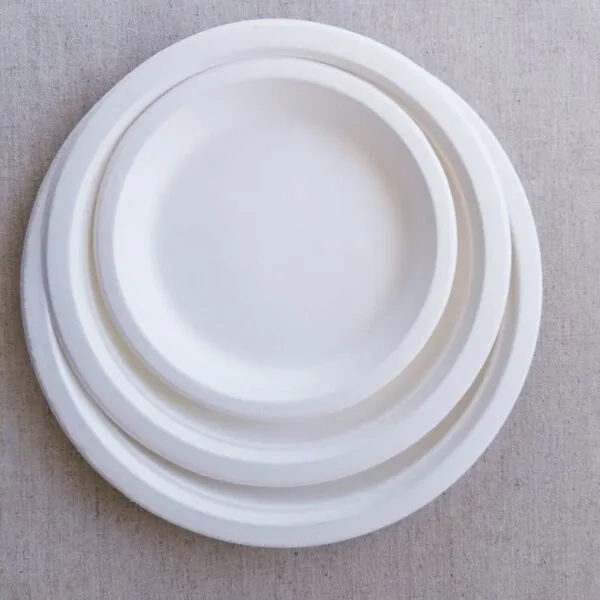
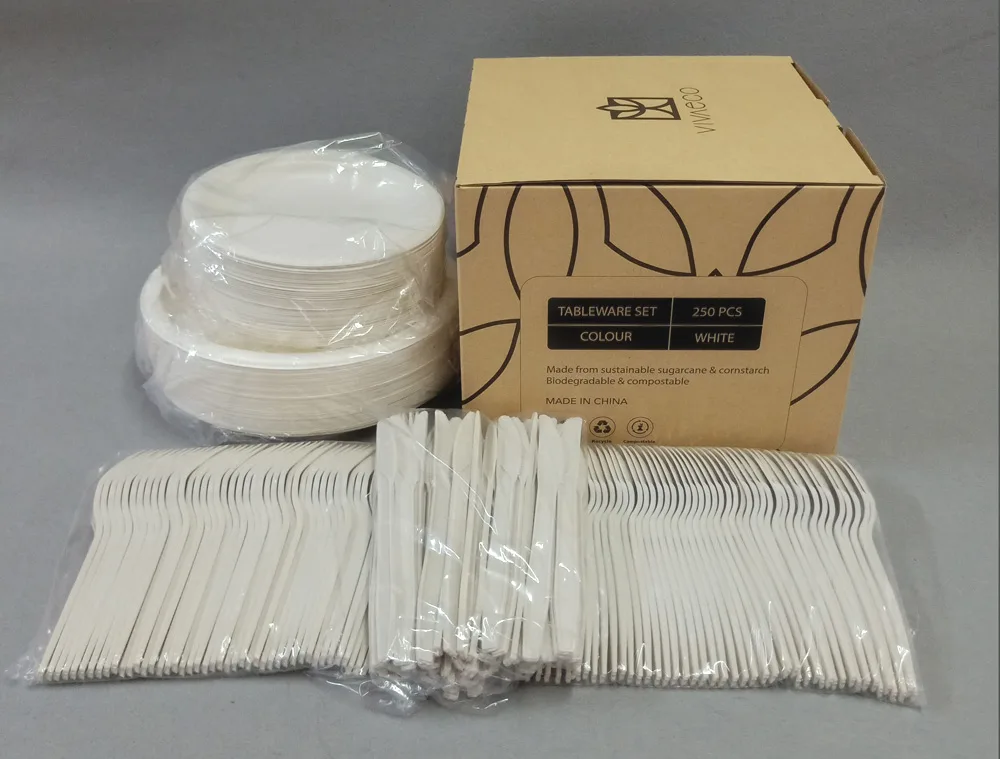
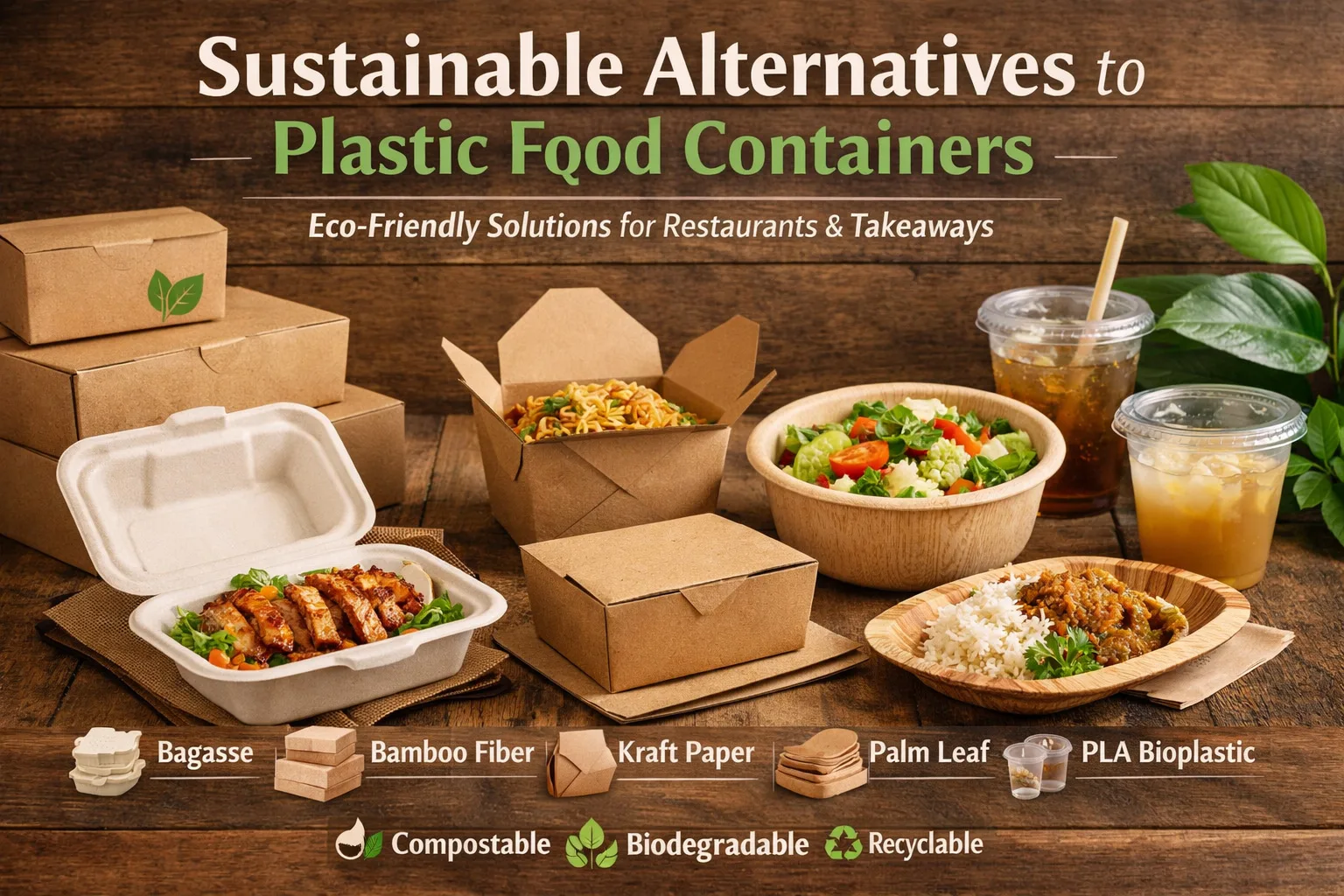
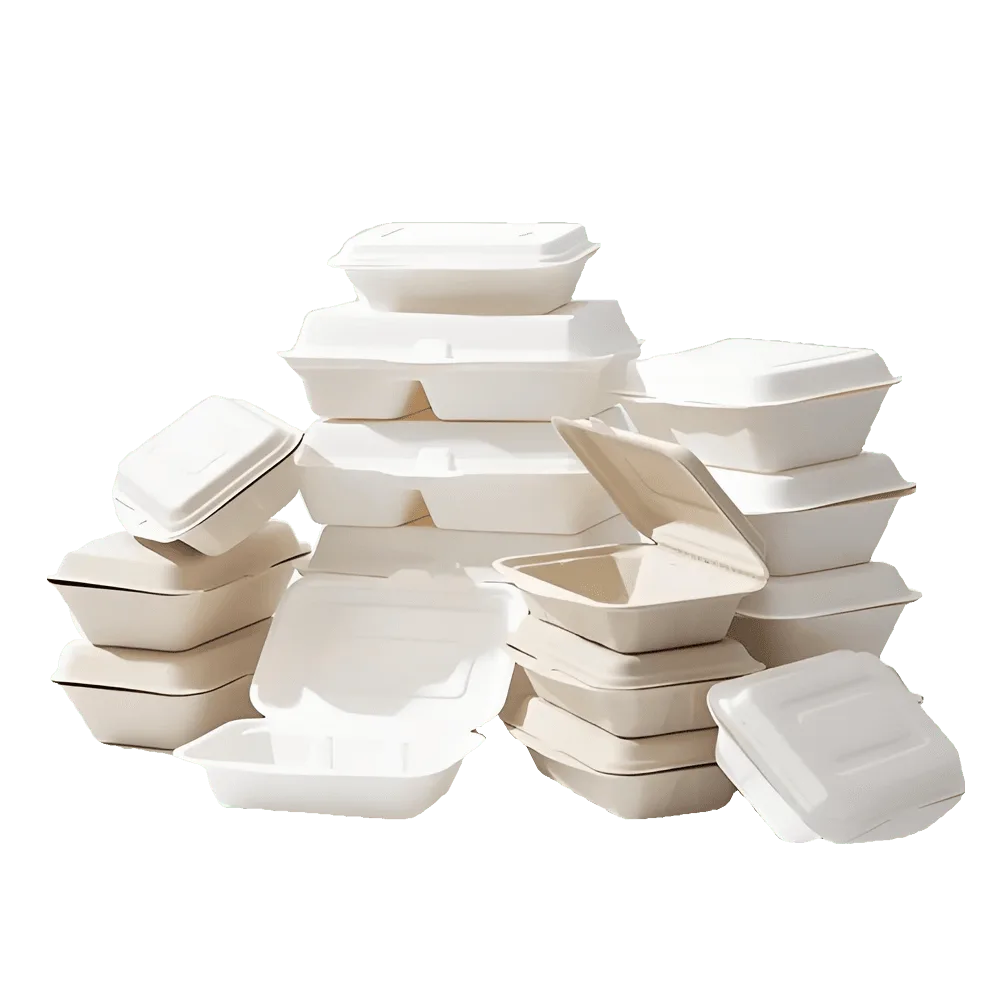
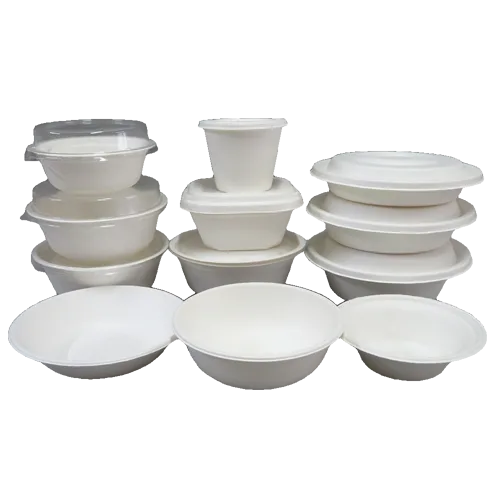
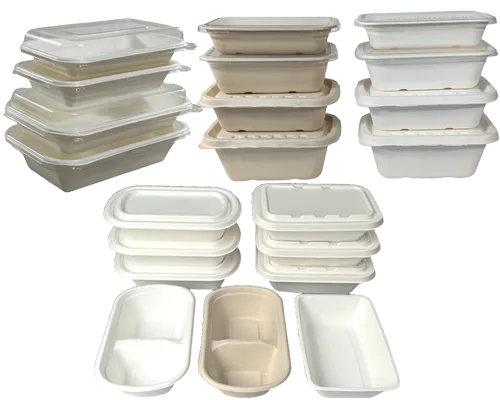
Pulp molding tableware refers to foodservice products formed from a water-based fiber pulp using molds, vacuum forming, pressing, drying and finishing processes. Typical finished formats include plates, bowls, trays, compartment meal containers, clamshell boxes, lids and custom molded inserts.
Raw materials vary. Sugarcane bagasse is widely used because it is the fibrous residue remaining after sugarcane juice extraction. Other molded fiber products may use wood pulp, bamboo fiber, recovered paper fiber or blends. Because these feedstocks have different origins, their sourcing documentation and certification relevance can also differ.
Key Features Buyers Should Evaluate
- Potential Compostability: Many molded plant-fiber products are designed for compostable foodservice applications, but compostability should be verified against the finished product, applicable standard, certification scope and disposal environment. Learn more in Is Bagasse Biodegradable and Compostable?
- Food-Contact Suitability: Food-contact compliance must be supported by appropriate product and material documentation for the intended destination market and conditions of use.
- PFAS and Chemical Requirements: Plant fiber does not automatically prove PFAS-free status. Buyers should review product-specific declarations or testing where PFAS restrictions apply. See Bioleader®’s guide to PFAS-Free vs PFOA-Free vs BPA-Free Foodware.
- Functional Performance: Depending on the product design and formulation, molded fiber packaging can provide useful resistance to oil, moisture and heat, but the actual product should be tested with the intended food, temperature and holding time.
- Customizable Structure: Shapes, compartments, depths, rims, lid interfaces and embossed branding can be developed for specific foodservice applications, subject to tooling and production requirements.
Important: Do not assume that every pulp molded product is automatically home compostable, PFAS-free, microwave-safe or certified for every market. These claims need to correspond to the specific product, formulation and supporting documentation.
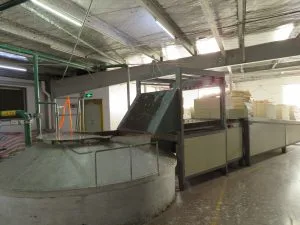
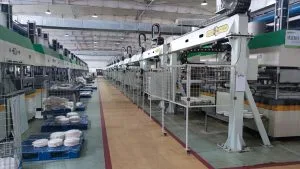
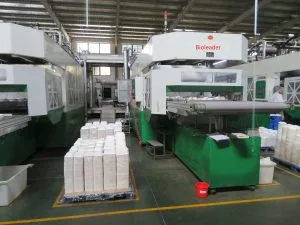
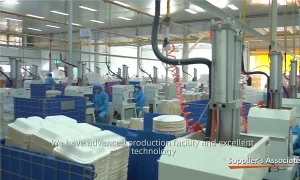
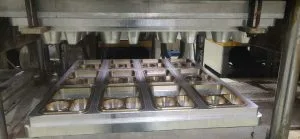
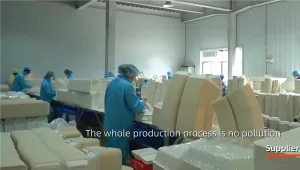
The Manufacturing Process: How Pulp Molded Tableware Is Made
 |  |  |
 |  |  |
1. Raw Material Selection
The process begins with a defined fiber feedstock. For Bioleader®’s sugarcane bagasse tableware, sugarcane residue is processed into pulp suitable for molded foodservice products. Other pulp molding systems may use bamboo, wood pulp, recovered fibers or blended fiber formulations.
Raw-material selection affects appearance, stiffness, forming performance, surface quality, sourcing documentation and end-of-life claims. Environmental comparisons should therefore consider the complete product system rather than relying only on the material name. For a broader comparison, see Bagasse vs Kraft vs Cornstarch Packaging: Carbon Footprint Comparison.
2. Pulp Preparation and Forming
Prepared fibers are mixed with water and refined into a controlled pulp slurry. Vacuum forming draws the fibers onto a shaped mold, creating a wet preform with the required plate, bowl, tray or container geometry.
Fiber consistency, slurry formulation, vacuum control and mold design influence wall distribution and dimensional consistency. These factors are particularly important around rims, hinge areas, compartment walls and lid-locking structures.
3. Pressing, Drying and Finishing
The wet molded structure is pressed and dried under controlled production conditions. Heat and pressure help remove moisture, consolidate the fiber network and create the final surface and structural characteristics.
Depending on the product specification, the manufacturing process may also include trimming, edge finishing, embossing and functional formulations or barrier treatments. Buyers specifying PFAS-free packaging should confirm the barrier approach and supporting chemical-compliance documentation rather than assuming that grease resistance is automatically PFAS-free.
4. Quality Control and Packaging
Finished products should be checked against defined specifications such as dimensions, product weight, rim formation, closure fit, stacking performance, appearance and functional resistance to water, oil or food exposure.
For export orders, inspection should also consider carton packing, quantity accuracy, traceability and compatibility between the food container and any separate lid.
Manufacturer Insight: Performance Is Created During the Process
Bagasse fiber alone does not determine whether a finished container will perform well. Product geometry, pulp formulation, pressing conditions, wall distribution, rim design and quality-control tolerances all influence real-world performance.
For this reason, Bioleader® recommends evaluating the finished sample with the buyer’s actual food rather than approving a project only from a raw-material description or certification list.
Does Pulp Molding Tableware Need FSC Certification?
This depends on the actual fiber source. FSC should not be treated as a universal certification for every type of molded plant fiber.
The FSC Chain of Custody framework primarily addresses forest-based materials. The FSC-STD-40-004 V3-1 standard defines material originating outside a forest matrix as neutral material and gives non-wood plant fibers as examples.
This distinction matters for sugarcane bagasse. Sugarcane bagasse is an agricultural residue rather than conventional forest-derived wood pulp. Therefore, buyers should not automatically request the same FSC evidence for pure sugarcane bagasse fiber that they would request for FSC paperboard or wood-pulp paper packaging.
| Fiber / Material | Typical Origin | FSC Relevance | Buyer Priority |
|---|---|---|---|
| Sugarcane bagasse | Agricultural residue after sugarcane juice extraction | Non-forest fiber; FSC is not normally the primary proof for the bagasse fiber itself | Material composition, food contact, compostability, PFAS and performance |
| Wood pulp | Forest-derived fiber | Directly relevant where FSC-certified sourcing is specified | Forest source, Chain of Custody, food contact and product performance |
| Paperboard component | Usually wood-pulp based | Relevant where an FSC claim is made or required | Paper source, coating, food contact and applicable FSC documentation |
| Mixed-material product | Combination of plant fiber and other components | Evaluate applicable forest-based components separately | Component-level material and compliance review |
For a detailed explanation of this issue, buyers can read Bioleader®’s dedicated guide: Does Sugarcane Bagasse Packaging Need FSC Certification? A Buyer’s Guide.
Certification Principle: FSC, food-contact compliance, compostability and PFAS testing answer different questions. One document should not be presented as proof of an unrelated claim.
Types of Pulp Molding Tableware Products
| Product Type | Typical Uses | Key Buyer Considerations |
|---|---|---|
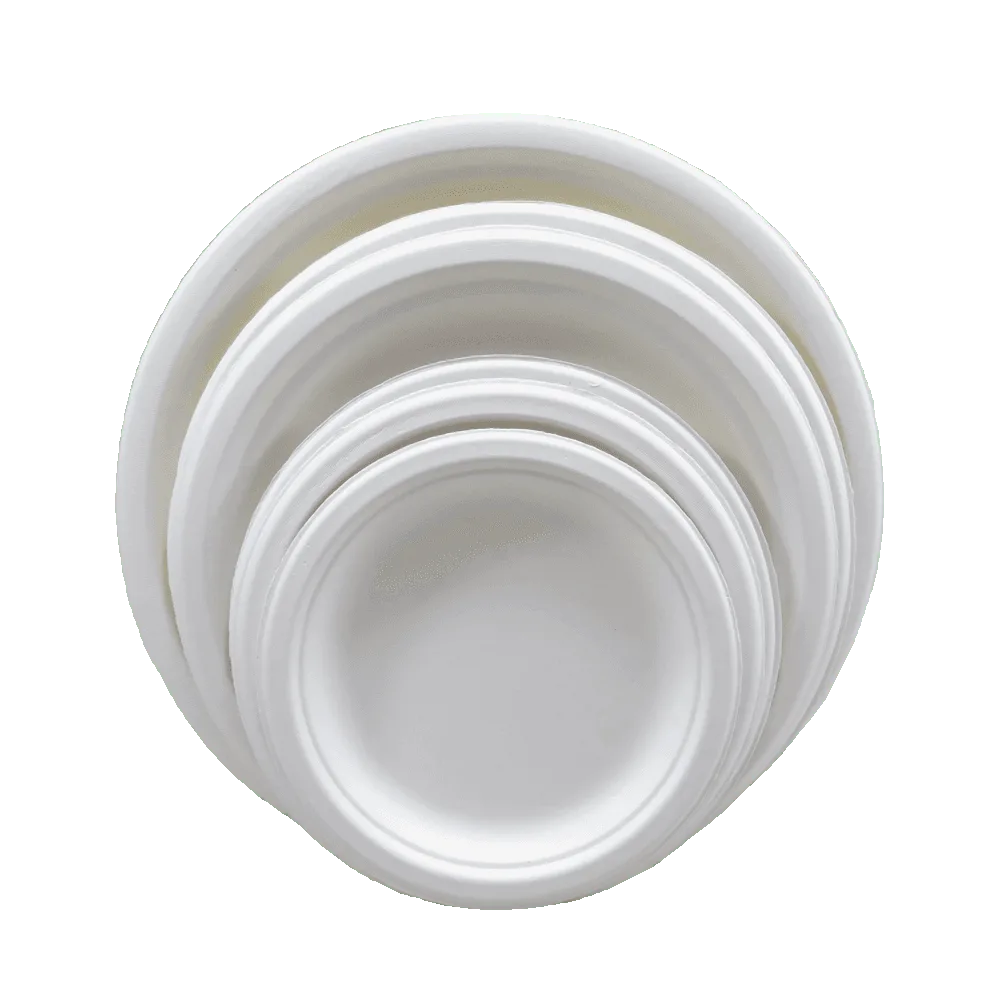
| Plates & Platters | Main courses, catering, events and cafeteria service | Rigidity, portion size, oil resistance, stacking and edge strength |
| Bowls | Rice, noodles, salads, curry, hot meals and desserts | Capacity, rim strength, lid fit, wet-food holding and temperature |
| Clamshell Boxes | Burgers, takeaway meals, rice dishes and combo meals | Hinge strength, closure security, compartment design and grease resistance |
| Trays & Compartments | Bento meals, airline meals, catering, supermarkets and meal prep | Load strength, compartment geometry, lid compatibility and stacking |
| Lids & Specialty Molded Parts | Cups, bowls, food containers and custom foodservice systems | Fit tolerance, vent design, temperature requirements and material compatibility |
Bioleader® supplies a broad range of molded fiber formats, including bagasse clamshell boxes, bagasse food containers, bagasse bowls, bagasse plates and bagasse trays.
Why Foodservice Buyers Are Evaluating Pulp Molding Tableware
1. Packaging Regulations Are Becoming More Material-Specific
Packaging regulation is moving beyond simple “plastic versus non-plastic” comparisons. The European Union’s Packaging and Packaging Waste Regulation, Regulation (EU) 2025/40, applies from 12 August 2026 and introduces a broader framework covering packaging placed on the EU market and its end-of-life requirements.
At the same time, food-contact laws, chemical restrictions and national waste rules continue to apply separately. A molded fiber container therefore does not become automatically compliant merely because it replaces plastic.
For international buyers, the correct approach is to identify the destination country, product application and packaging configuration before deciding which compliance documents are required.
2. Demand Is Moving Toward Verifiable Sustainability Claims
Large buyers increasingly want evidence behind packaging claims. Terms such as “plant-based,” “biodegradable,” “compostable,” “PFAS-free” and “plastic-free” should correspond to the actual material structure and the documentation that supports each claim.
This favors suppliers that can explain product composition and testing rather than simply adding environmental labels to a quotation.
3. Molded Fiber Can Work Across Multiple Foodservice Formats
Pulp molding can produce shallow plates, deep bowls, hinged boxes, multi-compartment trays and custom structures from related manufacturing technology. This makes it useful for restaurants, cafeterias, catering, airline meals, supermarkets and delivery operations that need several packaging formats.
4. Product Design Can Support Brand and Operational Requirements
Custom molds can incorporate shape, portioning, compartment design and embossed branding into the product structure. For high-volume B2B programs, these structural changes can be more useful than simply changing the printed appearance of a standard package.
Performance Comparison: Pulp Molding Tableware vs Plastic & Foam
A useful material comparison should focus on application requirements rather than declaring one material universally superior. Actual performance varies by polymer, fiber formulation, product thickness, barrier treatment and design.
| Attribute | Pulp Molding Tableware | Plastic Tableware | Foam Tableware |
|---|---|---|---|
| Typical Raw Material | Bagasse, wood pulp, bamboo or other suitable fiber | PP, PET, PS or other polymers depending on product | Typically expanded polystyrene or similar foam structures |
| Heat Performance | Can be suitable for hot foods; verify product specification and lid | Strongly polymer-dependent; PP and PET have different temperature limits | Application-dependent and often less suitable for high-heat use |
| Oil & Moisture Resistance | Depends on formulation, process and barrier system | Generally strong, depending on polymer and structure | Application-dependent |
| Microwave Use | Many molded fiber products are designed for microwave food reheating; verify the specific SKU and lid | Depends on polymer; PP may be suitable while PET products generally have different heat limitations | Verify specific material and manufacturer instructions |
| Compostability | Possible for qualifying products; verify applicable certification and disposal environment | Conventional plastic is generally not compostable | Conventional foam is generally not compostable |
| Recycling Route | Depends on fiber composition, contamination and local collection infrastructure | Depends on resin, format and local recycling infrastructure | Collection and recycling access can be limited in many markets |
| PFAS Status | Must be verified from formulation, declaration or testing where required | Material-specific; do not infer from polymer category alone | Material-specific |
| Best Procurement Approach | Match material, barrier, certificate and real food application | Match polymer and temperature to application | Check regulatory acceptance and performance requirements |
Buyer Decision Matrix: Where Molded Fiber Performs Best
| Foodservice Requirement | Pulp Molded Packaging | What Buyers Should Verify |
|---|---|---|
| Hot Takeaway Meals | Strong potential for clamshells, bowls and meal trays | Serving temperature, holding time, oil content, lid material and leakage performance |
| Oily / Saucy Foods | Suitable when barrier and forming performance match the application | PFAS specification, oil resistance, sauce contact time and sample test |
| Meal Prep | Useful for portion trays and compartment containers | Refrigeration, stacking, reheating and lid fit |
| Catering & Events | Plates, bowls and trays provide a broad product system | Rigidity, stack height, transport packing and serving duration |
| Supermarket Display | Useful for trays and prepared-food formats | Clear-lid material, refrigeration, condensation and shelf presentation |
| Compostability Programs | Can support compostable packaging strategies where certified products and suitable infrastructure exist | Certification scope, complete product configuration, labeling and local organics collection |
 |  |
 |  |
Compostability: Avoid Fixed Decomposition-Time Claims
One of the most common mistakes in molded fiber marketing is to state that every bagasse product will decompose within a fixed number of days regardless of disposal conditions.
Actual decomposition depends on temperature, moisture, microbial activity, aeration, product thickness, formulation and the composting environment. Industrial composting and home composting are also different systems.
Where a supplier makes an industrial-compostability or home-compostability claim, buyers should verify the applicable certification and whether the certificate actually covers the product being purchased.
Risk Warning: “Made from bagasse” and “certified compostable” are not interchangeable statements. Material origin describes what the product is made from; compostability certification evaluates a defined finished product against specified requirements.
Food-Contact Compliance: Fiber Origin Is Not Enough
All food packaging intended to contact food must be evaluated under the applicable food-contact framework of the destination market. In the European Union, Regulation (EC) No 1935/2004 provides the general framework for food-contact materials. In the United States, FDA requirements apply to substances used in food-contact materials according to their regulatory status and intended conditions of use.
For a B2B buyer, this means a supplier should be able to identify the product, material and intended application covered by its supporting documentation. A generic statement such as “FDA approved” should not replace a review of the relevant test report or regulatory basis.
Bioleader® publishes its available documentation categories on the Certificates & Test Reports page so procurement teams can distinguish food-contact, compostability, PFAS and factory-level documentation.
PFAS-Free Pulp Molding: Why Barrier Chemistry Matters
Oil and grease resistance are critical for molded fiber containers used with fried foods, curries, sauces and other high-fat meals. Historically, grease-resistant fiber packaging has attracted regulatory attention because of the use of fluorinated chemistry in parts of the industry.
For current procurement, buyers should not infer PFAS status from appearance, color or the fact that a product is plant-based. PFAS-related claims should be supported by the supplier’s current formulation controls, declarations and/or relevant analytical testing.
For applications involving hot and oily food, see Bioleader®’s technical analysis: PFAS-Free Sugarcane Tableware for 100°C Hot Food.
Recommended Sample Evaluation
Before placing a large order, test the actual molded fiber sample with the target food. Use the expected serving temperature, food oil level, sauce content, holding time, refrigeration conditions and delivery duration.
For containers with lids, test the complete system rather than the fiber base alone. A bagasse tray may tolerate reheating conditions that are not suitable for a separate PET lid, for example.
Market Direction: Why Molded Fiber Remains Strategically Important
The long-term driver for molded fiber is not a single market-size forecast. More important for B2B procurement is the convergence of packaging policy, chemical restrictions, plastic-reduction targets, foodservice delivery growth and demand for better documented material claims.
- Europe: PPWR introduces a broader regulatory framework for packaging placed on the EU market, while food-contact and chemical requirements continue to apply separately.
- North America: Buyers must monitor federal, state and local requirements because rules affecting food packaging, PFAS and single-use materials can differ by jurisdiction.
- Foodservice Operations: Restaurants and delivery businesses increasingly need packaging that combines functional performance with a clearer material and compliance story.
- Global Sourcing: Buyers are increasingly evaluating documentation, factory controls, consistency and application testing alongside unit price.
For a broader market and material analysis, buyers can review the 2026 Global Sugarcane Bagasse Packaging White Paper.
Buyer Scenario: Evaluating Molded Fiber for a Fast-Casual Restaurant Chain
A multi-location restaurant operator considering a move from conventional plastic takeaway packaging should not begin by asking only whether bagasse is “more sustainable.” The project needs to be translated into measurable packaging requirements.
Typical Procurement Challenges
- Replace selected plastic or foam meal containers without reducing delivery performance.
- Maintain resistance to hot, oily and saucy foods during takeaway holding times.
- Select containers and lids compatible with the restaurant’s reheating and refrigeration workflow.
- Confirm food-contact and chemical-compliance documentation for the target markets.
- Evaluate whether compostability claims match local disposal infrastructure.
- Balance unit price with packing efficiency, transport, storage and product failure risk.
Recommended Evaluation Process
- Define the menu: Separate dry foods, oily meals, soups, salads, frozen foods and reheated meals.
- Select candidate formats: Compare clamshells, bowls, compartment trays and containers with separate lids.
- Run food tests: Test leakage, deformation, lid retention, stacking and holding time using actual menu items.
- Review compliance documents: Match food-contact, compostability and PFAS-related evidence to the selected product.
- Calculate total packaging cost: Include product price, carton volume, container loading, storage and expected reject or leakage rates.
- Scale after validation: Finalize bulk specifications only after the product and documentation both meet the project requirements.
Why This Is Better Than a Generic “Green Packaging” Comparison
A restaurant does not buy raw bagasse fiber. It buys a finished food container that must work with a specific meal, lid, delivery route and local compliance system.
The correct commercial comparison is therefore finished-system performance + compliance + total operating cost, not simply bagasse versus plastic at the material-label level.
How to Choose a Reliable Pulp Molding Tableware Supplier
Buyer Checklist
- Raw Material Identification: Confirm whether the product uses sugarcane bagasse, wood pulp, bamboo, recovered fiber or a blend.
- FSC Relevance: Apply FSC sourcing requirements to relevant forest-based components rather than automatically treating agricultural bagasse as FSC-certified fiber.
- Food-Contact Documentation: Check documentation against the destination market and intended food-contact conditions.
- Compostability: Verify applicable certification and whether the exact product or product family is covered.
- PFAS Requirements: Review the supplier’s current PFAS-related documentation and testing where required.
- Production Capability: Evaluate molding capacity, tooling capability, process control and ability to maintain repeat orders.
- Quality Control: Confirm dimensional tolerances, product weight, fit, leakage testing, packaging inspection and traceability.
- Customization: Confirm tooling fees, embossing, product structure, private label requirements and realistic MOQ before development.
- Export Capability: Review carton specifications, container loading, commercial terms and destination documentation.
For buyers evaluating sugarcane products specifically, Bioleader®’s Comprehensive Guide to Sugarcane Bagasse Tableware provides additional information on material characteristics, manufacturing and foodservice applications.
Bioleader® Pulp Molded Food Packaging Solutions
Bioleader® manufactures and supplies molded sugarcane bagasse food packaging for international foodservice, wholesale, distribution and private-label projects. Available formats include clamshell containers, bowls, plates, trays, compartment meal containers and specialized molded fiber packaging.
For B2B projects, Bioleader® supports buyers with product selection, sample evaluation, specification matching, compliance-document review, custom molds, embossed branding, bulk production and export coordination.
Buyers can begin with the complete Sugarcane Bagasse Tableware range or review specialized Bagasse Packaging Solutions for foodservice applications.

Frequently Asked Questions About Pulp Molding Tableware
Are pulp molded tableware products microwave and freezer safe?
Many molded sugarcane bagasse products are designed for hot-food, microwave reheating and refrigerated or frozen-food applications, but the exact limits should be checked for the specific SKU. Buyers should also evaluate the lid separately because a molded fiber base and a PET, PP or PLA lid may have different temperature limitations.
How long does pulp molding tableware take to decompose?
There is no universal decomposition time for every pulp molded product. Actual breakdown depends on material formulation, product thickness, temperature, moisture, microbial activity and the composting environment. Industrial and home composting are different conditions, so buyers should rely on applicable product-specific certification rather than a generic “60–120 day” claim.
Are pulp molded containers suitable for oily or saucy foods?
They can be, but performance depends on product formulation, molding quality, barrier chemistry, food temperature and holding time. Buyers handling curry, fried foods, sauces or other high-oil meals should test actual samples and review PFAS-related requirements instead of assuming that every molded fiber container provides the same grease resistance.
Does sugarcane bagasse packaging need FSC certification?
FSC is not normally the primary proof used to verify the sugarcane bagasse fiber itself because bagasse is an agricultural residue rather than conventional forest-based wood pulp. FSC may still be relevant to forest-based paper or paperboard components. Buyers should distinguish FSC sourcing from food-contact, compostability and PFAS compliance.
What certifications should buyers check for pulp molded food packaging?
The correct documentation depends on the material, destination market and claim. Buyers may need food-contact reports, compostability certification, PFAS-related testing or declarations, factory quality documentation and raw-material specifications. A certificate should always be checked for its scope rather than assumed to cover every product manufactured by the supplier.
What is the MOQ for custom pulp molded packaging?
MOQ depends on product size, tooling, structure, weight, customization and production efficiency. Existing standard molded fiber products generally require lower development commitment than a completely new custom mold. Buyers should provide drawings, target dimensions, expected annual volume and food application before asking a manufacturer to calculate custom tooling and MOQ.
Can a logo be added to pulp molded tableware?
Yes. Embossed or debossed branding can often be integrated directly into the mold, and some molded fiber formats may support additional printing or labeling solutions. The appropriate method depends on surface geometry, required visual result, order quantity, food-contact area and production process.
Strategic Outlook: The Future of Food Packaging Is Application-Driven
Pulp molding tableware has a strong role in the transition away from certain conventional disposable packaging formats, but its value should not be reduced to a simple “fiber equals sustainable” claim.
For professional buyers, the stronger purchasing model is:
The right pulp molded packaging solution = material composition + food compatibility + barrier performance + regulatory requirements + verified claims + logistics + end-of-life infrastructure + total operating cost.
Sugarcane bagasse performs particularly well as a molded foodservice material because it can be formed into a wide range of plates, bowls, clamshells and takeaway containers. However, the finished product still needs to be evaluated for its actual use case.
For international buyers, this means moving beyond generic questions such as “Is it biodegradable?” or “Does it have FSC?” and instead asking which material is used, which claim each document verifies, how the product performs with the target food and whether the complete packaging configuration fits the destination market.
Final Buyer Recommendation
Choose pulp molding tableware by application, not by environmental label alone. Confirm the raw material, test the product with real food, review food-contact and chemical documentation, verify compostability claims where relevant, and assess the supplier’s ability to maintain the same specification in repeat production.
Bioleader® helps international buyers source sugarcane bagasse tableware through product selection, compliance-document support, sample evaluation, OEM/private-label development and bulk export supply.
References
- Forest Stewardship Council — FSC-STD-40-004 V3-1 Chain of Custody Certification
- Forest Stewardship Council — Chain of Custody Certification
- European Union — Regulation (EU) 2025/40 on Packaging and Packaging Waste
- European Commission — Food Contact Materials
- U.S. Food and Drug Administration — Packaging & Food Contact Substances
- European Union — Directive (EU) 2019/904 on Single-Use Plastics