Corn Starch Food Containers: A Practical Introduction | Bioleader® Insights

Actionable coverage of corn starch food containers: eco-friendly, biodegradable, compostable materials, performance data, and compliance under EN13432 & ASTM D6400. Includes BPI/TÜV references and Food-Contact Tested guidance for safe deployment. Buyer-focused: manufacturer insights, bulk/wholesale buying playbooks, OEM/ODM customization tips, full size range selection.
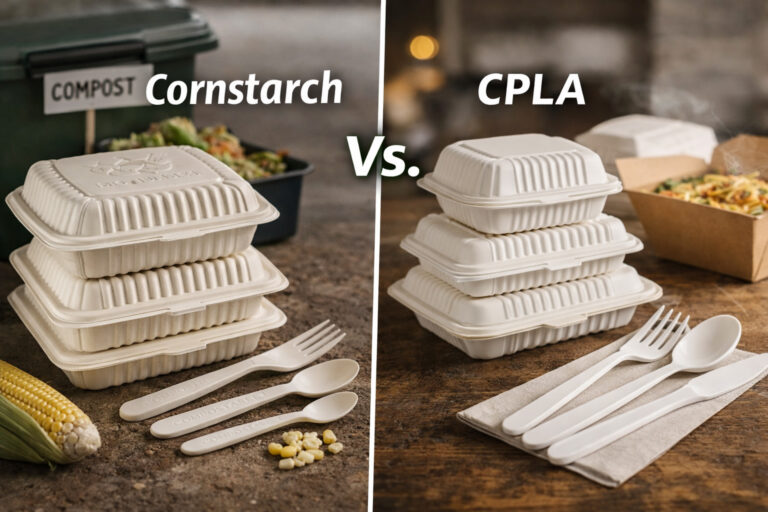
Quick Summary: Corn starch tableware is not a single material identity. It is a global sourcing category that must be judged by formulation transparency, food-contact compliance, environmental claim discipline, and destination-market fit. At Bioleader, we advise buyers not to be distracted by high “starch percentage” claims alone. In real projects, the more important question is whether the supplier can explain the starch-to-carrier balance, support the product with valid compliance documents, and recommend when a starch-based solution should be replaced by bagasse, paper, or PLA to reduce regulatory risk.
corn starch food containers — Quick Summary
  • Items displayed (articles): 12
  • Last updated: 2026-03-25
  • Includes test data, compliance guides, buyer FAQs, and real-world use cases.

Editor’s Picks: Top Corn Starch Food Containers Guides 2026

FAQ of Bioleader's Eco-friendly Disposable Tableware

Can these containers hold liquids?

Yes, our paper food containers are leakproof and hold solid and liquid foods including thick soups sauces, and creamy dishes too.

What is the range of sizes that you have?

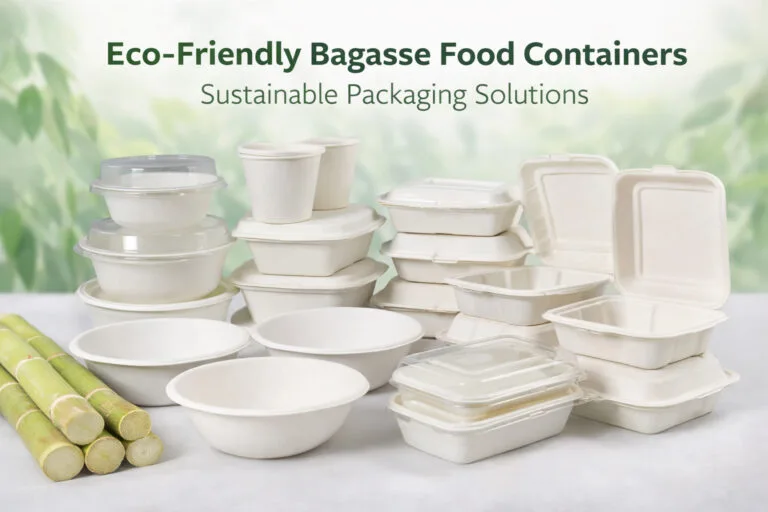
In terms of volume, there are varieties of cups: 500ml, 750ml, 1000ml, 1090ml, 1200ml, 1300ml, and 1500ml. This means that for every portion of any size, there is a bowl available.

Can these bowls be used in a microwave?

Yes, our eco friendly disposable bowls are microwaveable, which allows users to heat food without the need of an extra bowl.

2.2 What Buyers Are Actually Buying

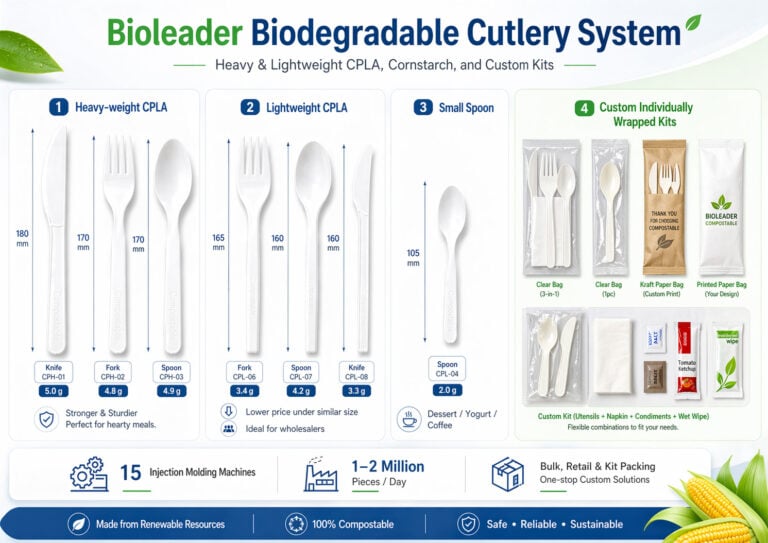
What a buyer is really buying is not “corn starch” alone, but a starch-based plastic composite. In real manufacturing, the purchasing risk sits in the balance between four variables: the starch phase, the polymer carrier, the mineral system, and the processing additives , corn starch food containers. This is why Bioleader does not evaluate quality by headline percentage alone. We evaluate whether the formulation balance is strong enough to survive real commercial use.

2.1 Commercial Naming vs. Material Identity

Global buyers will see multiple terms used almost interchangeably in catalogs and online listings: corn starch tableware, starch-based utensils, bio-based cutlery, and plant-based tableware , corn starch food containers. From a procurement perspective, these are often commercial naming choices, not precise legal or technical identities. This distinction matters because a product may be marketed under a plant-based message while still relying on a synthetic carrier phase or additive system that changes both its performance profile and its regulatory exposure , corn starch food containers. That is exactly why broad wording such as “plant-based” or “eco-friendly” should never be accepted as a substitute for document review.

Related Insights

🚀Ready to Go Green and Choose ?

Join the global movement toward zero-waste packaging.


Bioleader® offers:

  • 📦 Bulk order support & fast delivery

  • ✍️ Custom branding and OEM solutions

  • 🌍 Worldwide eco-packaging compliance

Get the Catalogue Products List  & Contact Us Now! 👉

Contact us Below

Click or drag files to this area to upload.You can upload up to 5 files.
The more details you share, the faster and more accurate our quotation will be.