Guide To Carbon Footprint: Materials, Standards & Best Practices | Bioleader® Guides

Actionable coverage of Carbon Footprint: eco-friendly, biodegradable, compostable materials, performance data, and compliance under EN13432 & ASTM D6400. Includes BPI/TÜV references and Food-Contact Tested guidance for safe deployment. Buyer-focused: manufacturer insights, bulk/wholesale buying playbooks, OEM/ODM customization tips, full size range selection.
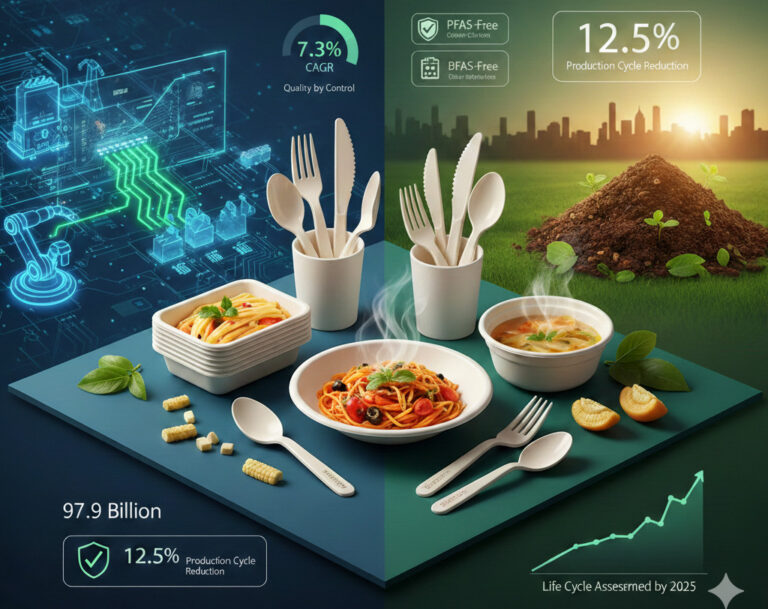
Quick Summary: This data-driven comparison reveals how compostable cutlery made from CPLA and cornstarch drastically reduces greenhouse gas emissions compared with traditional PP and PS plastics. Based on Bioleader® lifecycle assessments, switching to these materials can lower carbon emissions by 60–70%, while supporting EN13432 and ASTM D6400 composting standards. Ideal for global foodservice buyers and brands seeking measurable sustainability impact.
Carbon Footprint — Quick Summary
  • Items displayed (articles): 12
  • Last updated: 2025-11-05
  • Includes test data, compliance guides, buyer FAQs, and real-world use cases.

Editor’s Picks: Top Carbon Footprint Guides 2026

FAQ of Bioleader's Eco-friendly Disposable Tableware

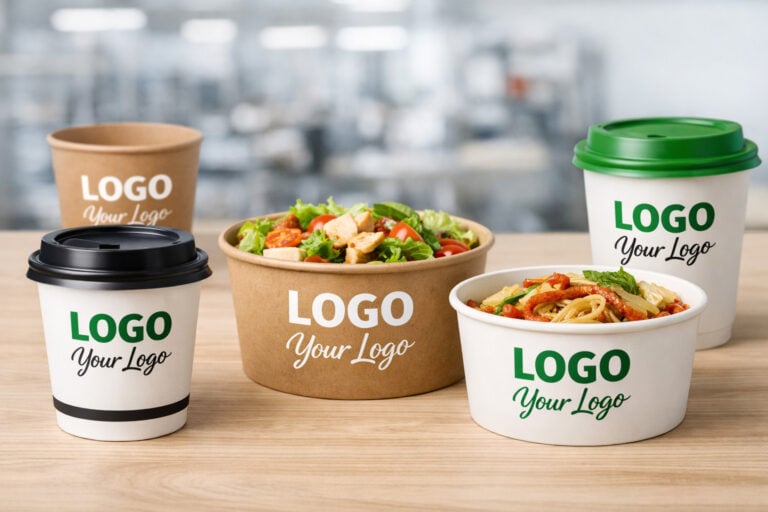
Is there a possibility to order the bowls with my logo?

Of course! Custom printing is an opportunity for you to order bowls with your logo or design printed on them. Do not hesitate to ask for additional information regarding the special applications.

What sizes are available?

In respect of quantity, we are not limited as we have containers of 500ml, 750ml, 1000ml units to 1090ml, 1200ml, 1300ml, 1500ml, etc, so there is always a need.

Are the bowls microwave- and freezer-safe?

Yes, our biodegradable bowls are both microwaveable and freezer-safe, maintaining their structure and food safety even under temperature variations , Carbon Footprint.

Traditional Plastics (PP, PS)

Conventional cutlery made from polypropylene (PP) or polystyrene (PS) relies entirely on fossil fuel extraction. Producing one kilogram of PP or PS emits between 2–3 kg of CO₂e, mainly due to high-temperature polymerization and refining processes. End-of-life scenarios further increase emissions — most of these utensils are not recyclable because of food residue contamination and their lightweight nature, which makes sorting uneconomical. A set of conventional plastic cutlery made from polypropylene and polystyrene, showing individually wrapped sporks on a wooden surface, representing single-use plastics still common in foodservice , Carbon Footprint.

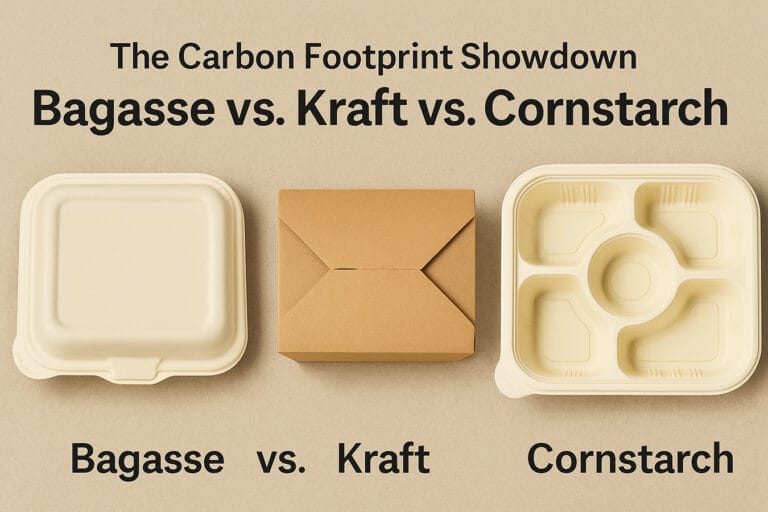
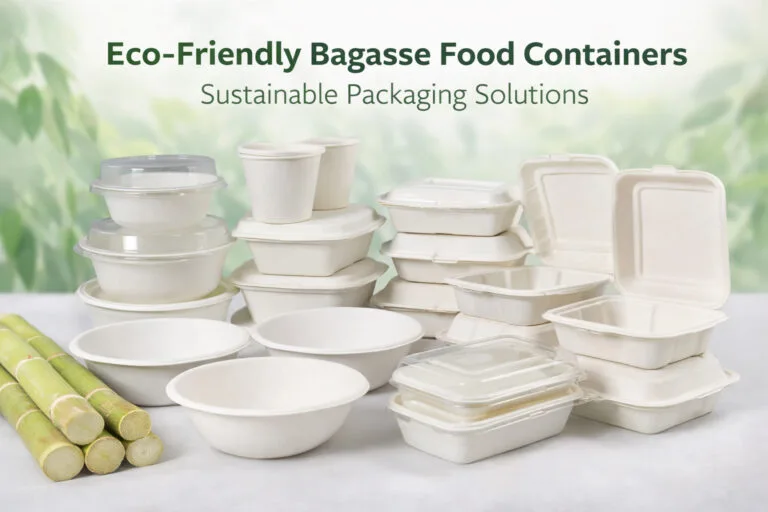
Bagasse Pulp Molding

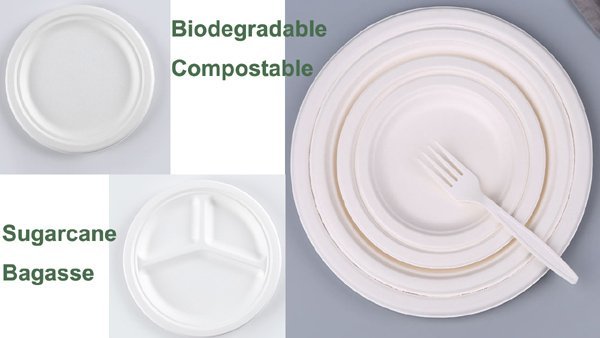
Bagasse is the fibrous by-product of sugarcane processing. After pulping and molding (wet-press or form-press routes), the result is a rigid, heat-tolerant article often compatible with hot, oily foods. Under recovery-friendly systems (where organic recovery and composting are available and correctly used), bagasse can realize strong net-carbon advantages by diverting material into biological cycles and mitigating methane potential (vs , Carbon Footprint. landfilling).

Related Insights

🚀Ready to Go Green and Choose ?

Join the global movement toward zero-waste packaging.


Bioleader® offers:

  • 📦 Bulk order support & fast delivery

  • ✍️ Custom branding and OEM solutions

  • 🌍 Worldwide eco-packaging compliance

Get the Catalogue Products List  & Contact Us Now! 👉

Contact us Below

Click or drag files to this area to upload.You can upload up to 5 files.
The more details you share, the faster and more accurate our quotation will be.