Biobased Food Containers: Strategic Overview | Bioleader® Guide

Actionable coverage of biobased food containers: eco-friendly, biodegradable, compostable materials, performance data, and compliance under EN13432 & ASTM D6400. Includes BPI/TÜV references and Food-Contact Tested guidance for safe deployment. Buyer-focused: manufacturer insights, bulk/wholesale buying playbooks, OEM/ODM customization tips, full size range selection.
Quick Summary: Bagasse and PLA are both leading compostable materials, but their structural composition, heat tolerance, degradation cycles, and suitable food packaging applications differ dramatically. Bagasse excels in high-temperature and wet-food scenarios due to its lignocellulosic fiber network, while PLA performs best in cold beverages and transparent packaging. This guide provides data-backed comparisons to support material selection for global foodservice brands.
biobased food containers — Quick Summary
  • Items displayed (articles): 12
  • Last updated: 2025-12-06
  • Includes test data, compliance guides, buyer FAQs, and real-world use cases.

Editor’s Picks: Top Biobased Food Containers Guides 2026

FAQ of Bioleader's Eco-friendly Disposable Tableware

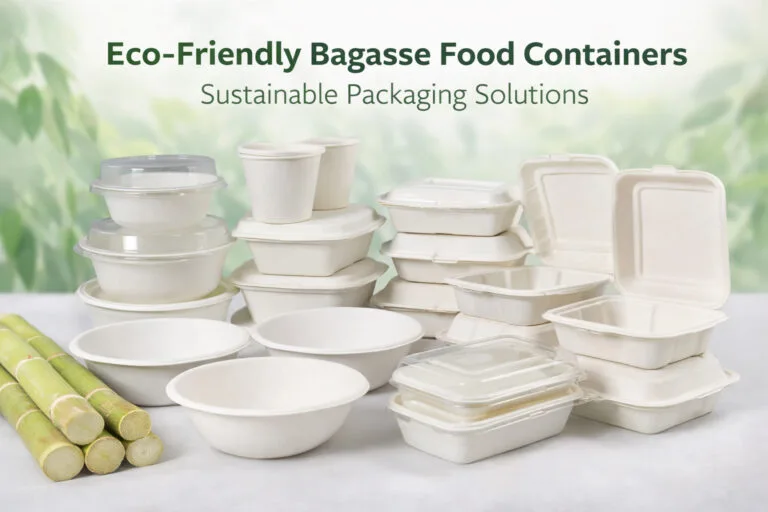
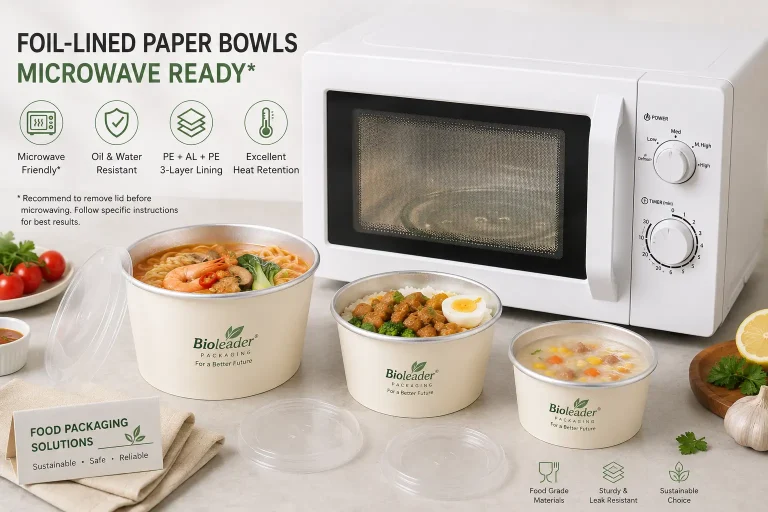
Can these bowls safely contain hot food without leaking?

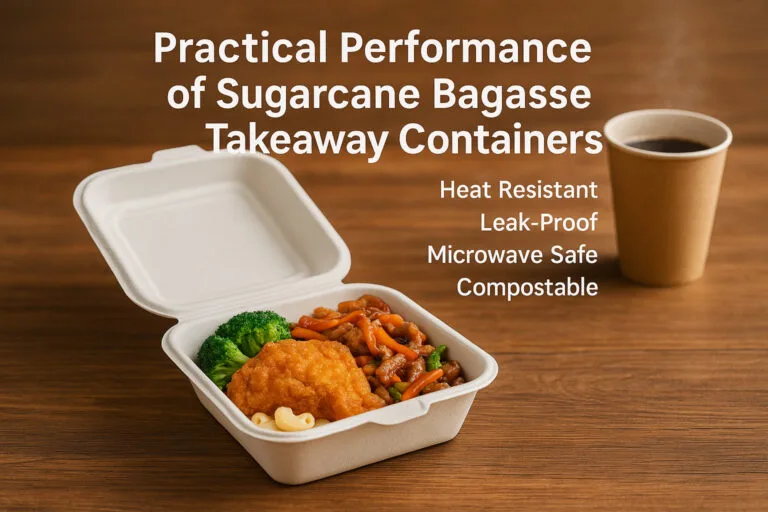
Definitely. These biodegradable disposable bowls are designed to hold both hot and cold food without any leakage or deformation, ensuring a mess-free experience.

Which food should I use these bowls for?

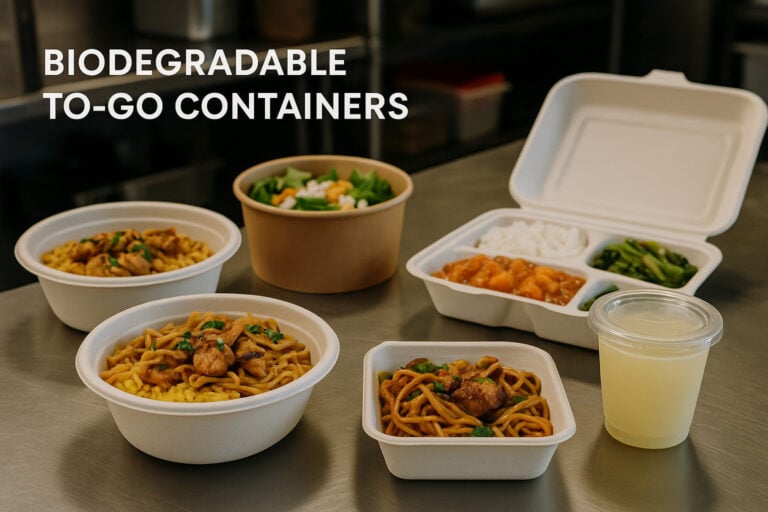
These bowls are multi-purpose and may be used for hot or cold food containing liquids, doling out soups, clogged salads, ice cream or even packing pasta.

What are the dimensions it comes in?

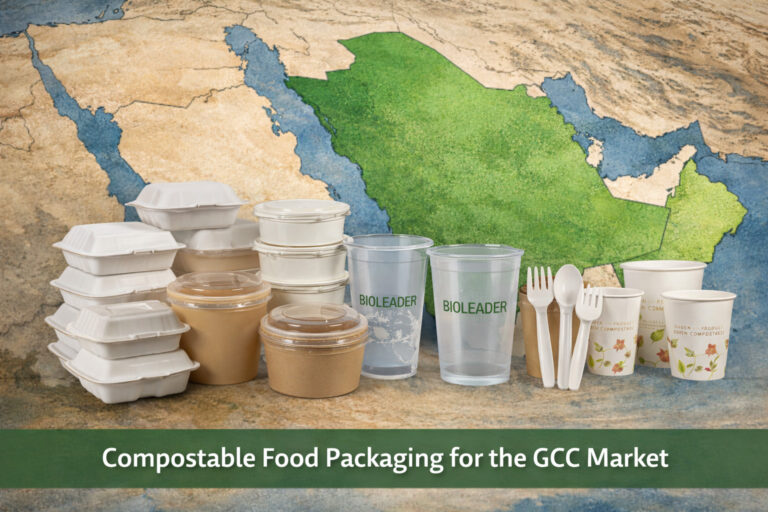
As for the to go bowls, these are available in different capacities of 500ml,750ml,1000ml,1090ml,1200ml,1300ml, and 1500ml. This implies that it serves a range of meals, that is, when it is served in a small salad one portion comes with it, and when it is served in larger portions many servings are included — biobased food containers.

1.2 PLA: A Thermoplastic Biopolymer Derived from Fermented Sugars

PLA is produced by polymerizing lactic acid monomers. Its performance characteristics reflect its nature as a thermoplastic. Key Material Properties: Glass transition temperature (Tg): 55–60°C Melting point: 160–170°C Begins softening around: 50–55°C A 2023 study in the Journal of Polymers and the Environment confirms that PLA’s mechanical strength drops sharply above 60°C, making it inappropriate for hot foods or microwaving.

Why PLA behaves like plastic:

It melts & deforms under moderate heat , biobased food containers. It retains shape under room temperature. It can be injection molded and thermoformed , biobased food containers. It allows transparency—Bagasse does not.

Related Insights

🚀Ready to Go Green and Choose ?

Join the global movement toward zero-waste packaging.


Bioleader® offers:

  • 📦 Bulk order support & fast delivery

  • ✍️ Custom branding and OEM solutions

  • 🌍 Worldwide eco-packaging compliance

Get the Catalogue Products List  & Contact Us Now! 👉

Contact us Below

Click or drag files to this area to upload.You can upload up to 5 files.
The more details you share, the faster and more accurate our quotation will be.